1. Search Result
Search Result
Results for "

BCR-ABL-T315I

" in MedChemExpress (MCE) Product Catalog:

17

阻害剤およびアゴニスト

1

蛍光色素

1

生化学アッセイ試薬

Targets Recommended:
製品番号 製品名 Target 研究分野 構造式
  • HY-15666
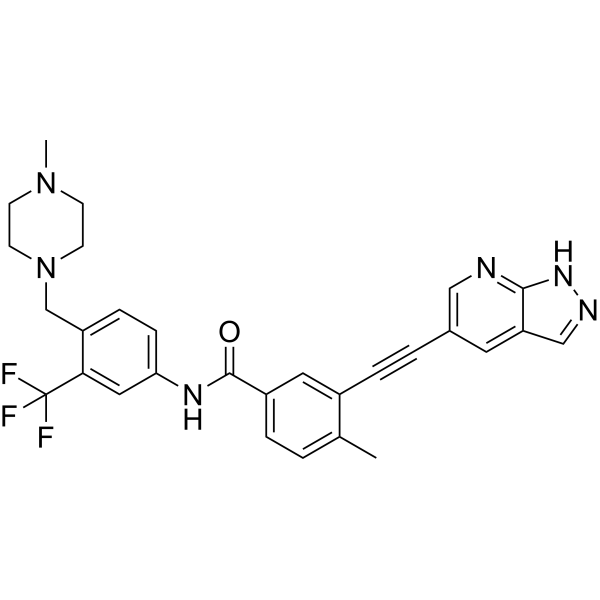
    Olverembatinib
    Maximum Cited Publications
    10 Publications Verification

    GZD824; HQP1351

    Bcr-Abl Cancer
    Olverembatinib (GZD824) is a potent and orally active pan-Bcr-Abl inhibitor. Olverembatinib potently inhibits a broad spectrum of Bcr-Abl mutants. Olverembatinib strongly inhibits native Bcr-Abl and Bcr-Abl T315I with IC50s of 0.34 nM and 0.68 nM, respectively. Olverembatinib has antitumor activity . Olverembatinib is a click chemistry reagent, it contains an Alkyne group and can undergo copper-catalyzed azide-alkyne cycloaddition (CuAAc) with molecules containing Azide groups.
    Olverembatinib
  • HY-147414

    PF-114

    Bcr-Abl Cancer
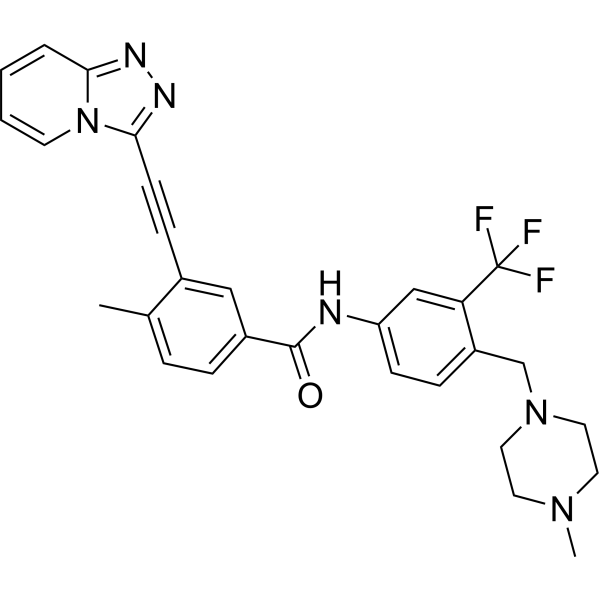
    Vamotinib (PF-114) is a potent, selective and orally active tyrosine kinase inhibitor. Vamotinib inhibits the autophosphorylation of BCR/ABL and BCR/ABL-T315I. Vamotinib induces apoptosis. Vamotinib shows anti-proliferative and anti-tumor activity. Vamotinib has the potential for the research of resistant philadelphia chromosome-positive (Ph+) leukemia. Vamotinib inhibits ABL series kinases with IC50s of 0.49 nM (ABL), 0.78 nM (ABL T315I), 9.5 nM (ABL E255K), 2.0 nM (ABL F317I), 7.4 nM (ABL G250E), 1.0 nM (ABL H396P), 2.8 nM (ABL M351T), 12 nM (ABL Q252H), and 4.1 nM (ABL Y253F), respectively . Vamotinib is a click chemistry reagent, it contains an Alkyne group and can undergo copper-catalyzed azide-alkyne cycloaddition (CuAAc) with molecules containing Azide groups.
    Vamotinib
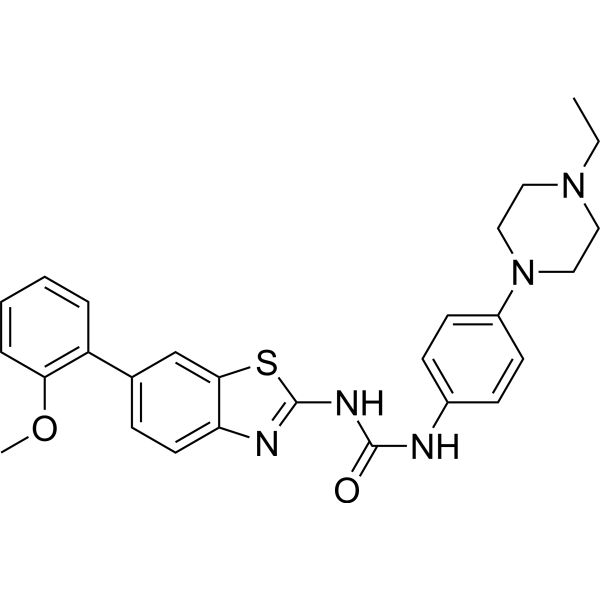
  • HY-123159

    Aurora Kinase Cancer
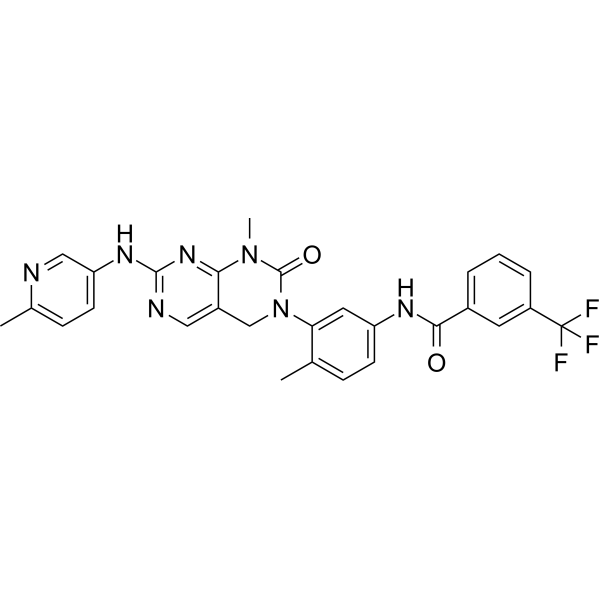
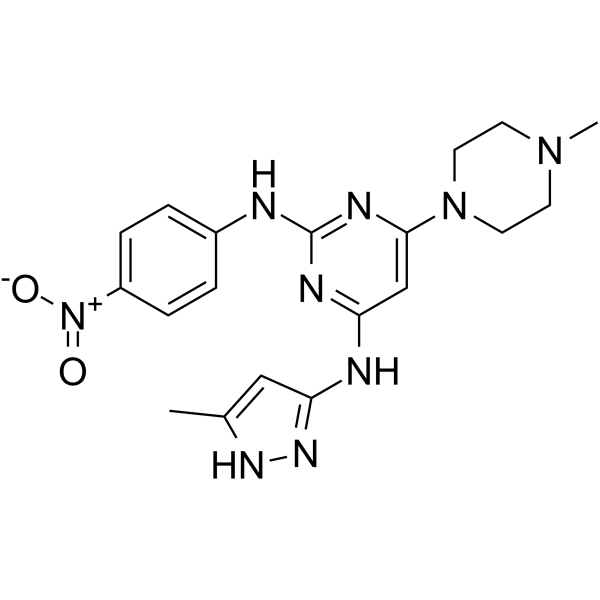
    AKI603 is an inhibitor of Aurora kinase A (AurA), with an IC50 of 12.3 nM. AKI603 is developed to overcome resistance mediated by BCR-ABL-T315I mutation. AKI603 exhibits strong anti-proliferative activity in leukemic cells .
    AKI603
  • HY-10943
    GNF-7
    2 Publications Verification

    Bcr-Abl Ack1 Cancer
    GNF-7 is a multikinase inhibitor. GNF-7 is a Bcr-Abl inhibitor, with IC50s of 133 nM and 61 nM for Bcr-Abl WT and Bcr-Abl T315I, respectively. GNF-7 also possesses inhibitory activity against both ACK1 (activated CDC42 kinase 1) and GCK (germinal center kinase) with IC50s of 25 nM and 8 nM, respectively. GNF-7 can be used for the research of hematologic malignancies .
    GNF-7
  • HY-15666A
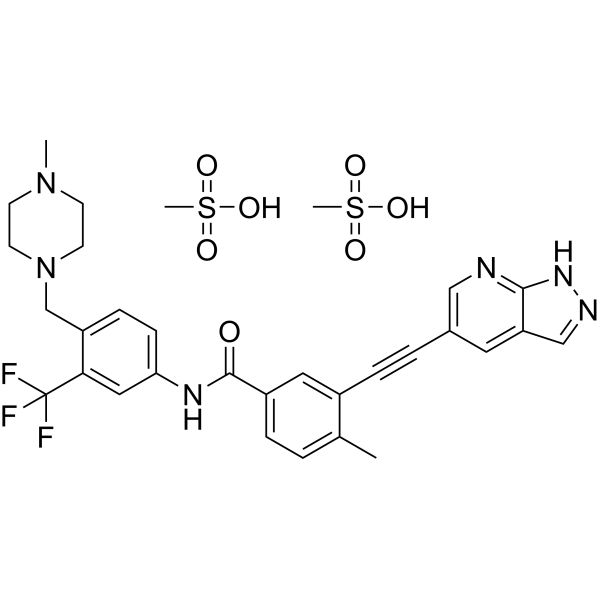
    Olverembatinib dimesylate
    Maximum Cited Publications
    10 Publications Verification

    GZD824 dimesylate; HQP1351 dimesylate

    Bcr-Abl Cancer
    Olverembatinib (GZD824) dimesylate is a potent and orally active pan-Bcr-Abl inhibitor. Olverembatinib dimesylate potently inhibits a broad spectrum of Bcr-Abl mutants. Olverembatinib dimesylate strongly inhibits native Bcr-Abl and Bcr-Abl T315I with IC50s of 0.34 nM and 0.68 nM, respectively. Olverembatinib dimesylate has antitumor activity . Olverembatinib (dimesylate) is a click chemistry reagent, it contains an Alkyne group and can undergo copper-catalyzed azide-alkyne cycloaddition (CuAAc) with molecules containing Azide groups.
    Olverembatinib dimesylate
  • HY-101489A

    PDGFR Bcr-Abl Apoptosis Cancer
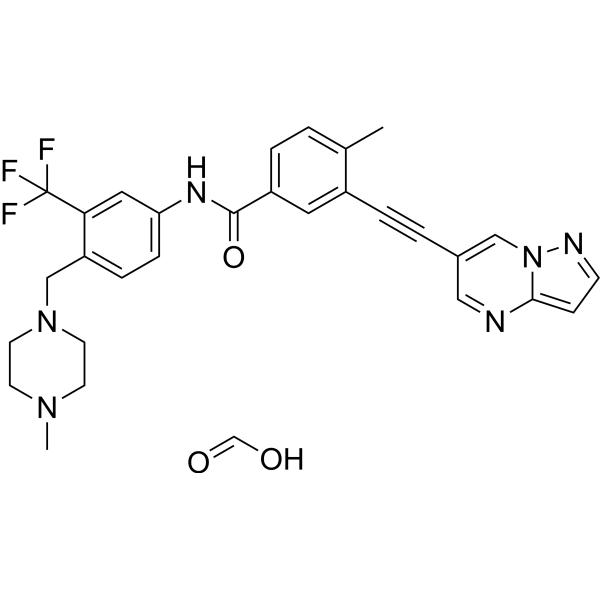
    GZD856 formic is a potent and orally active PDGFRα/β inhibitor, with IC50s of 68.6 and 136.6 nM, respectively. GZD856 formic is also a Bcr-Abl T315I inhibitor, with IC50s of 19.9 and 15.4 nM for native Bcr-Abl and the T315I mutant. GZD856 formic has antitumor activity . GZD856 (formic) is a click chemistry reagent, it contains an Alkyne group and can undergo copper-catalyzed azide-alkyne cycloaddition (CuAAc) with molecules containing Azide groups.
    GZD856 formic
  • HY-10364

    Bcr-Abl Cancer
    AP24163 is a BCR-ABL kinase inhibitor. AP24163 inhibits wild-type (native) BCR-ABL and BCR-ABL-T315I with IC50 values of 7 nM and 511 nM, respectively. AP24163 can be used in the research of chronic myeloid leukemia (CML) .
    AP24163
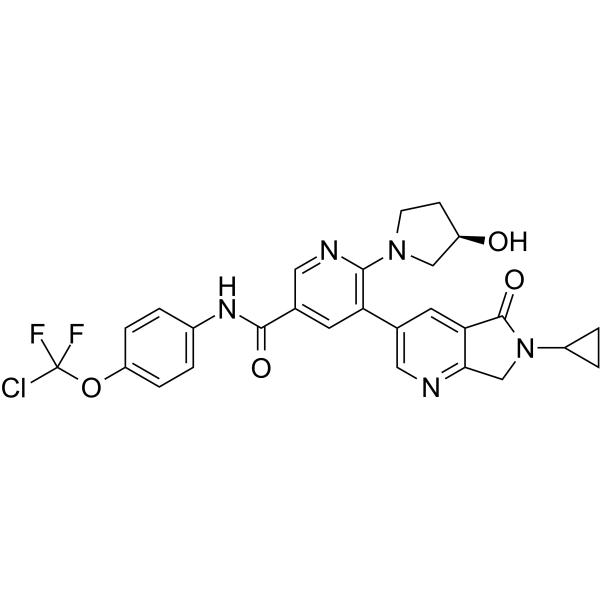
  • HY-160478

    Bcr-Abl Cancer
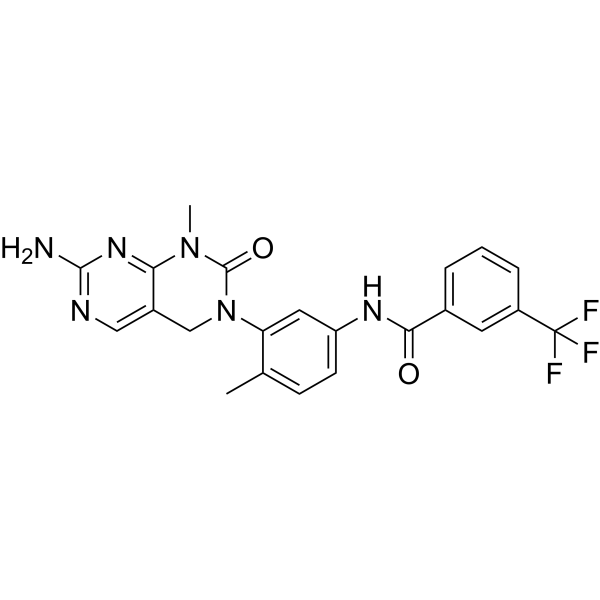
    GNF-6 (Compound 14) inhibits the gatekeeper threonine residue mutation of BCR-ABL-T315I with IC50s of 0.25 μM, 0.09 μM and 0.590 μM for c-ABL-T334I, BCR-ABL and BCR-ABL-T315I variants, respectively. GNF-6, an ATP competitive inhibitor, disrupts the assembly of the hydrophobic spine (a network of hydrophobic interactions), thereby locking the kinase in an inactive ‘DFG-out’ conformation .
    GNF-6
  • HY-101489

    PDGFR Bcr-Abl Apoptosis Cancer
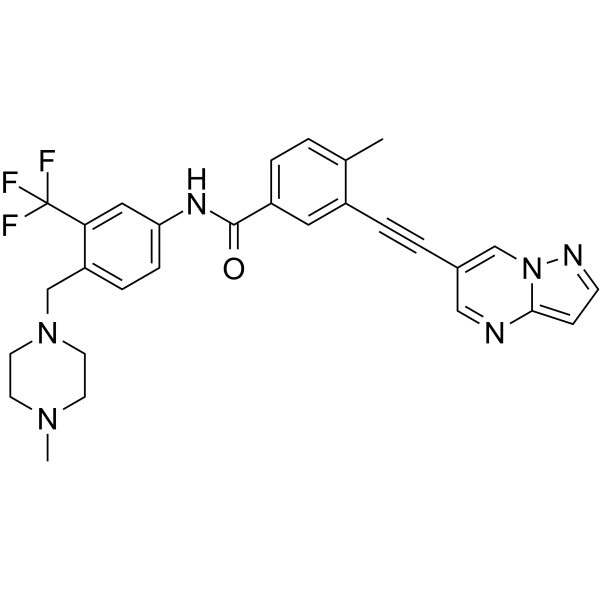
    GZD856 formic is a potent and orally active PDGFRα/β inhibitor, with IC50s of 68.6 and 136.6 nM, respectively. GZD856 formic is also a Bcr-Abl T315I inhibitor, with IC50s of 19.9 and 15.4 nM for native Bcr-Abl and the T315I mutant. GZD856 formic has antitumor activity .
    GZD856
  • HY-15666R

    GZD824 (Standard); HQP1351 (Standard)

    Reference Standards Bcr-Abl Cancer
    Olverembatinib (Standard) is the analytical standard of Olverembatinib. This product is intended for research and analytical applications. Olverembatinib (GZD824) is a potent and orally active pan-Bcr-Abl inhibitor. Olverembatinib potently inhibits a broad spectrum of Bcr-Abl mutants. Olverembatinib strongly inhibits native Bcr-Abl and Bcr-Abl T315I with IC50s of 0.34 nM and 0.68 nM, respectively. Olverembatinib has antitumor activity . Olverembatinib is a click chemistry reagent, it contains an Alkyne group and can undergo copper-catalyzed azide-alkyne cycloaddition (CuAAc) with molecules containing Azide groups.
    Olverembatinib (Standard)
  • HY-142922

    Bcr-Abl Cancer
    BCR-ABL-IN-4 is a BCR-ABL inhibitor with anticancer effects. BCR-ABL-IN-4 inhibits the cancer cell growth with IC50 values of 0.67 nM and 16 nM for K562 cells and BCR-ABL T315I transfected Ba/F3 cells, respectively (WO2021143927A1; compound 11) .
    BCR-ABL-IN-4
  • HY-157389

    Bcr-Abl Cancer
    AK-HW-90 (compound 2B) is a potent panBcr-Abl inhibitor with significant inhibitory activity against Imatinib (HY-15463)-resistant mutants. AK-HW-90 inhibits the resistance mutant Bcr-Abl T315I with an IC50 of 0.65 nM. AK-HW-90 has potential anticancer activity and can be used in the study of chronic myelogenous leukemia (CML) .
    AK-HW-90
  • HY-180979

    PROTACs Bcr-Abl Cancer
    P22D is a BCR-ABL PROTAC degrader based on Dasatinib (HY-10181), with a DC50 value of approximately 10 nM for the wild-type BCR-ABL protein. P22D cannot degrade the BCR-ABL T315I mutant. P22D has inhibitory activity against K562 cells (wild type), but is ineffective against BaF3-BCR-ABL (T315I) cells. P22D can be used for research on chronic myeloid leukemia and acute lymphocytic leukemia .
    P22D
  • HY-180981

    PROTACs Bcr-Abl Cancer
    P19As is a BCR-ABL PROTAC degrader based on Asciminib (HY-104010), with a DC50 value of approximately 200 nM for the wild-type BCR-ABL protein. P19As can degrade the T315I mutant and exhibits potent anti-proliferative activity in BaF3-BCR-ABL (T315I) cells. P19As can be used for the study of chronic myeloid leukemia and acute lymphoblastic leukemia .
    P19As
  • HY-180967

    Bcr-Abl PROTACs Apoptosis Cancer
    PROTAC BCR-ABL Degrader-2 is a selective Bcr-Abl T315 PROTAC degrader with a DC50 of 108.7 nM in Ba/F3 Bcr-Abl T315I cells. PROTAC BCR-ABL Degrader-2 exhibits the most potent degradation efficacy with DR of 69.89% and 94.23% at 100 and 300 nM, respectively. PROTAC BCR-ABL Degrader-2 demonstrates high plasma exposure, and induces significant tumor regression and induces tumor cell apoptosis with a good safety profile in vivo. PROTAC BCR-ABL Degrader-2 can be used for chronic myeloid leukemia (CML) research .
    PROTAC BCR-ABL Degrader-2
  • HY-180977

    PROTACs Bcr-Abl Cancer
    P19P is a BCR-ABL PROTAC degrader based on Ponatinib (HY-12047), with a DC50 value of approximately 20 nM for the wild-type BCR-ABL protein. P19P can effectively degrade various drug-resistant mutants such as T315I, E255K, H396R, and V468F, and exhibits potent anti-proliferative activity in BaF3-BCR-ABL (T315I) cells. P19P maintains strong inhibitory activity against ABL (T315I), with a IC50 of 13.1 nM. P19P does not inhibit the formation of vascular lumens in HUVEC. P19P can be used for research on chronic myeloid leukemia and acute lymphoblastic leukemia .
    P19P
  • HY-12292G

    NF-κB STAT GSK-3 β-catenin Bcr-Abl Cancer
    IM-12 GMP is IM-12 (HY-12292) produced by using GMP guidelines. GMP small molecules works appropriately as an auxiliary reagent for cell therapy manufacture. IM-12 is an orally active anti-inflammatory agent that targets and inhibits the NF-κB and STAT3 signaling pathways. IM-12 activates the Wnt signaling pathway and promotes the nuclear translocation of β-catenin by inhibiting GSK3β, while also blocking the tyrosine kinase activity of p210BCR/ABL. IM-12 reduces the levels of IL-6, IL-17, NO, prostaglandin E2, iNOS and COX-2, and induces ER stress, Ca 2+ release, autophagy and apoptosis. IM-12 is heat-sensitive and does not induce autophagy in IM-resistant p210BCR/ABL T315I mutant cells. IM-12 is also a component of the 5iLA medium used for naive pluripotent stem cell research. IM-12 has been applied in studies related to carrageenan (HY-125474)-induced hind paw edema, TNBS-induced colitis, and acute and chronic myeloid leukemia .
    IM-12

オンラインお問い合わせ

入力情報は安全に管理されます. 必須入力項目.

タイトル


国或いは地域 *

お名前 *


組纖名 *

デパートメント *


メールアドレス *


製品名 *

製品番号


カスタマ需要量 *

電話番号 *


必ず会社名を記載ください。個人への返信は行いません。

備考

バルクお問い合わせ

Inquiry Information

製品名:
製品番号:
数量:
MCE 日本正規代理店:

