1. Search Result
Search Result
Results for "

BRD2

" in MedChemExpress (MCE) Product Catalog:

92

Inhibitors & Agonists

3

Antibodies

1

Click Chemistry

3

Oligonucleotides

Cat. No. Product Name Target Research Areas Chemical Structure
  • HY-100972
    ARV-771
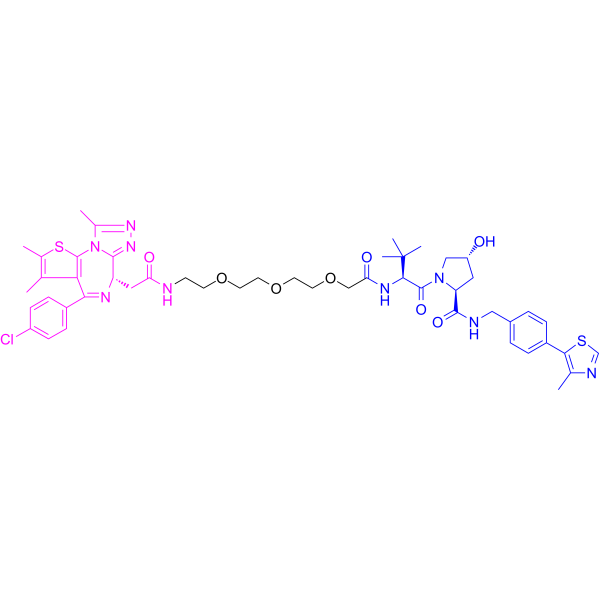
    25+ Cited Publications

    PROTACs Epigenetic Reader Domain Cancer
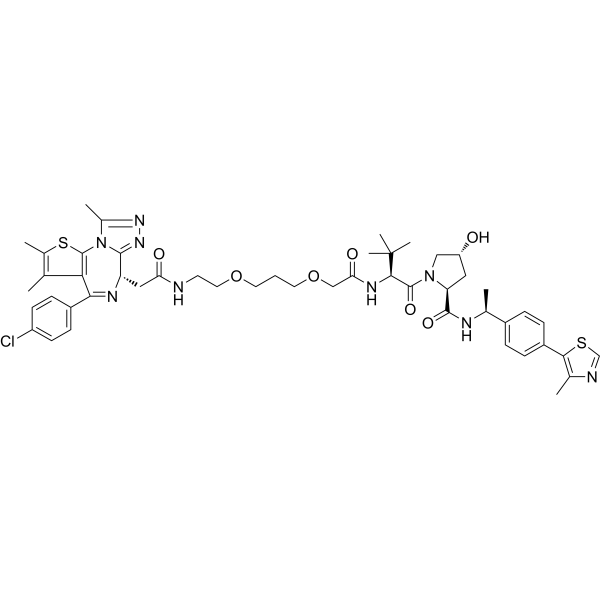
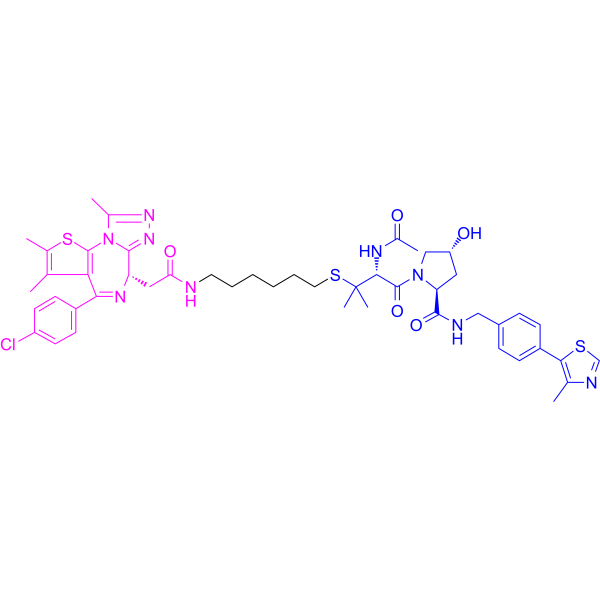
    ARV-771 is a potent BET PROTAC based on E3 ligase von Hippel-Lindau with Kds of 34 nM, 4.7 nM, 8.3 nM, 7.6 nM, 9.6 nM, and 7.6 nM for BRD2(1), BRD2(2), BRD3(1), BRD3(2), BRD4(1), and BRD4(2), respectively .
    ARV-771
  • HY-15743
    Birabresib
    Maximum Cited Publications
    39 Publications Verification

    OTX-015; MK-8628

    Epigenetic Reader Domain Cancer
    Birabresib (OTX-015) is a potent bromodomain (BRD2/3/4) inhibitor with IC50s ranging from 92 to 112 nM.
    Birabresib
  • HY-107425
    MZ 1
    20+ Cited Publications

    PROTACs Epigenetic Reader Domain Cancer
    MZ 1 is a PROTAC connected by ligands for von Hippel-Lindau and BRD4. MZ 1 potently and rapidly induces reversible, long-lasting, and selective removal of BRD4 over BRD2 and BRD3. Kds of 382/120, 119/115, and 307/228 nM for BRD4 BD1/2, BRD3 BD1/2, and BRD2 BD1/2, respectively .
    MZ 1
  • HY-13235
    I-BET151
    25+ Cited Publications

    GSK1210151A

    Epigenetic Reader Domain Cancer
    I-BET151 (GSK1210151A) is a BET bromodomain inhibitor which inhibits BRD4, BRD2, and BRD3 with pIC50 of 6.1, 6.3, and 6.6, respectively [2].
    I-BET151
  • HY-112090
    ABBV-744
    5+ Cited Publications

    Epigenetic Reader Domain HIV Infection Inflammation/Immunology Cancer
    ABBV-744 is a first-in-class, orally active and selective inhibitor of the BDII domain of BET family proteins with IC50 values ranging from 4 to 18 nM for BRD2, BRD3, BRD4 and BRDT. ABBV-744 is primarily metabolized by CYP3A4 with agent-like properties enable the investigation of its antitumor efficacy and tolerability .
    ABBV-744
  • HY-136570
    GSK778
    1 Publications Verification

    iBET-BD1

    Epigenetic Reader Domain Apoptosis Inflammation/Immunology Cancer
    GSK778 (iBET-BD1), a chemical probe, is a potent and selective BD1 bromodomain inhibitor of the BET proteins, with IC50s of 75 nM (BRD2 BD1), 41 nM (BRD3 BD1), 41 nM (BRD4 BD1), and 143 nM (BRDT BD1), respectively. GSK778 phenocopies the effects of pan-BET inhibitors in cancer models .
    GSK778
  • HY-13960
    GSK1324726A
    5+ Cited Publications

    I-BET726

    Epigenetic Reader Domain Apoptosis Cancer
    GSK1324726A is a novel, potent, and selective inhibitor of BET proteins with high affinity to BRD2 (IC50=41 nM), BRD3 (IC50=31 nM), and BRD4 (IC50=22 nM).
    GSK1324726A
  • HY-141438
    SIM1
    1 Publications Verification

    PROTACs Epigenetic Reader Domain Cancer
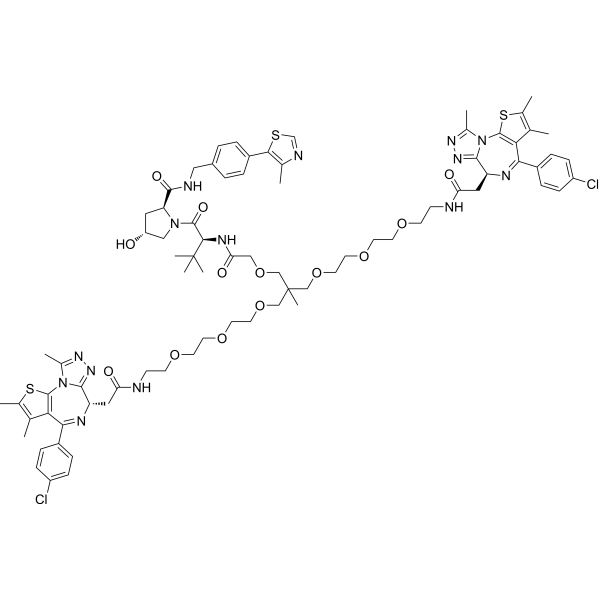
    SIM1 is a potent von Hippel-Lindau (VHL)-based trivalent PROTAC capable of degradation for all BET family members, with preference for BRD2 degradation (IC50=1.1 nM; Kd=186 nM). SIM1 shows sustained anti-cancer activity .
    SIM1
  • HY-111422
    PLX51107
    3 Publications Verification

    Epigenetic Reader Domain Cancer
    PLX51107 is a potent and selective BET inhibitor, with Kds of 1.6, 2.1, 1.7, and 5 nM for BD1 and 5.9, 6.2, 6.1, and 120 nM for BD2 of BRD2, BRD3, BRD4, and BRDT, respectively; PLX51107 also interacts with the bromodomains of CBP and EP300 (Kd, in the 100 nM range).
    PLX51107
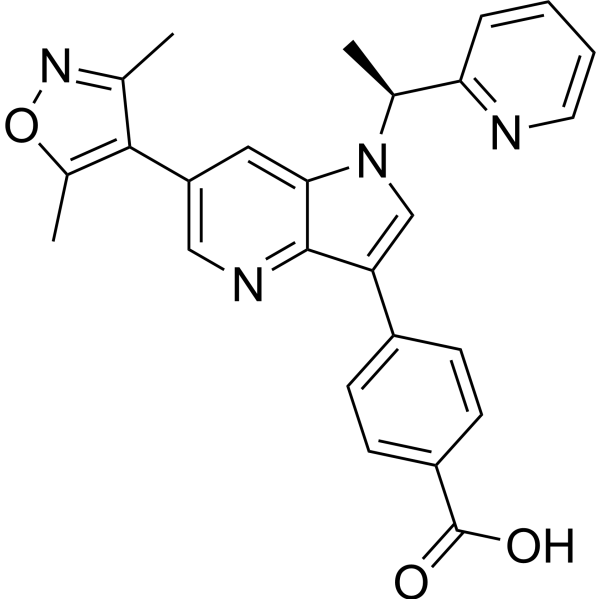
  • HY-162514

    Epigenetic Reader Domain Inflammation/Immunology
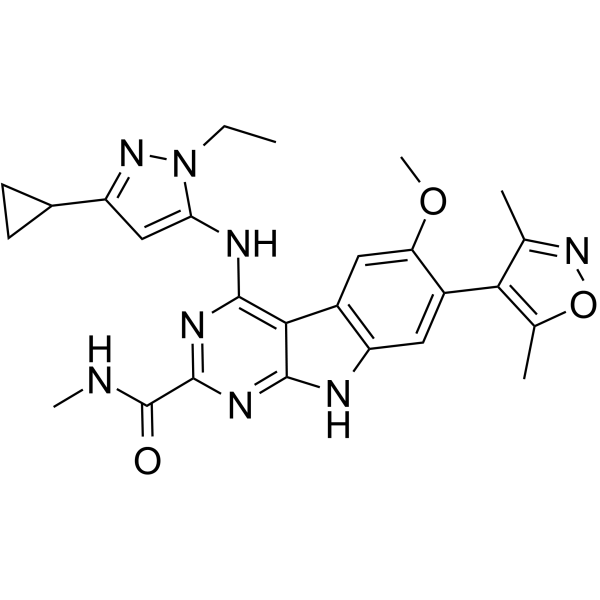
    BBC0403 is a selective BRD2 inhibitor with Kds of 7.64 μM and 41.37 μM for BRD2 (BD2) and BRD2 (BD1), respectively. BBC0403 exhibitS higher binding specificity for BRD2 compared to BRD3 and BRD4. BBC0403 has the potential for osteoarthritis (OA) research .
    BBC0403
  • HY-136571
    GSK046
    3 Publications Verification

    iBET-BD2

    Epigenetic Reader Domain Inflammation/Immunology
    GSK046 (iBET-BD2), a chemical probe, is a potent, selective and orally active BD2 bromodomain inhibitor of the BET proteins, with IC50s of 264 nM (BRD2 BD2), 98 nM (BRD3 BD2), 49 nM (BRD4 BD2) and 214 nM (BRDT BD2), respectively. GSK046 has immunomodulatory activity .
    GSK046
  • HY-13959
    MS436
    1 Publications Verification

    Epigenetic Reader Domain Cancer
    MS436 is a new class of bromodomain inhibitor, exhibits potent affinity of an estimated Ki=30-50 nM for the BRD4 BrD1 and a 10-fold selectivity over the BrD2.
    MS436
  • HY-134463
    NHWD-870
    1 Publications Verification

    Epigenetic Reader Domain Apoptosis Cancer
    NHWD-870 is a potent, orally active and selective BET family bromodomain inhibitor and only binds bromodomains of BRD2, BRD3, BRD4 (IC50=2.7 nM), and BRDT. NHWD-870 has potent tumor suppressive efficacies and suppresses cancer cell-macrophage interaction. NHWD-870 increases tumor apoptosis and inhibits tumor proliferation .
    NHWD-870
  • HY-13032B
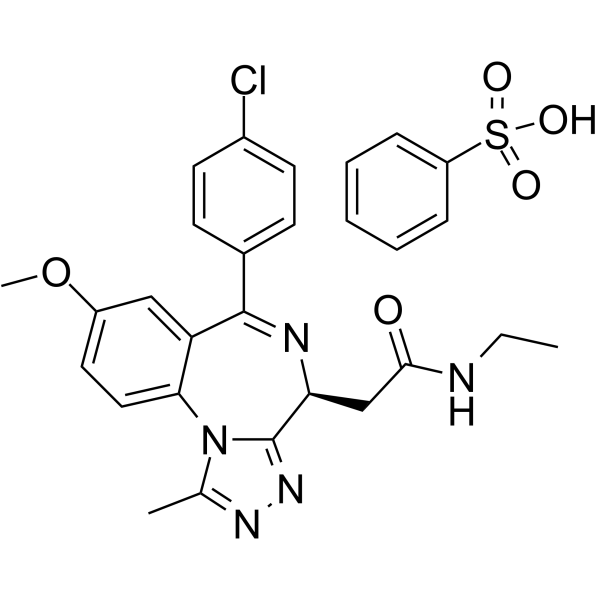
    Molibresib besylate
    20+ Cited Publications

    GSK 525762C; I-BET 762 besylate

    Epigenetic Reader Domain ERK Cancer
    Molibresib besylate (GSK 525762C; I-BET 762 besylate) is an orally active pan-BET inhibitor that targets and binds to BRD2, BRD3, BRD4 and BRDT. By competitively occupying acetylated lysine binding sites, Molibresib besylate disrupts the interaction between BET proteins and chromatin, thereby effectively inhibiting MYC expression and target gene transcription. Molibresib besylate exhibits broad antiproliferative activity, which not only inhibits cancer cell growth and induces growth arrest, but also downregulates mitosis-related genes and upregulates the level of p-ERK1/2. When combined with MEK inhibitors, Molibresib besylate shows a significant synergistic effect, reduces tumor burden in mouse models of leukemia, modulates the immune microenvironment and prolongs survival. Molibresib besylate is widely applicable to research related to acute myeloid leukemia, multiple myeloma, triple-negative breast cancer, small-cell lung cancer and various advanced refractory solid tumors [2] .
    Molibresib besylate
  • HY-120000
    MS402
    2 Publications Verification

    Epigenetic Reader Domain Inflammation/Immunology Cancer
    MS402 is a BD1-selective BET BrD inhibitor with Kis of 77 nM, 718 nM, 110 nM, 200 nM, 83 nM, and 240 nM for BRD4(BD1), BRD4(BD2), BRD3(BD1), BRD3(BD2), BRD2(BD1) and BRD2(BD2), respectively. MS402 blocks Th17 cell differentiation and ameliorates colitis in mice .
    MS402
  • HY-112429
    HJB97
    2 Publications Verification

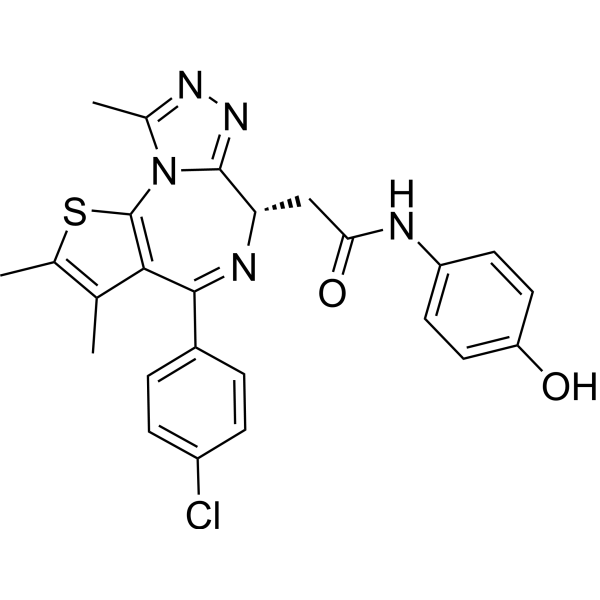
    Ligands for Target Protein for PROTAC Epigenetic Reader Domain Cancer
    HJB97 is a high-affinity BET inhibitor with Ki values of 0.9 nM (BRD2 BD1), 0.27 nM (BRD2 BD2), 0.18 nM (BRD3 BD1), 0.21 nM (BRD3 BD2), 0.5 nM (BRD4 BD1), and 1.0 nM (BRD4 BD2) . HJB97 can serve as a ligand for target protein (Ligands for Target Protein for PROTAC) for the development of PROTAC BET degraders with antitumor activity . HJB97 can be used for the synthesis of BETd-260 (HY-101519).
    HJB97
  • HY-117286

    TEN-010

    Epigenetic Reader Domain Apoptosis Neurological Disease Cancer
    (S)-JQ-35 (TEN-010) is an orally active, blood-brain barrier-permeable bromodomain inhibitor that selectively targets the bromodomain and extra-terminal domain (BET) protein family (BRD4, BRD3, BRD2 and BRDT). (S)-JQ-35 blocks the activation of Myc gene expression by BRD4, thereby inhibiting cancer cell proliferation and promoting cancer cell apoptosis. (S)-JQ-35 can be used in research related to NUT midline carcinoma and neuroblastoma [2].
    (S)-JQ-35
  • HY-149878

    PROTACs Epigenetic Reader Domain Cancer
    BD-9136 is a potent and highly selective BRD4 PROTAC depressant. BD-9136 has low-nanomolar degradation potencies against BRD4 , and its degradation selectivity for BRD4 is 1000 times that of BRD2 and BRD3 proteins. BD-9136 has antitumor activity .(Pink: Desmethyl-QCA276 (HY-44103); Black: 3-(2-(4-Methylpiperazin-1-yl)ethyl)azetidin-3-ol; Blue: Thalidomide-4-OH (HY-103596))
    BD-9136
  • HY-160528
    IBG3
    1 Publications Verification

    Epigenetic Reader Domain Molecular Glues Cancer
    IBG3 is a Molecular glue degrader targeting BRD2 and BRD4, with DC50 values of 8.6 pM and 6.7 pM, respectively. IBG3 binds simultaneously to the tandem bromodomains of BRD2/BRD4, induces intramolecular conformational changes, enhances the affinity of BRD2/BRD4 for DCAF16, and promotes ubiquitination and degradation. IBG3 is applicable to the research of chronic myeloid leukemia .
    IBG3
  • HY-153459

    Molecular Glues Epigenetic Reader Domain Cancer
    IBG1 is a molecular glue degrader targeting BRD2 and BRD4 (DC50: 0.15 nM). IBG1 has no significant degradation effect on its paralogue BRD3. IBG1 can inhibit the growth of cancer cells and can be used in tumor research. (Pink: BRD2/BRD4 Ligand (HY-111139); Black: Linker; Blue: DCAF15 ligand-1 (HY-W037495)) [2].
    IBG1
  • HY-103633
    PROTAC BET Degrader-1
    2 Publications Verification

    PROTACs Epigenetic Reader Domain Cancer
    PROTAC BET Degrader-1 is a PROTAC connected by ligands for Cereblon and BET, decreasing BRD2, BRD3, and BRD4 protein levels at low concentration.
    PROTAC BET Degrader-1
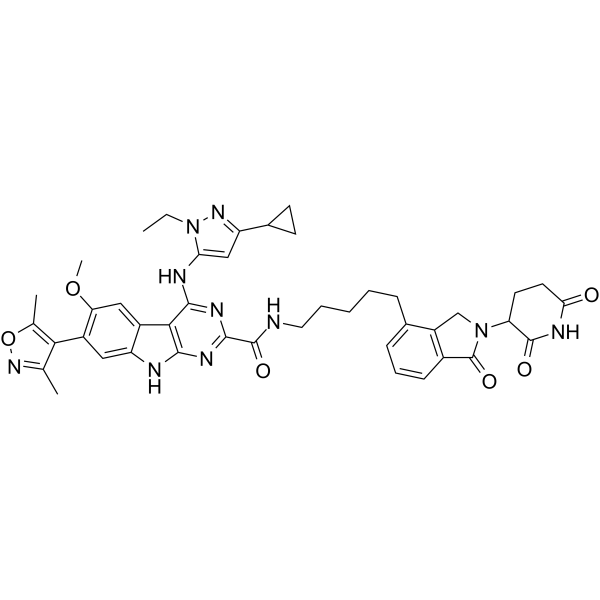
  • HY-19760

    Epigenetic Reader Domain Inflammation/Immunology
    I-BET282 is a pan-inhibitor of all eight BET bromodomains, and selectivity over other representative bromodomain-containing proteins. I-BET282 shows pIC50s ranging 6.4-7.7 for BRD2 (BD1/BD2), BRD2 (BD1/BD), BRD3 (BD1/BD), and BRD4 (BD1/BD) .
    I-BET282
  • HY-151593

    PROTACs Epigenetic Reader Domain Cancer
    dBRD4-BD1 is a selective and durable BRD4 degrader with an DC50 value of 280 nM (Dmax=77%). dBRD4-BD1 upregulates BRD2/3 protein level and shows low cytotoxicity than iBRD4-BD1 .
    dBRD4-BD1
  • HY-153385

    Molecular Glues Epigenetic Reader Domain Cancer
    TMX1 is a covalent, selective BRD4 molecular glue degrader. TMX1 binds to the JQ1-binding site of BRD4BD2, forms covalent bonds with Cys58 of DCAF16 and Cys87 of GAK in a BRD4BD2-dependent template-assisted manner, stabilizes the BRD4-TMX1-DCAF16 ternary complex, and promotes the ubiquitination of BRD4 via the CRL4DCAF16 ubiquitin ligase complex. TMX1 induces selective degradation of BRD4, mild degradation of BRD2 and BRD3, as well as DCAF16-dependent cytotoxicity [2].
    TMX1
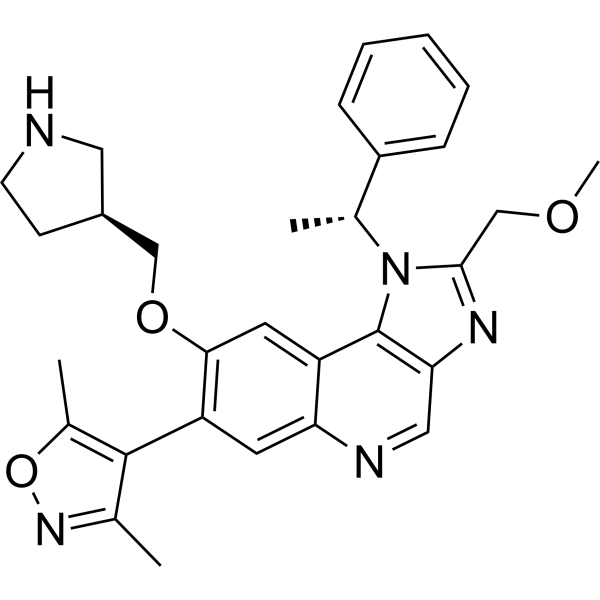
  • HY-112610

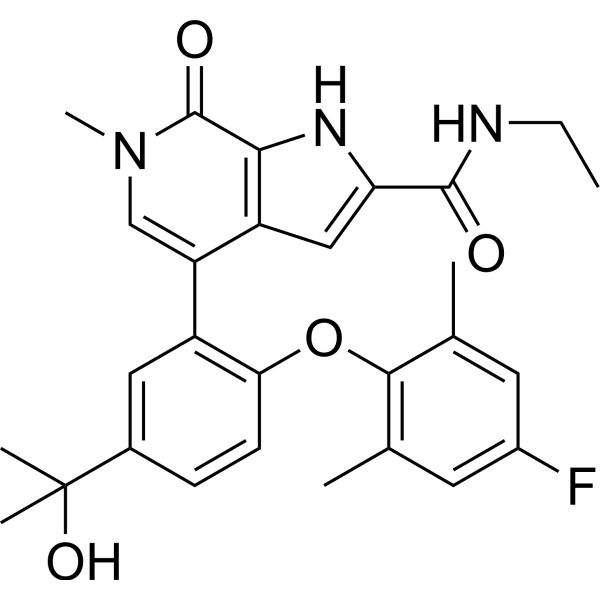
    Epigenetic Reader Domain Histone Acetyltransferase Cancer
    CF53 is a highly potent, selective and orally active inhibitor of BET protein, with a Ki of <1 nM, Kd of 2.2 nM and an IC50 of 2 nM for BRD4 BD1. CF53 binds to both the BD1 and BD2 domains of BRD2, BRD3, BRD4, and BRDT BET proteins with high affinities, very selective over non-BET bromodomain-containing proteins. CF53 shows potent anti-tumor activity both in vitro and in vivo .
    CF53
  • HY-131061

    Epigenetic Reader Domain Cancer
    BET bromodomain inhibitor 1 is an orally active, selective bromodomain and extra-terminal (BET) bromodomain inhibitor with an IC50 of 2.6 nM for BRD4. BET bromodomain inhibitor 1 binds to BRD2(2), BRD3(2), BRD4(1), BRD4(2), and BRDT(2) with high affinities (Kd values of 1.3 nM, 1.0 nM, 3.0 nM, 1.6 nM, 2.1 nM, respectively). bromodomain inhibitor 1 has anti-cancer activity .
    BET bromodomain inhibitor 1
  • HY-129917
    KB02-JQ1
    4 Publications Verification

    PROTACs Epigenetic Reader Domain Cancer
    KB02-JQ1 is a highly selective and PROTAC-based BRD4 degrader (molecular glue), but does not degrade BRD2 or BRD3. KB02-JQ1 promotes BRD4 degradation by covalently modifying DCAF16 (E3 ligase) and can improve the durability of protein degradation in biological systems. JQ1 binds ubiquitin E3 ligase ligand KB02 via a linker to form KB02-JQ1 .
    KB02-JQ1
  • HY-145264

    Epigenetic Reader Domain PROTACs Cancer
    OARV-771 is a VHL-based BET degrader (PROTAC) with improved cell permeability. OARV-771 shows DC50s of 6, 1, and 4 nM for Brd4, Brd2 and Brd3, respectively .
    OARV-771
  • HY-175678

    PROTACs Epigenetic Reader Domain Cancer
    PROTAC BRD2 BD1 Degrader-1 (compound 21-1) is a potent and selective BRD2 BD1 PROTAC degrader. PROTAC BRD2 BD1 Degrader-1 induces the association of BRD2 BD1 and von Hippel–Lindau-elongin C-elongin B (VCB). (Pink: BRD2-BD1 Ligand (HY-175679); Blue: E3 ligase ligand (HY-125845); Black: Linker (HY-W069332)) .
    PROTAC BRD2 BD1 Degrader-1
  • HY-110215

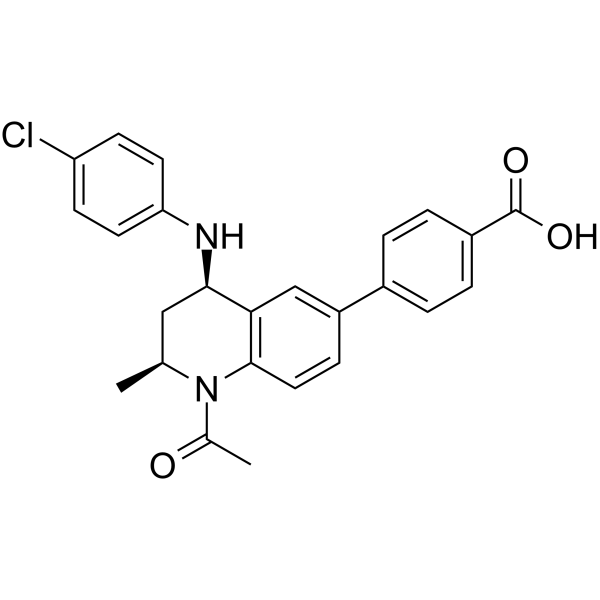
    Epigenetic Reader Domain Cancer
    XD14 is a potent BET inhibitor with antitumor effect. It binds to BRD2, BRD3, and BRD4 with Kds of 170, 380, and 160 nM, respectively .
    XD14
  • HY-114416

    Epigenetic Reader Domain Cancer
    GS-626510 is a potent, and orally active BET family bromodomains inhibitor, with Kd values of 0.59-3.2 nM for BRD2/3/4, with IC50 values of 83 nM and 78 nM foe BD1 and BD2, respectively .
    GS-626510
  • HY-114504

    Epigenetic Reader Domain Inflammation/Immunology
    RVX-297 is a potent, orally active BET bromodomain inhibitor with selectivity for BD2. RVX-297 shows IC50s of 0.08, 0.05, and 0.02 μM for BRD2(BD2), BRD3(BD2), and BRD4(BD2), respectively. RVX-297 suppresses inflammatory gene expression in multiple immune cell types. RVX-297 is effective in acute inflammation and autoimmunity models [2].
    RVX-297
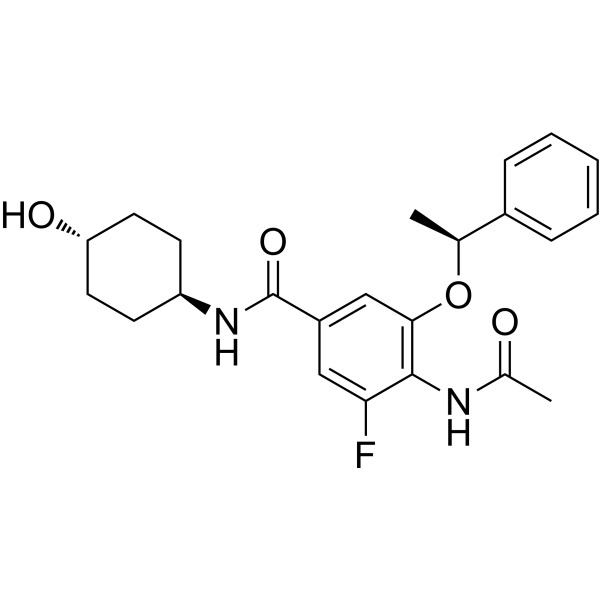
  • HY-138563

    Epigenetic Reader Domain Cancer
    GSK973, a chemical probe, is a highly selective, orally bioavailable inhibitor of the BD2s (second bromodomains) of the BET family, with a pIC50 of 7.8 and a pKd of 8.7 for BRD4 BD2. GSK973 displays a 1600-fold selectivity for BRD4 BD2 over BRD4 BD1. GSK973 shows good potency against BRD2 BD2, BRD3 BD2, and BRDT BD2 (pIC50=7.4~7.8; pKd=8.3~8.5) .
    GSK973
  • HY-153894

    CDK Epigenetic Reader Domain PI3K NF-κB SARS-CoV Infection Neurological Disease Metabolic Disease Inflammation/Immunology Cancer
    SRX3177 is a triple inhibitor of CDK4/6, PI3K, and BRD4, with IC50s of <2.5 nM (CDK4), 3.3 nM (CDK6), 33 nM (BRD4 BD1), 89 nM (BRD4 BD2), 79 nM (PI3Kα), 83 nM (PI3Kδ), 3.18 μM (PI3Kγ) , respectively. SRX3177 blocks the interaction between the SARS-CoV-2 E protein and the BRD2/4 BD1 domain, restores E protein-attenuated NF-κB activity. SRX3177 exerts broad cytotoxic activity against cancer cells. SRX3177 can be used for the study of anti-SARS-CoV-2 and cancer [2].
    SRX3177
  • HY-147046

    Epigenetic Reader Domain Ligands for Target Protein for PROTAC Cancer
    ET-JQ1-OH is an allele-specific BET inhibitor. ET-JQ1-OH can serve as a Ligand for Target Protein for PROTAC, and is used for the development and design of PROTAC Brd4 degraders, such as AB3145 (HY-180923).
    ET-JQ1-OH
  • HY-15743A
    (R)-Birabresib
    1 Publications Verification

    (R)-OTX-015; (R)-MK-8628

    Drug Isomer Cancer
    (R)-Birabresib is the isomer of Birabresib (HY-15743), and can be used as an experimental control. Birabresib (OTX-015) is a potent bromodomain (BRD2/3/4) inhibitor with IC50s ranging from 92 to 112 nM.
    (R)-Birabresib
  • HY-130612

    Epigenetic Reader Domain PROTACs Cancer
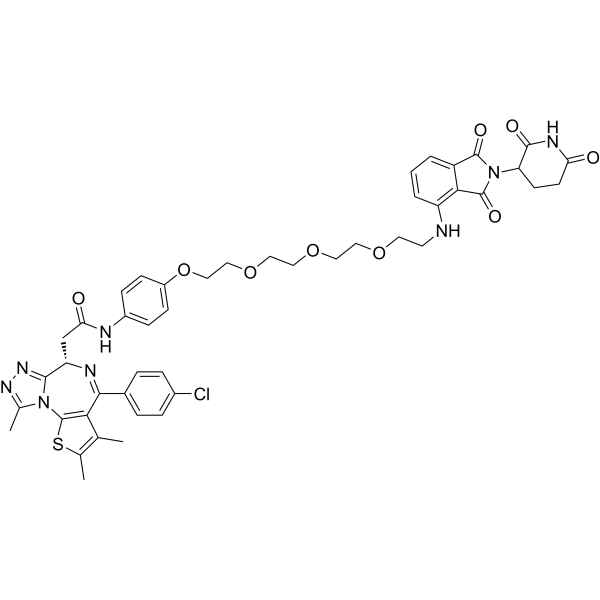
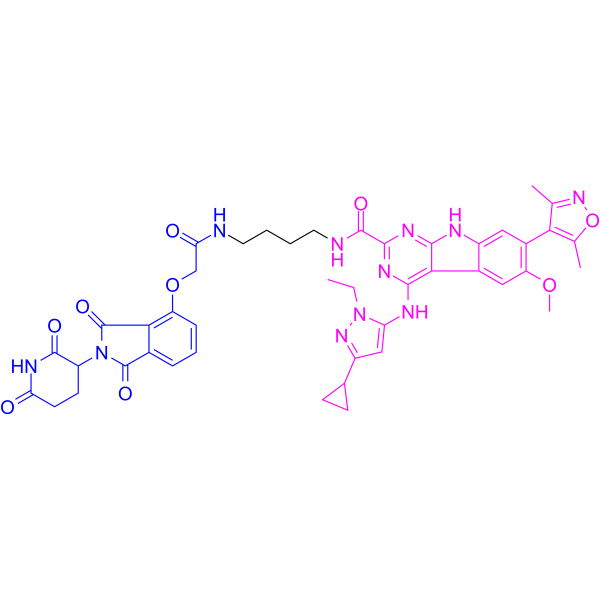
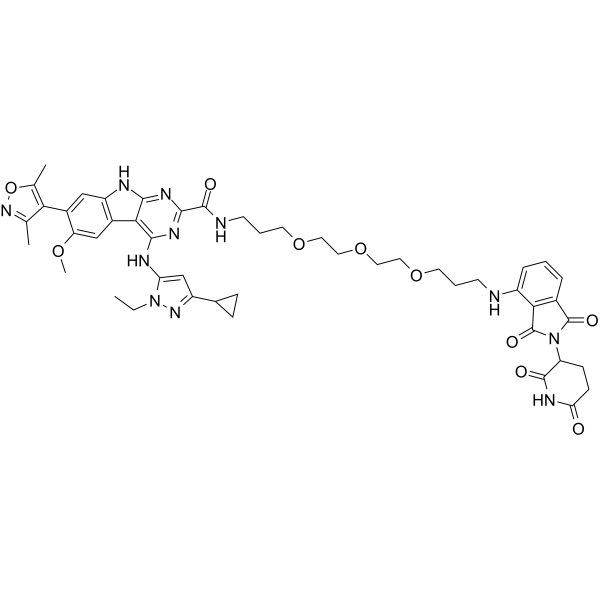
    PROTAC BRD2/BRD4 degrader-1 (compound 15) is a potent and selective BET protein BRD4 and BRD2 degrader, connected by ligands for Cereblon and BET. PROTAC BRD2/BRD4 degrader-1 rapidly induces reversible, long-lasting, and unexpectedly selective removal of BRD4 and BRD2 over BRD3. It effectively inhibits solid tumors with low cytotoxic effect. PROTAC BRD2/BRD4 degrader-1 is composed of the BET inhibitor, a linker, and the ligand thalidomide for cereblon (CRBN)/cullin 4A .
    PROTAC BRD2/BRD4 degrader-1
  • HY-130813

    Ligands for Target Protein for PROTAC Epigenetic Reader Domain Cancer
    BET-IN-6 is a potent and high affnity BRD2/BRD4 inhibitor. BET-IN-6 is the ligand for target protein BRD2/4, and is used for the systhesis of PROTAC BRD2/BRD4 degrader-1 (HY-130612) .
    BET-IN-6
  • HY-138623

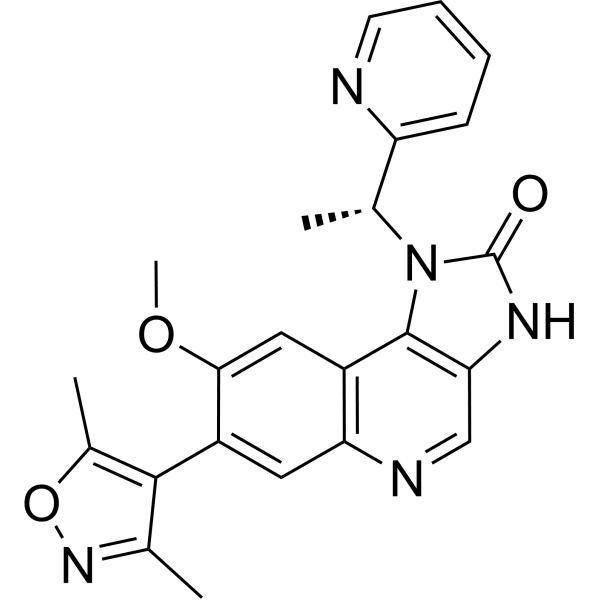
    Epigenetic Reader Domain TNF Receptor Interleukin Related Inflammation/Immunology Cancer
    GSK789 is a selective inhibitor of BET BD1. GSK789 inhibits the growth of leukemia cell lines. GSK789 inhibits LPS-stimulated production of MCP-1, TNFα and IL-6 in human whole blood. GSK789 exhibits antiproliferative, anti-inflammatory and immunomodulatory activities. GSK789 can be used in research related to cancers such as leukemia, as well as inflammatory and immune diseases .
    GSK789
  • HY-168635

    PROTACs Epigenetic Reader Domain Cancer
    SJ46420, a SJ46421 (HY-168634) pro-drug variant, is a potent and selective BRD3 PROTAC degrader. SJ46420 degrads BRD3 in a KLHDC2-dependent manner, thereby partially reducing the levels of BRD2 or BRD4 (Pink: ligand for target protein (HY-13030); Black: linker (HY-20797); Blue: E3 ligase ligand (HY-159973)) .
    SJ46420
  • HY-175679

    Ligands for Target Protein for PROTAC Epigenetic Reader Domain Cancer
    BRD2 BD1 ligand-1 is a potent BRD2 BD1 ligand (Ligands for Target Protein for PROTACs) can be used in the synthesis of PROTAC BRD2 BD1 Degrader-1 (HY-175678) .
    BRD2 BD1 ligand-1
  • HY-RS01599

    Small Interfering RNA (siRNA) Others

    BRD2 Rat Pre-designed siRNA Set A contains three designed siRNAs for BRD2 gene (Rat), as well as a negative control, a positive control, and a FAM-labeled negative control.

    BRD2 Rat Pre-designed siRNA Set A
    BRD2 Rat Pre-designed siRNA Set A
  • HY-RS01597

    Small Interfering RNA (siRNA) Others

    BRD2 Human Pre-designed siRNA Set A contains three designed siRNAs for BRD2 gene (Human), as well as a negative control, a positive control, and a FAM-labeled negative control.

    BRD2 Human Pre-designed siRNA Set A
    BRD2 Human Pre-designed siRNA Set A
  • HY-RS01598

    Small Interfering RNA (siRNA) Others

    Brd2 Mouse Pre-designed siRNA Set A contains three designed siRNAs for Brd2 gene (Mouse), as well as a negative control, a positive control, and a FAM-labeled negative control.

    Brd2 Mouse Pre-designed siRNA Set A
    Brd2 Mouse Pre-designed siRNA Set A
  • HY-170900

    PROTACs Epigenetic Reader Domain Cancer
    SJ44236 is the PROTAC degrader for BET that degrades BRD2 (DC50 = 0.127 nM), BRD3 and BRD4. SJ44236 exhibits cytotoxicity in cell MV4-11 and HD-MB03 with IC50s of 0.12 nM and 0.92 nM. SJ44236 downregulates the expression of c-Myc, upregulates the expression of p53. SJ44236 exhibits a good orally bioavailability of 45% in mice . (Pink: ligand for target protein JQ-1 carboxylic acid (HY-78695); Black: linker (HY-W012935); Blue: ligand for E3 ligase Cereblon E3 ligase Ligand 54 (HY-W890189))
    SJ44236
  • HY-130814

    E3 Ligase Ligand-Linker Conjugates Autophagy Apoptosis Cancer
    Thalidomide-NH-C4-NH2 TFA (compound 29c) is an E3 ligase ligand-linker conjugate, and incorporates the Thalidomide based cereblon ligand and a linker. Thalidomide-NH-C4-NH2 TFA is used in PROTAC BRD2/BRD4 degrader-1 (HY-130612). PROTAC BRD2/BRD4 degrader-1 is a potent and selective BET protein BRD4 and BRD2 degrader .
    Thalidomide-NH-C4-NH2 TFA
  • HY-13031

    Epigenetic Reader Domain Apolipoprotein Cancer
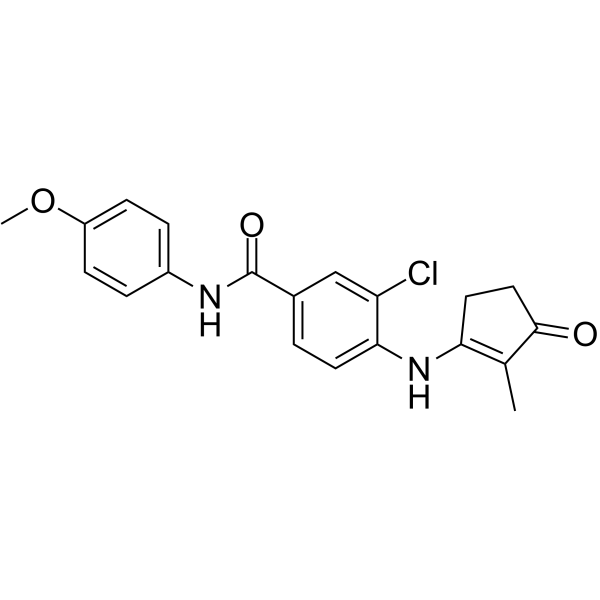
    GW 841819X is a potent inducer of the ApoA1 report gene, with an EC170 of 0.22 µM, and its pIC50 for Brd2/3/4 is 5.9/6.2/6.3 .
    GW 841819X
  • HY-15743R

    OTX-015 (Standard); MK-8628 (Standard)

    Reference Standards Epigenetic Reader Domain Cancer
    Birabresib (Standard) is the analytical standard of Birabresib. This product is intended for research and analytical applications. Birabresib (OTX-015) is a potent bromodomain (BRD2/3/4) inhibitor with IC50s ranging from 92 to 112 nM.
    Birabresib (Standard)
  • HY-168634

    PROTACs Epigenetic Reader Domain Cancer
    SJ46421 is a (+)-JQ-1 (HY-13030) based KLHDC2-BRD3 PROTAC protein degrader. SJ46421 induces cooperative ternary complexes with KLHDC2 and BRD3BD2, with an IC50 of 7.8 nM. SJ46421 selectively inhibits KLHDC2 substrate ubiquitylation. SJ46421 promotes polyubiquitylation of the BD2 domain from BRD2, BRD3, or BRD4. SJ46421 possesses poor cell permeability. (Pink: ligand for target protein (HY-13030); Black: linker (HY-20797); Blue: E3 ligase ligand (HY-168536)) .
    SJ46421
  • HY-175680

    E3 Ligase Ligand-Linker Conjugates Cancer
    Boc-4-(3-oxobutyl)piperidine-(S,R,S)-AHPC is an E3 ligase ligand-linker conjugatecan be used in the synthesis of PROTAC BRD2 BD1 Degrader-1 (HY-175678) .
    Boc-4-(3-oxobutyl)piperidine-(S,R,S)-AHPC

Inquiry Online

Your information is safe with us. * Required Fields.

Salutation


Country or Region *

Applicant Name *


Organization Name *

Department *


Email Address *


Product Name *

Cat. No.


Requested quantity *

Phone Number *


Remarks

Inquiry Online

Inquiry Information

Product Name:
Cat. No.:
Quantity:
MCE Japan Authorized Agent:

