1. Search Result
Search Result
Results for "

BT-549

" in MedChemExpress (MCE) Product Catalog:

28

Inhibitors & Agonists

1

Click Chemistry

Cat. No. Product Name Target Research Areas Chemical Structure
  • HY-110244

    BRK Cancer
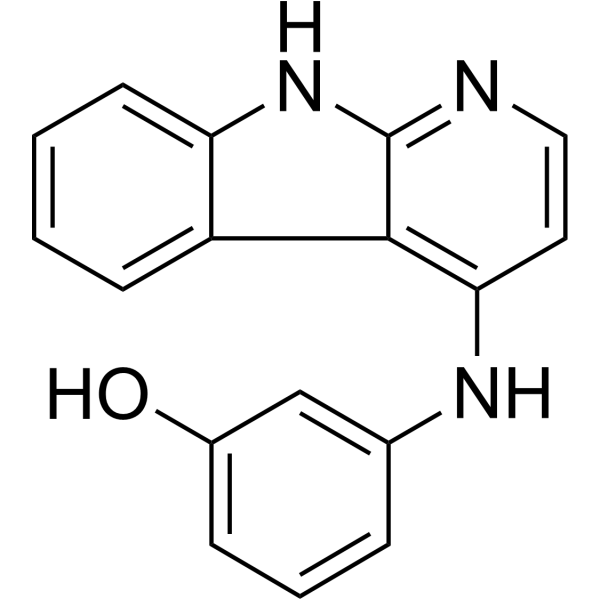
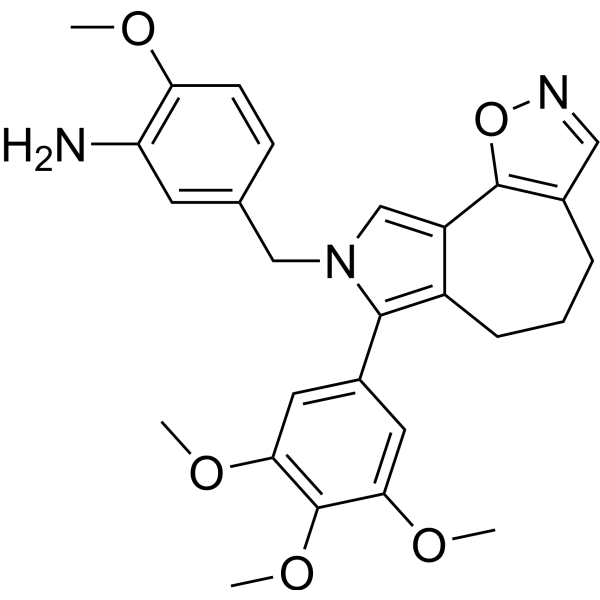
    Tilfrinib (compound 4f) is a potent and selective Brk/PTK6 inhibitor with an IC50 value of 3.15 nM for Brk. Tilfrinib shows good anti-proliferative activity and has potential of anti-tumour .
    Tilfrinib
  • HY-139659

    PROTACs Androgen Receptor Progesterone Receptor Apoptosis Cancer
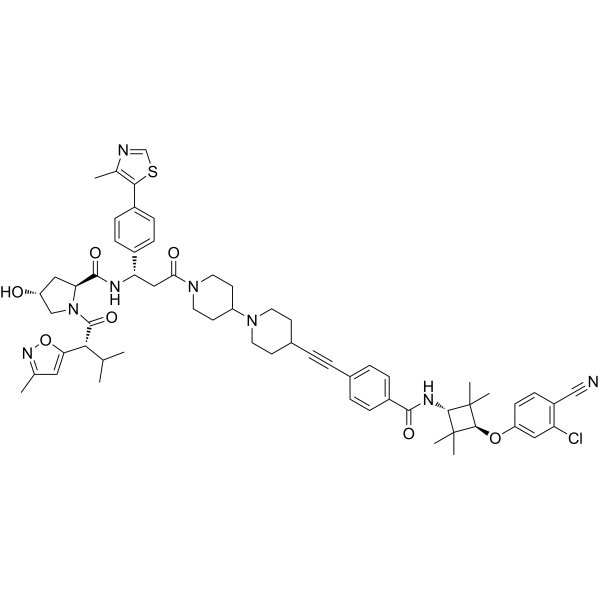
    ARD-61 is a highly potent, effective and specific PROTAC androgen receptor (AR) degrader. ARD-61 potently and effectively induces AR and progesterone receptors (PR) degradation in AR+ cancer cell lines. ARD-61 induces apoptosis and effectively induces tumor growth inhibition in the MDA-MB-453 xenograft model in mice . ARD-61 is a click chemistry reagent, it contains an Alkyne group and can undergo copper-catalyzed azide-alkyne cycloaddition (CuAAc) with molecules containing Azide groups.
    ARD-61
  • HY-101481

    COX Apoptosis MEK ERK PPAR AMPK NF-κB Interleukin Related TNF Receptor STAT Wnt Neurological Disease Inflammation/Immunology Cancer
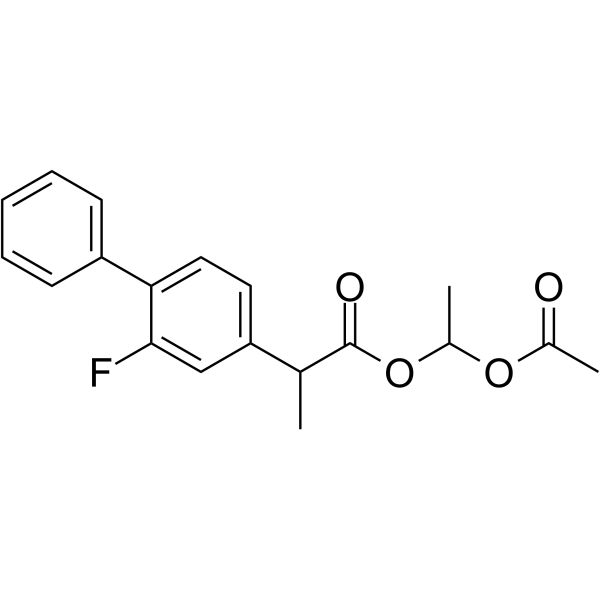
    Flurbiprofen axetil is a non-selective COX inhibitor and a nonsteroidal anti-inflammatory agent with anti-inflammatory and analgesic effects. Flurbiprofen axetil inhibits basal-like breast cancer metastasis by inhibiting the MEK/ERK signaling pathway. Flurbiprofen axetil can promote neuroprotection after focal cerebral ischemia in rats by partially activating PPAR-γ. Flurbiprofen axetil alleviates cerebral ischemia/reperfusion injury by reducing inflammation in a transient global cerebral ischemia/reperfusion rat model. Flurbiprofen axetil can alleviate inflammatory responses and cognitive function in a mild cognitive impairment (MCI) SD rat model through the AMPKα/NF-κB signaling pathway .
    Flurbiprofen axetil
  • HY-120548

    TGF-β Receptor Integrin Raf RIP kinase ERK Cancer
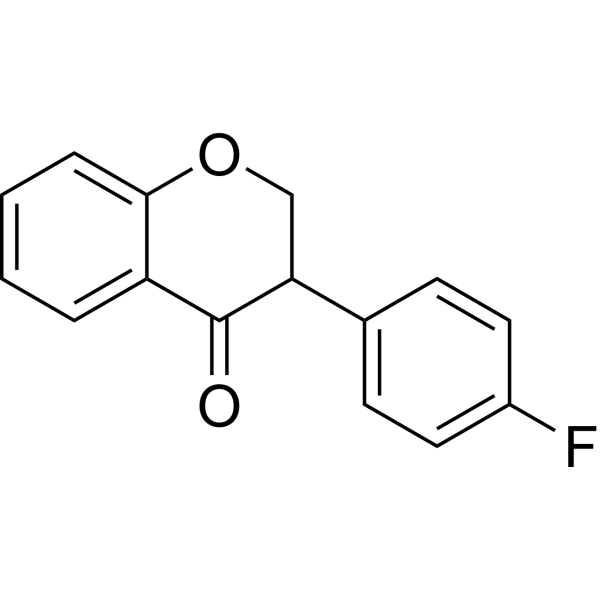
    KBU2046 is an orally active transforming growth factor-β (TGF-β1) inhibitor. KBU2046 reduces integrin family protein expression, decreases Raf, RIPK1 and ERK phosphorylation to deactivate the ERK signaling pathway, and down-regulates genes linked to TGF-β1 maturation. KBU2046 suppresses tumor cell motility, impedes cancer invasion and metastasis, and inhibits human ESCC growth and metastasis in a murine model. KBU2046 can be used for the researches of triple-negative breast cancer and esophageal squamous cell carcinoma .
    KBU2046
  • HY-122665

    MELK DYRK Pim mTOR CDK GSK-3 RIP kinase Cancer
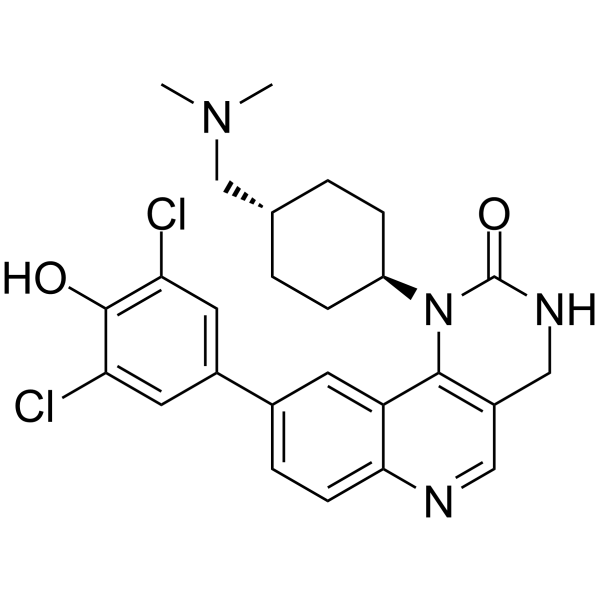
    HTH-01-091 is a potent and selective maternal embryonic leucine zipper kinase (MELK) inhibitor, with an IC50 of 10.5 nM. HTH-01-091 also inhibits PIM1/2/3, RIPK2, DYRK3, smMLCK and CLK2. HTH-01-091 can be uesd for breast cancer research .
    HTH-01-091
  • HY-159990

    Glutathione Peroxidase Cancer
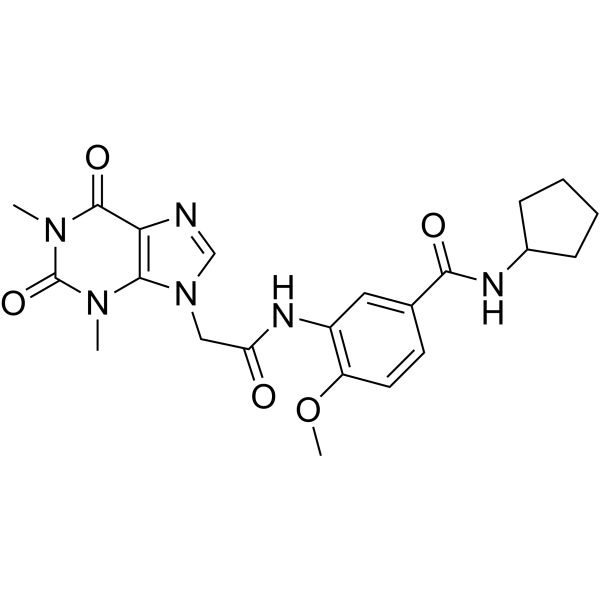
    GPX4-IN-15 (Compound C1) is an inhibitor for GPX4, that inhibits 19.8% GPX4 at 1 μM. GPX4-IN-15 inhibits the proliferation of cancer cell MDA-MB-468, BT-549 and MDA-MB-231 with IC50 of 0.86, 0.96 and 0.48 μM .
    GPX4-IN-15
  • HY-175846

    Drug Derivative Apoptosis Cancer
    TQFL13 is derivative of Thymoquinone (TQ) (HY-D0803) with potent anti-breast cancer activity. TQFL13 exhibits higher cytotoxicity against breast cancer cells (BT549, MDA-MB-231, 4T1). TQFL13 increases apoptosis and blocks the cell cycle at S and G2/G1 phases in breast cancer cells. TQFL13 shows dose-dependent anti-tumor efficacy in mouse breast cancer allograft model. TQFL13 can be used for the study of breast cancer .
    TQFL13
  • HY-163108

    Epigenetic Reader Domain Apoptosis c-Myc Cancer
    ATAD2-IN-1 (compound 19f) is a potent ATAD2 inhibitor (IC50: 0.27 μM) and can induce apoptosis. ATAD2-IN-1 also inhibits c-Myc activation and BT-549 cell migration .
    ATAD2-IN-1
  • HY-122665A

    MELK DYRK Pim mTOR CDK GSK-3 RIP kinase Cancer
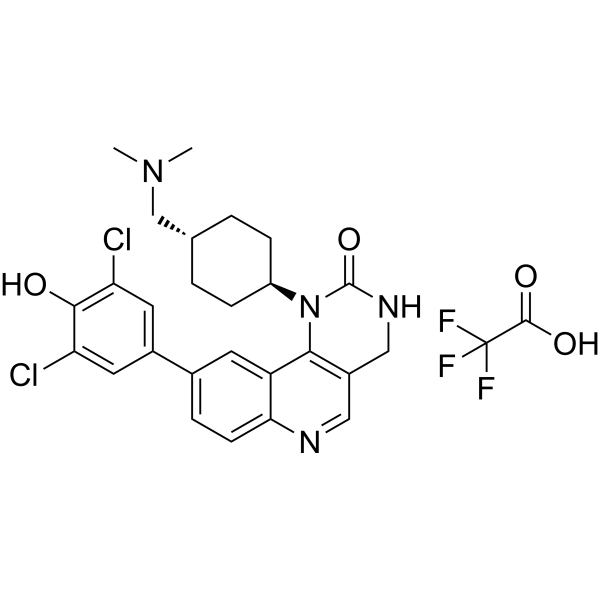
    HTH-01-091 TFA is a potent and selective maternal embryonic leucine zipper kinase (MELK) inhibitor, with an IC50 of 10.5 nM. HTH-01-091 TFA also inhibits PIM1/2/3, RIPK2, DYRK3, smMLCK and CLK2. HTH-01-091 TFA can be uesd for breast cancer research .
    HTH-01-091 TFA
  • HY-169962

    Carbonic Anhydrase Cholinesterase (ChE) Neurological Disease Cancer
    hCA I-IN-4 (Compound 14) is the inhibitor for carbonic anhydrase and cholinesterase, that inhibits hCA I, hCA II, AChE, and BChE with Ki of 29.94 nM, 17.72 nM, 21.21 nM, and 7.65 nMrespectively. hCA I-IN-4 exhibits cytotoxicity in BT-549 with IC50 of 16.59 μM .
    hCA I-IN-4
  • HY-119694

    Fungal Cancer
    Rotenolone is an antiproliferative agent. Rotenolone shows antiproliferative activity against the ovarian cancer A2780, breast cancer BT-549, prostate cancer DU 145, NSCLC NCI-H460, and colon cancer HCC-2998 cell lines, with IC50s of 0.95, 1.6, 2.7, 2.0, and 2.9 μM, respectively .
    Rotenolone
  • HY-163535

    HDAC DNA Methyltransferase Apoptosis Inflammation/Immunology Cancer
    J208 is a dual inhibitor for histone deacetylase (HDAC) and DNA methyltransferase (DNMT). J208 inhibits proliferation of cancer cells, as well as the migration/invasion of triple-negative breast cancer (TNBC) cells. J208 induces apoptosis, arrests the cell cycle at G0/G1 phase. J2008 activates the innate immune signalling pathway in TNBC, by inducing the expression of endogenous retroviruses (ERVs) .
    J208
  • HY-161083

    PARP Histone Methyltransferase Cancer
    PARP/EZH2-IN-2 (compound 12e) is a dual target PARP1 and EZH2 inhibitor, with IC50 values of 6.89 and 27.34 nM, respectively. PARP/EZH2-IN-2 shows anticancer activity, with no toxicity to normal cells. PARP/EZH2-IN-2 achieves synthetic lethality indirectly by inhibiting EZH2 to increase the sensitivity to PARP1, and induces cell death by regulating excessive autophagy .
    PARP/EZH2-IN-2
  • HY-172092

    Apoptosis Ferroptosis Cancer
    BG11 induces the accumulation of Fe 2+ and intracellular lipid peroxides, induces ferroptosis. BG11 regulates the expression of Bax and Bcl-2 proteins, and induces apoptosis in MDA-MB-231 cell. BG11 arrests the cell cycle at G0/G1 and S phase, inhibits the proliferation of TNBC cancer cell (IC50 for MDA-MB-231 and BT549 is 0.49 μM and 0.52 μM), and inhibits the cell migration and invasion. BG11 exhibits antitumor efficacy in mouse models .
    BG11
  • HY-175544

    Drug Derivative Cancer
    anti-TNBC agent-10 is an anti-TNBC agent. anti-TNBC agent-10 shows potent anti-TNBC activity against BT549 cells (IC50 = 0.018 μM) and maintains activity against MDA-MB-231 cells (IC50 = 4.16 μM). anti-TNBC agent-10 9 demonstrates significant anti-tumor efficacy in mice bearing subcutaneous MDA-MB-231 TNBC xenografts. anti-TNBC agent-10 can be used for the study of triple-negative breast cancer (TNBC) .
    anti-TNBC agent-10
  • HY-134997

    4-oxo DHA

    PPAR Cancer
    4-oxo Docosahexaenoic acid (4-oxo DHA) is a putative metabolite of Docosahexaenoic acid (HY-B2167) with antiproliferative and PPARγ agonist activity. It inhibits the growth of several triple negative breast cancer cell lines (MCF-10F, trMCF, bsMCF, MDA-MB-231, and BT549) at 50-100 μM, however it increased proliferation of MCF-7 cells. 4-oxo DHA binds covalently to PPARγ and activates gene transcription in luciferase reporter assays and in dendritic cells with EC50 values of approximately 8-16 μM.
    4-Oxo Docosahexaenoic Acid
  • HY-126914

    Parasite Infection
    Diacetylcercosporin is a perylenequinone produced by Cercospora and Septoria that has diverse biological activities. Diacetylcercosporin inhibits the growth of P. falciparum strains that are sensitive and resistant to chloroquine (IC50s=2.75 and 1.94 μM for D6 and W2 clones, respectively) and L. donovani parasites (IC50=3.1 μM) in vitro. Diacetylcercosporin exhibits cytotoxicity against SK-MEL, KB, BT549, and SKOV3 human cancer cell lines (IC50s=4.8-8.7 μM). Diacetylcercosporin is also a phytotoxin that inhibits the growth of lettuce and bentgrass at a concentration of 1.62 mM.
    Diacetylcercosporin
  • HY-169961

    Cholinesterase (ChE) Cancer
    BChE-IN-38 (compound 13) is a potent BChE inhibitor with Ki values of 62.05, 28.78, 14.09, 1.15 nM for hCAI, hCAII, AChE, BChE, respectively. BChE-IN-38 shows cytotoxic activity .
    BChE-IN-38
  • HY-149222

    Apoptosis Cancer
    Apoptosis inducer 12 (Compound 3z) is an apoptosis inducer that induces apoptosis through the mitochondrial pathway. Apoptosis inducer 12 can be used for the research of cancer .
    Apoptosis inducer 12
  • HY-101481R

    Reference Standards COX Apoptosis MEK ERK PPAR AMPK NF-κB Interleukin Related TNF Receptor STAT Wnt Neurological Disease Inflammation/Immunology Cancer
    Flurbiprofen axetil (Standard) is the analytical standard of Flurbiprofen axetil. This product is intended for research and analytical applications. Flurbiprofen axetil is a non-selective COX inhibitor and a nonsteroidal anti-inflammatory agent with anti-inflammatory and analgesic effects. Flurbiprofen axetil inhibits basal-like breast cancer metastasis by inhibiting the MEK/ERK signaling pathway. Flurbiprofen axetil can promote neuroprotection after focal cerebral ischemia in rats by partially activating PPAR-γ. Flurbiprofen axetil alleviates cerebral ischemia/reperfusion injury by reducing inflammation in a transient global cerebral ischemia/reperfusion rat model. Flurbiprofen axetil can alleviate inflammatory responses and cognitive function in a mild cognitive impairment (MCI) SD rat model through the AMPKα/NF-κB signaling pathway .
    Flurbiprofen axetil (Standard)
  • HY-163629

    Drug Derivative Cancer
    Anticancer agent 224 (Compound 16) is an anticancer agent that can effectively inhibit the growth of central nervous system (CNS), kidney and breast cancer cell, with a GI50 value ranging from 0.6 to 12.8 μM .
    Anticancer agent 224
  • HY-175245

    Carbonic Anhydrase Cancer
    hCA-IN-1 (Compound 5u) is an hCA inhibitor with Ki values of 159.2, 4.8, 15.5, and 2 nM against hCA I, hCA II, hCA IX, and hCA XII, respectively. hCA-IN-1 exhibits broad-spectrum anticancer activity against melanoma, breast, and colon cancer cells. ADME predictions indicate that hCA-IN-1 has good solubility and oral bioavailability. hCA-IN-1 can be used in tumor research .
    hCA-IN-1
  • HY-181068

    PARP Apoptosis Microtubule/Tubulin Cancer
    2'-Nitroflavone is a PARP1 inhibitor. 2'-Nitroflavone inhibits the proliferation, induces cell cycle arrest and apoptosis of triple-negative breast cancer cells. 2'-Nitroflavone also inhibits the migration of triple-negative breast cancer cells and endothelial cells. 2'-Nitroflavone exhibits antitumor activity and can be used in the research of tumors such as triple-negative breast cancer .
    2'-Nitroflavone
  • HY-182036

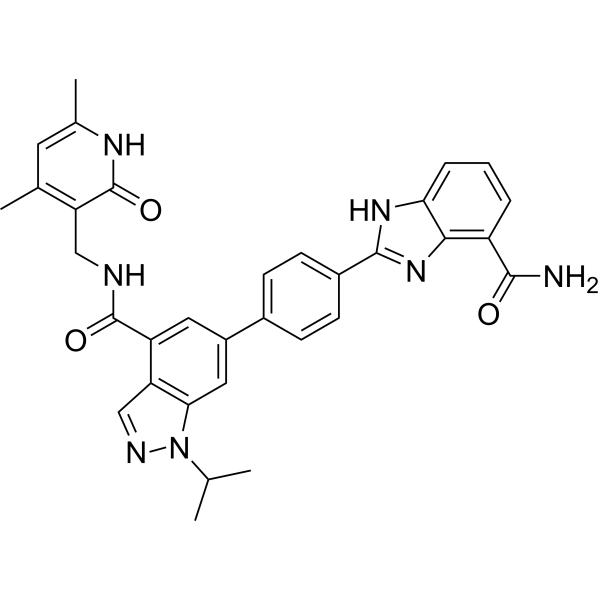
    Epigenetic Reader Domain Cancer
    KWZL-7f15 (compound 7f15) is a dual CDK6/BET inhibitor with an IC50 of 31.81 nM against human CDK6. KWZL-7f15 inhibits the CDK6-RB axis and the BRD4-Myc axis. KWZL-7f15 exhibits antiproliferative activity against triple-negative breast cancer cells. KWZL-7f15 shows antitumor activity in xenograft mouse models without significant adverse effects. KWZL-7f15 can be used in studies related to triple-negative breast cancer .
    KWZL-7f15
  • HY-183252

    PKC Apoptosis Caspase PARP p38 MAPK JNK Cancer
    ICA-1S is a specific PKC-ι inhibitor. ICA-1S can inhibit MAPK/JNK signaling pathway and downregulate the levels of c-Jun and TNF-α. ICA-1S inhibits the proliferation of breast cancer cells. ICA-1S induces apoptosis of breast cancer cells. ICA-1S can be used in breast cancer-related research .
    ICA-1S
  • HY-181999

    PARP CDK Protease Activated Receptor (PAR) Wnt β-catenin Reactive Oxygen Species (ROS) DNA/RNA Synthesis Cancer
    PC8 is a selective dual inhibitor of PARP1/CDK6, with an IC50 of 0.126 μM for PARP1 and 0.197 μM for CDK6. PC8 does not alter PARP1 expression, but reduces the expression of its downstream target PAR. PC8 inhibits the canonical Wnt/β-catenin signaling pathway. PC8 induces intracellular ROS accumulation and exacerbates DNA damage. PC8 inhibits the proliferation of triple-negative breast cancer (TNBC) cells. PC8 can be used for the research of triple-negative breast cancer .
    PC8
  • HY-181928

    c-Met/HGFR PARP Apoptosis Cancer
    PARP1/c-Met-IN-3 (Compound L19) is a selective c-Met and PARP1 inhibitor, with an IC50 of 5.4 nM against c-Met and an IC50 of 3.7 nM against PARP1. PARP1/c-Met-IN-3 inhibits PARP2 enzymatic activity with an IC50 of 4.52 nM, and shows no specificity for PARP1 and PARP2. PARP1/c-Met-IN-3 induces cell cycle arrest and apoptosis. PARP1/c-Met-IN-3 exhibits anti-tumor activity against triple-negative breast cancer .
    PARP1/c-Met-IN-3
  • HY-183294

    Glutathione Peroxidase Ferroptosis Reactive Oxygen Species (ROS) Cancer
    GPX4-IN-24 is an orally active glutathione peroxidase 4 (GPX4) inhibitor with a human IC50 of 10.90 μM, human Kd of 10.04 μM. GPX4-IN-24 suppresses GPX4 enzymatic activity, disrupts redox homeostasis, drives lipid peroxidation, promotes lipid peroxidation, and induces ferroptosis. GPX4-IN-24 can be used for the research of triple-negative breast cancer .
    GPX4-IN-24

Inquiry Online

Your information is safe with us. * Required Fields.

Salutation


Country or Region *

Applicant Name *


Organization Name *

Department *


Email Address *


Product Name *

Cat. No.


Requested quantity *

Phone Number *


Remarks

Inquiry Online

Inquiry Information

Product Name:
Cat. No.:
Quantity:
MCE Japan Authorized Agent:

