8 Results for "

Brain synaptic membrane

" in MedChemExpress (MCE) Product Catalog:
Products (8)

8 Results for "Brain synaptic membrane" in MCE Product Catalog:

2
2 Cited Publications
Cat. No.: HY-P2259
CAS No.: 1404188-93-7
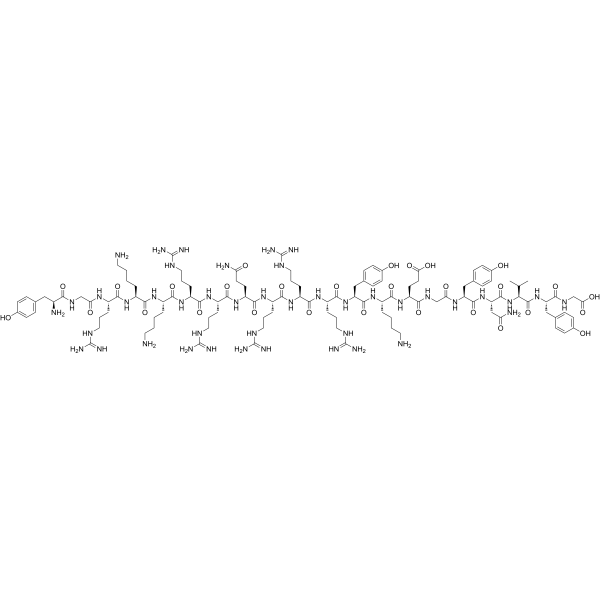
TAT-GluA2 3Y is a blood-brain barrier-permeable AMPA receptor inhibitory peptide that crosses cell membranes via the HIV-1 TAT protein domain. TAT-GluA2 3Y blocks the endocytosis of AMPA receptors, including the internalization of GluA1/GluA2 subunits, by disrupting interactions with the AP2, Brag2 and Syt3-GluA2 complexes, while also inhibiting long-term depression. TAT-GluA2 3Y blocks hypoxia-mediated AMPAR internalization, alleviates A1R-induced persistent synaptic inhibition, and reduces cerebral ischemic volume, neurological deficits and spatial memory deficits. TAT-GluA2 3Y blocks the effect of NLRP3 deficiency on fear generalization, inhibits amphetamine-induced behavioral/neurochemical sensitization, weakens the unconditioned stimulus-conditioned stimulus association of morphine, and promotes the extinction of morphine CPP. TAT-GluA2 3Y can be used in studies related to fear generalization, ischemic stroke, hypoxia, drug addiction and opioid addiction .
loading...
    loading...
Cat. No.: HY-W002199
CAS No.: 647-42-7
Synonyms: 6:2 FTOH; 1H,1H,2H,2H-Perfluoro-1-octanol; 2-(Perfluorohexyl)ethanol
6:2 Fluorotelomer alcohol (6:2 FTOH) is an orally active, blood-brain barrier-permeable modulator of cyclin D1 and ETS1. 6:2 Fluorotelomer alcohol downregulates cyclin D1 expression, upregulates ETS1 via the TNF-α/ERK 1/2 pathway, impairs mitochondrial membrane potential and respiratory function, increases reactive oxygen species levels, disrupts calcium homeostasis and activates endoplasmic reticulum stress markers, and induces cell proliferation inhibition and endothelial-mesenchymal transition. Furthermore, 6:2 Fluorotelomer alcohol induces morphological abnormalities in zebrafish embryos and liver developmental damage, while disrupting the brain immune microenvironment in mice, causing systemic toxicity and delayed pup maturation in CD-1 mice. 6:2 Fluorotelomer alcohol also induces cortical neuron apoptosis, glial cell activation, synaptic abnormalities, colonic barrier damage, intestinal dysbiosis and autism spectrum disorder-like symptoms in mice. 6:2 Fluorotelomer alcohol shows no mutagenic, clastogenic, primary skin/eye irritation or skin sensitizing effects, exhibits no selective reproductive toxicity in CD-1 mice, and is classified as GHS Category 4 for acute oral toxicity. 6:2 Fluorotelomer alcohol can be used in studies of neurodevelopmental disorders and autism spectrum disorders .
loading...
    loading...
Cat. No.: HY-W015793
CAS No.: 3167-49-5
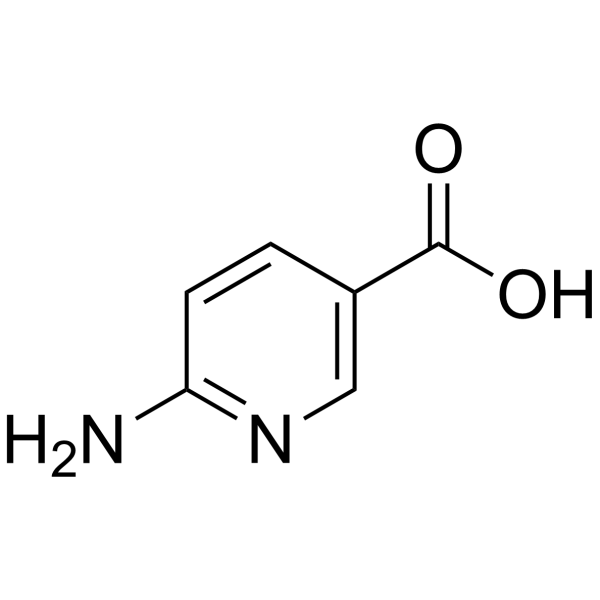
6-Aminonicotinic acid is an analog of Niacin (HY-B0143) and also a GABAA receptor agonist with a Ki value of 4.4 μM in rats. 6-Aminonicotinic acid binds to both native and recombinant GABAA receptors, is metabolized into non-functional pyridine nucleotide analogs to inhibit dehydrogenases, and suppresses the proliferation of T2 bacteriophages. 6-Aminonicotinic acid accumulates in specific bacterial cells in the form of pyridine nucleotide analog metabolites. 6-Aminonicotinic acid can be used in research related to neurological disorders such as anxiety, epilepsy and schizophrenia, and also serves as an intermediate in organic synthesis .
loading...
    loading...
Cat. No.: HY-100821
CAS No.: 111872-98-1
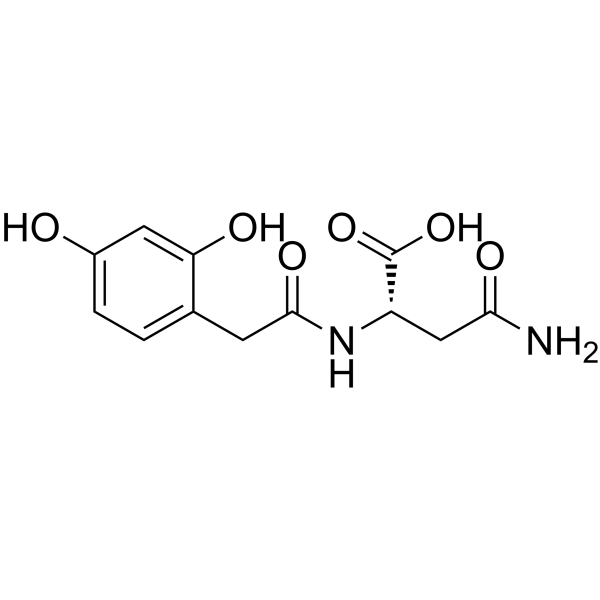
2,4-Dihydroxyphenylacetylasparagine is a potent and selective antagonist of glutamate. 2,4-Dihydroxyphenylacetylasparagine inhibits glutamate binding to rat brain synaptic membranes .
loading...
    loading...
Cat. No.: HY-106469
CAS No.: 81428-04-8
Synonyms: MY-117
Target:  

Drug Derivative

Research Areas:  

Neurological Disease

Taltrimide (MY-117), a lipophilic derivative of Taurine (HY-B0351), strongly inhibits the sodium-independent binding of Taurine to synaptic membranes of brain, the effects on the binding of GABA being less pronounced. Taltrimide exhibits definitive anticonvulsive effects in experimental epilepsy models .
loading...
    loading...
Cat. No.: HY-P3057A
CAS No.: 75644-95-0
Target:  

Neurotensin Receptor

Research Areas:  

Neurological Disease

[Trp11]-Neurotensin is a neurotensin analog and neurotensin receptor agonist. The Tyr11 residue of neurotensin is replaced by L-Trp. [Trp11]-Neurotensin competes for neurotensin receptor binding sites, with an IC50 of 4.3 nM in rat brain synaptic membranes, and activates neurotensin receptor-mediated smooth muscle responses, with an EC50 of 1.7 nM in rat ileum, exhibiting significant species-dependent differences in receptor recognition. [Trp11]-Neurotensin can be used in studies related to neurotensin receptor pharmacology, gastrointestinal smooth muscle, and species-dependent receptor recognition .
loading...
    loading...
Cat. No.: HY-15129A
CAS No.: 73913-63-0
Synonyms: D-Serine O-phosphate; D-SOP
Research Areas:  

Neurological Disease

O-Phospho-D-serine (D-SOP) is the D-configurational enantiomer of O-Phospho-L-serine (HY-15129). O-Phospho-D-serine inhibits L-[ 3H]glutamate binding to APB-sensitive sites in rat brain synaptic plasma membranes, with a Ki of 303 μM. Compared with the L-configurational form, D-SOP does not significantly activate the tested mGluR at 1 mM, and it is mainly used in studies related to the stereoselectivity of phosphatidylserine and mGluR ligands .
loading...
    loading...
Cat. No.: HY-L043
1,273 compounds

Lipids are a diverse and ubiquitous group of compounds which have many key biological functions, such as acting as structural components of cell membranes, serving as energy storage sources and participating in signaling pathways. Several studies suggest that bioactive lipids have effects on the treatment of some mental illnesses and metabolic syndrome. For example, DHA and EPA are important for monoaminergic neurotransmission, brain development and synaptic functioning, and are also correlated with a reduced risk of cancer and cardiovascular disease in clinical and animal studies.

MCE supplies a unique collection of 1,273 lipid and lipid derivative related compounds including triglycerides, phospholipids, sphingolipids, steroids and their structural analogues or derivatives. MCE lipid compound library can be used for research in bioactive lipids, and high throughput screening (HTS) and high content screening (HCS).

