250 Results for "

CDK1

" in MedChemExpress (MCE) Product Catalog:
Products (250)

250 Results for "CDK1" in MCE Product Catalog:

84
84 Publications Verification
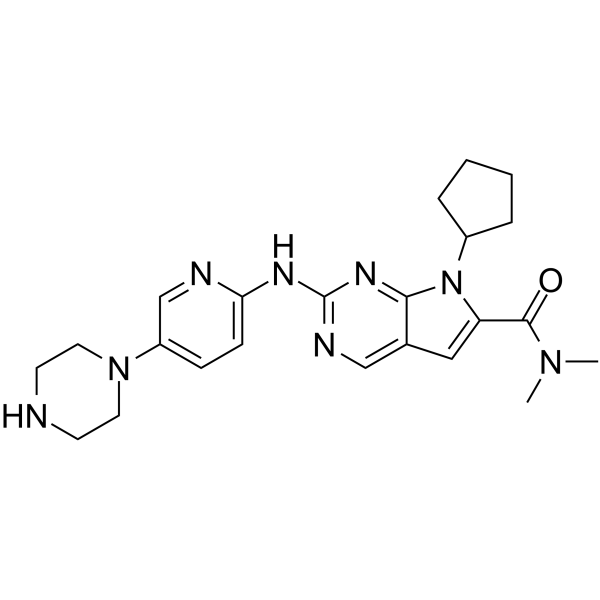
Cat. No.: HY-15777
CAS No.: 1211441-98-3
Purity:  99.94%
Synonyms: LEE011
Target:  

CDK

Research Areas:  

Neurological Disease Cancer

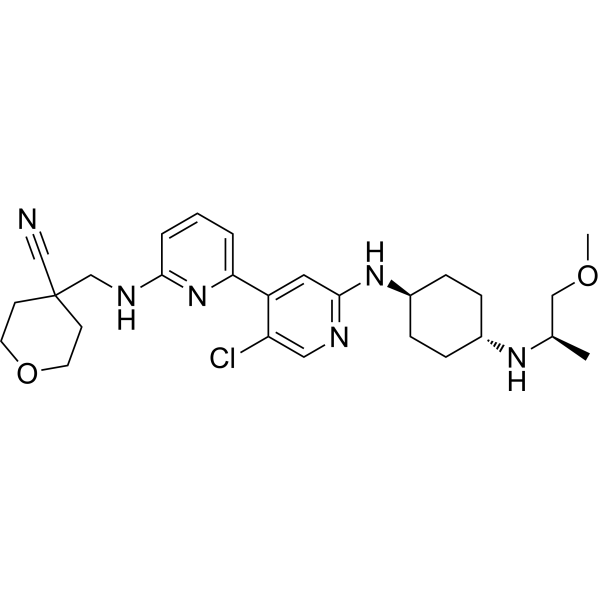
RRibociclib (LEE011) is an ATP-competitive and orally active CDK4/6 inhibitor that crosses the blood-brain barrier with IC50 values of 10 nM and 39 nM, respectively, and is over 1,000-fold less potent against the cyclin B/CDK1 complex [1] .
84
84 Publications Verification
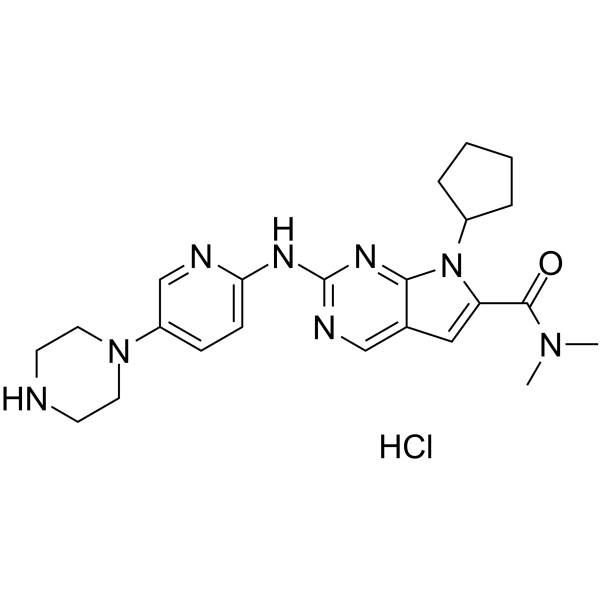
Cat. No.: HY-15777A
CAS No.: 1211443-80-9
Purity:  99.93%
Synonyms: LEE011 hydrochloride
Target:  

CDK

Research Areas:  

Neurological Disease Cancer

RRibociclib (LEE011) hydrochloride is an ATP-competitive and orally active CDK4/6 inhibitor that crosses the blood-brain barrier with IC50 values of 10 nM and 39 nM, respectively, and is over 1,000-fold less potent against the cyclin B/CDK1 complex [1] .
84
84 Publications Verification
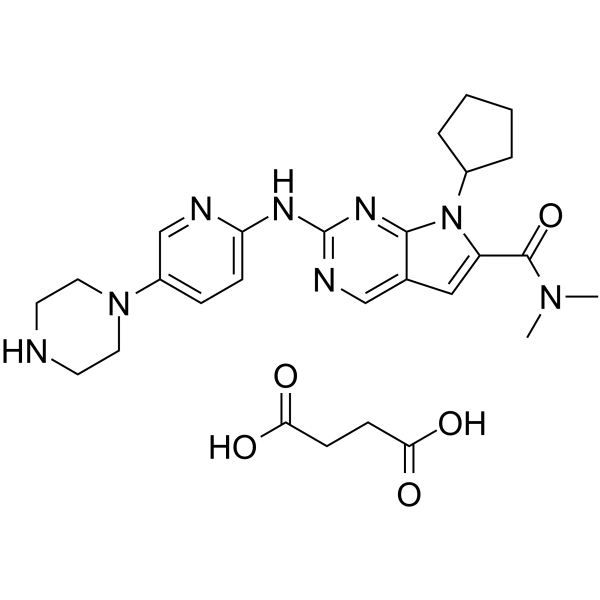
Cat. No.: HY-15777B
CAS No.: 1374639-75-4
Purity:  99.93%
Synonyms: LEE011 succinate
Target:  

CDK

Research Areas:  

Neurological Disease Cancer

RRibociclib (LEE011) succinate is an ATP-competitive and orally active CDK4/6 inhibitor that crosses the blood-brain barrier with IC50 values of 10 nM and 39 nM, respectively, and is over 1,000-fold less potent against the cyclin B/CDK1 complex [1] .
84
84 Publications Verification
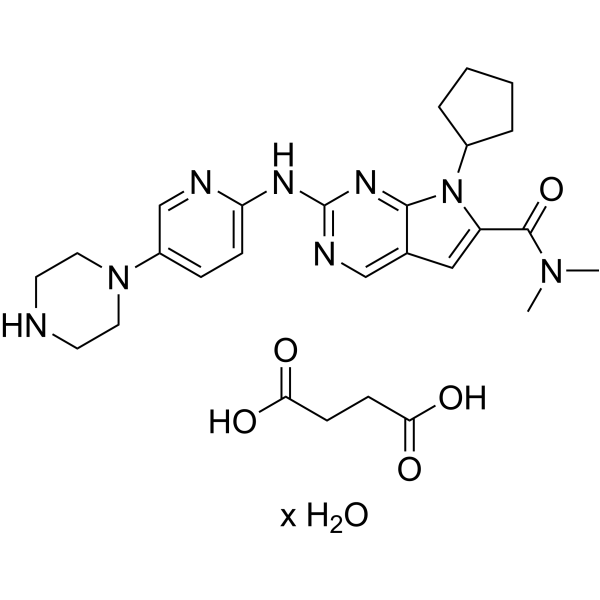
Cat. No.: HY-15777C
CAS No.: 1374639-79-8
Purity:  99.94%
Synonyms: LEE011 succinate hydrate
Target:  

CDK

Research Areas:  

Cancer

RRibociclib (LEE011) succinate hydrate is an ATP-competitive and orally active CDK4/6 inhibitor that crosses the blood-brain barrier with IC50 values of 10 nM and 39 nM, respectively, and is over 1,000-fold less potent against the cyclin B/CDK1 complex [1] .
70
70 Cited Publications
Cat. No.: HY-12529
CAS No.: 872573-93-8
Purity:  98.68%
Target:  

CDK Apoptosis

Research Areas:  

Cancer

Ro-3306 is a potent and selective inhibitor of CDK1, with Kis of 20 nM, 35 nM and 340 nM for CDK1, CDK1/cyclin B1 and CDK2/cyclin E, respectively.
55
55 Cited Publications
Cat. No.: HY-10492
CAS No.: 779353-01-4
Purity:  99.80%
Synonyms: SCH 727965
Target:  

CDK Apoptosis

Research Areas:  

Cancer

Dinaciclib (SCH 727965) is a potent inhibitor of CDK, with IC50s of 1 nM, 1 nM, 3 nM, and 4 nM for CDK2, CDK5, CDK1, and CDK9, respectively [1].
54
54 Cited Publications
Cat. No.: HY-10005
CAS No.: 146426-40-6
Purity:  99.73%
Synonyms: HMR-1275; Alvocidib; L86-8275
Target:  

CDK Autophagy HIV Apoptosis

Research Areas:  

Cancer

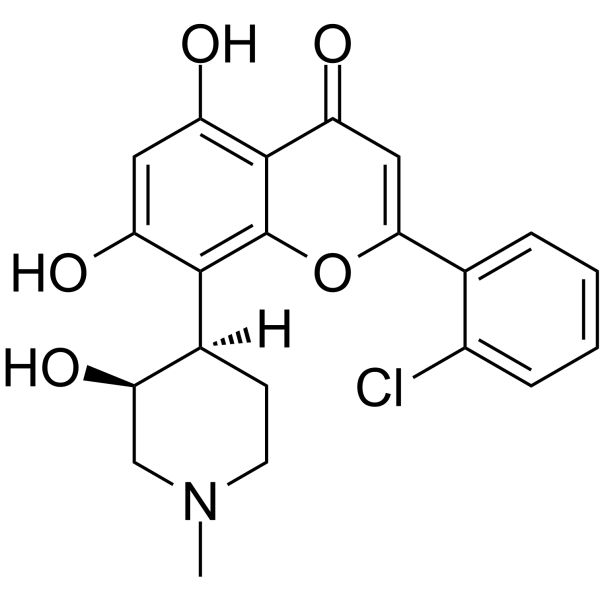
Flavopiridol (Alvocidib) is a broad spectrum and competitive inhibitor of CDKs, inhibiting CDK1, CDK2, CDK4 with IC50s of 30, 170, 100 nM, respectively.
54
54 Cited Publications
Cat. No.: HY-10006
CAS No.: 131740-09-5
Purity:  99.73%
Synonyms: Alvocidib Hydrochloride; L86-8275 Hydrochloride; HMR-1275 Hydrochloride
Target:  

CDK Autophagy HIV

Research Areas:  

Cancer

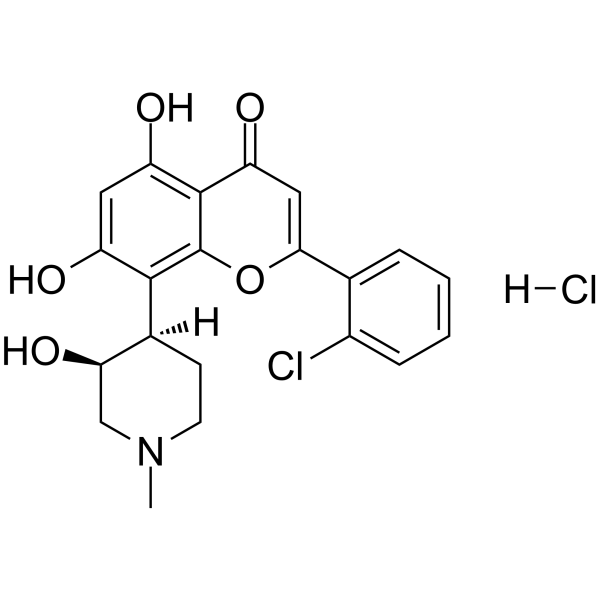
Flavopiridol Hydrochloride (Alvocidib Hydrochloride) is a broad inhibitor of CDK, competing with ATP to inhibit CDKs including CDK1, CDK2, CDK4 with IC50s of 30, 170, 100 nM, respectively.
41
41 Cited Publications
Cat. No.: HY-12214A
CAS No.: 1263373-43-8
Purity:  99.60%
Target:  

CDK Apoptosis

Research Areas:  

Cancer

NVP-2 is a potent and selective ATP-competitive cyclin dependent kinase 9 (CDK9) probe, inhibits CDK9/CycT activity with an IC50 of 0.514 nM. NVP-2 displays inhibitory effcts on CDK1/CycB, CDK2/CycA and CDK16/CycY kinases with IC50 values of 0.584 μM, 0.706 μM, and 0.605 μM, respectively. NVP-2 induces cell apoptosis. [1]
17
17 Cited Publications
Cat. No.: HY-10580
CAS No.: 667463-62-9
Purity:  99.31%
Synonyms: 6-Bromoindirubin-3'-oxime; BIO; MLS 2052
Target:  

GSK-3 CDK Apoptosis

Research Areas:  

Cancer

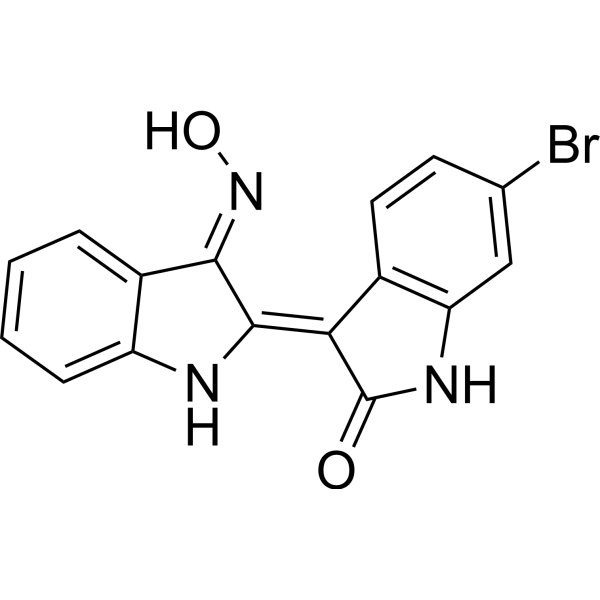
GSK 3 Inhibitor IX (6-Bromoindirubin-3'-oxime; BIO) is a potent, selective, reversible and ATP-competitive inhibitor of GSK-3α/β and CDK1-cyclinB complex with IC50s of 5 nM/320 nM/80 nM for (GSK-3α/β)/CDK1/CDK5, respectively.
16
16 Cited Publications
Cat. No.: HY-50940
CAS No.: 844442-38-2
Synonyms: AT7519M
Target:  

CDK Apoptosis

Research Areas:  

Cancer

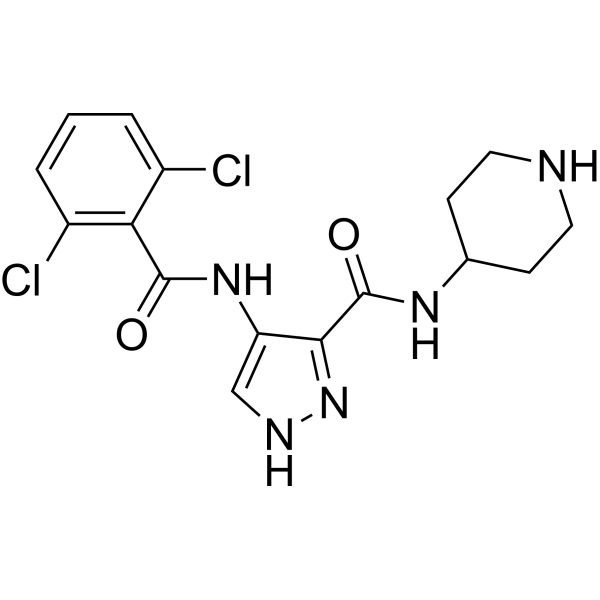
AT7519 (AT7519M) as a potent inhibitor of CDKs, with IC50s of 210, 47, 100, 13, 170, and <10 nM for CDK1, CDK2, CDK4 to CDK6, and CDK9, respectively.
16
16 Cited Publications
Cat. No.: HY-50943
CAS No.: 902135-91-5
Target:  

CDK Apoptosis

Research Areas:  

Cancer

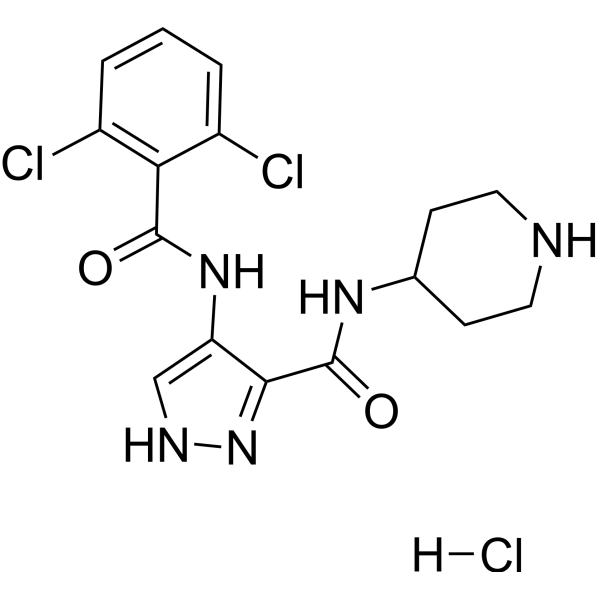
AT7519 Hydrochloride is a potent inhibitor of CDKs, with IC50s of 210, 47, 100, 13, 170, and <10 nM for CDK1, CDK2, CDK4 to CDK6, and CDK9, respectively.
16
16 Cited Publications
Cat. No.: HY-50940A
CAS No.: 1431697-85-6
Synonyms: AT7519M TFA
Target:  

CDK

Research Areas:  

Cancer

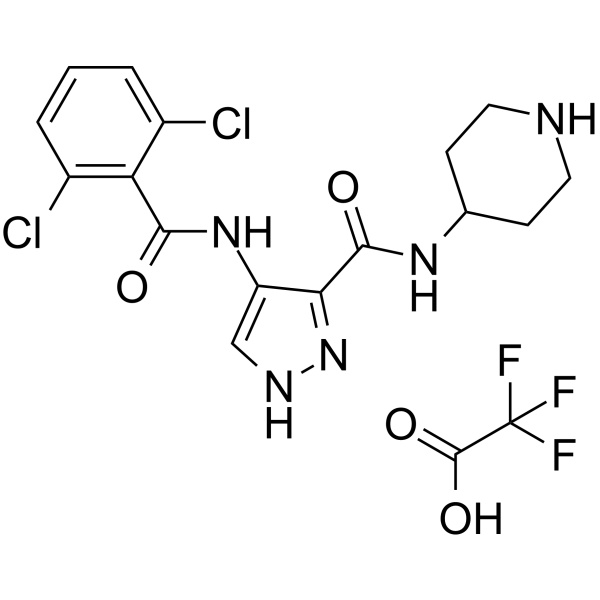
AT7519 (AT7519M) TFA as a potent inhibitor of CDKs, with IC50s of 210, 47, 100, 13, 170, and <10 nM for CDK1, CDK2, CDK4 to CDK6, and CDK9, respectively.
16
16 Cited Publications
Cat. No.: HY-10012
CAS No.: 602306-29-6
Purity:  99.91%
Target:  

CDK

Research Areas:  

Cancer

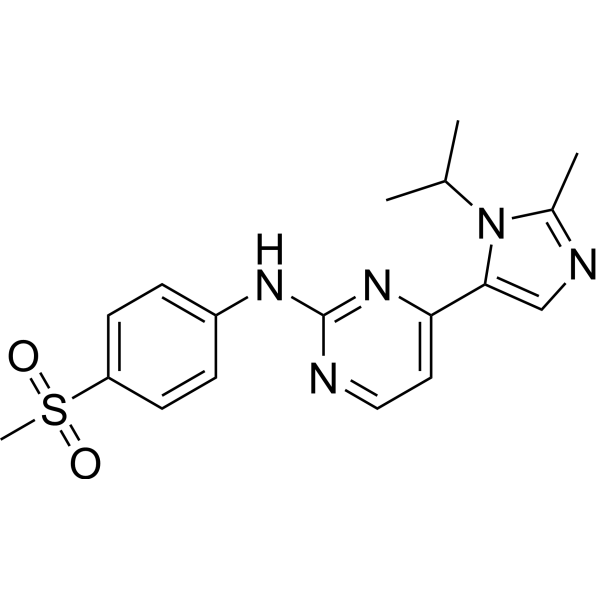
AZD-5438 is a potent CDK1, CDK2, and CDK9 inhibitor, with IC50s of 16 nM, 6 nM, and 20 nM in cell-free assays, respectively. AZD-5438 shows less inhibition activity against GSK3β, CDK5 and CDK6 [1].
15
15 Cited Publications
Cat. No.: HY-12302
CAS No.: 142273-20-9
Purity:  98.20%
Synonyms: 9-Bromopaullone; NSC-664704
Target:  

CDK GSK-3

Research Areas:  

Cancer

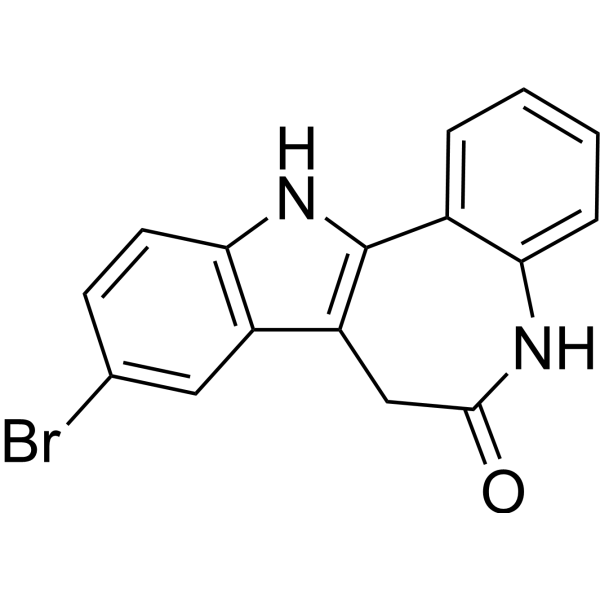
Kenpaullone is a potent inhibitor of CDK1/cyclin B and GSK-3β, with IC50s of 0.4 μM and 23 nM, and also inhibits CDK2/cyclin A, CDK2/cyclin E, and CDK5/p25 with IC50s of 0.68 μM, 7.5 μM, 0.85 μM, respectively. Kenpaullone, a small molecule inhibitor of KLF4, reduces self-renewal of breast cancer stem cells and cell motility in vitro.
15
15 Cited Publications
Cat. No.: HY-11012
CAS No.: 327036-89-5
Purity:  99.76%
Synonyms: GSK-3β Inhibitor I; NP 01139
Target:  

GSK-3

Research Areas:  

Cancer

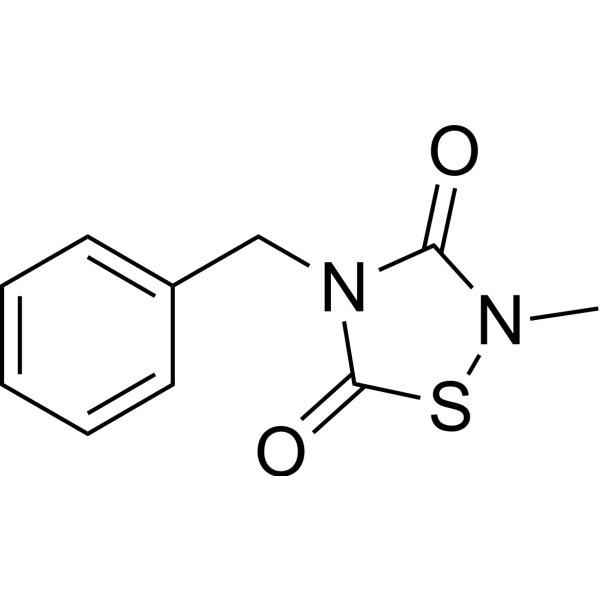
TDZD-8 is an inhibitor of GSK-3β, with an IC50 of 2 μM; TDZD-8 shows less potent activities against Cdk-1/cyclin B, CK-II, PKA, and PKC, with all IC50s of >100 μM.
14
14 Cited Publications
Cat. No.: HY-124719
CAS No.: 1402452-15-6
Purity:  99.82%
Target:  

PI3K mTOR GSK-3 CDK

Research Areas:  

Cancer

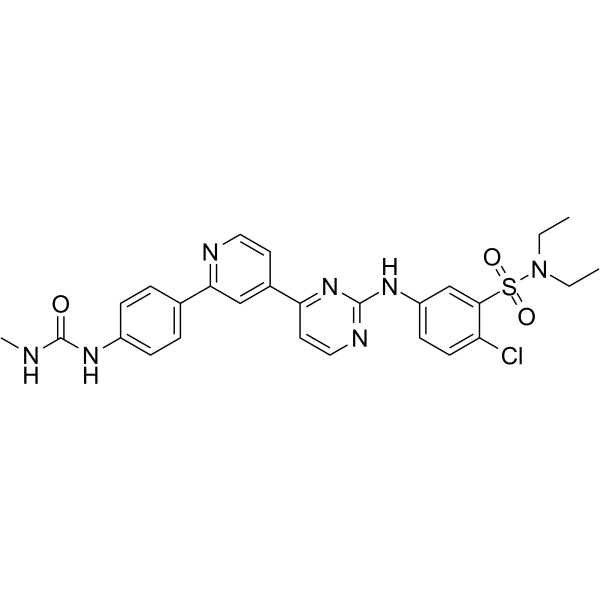
hSMG-1 inhibitor 11j, a pyrimidine derivative, is a potent and selective inhibitor of hSMG-1, with an IC50 of 0.11 nM. hSMG-1 inhibitor 11j exhibits >455-fold selectivity for hSMG-1 over mTOR (IC50=50 nM), PI3Kα/γ (IC50=92/60 nM) and CDK1/CDK2 (IC50=32/7.1 μM). hSMG-1 inhibitor 11j can be used for the research of cancer [1].
12
12 Cited Publications
Cat. No.: HY-103712
CAS No.: 1805833-75-3
Synonyms: CT7001; ICEC0942
Target:  

CDK Apoptosis

Research Areas:  

Cancer

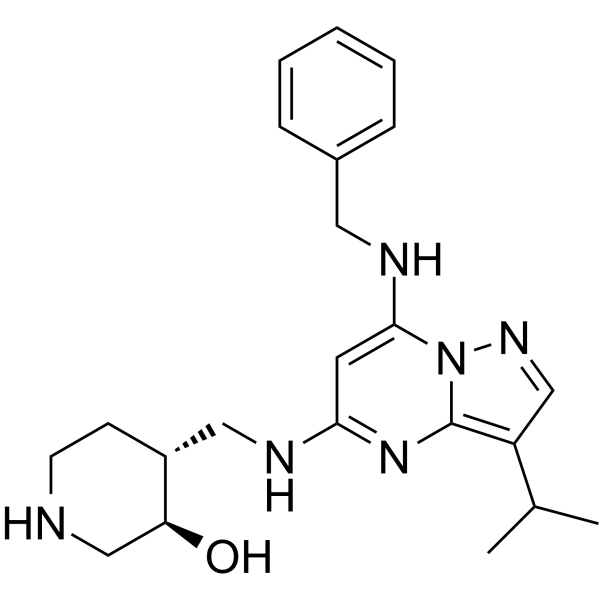
Samuraciclib (CT7001) is a potent, selective, ATP-competitive and orally active CDK7 inhibitor, with an IC50 of 41 nM. Samuraciclib displays 45-, 15-, 230- and 30-fold selectivity over CDK1, CDK2 (IC50 of 578 nM), CDK5 and CDK9, respectively. Samuraciclib inhibits the growth of breast cancer cell lines with GI50 values between 0.2-0.3 μM. Samuraciclib has anti-tumor effects [1] .
12
12 Cited Publications
Cat. No.: HY-103712A
CAS No.: 1805789-54-1
Purity:  99.90%
Synonyms: CT7001 hydrochloride; ICEC0942 hydrochloride
Target:  

CDK Apoptosis

Research Areas:  

Cancer

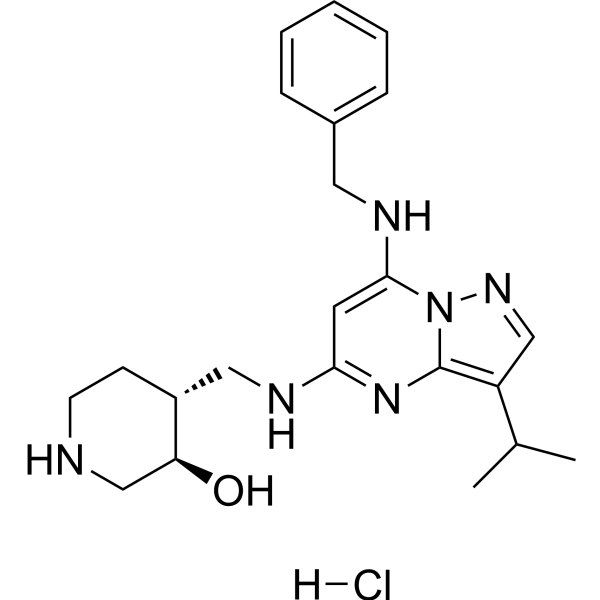
Samuraciclib hydrochloride (CT7001 hydrochloride) is a potent, selective, ATP-competitive and orally active CDK7 inhibitor, with an IC50 of 41 nM. Samuraciclib hydrochloride displays 45-, 15-, 230- and 30-fold selectivity over CDK1, CDK2 (IC50 of 578 nM), CDK5 and CDK9, respectively. Samuraciclib hydrochloride inhibits the growth of breast cancer cell lines with GI50 values between 0.2-0.3 µM. Samuraciclib hydrochloride has anti-tumor effects [1] .
12
12 Cited Publications
Cat. No.: HY-103712B
Purity:  99.06%
Synonyms: CT7001 hydrochloride dihydrate; ICEC0942 hydrochloride dihydrate
Target:  

CDK Apoptosis

Research Areas:  

Cancer

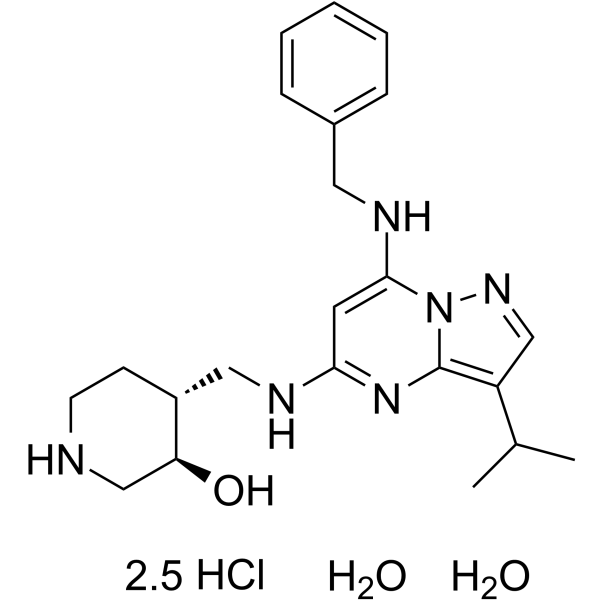
Samuraciclib (CT7001) hydrochloride hydrate is a potent, selective, ATP-competitive and orally active CDK7 inhibitor, with an IC50 of 41 nM. Samuraciclib hydrochloride hydrate displays 45-, 15-, 230- and 30-fold selectivity over CDK1, CDK2 (IC50 of 578 nM), CDK5 and CDK9, respectively. Samuraciclib hydrochloride hydrate inhibits the growth of breast cancer cell lines with GI50 values between 0.2-0.3 μM. Samuraciclib hydrochloride hydrate has anti-tumor effects [1] .

