11 Results for "

Capsaicinoid

" in MedChemExpress (MCE) Product Catalog:
Products (11)

11 Results for "Capsaicinoid" in MCE Product Catalog:

1
1 Cited Publications
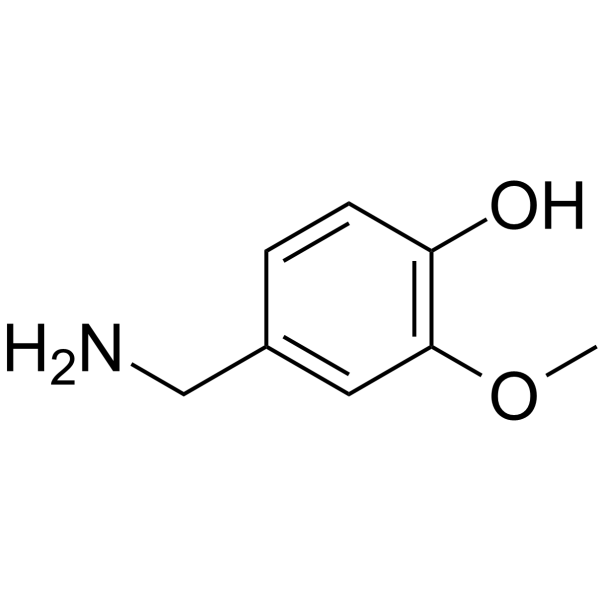
Cat. No.: HY-W097899
CAS No.: 1196-92-5
Vanillylamine is an immediate precursor for capsaicinoids. Vanillylamine is a derivative of Vanillin (HY-N0098) is synthesized through a transaminase reaction in the phenylpropanoid pathway of capsaicinoid synthesis. Vanillylamine significantly alleviates myelosuppression caused by abdominal and pelvic tumor chemotherapy .
loading...
    loading...
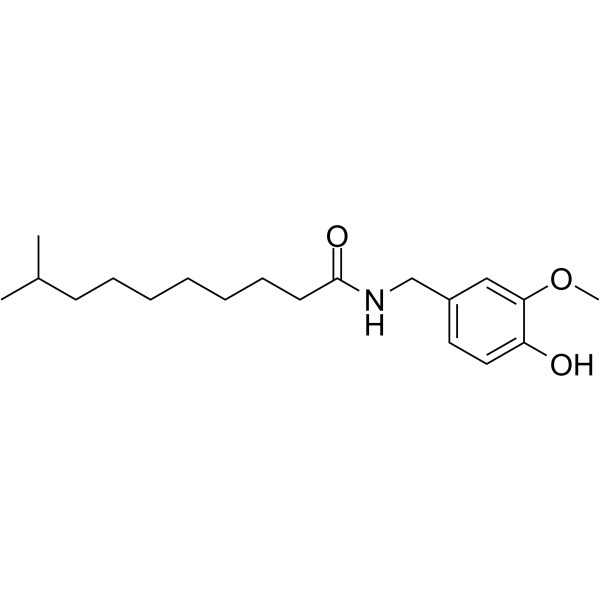
Cat. No.: HY-N0449
CAS No.: 28789-35-7
Nordihydrocapsaicin, an analog of Capsaicin (HY-10448), is an orally active compound with pungent properties and anti-cancer activities, which is found in fresh and processed peppers. Nordihydrocapsaicin can cause a burning sensation when consumed .
loading...
    loading...
Cat. No.: HY-N5082
CAS No.: 20279-06-5
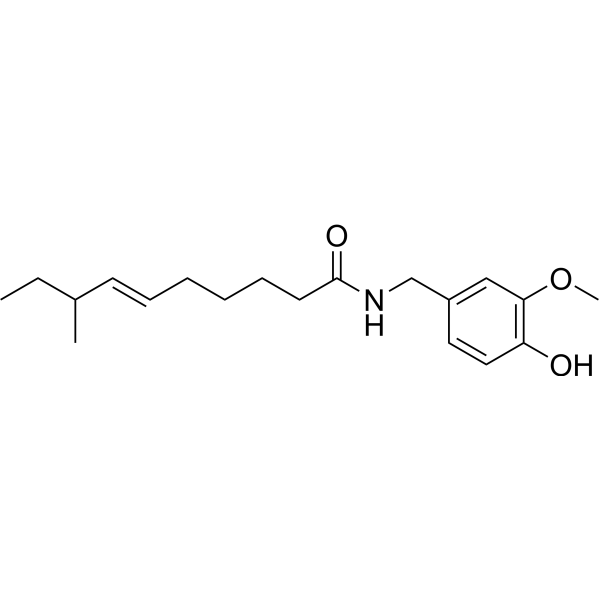
Homodihydrocapsaicin I is a kind of capsaicinoid from the fruits of Capsicum annuum .
loading...
    loading...
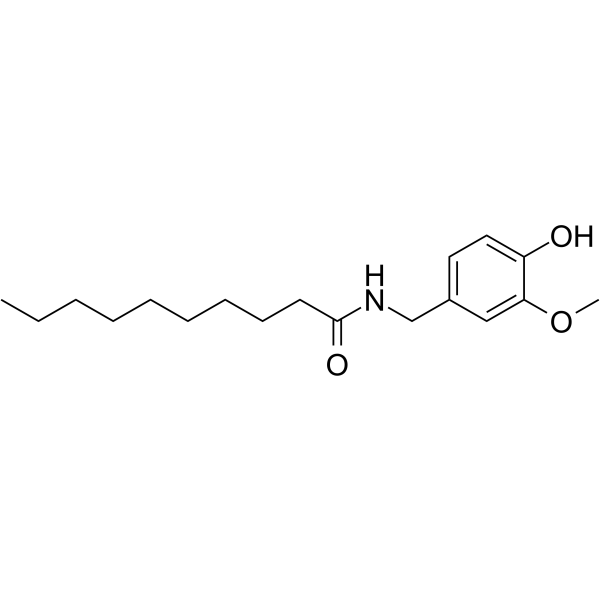
Cat. No.: HY-N5099
CAS No.: 31078-36-1
N-Vanillyldecanamide, a capsaicinoid isolated from the fruits of Capsicum annuum, significantly reduced the radical length of Lactuca sativa seedling in a dose-dependent manner .
loading...
    loading...
Cat. No.: HY-W712539
CAS No.: 71239-21-9
Homodihydrocapsaicin II is a capsaicinoid with analgesic and anti-inflammatory effects, which is found in capsicum fruits. Homodihydrocapsaicin II is promising for research of inflammatory diseases and neuropathic pain .
loading...
    loading...
Cat. No.: HY-N0449R
CAS No.: 28789-35-7
Nordihydrocapsaicin (Standard) is the analytical standard of Nordihydrocapsaicin. This product is intended for research and analytical applications. Nordihydrocapsaicin is a capsaicinoid analog and congener of capsaicin in chili peppers .
loading...
    loading...
Cat. No.: HY-W097899R
CAS No.: 1196-92-5
Vanillylamine is an immediate precursor for capsaicinoids. Vanillylamine is a derivative of Vanillin (HY-N0098) is synthesized through a transaminase reaction in the phenylpropanoid pathway of capsaicinoid synthesis. Vanillylamine significantly alleviates myelosuppression caused by abdominal and pelvic tumor chemotherapy .
loading...
    loading...
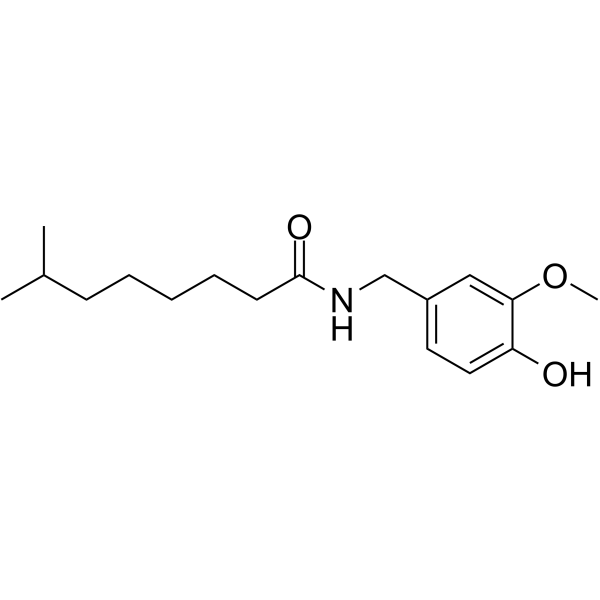
Cat. No.: HY-N11950
CAS No.: 58493-47-3
N-Vanillyloctanamide is a capsaicinoid that has the activity of inhibiting the root growth of plant seedlings. N-Vanillyloctanamide significantly reduces the root length of Lactuca sativa (seedling) in a dose-dependent manner .
loading...
    loading...
Cat. No.: HY-N11468
CAS No.: 71240-51-2
Homocapsaicin II is a pungent compound, that can be isolated from fruits of Capsicum annuum L .
loading...
    loading...
Cat. No.: HY-N5099R
CAS No.: 31078-36-1
N-Vanillyldecanamide (Standard) is the analytical standard of N-Vanillyldecanamide (HY-N5099). This product is intended for research and analytical applications. N-Vanillyldecanamide, a capsaicinoid isolated from the fruits of Capsicum annuum, significantly reduced the radical length of Lactuca sativa seedling in a dose-dependent manner .
loading...
    loading...
Cat. No.: HY-182517
CAS No.: 2225980-49-2
Target:  

TRP Channel

Research Areas:  

Inflammation/Immunology

AG1529 is a TRPV1 inhibitor and capsaicinoid-based soft agent with a human TRPV1 IC50 of 0.9-0.93 μM. AG1529 reversibly blocks capsaicin-evoked TRPV1 activation, binds to the TRPV1 capsaicin binding site, moderately affects pH-induced TRPV1 gating, and does not alter voltage- or heat-mediated TRPV1 responses. AG1529 suppresses TRPV1-mediated neuronal excitability, reduces capsaicin- and pH-evoked neuronal firing, abolishes histaminergic and inflammation-mediated TRPV1 sensitization. AG1529 exhibits anti-nociceptive and antipruritic effects, attenuates in vivo hyperalgesia and pruritus, dose-dependently reduces acute histaminergic itch in rodents, and mildly blocks hTRPA1 and hTRPM8 channel activity. AG1529 undergoes hydrolysis and dermal deactivation, minimizes TRPV1-associated side reactions, does not evoke capsaicin-like burning sensation, and does not disrupt physiological thermal regulation. AG1529 can be used for the research of inflammatory cutaneous nociception and acute histaminergic pruritus .
loading...
    loading...
  • 1

