




1. Search Result
Search Result
Results for "

Endotoxin quantification kit

" in MedChemExpress (MCE) Product Catalog:

506

Inhibitors & Agonists

6

Screening Libraries

51

Fluorescent Dye

57

Biochemical Assay Reagents

40

Peptides

195

MCE Kits

10

Inhibitory Antibodies

18

Natural
Products

29

Recombinant Proteins

42

Isotope-Labeled Compounds

9

Antibodies

1

Click Chemistry

10

Oligonucleotides

Targets Recommended:
Cat. No. Product Name Target Research Areas Chemical Structure
  • HY-D0842A

    Albumin bovine serum (Low Endotoxin,Fatty acid free); BSA (Low Endotoxin,Fatty acid free)

    Biochemical Assay Reagents Nucleoside Antimetabolite/Analog Inflammation/Immunology
    Bovine Serum Albumin (Low Endotoxin,Fatty acid free) (BSA) is a 583 amino acid globular protein and oligonucleotide binding protein composed of three homologous full α domains. Bovine Serum Albumin (Low Endotoxin,Fatty acid free) (BSA) blocks the overall binding of oligonucleotides to cells. Bovine Serum Albumin (Low Endotoxin,Fatty acid free) (BSA) regulates the development of hamster embryos and induces arthritis .
    Bovine Serum Albumin (Low Endotoxin,Fatty acid free)
  • HY-D1056
    Lipopolysaccharides, from E. coli O55:B5
    Maximum Cited Publications
    506 Publications Verification

    LPS

    Toll-like Receptor (TLR) Infection Neurological Disease Inflammation/Immunology Cancer
    Lipopolysaccharides, from E. coli O55:B5 (LPS, from Escherichia coli (O55:B5)) are endotoxins and TLR4 activators extracted from Escherichia coli (E. coli O55:B5) and are classified as S (smooth) type LPS. Lipopolysaccharides, from E. coli O55:B5 possess the typical three-part structure: O-antigen, core oligosaccharide, and lipid A. Lipopolysaccharides, from E. coli O55:B5 activate TLR-4 in immune cells, exhibit high pyrogenicity, and demonstrate dose and serotype specificity. Lipopolysaccharides, from E. coli O55:B5 can be widely used to induce cellular inflammation and establish animal models related to inflammation .
    It is recommended to prepare a solution with concentration ≥2 mg/mL. Vortex thoroughly for more than 10 minutes. Due to the adsorption characteristics of LPS, silanized container or low adsorption centrifuge tubes should be used for aliquoting and storage, and mix thoroughly before use.
    Lipopolysaccharides, from E. coli O55:B5
  • HY-15915
    DTNB
    10+ Cited Publications

    Ellman’s Reagent

    Biochemical Assay Reagents Others
    DTNB (Ellman’s Reagent) is a chemical used to quantify the number or concentration of thiol groups .
    DTNB
  • HY-13001
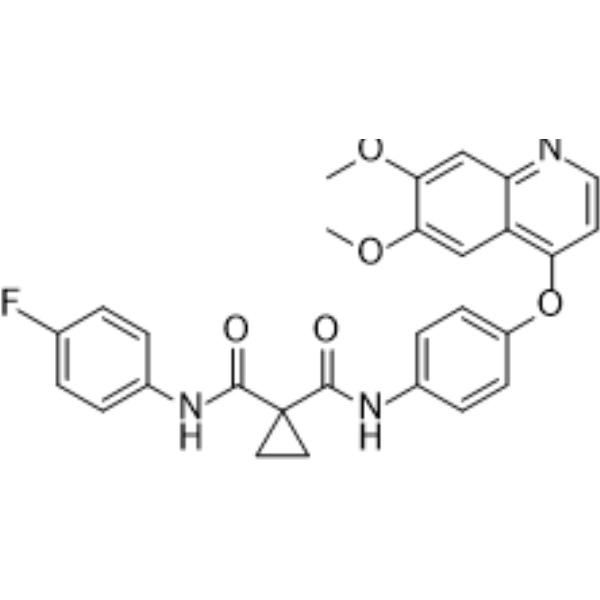
    Quizartinib
    40+ Cited Publications

    AC220

    FLT3 Apoptosis PDGFR c-Kit Cancer
    Quizartinib (AC220) is an orally active, potent and selective FLT3 inhibitor. Quizartinib inhibits kinase activity of mutant-FLT3, -PDGFRA and -KIT isoforms and inhibits autophosphorylation. Quizartinib inhibits cellular proliferation, induces apoptosis in cancer cells. Quizartinib can be used for the research of cancer .
    Quizartinib
  • HY-D0974
    Sulforhodamine B sodium salt
    5+ Cited Publications

    Acid Red 52; kiton Red 620

    Environmental Pollutants Fluorescent Dye Others
    Sulforhodamine B sodium salt is a fluorescent dye with uses spanning from laser-induced fluorescence (LIF) to the quantification of cellular proteins of cultured cells.
    Sulforhodamine B sodium salt
  • HY-D0908

    Fluorescent Dye Others
    Ninhydrin can be used as a chromogenic analytical probe for the quantification of amino acids and proteins.
    Ninhydrin
  • HY-P1956A

    HSA (Cell culture grade, Endotoxin<0.125 EU/mg)

    NF-κB NO Synthase Cardiovascular Disease Inflammation/Immunology
    Human serum albumin (Cell culture grade, Endotoxin<0.125 EU/mg) (HSA) is the most abundant protein in plasma and is a major determinant of plasma oncotic pressure. Human serum albumin (Cell culture grade, Endotoxin<0.125 EU/mg) exhibits antioxidant, anticoagulant, anti-inflammatory, anti-platelet aggregation activities as well as colloid osmotic action. Human serum albumin (Cell culture grade, Endotoxin<0.125 EU/mg) can block the inhibitory effect of GML on human T cells, providing protective function for T cells. Human serum albumin (Cell culture grade, Endotoxin<0.125 EU/mg) is also associated with cardiovascular diseases and can partially prevent the LPS (HY-D1056) induced oxidative stress, as well as the upregulation of NF-κB, iNOS, and peroxynitrite (ONOO ) in the vascular wall, contributing to the reduction of blood pressure. Human serum albumin (Cell culture grade, Endotoxin<0.125 EU/mg) can be used for in vitro cell culture .
    This product is human serum albumin recombinantly expressed in an Escherichia coli expression system.
    Human serum albumin (Cell culture grade, Endotoxin<0.125 EU/mg)
  • HY-W751238

    DMMB

    Fluorescent Dye Others
    Dimethyl methylene blue zinc chloride double salt (DMMB) is a cationic dye. Dimethyl methylene blue zinc chloride double salt competitively binds to the active site of the PANI-Benz-Ag nanocomposite with endotoxin, releasing DMMB and increasing the fluorescence intensity. Dimethyl methylene blue zinc chloride double salt can be used as a fluorescent probe for the detection of bacteria (such as E. Coli) endotoxin . Dimethyl methylene blue zinc chloride double salt can be used for the quantification of sulfated glycosaminoglycans .
    Dimethyl methylene blue zinc chloride double salt
  • HY-136886
    IR-820
    2 Publications Verification

    New Indocyanine Green

    Fluorescent Dye Cancer
    IR-820 (New Indocyanine Green) is an infrared blood pool contrast agent. IR-820 also is normally used as a laser and near-infrared dye to detect and quantify diseased tissue in live animals .
    IR-820
  • HY-16961
    Sitravatinib
    5+ Cited Publications

    MGCD516; MG-516

    VEGFR c-Kit FLT3 Discoidin Domain Receptor Trk Receptor Inflammation/Immunology Cancer
    Sitravatinib (MGCD516) is an orally bioavailable receptor tyrosine kinase (RTK) inhibitor with IC50s of 1.5 nM, 2 nM, 2 nM, 5 nM, 6 nM, 6 nM, 8 nM, 0.5 nM, 29 nM, 5 nM, and 9 nM for Axl, MER, VEGFR3, VEGFR2, VEGFR1, KIT, FLT3, DDR2, DDR1, TRKA, TRKB, respectively . Sitravatinib shows potent single-agent antitumor efficacy and enhances the activity of PD-1 blockade through promoting an antitumor immune microenvironment .
    Sitravatinib
  • HY-145557
    Bezuclastinib
    1 Publications Verification

    CGT9486; PLX 9486

    c-Kit Cancer
    Bezuclastinib (CGT9486) is an orally active, highly selective tyrosine kinase inhibitor with potent activity against KIT D816V. Bezuclastinib can be used for the research of nonadvanced systemic mastocytosis (NonAdvSM) .
    Bezuclastinib
  • HY-110133
    JTE-607
    5 Publications Verification

    Interleukin Related Inflammation/Immunology
    JTE-607, a highly selective inflammatory cytokine synthesis inhibitor, protects from endotoxin shock in mice. JTE-607 inhibits inflammatory cytokine production, including TNF-α, IL-1β, IL-6, IL-8 and IL-10, from LPS-stimulated human PBMCs, with IC50s of 11, 5.9, 8.8, 7.3 and 9.1 nM, respectively . Cleavage and Polyadenylation Specificity Factor 3 (CPSF3) is the target of JTE-607 .
    JTE-607
  • HY-W250978A

    Biochemical Assay Reagents Inflammation/Immunology
    Ovalbumin, low endotoxin (OVA, low endotoxin), the main protein found in egg whites, have various biological activities such as anticancer, antihypertensive, antibacterial, antioxidant and immunomodulatory activities. Ovalbumins are the most abundant proteins synthesized in progesterone- or estrogen-treated fallopian tubes and are commonly used as markers to study hormone regulation of gene expression in tissues . Ovalbumin, a low endotoxin, can be used to establish an asthma model .
    Ovalbumin, low endotoxin
  • HY-P99462

    c-Kit Inflammation/Immunology
    Barzolvolimab is a humanized anti-KIT IgG1 monoclonal antibody. Barzolvolimab specificity and potently inhibits KIT activation by SCF. Barzolvolimab can reduce skin mast cells and disease activity in chronic inducible urticaria .
    Barzolvolimab
  • HY-P4931
    Mca-KPLGL-Dap(Dnp)-AR-NH2
    1 Publications Verification

    MMP Cancer
    Mca-Lys-Pro-Leu-Gly-Leu-Dap(Dnp)-Ala-Arg-NH2 (FS-6) is a fluorescent peptide that is a quenched MMP peptide substrate. Mca-Lys-Pro-Leu-Gly-Leu-Dap(Dnp)-Ala-Arg-NH2 can be used for real-time quantification of MMP enzymatic activity. Mca-Lys-Pro-Leu-Gly-Leu-Dap(Dnp)-Ala-Arg-NH2 is an elongated peptide of MMP substrate (FS-1) and is active against collagenases (MMP-1, MMP-8, MMP-13 ) and MT1-MMP with higher specificity constants than FS-1 . (Ex/Em=325 nm/400 nm)
    Mca-KPLGL-Dap(Dnp)-AR-NH2
  • HY-B0633E

    Hyaluronan, low Endotoxin; Hyaluronate, low Endotoxin

    Endogenous Metabolite CD44 Bacterial Akt PI3K Neurological Disease Metabolic Disease Inflammation/Immunology Cancer
    Hyaluronic acid, low endotoxin (Hyaluronan, low endotoxin) is a biopolymer composed of repeating disaccharide units containing low levels of endotoxin. Hyaluronic acid is a major component of the extracellular matrix (ECM). It is synthesized on the plasma membrane. Hyaluronic acid exerts its effects by binding to receptors CD44 and RHAMM. Hyaluronic acid activates PI3K-Akt signaling. Hyaluronic acid also enhances cell invasion and angiogenesis by promoting or stimulating the binding of proteolytic MMP-9 to the cell surface. Elevated hyaluronic acid levels are associated with tumor cell growth, adhesion, migration, invasion, and angiogenesis in digestive system cancers. Hyaluronic acid is involved in tissue remodeling and rapid cell proliferation in several physiological processes, including embryonic morphogenesis and wound healing. Hyaluronic acid can be used as a regulator of cancer-associated lymphangiogenesis. Hyaluronic acid can be used as a drug delivery carrier for sodium butyrate, enhancing its anti-proliferative activity against breast cancer cell lines. Hyaluronic acid can lubricate the corneal endothelium. Hyaluronic acid can improve tissue hydration and enhance the resistance of cells to mechanical damage. Hyaluronic acid has been conjugated with antibodies to ensure that the active compound continues to exert its effects at the site of inflammation. Hyaluronic acid can be used in research in the fields of osteoarthritis, ophthalmology, cosmetic dermatology, oncology, and liver diseases .
    Hyaluronic acid, low endotoxin
  • HY-P3936

    Fluorescent Dye Others
    Endotoxin Substrate (Boc-LGR-pNA) is a chromogenic substrate can be used in quantitative assays of endotoxin .
    Endotoxin Substrate
  • HY-15240
    c-Kit-IN-1
    1 Publications Verification

    c-Kit c-Met/HGFR Cancer
    c-Kit-IN-1 is a potent inhibitor of c-Kit and c-Met with IC50s of <200 nM.
    c-Kit-IN-1
  • HY-D1553

    Fluorescent Dye Others
    BODIPY-C12 is a boron-dipyrromethene derivative containing a lipophilic tail (excitation 490 nm). BODIPY-C12 is a hydrophobic molecular and sensitivity to the surrounding environment and can be used to quantify viscosity, critical micelle concentration, and critical micelle temperature .
    BODIPY-C12
  • HY-135042
    CAY10614
    1 Publications Verification

    Toll-like Receptor (TLR) Neurological Disease
    CAY10614 is a potent TLR4 antagonist. CAY10614 inhibits the lipid A-induced activation of TLR4, with an IC50 of 1.675 μM. CAY10614 can improve survival of mice in lethal endotoxin shock model .
    CAY10614
  • HY-NP035
    Ovalbumin-FITC
    1 Publications Verification

    OVA-FITC

    Fluorescent Dye Biochemical Assay Reagents Others
    Ovalbumin-FITC is an ovalbumin conjugated to FITC (Ex=495 nm; Em=525 nm). Ovalbumin-FITC can be internalized by cells via endocytosis .
    Ovalbumin-FITC
  • HY-112802

    c-Kit Cancer
    AZD3229 is a potent pan-KIT mutant inhibitor for the treatment of gastrointestinal stromal tumors. AZD3229 inhibits c-KIT with an IC50 value of 223.3 nM .
    AZD3229
  • HY-101443
    ISCK03
    5+ Cited Publications

    c-Kit Inflammation/Immunology
    ISCK03 is a SCF/c-Kit and CD117-specific inhibitor. ISCK03 significantly inhibits c-Kit phosphorylation at 10 μM .
    ISCK03
  • HY-W013275
    MCLA hydrochloride
    1 Publications Verification

    Reactive Oxygen Species (ROS) Others
    MCLA hydrochloride is a chemiluminescent reagent which can be used to quantify aqueous concentrations of superoxide.
    MCLA hydrochloride
  • HY-141639

    Drug Derivative Inflammation/Immunology
    3-Hydroxyheptadecanoic acid is a type of 3-hydroxy acid that can be used as a chemical marker for endotoxins .
    3-Hydroxyheptadecanoic acid
  • HY-18302
    c-Kit-IN-5-1
    1 Publications Verification

    c-Kit Inflammation/Immunology
    c-Kit-IN-5 is potent inhibitor of c-Kit, with IC50s of 22 nM and 16 nM in kinase assay and cell assay, respectively. c-Kit-IN-5 shows more than 200-fold selectivity for c-Kit over KDR, p38, Lck, and Src. c-Kit-IN-5 also exhibits desirable pharmacokinetic properties .
    c-Kit-IN-5-1
  • HY-W143698

    Bcr-Abl c-Kit PDGFR Cancer
    PDGFRα kinase inhibitor 2 (compound 1), an Imatinib (HY-15463) analogue, is a covalent and irreversible kinase inhibitor with IC50s of 6.95 μM, 2.45 μM, 1.39 μM for ABL1 wt, KIT wt, PDGFRR wt .
    PDGFRα kinase inhibitor 2
  • HY-P990615

    LOP628 antibody

    c-Kit Inflammation/Immunology
    Anti-c-Kit Antibody (LMJ729) (LOP628 antibody) is a CHO-expressed human antibody that targets SCFR/c-Kit/CD117. The predicted molecular weight (MW) of Anti-c-Kit Antibody (LMJ729) is 146.9 kDa. The isotype control for Anti-c-Kit Antibody (LMJ729) can refer to Human IgG1 kappa, Isotype Control (HY-P99001).
    Anti-c-Kit Antibody (LMJ729)
  • HY-P990002

    c-Kit Inflammation/Immunology Cancer
    Anti-Mouse CD117/c-Kit Antibody (2B8) is an IgG2b antibody, targeting to mouse CD117/c-Kit. Anti-Mouse CD117/c-Kit Antibody (2B8) reacts with mouse c-Kit (also known as CD117), which is expressed on hematopoietic progenitor cells, mast cells, and acute myeloid leukemia (AML) cells. Anti-Mouse CD117/c-Kit Antibody (2B8) can be used for the detection of flow cytometry, immunofluorescence and immunohistochemistry in cancer and inflammation .
    Anti-Mouse CD117/c-Kit Antibody (2B8)
  • HY-133962

    Biochemical Assay Reagents Others
    Cholesteryl erucate is a cholesterol ester. It has been used as a standard for the quantification of cholesteryl esters in human meibomian gland secretions.
    Cholesteryl erucate
  • HY-KT001

    E3 Ligase Ligand-Linker Conjugates Cancer
    E3 Ligase Ligand-Linker Conjugate Kit is a series of synthesized compounds that incorporate an E3 ligase ligand and a linker used in PROTAC technology.
    E3 Ligase Ligand-Linker Conjugate Kit
  • HY-18317

    VEGFR RET c-Kit Cancer
    JNJ-38158471 is a well tolerated, orally available, highly selective VEGFR-2 inhibitor, with an IC50 of 40 nM. JNJ-38158471 also inhibits Ret and Kit with IC50s of 180 and 500 nM, respectively .
    JNJ-38158471
  • HY-131676

    SM (d18:1/17:0); Heptadecanoyl Sphingomyelin; N-Heptadecanoyl-D-erythro-Sphingosylphosphorylcholine

    Endogenous Metabolite Metabolic Disease
    C17 Sphingomyelin is a synthetic derivative of sphingomyelin that has been used as an internal standard for the quantification of sphingomyelin.
    C17 Sphingomyelin (d18:1/17:0)
  • HY-10331S

    BAY 73-4506-d3

    VEGFR Autophagy PDGFR Raf RET Cancer
    Regorafenib-d3 (BAY 73-4506-d3) is a deuterium labeled Regorafenib (HY-10331). Regorafenib is a multi-targeted receptor tyrosine kinase inhibitor .
    Regorafenib-d3
  • HY-P5280

    Ser/Thr Protease Others
    Ac-KQL-AMC is a fluorogenic substrate that can be used to quantify Trypsin-like activity, resulting in detectable fluorescence when cleaved by the proteasome .
    Ac-KQL-AMC
  • HY-P3912A

    Interleukin Related Infection
    Endotoxin inhibitor TFA is a synthetic peptide that binds lipid A with high affinity, thereby detoxifying LPS (HY-D1056) and preventing LPS-induced cytokine release in vivo. Endotoxin inhibitor TFA inhibits the febrile response to LPS with very low toxicity and lethality .
    Endotoxin inhibitor TFA
  • HY-176266

    Mitochondrial Metabolism Neurological Disease
    KIT-13 is an orally active plasmalogen derivative to inhibit neuroinflammation and mitochondrial DNA leakage associated with Mecp2 deficiency. KIT-13 significantly reduce neurological symptoms and improves the life span of the Rett Syndrome (RTT) model mice. KIT-13 can be used for the study of RTT and other neuroinflammation-related diseases.
    KIT-13
  • HY-101034

    CHMFL-ABL-kit-155

    Bcr-Abl c-Kit Apoptosis PDGFR Discoidin Domain Receptor Cancer
    CHMFL-ABL/KIT-155 (CHMFL-ABL-KIT-155; compound 34) is a highly potent and orally active type II ABL/c-KIT dual kinase inhibitor (IC50s of 46 nM and 75 nM, respectively), and it also presents significant inhibitory activities to BLK (IC50=81 nM), CSF1R (IC50=227 nM), DDR1 (IC50=116 nM), DDR2 (IC50=325 nM), LCK (IC50=12 nM) and PDGFRβ (IC50=80 nM) kinases. CHMFL-ABL/KIT-155 (CHMFL-ABL-KIT-155) arrests cell cycle progression and induces apoptosis .
    CHMFL-ABL/KIT-155
  • HY-W110776

    Bis(8-quinolinolato)zinc(II) hydrate; Zinc 8-hydroxyquinolinate

    Biochemical Assay Reagents Others
    Zinc oxinate (Zinc 8-hydroxyquinolinate) is a metal chelator that stabilizes zinc complexes by forming pentacoordinate or hexacoordinate adducts. Zinc oxinate is promising for research of zinc quantification .
    Zinc oxinate
  • HY-15198

    Raf PDGFR FLT3 c-Kit Cancer
    KG5 is an orally active dual PDGFRβ and B-Raf allosteric inhibitor. KG5 also inhibits Flt3, KIT and c-Raf. KG5 has anticancer, antiangiogenic activities .
    KG5
  • HY-16961A

    MGCD516 malate; MG-516 malate

    VEGFR c-Kit FLT3 Discoidin Domain Receptor Trk Receptor Inflammation/Immunology Cancer
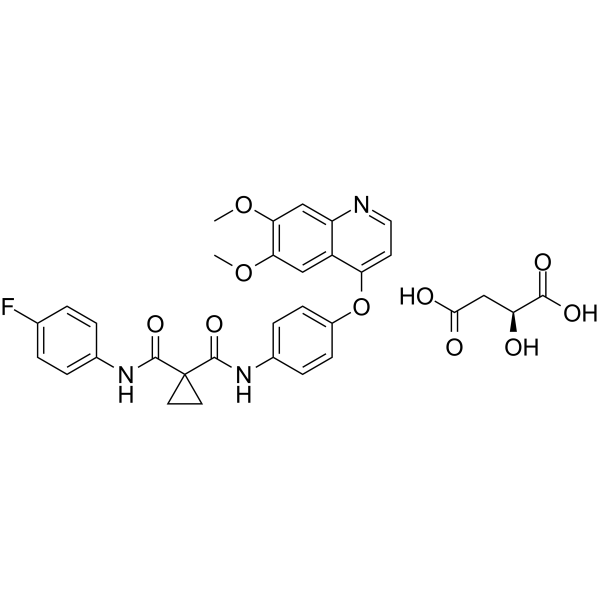
    Sitravatinib malate (MGCD516 malate) is an orally bioavailable receptor tyrosine kinase (RTK) inhibitor with IC50s of 1.5 nM, 2 nM, 2 nM, 5 nM, 6 nM, 6 nM, 8 nM, 0.5 nM, 29 nM, 5 nM, and 9 nM for Axl, MER, VEGFR3, VEGFR2, VEGFR1, KIT, FLT3, DDR2, DDR1, TRKA, TRKB, respectively . Sitravatinib malate shows potent single-agent antitumor efficacy and enhances the activity of PD-1 blockade through promoting an antitumor immune microenvironment .
    Sitravatinib malate
  • HY-P3477

    Fluorescent Dye Others
    Mca-PLA-Nva-Dap(Dnp)-AR-NH2 is a fluorogenic substrate for matrix metalloproteinase-2 (MMP-2) .
    Mca-PLA-Nva-Dap(Dnp)-AR-NH2
  • HY-W014924

    Phenolindophenol

    Biochemical Assay Reagents Others
    Indophenol (Phenolindophenol) can be used for quantification of the concentrations of ammoniacal nitrogen (eg: NH4 + and NO2 ) through spectrophotometric assay .
    Indophenol
  • HY-P11392

    Cholinesterase (ChE) Biochemical Assay Reagents Others
    Ac-IEAR-pNA is the chromogenic substrate for quantifying endotoxin levels. Ac-IEAR-pNA is cleaved by HuBChE to produce p-nitroaniline product .
    Ac-IEAR-pNA
  • HY-P3912

    COX Interleukin Related Infection
    Endotoxin inhibitor a synthetic peptide that binds lipid A with high affinity, thereby detoxifying LPS (HY-D1056) and preventing LPS-induced cytokine release in vivo. Endotoxin inhibitor inhibits the febrile response to LPS with very low toxicity and lethality .
    Endotoxin inhibitor
  • HY-122849

    c-Kit Cancer
    CHMFL-KIT-031 is a highly selective KIT V559D inhibitor, with an IC50 of 28 nM. CHMFL-KIT-031 potently affects KIT V559D mutant’s phosphorylation at Y703/719/823 sites. CHMFL-KIT-031 inhibits the tumor growth in BaF3-TEL-KIT-V559D cell inoculated mouse model .
    CHMFL-KIT-031
  • HY-128589

    c-Kit Cancer
    CHMFL-KIT-033 is a potent and selective inhibitor of c-KIT T670I mutant for gastrointestinal stromal tumors (GISTs), with an IC50 of 0.045 μM .
    CHMFL-KIT-033
  • HY-170911

    PDGFR Cancer
    KIT/PDGFRA-IN-1 (compound 19) is a stem cell growth factor receptor (KIT) and platelet-derived growth factor receptor alpha (PDGFRA) inhibitor. KIT/PDGFRA-IN-1 inhibits KIT-wt, KIT-D816H, KIT-T670I, PDGFRA-wt, PDGFRA-D842V, PDGFRA-T674I and PDGFRA-G680R with IC50s of 2.3, 12, 492, 0.8, 99.9, 42.3, and 4.3 μM, respectively. KIT/PDGFRA-IN-1 inhibits GIST-T1, T1-a-D842V and GIST-48B cells (PDGFR- and KIT-Mutant GIST cell Lines) with GR50s of 12, 8900, ≥10 000 nM, respectively .
    KIT/PDGFRA-IN-1
  • HY-177275

    c-Kit Cancer
    c-Kit Receptor modulator-1 (Compound #22) is a c-Kit Receptor modulator. c-Kit Receptor modulator-1 can be used for malignant cancers such as canine mastocytoma, human gastrointestinal stromal tumor and small cell lung cancer research .
    c-Kit Receptor modulator-1
  • HY-148600

    Aquaporin NO Synthase Metabolic Disease Inflammation/Immunology
    HTS13286 is a novel AQP9 inhibitor. HTS13286 prevents the LPS-induced increase of NO. HTS13286 reduces glucose output. HTS13286 can be used in the research of endotoxin shock .
    HTS13286

Inquiry Online

Your information is safe with us. * Required Fields.

Salutation


Country or Region *

Applicant Name *


Organization Name *

Department *


Email Address *


Product Name *

Cat. No.


Requested quantity *

Phone Number *


Remarks

Inquiry Online

Inquiry Information

Product Name:
Cat. No.:
Quantity:
MCE Japan Authorized Agent:

