7 Results for "

Ethion

" in MedChemExpress (MCE) Product Catalog:
Products (7)

7 Results for "Ethion" in MCE Product Catalog:

5
5 Cited Publications
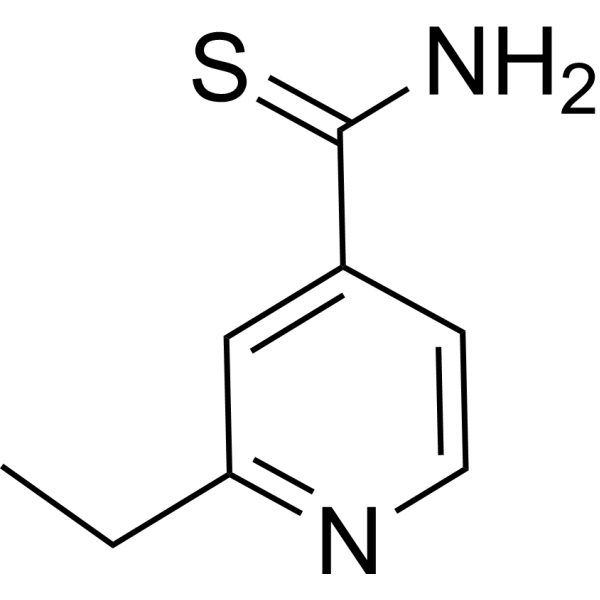
Cat. No.: HY-B0276
CAS No.: 536-33-4
Synonyms: 2-Ethylthioisonicotinamide
Ethionamide (2-ethylthioisonicotinamide) is a second-line anti-tuberculosis antibiotic with antibacterial effect and oral activity .
loading...
    loading...
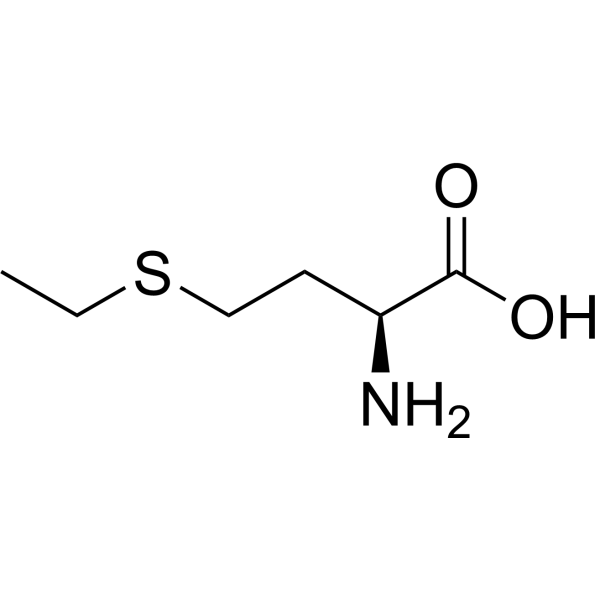
Cat. No.: HY-W017200
CAS No.: 13073-35-3
Synonyms: L-ETH
Research Areas:  

Others

L-Ethionine (L-ETH) is aamino acids and their derivatives.
loading...
    loading...
Cat. No.: HY-160963
CAS No.: 524-70-9
Target:  

Drug Derivative

Research Areas:  

Others

S-Adenosyl-L-ethionine is S-Adenosyl-L-methione analog. S-Adenosyl-L-ethionine is able to replace S-Adenosyl-L-methione during HydG catalysis. HydG can utilize S-Adenosyl-L-ethionine as an effective alternative cosubstrate to S-Adenosyl-L-methione under normal enzymatic turnover conditions, producing the Ω intermediate and allowing efficient catalytic turnover of substrate L-tyrosine .
loading...
    loading...
Cat. No.: HY-B0276R
CAS No.: 536-33-4
Synonyms: 2-Ethylthioisonicotinamide (Standard)
Ethionamide (Standard) is the analytical standard of Ethionamide. This product is intended for research and analytical applications. Ethionamide (2-ethylthioisonicotinamide) is a second-line anti-tuberculosis antibiotic.
loading...
    loading...
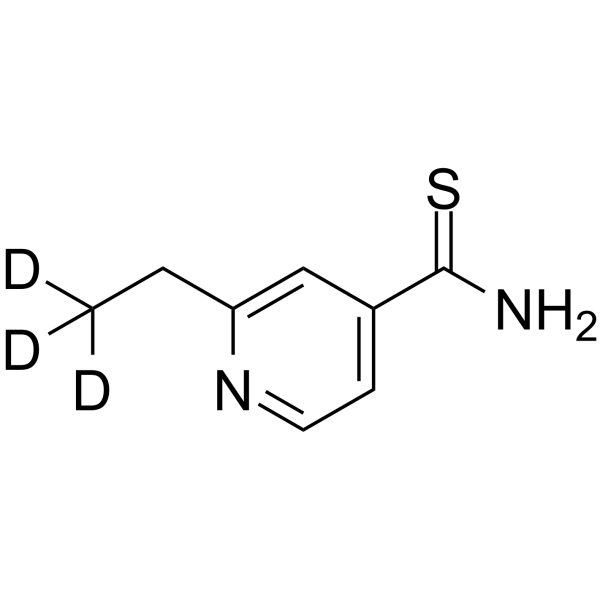
Cat. No.: HY-B0276S
CAS No.: 2748267-66-3
Synonyms: 2-Ethylthioisonicotinamide-d3
Ethionamide-d3 is the deuterium labeled Ethionamide. Ethionamide (2-ethylthioisonicotinamide) is an antibiotic used in the treatment of tuberculosis.
loading...
    loading...
Cat. No.: HY-W745403
Ethionamide Sulfoxide-d3 is the deuterium labeled Ethionamide Sulfoxide.
loading...
    loading...
Cat. No.: HY-B0276A
CAS No.: 3684-73-9
Synonyms: 2-Ethylthioisonicotinamide hydrochloride
Target:  

Bacterial

Research Areas:  

Infection

Ethionamide hydrochloride (2-Ethylthioisonicotinamide hydrochloride) is an antituberculosis drug with mycobacterial activity. Ethionamide hydrochloride interferes with the bacterial cell wall synthesis process by inhibiting the synthesis of fatty acids in the bacterial cell wall. Ethionamide hydrochloride may have bacteriostatic or bactericidal effects, depending on the concentration of the drug at the site of infection and the susceptibility of the associated microorganisms. Ethionamide hydrochloride combines with NAD+ to form an adduct, thereby exerting its antibacterial effect .
loading...
    loading...

