Search Result
Results for "
FAPs
" in MedChemExpress (MCE) Product Catalog:
| Cat. No. |
Product Name |
Target |
Research Areas |
Chemical Structure |
-
- HY-13233A
-
|
Val-boroPro mesylate; PT100 mesylate
|
Dipeptidyl Peptidase
|
Inflammation/Immunology
Cancer
|
|
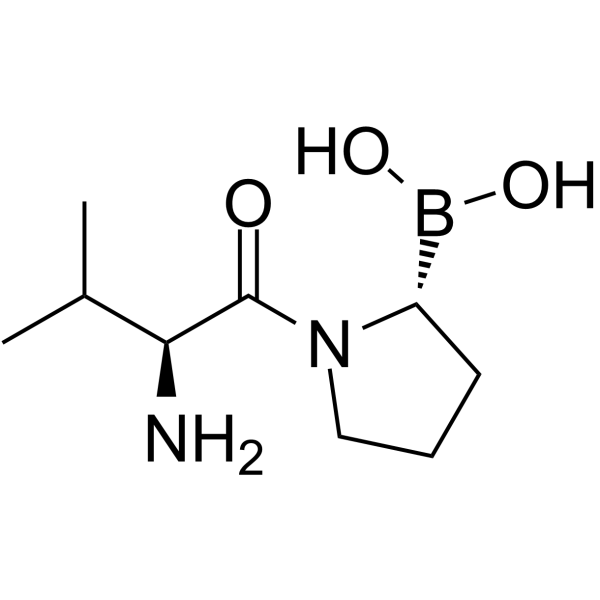
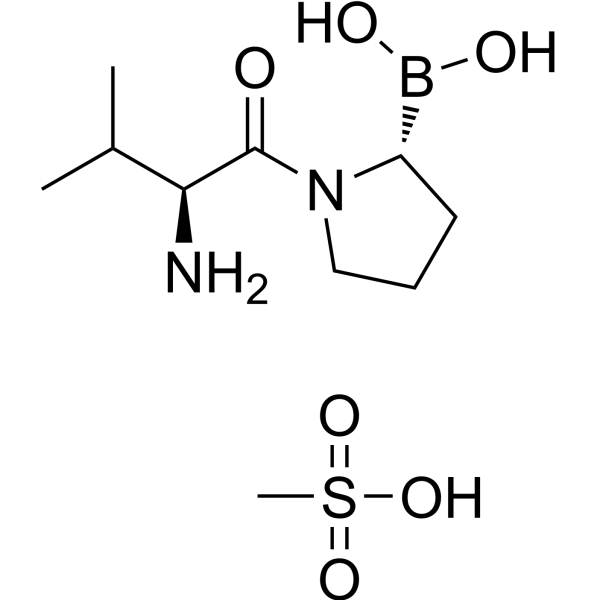
Talabostat mesylate (Val-boroPro mesylate; PT100 mesylate) is an orally active and nonselective dipeptidyl peptidase IV (DPP-IV) inhibitor (IC50 < 4 nM; Ki = 0.18 nM) and the inhibitor of fibroblast activation protein (FAP) (IC50 = 560 nM), inhibits DPP8/9 (IC50 = 4/11 nM; Ki = 1.5/0.76 nM), quiescent cell proline dipeptidase (QPP) (IC50 = 310 nM), DPP2, and some other DASH family enzymes. Antineoplastic and hematopoiesis- stimulating activities .
|
-
-
- HY-128643
-
|
|
FAP
|
Cancer
|
|
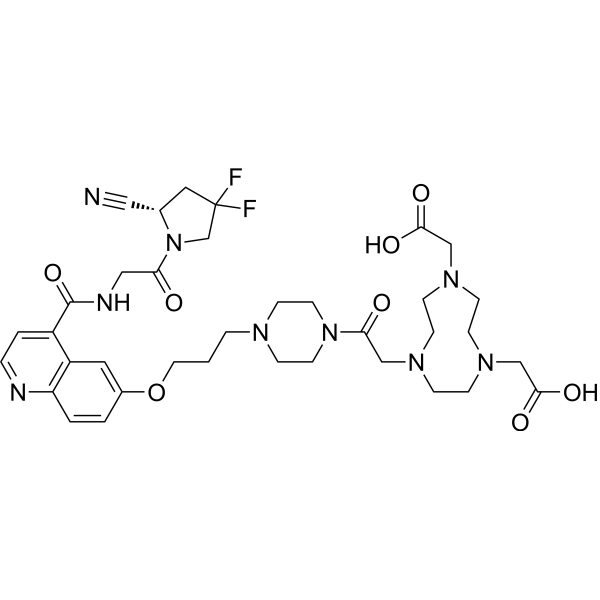
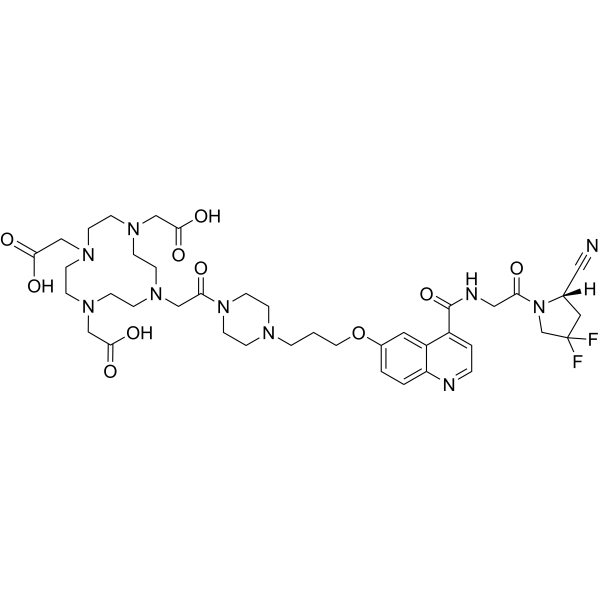
FAPI-4 is a potent fibroblast activation protein (FAP) inhibitor for the targeting FAP. FAPI-4 can be used in cancer research. 68Ga-FAPI-4 PET/CT is a promising new diagnostic method for imaging various kinds of cancer, with good tumor-to-background contrast ratios .
|
-
-
- HY-147057
-
|
FAP-2286
|
FAP
|
Cancer
|
|
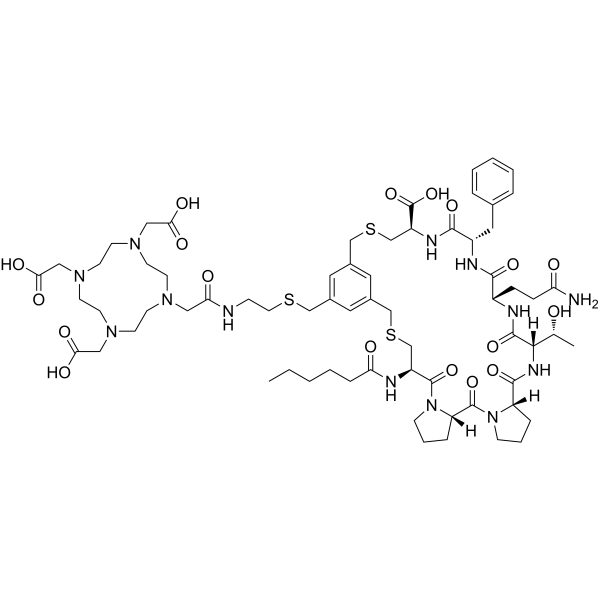
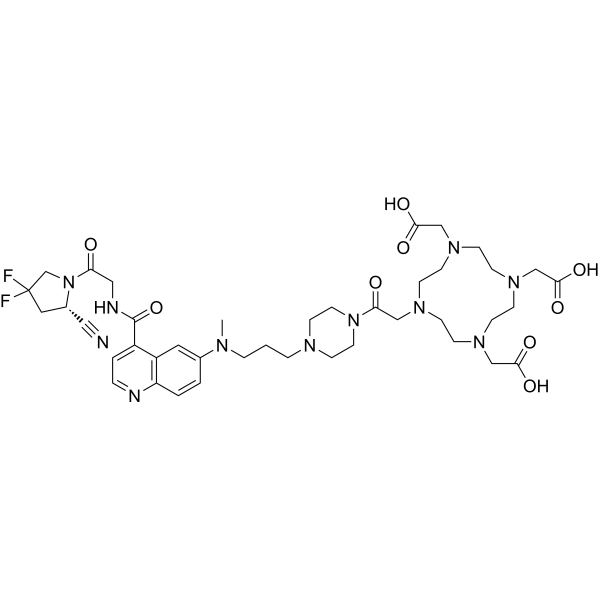
Rofapitide tetraxetan (FAP-2286) is a potent and selective FAP-binding peptide with a mean IC50 value of 2.7 nM for binding to FAP. Rofapitide tetraxetan can be labeled with radionuclides for diagnostic applications. Rofapitide tetraxetan has antitumor activity .
|
-
-
- HY-137331
-
FAPI-46
2 Publications Verification
|
FAP
|
Cancer
|
|
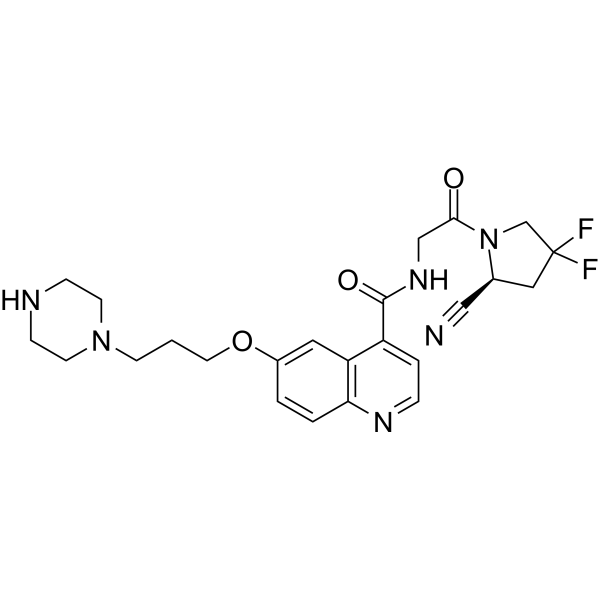
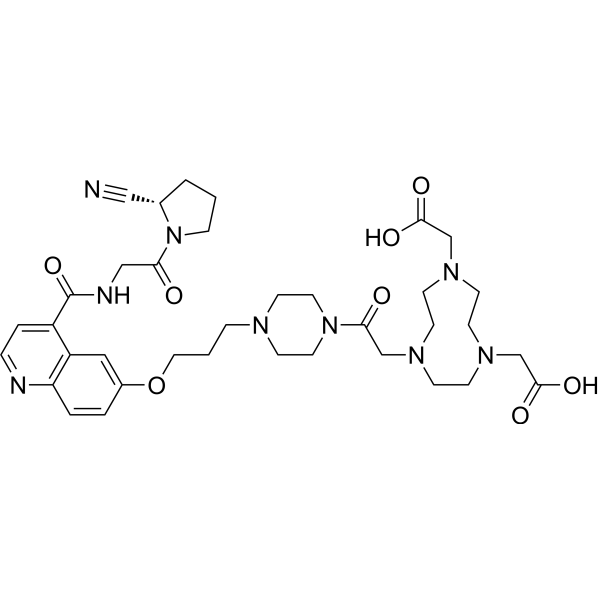
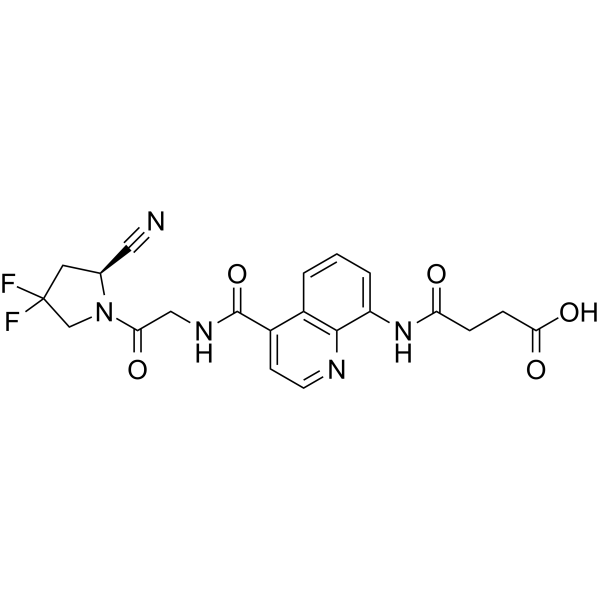
FAPI-46 is a quinoline-based fibroblast activation protein (FAP)-targeted tracer. Use radioactivity FAPI-46 labeled with 68Ga or 177Lu can be used for tumor imaging in a variety of cancers and has higher tumor uptake rates and longer tumor accumulation .
|
-
-
- HY-100684
-
|
|
Prolyl Endopeptidase (PREP)
FAP
|
Cancer
|
|
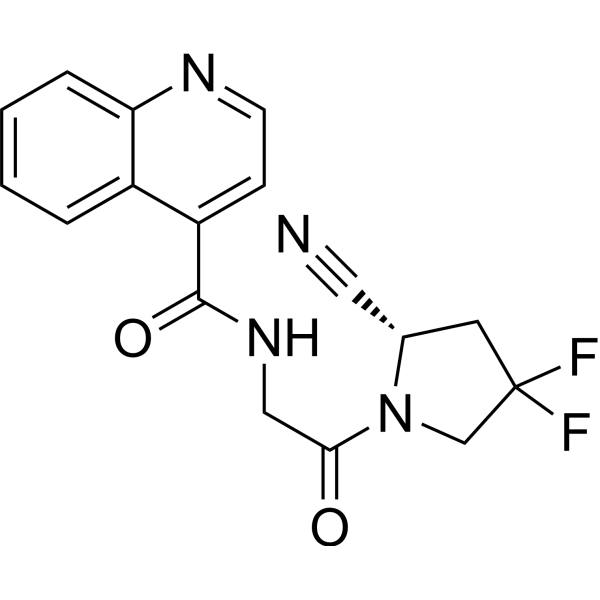
UAMC-1110 is a highly potent and selective inhibitor of fibroblast activation protein (FAP) with an IC50 of 3.2 nM. UAMC-1110 also inhibits prolyl oligopeptidase (PREP) with an IC50 of 1.8 μM .
|
-
-
- HY-101801
-
|
|
FAP
|
Cancer
|
|
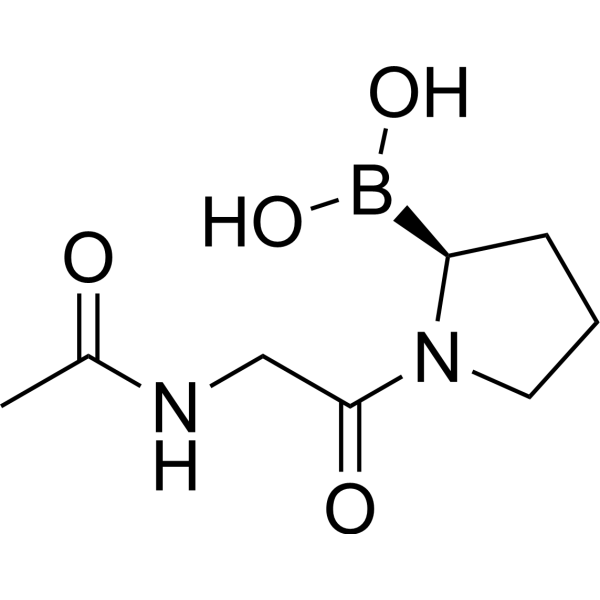
Ac-Gly-BoroPro is a selective FAP inhibitor with a Ki of 23 nM.
|
-
-
- HY-P99269
-
|
BIBH 1; Anti-Human FAP Recombinant Antibody
|
FAP
|
Cancer
|
|
Sibrotuzumab (BIBH 1) is a humanized IgG1 monoclonal antibody targets fibroblast activation protein (FAP). Sibrotuzumab can be used for the research of colorectal cancer and non-small cell lung cancer (NSCLC) .
|
-
-
- HY-47979
-
|
|
FAP
|
Cancer
|
|
FAP-IN-2 is an isonitrile-containing fibroblast activation protein (FAP) inhibitor. FAP-IN-2 can be labeled with technetium-99m ( 99mTc) for targeted tumor SPECT imaging .
|
-
-
- HY-147173
-
|
|
FAP
|
Cancer
|
|
FAPI-74 is a PET (positron emission tomography) tracer targeting the fibroblast activation protein (FAP). FAPI-74 can be used for FAP-positive tumor research .
|
-
-
- HY-13233
-
|
Val-boroPro; PT100
|
Dipeptidyl Peptidase
|
Inflammation/Immunology
Cancer
|
|
Talabostat (Val-boroPro; PT100) is an orally active and nonselective dipeptidyl peptidase IV (DPP-IV) inhibitor (IC50 < 4 nM; Ki = 0.18 nM) and the first clinical inhibitor of fibroblast activation protein (FAP) (IC50 = 560 nM), inhibits DPP8/9 (IC50 = 4/11 nM; Ki = 1.5/0.76 nM), quiescent cell proline dipeptidase (QPP) (IC50 = 310 nM), DPP2, and some other DASH family enzymes. Antineoplastic and hematopoiesis- stimulating activities .
|
-
-
- HY-164316
-
|
|
FAP
|
Others
|
|
FT-FAPI-12_9 is a FAP ligand that can be used to synthesize FAPI-46, a radiotracer targeting FAP .
|
-
-
- HY-172317
-
|
|
FAP
|
Metabolic Disease
|
|
AZD2389 is a potent and orally active FAP inhibitor. AZD2389 can be used for the study of metabolic dysfunction-associated steatohepatitis .
|
-
-
- HY-P10944
-
|
NNS309
|
FAP
|
Inflammation/Immunology
Cancer
|
|
Unlabeled FXX489 (NNS309) is a fibroblast activation protein (FAP)-targeting ligand. Unlabeled FXX489 can be labeled with 68Ga and 177Lu and shows anticancer effects. Unlabeled FXX489 can be used for the study of pancreatic ductal adenocarcinoma (PDAC), non-small cell lung cancer (NSCLC), breast cancer (BC), and colorectal cancer (CRC) .
|
-
-
- HY-136641
-
|
|
Radionuclide-Drug Conjugates (RDCs)
FAP
|
Cancer
|
|
NOTA-FAPI is a fibroblast activation protein (FAP) inhibitor. NOTA-FAPI can be used as a probe for FAP-targeted tumour imaging. NOTA-FAPI has good tumour detection efficacy and excellent imaging quality .
|
-
-
- HY-145938
-
|
|
FAP
|
Cancer
|
|
OncoFAP is an ultra-high-affinity ligand of fibroblast activation protein (FAP) for targeting applications with pan-tumoral potential.
|
-
-
- HY-145983
-
|
|
FAP
Prolyl Endopeptidase (PREP)
|
Cancer
|
|
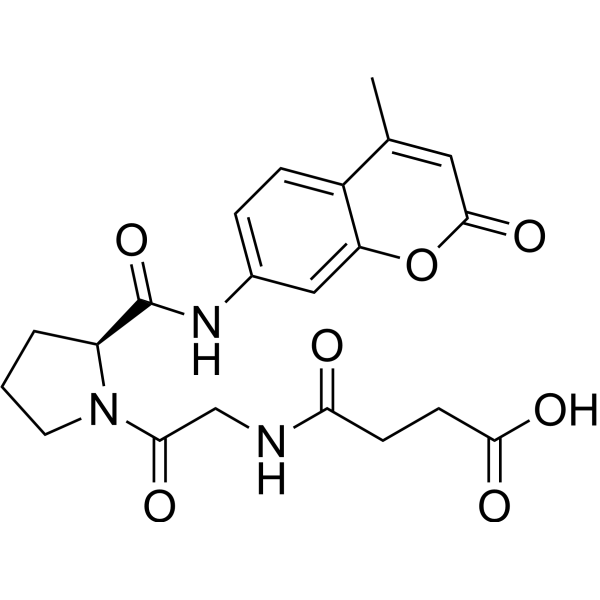
Suc-Gly-Pro-AMC is a fluorescent substrate. Suc-Gly-Pro-AMC is a fibroblast activation protein (FAP) specific substrate. Suc-Gly-Pro-AMC reacts with recombinant porcine prolyl oligopeptidase. Suc-Gly-Pro-AMC can be used to study the activity of FAP, prolyl endopeptidase (PREP). Suc-Gly-Pro-AMC is used in glioma research .
|
-
-
- HY-P10945
-
-
-
- HY-153552A
-
|
|
FAP
|
Cancer
|
|
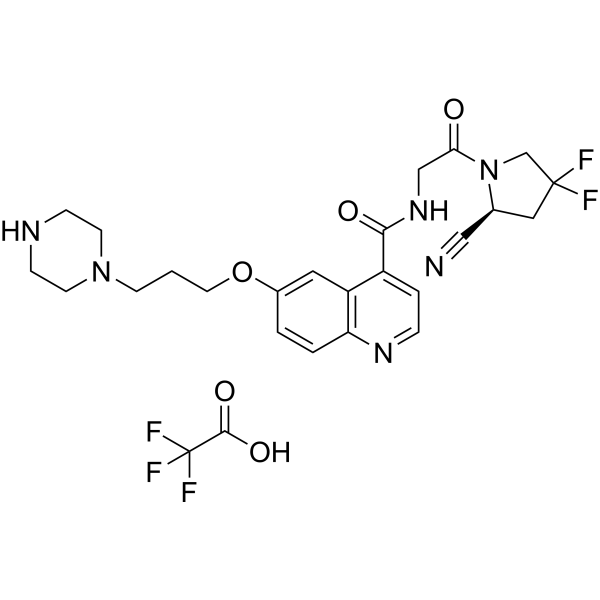
NH2-UAMC1110 TFA is an aminobutoxy derivative of the fibroblast activation protein (FAP) inhibitor UAMC1110 (HY-100684), and is a precursor compound for the synthesis of FAP inhibitor probes, not directly used in bioactivity experiments. For example, NH2-UAMC1110 TFA is involved in the synthesis of the radiotracer FAPI-QS, which exhibits high tumor selectivity and high dose effect, and has been used in tumor diagnosis. NH2-UAMC1110 TFA structurally incorporates an active amino group, allowing it to form covalent bonds with various molecules (such as DOTA, DATA5m, radionuclide chelators, etc.) to synthesize molecular imaging probes or targeted compounds with the ability to target FAP. NH2-UAMC1110 TFA specifically binds to the FAP active site, inhibiting its proline-selective serine protease activity (including dipeptidyl peptidase and endopeptidase activity), blocking FAP-mediated tissue remodeling-related processes. Its key activity is high targeting and high affinity, and its core function is to act as a targeting module coupled with bifunctional chelators (such as DOTA, DATA5m). NH2-UAMC1110 TFA can be applied to diagnostic imaging studies of tumors expressing FAP (such as colorectal cancer, pancreatic cancer, etc.), and also provides molecular tools for targeted research of FAP-related diseases with high FAP expression, such as fibrosis and arthritis .
|
-
-
- HY-P990245
-
|
|
FAP
|
Cancer
|
|
Anti-Mouse FAP Antibody (73.3) is an anti-mouse FAP IgG1 monoclonal antibody. Anti-Mouse FAP Antibody (73.3) can be used to accurately detect the expression and localization of FAP protein in mice. Anti-Mouse FAP Antibody (73.3) can be used for research on cancer .
|
-
-
- HY-139401
-
|
|
FAP
|
Cancer
|
|
FAPI-34 is a SPECT imaging agent targeting FAP. FAPI-34 specifically binds to FAP, is highly internalized by FAP-expressing cells, accumulates in FAP-expressing tumor lesions, and shows low uptake in normal tissues except the kidneys. FAPI-34 is applicable for tumor-related research .
|
-
-
- HY-148127
-
|
|
Drug-Linker Conjugates for ADC
|
Cancer
|
|
TAM558 is a payload molecule used for the synthesis of OMTX705. OMTX705 is a humanized anti-fibroblast-activating protein (FAP) antibody conjugated to the cytolysin TAM470 (HY-148128), with antitumor activity .
|
-
-
- HY-D2363
-
|
|
Radionuclide-Drug Conjugates (RDCs)
FAP
Prolyl Endopeptidase (PREP)
|
Cancer
|
|
DOTA.SA.FAPi TFA is a selective FAP inhibitor with an IC50 value of 0.9 nM against FAP. DOTA.SA.FAPi TFA forms stable complexes with 68Ga and serves as a PET radiotracer for preclinical imaging of FAP-expressing tumors. DOTA.SA.FAPi TFA can be used in the research of colorectal adenocarcinoma and various other cancers .
|
-
-
- HY-153552
-
|
|
FAP
|
Cancer
|
|
NH2-UAMC1110 is an aminobutoxy derivative of the fibroblast activation protein (FAP) inhibitor UAMC1110 (HY-100684), and is a precursor compound for the synthesis of FAP inhibitor probes, not directly used in bioactivity experiments. For example, NH2-UAMC1110 is involved in the synthesis of the radiotracer FAPI-QS, which exhibits high tumor selectivity and high dose-response, and has been used for tumor diagnosis. NH2-UAMC1110 introduces an active amino group into its structure, enabling it to form covalent bonds with various molecules (such as DOTA, DATA5m, radionuclide chelators, etc.), thereby synthesizing molecular imaging probes or targeted compounds with the ability to target FAP. NH2-UAMC1110 specifically binds to the FAP active site, inhibiting its proline-selective serine protease activity (including dipeptidyl peptidase and endopeptidase activity), blocking FAP-mediated tissue remodeling processes. Its key activity is high targeting and high affinity, and its core function is to be coupled with bifunctional chelators (such as DOTA, DATA5m) as a targeting module. NH2-UAMC1110 can be applied to diagnostic imaging studies of tumors expressing FAP (such as colorectal cancer, pancreatic cancer, etc.), and also provides molecular tools for targeted research of FAP-related diseases with high FAP expression, such as fibrosis and arthritis .
|
-
-
- HY-P99902
-
|
FAP-IL2v; RO6874281; RG7461
|
Interleukin Related
|
Cancer
|
|
Simlukafusp alfa (FAP-IL2v) is an immunocytokine comprising an antibody against fibroblast activation protein α (FAPα) and an IL-2 variant that only binds IL-2Rβγ. Isotype: human IgG1 .
|
-
-
- HY-160289
-
|
|
FAP
|
Cancer
|
|
ARI-3144 is an excellent and specific substrate for fibroblast activation protein (FAP). ARI-3144 is usually coupled with the fluorophore 7-Amino-4-methylcoumarin (HY-D0027) (AMC) for detection and quantification of FAP .
|
-
-
- HY-125366
-
|
|
FAP
|
Metabolic Disease
|
|
ARI-3099 is an oral fibroblast activation protein (FAP) inhibitor. ARI-3099 specifically inhibits the proteolytic activity of FAP and blocks the cleavage of human FGF-21 between residues P171 and S172. ARI-3099 extends the half-life of circulating human FGF-21 in mice. ARI-3099 can be used in the research of type 2 diabetes and metabolic disorders .
|
-
-
- HY-P10131
-
|
|
Radionuclide-Drug Conjugates (RDCs)
FAP
|
Cancer
|
|
3BP-3940 is a highly potent and selective peptide inhibitor of FAP that targets cancer-associated fibroblasts (CAFs) in the tumor microenvironment. 3BP-3940 can be labeled with radionuclides (such as Ga-68) for precise tumor imaging or Lu-177 for the development of targeted anticancer technologies. 3BP-3940 accumulates in tumor lesions and can be used to diagnose and inhibit various solid cancers and CAFs-related diseases .
|
-
-
- HY-173374
-
|
|
FAP
Drug Derivative
|
Cancer
|
|
DOTAGA-FAP-2286-ALB is a derivative of Rofapitide tetraxetan (HY-147057). DOTAGA-FAP-2286-ALB is a selective fibroblast activation protein (FAP) inhibitor with an IC50 value of 67.5 nM. DOTAGA-FAP-2286-ALB enhances tumor retention via albumin interaction, prolonging blood circulation and improving radiometal complex stability (e.g., with 111In and 225Ac). DOTAGA-FAP-2286-ALB is promising for research of radionuclide therapy (TRT) of FAP-positive solid tumors .
|
-
-
- HY-W404002
-
|
|
Prolyl Endopeptidase (PREP)
|
Metabolic Disease
|
|
BR102910 is a selective fibroblast activation protein (FAP) inhibitor with the IC50 of 2 nM. BR102910 also inhibits prolyl oligopeptidase (PREP) with the IC50 of 49.00 μM. BR102910 can be used for the researchof type 2
|
-
-
- HY-154844
-
|
|
Biochemical Assay Reagents
|
Cancer
|
|
FAP Ligand 1 (FL), a high-affinity FAP small-molecule ligand, is used to target attached drugs to FAP-expressing fibroblasts and can be used in radiation imaging studies of targeted cancers .
|
-
-
- HY-161074
-
|
|
FAP
|
Cancer
|
|
PNT6555 is a fibroblast activation protein-α (FAP) inhibitor. PNT6555 has antitumor activity. PNT6555 can be used for imaging of FAP-positive tumors .
|
-
-
- HY-159768A
-
|
|
Radionuclide-Drug Conjugates (RDCs)
FAP
|
Neurological Disease
Cancer
|
|
DOTAGA.Glu.(FAPi) 2 is a FAPI homodimer in which a central glutamic acid (Glu) linker connects FAPI and a chelator. Radiolabeled with gallium- 68, lutetium- 177 or terbium- 161, DOTAGA.Glu.(FAPi) 2 is applicable to FAP-positive cancer PET imaging studies. DOTAGA.Glu.(FAPi) 2 is suitable for research related to prostate adenocarcinoma and recurrent glioblastoma multiforme .
|
-
-
- HY-175350
-
|
OncoFAP glidotin
|
FAP
Microtubule/Tubulin
|
Cancer
|
|
OncoFAP-GlyPro-MMAE is a FAP small molecule-drug conjugate (SMDC) with an IC50 of 0.49 nM. OncoFAP-GlyPro-MMAE consists of a FAP Ligand OncoFAP (HY-145938), a Tubulin inhibitor (MMAE) (HY-15162) and a linker. OncoFAP-GlyPro-MMAE can be used for cancers like renal cancer research .
|
-
-
- HY-P3441A
-
|
|
FAP
|
Cancer
|
|
3BP-4089 TFA is a highly efficient fibroblast activation protein (FAP) targeting peptide. 3BP-4089 TFA is often conjugated with radionuclides for tumor diagnosis and research .
|
-
-
- HY-177435
-
|
|
FAP
|
Inflammation/Immunology
|
|
FAPI-800CW is a near-infrared (NIR) fluorescent-labeled fibroblast activation protein (FAP) inhibitor. FAPI-800CW shows specific uptake in inflamed paws in collagen-induced arthritis (CIA) model mice. FAPI-800CW can be used for in vivo molecular imaging of FAP expression in inflammatory diseases such as rheumatoid arthritis (RA) to monitor joint inflammation and disease activity .
|
-
-
- HY-175613
-
|
|
FAP
|
Cancer
|
|
DOTA-ALB-02 is an albumin-bound FAP inhibitor (FAPI) ligand. DOTA-ALB-02 labeled with 177Lu has a high FAP-binding affinity and enhanced tumor uptake and retention with a significant tumor/nontarget ratio. DOTA-ALB-02 can be used for PET/CT and SPECT/CT imaging of cancers, especially late-stage cancers .
|
-
-
- HY-148128
-
|
|
Microtubule/Tubulin
ADC Payload
|
Cancer
|
|
TAM470 is a novel cytolysin, inhibiting tubulin polymerization and microtubule depolymerization. TAM470 can be used in the synthesis of OMTX705 as payload molecule, OMTX705 is a novel FAP-targeting antibody-drug conjugates (ADCs) with antitumor activity .
|
-
-
- HY-177459
-
|
|
FAP
|
Cancer
|
|
DOTA-2P(FAPI)2 is a dimeric FAP (fibroblast activation protein) that can be used as a PET imaging agent and a tracer for tumor therapy .
|
-
-
- HY-177083
-
|
AVA-6000
|
FAP
|
Cancer
|
|
Faridoxorubicin (AVA-6000) is a prodrug targeting fibroblast activation protein α (FAPα). Faridoxorubicin releases active doxorubicin through FAPα-mediated cleavage, enhancing intratumoral drug exposure and reducing cardiac toxicity. Faridoxorubicin is promising for research of solid tumors (e.g., colorectal cancer liver metastasis) .
|
-
-
- HY-164725
-
|
|
Radionuclide-Drug Conjugates (RDCs)
FAP
|
Cancer
|
|
FAPI-mFS is an irreversible fibroblast activation protein (FAP) inhibitor, that enhances the uptake and retention time in cancer cells through its covalent binding property for FAP. FAPI-mFS can be used for cancer imaging the therapy, when labeled with radioactive 68Ga or 177Lu . FAPI-mFS can be used for the synthesis/research of Radionuclide-Drug Conjugates (RDCs).
|
-
-
- HY-P3441
-
|
|
FAP
|
Cancer
|
|
3BP-4089 is a highly efficient fibroblast activation protein (FAP) targeting peptide. 3BP-4089 is often conjugated with radionuclides for tumor diagnosis and research .
|
-
-
- HY-176958
-
|
|
FAP
|
Others
|
|
OncoFAP-EN-DOTAGA is a FAP (fibroblast activation protein) targeting conjugate compound. OncoFAP-EN-DOTAGA can chelate radioactive isotopes (such as ) Ga-68 or fluorescent agent and can be used as a probe with targeting binding functions .
|
-
-
- HY-170779
-
|
|
FAP
|
Cancer
|
|
DOTA-NI-FAPI-04 is a FAP inhibitor (IC50 = 7.44 nM). By integrating FAP targeting with hypoxia-sensitive groups (nitroimidazole), DOTA-NI-FAPI-04 significantly enhances tumor uptake and retention capabilities. DOTA-NI-FAPI-04 chelates metallic isotopes (such as 68Ga and 177Lu) through DOTA to produce radioactive probes ([68Ga]Ga/DOTA-NI-FAPI-04 and [177Lu]Lu/DOTA-NI-FAPI-04), which can be used for research in tumor diagnostics and therapeutic agents. DOTA-NI-FAPI-04 holds dual targeting potential in the fields of cancer imaging, tumor microenvironment analysis, and radionuclide therapy, particularly suitable for scenarios where the tumor stroma and hypoxic regions synergistically interact .
|
-
-
- HY-D2281
-
|
|
FAP
|
Cancer
|
|
FAP Ligand 2, a FAPI-46 derivative, is a specific fibroblast activation protein (FAP)-targeted tracer. FAP Ligand 2 exhibits good tumor uptake and acts as a promising molecular tracer for FAP tumor imaging .
|
-
-
- HY-147057A
-
|
FAP-2286 acetate
|
FAP
|
Cancer
|
|
Rofapitide tetraxetan (FAP-2286) acetate is a potent and selective FAP-binding peptide with a mean IC50 value of 2.7 nM for binding to FAP. Rofapitide tetraxetan acetate can be labeled with radionuclides for diagnostic applications. Rofapitide tetraxetan acetate has antitumor activity .
|
-
-
- HY-175353
-
|
|
FAP
|
Cancer
|
|
TriOncoFAP-GlyPro-MMAE is a small molecule drug conjugate (SMDC) targeting fibroblast activation protein (FAP) with an IC50 of 13 pmol/L. TriOncoFAP-GlyPro-MMAE combines a FAP-targeting ligand (TriOnco), a cleavable glycine-proline linker, and a cytotoxic payload (MMAE) .
|
-
-
- HY-175685
-
|
|
FAP
|
Cancer
|
|
FAP-IN-7 (Compound 5b) is a FAPFAP-IN-7 labeled with 18F enhances tumor retention with high selectivity and favorable pharmacokinetics. FAP-IN-7 can be used as a radiotracer for PET imaging and radionuclide therapy of cancers research .
|
-
-
- HY-175322
-
|
|
FAP
|
Cancer
|
|
FAPI-P8PN is a fibroblast activation protein (FAP) inhibitor (IC50=3.6 nM). FAPI-P8PN is promising for research of FAP-overexpressing solid tumors .
|
-
-
- HY-145358
-
|
|
PI3K
|
Cancer
|
|
FAP-PI3KI1 is a fibroblast-activated protein (FAP)-targeted PI3K inhibitor that selectively targets FAP-expressing human idiopathic pulmonary fibrosis (IPF) cells and effectively inhibits collagen synthesis and reduces collagen deposition .
|
-
-
- HY-174421
-
|
|
FAP
|
Cancer
|
|
FAPI-JNU is a molecule targeting fibroblast activation protein (FAP). FAPI-JNU specifically binds to FAP highly expressed in the tumor microenvironment, and uses radionuclides [ 68Ga]Ga or [ 177Lu]Lu to achieve tumor imaging diagnosis. [177Lu]Lu−FAPI−JNU can effectively target and inhibit tumor growth in tumor-bearing mice. FAPI-JNU is promising for research of FAP-positive tumors (such as various solid tumors) .
|
-
- HY-128642
-
|
|
FAP
|
Cancer
|
|
FAPI-2 is a quinoline-based fibroblast activation protein (FAP)-targeting ligand that can be labeled as 68Ga-FAPI-2 and used as a PET tracer for cancer diagnosis. FAPI-2 has advantages such as fast tracer kinetics, no need for fasting preparation, and being unaffected by blood glucose .
|
-
- HY-175612
-
|
|
FAP
|
Cancer
|
|
DOTA-ALB-01 is an albumin-bound FAP inhibitor (FAPI) ligand. DOTA-ALB-01 labeled with 68Ga or 177Lu has a high FAP-binding affinity and enhanced tumor uptake and retention. DOTA-ALB-01 can be used for PET/CT and SPECT/CT imaging of cancers, especially late-stage cancers .
|
-
- HY-149860
-
|
|
FAP
|
Cancer
|
|
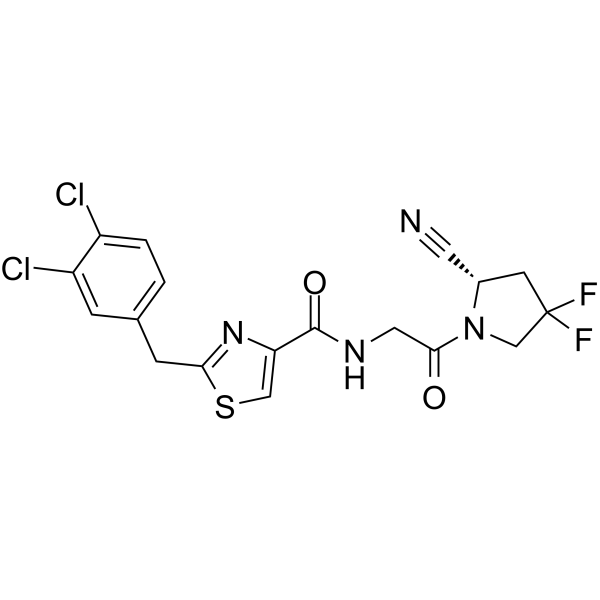
FAP-IN-1 is a fibroblast activation protein (FAP) inhibitor with an IC50 value of 3.3 nM. FAP-IN-1 can be used for the research of cancer .
|
-
- HY-47979A
-
|
|
FAP
|
Cancer
|
|
FAP-IN-2 TFA is an isonitrile-containing fibroblast activation protein (FAP) inhibitor. FAP-IN-2 TFA can be labeled with technetium-99m ( 99mTc) for targeted tumor SPECT imaging .
|
-
- HY-W668749
-
|
|
FAP
|
Cancer
|
|
3BP-3580 is a fibroblast activation protein (FAP) inhibitor (pIC50: 8.6), and can be used for cancer research .
|
-
- HY-148361
-
|
|
FAP
|
Others
|
|
Fluorogen binding modulator-1 (PubChem SID 125240934) is a fluorogen activating protein (FAP)-fluorogen binding modulator with -log EC50s of 6.61 and 6.37 for AM2.2-β2AR and AM2.2-GPR32, respectively .
|
-
- HY-178981
-
|
|
FAP
Prolyl Endopeptidase (PREP)
|
Cancer
|
|
FAP-IN-8 (Compound 12i) is a potent inhibitor of PREP and FAP, with pIC50 values of 8.99 and 10.08 for FAP and PREP, and IC50 values of 1 and 0.08 nM, respectively. FAP-IN-8 may be used in cancer research .
|
-
- HY-158326
-
|
|
FAP
|
Cancer
|
|
FAP-IN-4 (Comp 10) is a fibroblast activation protein (FAP) inhibitor and a 18F-labeled PET tracer targeting FAP. FAP-IN-4 can be used for cancer research .
|
-
- HY-164316A
-
|
|
FAP
|
Cancer
|
|
FT-FAPI-12_9 TFA is a FAP ligand that can be used to synthesize FAPI-46, a radiotracer targeting FAP .
|
-
- HY-175330
-
|
|
FAP
|
Cancer
|
|
FAP-IN-6 (Compound 21) is a selectivity FAP inhibitor with an IC50 of 13 pM. FAP-IN-6 has a high metabolic stability. FAP-IN-6 labeled with 18F can be used as a positron emission tomography (PET) tracer. FAP-IN-6 can be used for microenvironment of cancers research .
|
-
- HY-169868
-
|
|
Biochemical Assay Reagents
|
Cancer
|
|
NOTA-FAPI-52 is a tracer with potent tumor uptake. NOTA-FAPI-52 can be radiolabeled to enable PET imaging or other bioimaging techniques. NOTA-FAPI-52 can be used to study diseases in which fibroblast activation protein (FAP) is overexpressed .
|
-
- HY-128642A
-
|
|
FAP
|
Cancer
|
|
FAPI-2 TFA is a quinoline-based fibroblast activation protein (FAP)-targeting ligand that can be labeled as 68Ga-FAPI-2 and used as a PET tracer for cancer diagnosis. FAPI-2 TFA has advantages such as fast tracer kinetics, no need for fasting preparation, and being unaffected by blood glucose .
|
-
- HY-159771
-
|
|
FAP
|
Cancer
|
|
FAP6-19 is a fibroblast activation protein (FAP) targeting radioligand with a Kd of 18.2 nM. FAP6-19 selectively delivers therapeutic radioactive nuclides (such as 177Lu) to the tumor site by targeting the overexpressed FAP protein in the tumor microenvironment, achieving precise killing of cancer cells while minimizing radiation damage to healthy tissues. FAP6-19 exhibits extremely high total cellular uptake and good intracellular retention ability in HT1080 cells. After being labeled with 111In, FAP6-19 produced extremely high tumor/kidney and tumor/liver dose ratios in the mouse model with 4T1 tumors. FAP6-19 can be used in the research of solid tumors expressing FAP.
|
-
- HY-172137
-
|
|
FAP
|
Cancer
|
|
FAPI-FUSCC-07 is a targeted probe for fibroblast activation protein (FAP), exhibiting high affinity binding to FAP for applications in molecular imaging, tumor diagnosis, and radiotherapy .
|
-
- HY-P10945B
-
|
|
Radionuclide-Drug Conjugates (RDCs)
FAP
|
Cancer
|
|
Cys-FAP targeting peptide for FXX489 TFA is the polypeptide part of Unlabeled FXX489 (HY-P10944). Unlabeled FXX489 is a fibroblast activation protein (FAP)-targeting ligand .
|
-
- HY-P10946
-
|
|
Radionuclide-Drug Conjugates (RDCs)
|
Cancer
|
|
FAP targeting peptide-PEG2 conjugate (Example A1) is the peptide (HY-P10945) and linker conjugate of Unlabeled FXX489 (HY-P10944). Unlabeled FXX489 is a fibroblast activation protein (FAP)-targeting ligand .
|
-
- HY-161262
-
|
|
FAP
|
Cancer
|
|
SB03178 is a fibroblast activation protein-alpha (FAP) inhibitor. SB03178 can be conjugated with DOTA and can be used for cancer research .
|
-
- HY-P11254
-
|
|
Radionuclide-Drug Conjugates (RDCs)
|
Cancer
|
|
DOTA-FAPT is a novel targeting FAP tracer. DOTA-FAPT can be radiolabeled with gallium-68 and lutetium-177. DOTA-FAPT can be used for PET imaging studies of cancer-associated fibroblasts .
|
-
- HY-164364B
-
|
|
FAP
|
Cancer
|
|
DOTAGA.(SA.FAPi)2 analogue TFA is a DOTAGA.(SA.FAPi)2 TFA (HY-164364A) analogue, in which the ligand and the chelator are identical to those of DOTAGA.(SA.FAPi)2 TFA. DOTAGA.(SA.FAPi)2 TFA is a potent dimeric fibroblast-activation protein inhibitor (FAPi) .
|
-
- HY-159934
-
|
|
FAP
|
Cancer
|
|
QI-18 is a fibroblast activation protein (FAP) inhibitor with the IC50 of 0.50 nM, which is a 6.5-fold increase in potency over that of UAMC-1110 (HY-100684,IC50 of 3.25 nM). QI-18 can be used to synthesize high tumor selectivity and high dose radiotracers for the diagnosis and study of tumors .
|
-
- HY-178028
-
|
|
Histone Methyltransferase
|
Cancer
|
|
PRMT5-IN-53 is a gut-restricted and orally active PRMT5 inhibitor with pIC50s of ≥ 9.7 against hPRMT5 and mPRMT5. PRMT5-IN-53 binds to the PRMT5:MEP50 complex with a KD of 11.3 pM. PRMT5-IN-53 effectively inhibits PRMT5 locally in the intestines of mice, significantly reducing the number and area of polyps, while avoiding systemic hematological toxicity (such as anemia, neutropenia). PRMT5-IN-53 can be used for the study of colorectal cancer especially for familial adenomatous polyposis (FAP) .
|
-
- HY-179348
-
|
|
Dipeptidyl Peptidase
HIV
Pyroptosis
|
Cancer
|
DPP9-IN-2 is a selective, potent and orally active inhibitor of Dipeptidyl Peptidase 9 (DPP9 ) with an IC50 of 12.9 nM. DPP9-IN-2 shows a SI of 59 over DPP8, and shows no significant inhibitory activity against related peptidases including DPP2, DPP4, FAP, and PREP. DPP9-IN-2 can induce cancer cells pyroptosis and has weak synergistic anti-HIV-1 activity when combined with non-nucleoside reverse transcriptase inhibitor. DPP9-IN-2 can be used for the researches of cance rand infection .
|
-
- HY-146180
-
|
|
FAP
|
Cancer
|
|
FSDD0I is an albumin-binding fibroblast activation protein (FAP) ligand. FSDD0I can be labeled with 68Ga and 177Lu for single photon emission computed tomography (SPECT) imaging .
|
-
- HY-146181
-
|
|
FAP
|
Cancer
|
|
FSDD1I is an albumin-binding fibroblast activation protein (FAP) ligand. FSDD1I can be labeled with 68Ga and 177Lu for single photon emission computed tomography (SPECT) imaging .
|
-
- HY-146182
-
|
|
FAP
|
Cancer
|
|
FSDD3I is an albumin-binding fibroblast activation protein (FAP) ligand. FSDD3I can be labeled with 68Ga and 177Lu for single photon emission computed tomography (SPECT) imaging .
|
-
- HY-173319
-
|
|
FAP
|
Cancer
|
|
FAP-IN-5 (Compound 4a) is an FAP inhibitor with an IC50 of 1.7 nM. FAP-IN-5 can be used in the research of tumor positron emission tomography (PET) imaging .
|
-
- HY-RS22947
-
|
|
Small Interfering RNA (siRNA)
|
Others
|
|
Fap Rat Pre-designed siRNA Set A contains three designed siRNAs for Fap gene (Rat), as well as a negative control, a positive control, and a FAM-labeled negative control.
|
-
Fap Rat Pre-designed siRNA Set A
- HY-RS04743
-
|
|
Small Interfering RNA (siRNA)
|
Others
|
|
FAP Human Pre-designed siRNA Set A contains three designed siRNAs for FAP gene (Human), as well as a negative control, a positive control, and a FAM-labeled negative control.
|
-
FAP Human Pre-designed siRNA Set A
- HY-RS16516
-
|
|
Small Interfering RNA (siRNA)
|
Others
|
|
Fap Mouse Pre-designed siRNA Set A contains three designed siRNAs for Fap gene (Mouse), as well as a negative control, a positive control, and a FAM-labeled negative control.
|
-
Fap Mouse Pre-designed siRNA Set A
- HY-163079
-
|
|
FAP
|
Cancer
|
|
AlF-PD-FAPI has affinity for FAP , with the IC50 of 0.13 nM, and shows a specific uptake, high internalized fraction, and low cellular efflux in vitro. AlF-PD-FAPI can be used as FAP-targeting tracer .
|
-
- HY-P4448
-
|
|
Fluorescent Dye
|
Others
|
|
Ac-Gly-Pro-AFC is a fluorogenic substrate for the determination of fibroblast activation protein (FAP) endopeptidase activity .
|
-
- HY-103323
-
|
|
FAP
|
Others
|
|
Fas C-Terminal Tripeptide is a C-terminal tripeptide of Fas. Fas C-Terminal Tripeptide shows the inhibitory effect on Fas/FAP-1 binding .
|
-
- HY-131096
-
|
H-Pro-4MβNA hydrochloride
|
Drug Intermediate
|
Cancer
|
|
L-Proline 4-methoxy-β-naphthylamide hydrochloride (H-Pro-4MβNA hydrochloride) can be used for Fap-activated anti-tumor compounds preparaction .
|
-
- HY-48564
-
|
|
ADC Payload
|
Cancer
|
|
TAM558 intermediate-54 is an intermediate in the synthesis of TAM558 (HY-148127).TAM558 is the payload molecule used in the synthesis of OMTX705.OMTX705 is a humanized anti-fibroblast activation protein (FAP) antibody that binds to the cytolysin TAM470 (HY-148128) and has anti-tumor activity .
|
-
- HY-400690
-
|
|
Drug Intermediate
|
Cancer
|
|
TAM558 intermediate-4 is an intermediate in the synthesis of TAM558 (HY-148127).TAM558 is the payload molecule used in the synthesis of OMTX705.OMTX705 is a humanized anti-fibroblast activation protein (FAP) antibody that binds to the cytolysin TAM470 (HY-148128) and has anti-tumor activity .
|
-
- HY-400688
-
|
|
ADC Payload
|
Cancer
|
|
TAM558 intermediate-24 is an intermediate in the synthesis of TAM558 (HY-148127).TAM558 is the payload molecule used in the synthesis of OMTX705.OMTX705 is a humanized anti-fibroblast activation protein (FAP) antibody that binds to the cytolysin TAM470 (HY-148128) and has anti-tumor activity .
|
-
- HY-400687
-
|
|
Drug Intermediate
|
Cancer
|
|
TAM558 intermediate-1 is an intermediate in the synthesis of TAM558 (HY-148127).TAM558 is the payload molecule used in the synthesis of OMTX705.OMTX705 is a humanized anti-fibroblast activation protein (FAP) antibody that binds to the cytolysin TAM470 (HY-148128) and has anti-tumor activity .
|
-
- HY-400689
-
|
|
Drug Intermediate
|
Cancer
|
|
TAM558 intermediate-34 is an intermediate in the synthesis of TAM558 (HY-148127).TAM558 is the payload molecule used in the synthesis of OMTX705.OMTX705 is a humanized anti-fibroblast activation protein (FAP) antibody that binds to the cytolysin TAM470 (HY-148128) and has anti-tumor activity .
|
-
- HY-164567
-
|
|
FAP
|
Cancer
|
|
SID 125240931 is a fluorogen activating proteins (FAPs) modulator. SID 125240931 interferes with the binding between fluorogens and FAP .
|
-
- HY-182272
-
|
|
FAP
|
Cancer
|
|
FAP-IN-9 (compound P12) is a fibroblast activation protein (FAP) inhibitor with an IC50 of 0.38 nM against human FAP. FAP-IN-9 functionally inhibits FAP activity, and its specific binding is verified by in vitro and in vivo blocking assays. FAP-IN-9 forms stable complexes and acts as a tumor-targeting agent. When labeled with 99mTc, FAP-IN-9 serves as a SPECT probe and is applicable to research related to glioblastoma .
|
-
- HY-181580
-
|
|
FAP
|
Cancer
|
|
FAP Ligand 3 (compound 54) is a reagent that binds to FAP, with a Ki value of 0.092 nM against human targets. FAP Ligand 3 acts as a tumor-retaining agent and serves as a FAP-targeted positron emission tomography (PET) tracer for tumor imaging. FAP Ligand 3 is applicable to studies related to U87MG glioma .
|
-
- HY-182250
-
|
|
FAP
ERK
GLUT
|
Metabolic Disease
Inflammation/Immunology
|
|
BR103354 is an orally active, selective fibroblast activation protein (FAP) inhibitor with an IC50 value of 14 nM against hFAP. BR103354 restores the levels of phosphorylated ERK and Glut1 that are reduced by co-treatment with hFGF21 and FAP, decreases non-fasting blood glucose concentrations, improves glucose tolerance, and reduces hepatic triglyceride content. BR103354 ameliorates hepatic steatosis and hepatic fibrosis. BR103354 can be used in the research of type 2 diabetes and non-alcoholic steatohepatitis .
|
-
- HY-P11602
-
|
|
FAP
|
Cancer
|
|
DOTA-C1-FAP-2286 is a cysteic acid-modified fibroblast activation protein (FAP)-targeting radioligand. DOTA-C1-FAP-2286 binds competitively to FAP with an IC50 of 127.64 nM. DOTA-C1-FAP-2286 is targeted accumulation in FAP-expressing cells and exhibits accelerated renal clearance. DOTA-C1-FAP-2286 can be used as a PET/CT tracer in cancer .
|
-
- HY-186190
-
|
|
Drug Intermediate
FAP
|
Cancer
|
|
I-FAPI-04 prodrug-1 is a prodrug of I-FAPI-04, which is an inhibitor targeting fibroblast activation protein (FAP). I-FAPI-04 prodrug-1 can be used as a radioactive tracer in cancer .
|
-
- HY-181494
-
|
|
FAP
|
Cancer
|
|
FAPI-X5 is a fibroblast activation protein (FAP) inhibitor. FAPI-X5 binds to the FAP catalytic domain, forming hydrogen bonds with key active residues and engaging in π-π stacking to drive functional inhibition. FAPI-X5 exhibits albumin binding activity to prolong systemic circulation half-life. FAPI-X5 induces cytostatic effects on glioblastoma tumors, slowing tumor growth without regression. FAPI-X5, when labeled with 68Ga, acts as a PET tracer with rapid tumor uptake and high-contrast imaging in glioblastoma tumor-bearing mice. FAPI-X5, when labeled with 177Lu or 47Sc, functions as a targeted radionuclide agent with prolonged tumor retention. FAPI-X5 can be used for the research of glioblastoma .
|
-
- HY-P10945A
-
-
- HY-183513
-
|
|
FAP
|
Cancer
|
|
L-Ala-BPA is a boron delivery agent. L-Ala-BPA is transported into tumor cells via PEPT1/2 and LAT-1 (SLC7A5) pathways and is rapidly cleaved systemically by endogenous proteases including FAP to yield L-BPA (HY-W087830). L-Ala-BPA shows antitumor activity and can be used for the research of Boron Neutron Capture Therapy (BNCT) .
|
-
- HY-P991995
-
|
OMTX705 antibody
|
ADC Antibody
FAP
|
Cancer
|
|
OMTX005 (OMTX705 antibody) is a humanized anti-FAP IgG1 monoclonal antibody that specifically binds to human (EC50: 0.33 nM)/mouse (EC50: 0.14 nM) FAP proteins and FAP-positive cells. OMTX005 exhibits no cytotoxicity when used alone and fails to induce an increase in caspase 3/7 activity in relevant cells. OMTX005 can be used to synthesize the ADC molecule OMTX705 for tumor research .
|
-
- HY-P11599
-
|
|
FAP
|
Cancer
|
|
NOTA-SP2A-FAPT is a fibroblast activation protein (FAP) ligand. NOTA-SP2A-FAPT can be adiolabeled and exhibits rapid renal excretion with fast kidney tissue clearance, accumulates rapidly in and retains high levels in FAP-positive tumor xenografts to enable clear tumor visualization. NOTA-SP2A-FAPT can be used as a tracer of cancer .
|
-
- HY-100684R
-
|
|
Prolyl Endopeptidase (PREP)
FAP
Reference Standards
|
Cancer
|
|
UAMC-1110 (Standard) is the analytical standard of UAMC-1110 (HY-100684). This product is intended for research and analytical applications. UAMC-1110 is a highly potent and selective inhibitor of fibroblast activation protein (FAP) with an IC50 of 3.2 nM. UAMC-1110 also inhibits prolyl oligopeptidase (PREP) with an IC50 of 1.8 μM .
|
-
- HY-D3192
-
|
|
Fluorescent Dye
Bacterial
Amyloid-β
|
Infection
|
|
CDy11 is a fluorescent probe and amyloid-binding dye (λex=590 nm; λem=612 nm), with a Ka of 29 μM for Pseudomonas aeruginosa Fap. CDy11 specifically recognizes amyloid fibrils in bacterial biofilms and exhibits significantly enhanced fluorescence upon binding to the target. CDy11 shows no staining effect on amyloid-deficient mutant strains, planktonic cells or protein monomers. CDy11 supports in vivo imaging of Pseudomonas aeruginosa biofilms in mouse implant and corneal infection models. CDy11 is widely used in studies of Staphylococcus aureus biofilm infections, dental caries, and Pseudomonas aeruginosa-associated implant and corneal infections .
|
-
- HY-W010991
-
|
FAPGG
|
Angiotensin-converting Enzyme (ACE)
|
Others
|
|
N-[3-(2-Furyl)acryloyl]-Phe-Gly-Gly (FAPGG) is a specific substrate of angiotensin converting enzyme (ACE) with a Ki of 2.546×10 -4 M. It is used as a chromogenic probe for quantitative detection of ACE activity. N-[3-(2-Furyl)acryloyl]-Phe-Gly-Gly can be hydrolyzed by ACE to generate N-[3-(2-furyl)acryloyl]-Phe (FAP) and Gly-Gly, and the ACE inhibitory effect is monitored by photometry. FAPGG competitively binds to the active center of ACE and is a key tool for screening ACE inhibitors such as Captopril (HY-B0368) and Dioscorin. Its reversible mechanism of action supports hypertension research and drug development targeting the renin-angiotensin system .
|
-
| Cat. No. |
Product Name |
Type |
-
- HY-W010991
-
|
FAPGG
|
Fluorescent Dye
|
|
N-[3-(2-Furyl)acryloyl]-Phe-Gly-Gly (FAPGG) is a specific substrate of angiotensin converting enzyme (ACE) with a Ki of 2.546×10 -4 M. It is used as a chromogenic probe for quantitative detection of ACE activity. N-[3-(2-Furyl)acryloyl]-Phe-Gly-Gly can be hydrolyzed by ACE to generate N-[3-(2-furyl)acryloyl]-Phe (FAP) and Gly-Gly, and the ACE inhibitory effect is monitored by photometry. FAPGG competitively binds to the active center of ACE and is a key tool for screening ACE inhibitors such as Captopril (HY-B0368) and Dioscorin. Its reversible mechanism of action supports hypertension research and drug development targeting the renin-angiotensin system .
|
-
- HY-D2281
-
|
|
Fluorescent Dye
|
|
FAP Ligand 2, a FAPI-46 derivative, is a specific fibroblast activation protein (FAP)-targeted tracer. FAP Ligand 2 exhibits good tumor uptake and acts as a promising molecular tracer for FAP tumor imaging .
|
-
- HY-D3192
-
|
|
Fluorescent Dye
|
|
CDy11 is a fluorescent probe and amyloid-binding dye (λex=590 nm; λem=612 nm), with a Ka of 29 μM for Pseudomonas aeruginosa Fap. CDy11 specifically recognizes amyloid fibrils in bacterial biofilms and exhibits significantly enhanced fluorescence upon binding to the target. CDy11 shows no staining effect on amyloid-deficient mutant strains, planktonic cells or protein monomers. CDy11 supports in vivo imaging of Pseudomonas aeruginosa biofilms in mouse implant and corneal infection models. CDy11 is widely used in studies of Staphylococcus aureus biofilm infections, dental caries, and Pseudomonas aeruginosa-associated implant and corneal infections .
|
| Cat. No. |
Product Name |
Target |
Research Area |
-
- HY-W010991
-
|
FAPGG
|
Angiotensin-converting Enzyme (ACE)
|
Others
|
|
N-[3-(2-Furyl)acryloyl]-Phe-Gly-Gly (FAPGG) is a specific substrate of angiotensin converting enzyme (ACE) with a Ki of 2.546×10 -4 M. It is used as a chromogenic probe for quantitative detection of ACE activity. N-[3-(2-Furyl)acryloyl]-Phe-Gly-Gly can be hydrolyzed by ACE to generate N-[3-(2-furyl)acryloyl]-Phe (FAP) and Gly-Gly, and the ACE inhibitory effect is monitored by photometry. FAPGG competitively binds to the active center of ACE and is a key tool for screening ACE inhibitors such as Captopril (HY-B0368) and Dioscorin. Its reversible mechanism of action supports hypertension research and drug development targeting the renin-angiotensin system .
|
-
- HY-P10944
-
|
NNS309
|
FAP
|
Inflammation/Immunology
Cancer
|
|
Unlabeled FXX489 (NNS309) is a fibroblast activation protein (FAP)-targeting ligand. Unlabeled FXX489 can be labeled with 68Ga and 177Lu and shows anticancer effects. Unlabeled FXX489 can be used for the study of pancreatic ductal adenocarcinoma (PDAC), non-small cell lung cancer (NSCLC), breast cancer (BC), and colorectal cancer (CRC) .
|
-
- HY-P10945
-
-
- HY-D2363
-
|
|
Radionuclide-Drug Conjugates (RDCs)
FAP
Prolyl Endopeptidase (PREP)
|
Cancer
|
|
DOTA.SA.FAPi TFA is a selective FAP inhibitor with an IC50 value of 0.9 nM against FAP. DOTA.SA.FAPi TFA forms stable complexes with 68Ga and serves as a PET radiotracer for preclinical imaging of FAP-expressing tumors. DOTA.SA.FAPi TFA can be used in the research of colorectal adenocarcinoma and various other cancers .
|
-
- HY-P10131
-
|
|
Radionuclide-Drug Conjugates (RDCs)
FAP
|
Cancer
|
|
3BP-3940 is a highly potent and selective peptide inhibitor of FAP that targets cancer-associated fibroblasts (CAFs) in the tumor microenvironment. 3BP-3940 can be labeled with radionuclides (such as Ga-68) for precise tumor imaging or Lu-177 for the development of targeted anticancer technologies. 3BP-3940 accumulates in tumor lesions and can be used to diagnose and inhibit various solid cancers and CAFs-related diseases .
|
-
- HY-P3441A
-
|
|
FAP
|
Cancer
|
|
3BP-4089 TFA is a highly efficient fibroblast activation protein (FAP) targeting peptide. 3BP-4089 TFA is often conjugated with radionuclides for tumor diagnosis and research .
|
-
- HY-164725
-
|
|
Radionuclide-Drug Conjugates (RDCs)
FAP
|
Cancer
|
|
FAPI-mFS is an irreversible fibroblast activation protein (FAP) inhibitor, that enhances the uptake and retention time in cancer cells through its covalent binding property for FAP. FAPI-mFS can be used for cancer imaging the therapy, when labeled with radioactive 68Ga or 177Lu . FAPI-mFS can be used for the synthesis/research of Radionuclide-Drug Conjugates (RDCs).
|
-
- HY-P3441
-
|
|
FAP
|
Cancer
|
|
3BP-4089 is a highly efficient fibroblast activation protein (FAP) targeting peptide. 3BP-4089 is often conjugated with radionuclides for tumor diagnosis and research .
|
-
- HY-159771
-
|
|
FAP
|
Cancer
|
|
FAP6-19 is a fibroblast activation protein (FAP) targeting radioligand with a Kd of 18.2 nM. FAP6-19 selectively delivers therapeutic radioactive nuclides (such as 177Lu) to the tumor site by targeting the overexpressed FAP protein in the tumor microenvironment, achieving precise killing of cancer cells while minimizing radiation damage to healthy tissues. FAP6-19 exhibits extremely high total cellular uptake and good intracellular retention ability in HT1080 cells. After being labeled with 111In, FAP6-19 produced extremely high tumor/kidney and tumor/liver dose ratios in the mouse model with 4T1 tumors. FAP6-19 can be used in the research of solid tumors expressing FAP.
|
-
- HY-P10945B
-
|
|
Radionuclide-Drug Conjugates (RDCs)
FAP
|
Cancer
|
|
Cys-FAP targeting peptide for FXX489 TFA is the polypeptide part of Unlabeled FXX489 (HY-P10944). Unlabeled FXX489 is a fibroblast activation protein (FAP)-targeting ligand .
|
-
- HY-P10946
-
|
|
Radionuclide-Drug Conjugates (RDCs)
|
Cancer
|
|
FAP targeting peptide-PEG2 conjugate (Example A1) is the peptide (HY-P10945) and linker conjugate of Unlabeled FXX489 (HY-P10944). Unlabeled FXX489 is a fibroblast activation protein (FAP)-targeting ligand .
|
-
- HY-P11254
-
|
|
Radionuclide-Drug Conjugates (RDCs)
|
Cancer
|
|
DOTA-FAPT is a novel targeting FAP tracer. DOTA-FAPT can be radiolabeled with gallium-68 and lutetium-177. DOTA-FAPT can be used for PET imaging studies of cancer-associated fibroblasts .
|
-
- HY-P4448
-
|
|
Fluorescent Dye
|
Others
|
|
Ac-Gly-Pro-AFC is a fluorogenic substrate for the determination of fibroblast activation protein (FAP) endopeptidase activity .
|
-
- HY-P11602
-
|
|
FAP
|
Cancer
|
|
DOTA-C1-FAP-2286 is a cysteic acid-modified fibroblast activation protein (FAP)-targeting radioligand. DOTA-C1-FAP-2286 binds competitively to FAP with an IC50 of 127.64 nM. DOTA-C1-FAP-2286 is targeted accumulation in FAP-expressing cells and exhibits accelerated renal clearance. DOTA-C1-FAP-2286 can be used as a PET/CT tracer in cancer .
|
-
- HY-P10945A
-
-
- HY-P11599
-
|
|
FAP
|
Cancer
|
|
NOTA-SP2A-FAPT is a fibroblast activation protein (FAP) ligand. NOTA-SP2A-FAPT can be adiolabeled and exhibits rapid renal excretion with fast kidney tissue clearance, accumulates rapidly in and retains high levels in FAP-positive tumor xenografts to enable clear tumor visualization. NOTA-SP2A-FAPT can be used as a tracer of cancer .
|
| Cat. No. |
Product Name |
Target |
Research Area |
Image |
-
- HY-P99269
-
|
BIBH 1; Anti-Human FAP Recombinant Antibody
|
FAP
|
Cancer
|
|
Sibrotuzumab (BIBH 1) is a humanized IgG1 monoclonal antibody targets fibroblast activation protein (FAP). Sibrotuzumab can be used for the research of colorectal cancer and non-small cell lung cancer (NSCLC) .
|
-
(5)
-
- HY-P990245
-
|
|
FAP
|
Cancer
|
|
Anti-Mouse FAP Antibody (73.3) is an anti-mouse FAP IgG1 monoclonal antibody. Anti-Mouse FAP Antibody (73.3) can be used to accurately detect the expression and localization of FAP protein in mice. Anti-Mouse FAP Antibody (73.3) can be used for research on cancer .
|
-
(5)
-
- HY-P99902
-
|
FAP-IL2v; RO6874281; RG7461
|
Interleukin Related
|
Cancer
|
|
Simlukafusp alfa (FAP-IL2v) is an immunocytokine comprising an antibody against fibroblast activation protein α (FAPα) and an IL-2 variant that only binds IL-2Rβγ. Isotype: human IgG1 .
|
-
(5)
-
- HY-P991995
-
|
OMTX705 antibody
|
ADC Antibody
FAP
|
Cancer
|
|
OMTX005 (OMTX705 antibody) is a humanized anti-FAP IgG1 monoclonal antibody that specifically binds to human (EC50: 0.33 nM)/mouse (EC50: 0.14 nM) FAP proteins and FAP-positive cells. OMTX005 exhibits no cytotoxicity when used alone and fails to induce an increase in caspase 3/7 activity in relevant cells. OMTX005 can be used to synthesize the ADC molecule OMTX705 for tumor research .
|
-
(5)
| Cat. No. |
Product Name |
|
Classification |
Your information is safe with us. * Required Fields.
Inquiry Information
- Product Name:
- Cat. No.:
- Quantity:
- MCE Japan Authorized Agent: