14 Results for "

Galantamine

" in MedChemExpress (MCE) Product Catalog:
Products (14)

14 Results for "Galantamine" in MCE Product Catalog:

15
15 Cited Publications
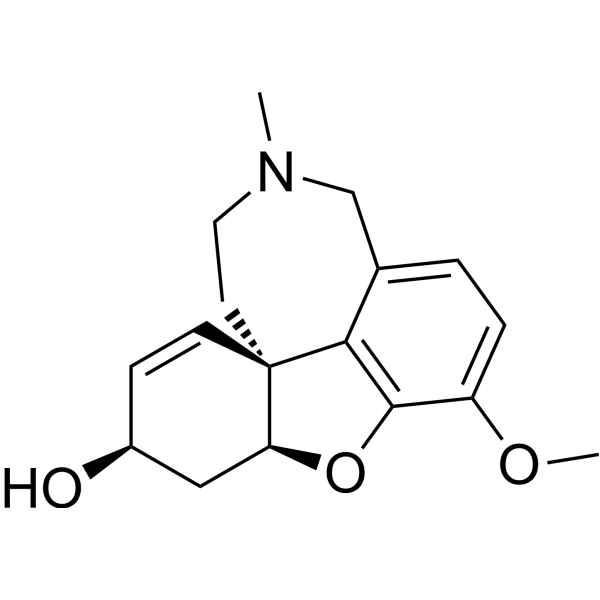
Cat. No.: HY-76299
CAS No.: 357-70-0
Synonyms: Galantamine
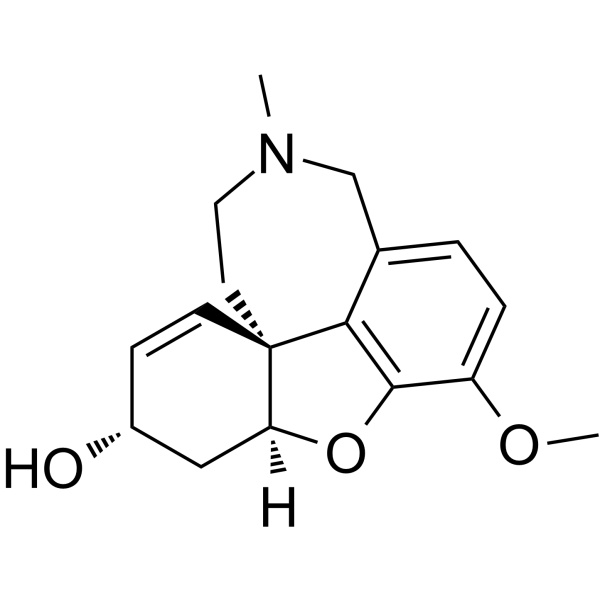
Galanthamine is a potent acetylcholinesterase (AChE) inhibitor with an IC50 of 500 nM.
loading...
    loading...
15
15 Cited Publications
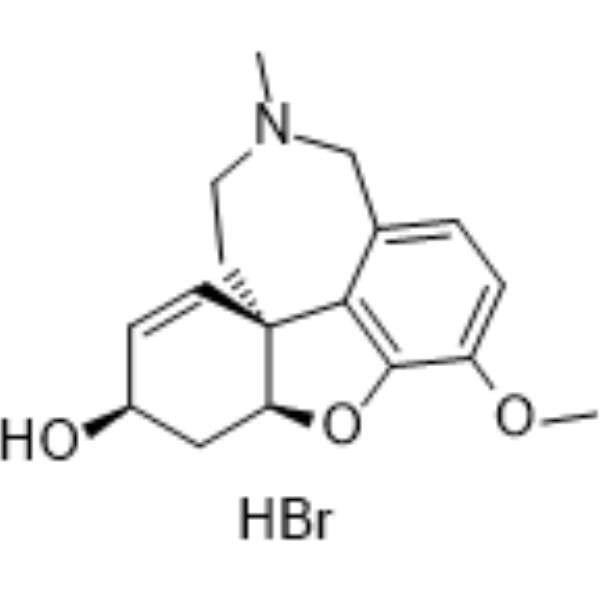
Cat. No.: HY-A0009
CAS No.: 1953-04-4
Synonyms: Galantamine hydrobromide
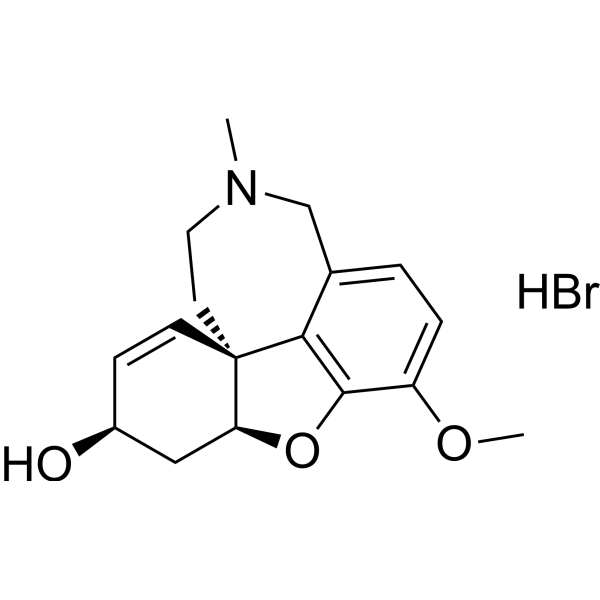
Galanthamine hydrobromide (Galantamine hydrobromide) is a selective, reversible, competitive, alkaloid AChE inhibitor, with an IC50 of 0.35 µM. Galanthamine hydrobromide is a potent allosteric potentiating ligand (APL) of human α3β4, α4β2, α6β4 nicotinic receptors ( nAChRs). Galanthamine hydrobromide is developed for the research of Alzheimer's disease (AD) .
loading...
    loading...
Cat. No.: HY-76299R
CAS No.: 357-70-0
Synonyms: Galantamine (Standard)
Galanthamine (Standard) is the analytical standard of Galanthamine. This product is intended for research and analytical applications. Galanthamine is a potent acetylcholinesterase (AChE) inhibitor with an IC50 of 500 nM.
loading...
    loading...
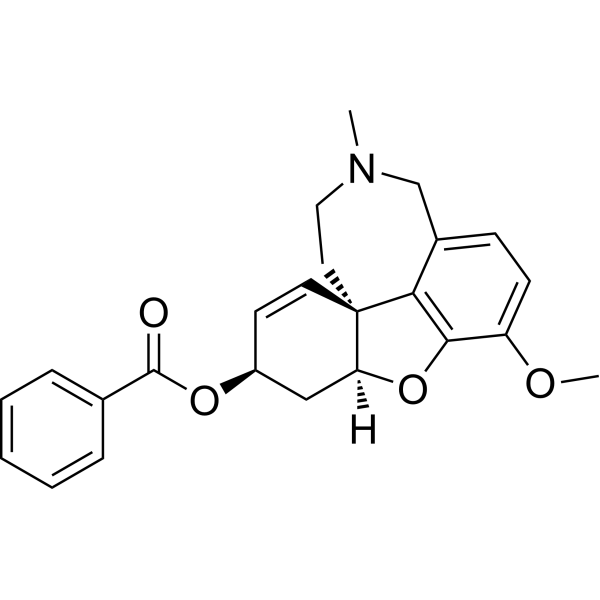
Cat. No.: HY-101710
CAS No.: 224169-27-1
Purity:  99.51%
Synonyms: GLN-1062
Target:  

Drug Intermediate

Research Areas:  

Neurological Disease

Benzgalantamine (GLN-1062) is a pro-agent of galantamine, used for the treatment for Alzheimer’s disease.
loading...
    loading...
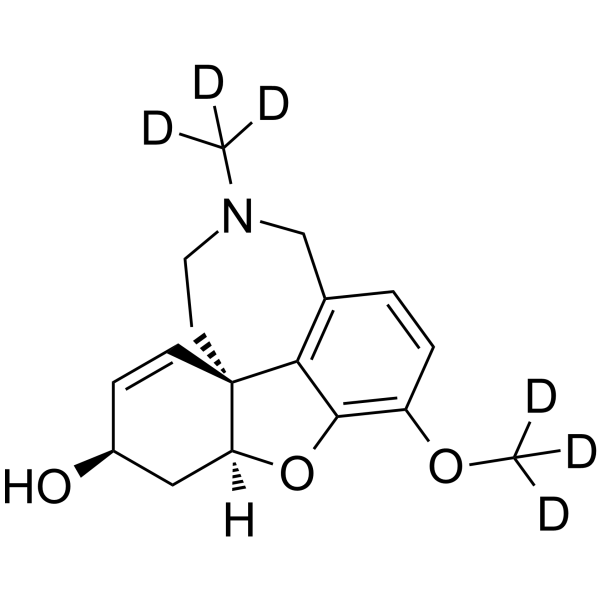
Cat. No.: HY-76299S
CAS No.: 1128109-00-1
Galanthamine-d6 (Galantamine-d6) is the deuterium labeled Galanthamine. Galanthamine is a potent acetylcholinesterase (AChE) inhibitor with an IC50 of 500 nM .
loading...
    loading...
Cat. No.: HY-N7265
CAS No.: 1668-85-5
Epi-galantamine is a diastereomer of Galantamine. Epi-galantamine is an alkaloid isolated from the bulbs and flowers of Caucasian snowdrop (Galanthus woronowii). Epi-galantamine inhibits AChE with an EC50 of 45.7 μM .
loading...
    loading...
Cat. No.: HY-A0009R
CAS No.: 1953-04-4
Synonyms: Galantamine hydrobromide (Standard)
Galanthamine (hydrobromide) (Standard) is the analytical standard of Galanthamine (hydrobromide). This product is intended for research and analytical applications. Galanthamine hydrobromide (Galantamine hydrobromide) is a selective, reversible, competitive, alkaloid AChE inhibitor, with an IC50 of 0.35 µM. Galanthamine hydrobromide is a potent allosteric potentiating ligand (APL) of human α3β4, α4β2, α6β4 nicotinic receptors ( nAChRs). Galanthamine hydrobromide is developed for the research of Alzheimer's disease (AD) .
loading...
    loading...
Cat. No.: HY-76299S2
CAS No.: 2012598-44-4
Synonyms: Galantamine-d3 hydrochloride
Galanthamine-d3 (Galantamine-d3) hydrochloride is deuterium-labeled Galanthamine (HY-76299) .
loading...
    loading...
Cat. No.: HY-W856819
CAS No.: 469-22-7
Eseroline is a potent μ-opioid receptor agonist, which is the hydrolytic metabolite of Physostigmine (HY-N6608). Eseroline is a selective and competitive acetylcholinesterase (AChE) inhibitor, with its Ki values for AChE and BuChE being 0.1 μM and 200 μM respectively. Eseroline has nicotinic acetylcholine receptor allosteric enhancing ligand (nAChR-APL) activity, meaning it does not activate the receptor but significantly enhances the signal transduction of Ach triggered by the receptor. Eseroline is neurotoxic, causing cell membrane damage (LDH leakage) and energy metabolism collapse (ATP depletion). Eseroline can be used for the study of Alzheimer's disease .
loading...
    loading...
Cat. No.: HY-A0009S
Synonyms: Galantamine-d3 hydrobromide
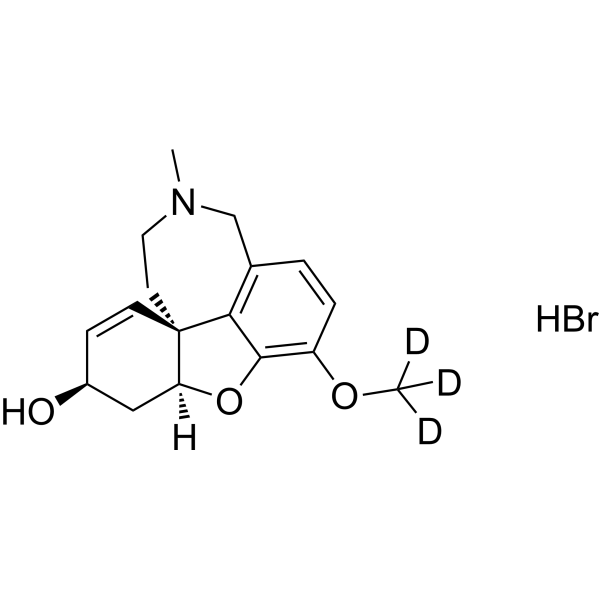
Galanthamine-d3 (hydrobromide) is deuterium labeled Galanthamine (hydrobromide). Galanthamine hydrobromide (Galantamine hydrobromide) is a selective, reversible, competitive, alkaloid AChE inhibitor, with an IC50 of 0.35 μM. Galanthamine hydrobromide is a potent allosteric potentiating ligand (APL) of human α3β4, α4β2, α6β4 nicotinic receptors ( nAChRs). Galanthamine hydrobromide is developed for the research of Alzheimer's disease (AD) .
loading...
    loading...
Cat. No.: HY-156188
CAS No.: 3038811-77-4
Target:  

Cholinesterase (ChE)

Research Areas:  

Others

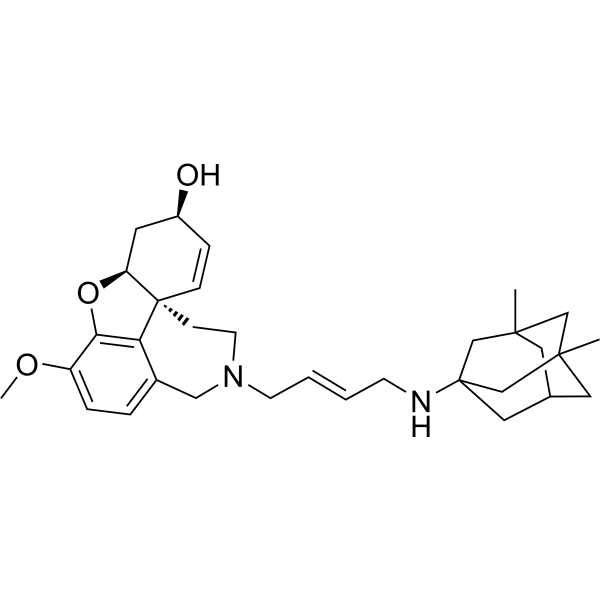
AChE-IN-41 (Compound 2) is a compound of the Galantamine Memantine hybrid. AChE-IN-41 has the inhibition ability of cholinesterase. AChE-IN-41 shows higher plasma stability and comparable microsomal stability in vitro, while showing lower half-life and faster clearance in vivo .
loading...
    loading...
Cat. No.: HY-101710R
CAS No.: 224169-27-1
Synonyms: GLN-1062 (Standard)
Benzgalantamine (Standard) (GLN-1062 (Standard)) is the analytical standard of Benzgalantamine (HY-101710). This product is intended for research and analytical applications. Benzgalantamine (GLN-1062) is a pro-agent of galantamine, used for the treatment for Alzheimer’s disease.
loading...
    loading...
Cat. No.: HY-185199
CAS No.: 216986-48-0
Synonyms: N-Demethylnarwedine
Target:  

Drug Intermediate

Research Areas:  

Neurological Disease

Nornarwedine (N-Demethylnarwedine) is an amaryllidaceae alkaloid and also a key precursor in the synthetic pathway of Galanthaminone (HY-I0020). Nornarwedine can be synthesized in yeast with 4'-O-methylnorbelladine as the substrate via the catalytic activity of CYP96T6. Nornarwedine is applicable to research related to Alzheimer's disease .
loading...
    loading...
Cat. No.: HY-L236
19,886 compounds

Fragment-based drug discovery (FBDD) offers a strategic advantage by categorizing fragment hits according to their functional groups. This approach facilitates both the further optimization of these hits and the rational design of larger compounds through fragment combination. The amine functional group plays a vital role in drug development, as evidenced by its presence in many marketed drugs like Galantamine, Tacrine, and Rivastigmine. It is instrumental in enhancing solubility, improving bioavailability, and ensuring shelf-life stability—all critical factors for drug efficacy.

MCE offers a collection of 19,886 amine fragments for drug discovery. All of these compounds adhere to the Rule of Three (RO3) criteria for drug-likeness, which MCE offers a collection of 19,886 amine fragments for drug discovery, all of which stipulates a molecular weight ≤ 300 Da, ≤ 3 hydrogen bond donors, ≤ 3 hydrogen bond acceptors, and a cLogP ≤ 3.

  • 1

