
15 Results for "

Ischaemic stroke

" in MedChemExpress (MCE) Product Catalog:
Products (15)

15 Results for "Ischaemic stroke" in MCE Product Catalog:

2
2 Cited Publications
Cat. No.: HY-103435
CAS No.: 858134-23-3
Purity:  99.90%
Synonyms: Terrestrin A
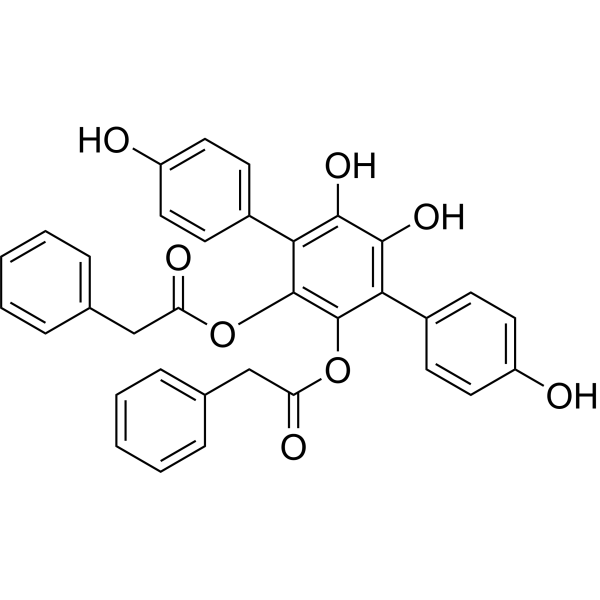
Vialinin A (Terrestrin A) is a p-terphenyl compound that can be derived from a Chinese edible mushroom. Vialinin A is an inhibitor of ubiquitin-specific peptidase 4 (USP4) and has anti-inflammatory and antioxidant properties. Vialinin A can alleviate cerebral ischaemia-reperfusion injury-induced neurological deficits and neuronal apoptosis. Vialinin A promotes activation of Keap1-Nrf2-ARE signaling pathway and increases the protein degradation of Keap1. Vialinin A possesses various pharmacological activities in cancer, Kawasaki disease, asthma, and pathological scarring. Vialinin A is a potent inhibitor of TNF-α, USP4, USP5, and sentrin/SUMO-specific protease 1 (SENP1). Vialinin A can be studied in reseach for autoimmune diseases, cancer and ischaemic stroke .
loading...
    loading...
Cat. No.: HY-W027553
CAS No.: 62732-44-9
Synonyms: NIK-247 free base; Amiridine free base
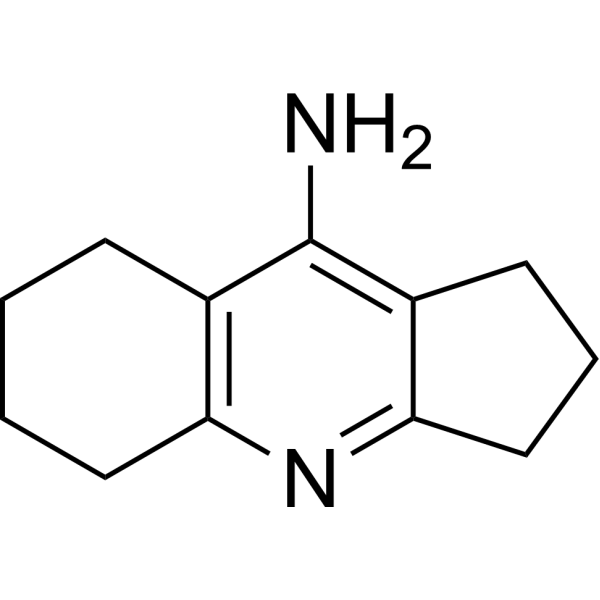
Ipidacrine is orally active and brain-penetrant AChE and BuChE inhibitors with IC50 values of 1 μM and 1.9 μM, respectively, which is also a partial agonist of M2-cholinergic receptors and a reversible cholinesterase inhibitor. Ipidacrine has a stimulating effect on neuromuscular transmission and excitation along the nerve fibres with a moderately anti-pain effect. Ipidacrine is an aminopyridines and is structurally similar to Tacrine (HY-111338). Ipidacrine is effective in various amnesia models, improves erectile function and inhibits K + and Na +-channels in the neuronal membrane in diabetic rats. Ipidacrine is promising for research of Alzheimer’s disease, ischaemic stroke, idiopathic neuropathy of the facial nerve, diabetes mellitus-induced erectile dysfunction and other deficits in central or peripheral cholinergic deseases .
loading...
    loading...
Cat. No.: HY-108845
CAS No.: 191588-94-0
Synonyms: TNK-tPA
Tenecteplase (TNK-tPA) is a modified tissue plasminogen activator. Tenecteplase is a recombinant human tissue plasminogen activator (rt-PA) that has been bioengineered to produce mutations in three gene loci. Tenecteplase (TNK-tPA) can be used in the study of acute ischemic stroke .
loading...
    loading...
Cat. No.: HY-121872
CAS No.: 222315-88-0
Purity:  ≥95.0%
Research Areas:  

Neurological Disease

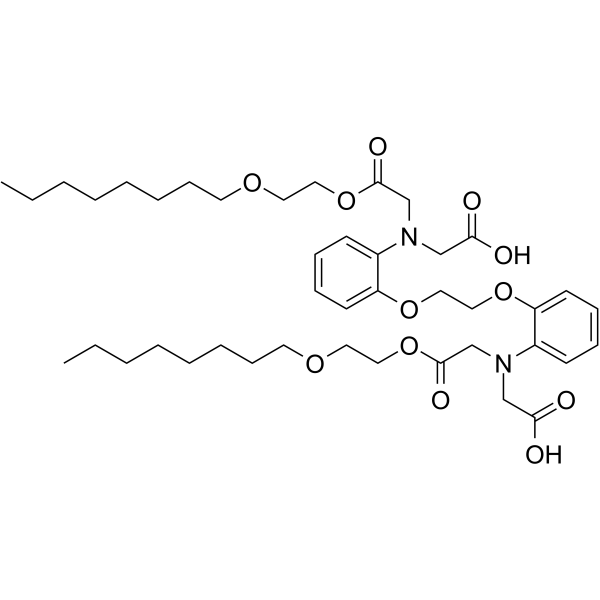
DP-b99 is a blood-brain barrier-permeable inhibitor of CYP2C9 and MMP-9, with a Ki value of 4.655 μM against CYP2C9. DP-b99 inhibits CYP2C9 via apparent non-competitive inhibition, mainly chelates pathological Zn 2+ in the membrane environment, attenuates the elevation of intracellular Zn 2+ and Ca 2+ levels, delays seizure onset and reduces seizure severity, and also prevents MMP-9-dependent dendritic spine remodeling, β-dystroglycan cleavage and gelatinase activity. DP-b99 can be used in the research of acute ischemic stroke, epileptogenesis and stroke .
loading...
    loading...
Cat. No.: HY-123669
CAS No.: 204204-73-9
Research Areas:  

Cardiovascular Disease

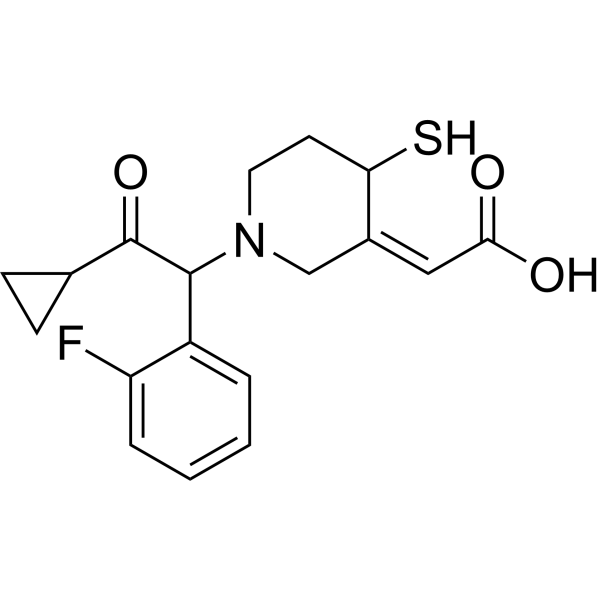
R-138727, the major active metabolite of Prasugrel (HY-15284), is a highly potent and selective irreversible antagonist of the P2Y12 receptor, with an IC50 of 2.5 μM. R-138727 covalently binds to the P2Y12 receptor on the platelet surface, blocking adenosine diphosphate-mediated platelet activation and aggregation. R-138727 can be used to study stroke, cerebral infarction and neurological deficits.
loading...
    loading...
Cat. No.: HY-122070
CAS No.: 110101-67-2
Synonyms: U 74006F
Target:  

Antibiotic

Research Areas:  

Infection Neurological Disease

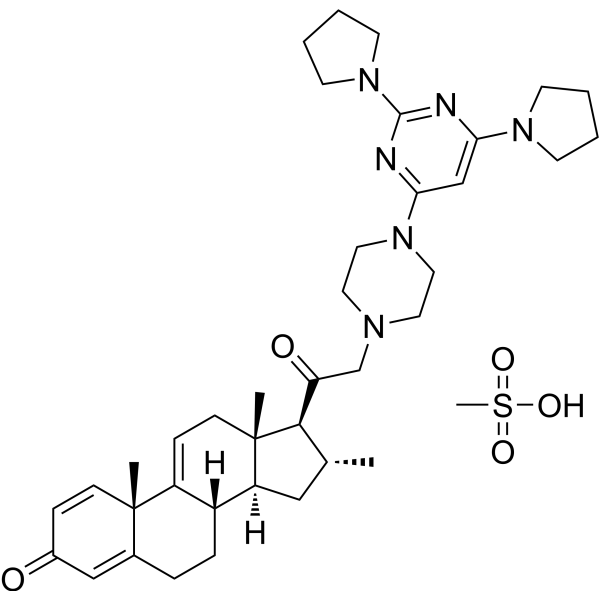
Tirilazad mesylate (U 74006F) is a nonglucocorticoid, 21-aminosteroid that inhibits lipid peroxidation. Tirilazad mesylate can attenuate brain or spinal cord injury caused by trauma, stroke, ischemia and reperfusion injury. Tirilazad mesylate has antiviral activities against nCoV. Tirilazad mesylate is neuroprotective for ischaemic stroke, can be used for subarachnoid hemorrhage research .
loading...
    loading...
Cat. No.: HY-10679
CAS No.: 954138-07-9
Research Areas:  

Neurological Disease

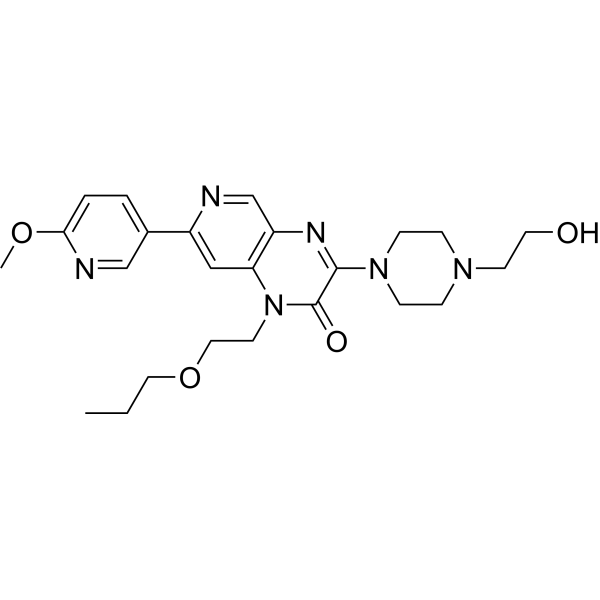
PF-03049423 (Compound PF-5) free base is a potent and highly selective phosphodiesterase-5A inhibitor with an IC50 of about 0.2 nM for rat and human platelet enzyme. PF-03049423 free base can be used for the research of acute ischaemic stroke .
loading...
    loading...
Cat. No.: HY-116218
CAS No.: 1227156-72-0
Purity:  99.17%
Synonyms: JPI-289 free base
Target:  

PARP

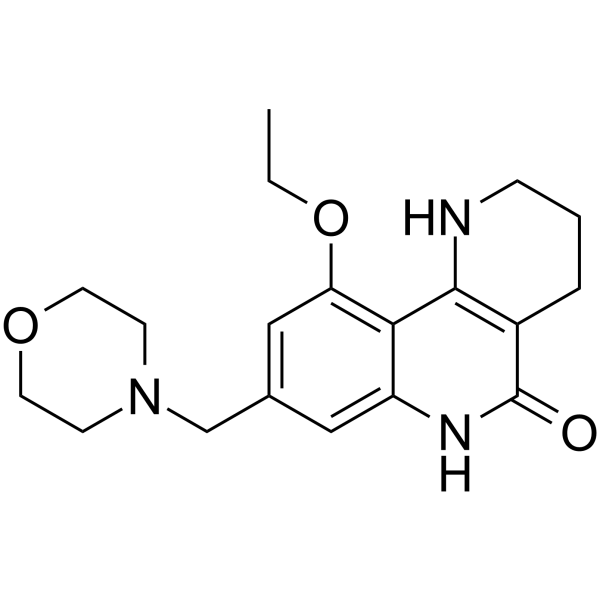
Amelparib (JPI-289 free base) is a potent, orally active, and water-soluble inhibitor of PARP-1. Amelparib inhibits PARP-1 activity (IC50=18.5 nM) and cellular PAR formation (IC50=10.7 nM) in the nanomolar range. Amelparib is a potential neuroprotective agent. Amelparib has the potential for the research of acute ischaemic stroke .
loading...
    loading...
Cat. No.: HY-W027553R
CAS No.: 62732-44-9
Synonyms: NIK-247 free base (Standard); Amiridine free base (Standard)
Ipidacrine (Standard) is the analytical reference standard of Ipidacrine. This product is used for research and analytical applications. Ipidacrine is orally active and blood-brain-barrier-penetrant AChE and BuChE inhibitors with IC50 values of 1 μM and 1.9 μM, respectively, which is also a partial agonist of M2-cholinergic receptors and a reversible cholinesterase inhibitor. Ipidacrine has a stimulating effect on neuromuscular transmission and excitation along the nerve fibres with a moderately anti-pain effect. Ipidacrine is an aminopyridines and is structurally similar to Tacrine (HY-111338). Ipidacrine is effective in various amnesia models, improves erectile function and inhibits K + and Na +-channels in the neuronal membrane in diabetic rats. Ipidacrine is promising for research of Alzheimer’s disease, ischaemic stroke, idiopathic neuropathy of the facial nerve, diabetes mellitus-induced erectile dysfunction and other deficits in central or peripheral cholinergic deseases .
loading...
    loading...
Cat. No.: HY-122070A
CAS No.: 111793-42-1
Synonyms: U 74006F hydrate
Target:  

Antibiotic

Research Areas:  

Infection Metabolic Disease

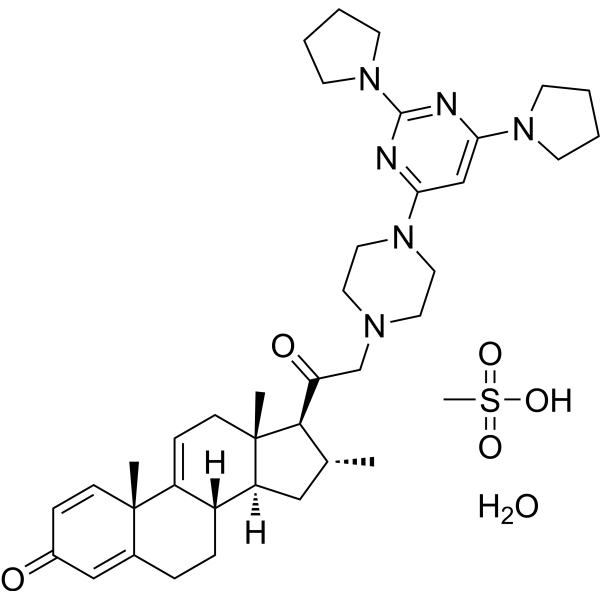
Tirilazad mesylate hydrate is the hydrate form of Tirilazad mesylate (HY-122070). Tirilazad mesylate is a nonglucocorticoid, 21-aminosteroid that inhibits lipid peroxidation. Tirilazad mesylate can attenuate brain or spinal cord injury caused by trauma, stroke, ischemia and reperfusion injury. Tirilazad mesylate has antiviral activities against nCoV. Tirilazad mesylate is neuroprotective for ischaemic stroke, can be used for subarachnoid hemorrhage research .
loading...
    loading...
Cat. No.: HY-10679A
CAS No.: 402955-58-2
Research Areas:  

Neurological Disease

PF-03049423 (Compound PF-5) is a potent and highly selective phosphodiesterase-5A inhibitor with an IC50 of about 0.2 nM for rat and human platelet enzyme. PF-03049423 can be used for the research of acute ischaemic stroke .
loading...
    loading...
Cat. No.: HY-116218C
Purity:  98.37%
Synonyms: JPI-289 hydrochloride
Target:  

PARP

Amelparib (JPI-289) hydrochloride is a potent, orally active, and water-soluble inhibitor of PARP-1. Amelparib hydrochloride inhibits PARP-1 activity (IC50 = 18.5 nM) and cellular PAR formation (IC50 = 10.7 nM). Amelparib hydrochloride is a potential neuroprotective agent. Amelparib hydrochloride has the potential for the research of acute ischaemic stroke .
loading...
    loading...
Cat. No.: HY-132280R
CAS No.: 110101-66-1
Synonyms: U 74006F free base (Standard)
Tirilazad (U 74006F free base) Standard is the analytical standard of Tirilazad (HY-132280). This product is intended for research and analytical applications. Tirilazad (U 74006F free base) is a neuroprotective agent. Tirilazad can also bind tightly to the main protease of the COVID-19 virus and exert anti-SARS-CoV-2 activity. Tirilazad scavenges hydroxyl and lipid peroxyl free radicals and maintains the levels of endogenous antioxidants. Tirilazad reduces cerebral infarct volume and improves neurobehavioral scores in animal models of focal ischemia. Tirilazad can be used in research related to ischemic stroke and subarachnoid hemorrhage .
loading...
    loading...
Cat. No.: HY-W027553S1
Synonyms: NIK-247-d9 free base
Ipidacrine-d9 (NIK-247-d9 (free base)) is the deuterium labeled Ipidacrine (HY-W027553). Ipidacrine is orally active and brain-penetrant AChE and BuChE inhibitors with IC50 values of 1 μM and 1.9 μM, respectively, which is also a partial agonist of M2-cholinergic receptors and a reversible cholinesterase inhibitor. Ipidacrine has a stimulating effect on neuromuscular transmission and excitation along the nerve fibres with a moderately anti-pain effect. Ipidacrine is an aminopyridines and is structurally similar to Tacrine (HY-111338). Ipidacrine is effective in various amnesia models, improves erectile function and inhibits K+ and Na+-channels in the neuronal membrane in diabetic rats. Ipidacrine is promising for research of Alzheimer’s disease, ischaemic stroke, idiopathic neuropathy of the facial nerve, diabetes mellitus-induced erectile dysfunction and other deficits in central or peripheral cholinergic deseases .
loading...
    loading...
Cat. No.: HY-19689
CAS No.: 90043-86-0
Synonyms: NIK-247; Amiridine
Ipidacrine (NIK-247; Amiridine) hydrochloride is orally active and blood-brain-barrier-penetrant AChE and BuChE inhibitors with IC50 values of 1 μM and 1.9 μM, respectively, which is also a partial agonist of M2-cholinergic receptors and a reversible cholinesterase inhibitor. Ipidacrine hydrochloride has a stimulating effect on neuromuscular transmission and excitation along the nerve fibres with a moderately anti-pain effect. Ipidacrine hydrochloride is an aminopyridines and is structurally similar to Tacrine (HY-111338). Ipidacrine hydrochloride is effective in various amnesia models, improves erectile function and inhibits K + and Na +-channels in the neuronal membrane in diabetic rats. Ipidacrine hydrochloride is promising for research of Alzheimer’s disease, ischaemic stroke, idiopathic neuropathy of the facial nerve, diabetes mellitus-induced erectile dysfunction and other deficits in central or peripheral cholinergic deseases .
loading...
    loading...
  • 1

