
Search Result
Results for "
Luciferin
" in MedChemExpress (MCE) Product Catalog:
1
Biochemical Assay Reagents
| Cat. No. |
Product Name |
Target |
Research Areas |
Chemical Structure |
-
- HY-12591B
-
|
D-(-)-Luciferin potassium; Firefly Luciferin potassium; Beetle Luciferin potassium
|
Fluorescent Dye
|
Others
|
|
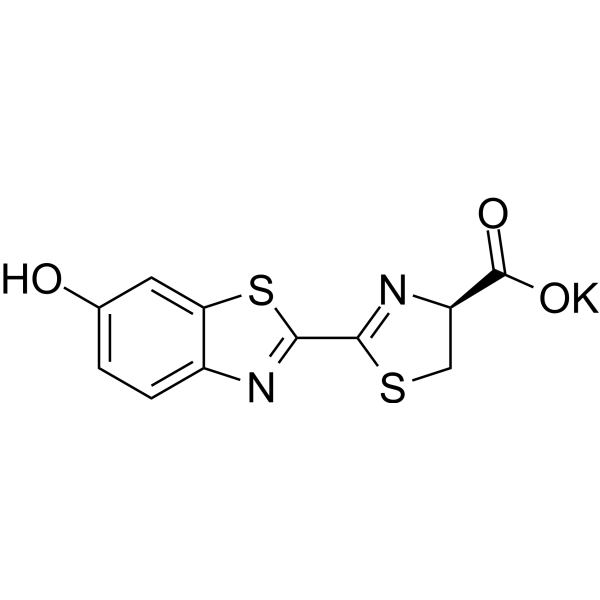
D-luciferin potassium is the natural substrate of the enzyme luciferase (Luc) that catalyzes the production of the typical yellowgreen light of fireflies. The 560 nm chemiluminescence from this reaction peaks within seconds, with light output that is proportional to luciferase concentration when the substrate luciferin is present in excess. The luciferase (luc) gene is a popular reporter gene for research and agent screening. Chemiluminescent techniques are virtually background-free, making the luc reporter gene ideal for detecting low-level gene expression. As little as 0.02 pg of luciferase can be reliably measured in a standard scintillation counter. In addition to its role as a reporter of gene expression, luciferase is commonly used in an extremely sensitive assay for ATP . We offer the firefly luciferase (HY-P1004A), luciferin free acid (HY-12591A), as well as its water-soluble sodium salts (HY-12591) and potassium salts (HY-12591B) .
|
-
-
- HY-12591
-
|
D-(-)-Luciferin sodium; Firefly Luciferin sodium; Beetle Luciferin sodium
|
Fluorescent Dye
|
Others
|
|
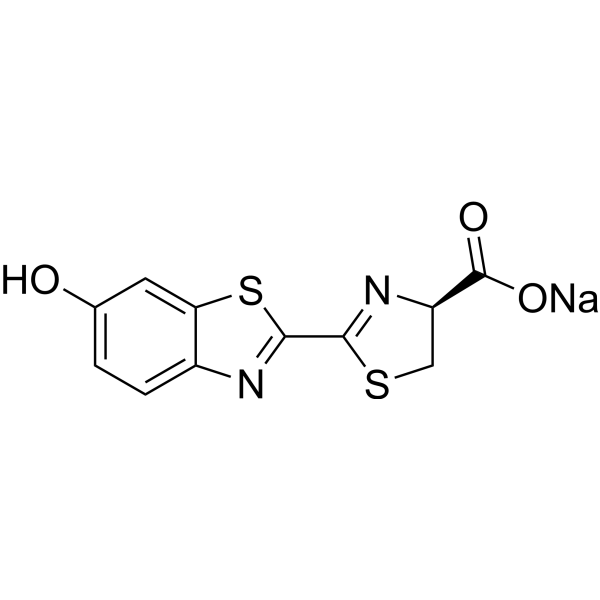
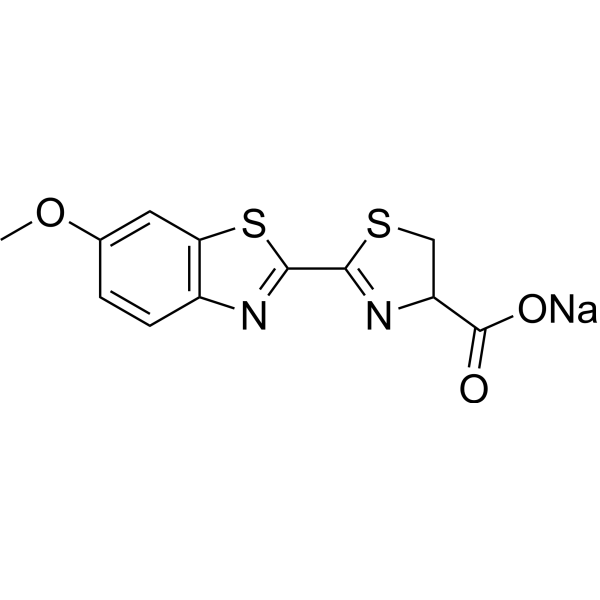
D-luciferin sodium is the natural substrate of the enzyme luciferase (Luc) that catalyzes the production of the typical yellowgreen light of fireflies. The 560 nm chemiluminescence from this reaction peaks within seconds, with light output that is proportional to luciferase concentration when the substrate luciferin is present in excess. The luciferase (luc) gene is a popular reporter gene for research and agent screening. Chemiluminescent techniques are virtually background-free, making the luc reporter gene ideal for detecting low-level gene expression. As little as 0.02 pg of luciferase can be reliably measured in a standard scintillation counter. In addition to its role as a reporter of gene expression, luciferase is commonly used in an extremely sensitive assay for ATP . We of er the firefly luciferase (HY-P1004A), luciferin free acid (HY-12591A), as well as its water-soluble sodium salts (HY-12591) and potassium salts (HY-12591B) .
|
-
-
- HY-12591A
-
D-Luciferin
Maximum Cited Publications
110 Publications Verification
D-(-)-Luciferin; Firefly Luciferin; Beetle Luciferin
|
Fluorescent Dye
|
Others
|
|
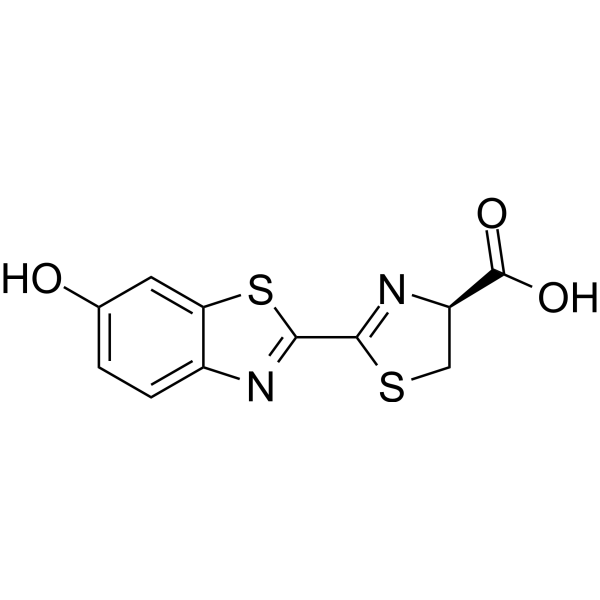
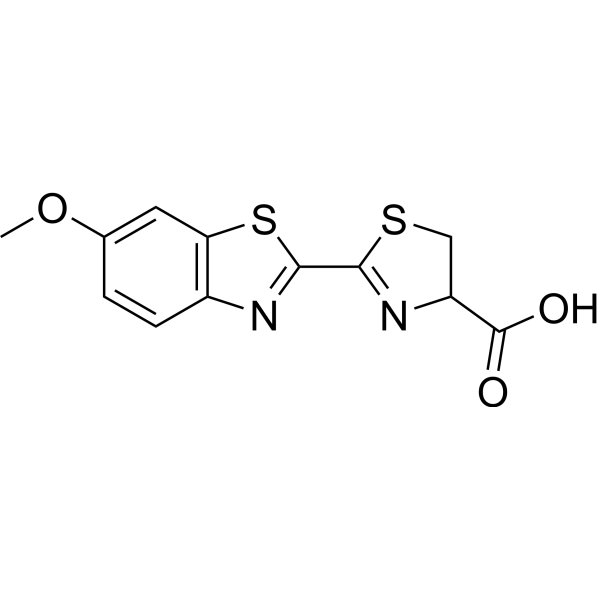
D-luciferin is the natural substrate of the enzyme luciferase (Luc) that catalyzes the production of the typical yellowgreen light of fireflies. The 560 nm chemiluminescence from this reaction peaks within seconds, with light output that is proportional to luciferase concentration when the substrate luciferin is present in excess. The luciferase (luc) gene is a popular reporter gene for research and agent screening. Chemiluminescent techniques are virtually background-free, making the luc reporter gene ideal for detecting low-level gene expression. As little as 0.02 pg of luciferase can be reliably measured in a standard scintillation counter. In addition to its role as a reporter of gene expression, luciferase is commonly used in an extremely sensitive assay for ATP . We of er the firefly luciferase (HY-P1004A), luciferin free acid (HY-12591A), as well as its water-soluble sodium salts (HY-12591) and potassium salts (HY-12591B) .
|
-
-
- HY-112641A
-
|
|
Fluorescent Dye
|
Cancer
|
|
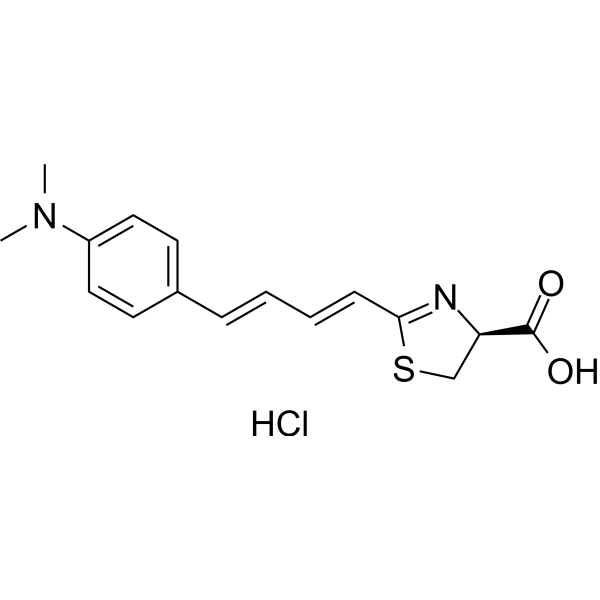
AkaLumine hydrochloride is a D-luciferin (HY-12591A) analogue with a Km of 2.06 μM for recombinant firefly luciferase (Fluc) protein. AkaLumine hydrochloride emits near-infrared (NIR) light (λmax=677 nm) in reactions with native Fluc. AkaLumine hydrochloride has high tissue-penetration and increases detection sensitivity from deep-tissue targets .
|
-
-
- HY-D0722
-
|
5-(6)-Carboxyfluorescein diacetate; CFDA
|
Fluorescent Dye
|
Others
|
|
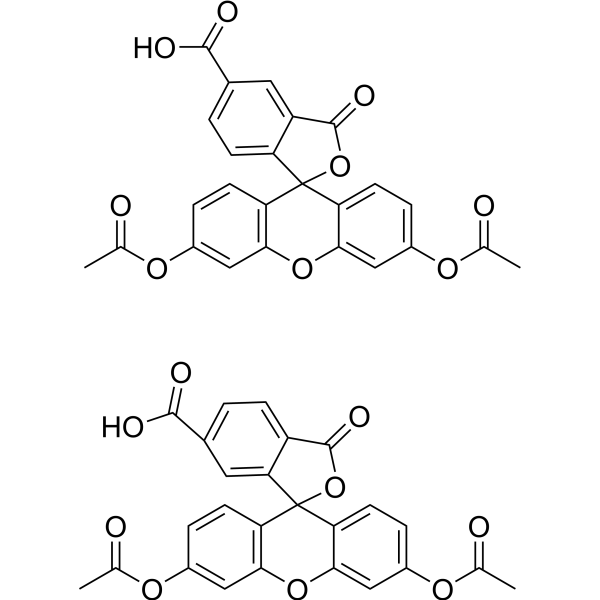
5(6)-CFDA is a common aliphatic luciferin-line organism. CFDA conducts free diffusion into cells, and then it is hydrolyzed into carboxyl fluorescein (CF) by intracellular non-specific lipase. CF containing portion contains an additional negative charge so that it is better retained in cells, compared to fluorescein dyes .
|
-
-
- HY-126994
-
|
|
Fluorescent Dye
|
Others
|
|
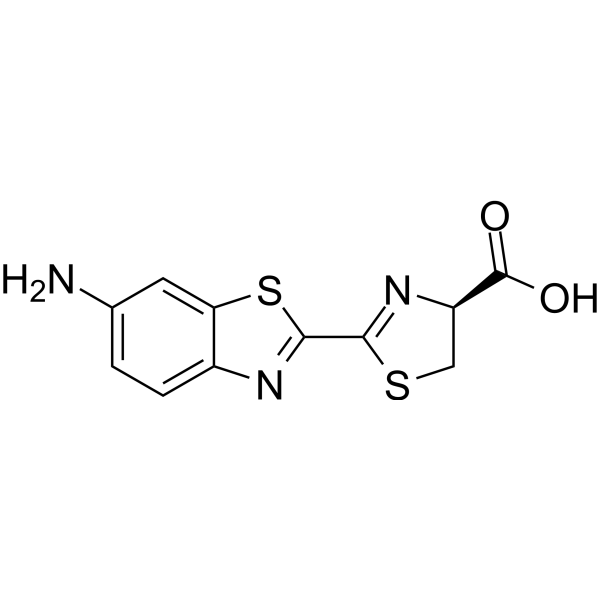
6’-Amino-D-luciferin is a derivative of D-luciferin (HY-12591A) with an amino group replacing the 6-hydroxyl group. 6’-Amino-D-luciferin is a natural substrate of luciferase (Luc) and can be used for IVIS imaging in cell/animal experiments[1][2][3].
|
-
-
- HY-P1004A
-
|
|
Fluorescent Dye
|
Others
|
|
Luciferase, firefly is the light-emitting enzyme responsible for the bioluminescence of fireflies and click beetles. Luciferase, firefly catalytic substrate is D-luciferin (HY-12591B) .
|
-
-
- HY-D0047
-
5-CFDA
3 Publications Verification
5-Carboxyfluorescein diacetate
|
Fluorescent Dye
|
Others
|
|
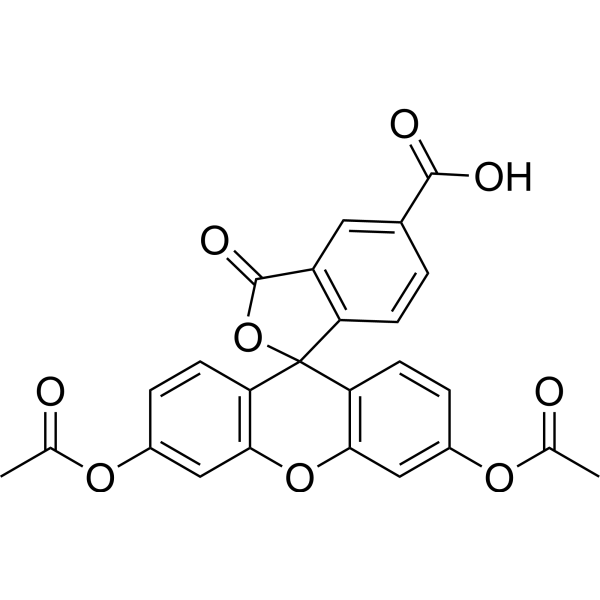
5-CFDA is a common aliphatic luciferin-line organism. CFDA conducts free diffusion into cells, and then it is hydrolyzed into carboxyl fluorescein (CF) by intracellular non-specific lipase. CF containing portion contains an additional negative charge so that it is better retained in cells, compared to fluorescein dyes .
|
-
-
- HY-D0721
-
|
6-Carboxyfluorescein diacetate
|
Fluorescent Dye
|
Others
|
|
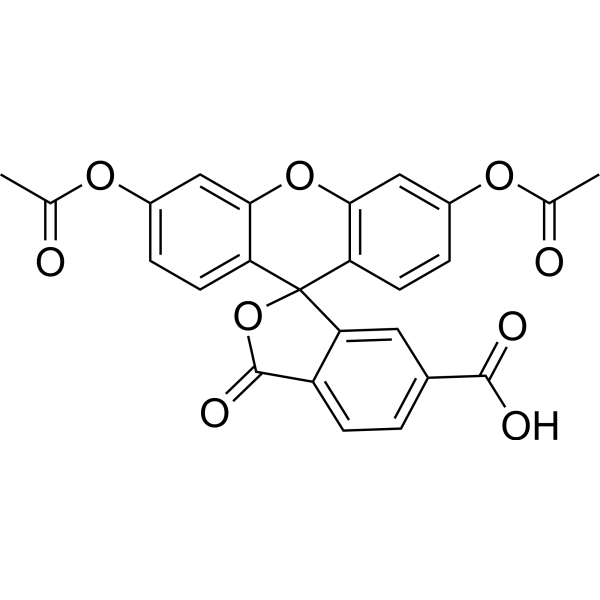
6-CFDA is a common aliphatic luciferin-line organism. CFDA conducts free diffusion into cells, and then it is hydrolyzed into carboxyl fluorescein (CF) by intracellular non-specific lipase. CF containing portion contains an additional negative charge so that it is better retained in cells, compared to fluorescein dyes .
|
-
-
- HY-145127
-
|
C3-CA-DTZ
|
Fluorescent Dye
|
Neurological Disease
|
|
ETZ (C3-CA-DTZ) is a promising luciferase substrate (prosubstrate) activatable in vivo by nonspecific esterase to enhance the brain delivery of the luciferin .
|
-
-
- HY-174493
-
|
|
mRNA
|
Others
|
|
Firefly luciferase (FLuc) mRNA (5moU) expresses a luciferase protein, originally isolated from the firefly, Photinus pyralis. FLuc is commonly used in mammalian cell culture to measure both gene expression and cell viability. It emits bioluminescence in the presence of the substrate, luciferin.
|
-
-
- HY-169740
-
|
|
Fluorescent Dye
|
Others
|
|
L-Luciferin is a competitive inhibitor of firefly Luciferin and can be used as an alternative substrate for light production, increasing the concentration of the enzyme or L-luciferin reduces the amount of light produced compared to D-Luciferin catalysis .
|
-
-
- HY-115749
-
|
6′-MethoxyLuciferin
|
Fluorescent Dye
|
Others
|
|
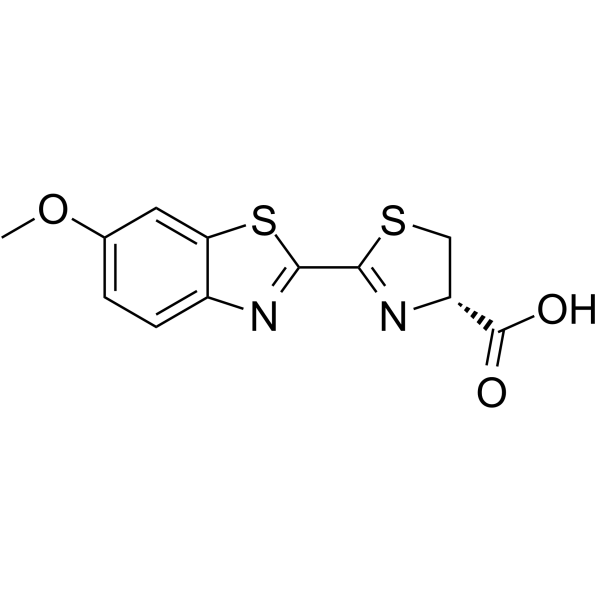
D-Luciferin 6′-methyl ether (6′-Methoxyluciferin; compound 19a) is a potent luciferase from the North American firefly Photinus pyralis (PpyLuc) inhibitor with an IC50 of 0.1 µM. D-Luciferin 6′-methyl ether, a D-luciferin analog, shows non-specific interactions at ATP- and luciferin-binding sites of the PpyLuc active site .
|
-
-
- HY-D1343
-
|
|
Fluorescent Dye
|
|
|
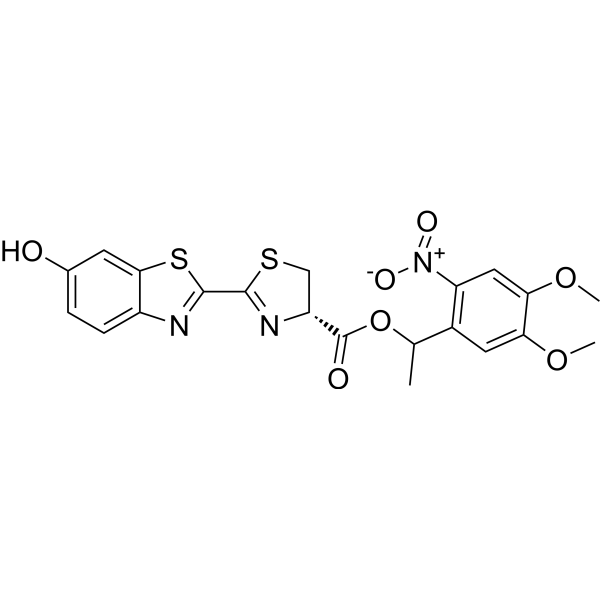
DMNPE-caged D-luciferin is a heterocyclic luminescent compound that is a natural ligand for luciferase, an enzyme used to detect cell activity. Its reaction requires ATP and emits yellow-green light with a peak wavelength of about 530 nm. The luciferin in the DMNPE cage easily crosses the cell membrane.
|
-
-
- HY-148843
-
|
|
Fluorescent Dye
|
Others
|
|
D-Luciferin phosphate trisodium is a synthetic and bioluminescent substrate for firefly luciferase. D-Luciferin phosphate trisodium is dephosphorylated in the presence of alkaline phosphatase, releasing the free D-fluorescein. D-Luciferin phosphate trisodium is mainly used for highly sensitive detection of phosphatase .
|
-
-
- HY-W127851
-
|
Cypridina Luciferin analog
|
Biochemical Assay Reagents
|
Others
Cancer
|
|
CLA, or conjugated linoleic acid, is a polyunsaturated fatty acid that occurs naturally in a variety of animal products, such as meat and dairy. It has several potential benefits for human health, including the ability to reduce body fat mass, improve insulin sensitivity, and reduce inflammation. CLA has been extensively studied for its effects on weight loss and muscle growth, as well as its potential role in preventing chronic diseases such as heart disease and cancer. Additionally, it can be taken as a dietary supplement in capsule form.
|
-
-
- HY-D1424
-
|
|
Fluorescent Dye
|
Others
|
|
Coelenterazine hcp is a Coelenterazine analogue. Coelenterazine hcp shows high sensitivity to Ca 2+. Coelenterazine hcp is suited for monitoring intracellular Ca 2+ .
|
-
-
- HY-D1904
-
|
|
Fluorescent Dye
|
Others
|
|
D-Luciferin 6'-methyl ether sodium salt is a firefly luciferase inhibitor. D-Luciferin 6'-methyl ether sodium salt is a cofactor in Luc-catalyzed synthesis of dinucleoside polyphosphates .
|
-
-
- HY-115749A
-
|
(Rac)-6′-MethoxyLuciferin sodium
|
Drug Derivative
|
Others
|
|
D-Luciferin 6′-methyl ether (6′-Methoxyluciferin; compound 19a) sodium is a potent luciferase from the North American firefly Photinus pyralis (PpyLuc) inhibitor with an IC50 of 0.1 μM. D-Luciferin 6′-methyl ether, a D-luciferin analog, shows non-specific interactions at ATP- and luciferin-binding sites of the PpyLuc active site .
|
-
-
- HY-118308
-
-
-
- HY-138760
-
|
|
Fluorescent Dye
|
Others
|
|
SEluc-2 is a small-molecule probe based on the firefly luciferin. SEluc-2, a bioluminescent probe for the sensitive and selective detection of thiols in living cells .
|
-
-
- HY-112641
-
|
|
Fluorescent Dye
|
Cancer
|
|
AkaLumine is a D-luciferin (HY-12591A) analogue with a Km of 2.06 μM for recombinant firefly luciferase (Fluc) protein. AkaLumine emits near-infrared (NIR) light (λmax=677 nm) in reactions with native Fluc. AkaLumine has high tissue-penetration and increases detection sensitivity from deep-tissue targets .
|
-
-
- HY-163981
-
|
|
P-glycoprotein
|
Cancer
|
|
ABCB1-IN-2 (compound 16q) is a functional inhibitor that can directly bind to the ABCB1 protein and stabilize its structure without affecting the expression and subcellular localization of ABCB1. ABCB1-IN-2 can increase the sensitivity of MCF-7/ADR cells to paclitaxel (PTX), increase the accumulation of PTX, and prevent the accumulation and excretion of luciferin Rh123 mediated by ABCB1. ABCB1-IN-2, as an ABCB1-mediated multidrug resistance (MDR) reversal agent, shows a strong ability to reverse MDR .
|
-
-
- HY-D3169
-
|
|
Fluorescent Dye
Caspase
|
Inflammation/Immunology
|
|
IETDC is a caspase 8 probe substrate. IETDC is cleaved by activated caspase 8 to release D-cysteine. The D-cysteine released by IETDC binds to HCBT to generate firefly luciferin in situ, accompanied by a bioluminescent signal produced by H2O2-mediated release of 6-hydroxy-2-cyanobenzothiazole. IETDC is applicable to studies related to acute inflammation .
|
-
-
- HY-E71032
-
|
|
Biochemical Assay Reagents
|
Others
|
|
Biotinylated luciferase, E. coli (EC 1.13.12.7) is an enzyme that catalyzes production of light from luciferin in the presence of Mg2+-ATP and oxygen. The reaction of Biotinylated luciferase, E. coli (EC 1.13.12.7) with luciferin, ATP, and O2 results in the emission of light.
|
-
-
- HY-D3208
-
|
|
Fluorescent Dye
|
Inflammation/Immunology
|
|
oLOX is a fluorescent activity reporter. oLOX can be activated by lysyl oxidase family (LOXF) enzymes, which in turn releases a luciferin fluorescent product that reports LOXF enzyme activity. After oLOX is activated in in vitro fibrotic lung tissues, the fluorescence intensity increases, enabling real-time detection of fibrotic activity. oLOX can be used in studies related to pulmonary fibrosis .
|
-
| Cat. No. |
Product Name |
Type |
-
- HY-12591B
-
|
D-(-)-Luciferin potassium; Firefly Luciferin potassium; Beetle Luciferin potassium
|
Fluorescent Dye
|
|
D-luciferin potassium is the natural substrate of the enzyme luciferase (Luc) that catalyzes the production of the typical yellowgreen light of fireflies. The 560 nm chemiluminescence from this reaction peaks within seconds, with light output that is proportional to luciferase concentration when the substrate luciferin is present in excess. The luciferase (luc) gene is a popular reporter gene for research and agent screening. Chemiluminescent techniques are virtually background-free, making the luc reporter gene ideal for detecting low-level gene expression. As little as 0.02 pg of luciferase can be reliably measured in a standard scintillation counter. In addition to its role as a reporter of gene expression, luciferase is commonly used in an extremely sensitive assay for ATP . We offer the firefly luciferase (HY-P1004A), luciferin free acid (HY-12591A), as well as its water-soluble sodium salts (HY-12591) and potassium salts (HY-12591B) .
|
-
- HY-12591
-
|
D-(-)-Luciferin sodium; Firefly Luciferin sodium; Beetle Luciferin sodium
|
Fluorescent Dye
|
|
D-luciferin sodium is the natural substrate of the enzyme luciferase (Luc) that catalyzes the production of the typical yellowgreen light of fireflies. The 560 nm chemiluminescence from this reaction peaks within seconds, with light output that is proportional to luciferase concentration when the substrate luciferin is present in excess. The luciferase (luc) gene is a popular reporter gene for research and agent screening. Chemiluminescent techniques are virtually background-free, making the luc reporter gene ideal for detecting low-level gene expression. As little as 0.02 pg of luciferase can be reliably measured in a standard scintillation counter. In addition to its role as a reporter of gene expression, luciferase is commonly used in an extremely sensitive assay for ATP . We of er the firefly luciferase (HY-P1004A), luciferin free acid (HY-12591A), as well as its water-soluble sodium salts (HY-12591) and potassium salts (HY-12591B) .
|
-
- HY-12591A
-
D-Luciferin
Maximum Cited Publications
110 Publications Verification
D-(-)-Luciferin; Firefly Luciferin; Beetle Luciferin
|
Fluorescent Dye
|
|
D-luciferin is the natural substrate of the enzyme luciferase (Luc) that catalyzes the production of the typical yellowgreen light of fireflies. The 560 nm chemiluminescence from this reaction peaks within seconds, with light output that is proportional to luciferase concentration when the substrate luciferin is present in excess. The luciferase (luc) gene is a popular reporter gene for research and agent screening. Chemiluminescent techniques are virtually background-free, making the luc reporter gene ideal for detecting low-level gene expression. As little as 0.02 pg of luciferase can be reliably measured in a standard scintillation counter. In addition to its role as a reporter of gene expression, luciferase is commonly used in an extremely sensitive assay for ATP . We of er the firefly luciferase (HY-P1004A), luciferin free acid (HY-12591A), as well as its water-soluble sodium salts (HY-12591) and potassium salts (HY-12591B) .
|
-
- HY-112641A
-
|
|
Fluorescent Dye
|
|
AkaLumine hydrochloride is a D-luciferin (HY-12591A) analogue with a Km of 2.06 μM for recombinant firefly luciferase (Fluc) protein. AkaLumine hydrochloride emits near-infrared (NIR) light (λmax=677 nm) in reactions with native Fluc. AkaLumine hydrochloride has high tissue-penetration and increases detection sensitivity from deep-tissue targets .
|
-
- HY-D0722
-
|
5-(6)-Carboxyfluorescein diacetate; CFDA
|
Fluorescent Dye
|
|
5(6)-CFDA is a common aliphatic luciferin-line organism. CFDA conducts free diffusion into cells, and then it is hydrolyzed into carboxyl fluorescein (CF) by intracellular non-specific lipase. CF containing portion contains an additional negative charge so that it is better retained in cells, compared to fluorescein dyes .
|
-
- HY-P1004A
-
|
|
Fluorescent Dye
|
|
Luciferase, firefly is the light-emitting enzyme responsible for the bioluminescence of fireflies and click beetles. Luciferase, firefly catalytic substrate is D-luciferin (HY-12591B) .
|
-
- HY-D0047
-
5-CFDA
3 Publications Verification
5-Carboxyfluorescein diacetate
|
Fluorescent Dye
|
|
5-CFDA is a common aliphatic luciferin-line organism. CFDA conducts free diffusion into cells, and then it is hydrolyzed into carboxyl fluorescein (CF) by intracellular non-specific lipase. CF containing portion contains an additional negative charge so that it is better retained in cells, compared to fluorescein dyes .
|
-
- HY-D0721
-
|
6-Carboxyfluorescein diacetate
|
Fluorescent Dye
|
|
6-CFDA is a common aliphatic luciferin-line organism. CFDA conducts free diffusion into cells, and then it is hydrolyzed into carboxyl fluorescein (CF) by intracellular non-specific lipase. CF containing portion contains an additional negative charge so that it is better retained in cells, compared to fluorescein dyes .
|
-
- HY-D1343
-
|
|
Fluorescent Dye
|
|
DMNPE-caged D-luciferin is a heterocyclic luminescent compound that is a natural ligand for luciferase, an enzyme used to detect cell activity. Its reaction requires ATP and emits yellow-green light with a peak wavelength of about 530 nm. The luciferin in the DMNPE cage easily crosses the cell membrane.
|
-
- HY-D1424
-
|
|
Fluorescent Dye
|
|
Coelenterazine hcp is a Coelenterazine analogue. Coelenterazine hcp shows high sensitivity to Ca 2+. Coelenterazine hcp is suited for monitoring intracellular Ca 2+ .
|
-
- HY-D1904
-
|
|
Fluorescent Dye
|
|
D-Luciferin 6'-methyl ether sodium salt is a firefly luciferase inhibitor. D-Luciferin 6'-methyl ether sodium salt is a cofactor in Luc-catalyzed synthesis of dinucleoside polyphosphates .
|
-
- HY-115749A
-
|
(Rac)-6′-MethoxyLuciferin sodium
|
Fluorescent Dye
|
|
D-Luciferin 6′-methyl ether (6′-Methoxyluciferin; compound 19a) sodium is a potent luciferase from the North American firefly Photinus pyralis (PpyLuc) inhibitor with an IC50 of 0.1 μM. D-Luciferin 6′-methyl ether, a D-luciferin analog, shows non-specific interactions at ATP- and luciferin-binding sites of the PpyLuc active site .
|
-
- HY-138760
-
|
|
Fluorescent Dye
|
|
SEluc-2 is a small-molecule probe based on the firefly luciferin. SEluc-2, a bioluminescent probe for the sensitive and selective detection of thiols in living cells .
|
-
- HY-112641
-
|
|
Fluorescent Dye
|
|
AkaLumine is a D-luciferin (HY-12591A) analogue with a Km of 2.06 μM for recombinant firefly luciferase (Fluc) protein. AkaLumine emits near-infrared (NIR) light (λmax=677 nm) in reactions with native Fluc. AkaLumine has high tissue-penetration and increases detection sensitivity from deep-tissue targets .
|
-
- HY-D3169
-
|
|
Fluorescent Dye
|
|
IETDC is a caspase 8 probe substrate. IETDC is cleaved by activated caspase 8 to release D-cysteine. The D-cysteine released by IETDC binds to HCBT to generate firefly luciferin in situ, accompanied by a bioluminescent signal produced by H2O2-mediated release of 6-hydroxy-2-cyanobenzothiazole. IETDC is applicable to studies related to acute inflammation .
|
-
- HY-D3208
-
|
|
Fluorescent Dye
|
|
oLOX is a fluorescent activity reporter. oLOX can be activated by lysyl oxidase family (LOXF) enzymes, which in turn releases a luciferin fluorescent product that reports LOXF enzyme activity. After oLOX is activated in in vitro fibrotic lung tissues, the fluorescence intensity increases, enabling real-time detection of fibrotic activity. oLOX can be used in studies related to pulmonary fibrosis .
|
| Cat. No. |
Product Name |
Type |
-
- HY-W127851
-
|
Cypridina Luciferin analog
|
Biochemical Assay Reagents
|
|
CLA, or conjugated linoleic acid, is a polyunsaturated fatty acid that occurs naturally in a variety of animal products, such as meat and dairy. It has several potential benefits for human health, including the ability to reduce body fat mass, improve insulin sensitivity, and reduce inflammation. CLA has been extensively studied for its effects on weight loss and muscle growth, as well as its potential role in preventing chronic diseases such as heart disease and cancer. Additionally, it can be taken as a dietary supplement in capsule form.
|
| Cat. No. |
Product Name |
Target |
Research Area |
-
- HY-P1004A
-
|
|
Fluorescent Dye
|
Others
|
|
Luciferase, firefly is the light-emitting enzyme responsible for the bioluminescence of fireflies and click beetles. Luciferase, firefly catalytic substrate is D-luciferin (HY-12591B) .
|
-
- HY-D3169
-
|
|
Fluorescent Dye
Caspase
|
Inflammation/Immunology
|
|
IETDC is a caspase 8 probe substrate. IETDC is cleaved by activated caspase 8 to release D-cysteine. The D-cysteine released by IETDC binds to HCBT to generate firefly luciferin in situ, accompanied by a bioluminescent signal produced by H2O2-mediated release of 6-hydroxy-2-cyanobenzothiazole. IETDC is applicable to studies related to acute inflammation .
|
| Cat. No. |
Product Name |
Category |
Target |
Chemical Structure |
-
- HY-12591A
-
D-Luciferin
Maximum Cited Publications
110 Publications Verification
D-(-)-Luciferin; Firefly Luciferin; Beetle Luciferin
|
Natural Products
Animals
Other Diseases
Disease Research Fields
Source Classification
|
Fluorescent Dye
|
|
D-luciferin is the natural substrate of the enzyme luciferase (Luc) that catalyzes the production of the typical yellowgreen light of fireflies. The 560 nm chemiluminescence from this reaction peaks within seconds, with light output that is proportional to luciferase concentration when the substrate luciferin is present in excess. The luciferase (luc) gene is a popular reporter gene for research and agent screening. Chemiluminescent techniques are virtually background-free, making the luc reporter gene ideal for detecting low-level gene expression. As little as 0.02 pg of luciferase can be reliably measured in a standard scintillation counter. In addition to its role as a reporter of gene expression, luciferase is commonly used in an extremely sensitive assay for ATP . We of er the firefly luciferase (HY-P1004A), luciferin free acid (HY-12591A), as well as its water-soluble sodium salts (HY-12591) and potassium salts (HY-12591B) .
|
-
| Cat. No. |
Compare |
Product Name |
Species |
Source |
Image |
Compare Products
|
| Products |
|
| Cat. No. |
|
| Species |
|
| Source |
|
| Tag |
|
| Accession |
|
| Gene ID |
|
| Molecular Weight |
|
| Purity |
|
| Endotoxin Level |
|
| Biological Activity |
|
| Appearance |
|
| Formulation |
|
| Storage & Stability |
|
| Shipping |
|
| Free Sample |
Yes
No
|
| Size |
* This product has been "discontinued".
Optimized version of product available:
|
| Cat. No. |
Product Name |
|
Classification |
-
- HY-174493
-
|
|
|
mRNA
Reporter Genes
|
|
Firefly luciferase (FLuc) mRNA (5moU) expresses a luciferase protein, originally isolated from the firefly, Photinus pyralis. FLuc is commonly used in mammalian cell culture to measure both gene expression and cell viability. It emits bioluminescence in the presence of the substrate, luciferin.
|
Your information is safe with us. * Required Fields.
Inquiry Information
- Product Name:
- Cat. No.:
- Quantity:
- MCE Japan Authorized Agent:

