20 Results for "

M1-mAChR

" in MedChemExpress (MCE) Product Catalog:
Products (20)

20 Results for "M1-mAChR" in MCE Product Catalog:

5
5 Cited Publications
Cat. No.: HY-17037
CAS No.: 29868-97-1
Synonyms: LS 519; Pirenzepin dihydrochloride; Gastrozepin dihydrochloride
Target:  

mAChR

Research Areas:  

Metabolic Disease Cancer

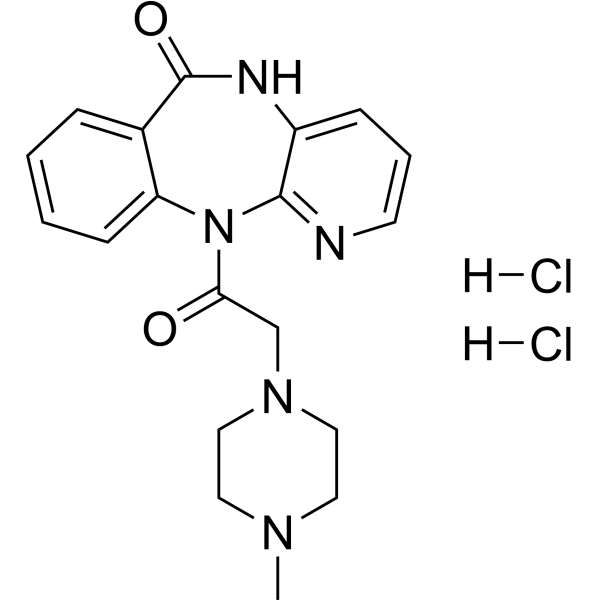
Pirenzepine (LS 519) dihydrochloride is a selective M1 mAChR (muscarinic acetylcholine receptor) antagonist, with poor penetration of the blood-brain barrier. Pirenzepine dihydrochloride reduces gastric acid secretion and reduces muscle spasm, can be used in peptic ulcers research. Pirenzepine dihydrochloride shows anti-proliferative activity to cancer cells [1] .
loading...
    loading...
5
5 Cited Publications
Cat. No.: HY-17037A
CAS No.: 28797-61-7
Synonyms: LS 519 free base; Pirenzepin; Gastrozepin
Target:  

mAChR

Research Areas:  

Metabolic Disease Cancer

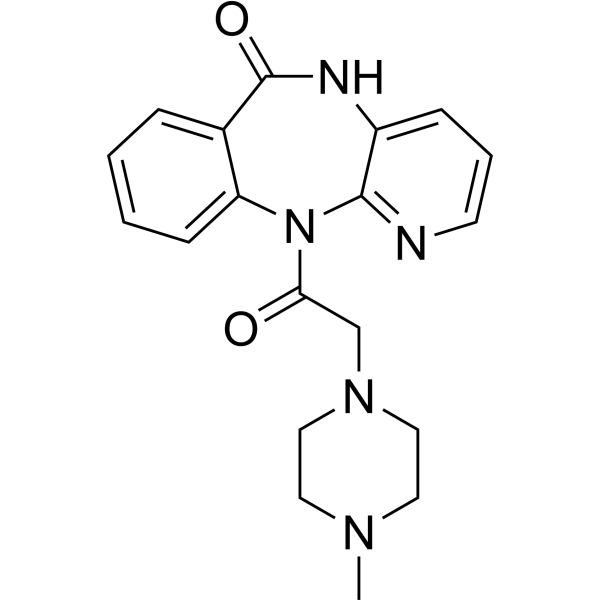
Pirenzepine (LS 519 free base) is a selective M1 mAChR (muscarinic acetylcholine receptor) antagonist, with poor penetration of the blood-brain barrier. Pirenzepine reduces gastric acid secretion and reduces muscle spasm, can be used in peptic ulcers research. Pirenzepine shows anti-proliferative activity to cancer cells [1] .
loading...
    loading...
1
1 Cited Publications
Cat. No.: HY-108234
CAS No.: 1135243-19-4
Purity:  99.76%
Synonyms: VU 255035
Target:  

mAChR

Research Areas:  

Neurological Disease

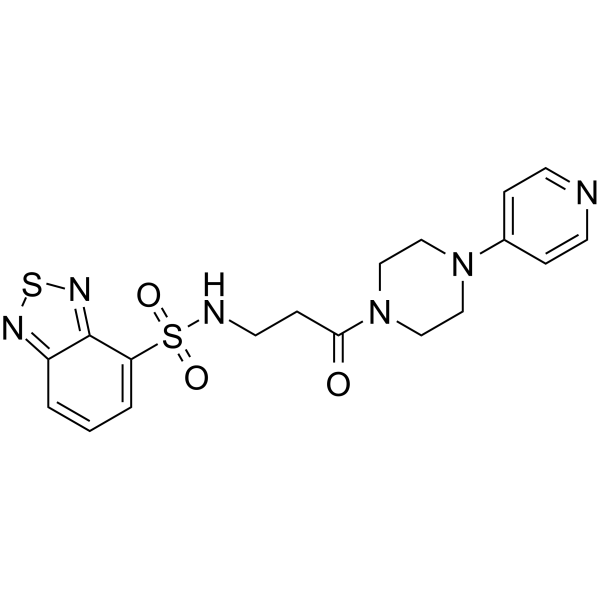
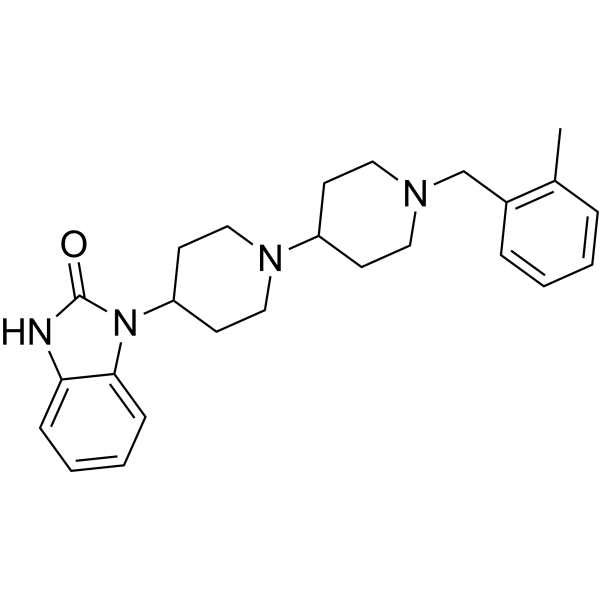
VU0255035 is a highly selective and competitive M1 mAChR antagonist. VU0255035 blocks M1 mAChR signals to reduce epileptic seizures and regulate neuronal membrane potential. VU0255035 can be used in research related to central nervous system diseases, such as epilepsy, Parkinson's disease, and dystonia [1] .
loading...
    loading...
Cat. No.: HY-101858
CAS No.: 338747-41-4
Purity:  98.03%
Target:  

mAChR

Research Areas:  

Neurological Disease

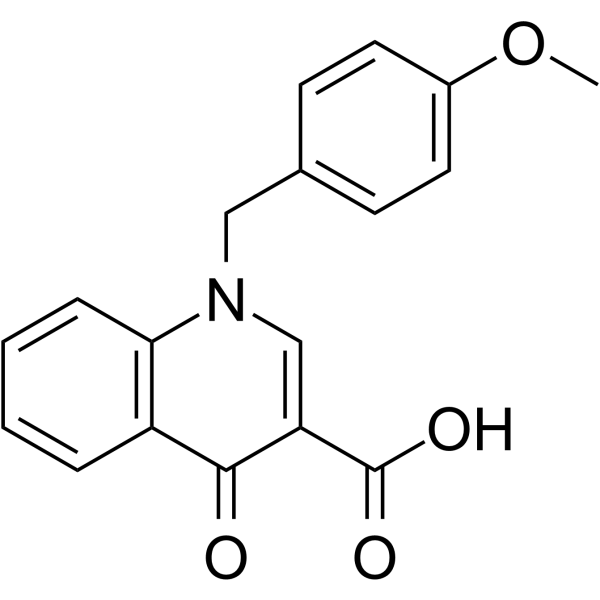
BQCA a highly selective allosteric modulator of the M1 mAChR.
loading...
    loading...
Cat. No.: HY-107111
CAS No.: 932373-87-0
Purity:  98.78%
Target:  

mAChR

Research Areas:  

Neurological Disease

GSK1034702 is an orally active and allosteric agonist of M1 mAChR (pEC50=8.1) that can cross the blood-brain barrier. GSK1034702 activates the Gq/11 protein-mediated signaling pathway, enhancing neuronal firing and long-term potentiation (LTP) in the CA1 region of the hippocampus. GSK1034702 can modulate hippocampal function, improve memory encoding in the nicotine withdrawal cognitive dysfunction model, and show pro-cognitive effects in rodents. GSK1034702 can be used for the study of the mechanisms of cognitive impairment diseases such as Alzheimer's disease, and has certain peripheral M receptor activation-related side effects (such as gastrointestinal reactions) [1] .
loading...
    loading...
Cat. No.: HY-14562
CAS No.: 634616-95-8
Purity:  99.74%
TBPB (tert-butyl peroxybenzoate) is a highly selective, blood-brain-permeable M1 mAChR allosteric agonist (EC50=289 nM) with anti-schizophrenia and anti-inflammatory activities. TBPB can enhance the sensitivity of M1 receptors to acetylcholine, activate downstream signaling pathways, and inhibit the release of pro-inflammatory cytokines (TNF-α, IL-6). TBPB can regulate the processing of amyloid and can be used in the study of neurodegenerative diseases (such as Alzheimer's disease) and inflammation-related diseases (such as sepsis) [1] .
loading...
    loading...
Cat. No.: HY-177498
CAS No.: 2247999-07-9
Target:  

mAChR

Research Areas:  

Neurological Disease

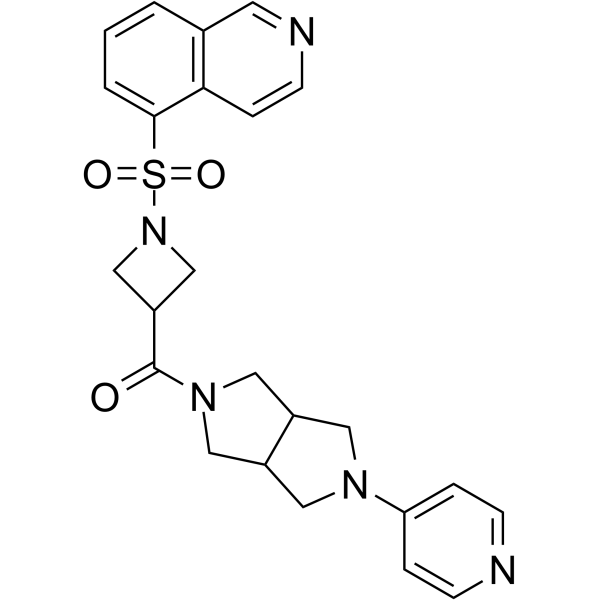
M1 mAChR modulator-1 (Example 66) is a muscarinic M1 receptor (mAChR1) positive allosteric modulator. M1 mAChR modulator-1 effectively promotes gastrointestinal motility and defecation in mouse models with low central permeability. M1 mAChR modulator-1 can be used for constipation research [1].
loading...
    loading...
Cat. No.: HY-148961
CAS No.: 1438242-59-1
Target:  

mAChR

Research Areas:  

Neurological Disease

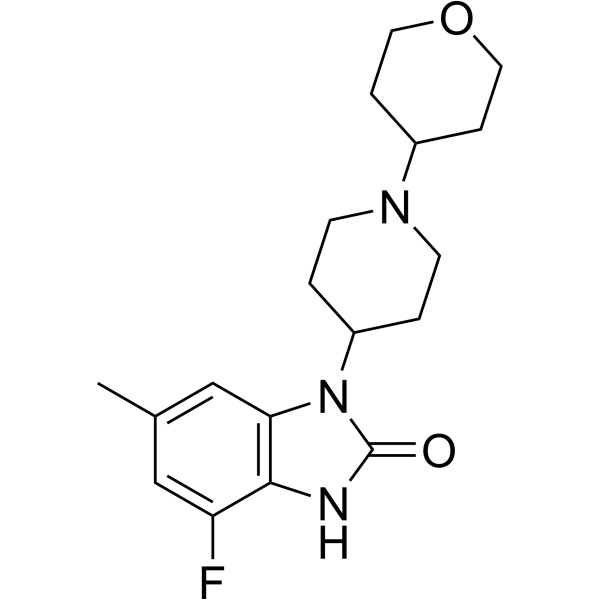
HTL-9936 is a selective M1 muscarinic acetylcholine receptor (M1-mAChR) agonist. HTL-9936 is promising for research of neurodegenerative disorders (e.g., Alzheimer’s) [1] .
loading...
    loading...
Cat. No.: HY-116569
CAS No.: 1392443-41-2
Target:  

mAChR

Research Areas:  

Cardiovascular Disease

VU0455691 is a potent, selective orthosteric M1 mAChR antagonist (pIC50=6.64; IC50=0.23 µM for hM1) [1].
loading...
    loading...
Cat. No.: HY-120576
CAS No.: 1222878-02-5
Synonyms: VU0405652
Target:  

mAChR

Research Areas:  

Neurological Disease

ML169 (VU0405652) is a potent, selective and brain penetrant positive allosteric modulator (PAM) of M1 mAChR, with an EC50 of 1.38 µM. ML169 is a MLPCN probe and can be used for Alzheimer’s disease [1].
loading...
    loading...
Cat. No.: HY-17037R
CAS No.: 29868-97-1
Synonyms: LS 519 (Standard); Pirenzepin dihydrochloride (Standard); Gastrozepin dihydrochloride (Standard)
Research Areas:  

Metabolic Disease Cancer

Pirenzepine (dihydrochloride) (Standard) is the analytical standard of Pirenzepine (dihydrochloride). This product is intended for research and analytical applications. Pirenzepine (LS 519) dihydrochloride is a selective M1 mAChR (muscarinic acetylcholine receptor) antagonist. Pirenzepine dihydrochloride reduces gastric acid secretion and reduces muscle spasm, can be used in peptic ulcers research. Pirenzepine dihydrochloride shows anti-proliferative activity to cancer cells [1] .
loading...
    loading...
Cat. No.: HY-17037AR
CAS No.: 28797-61-7
Synonyms: LS 519 free base (Standard); Pirenzepin (Standard); Gastrozepin (Standard)
Research Areas:  

Metabolic Disease Cancer

Pirenzepine (Standard) is the analytical standard of Pirenzepine. This product is intended for research and analytical applications. Pirenzepine (LS 519 free base) is a selective M1 mAChR (muscarinic acetylcholine receptor) antagonist. Pirenzepine reduces gastric acid secretion and reduces muscle spasm, can be used in peptic ulcers research. Pirenzepine shows anti-proliferative activity to cancer cells [1] .
loading...
    loading...
Cat. No.: HY-B1789
CAS No.: 80880-90-6
Target:  

mAChR

Research Areas:  

Neurological Disease

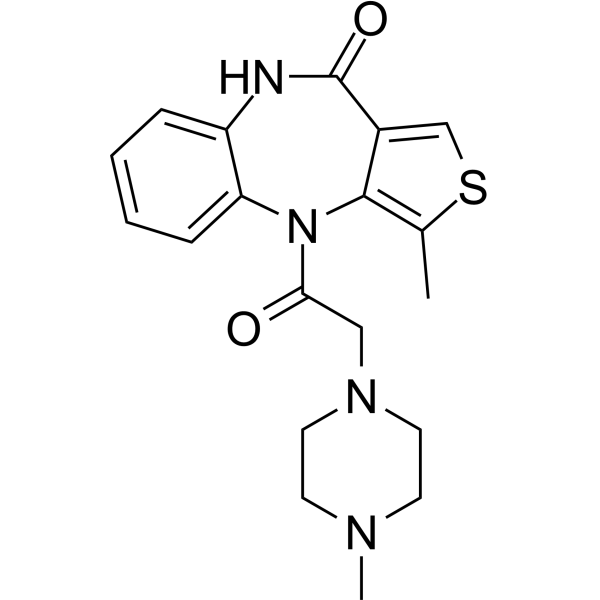
Telenzepine is an antimuscarinic agent with Kis of 0.94 nM (M1 mAChR) and 17.8 nM (M2 mAChR) binding to muscarinic receptors. Telenzepine effectively blocks synaptic transmission promoted by muscarinic or M1 receptor agonists. Thus, Telenzepine can reduce the amplitude of extracellular slow excitatory postsynaptic potentials (EC50=38 nM) and slow inhibitory postsynaptic potentials (EC50=253 nM) [1].
loading...
    loading...
Cat. No.: HY-17037S1
CAS No.: 2982740-97-4
Synonyms: LS 519-d8 dihydrochloride; Pirenzepin-d8 dihydrochloride; Gastrozepin-d8 dihydrochloride
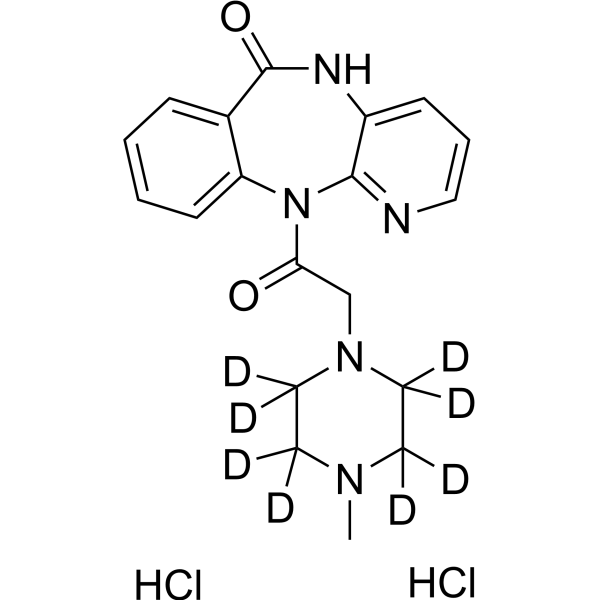
Pirenzepine-d8 (LS 519-d8; Pirenzepin-d8) dihydrochloride is a deuterium labeled Pirenzepine (dihydrochloride) (HY-17037). Pirenzepine (LS 519) dihydrochloride is a selective M1 mAChR (muscarinic acetylcholine receptor) antagonist. Pirenzepine dihydrochloride reduces gastric acid secretion and reduces muscle spasm, can be used in peptic ulcers research. Pirenzepine dihydrochloride shows anti-proliferative activity to cancer cells [1] .
loading...
    loading...
Cat. No.: HY-17037AS
Synonyms: LS 519 free base-d11; Pirenzepin-d11; Gastrozepin-d11
Pirenzepine-d11 (LS 519 (free base)-d11; Pirenzepin-d11; Gastrozepin-d11) is the deuterium labeled Pirenzepine (HY-17037A). Pirenzepine (LS 519 free base) is a selective M1 mAChR (muscarinic acetylcholine receptor) antagonist. Pirenzepine reduces gastric acid secretion and reduces muscle spasm, can be used in peptic ulcers research. Pirenzepine shows anti-proliferative activity to cancer cells [1] .
loading...
    loading...
Cat. No.: HY-107111A
CAS No.: 932373-86-9
Research Areas:  

Neurological Disease

GSK1034702 hydrochloride is an orally active and allosteric agonist of M1 mAChR (pEC50=8.1) that can cross the blood-brain barrier. GSK1034702 hydrochloride activates the Gq/11 protein-mediated signaling pathway, enhancing neuronal firing and long-term potentiation (LTP) in the CA1 region of the hippocampus. GSK1034702 hydrochloride can modulate hippocampal function, improve memory encoding in the nicotine withdrawal cognitive dysfunction model, and show pro-cognitive effects in rodents. GSK1034702 hydrochloride can be used for the study of the mechanisms of cognitive impairment diseases such as Alzheimer's disease, and has certain peripheral M receptor activation-related side effects (such as gastrointestinal reactions) [1] .
loading...
    loading...
Cat. No.: HY-108234R
CAS No.: 1135243-19-4
Synonyms: VU 255035 (Standard)
Research Areas:  

Neurological Disease

VU 0255035 (Standard) is the analytical standard of VU 0255035 (HY-108234). This product is intended for research and analytical applications. VU0255035 is a highly selective and competitive M1 mAChR antagonist. VU0255035 blocks M1 mAChR signals to reduce epileptic seizures and regulate neuronal membrane potential. VU0255035 can be used in research related to central nervous system diseases, such as epilepsy, ParKinson's disease, and dystonia [1] .
loading...
    loading...
Cat. No.: HY-101858R
CAS No.: 338747-41-4
Research Areas:  

Neurological Disease

BQCA (Standard) is the analytical standard of BQCA (HY-101858). This product is intended for research and analytical applications. BQCA a highly selective allosteric modulator of the M1 mAChR.
loading...
    loading...
Cat. No.: HY-187355
Target:  

mAChR

Research Areas:  

Neurological Disease

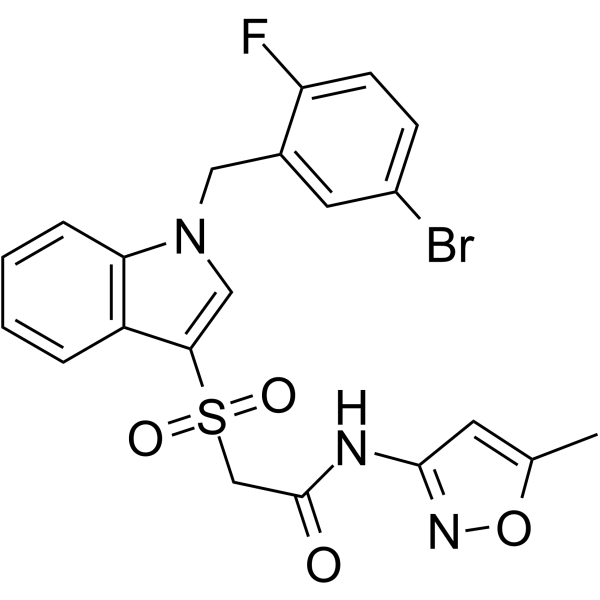
VU6077564 is a reversible competitive antagonist of M1 mAChR, with an IC50 of 31 nM in human (CHO cells) and 39.5 nM in rats. VU6077564 promotes axon growth of sensory neurons from adult rat dorsal root ganglia cultured in vitro. VU6077564 can be used for the research of peripheral neuropathy [1].
loading...
    loading...
Cat. No.: HY-107111R
CAS No.: 932373-87-0
Research Areas:  

Neurological Disease

GSK1034702 (Standard) is the analytical standard of GSK1034702 (HY-107111). This product is intended for research and analytical applications. GSK1034702 is an orally active and allosteric agonist of M1 mAChR (pEC50=8.1) that can cross the blood-brain barrier. GSK1034702 activates the Gq/11 protein-mediated signaling pathway, enhancing neuronal firing and long-term potentiation (LTP) in the CA1 region of the hippocampus. GSK1034702 can modulate hippocampal function, improve memory encoding in the nicotine withdrawal cognitive dysfunction model, and show pro-cognitive effects in rodents. GSK1034702 can be used for the study of the mechanisms of cognitive impairment diseases such as Alzheimer's disease, and has certain peripheral M receptor activation-related side effects (such as gastrointestinal reactions) [1] .
loading...
    loading...
  • 1

