1. Search Result
Search Result
Pathways Recommended: Stem Cell/Wnt Cell Cycle/DNA Damage
Results for "

MSI cell

" in MedChemExpress (MCE) Product Catalog:

10

Inhibitors & Agonists

3

Peptides

3

Natural
Products

Cat. No. Product Name Target Research Areas Chemical Structure
  • HY-158116

    RO7589831; VVD-133214

    DNA/RNA Synthesis Cancer
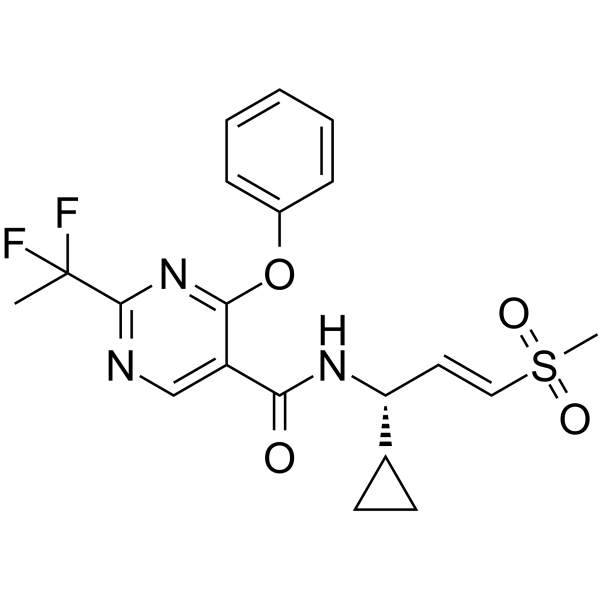
    VVD-214 is a synthetic lethal allosteric inhibitor of WRN helicase with an IC50 of 0.1316 µM. VVD-214 covalently binds to cysteine 727 of WRN and inhibits ATP hydrolysis and helicase activity. VVD-214 is potent in causing double-stranded DNA breaks, nuclear swelling, and cell death in high microsatellite instability (MSI) cancers .
    VVD-214
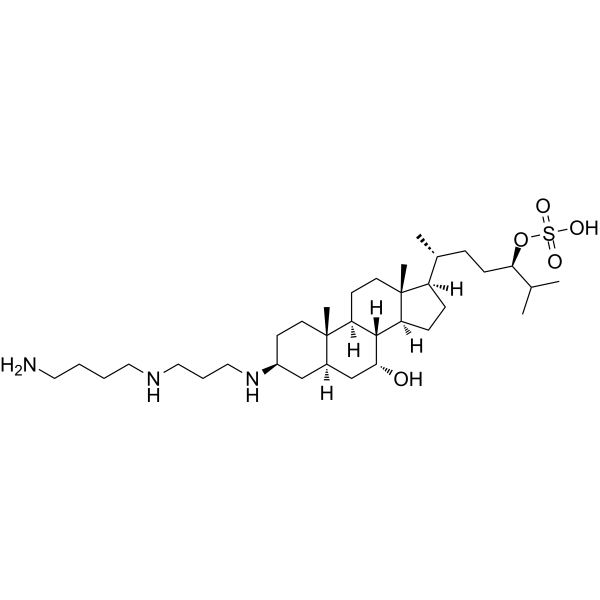
  • HY-16468
    Squalamine
    1 Publications Verification

    MSI-1256; ENT-01 free acid

    Bacterial HBV FAK Dengue Virus Infection Neurological Disease Cancer
    Squalamine (MSI-1256) is an aminosterol compound with broad-spectrum antiviral activity. Squalamine makes cells less conducive to certain viral replication by altering the electrostatic interactions in the inner membrane of host cells. Squalamine also has antibacterial and antitumor activities. Squalamine has broad-spectrum antibacterial activity against Gram-negative and Gram-positive bacteria, fungi and protozoa. Squalamine inhibits tumor-related angiogenesis and the growth of human breast cancer cells. Squalamine restores the function of enteric nervous system in Parkinson ,s disease mouse models .
    Squalamine
  • HY-105088

    MSI 78 free base

    Bacterial Infection Cancer
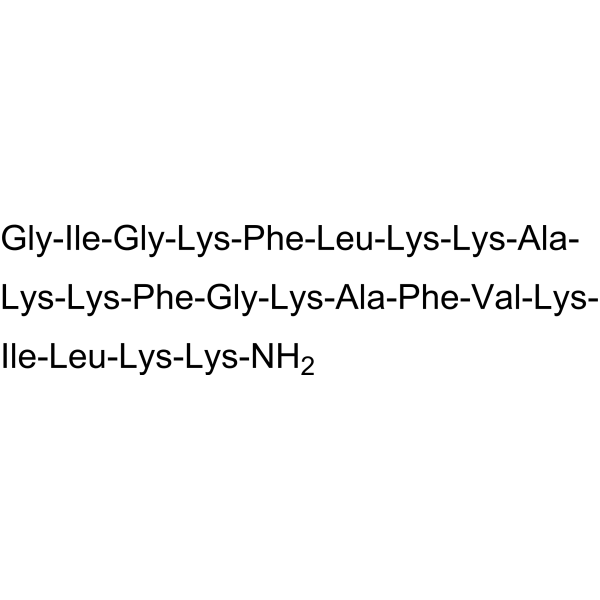
    Pexiganan (MSI 78) is an orally active antimicrobial peptide with broad-spectrum bactericidal. Pexiganan disrupts bacterial cell membranes, induces peptidoglycan damage and cell lysis. Pexiganan TFA can be used for the research of bacterial infection .
    Pexiganan
  • HY-162471

    DNA/RNA Synthesis ATM/ATR Cancer
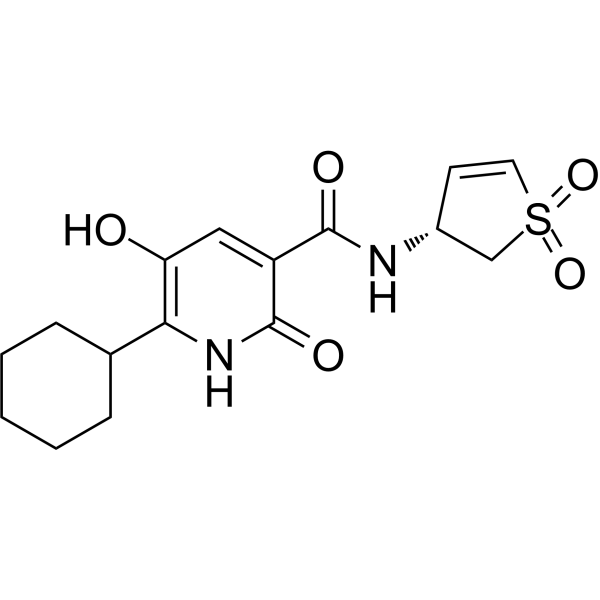
    GSK_WRN3 is selective WRN helicase inhibitor (pIC50 = 8.6). SK_WRN3 can selectively inhibit the growth of microsatellite unstable (MSI) cancer cells, induce DNA damage, and cause cell cycle arrest. GSK_WRN3 has anti-tumor activity .
    GSK_WRN3
  • HY-105088A

    MSI 78

    Bacterial Infection
    Pexiganan (MSI 78) acetate is an orally active antimicrobial peptide with broad-spectrum bactericidal. Pexiganan TFA disrupts bacterial cell membranes, induces peptidoglycan damage and cell lysis. Pexiganan acetate can be used for the research of bacterial infection .
    Pexiganan acetate
  • HY-168934

    DNA/RNA Synthesis Cancer
    KWR137 is a WRN degrader, with an IC50 of 8 nM. KWR137 exhibits good anti-proliferative activity against MSI-H cells, with a GI50 of 509 nM in SW48 cells and a GI50 of 824 μM in HCT116 cells. It also demonstrates anti-tumor growth effects in xenograft mouse models. KWR137 can be used for cancer research .
    KWR137
  • HY-174217

    DNA/RNA Synthesis Cancer
    WRN-IN-19 (Compound (S)-27) is a covalent WRN helicase inhibitor, with pIC50 (0 h/4 h) = 5.4/7.5 in the DNA-unwinding 5 endpoint assays. WRN-IN-19 shows synthetic lethality in MSI-H (high microsatellite instability) cancer cells .
    WRN-IN-19
  • HY-178474

    DNA/RNA Synthesis Apoptosis Cancer
    WRN inhibitor 20 (Compound 14c) is a WRN degradation agent. WRN inhibitor 20 exhibits strong degradation activity in various cells, such as HCT-116 (DC50 = 1.7 µM), SW-48 (DC50 = 3.0 µM), and SW-480 (DC50 = 5.9 µM) cells. WRN inhibitor 20 exhibits potent anti proliferative, pro apoptotic, migration inhibiting, and DNA damage inducing effects in MSI-H cells. WRN inhibitor 20 can be used for research on cancer .
    WRN-IN-20
  • HY-183610

    DNA/RNA Synthesis PAK Cancer
    WRN-IN-26 is an orally active Werner syndrome helicase (WRN) inhibitor with a human Ki value of 58.7 μM and an IC50 value of 0.026 μM. WRN-IN-26 selectively targets the cysteine residues of WRN. WRN-IN-26 induces the expression of p21 protein in MSI-H tumor cells. WRN-IN-26 inhibits the growth of MSI-H tumor cells and exhibits potent in vivo efficacy in MSI-H xenograft tumor models. WRN-IN-26 can be used for the research of microsatellite instability-high (MSI-H) cancers .
    WRN-IN-26
  • HY-105088C

    MSI 78 TFA

    Bacterial Infection
    Pexiganan (MSI 78) TFA is an orally active antimicrobial peptide with broad-spectrum bactericidal. Pexiganan TFA disrupts bacterial cell membranes, induces peptidoglycan damage and cell lysis. Pexiganan TFA can be used for the research of bacterial infection .
    Pexiganan TFA

Inquiry Online

Your information is safe with us. * Required Fields.

Salutation


Country or Region *

Applicant Name *


Organization Name *

Department *


Email Address *


Product Name *

Cat. No.


Requested quantity *

Phone Number *


Remarks

Inquiry Online

Inquiry Information

Product Name:
Cat. No.:
Quantity:
MCE Japan Authorized Agent:

