1. Search Result
Search Result
Results for "

MX-1

" in MedChemExpress (MCE) Product Catalog:

29

Inhibitors & Agonists

1

Natural
Products

1

Antibodies

4

Oligonucleotides

Cat. No. Product Name Target Research Areas Chemical Structure
  • HY-16106
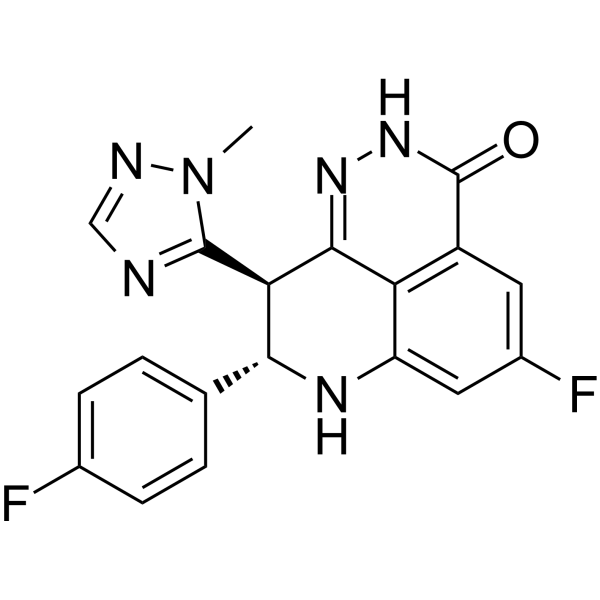
    Talazoparib
    Maximum Cited Publications
    98 Publications Verification

    BMN-673; LT-673

    PARP Cancer
    Talazoparib (BMN-673) is a highly potent, orally active PARP1/2 inhibitor.Talazoparib inhibits PARP1 and PARP2 enzyme activity with Kis of 1.2 nM and 0.87 nM, respectively. Talazoparib has antitumor activity [1].
    Talazoparib
  • HY-10617A
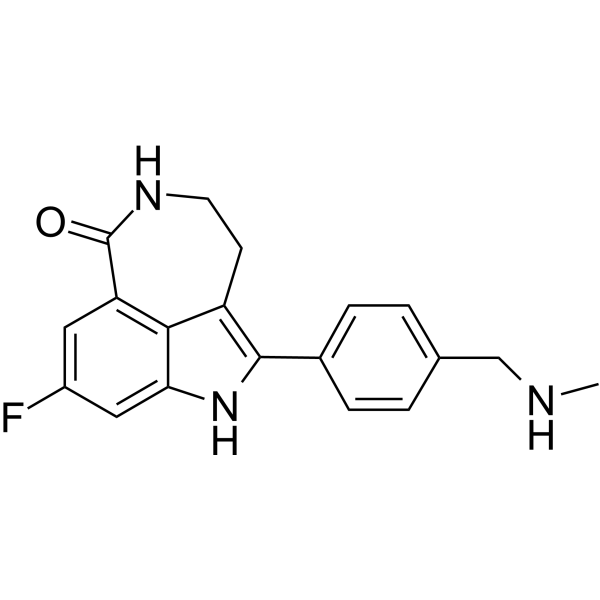
    Rucaparib
    45+ Cited Publications

    AG014699; PF-01367338

    PARP Cancer
    Rucaparib (AG014699) is an orally active, potent inhibitor of PARP proteins (PARP-1, PARP-2 and PARP-3) with a Ki of 1.4 nM for PARP1. Rucaparib is a modest hexose-6-phosphate dehydrogenase (H6PD) inhibitor. Rucaparib has the potential for castration-resistant prostate cancer (CRPC) research [1] .
    Rucaparib
  • HY-10617
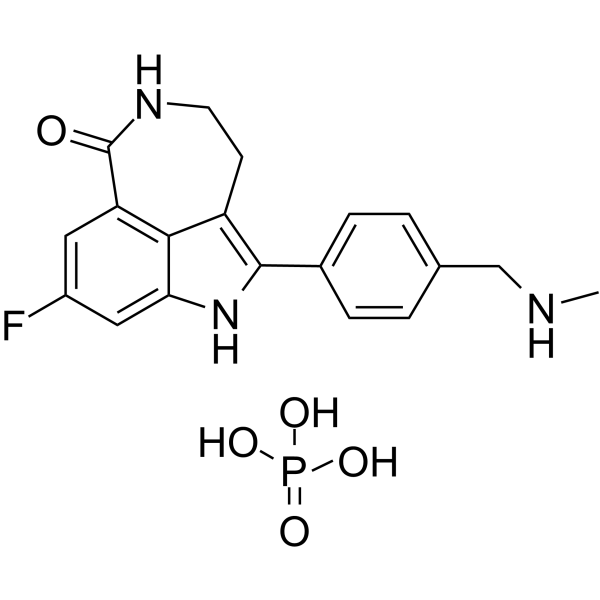
    Rucaparib phosphate
    45+ Cited Publications

    AG-014699 phosphate; PF-01367338 phosphate

    PARP Cancer
    Rucaparib (AG014699) phosphate is an orally active, potent inhibitor of PARP proteins (PARP-1, PARP-2 and PARP-3) with a Ki of 1.4 nM for PARP1. Rucaparib phosphate is a modest hexose-6-phosphate dehydrogenase (H6PD) inhibitor. Rucaparib phosphate has the potential for castration-resistant prostate cancer (CRPC) research [1] .
    Rucaparib phosphate
  • HY-102003
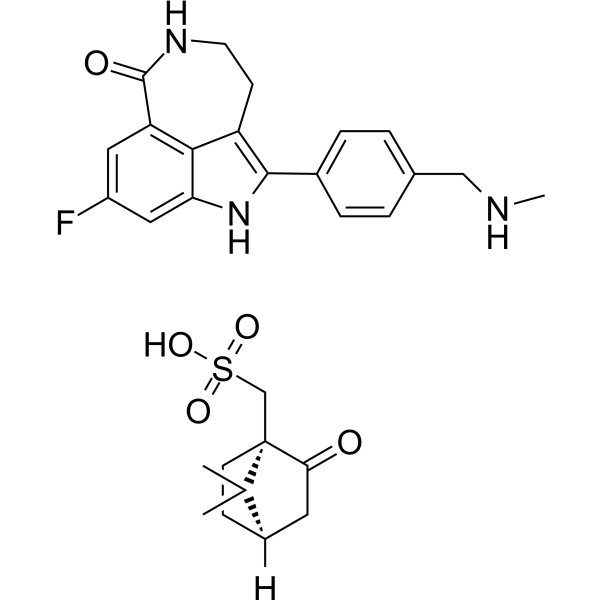
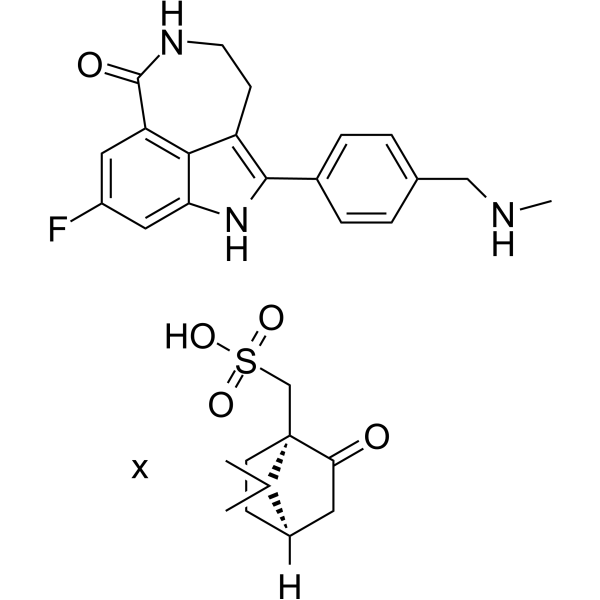
    Rucaparib monocamsylate
    35+ Cited Publications

    AG014699 monocamsylate; PF-01367338 monocamsylate

    PARP Cancer
    Rucaparib (AG014699) monocamsylate is an orally active, potent inhibitor of PARP proteins (PARP-1, PARP-2 and PARP-3) with a Ki of 1.4 nM for PARP1. Rucaparib monocamsylate is a modest hexose-6-phosphate dehydrogenase (H6PD) inhibitor. Rucaparib monocamsylate has the potential for castration-resistant prostate cancer (CRPC) research [1] .
    Rucaparib monocamsylate
  • HY-160229

    R-1075 sodium

    Toll-like Receptor (TLR) MyD88 Caspase Reactive Oxygen Species (ROS) Autophagy Pyroptosis HIV Infection Neurological Disease
    ssRNA40 sodium (R-1075 sodium) is a single-stranded RNA40 derived from HIV-1. ssRNA40 sodium activates the TLR7, TLR8, TLR2, RIG-I, MDA5, MyD88, Caspase-3, IRE1α, NLRP3 inflammasome and IRF7 signaling pathways. ssRNA40 sodium alters mRNA expression in neutrophils, induces pro-inflammatory cytokines, ROS, autophagy (autophagy), pyroptosis (pyroptosis), neuronal death, neurodegeneration, aggregate formation and NK cell activation. ssRNA40 sodium activates the expression of CD62L, CD11b, CD69, MX1, OAS1, ATG7, LC3B and XBP1 in immune cell and neuronal populations. ssRNA40 sodium causes cortical neuron loss and axonal damage in mice in a TLR7-dependent manner. ssRNA40 sodium can be used in research on HIV-1 infection, neurodegeneration, COVID-19 and HIV-associated neurological disorders [1] .
    ssRNA40 sodium
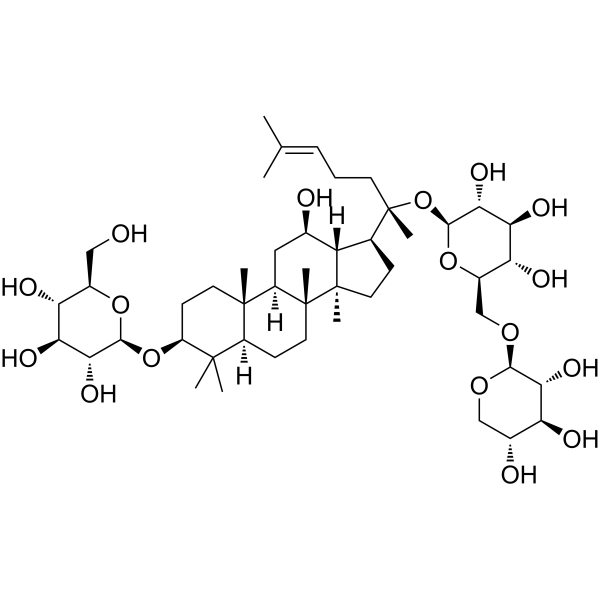
  • HY-N0167
    Gynostemma Extract
    1 Publications Verification

    Ginsenoside C-MX1; Gypenoside IX

    p38 MAPK Akt NF-κB COX Interleukin Related NO Synthase Metabolic Disease Inflammation/Immunology
    Gynostemma Extract (Gypenoside IX) is a triterpenoid saponin. Gynostemma Extract can be isolated from Panax notoginseng. Gynostemma Extract reduces NFκB nuclear translocation and transcriptional activity by inhibiting the p38 MAPK/Akt/NFκB signaling pathway. Gynostemma Extract reduces the expression of cytokines (COX-2, IL-6) and the production of NO. Gynostemma Extract has anti-inflammatory activity. Gynostemma Extract can be used in the study of liver injury and neuroinflammation [1] .
    Gynostemma Extract
  • HY-155113

    PROTACs HSP Cancer
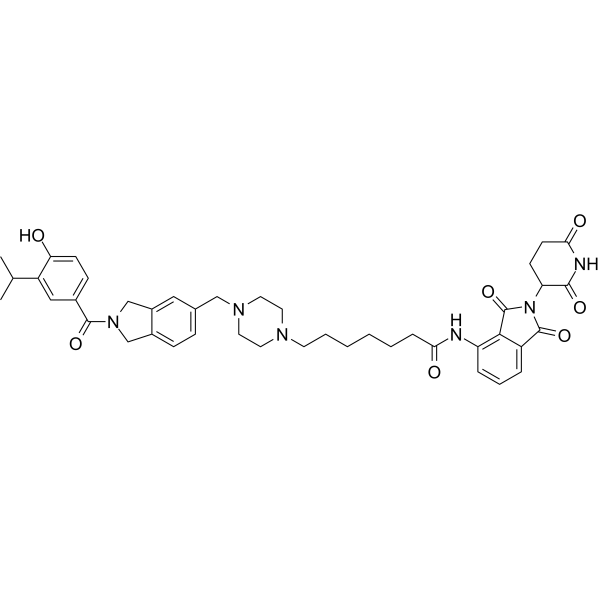
    PROTAC Hsp90α degrader 1 (Compound X10g) is a selective PROTAC Hsp90α degrader. PROTAC Hsp90α degrader 1 can be used for breast cancer research. PROTAC Hsp90α degrader 1 inhibits the proliferation of MDA-MB-231, MDA-MB-468, MCF-7, MX-1 cells with IC50s of 51.48 μM, 16.46 μM, 8.93 μM, 11.95 μM respectively [1].
    PROTAC Hsp90α degrader 1
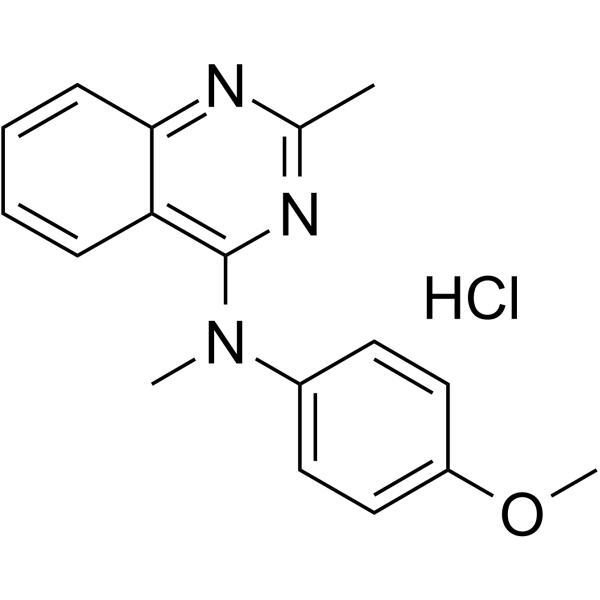
  • HY-12098

    MPC-6827 hydrochloride

    Microtubule/Tubulin Cancer
    Verubulin hydrochloride (MPC-6827 hydrochloride) is a blood brain barrier permeable microtubule-disrupting agent, with potent and broad-spectrum in vitro and in vivo cytotoxic activities. Verubulin hydrochloride (MPC-6827 hydrochloride) exhibits potent anticancer activity in human MX-1 breast and other mouse xenograft cancer models. Verubulin hydrochloride (MPC 6827 hydrochloride) is a promising candidate for the treatment of multiple cancer types [1] .
    Verubulin hydrochloride
  • HY-123805

    RIG-I-like receptor (RLR) HCV IFNAR Infection
    KIN1400 is a potent IRF3 activator. KIN1400 triggers IRF3-dependent innate immune antiviral genes (RIG-I, MDA5, IFIT1, and Mx1) and IFN-β expression. KIN1400 inhibits WNV and DV, two mosquito-borne members of the Flaviviridae and the genus Flavivirus. KIN1400 also inhibits HCV replication. KIN1400 induces innate antiviral immunity through a MAVS-IRF3 axis [1].
    KIN1400
  • HY-106031

    Topoisomerase DNA/RNA Synthesis Cancer
    F-14512 is an anticancer agent that utilizes the polyamine transport system (PTS) to selectively deliver polyamine-containing drugs to cancer cells. F-14512 enhances the affinity of polyamines for DNA, thereby inhibiting topoisomerase II and achieving selective cellular uptake. F-14512 exhibits significant cytotoxicity against cells with high PTS activity and induces DNA damage. F-14512 demonstrates potent antitumor activity in the MX1 breast tumor xenograft model. F-14512 can be used to study breast cancer [1].
    F-14512
  • HY-162465

    STING IFNAR Cancer
    BDW568 is a selective STING A230 agonist with an EC50 of 5.7 μM. BDW568 triggers the interferon signaling pathway and induces the expression of interferon-stimulated genes including MX1 and OAS1. BDW568 is applicable for cancer-related research [1] .
    BDW568
  • HY-16124

    TLK-286; TER286

    DNA-PK Apoptosis Cancer
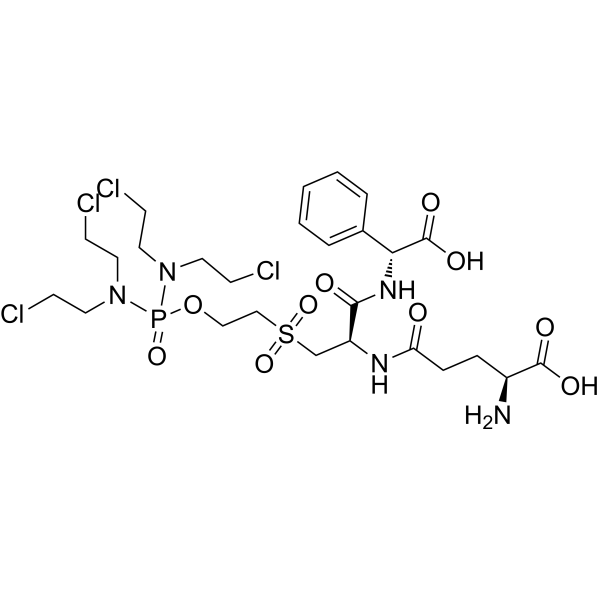
    Canfosfamide (TLK-286, TER286) is a glutathione analogue prodrug that is activated by glutathione S-transferase P1-1 and induces apoptosis. Canfosfamide also inhibits the catalytic kinase activity of DNA-dependent protein kinase (DNA-PK). Canfosfamide produces an anticancer alkylating agent and a glutathione derivative after activation. Canfosfamide can be used to research malignancies [1] .
    Canfosfamide
  • HY-RS18454

    Small Interfering RNA (siRNA) Others

    Mx1 Mouse Pre-designed siRNA Set A contains three designed siRNAs for Mx1 gene (Mouse), as well as a negative control, a positive control, and a FAM-labeled negative control.

    Mx1 Mouse Pre-designed siRNA Set A
    Mx1 Mouse Pre-designed siRNA Set A
  • HY-RS08859

    Small Interfering RNA (siRNA) Others

    MX1 Human Pre-designed siRNA Set A contains three designed siRNAs for MX1 gene (Human), as well as a negative control, a positive control, and a FAM-labeled negative control.

    MX1 Human Pre-designed siRNA Set A
    MX1 Human Pre-designed siRNA Set A
  • HY-102003A

    AG014699 camsylate; PF-01367338 camsylate

    PARP Cancer
    Rucaparib (AG014699) camsylate is an orally active, potent inhibitor of PARP proteins (PARP-1, PARP-2 and PARP-3) with a Ki of 1.4 nM for PARP1. Rucaparib camsylate is a modest hexose-6-phosphate dehydrogenase (H6PD) inhibitor. Rucaparib camsylate has the potential for castration-resistant prostate cancer (CRPC) research [1] .
    Rucaparib camsylate
  • HY-106401

    NSC 338720

    Drug Derivative Cancer
    Penclomedine (NSC 338720), a synthetic alpha-picoline derivative, is an orally active antitumor agent. Penclomedine has a strong inhibitory effect on breast cancer cells, such as CD8F1 and MX-1 cells [1].
    Penclomedine
  • HY-131438

    Topoisomerase Cancer
    GI-149893 is a selective topoisomerase I (TopoI) inhibitor. GI-149893 prevents DNA religation and induces irreversible DNA damage in tumor cells. GI-149893 is promising for research of cancers (e.g., colon carcinoma HT-29/SW-48, breast MX-1, prostate PC-3 xenografts) [1] .
    GI-149893
  • HY-10615
    A-620223
    1 Publications Verification

    PARP Cancer
    A-620223 is a PARP-1 inhibitor with a Ki of 8 nM against PARP-1 and EC50 of 3 nM in a whole cell assay. A-620223 demonstrates good in vivo efficacy in a B16F10 subcutaneous murine melanoma model in combination with Temozolomide (TMZ) (HY-17364) and in an MX-1 breast xenograph model in combination with Cisplatin (HY-17394). A-620223 can be used for the studies of melanoma and breast cancer [1].
    A-620223
  • HY-RS24935

    Small Interfering RNA (siRNA) Others

    Mx1 Rat Pre-designed siRNA Set A contains three designed siRNAs for Mx1 gene (Rat), as well as a negative control, a positive control, and a FAM-labeled negative control.

    Mx1 Rat Pre-designed siRNA Set A
    Mx1 Rat Pre-designed siRNA Set A
  • HY-14687

    (rac)-BMN-673; (rac)-LT-673

    PARP Cancer
    (rac)-Talazoparib ((rac)-BMN-673) (Compound 47) is the orally active inhibitor for PARP1/2 with Ki of 1.2 nM and 0.87 nM. (rac)-Talazoparib inhibits cellular PARylation with an EC50 of 2.51 nM. (rac)-Talazoparib causes the accumulation of DNA damage, inhibits proliferation of BRCA1/2-mutated MX-1 cell and Capan-1 cell with IC50 of 0.3 nM and 5 nM. (rac)-Talazoparib exhibits antitumor efficacy in mouse models [1].
    (rac)-Talazoparib
  • HY-10617AR

    AG014699 (Standard); PF-01367338 (Standard)

    Reference Standards PARP Cancer
    Rucaparib (Standard) is the analytical standard of Rucaparib. This product is intended for research and analytical applications. Rucaparib (AG014699) is an orally active, potent inhibitor of PARP proteins (PARP-1, PARP-2 and PARP-3) with a Ki of 1.4 nM for PARP1. Rucaparib is a modest hexose-6-phosphate dehydrogenase (H6PD) inhibitor. Rucaparib has the potential for castration-resistant prostate cancer (CRPC) research [1] .
    Rucaparib (Standard)
  • HY-121372

    Estrogen Receptor/ERR Cancer
    Lactandrate is a D-high nitrogen steroid alkylating agent. It can interact with the ligand-binding domain (LBD) of estrogen receptor-alpha (ERα). Lactandrate has a growth inhibitory effect on breast cancer cells, with a GI50 value ranging from 5 to 65 μM. It shows anti-tumor activity in mouse breast tumors (MXT and CD8F1) as well as in human xenograft MX-1 [1].
    Lactandrate
  • HY-12098R

    MPC-6827 hydrochloride (Standard)

    Microtubule/Tubulin Reference Standards Cancer
    Verubulin (hydrochloride) (Standard) is the analytical standard of Verubulin (hydrochloride). This product is intended for research and analytical applications. Verubulin hydrochloride (MPC-6827 hydrochloride) is a blood brain barrier permeable microtubule-disrupting agent, with potent and broad-spectrum in vitro and in vivo cytotoxic activities. Verubulin hydrochloride (MPC-6827 hydrochloride) exhibits potent anticancer activity in human MX-1 breast and other mouse xenograft cancer models. Verubulin hydrochloride (MPC 6827 hydrochloride) is a promising candidate for the treatment of multiple cancer types [1] .
    Verubulin hydrochloride (Standard)
  • HY-106031A

    Topoisomerase DNA/RNA Synthesis Cancer
    F-14512 hydrochloride is an anticancer agent that utilizes the polyamine transport system (PTS) to selectively deliver polyamine-containing drugs to cancer cells. F-14512 hydrochloride enhances the affinity of polyamines for DNA, thereby inhibiting topoisomerase II and achieving selective cellular uptake. F-14512 hydrochloride exhibits significant cytotoxicity against cells with high PTS activity and induces DNA damage. F-14512 hydrochloride demonstrates potent antitumor activity in the MX1 breast tumor xenograft model. F-14512 hydrochloride could be used to study breast cancer [1].
    F-14512 hydrochloride
  • HY-160662

    Epigenetic Reader Domain Cancer
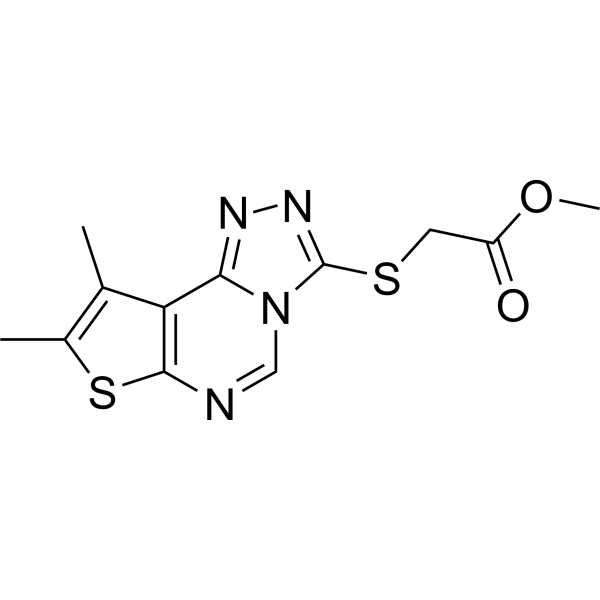
    BRD4-IN-5 (example 51) is a BRD4 inhibitor. The Ki values of the two BRD4 domains BDI_K57-E168 and BDII_E352-M457 are 9.7 nM and 16.1 nM, respectively. BRD4-IN-5 can be used in cancer research [1].
    BRD4-IN-5
  • HY-10617R

    AG-014699 phosphate (Standard); PF-01367338 phosphate (Standard)

    Reference Standards PARP Cancer
    Rucaparib (phosphate) (Standard) is the analytical standard of Rucaparib (phosphate). This product is intended for research and analytical applications. Rucaparib (AG014699) phosphate is an orally active, potent inhibitor of PARP proteins (PARP-1, PARP-2 and PARP-3) with a Ki of 1.4 nM for PARP1. Rucaparib phosphate is a modest hexose-6-phosphate dehydrogenase (H6PD) inhibitor. Rucaparib phosphate has the potential for castration-resistant prostate cancer (CRPC) research [1] .
    Rucaparib phosphate (Standard)
  • HY-105060

    Drug Derivative Cancer
    TA 077 is a nitrosourea derivative with antitumor activity. TA 077 can be used for the research of cancer, such as lung cancer and leukemia [1].
    TA 077
  • HY-102003R

    AG014699 monocamsylate (Standard); PF-01367338 monocamsylate (Standard)

    Reference Standards PARP Cancer
    Rucaparib monocamsylate (Standard) is the analytical standard of Rucaparib monocamsylate (HY-102003). This product is intended for research and analytical applications. Rucaparib (AG014699) monocamsylate is an orally active, potent inhibitor of PARP proteins (PARP-1, PARP-2 and PARP-3) with a Ki of 1.4 nM for PARP1. Rucaparib monocamsylate is a modest hexose-6-phosphate dehydrogenase (H6PD) inhibitor. Rucaparib monocamsylate has the potential for castration-resistant prostate cancer (CRPC) research [1] .
    Rucaparib monocamsylate (Standard)
  • HY-182264

    Nordihydroguaiaretic acid tetrapivalate

    IGF-1R EGFR Drug Metabolite Cancer
    Masoprocol tetrapivalate (Nordihydroguaiaretic acid tetrapivalate) is a catecholic butane metabolite and also a tyrosine kinase activity inhibitor of IGF-1R and EGFR. Masoprocol tetrapivalate regulates tyrosine kinase signaling pathways associated with cell proliferation. Masoprocol tetrapivalate can be used in the research of proliferative diseases, including malignant, precancerous or benign cancers, and solid tumors [1].
    Masoprocol tetrapivalate

Inquiry Online

Your information is safe with us. * Required Fields.

Salutation


Country or Region *

Applicant Name *


Organization Name *

Department *


Email Address *


Product Name *

Cat. No.


Requested quantity *

Phone Number *


Remarks

Inquiry Online

Inquiry Information

Product Name:
Cat. No.:
Quantity:
MCE Japan Authorized Agent:

