1. Search Result
Search Result
Results for "

Non-genotoxic

" in MedChemExpress (MCE) Product Catalog:

17

Inhibitors & Agonists

4

Natural
Products

2

Isotope-Labeled Compounds

Cat. No. Product Name Target Research Areas Chemical Structure
  • HY-Y1644
    (E)-Crotonic acid
    1 Publications Verification

    (E)-2-Butenoic acid; trans-2-Butenoic acid; trans-Crotonic acid

    Endogenous Metabolite Metabolic Disease
    NSC 8751 (trans-2-Butenoic acid; trans-Crotonic acid) is an unsaturated carboxylic acid compound containing α,β-unsaturated carboxylic acid groups. NSC 8751 is one of the important analogs for evaluating the safety of fragrance ingredients and is used to evaluate the toxicological properties of compounds with similar structures. When NSC 8751 is applied to local lymph nodes, a 50% concentration does not cause skin sensitization. Structural analogs of NSC 8751 have been shown to be non-genotoxic. trans-Crotonic acid can be used in the preparation of cosmetics and food additives .
    (E)-Crotonic acid
  • HY-139838

    Herbicide Others Cancer
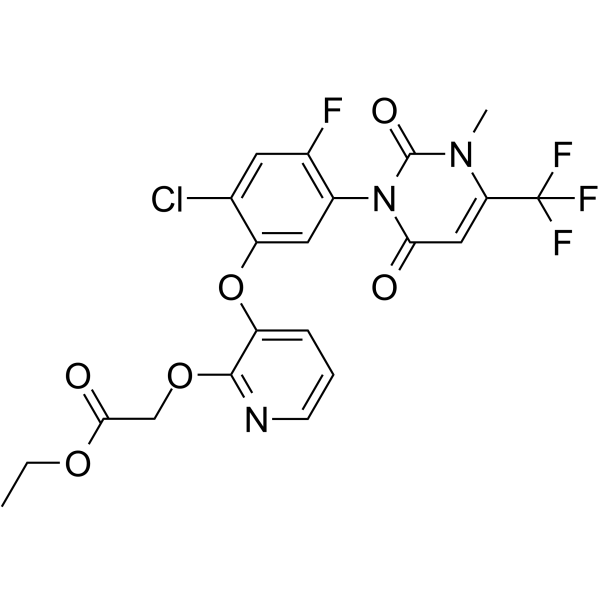
    Epyrifenacil is a protoporphyrinogen oxidase (PPO) inhibiting herbicide, potently targeting the PPO2 isoform from weeds such as Amaranthus palmeri with an IC50 of 0.637 nM. Epyrifenacil also inhibits liver mitochondrial PPO across species, with IC50 values of 2.2 nM (mouse), 2.6 nM (rat), 12.1 nM (rabbit), 7.6 nM (dog), and 10.2 nM (human). Epyrifenacil induces liver tumor development in mice. Epyrifenacil can be used for weed control, and also used as a tool compound in toxicological research to study the mechanism of PPO inhibition, chemical-induced hepatotoxicity, and the mode of action of non-genotoxic carcinogens in rodents [3].
    Epyrifenacil
  • HY-152775

    Histone Methyltransferase Cancer
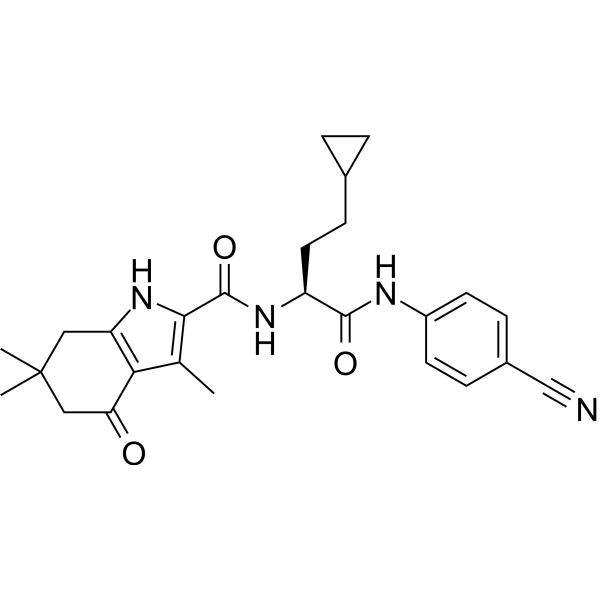
    RK-701 is an highly selective and non-genotoxic inhibitor of G9a with IC50 value of 23-27 nM. RK-701 selectively up-regulates HbF, γ- Globin, BGLT3 expression, down-regulates H3K9me2 expression. RK-701 also has inhibition for BCL11A and ZBTB7A .
    RK-701
  • HY-Y0496

    Insecticide Environmental Pollutants Mitosis Cancer
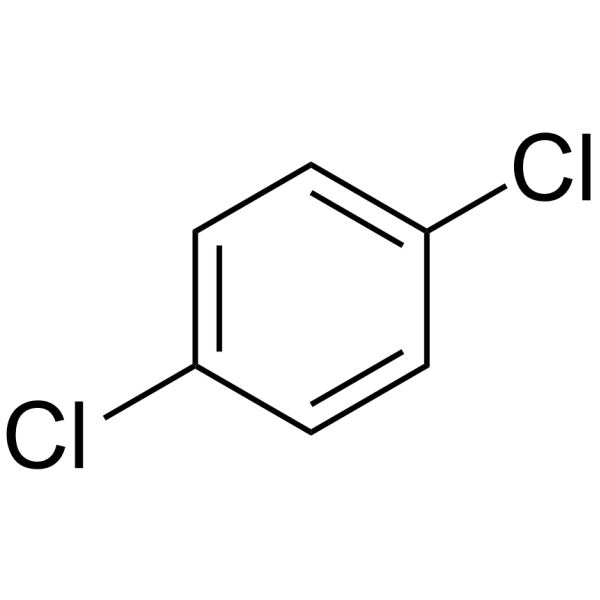
    1,4-Dichlorobenzene is a non-genotoxic, orally active mitogenic/tumor-promoting carcinogen that is also widely used as a dye, resin intermediate, and deodorant, moth repellent/insecticide. 1,4-Dichlorobenzene induces liver tumors in mice and promotes the growth of spontaneous precancerous lesions, but shows no liver tumor-inducing activity in F344 rats. Exposure to 1,4-dichlorobenzene leads to elevated leukocyte counts, serum alanine aminotransferase, and blood urea nitrogen levels. Due to the hepatotoxic characteristics, 1,4-Dichlorobenzene is applicable to liver cancer-related research .
    1,4-Dichlorobenzene
  • HY-W012653

    Environmental Pollutants Others
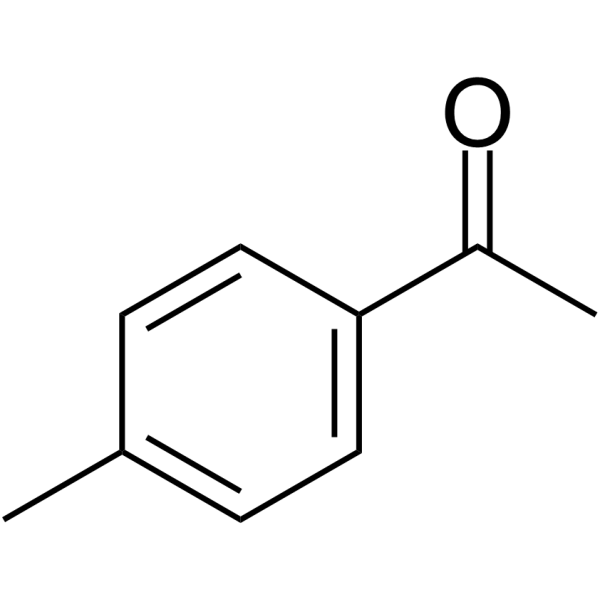
    4′-Methylacetophenone is a phenolic compound that can be used as a fragrance material. 4′-Methylacetophenone is wildly occurs in volatile compounds in food and in some natural complex substances (NCS). 4′-Methylacetophenone can be used to study the Bayer-Villiger reaction and to synthesize functionalized terpolymers .
    4'-Methylacetophenone
  • HY-162386

    Cuproptosis Mitochondrial Metabolism Cancer
    UM4118 is a potent copper-selective non-genotoxic copper ionophore that induces cuproptosis in acute myeloid leukemia cells. UM4118 exhibits stronger activity against SF3B1G12C mutant acute myeloid leukemia cells. UM4118 transports extracellular copper into cells, elevates intracellular and mitochondrial copper levels, and triggers lipoylated DLAT aggregation, proteotoxic stress, iron-sulfur cluster protein depletion, reduced lipoylated protein levels, and maximal mitochondrial respiratory damage. UM4118 cytotoxicity can be enhanced by supplementation with extracellular copper, abolished by copper chelation, and shows synthetic lethal effects in the absence of iron-sulfur cluster biosynthesis/transport genes. UM4118 can be used for the study of acute myeloid leukemia .
    UM4118
  • HY-W015307

    Drug Derivative Others
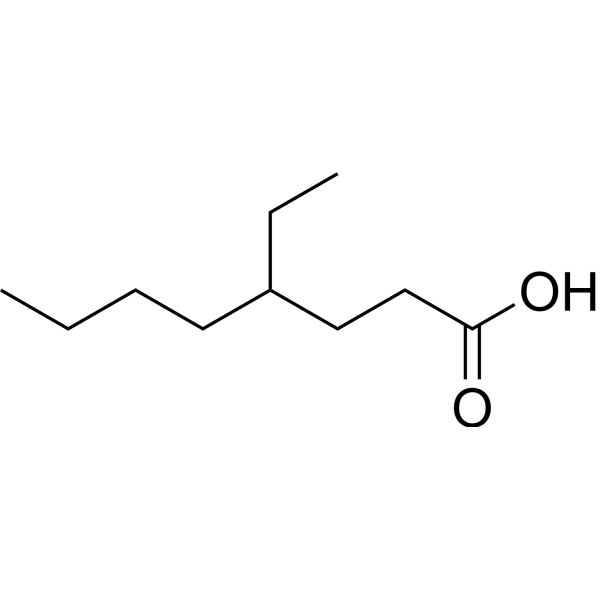
    4-Ethyloctanoic acid is a branched chain aliphatic carboxylic acid that can be found in blue cheeses, various cheese types, and lamb/mutton. 4-Ethyloctanoic acid is a fragrance ingredient .
    4-Ethyloctanoic acid
  • HY-136375

    Environmental Pollutants Herbicide Others
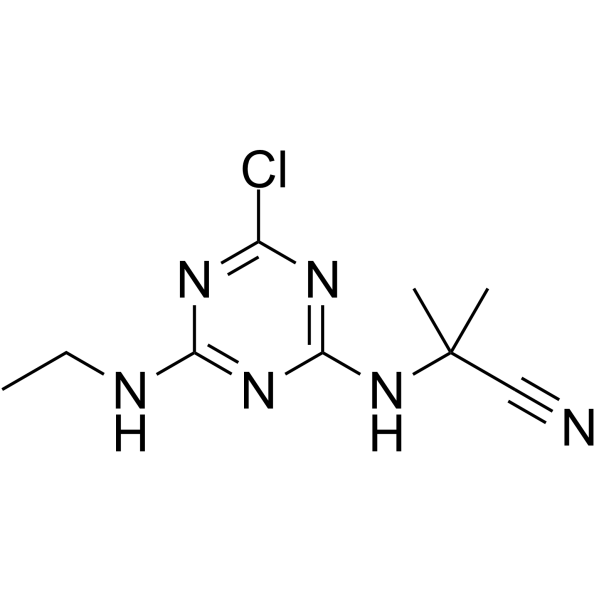
    Cyanazine, a triazine herbicide cyanazine, is used to control a variety of grass weeds and broadleaf weed. Cyanazine is proved non-genotoxic .
    Cyanazine
  • HY-W587892

    1-Methoxydecane

    Biochemical Assay Reagents Others
    Decyl methyl ether is a new type of strong fatty ether. Decyl methyl ether is non-genotoxic and phototoxic/photosensitizing .
    Decyl methyl ether
  • HY-139420

    Drug Derivative Others
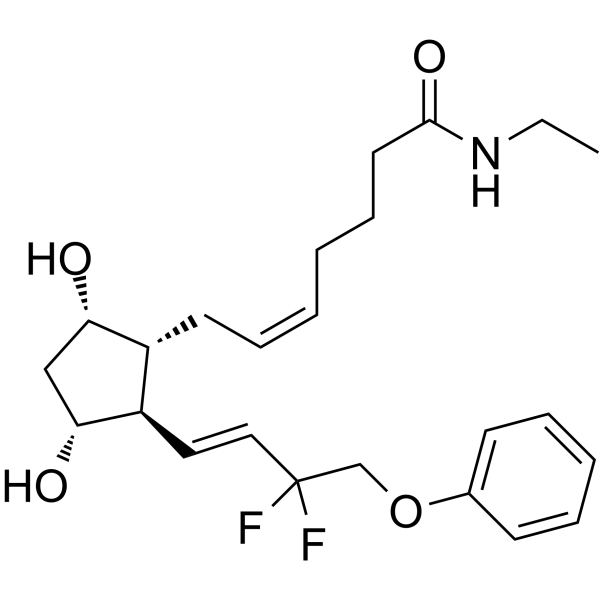
    Tafluprost ethyl amide is a derivative of Tafluprost (HY-B0600). Tafluprost ethyl amide is commonly used in studies related to eyelash hypotrichosis, and it can also be applied in research related to the cosmetic field .
    Tafluprost ethyl amide
  • HY-Y0496S

    Isotope-Labeled Compounds Insecticide Others
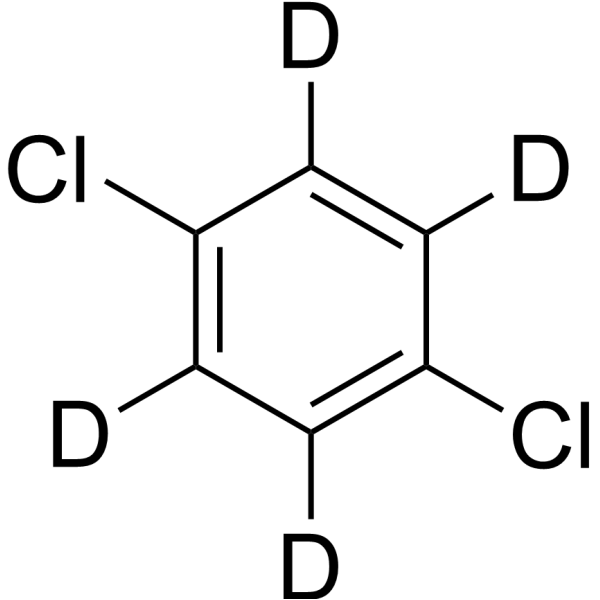
    1,4-Dichlorobenzene-d4 is the deuterium labeled 1,4-Dichlorobenzene. 1,4-Dichlorobenzene is a non-genotoxic, orally active mitogenic/tumor-promoting carcinogen that is also widely used as a dye, resin intermediate, and deodorant, moth repellent/insecticide. 1,4-Dichlorobenzene induces liver tumors in mice and promotes the growth of spontaneous precancerous lesions, but shows no liver tumor-inducing activity in F344 rats. 1,4-Dichlorobenzene increases the levels of white blood cell count, serum alanine aminotransferase and blood urea nitrogen in occupationally exposed populations. 1,4-Dichlorobenzene is metabolized to 2,5-dichlorophenol and excreted in urine, and this metabolite can serve as a biomarker for 1,4-Dichlorobenzene exposure. Due to its specific hepatotoxic characteristics, 1,4-Dichlorobenzene is applicable to liver cancer-related research .
    1,4-Dichlorobenzene-d4
  • HY-136375S

    Isotope-Labeled Compounds Others
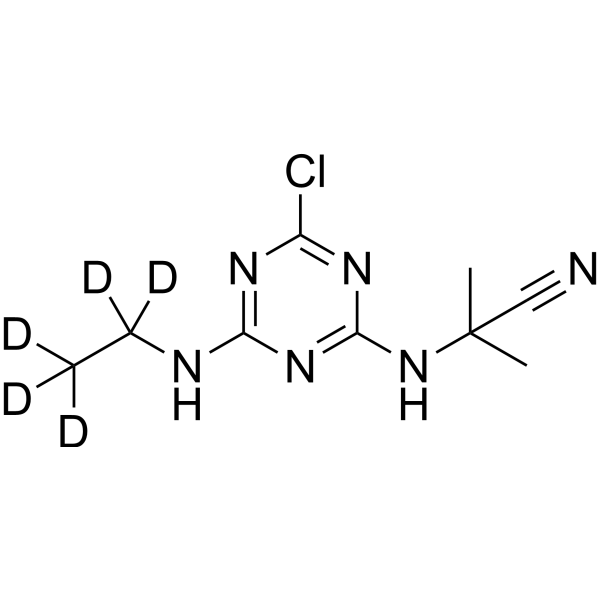
    Cyanazine-d5 is deuterium labeled Cyanazine. Cyanazine, a triazine herbicide cyanazine, is used to control a variety of grass weeds and broadleaf weed. Cyanazine is proved non-genotoxic .
    Cyanazine-d5
  • HY-136375R

    Herbicide Reference Standards Others
    Cyanazine (Standard) is the analytical standard of Cyanazine. This product is intended for research and analytical applications. Cyanazine, a triazine herbicide cyanazine, is used to control a variety of grass weeds and broadleaf weed. Cyanazine is proved non-genotoxic .
    Cyanazine (Standard)
  • HY-130053

    SU-13-437

    Endogenous Metabolite Cancer
    Nafenopin (SU-13-437) is a peroxidase proliferator with liver tumor promoting activity. Nafenopin is also used as an anti-hyperlipoproteinemia compound. Nafenopin is able to induce oxidative stress in vivo, showing its effects on the liver. The mechanism of action of nafenopin has differentiated features compared to other non-genotoxic carcinogens .
    Nafenopin
  • HY-Y0496R

    Reference Standards Insecticide Others
    1,4-Dichlorobenzene (Standard) is the analytical standard of 1,4-Dichlorobenzene. This product is intended for research and analytical applications. 1,4-Dichlorobenzene is a non-genotoxic, orally active mitogenic/tumor-promoting carcinogen that is also widely used as a dye, resin intermediate, and deodorant, moth repellent/insecticide. 1,4-Dichlorobenzene induces liver tumors in mice and promotes the growth of spontaneous precancerous lesions, but shows no liver tumor-inducing activity in F344 rats. 1,4-Dichlorobenzene increases the levels of white blood cell count, serum alanine aminotransferase and blood urea nitrogen in occupationally exposed populations. 1,4-Dichlorobenzene is metabolized to 2,5-dichlorophenol and excreted in urine, and this metabolite can serve as a biomarker for 1,4-Dichlorobenzene exposure. Due to its specific hepatotoxic characteristics, 1,4-Dichlorobenzene is applicable to liver cancer-related research .
    1,4-Dichlorobenzene (Standard)
  • HY-W012653R

    Reference Standards Biochemical Assay Reagents Others
    4'-Methylacetophenone (Standard) is the analytical standard of 4'-Methylacetophenone (HY-W012653). This product is intended for research and analytical applications. 4′-Methylacetophenone is a phenolic compound that can be used as a fragrance material. 4′-Methylacetophenone is wildly occurs in volatile compounds in food and in some natural complex substances (NCS). 4′-Methylacetophenone can be used to study the Bayer-Villiger reaction and to synthesize functionalized terpolymers.
    4'-Methylacetophenone (Standard)
  • HY-185173

    TRP Channel Others
    (E)-3-Benzodioxol-5-yl-N,N-diphenyl-2-propenamide is a chemically synthesized flavoring substance and can be found in toothpaste products. (E)-3-Benzodioxol-5-yl-N,N-diphenyl-2-propenamide is non-genotoxic, shows no genotoxic activity in bacterial reverse mutation and in vitro mammalian cell micronucleus assays. (E)-3-Benzodioxol-5-yl-N,N-diphenyl-2-propenamide does not induce prenatal developmental toxicity in rats .
    (E)-3-Benzo[1,3]dioxol-5-yl-N,N-diphenyl-2-propenamide

Inquiry Online

Your information is safe with us. * Required Fields.

Salutation


Country or Region *

Applicant Name *


Organization Name *

Department *


Email Address *


Product Name *

Cat. No.


Requested quantity *

Phone Number *


Remarks

Inquiry Online

Inquiry Information

Product Name:
Cat. No.:
Quantity:
MCE Japan Authorized Agent:

