1. Search Result
Search Result
Results for "

OEA

" in MedChemExpress (MCE) Product Catalog:
Cat. No. Product Name Target Research Areas Chemical Structure
  • HY-116477

    FAAH Neurological Disease Inflammation/Immunology
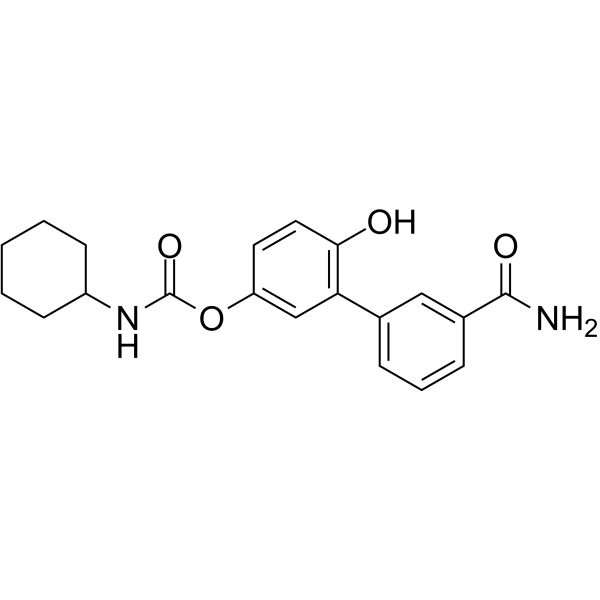
    URB937 is an orally active and peripherally restricted FAAH inhibitor (IC50=26.8 nM) and increases anandamide levels. URB937 fails to affect FAAH activity in the brain (not penetrate the blood-brain barrier) .
    URB937
  • HY-129683

    PPAR Metabolic Disease
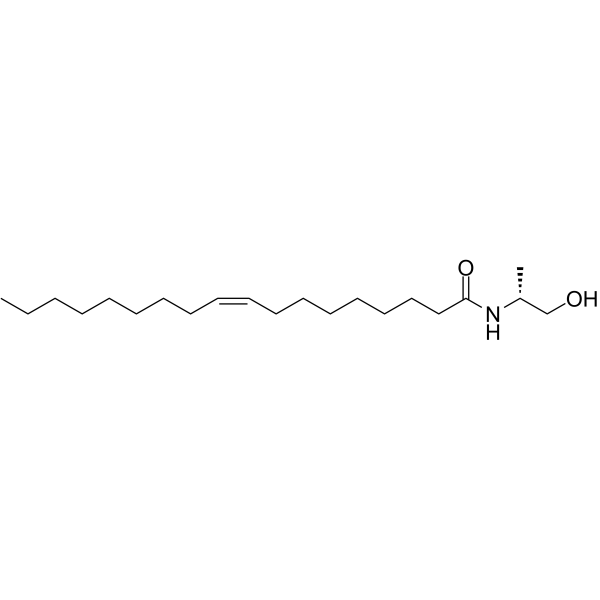
    AM3102 is an oleoylethanolamide (OEA) analog. AM3102 is an endogenous high-affinity PPAR-alpha agonist. AM3102 resists enzymatic hydrolysis, activates PPAR-alpha with high potency in vitro, and persistently reduces feeding when administered in vivo either parenterally or orally .
    AM3102
  • HY-147773

    Ceramidase Inflammation/Immunology
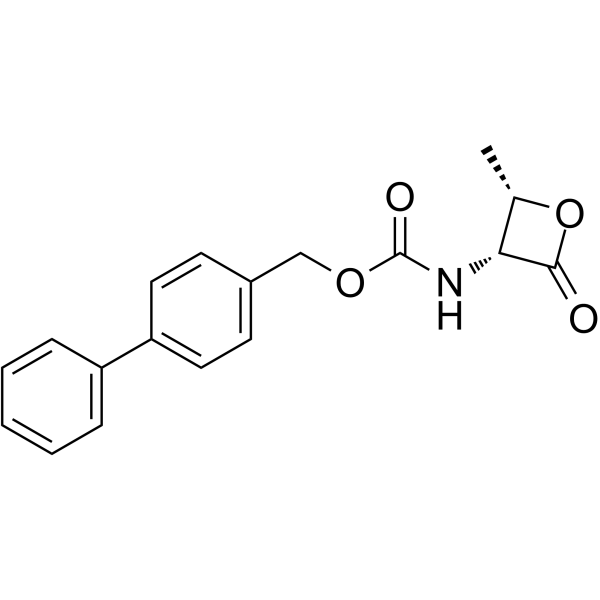
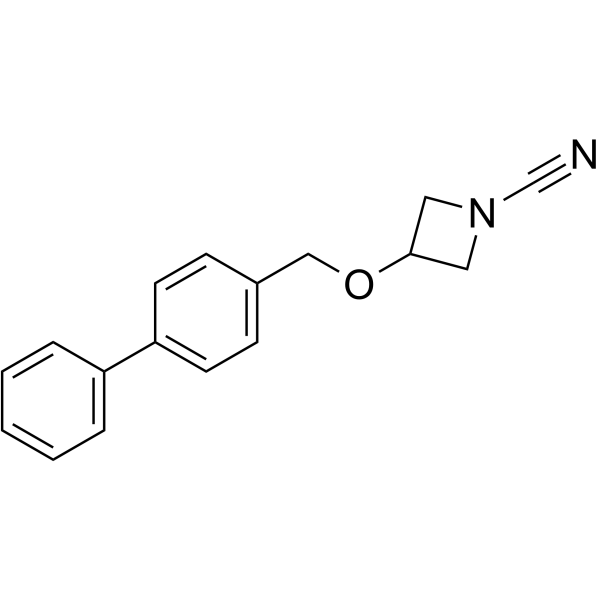
    NAAA-IN-1 (Compound 1) is a potent and selective inhibitor of NAAA with an IC50 of 7 nM. NAAA is a cysteine amidase which preferentially hydrolyzes the endogenous biolipids palmitoylethanolamide (PEA) and oleoylethanolamide (OEA). NAAA-IN-1 has the potential for the research of inflammation and pain .
    NAAA-IN-1
  • HY-108258

    GPR119 Endocrinology
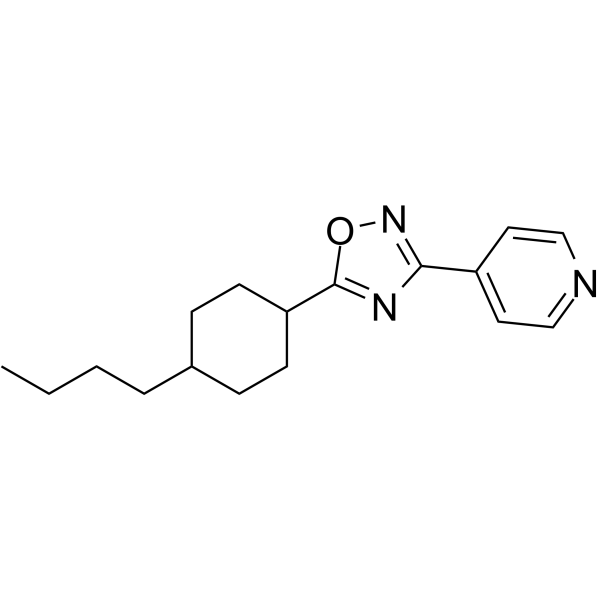
    PSN 375963 is a potent GPR119 agonist, with EC50s of 8.4 and 7.9 μM for human and mouse GPR119, respectively. PSN 375963 shows similar potency to the endogenous agonist oleoylethanolamide (OEA) .
    PSN 375963
  • HY-147775

    Ceramidase Inflammation/Immunology
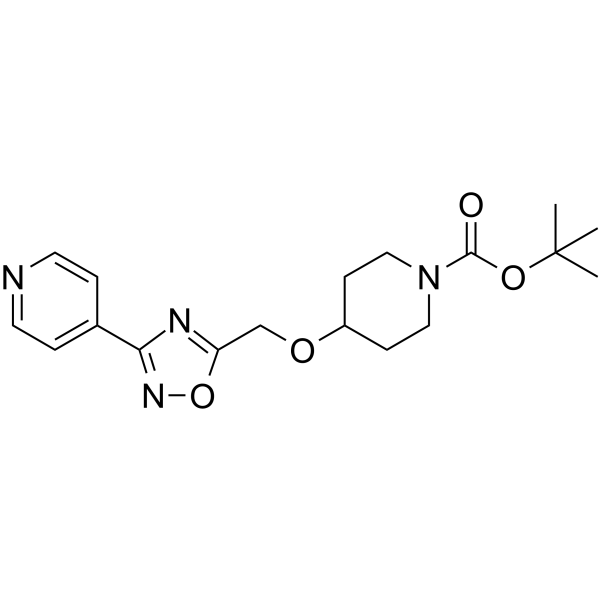
    NAAA-IN-3 (Compound 17a) is a potent and selective inhibitor of NAAA with an IC50 of 50 nM. NAAA is a cysteine amidase which preferentially hydrolyzes the endogenous biolipids palmitoylethanolamide (PEA) and oleoylethanolamide (OEA). NAAA-IN-3 has the potential for the research of inflammation and pain .
    NAAA-IN-3
  • HY-16673

    GPR119 Metabolic Disease
    PSN632408, a selective, orally active GPR119 agonist, shows similar potency to OEA at both recombinant mouse and human GPR119 receptors (EC50=5.6 and 7.9 uM, respectively). PSN632408 can stimulate β-cell replication and improve islet graft function. PSN632408 has the potential for the research of obesity and related metabolic disorders .
    PSN632408
  • HY-185011

    Ceramidase PPAR TRP Channel Interleukin Related NEDD8-activating Enzyme Inflammation/Immunology Cancer
    AM9053 is a selective, effective and slowly reversible inhibitor of N-acyl ethanolamine acid amidease (NAAA) (IC50 = 30 nM). The effect of AM9053 on FAAH activity is limited (IC50 > 100 nM). AM9053 inhibits the proliferation of colorectal cancer cells by activating the PPAR-α and TRPV1 dependent mechanisms and induces S-phase cell cycle arrest. AM9053 alleviates intestinal fibrosis by regulating macrophage activity and inhibiting the IL-23 signaling pathway. AM9053 leads to an increase in NAE levels, especially PEA and OEA. AM9053 can be used for the study of colorectal cancer and intestinal fibrosis .
    AM9053
  • HY-124399

    Endogenous Metabolite PPAR Metabolic Disease
    Peroxisome proliferator-activated receptors (PPARs) play an important role in regulating lipid and glucose metabolism, and oleoylethanolamide (OEA) is a natural ligand for PPARα. N-Octadecyl-N'-propyl-sulfamide is an analog of OEA and a potent activator of PPARα, with selective binding affinity for PPARα (EC50=100 nM, compared to 120 nM for OEA). N-Octadecyl-N'-propyl-sulfamide (10 mg/kg; ip) inhibits food intake and reduces body weight gain in rats. At a dose of 1 mg/kg, N-Octadecyl-N'-propyl-sulfamide induces satiety, thereby reducing food intake, body weight, and plasma triglyceride concentrations in free-feeding Wistar rats and obese Zucker (fa/fa) rats.
    N-Octadecyl-N'-propyl-sulfamide
  • HY-120369

    FAAH Neurological Disease
    URB532 is an inhibitor for fatty acid amide hydrolase (FAAH) with an IC50 of 396 nM. URB532 increases levels of arachidonic acid acetamide (AEA), palmitoylethanolamide (PEA), and oleamide (OEA) in the rat brain, and exhibits anxiolytic and analgesic effects .
    URB532
  • HY-108258A

    GPR119 Endocrinology
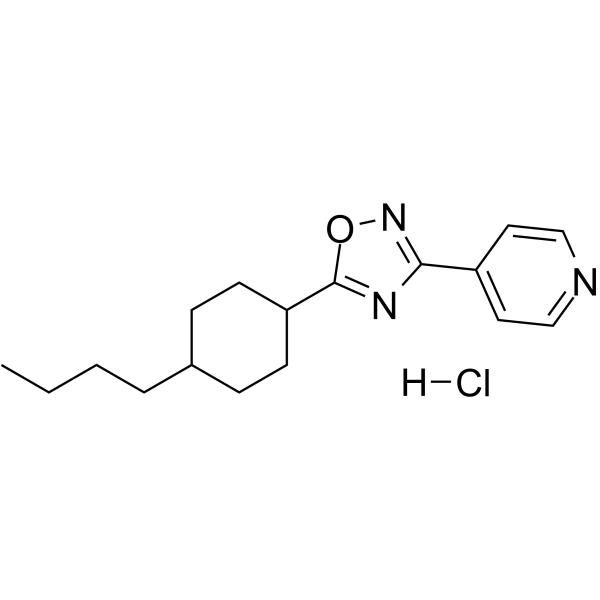
    PSN 375963 hydrochloride is a potent GPR119 agonist, with EC50s of 8.4 and 7.9 μM for human and mouse GPR119, respectively. PSN 375963 hydrochloride shows similar potency to the endogenous agonist oleoylethanolamide (OEA) .
    PSN 375963 hydrochloride
  • HY-176029

    NAPE(16:0/16:0/18:1); N-Oleoyl-1,2-dipalmitoyl-3-PE

    Drug Intermediate Neurological Disease Inflammation/Immunology
    N-Oleoyl-DPPE ammonium is an N-acylphosphatidylethanolamine (NAPE). N-Oleoyl-DPPE ammonium is a biosynthetic precursor of oleoylethanolamide (OEA), an endocannabinoid derivative and peroxisome proliferator-activated receptor α (PPARα) agonist. N-Oleoyl-DPPE ammonium can be used in the study of neuroinflammation and alcohol abuse .
    N-Oleoyl-DPPE ammonium
  • HY-108258R

    Reference Standards GPR119 Endocrinology
    PSN 375963 (Standard) is the analytical standard of PSN 375963 (HY-108258). This product is intended for research and analytical applications. PSN 375963 is a potent GPR119 agonist, with EC50s of 8.4 and 7.9 μM for human and mouse GPR119, respectively. PSN 375963 shows similar potency to the endogenous agonist oleoylethanolamide (OEA) .
    PSN 375963 (Standard)

Inquiry Online

Your information is safe with us. * Required Fields.

Salutation


Country or Region *

Applicant Name *


Organization Name *

Department *


Email Address *


Product Name *

Cat. No.


Requested quantity *

Phone Number *


Remarks

Inquiry Online

Inquiry Information

Product Name:
Cat. No.:
Quantity:
MCE Japan Authorized Agent:

