10 Results for "

PANoptosis

" in MedChemExpress (MCE) Product Catalog:
Products (10)

10 Results for "PANoptosis" in MCE Product Catalog:

145
145 Publications Verification
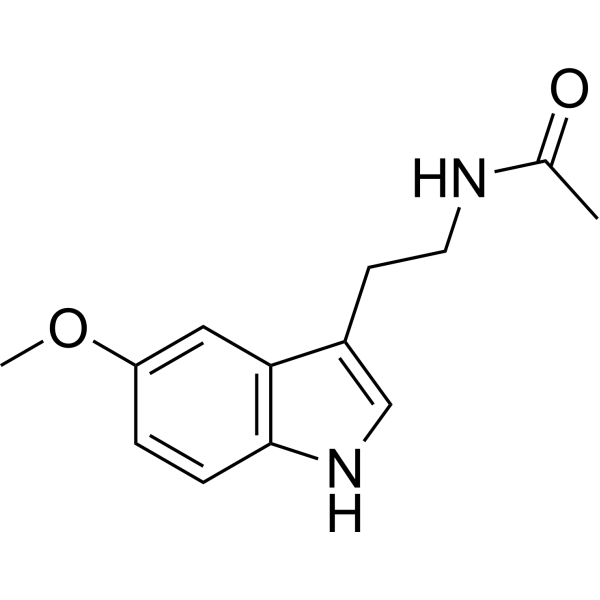
Cat. No.: HY-B0075
CAS No.: 73-31-4
Synonyms: N-Acetyl-5-methoxytryptamine
Melatonin is a hormone made by the pineal gland that can activate melatonin receptor and inhibit PANoptosis. Melatonin plays a role in sleep and possesses important antioxidative and anti-inflammatory properties . Melatonin is a novel selective ATF-6 inhibitor and induces human hepatoma cell apoptosis through COX-2 downregulation . Melatonin attenuates palmitic acid-induced (HY-N0830) mouse granulosa cells apoptosis via endoplasmic reticulum stress .
loading...
    loading...
13
13 Cited Publications
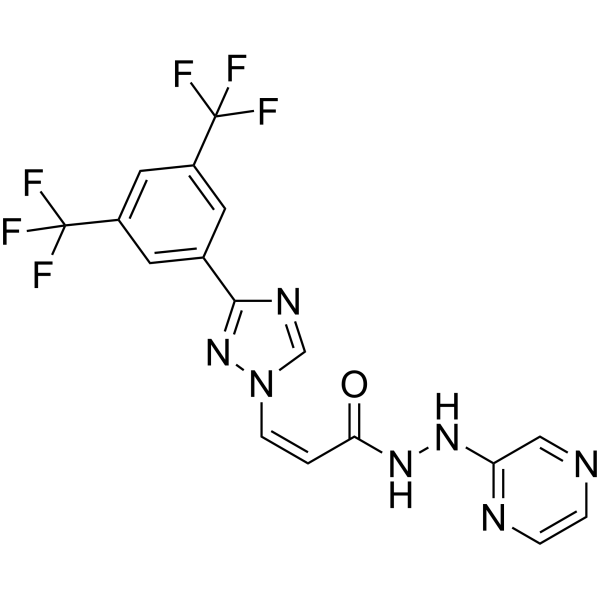
Cat. No.: HY-17536
CAS No.: 1393477-72-9
Synonyms: KPT-330
Target:  

CRM1 PANoptosis

Research Areas:  

Infection Cancer

Selinexor (KPT-330) is an analog of KPT-185 (HY-15611). Selinexor is an orally active, selective CRM1 inhibitor that inhibits tumor growth by inducing PANoptosis .
loading...
    loading...
6
6 Cited Publications
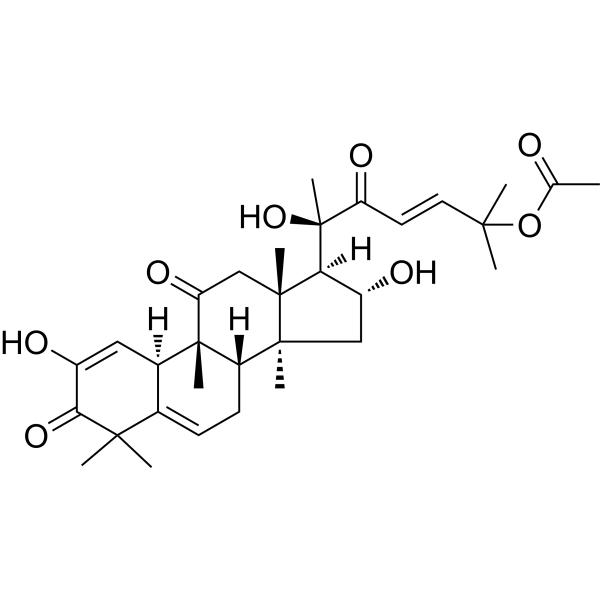
Cat. No.: HY-N0417
CAS No.: 18444-66-1
Synonyms: α-Elaterin; α-Elaterine
Cucurbitacin E is a CDK1 inhibitor that significantly inhibits the activity of the cyclin B1/CDC2 complex. Cucurbitacin E also induces PANoptosis in adrenocortical carcinoma cells in a ZBP1-dependent manner. Cucurbitacin E exhibits synergistic effects with Mitotane (HY-13690); when used in combination, they effectively eliminate tumors .
loading...
    loading...
3
3 Cited Publications
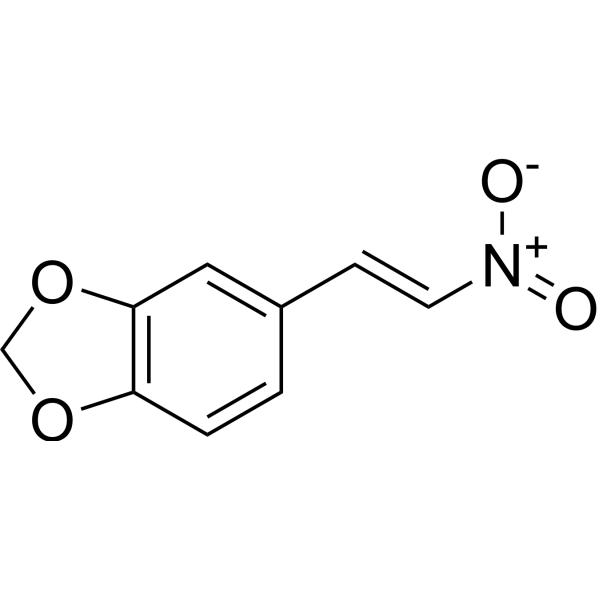
Cat. No.: HY-78263
CAS No.: 1485-00-3
Synonyms: NSC 170724; 5-(2-Nitrovinyl)benzodioxole
MNS (NSC 170724), the beta-nitrostyrene derivative, is an orally active tyrosine kinase inhibitor, a broad-spectrum antiplatelet agent, and a PANoptosis inhibitor. MNS inhibits Src, Syk, and FAK with IC50 of 27.3, 2.8, and 97.6 μM, respectively. MNS inhibits NLRP3 inflammasome and β1 integrin. MNS completely inhibits U46619, ADP-, arachidonic acid-, collagen-, and thrombin-induced platelet aggregation with IC50 values of 2.1, 4.1, 5.8, 7.0, and 12.7 μM, respectively. MNS is cytotoxic to a variety of cells .
loading...
    loading...
Cat. No.: HY-179386
PARP1/EZH2-IN-1 is a selective PARP1 and EZH2 dual inhibitor. PARP1/EZH2-IN-1 has IC50s of 28 nM, 414 nM and 74 nM for PARP1, PARP2 and EZH2, respectively. PARP1/EZH2-IN-1 inhibits the proliferation and migration of TNBC cells (triple-negative breast Cancer cells). PARP1/EZH2-IN-1 induces PANoptosis (Apoptosis, Pyroptosis and Necroptosis), increases the level of reactive oxygen species (ROS), and activates related inflammatory pathways. PARP1/EZH2-IN-1 can be used in triple-negative breast cancer research .
loading...
    loading...
Cat. No.: HY-17536R
CAS No.: 1393477-72-9
Synonyms: KPT-330 (Standard)
Research Areas:  

Cancer

Selinexor (Standard) is the analytical standard of Selinexor. This product is intended for research and analytical applications. Selinexor (KPT-330) is an analog of KPT-185 (HY-15611). Selinexor is an orally active, selective CRM1 inhibitor that inhibits tumor growth by inducing PANoptosis .
loading...
    loading...
Cat. No.: HY-175030
CAS No.: 2790425-52-2
Research Areas:  

Cancer

TNI-97 is a selective and orally active HDAC6 inhibitor, with an IC50 of 0.2 nM. TNI-97 potently inhibited TNBC cell MDA-MB-453 growth and clonogenicity. TNI-97 induces PANoptosis including apoptosis, necroptosis and pyroptosis in MDA-MB-453 cells. TNI-97 shows antitumor activity in the mice carrying the MDA-MB-453 xenograft or carrying murine-derived TNBC cell allografts. TNI-97 can be used for the study of triple-negative breast cancer .
loading...
    loading...
Cat. No.: HY-168927
CAS No.: 2831492-41-0
Research Areas:  

Cancer

Apoptosis inducer 36 (Compound 42) exhibits anti-leukemic activity through reduction of leukemia stem cells (LSCs) and induction of differentiation. Apoptosis inducer 36 inhibits the proliferation of AML cells, arrests cell cycle at G1 phase, and induces PANoptosis including apoptosis, pyroptosis and necrosis. Prodrug of apoptosis inducer 36 exhibits orally active antitumor efficacy in mouse model .
loading...
    loading...
Cat. No.: HY-P10797
TAT-N24 is a cell-penetrating peptide and also an inhibitor of p55PIK. TAT-N24 disrupts the interactions between p55PIK and p53, PCNA or Rb, blocks the p53-dependent ubiquitin-mediated degradation process, and inhibits the nuclear translocation and phosphorylation of NF-κB p65. TAT-N24 enhances MMS-induced p53-dependent cell apoptosis, inhibits DNA synthesis, reduces the expression of Cyclin D1, and induces cell cycle arrest at the G0/G1 or S phase. TAT-N24 inhibits the activation of NLRP3 and NLRC4 inflammasomes, reduces the expression of ZBP1-PANoptosome components, and suppresses PANoptosis. TAT-N24 can be used in research related to leukemia, colon cancer, cervical cancer, liver cancer, corneal neovascularization, restenosis and acute glaucoma .
loading...
    loading...
Cat. No.: HY-182066
Target:  

PANoptosis

Research Areas:  

Cancer

Photosensitizer-9 is an iridium (III)-based photosensitizer with anti-melanoma activity. Photosensitizer-9 exhibits significant phototoxicity (IC50=0.98 μM) and an ideal phototoxicity index (PI=3.05). Under light irradiation, Photosensitizer-9 generates large amounts of intracellular •OH in an oxygen-independent manner. Photosensitizer-9 mediates photodynamic therapy under hypoxic conditions and synergistically activates PANoptosis (by upregulating cleaved Caspase-3, GSDMD-N, p-MLKL), ferroptosis (by disrupting the GSH-GPX4-LPO axis), apoptosis, pyroptosis and necroptosis in melanoma cells. Photosensitizer-9 induces immunogenic cell death by promoting the release of damage-associated molecular patterns under hypoxic conditions and increases the maturation rate of dendritic cells. Photosensitizer-9 reduces tumor volume in melanoma-bearing mice. Photosensitizer-9 is applicable to relevant studies on melanoma .
loading...
    loading...

