



Selinexor
Based on 18 publication(s) in Google Scholar
Selinexor (KPT-330) is an analog of KPT-185 (HY-15611). Selinexor is an orally active, selective CRM1 inhibitor that inhibits tumor growth by inducing PANoptosis.
For research use only. We do not sell to patients.
- Purity : 99.83%
- CAS No.: 1393477-72-9
- Formula: C17H11F6N7O
- Molecular Weight:443.31
-
Storage:Powder -20°C, 3 years , 4°C, 2 years ; In solvent -80°C, 2 years , -20°C, 1 year

To place orders, for customer services and technical support, please contact: MedChemExpress USA
Tel: 609-228-6898 E-mail: [email protected] [email protected]


-
 Biological Activity
-
Chemical Information
-
Solvent & Solubility
- Protocols
- Purity & Documentation
- References
-
 Help & FAQs


-
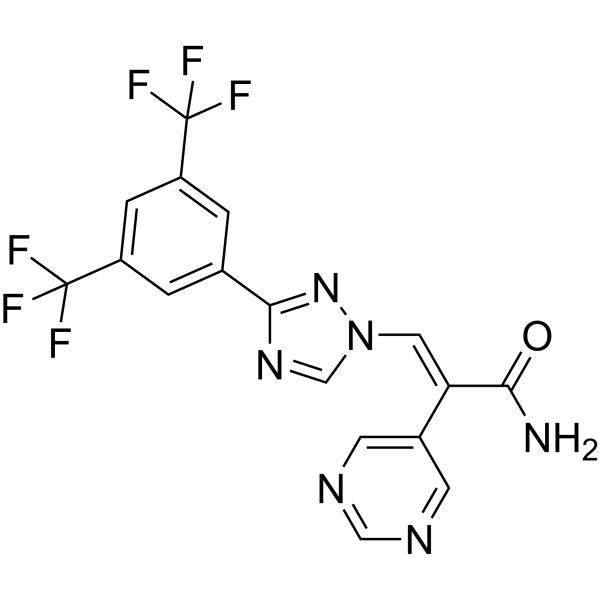
HY-100423
EltanexorXPO1 Inhibitor -
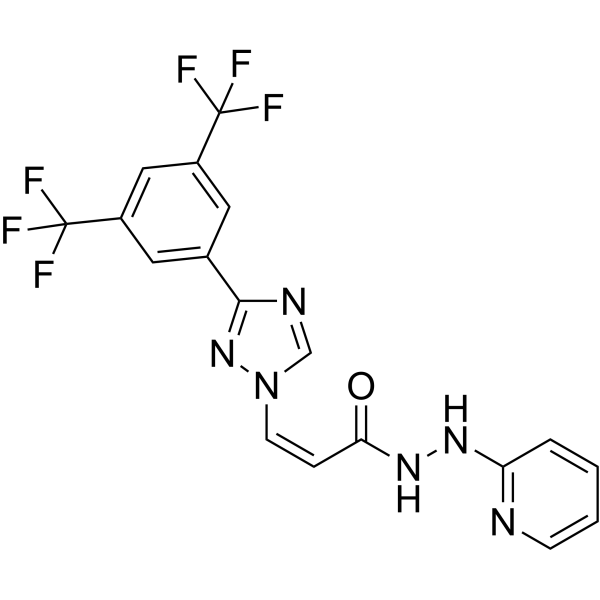
HY-15970
VerdinexorSINE Inhibitor -
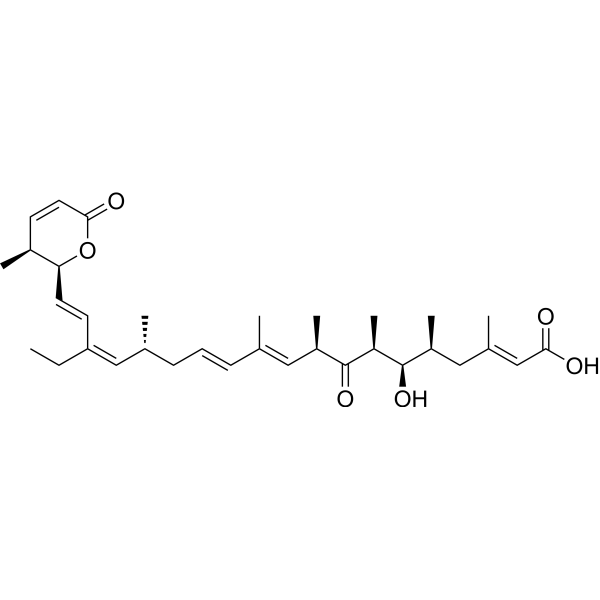
HY-16909
Leptomycin BCRM1/Exportin 1 Inhibitor -
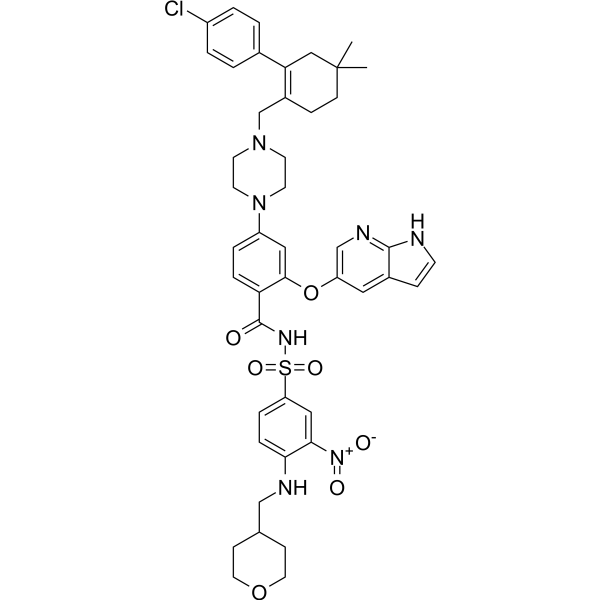
HY-15531
VenetoclaxBCL-2 Inhibitor -
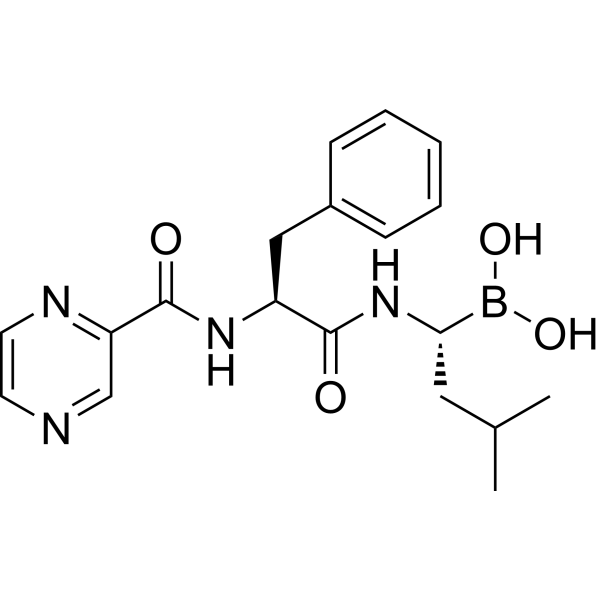
HY-10227
BortezomibProteasome Inhibitor -
HY-50767
PalbociclibCDK4/6 Inhibitor -
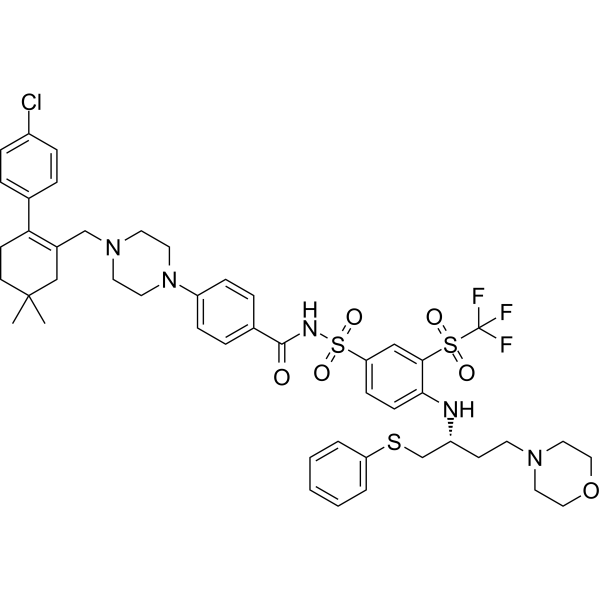
HY-10087
NavitoclaxBcl-2 Inhibitor -
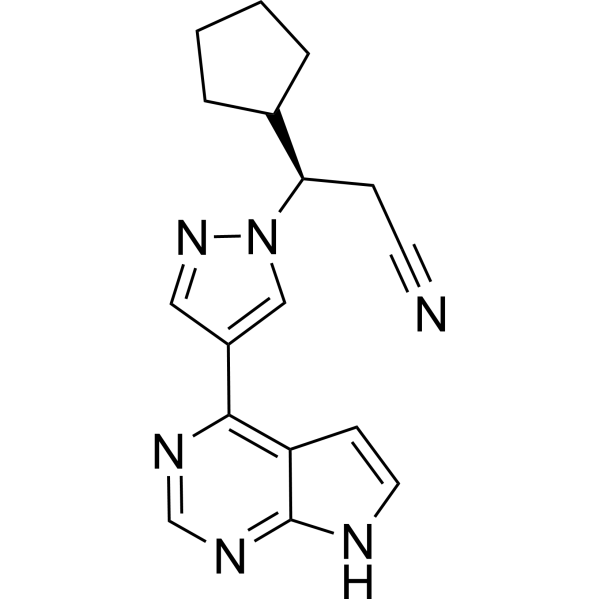
HY-50856
RuxolitinibJAK1/2 Inhibitor -
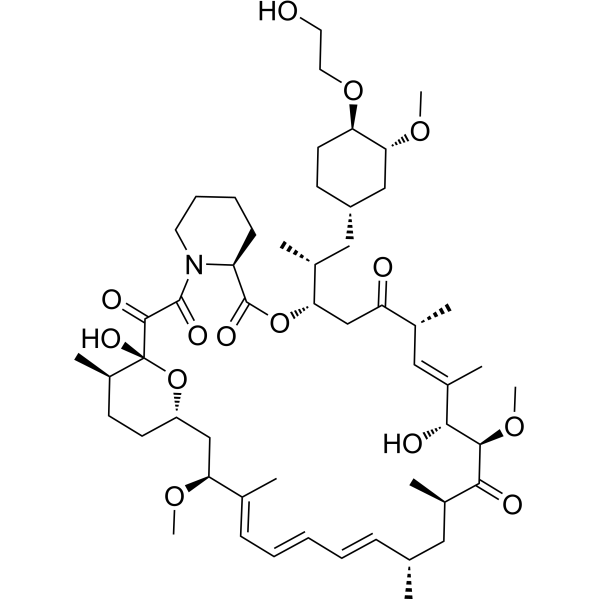
HY-10218
EverolimusmTORC Inhibitor -
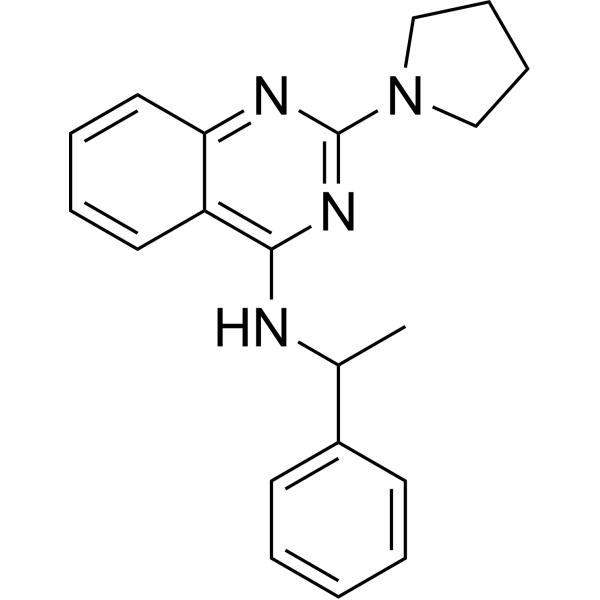
HY-101091
ImportazoleImportin-β Inhibitor -
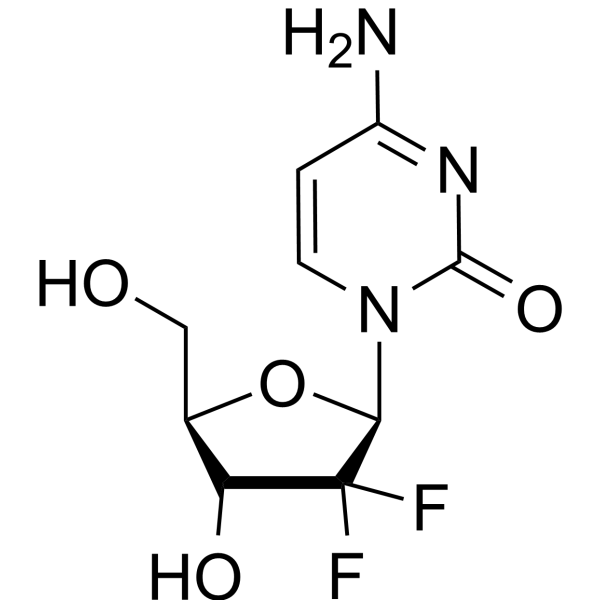
HY-17026
GemcitabineDNA Synthesis Inhibitor -
HY-136175
RevumenibMenin-MLL Inhibitor
Publications Citing Use of MedChemExpress (MCE) Selinexor
More- Nat Commun. 2026 Aug 22;17(1):10050.
- Cancer Lett. 2026 May 1:645:218384. [Abstract]
- Int J Biol Sci. 2023 Jul 3;19(11):3412-3427. [Abstract]
- J Exp Med. 2020 Jul 6;217(7):e20192083. [Abstract]
- Apoptosis. 2026 Mar 11;31(3):98. [Abstract]
- Leukemia. 2023 Jun;37(6):1336-1348. [Abstract]
- Cell Rep. 2026 Sep 22;45(9):117895. [Abstract]
- Cell Rep. 2026 Jan 22;45(2):116858. [Abstract]
- J Ethnopharmacol. 2024 Jun 28:328:118057. [Abstract]
- Biochem Pharmacol. 2025 Jul:237:116948. [Abstract]
- Cells. 2026 Jun 11;15(12):1070. [Abstract]
- Neurooncol Adv. 2026 Aug 10;8(1):vdag209.
- Mol Oncol. 2026 Jun 5. [Abstract]
- iScience. 2026 Jan 29;29(3):114840. [Abstract]
- Biochem Biophys Res Commun. 2026 Jul 28:832:154345.
- J Clin Lab Anal. 2026 Jun;40(12):e70229. [Abstract]
- Hematology. 2026 Dec 31;31(1):2664314. [Abstract]
- bioRxiv. 2026 Sep 20.
 Customer Validation & Images

-
IHC
-
WB
-
Flow Cytometry
-
IP
-
Apoptosis Analysis


Biological Activity
Description
IC50 & Target
CRM1
Cellular Effect
|
Cell Line

|
Type | Value | Description | References |
|---|---|---|---|---|
| HEK-293T | IC50 |
0.73 μM
Compound: KPT-330
|
Cytotoxicity against HEK293T cells assessed as inhibition of cell growth incubated for 72 hrs by SRB assay
Cytotoxicity against HEK293T cells assessed as inhibition of cell growth incubated for 72 hrs by SRB assay
|
[PMID: 38105606] |
| HeLa | IC50 |
0.43 μM
Compound: KPT-330
|
Antiproliferative activity against human HeLa cells assessed as inhibition of cell growth incubated for 72 hrs by SRB assay
Antiproliferative activity against human HeLa cells assessed as inhibition of cell growth incubated for 72 hrs by SRB assay
|
[PMID: 38105606] |
| HPBALL | IC50 |
34 nM
Compound: KPT-330
|
Antiproliferative activity against human HPBALL cells assessed as inhibition of cell growth incubated for 72 hrs by CellTiter Glo assay
Antiproliferative activity against human HPBALL cells assessed as inhibition of cell growth incubated for 72 hrs by CellTiter Glo assay
|
[PMID: 38105606] |
| Jurkat | EC50 |
17 nM
Compound: 1; KPT-330
|
Cytotoxicity against human Jurkat cells incubated for 24 hrs by celltiter glo assay
Cytotoxicity against human Jurkat cells incubated for 24 hrs by celltiter glo assay
|
[PMID: 39005064] |
| Jurkat | IC50 |
34 nM
Compound: KPT-330
|
Antiproliferative activity against human Jurkat cells assessed as inhibition of cell growth incubated for 72 hrs by CellTiter Glo assay
Antiproliferative activity against human Jurkat cells assessed as inhibition of cell growth incubated for 72 hrs by CellTiter Glo assay
|
[PMID: 38105606] |
| KOPTK1 | IC50 |
34 nM
Compound: KPT-330
|
Antiproliferative activity against human KOPT-K1 cells assessed as inhibition of cell growth incubated for 72 hrs by CellTiter Glo assay
Antiproliferative activity against human KOPT-K1 cells assessed as inhibition of cell growth incubated for 72 hrs by CellTiter Glo assay
|
[PMID: 38105606] |
| MOLT-4 | IC50 |
34 nM
Compound: KPT-330
|
Antiproliferative activity against human MOLT-4 cells assessed as inhibition of cell growth incubated for 72 hrs by CellTiter Glo assay
Antiproliferative activity against human MOLT-4 cells assessed as inhibition of cell growth incubated for 72 hrs by CellTiter Glo assay
|
[PMID: 38105606] |
| NSCLC | IC50 |
25 nM
Compound: 2; KPT-330
|
Antitumor activity against human NSCLC cells
Antitumor activity against human NSCLC cells
|
[PMID: 34669417] |
In Vitro
As the clinical candidate analog of KPT-185, KPT-330 exhibits similar effects on the viability of T-ALL cells and elicits rapid apoptotic response. KPT-330 also reduces cell growth in MOLT-4, Jurkat, HBP-ALL, KOPTK-1, SKW-3, and DND-41 cell lines, with IC50 values of 34-203 nM[1].
MedChemExpress (MCE) has not independently confirmed the accuracy of these methods. They are for reference only.
In Vivo
MedChemExpress (MCE) has not independently confirmed the accuracy of these methods. They are for reference only.
Clinical Trial
| NCT Number | Sponsor | Condition | Start Date |
Phase
|
|---|---|---|---|---|
| NCT01329991 | 2011-05 | PHASE1 |


Chemical Information
-
CAS No. 1393477-72-9
-
Appearance Solid
-
Molecular Weight 443.31
-
Formula C17H11F6N7O
-
Color White to light yellow
-
SMILES
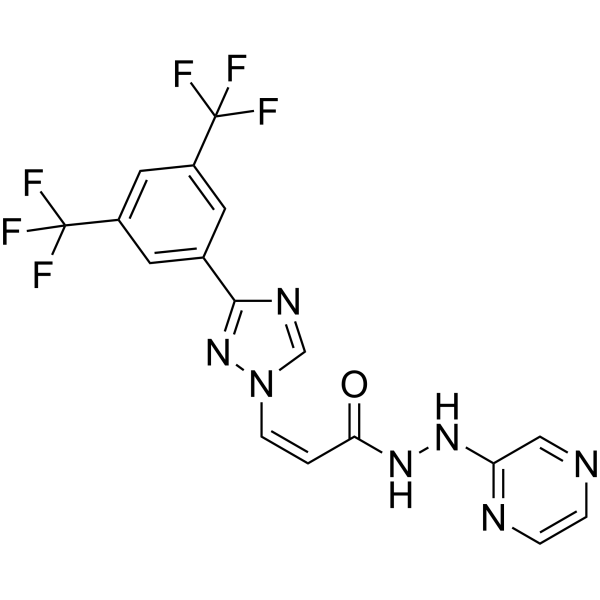
O=C(NNC1=NC=CN=C1)/C=C\N2N=C(C3=CC(C(F)(F)F)=CC(C(F)(F)F)=C3)N=C2
-
Synonyms
KPT-330
-
Shipping
Room temperature in continental US; may vary elsewhere.
-
Storage
Powder -20°C 3 years 4°C 2 years In solvent -80°C 2 years -20°C 1 year


Publications (18)
-
Journal Impact Factor
-
Most Recent
-
-
Cancer Lett
GPI inactivation mediates pentose phosphate pathway flux switch-on inducing temozolomide resistance in glioma stem cell. [Abstract]2026 May 1:645:218384. PMID: 41763452 -
Int J Biol Sci
DBF4 Dependent Kinase Inhibition Suppresses Hepatocellular Carcinoma Progression and Potentiates Anti-Programmed Cell Death-1 Therapy. [Abstract]2023 Jul 3;19(11):3412-3427. PMID: 37497004
Selinexor purchased from MedChemExpress. Usage Cited in: Int J Biol Sci. 2023 Jul 3;19(11):3412-3427. [Abstract]
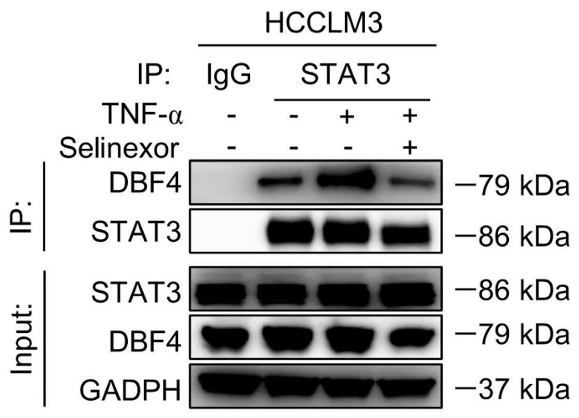
HCCLM3 cells were treated with or without TNF-α and Selinexor (1 mM, 72 hours) followed by STAT3 co-immunoprecipitation assay.
-
J Exp Med
2020 Jul 6;217(7):e20192083. PMID: 32324863 -
Apoptosis
2026 Mar 11;31(3):98. PMID: 41813919 -
Leukemia
Causal linkage of presence of mutant NPM1 to efficacy of novel therapeutic agents against AML cells with mutant NPM1. [Abstract]2023 Jun;37(6):1336-1348. PMID: 36977823
Selinexor purchased from MedChemExpress. Usage Cited in: Leukemia. 2023 Jun;37(6):1336-1348. [Abstract]
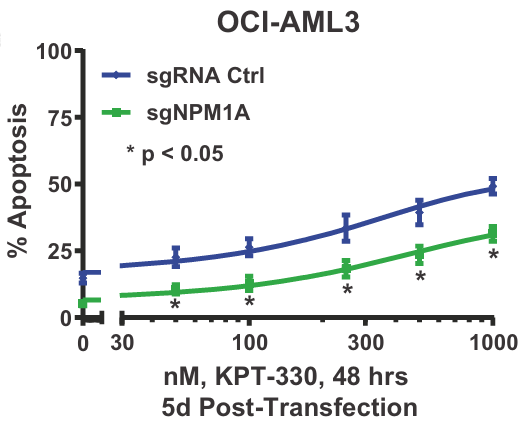
Percent apoptotic cells following KO of mtNPM1 and treatment with Selinexor (KPT-330, 30-1000 nM) at the indicated concentrations for 48 hours.
-
Cell Rep
Hepatocellular carcinoma organoids enable drug discovery and combination therapy across heterogeneous tumors. [Abstract]2026 Sep 22;45(9):117895. PMID: 42636109 -
Cell Rep
Extracellular matrix stiffness drives post-mitotic nuclear pore complex assembly to promote neuroblastoma pathogenesis. [Abstract]2026 Jan 22;45(2):116858. PMID: 41575851 -
J Ethnopharmacol
Si-Wu-Tang attenuates hepatocyte PANoptosis and M1 polarization of macrophages in non-alcoholic fatty liver disease by influencing the intercellular transfer of mtDNA. [Abstract]2024 Jun 28:328:118057. PMID: 38518965 -
Biochem Pharmacol
2025 Jul:237:116948. PMID: 40228640
Selinexor purchased from MedChemExpress. Usage Cited in: Biochem Pharmacol. 2025 Jul:237:116948. [Abstract]
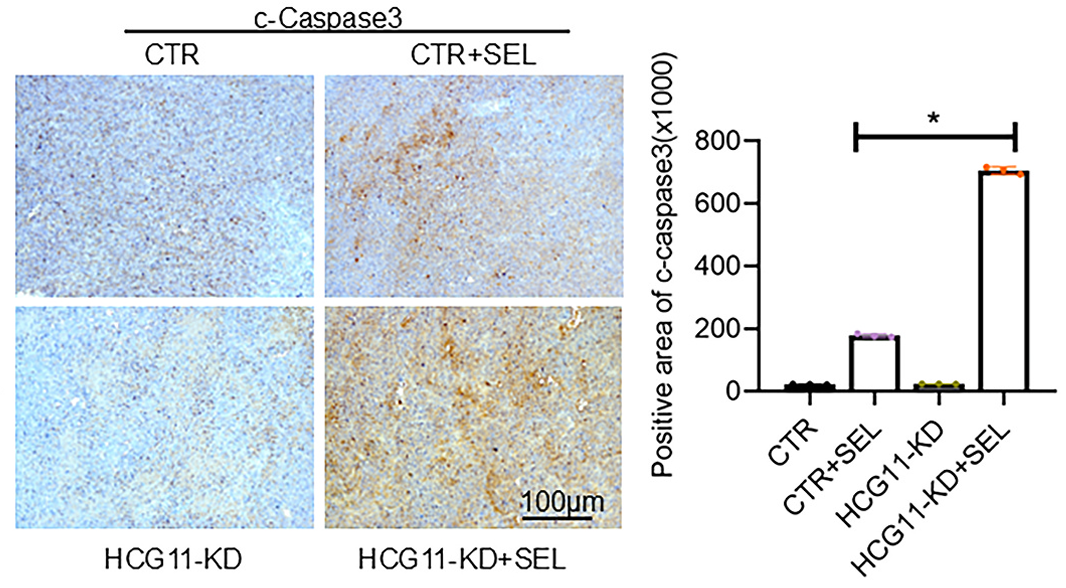
From the above animal model, the tumors were isolated and examined by immunohistochemistry and quantified by ImageJ to detect cleaved caspase3 protein expression in CTR-KD and HCG11-KD tumors treated with Selinexor (10 mg/kg, twice per week) or PBS.
Selinexor purchased from MedChemExpress. Usage Cited in: Biochem Pharmacol. 2025 Jul:237:116948. [Abstract]
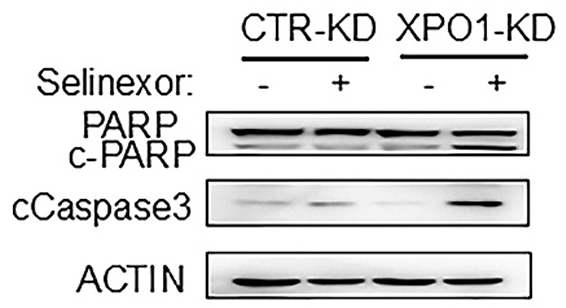
Western blotting of PARP, cleaved PARP and cleaved caspase 3 in CTR-KD and XPO1-KD ARD cells treated with Selinexor (0.25 μM, 12 h).
Selinexor purchased from MedChemExpress. Usage Cited in: Biochem Pharmacol. 2025 Jul:237:116948. [Abstract]
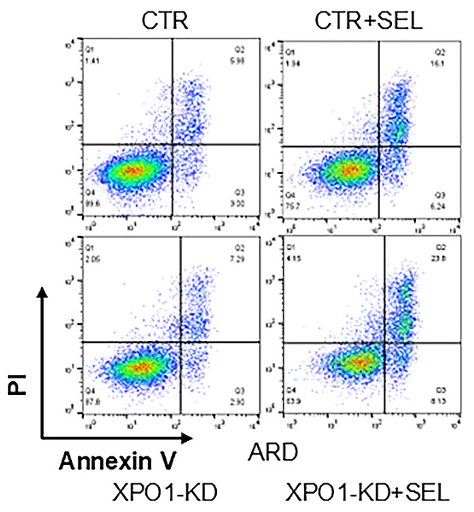
Apoptosis rates of CTR-KD and XPO1-KD ARD cells treated with Selinexor (0.25 μM, 48 h).
-
Cells
Structure-Based Virtual Screening and Mechanistic Characterization of Methotrexate and Selinexor as Potent Anti-Melanogenic Agents via Multi-Pathway Suppression of MITF. [Abstract]2026 Jun 11;15(12):1070. PMID: 42346097 -
-
Mol Oncol
Patient therapy outcome modeling in cancer organoids is improved by cancer-associated fibroblasts and organoid assembly convolution. [Abstract]2026 Jun 5. PMID: 42246237 -
iScience
CCT3-mediated regulation of XPO1/RB1 axis stability promotes cellular senescence and tumor progression in clear cell renal carcinoma. [Abstract]2026 Jan 29;29(3):114840. PMID: 41732260 -
-
J Clin Lab Anal
Exportin 1 Inhibitor Combined With Venetoclax Induces Apoptosis in Myelodysplastic Syndrome by Mitochondria-Induced Apoptosis Pathway. [Abstract]2026 Jun;40(12):e70229. PMID: 42007609 -
Hematology
XPO1 inhibitor selinexor suppresses homologous recombination by inhibiting E2F7 nuclear export in acute myeloid leukemia. [Abstract]2026 Dec 31;31(1):2664314. PMID: 42026967 -


Solvent & Solubility
In Vitro:
DMSO : 100 mg/mL (225.58 mM; Need ultrasonic; Hygroscopic DMSO has a significant impact on the solubility of product, please use newly opened DMSO)
Please refer to the solubility information to select the appropriate solvent. Once prepared, please aliquot and store the solution to prevent product inactivation from repeated freeze-thaw cycles.
Storage method and period of stock solution: -80°C, 2 years; -20°C, 1 year. When stored at -80°C, please use it within 2 years. When stored at -20°C, please use it within 1 year.
Please refer to the solubility information to select the appropriate solvent. Once prepared, please aliquot and store the solution to prevent product inactivation from repeated freeze-thaw cycles.
Storage method and period of stock solution: -80°C, 2 years; -20°C, 1 year. When stored at -80°C, please use it within 2 years. When stored at -20°C, please use it within 1 year.
Concentration (start) × Volume (start) = Concentration (final) × Volume (final)
In Vivo:
Select the appropriate dissolution method based on your experimental animal and administration route.
- For the following dissolution methods, please ensure to first prepare a clear stock solution using an In Vitro approach and then sequentially add co-solvents:
- To ensure reliable experimental results, the clarified stock solution can be appropriately stored based on storage conditions. As for the working solution for In Vivo experiments, it is recommended to prepare freshly and use it on the same day.
- The percentages shown for the solvents indicate their volumetric ratio in the final prepared solution. If precipitation or phase separation occurs during preparation, heat and/or sonication can be used to aid dissolution.
Add each solvent one by one: 10% DMSO 40% PEG300 5% Tween-80 45% Saline
Solubility: ≥ 2.08 mg/mL (4.69 mM); Clear solution
This protocol yields a clear solution of ≥ 2.08 mg/mL (saturation unknown).
Taking 1 mL working solution as an example, add 100 μL DMSO stock solution (20.8 mg/mL) to 400 μL PEG300, and mix evenly; then add 50 μL Tween-80 and mix evenly; then add 450 μL Saline to adjust the volume to 1 mL.
Preparation of Saline: Dissolve 0.9 g sodium chloride in ddH₂O and dilute to 100 mL to obtain a clear Saline solution.
Add each solvent one by one: 10% DMSO 90% (20% SBE-β-CD in Saline)
Solubility: 2.08 mg/mL (4.69 mM); Suspended solution; Need ultrasonic
This protocol yields a suspended solution of 2.08 mg/mL. Suspended solution can be used for oral and intraperitoneal injection.
Taking 1 mL working solution as an example, add 100 μL DMSO stock solution (20.8 mg/mL) to 900 μL 20% SBE-β-CD in Saline, and mix evenly.
Preparation of 20% SBE-β-CD in Saline (4°C, storage for one week): 2 g SBE-β-CD powder is dissolved in 10 mL Saline, completely dissolve until clear.
In Vivo Dissolution Calculator
Please enter the basic information of animal experiments:
-
-
-
-
Recommended: Prepare an additional quantity of animals to account for potential losses during experiments.
Please enter your animal formula composition:
-
%DMSO +
Recommended: Keep the proportion of DMSO in working solution below 2% if your animal is weak.
-
%+
-
+%Tween-80 + +
-
%Saline +
The co-solvents required include: DMSO, . All of co-solvents are available by MedChemExpress (MCE). , Tween 80. All of co-solvents are available by MedChemExpress (MCE).
Working solution concentration: 0.22 mg/mL
Method for preparing stock solution: mg drug dissolved in μL DMSO. Stock solution concentration: mg/mL.
1. Take μL DMSO stock solution;
2. Add μL .
μL , mix evenly;
3. Then add μL Tween 80, mix evenly;
4. Then add μL
Please ensure that the stock solution in the first step is dissolved to a clear state, and add co-solvents in sequence. You can use ultrasonic heating (ultrasonic cleaner, recommended frequency 20-40 kHz), vortexing, etc. to assist dissolution.


Purity & Documentation
-
Data Sheet (276 KB)
-
SDS (393 KB)
- English - EN (393 KB)
- Français - FR (393 KB)
- Deutsch - DE (393 KB)
- Norwegian - NO (393 KB)
- Español - ES (393 KB)
- Swedish - SV (393 KB)
- Italian - IT (393 KB)
- Korean - KR (393 KB)
- Portuguese - PT (393 KB)
-
Handling Instructions (2659 KB)
References
[1]. Etchin J, et al. KPT-330 inhibitor of CRM1 (XPO1)-mediated nuclear export has selective anti-leukaemic activity in preclinical models of T-cell acute lymphoblastic leukaemia and acute myeloid leukaemia. Br J Haematol. 2013 Apr;161(1):117-27. [Content Brief]
[2]. Tai YT, et al. CRM1 inhibition induces tumor cell cytotoxicity and impairs osteoclastogenesis in multiple myeloma: molecular mechanisms and therapeutic implications. Leukemia. 2014 Jan;28(1):155-65. [Content Brief]
[3]. Camilli S, et al. Nuclear Export Inhibitors Selinexor (KPT-330) and Eltanexor (KPT-8602) Provide a Novel Therapy to Reduce Tumor Growth by Induction of PANoptosis. Cell Biochem Biophys. 2023 Sep;81(3):421-426. [Content Brief]


Complete Stock Solution Preparation Table
Please refer to the solubility information to select the appropriate solvent. Once prepared, please aliquot and store the solution to prevent product inactivation from repeated freeze-thaw cycles.
Storage method and period of stock solution: -80°C, 2 years; -20°C, 1 year. When stored at -80°C, please use it within 2 years. When stored at -20°C, please use it within 1 year.
| Optional Solvent | Concentration Solvent Mass | 1 mg | 5 mg | 10 mg | 25 mg |
|---|---|---|---|---|---|
| DMSO | 1 mM | 2.2558 mL | 11.2788 mL | 22.5576 mL | 56.3939 mL |
| 5 mM | 0.4512 mL | 2.2558 mL | 4.5115 mL | 11.2788 mL | |
| 10 mM | 0.2256 mL | 1.1279 mL | 2.2558 mL | 5.6394 mL | |
| 15 mM | 0.1504 mL | 0.7519 mL | 1.5038 mL | 3.7596 mL | |
| 20 mM | 0.1128 mL | 0.5639 mL | 1.1279 mL | 2.8197 mL | |
| 25 mM | 0.0902 mL | 0.4512 mL | 0.9023 mL | 2.2558 mL | |
| 30 mM | 0.0752 mL | 0.3760 mL | 0.7519 mL | 1.8798 mL | |
| 40 mM | 0.0564 mL | 0.2820 mL | 0.5639 mL | 1.4098 mL | |
| 50 mM | 0.0451 mL | 0.2256 mL | 0.4512 mL | 1.1279 mL | |
| 60 mM | 0.0376 mL | 0.1880 mL | 0.3760 mL | 0.9399 mL | |
| 80 mM | 0.0282 mL | 0.1410 mL | 0.2820 mL | 0.7049 mL | |
| 100 mM | 0.0226 mL | 0.1128 mL | 0.2256 mL | 0.5639 mL |


Selinexor Related Classifications
HY-17536 Related Classifications
 Powered by Bioz