1. Search Result
Search Result
Pathways Recommended: PI3K/Akt/mTOR
Results for "

PI3K cascades

" in MedChemExpress (MCE) Product Catalog:

8

Inhibitors & Agonists

1

Biochemical Assay Reagents

1

Inhibitory Antibodies

2

Natural
Products

1

Isotope-Labeled Compounds

Targets Recommended:
Cat. No. Product Name Target Research Areas Chemical Structure
  • HY-P991220

    TREM receptor Neurological Disease
    AL002 is a humanized monoclonal IgG1 antibody and a blood-brain barrier-permeable TREM2 modulator. AL002 binds to TREM2 on the surface of microglia, promotes TREM2 clustering and the formation of the TREM2-DAP12 complex, activates the TREM2 signaling pathway and PI3K cascade, and induces TREM2 internalization and degradation. AL002 is applicable to research related to Alzheimer's disease .
    AL002
  • HY-N5072
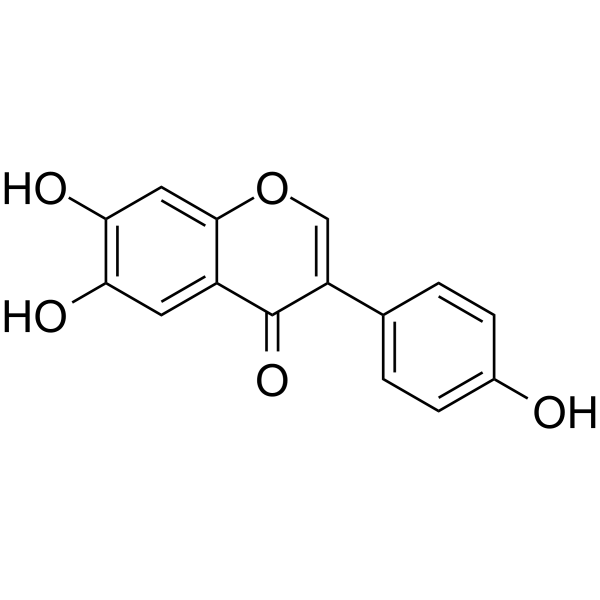
    Desmethylglycitein
    3 Publications Verification

    4',6,7-Trihydroxyisoflavone

    CDK PI3K PKC Cancer
    Desmethylglycitein (4',6,7-Trihydroxyisoflavone), a metabolite of daidzein, sourced from Glycine max with antioxidant, and anti-cancer activities. Desmethylglycitein binds directly to CDK1 and CDK2 in vivo, resulting in the suppresses CDK1 and CDK2 activity . Desmethylglycitein is a direct inhibitor of protein kinase C (PKC)α, against solar UV (sUV)-induced matrix matrix metalloproteinase 1 (MMP1) . Desmethylglycitein binds to PI3K in an ATP competitive manner in the cytosol, where it inhibits the activity of PI3K and downstream signaling cascades, leading to the suppression of adipogenesis in 3T3-L1 preadipocytes .
    Desmethylglycitein
  • HY-NP203

    HDL (human)

    Apolipoprotein NO Synthase LPL Receptor Akt PI3K p38 MAPK Neurological Disease Metabolic Disease Inflammation/Immunology Cancer
    High density lipoprotein (human) (HDL (human)) is a human-derived high-density lipoprotein. High density lipoprotein can cross the blood-brain barrier, and partially acts on endothelial nitric oxide synthase (eNOS) by activating surface receptors such as SR-B1 and S1P3R, as well as intracellular signaling cascades involving Akt, PI3K and MAPK, thereby inducing the production of NO in endothelial cells. High density lipoprotein (human) can be used in research related to type 2 diabetes, Alzheimer's disease, cancer and atherosclerosis .
    High density lipoprotein (human)
  • HY-Y1322

    Environmental Pollutants Mitophagy Apoptosis NF-κB p38 MAPK ERK JNK PI3K Akt Monoamine Oxidase Reactive Oxygen Species (ROS) PPAR Indoleamine 2,3-Dioxygenase (IDO) Cardiovascular Disease Neurological Disease Metabolic Disease Inflammation/Immunology Endocrinology
    Triphenyl phosphate is an orally active, blood-brain barrier-permeable aryl organophosphate flame retardant and endocrine disruptor. Triphenyl phosphate disrupts mitochondrial dynamic balance through oxidative stress, induces excessive mitophagy and apoptosis, and ultimately leads to myocardial fibrosis. In the brain, Triphenyl phosphate activates the NF-κB inflammatory pathway by disrupting the gut microbiota, alters tryptophan metabolism and elevates neurotoxins, thereby inducing anxiety- and depression-like behaviors. In the skeletal and reproductive systems, Triphenyl phosphate inhibits osteoblast differentiation and induces germ cell apoptosis by suppressing the MAPK/ERK pathway and activating the JNK signal, respectively. In adipose and placental tissues, Triphenyl phosphate promotes lipid accumulation by activating the PI3K/AKT-PPARγ axis, and disrupts placental metabolism via the MAOA/ROS/NF-κB cascade, impairing neurodevelopment of offspring .
    Triphenyl phosphate
  • HY-Y1322S

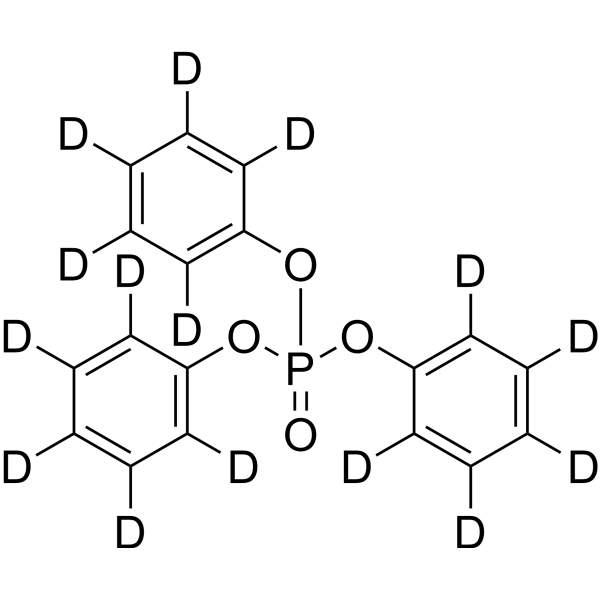
    Celluflex TPP-d15; DHPF 005-d15; Disflamol TP-d15; Disflamoll TP-d15; NSC 57868-d15; Phenyl phosphate ((PhO)3PO)-d15; Phoscon FR 903N-d15

    Isotope-Labeled Compounds Environmental Pollutants ERK Indoleamine 2,3-Dioxygenase (IDO) p38 MAPK NF-κB Akt Monoamine Oxidase Mitophagy Reactive Oxygen Species (ROS) JNK PI3K PPAR Apoptosis Cardiovascular Disease Neurological Disease Metabolic Disease Inflammation/Immunology Endocrinology
    Triphenyl phosphate-d15 is the deuterium labeled Triphenyl phosphate. Triphenyl phosphate is an orally active, blood-brain barrier-permeable aryl organophosphate flame retardant and endocrine disruptor. Triphenyl phosphate disrupts mitochondrial dynamic balance through oxidative stress, induces excessive mitophagy and apoptosis, and ultimately leads to myocardial fibrosis. In the brain, Triphenyl phosphate activates the NF-κB inflammatory pathway by disrupting the gut microbiota, alters tryptophan metabolism and elevates neurotoxins, thereby inducing anxiety- and depression-like behaviors. In the skeletal and reproductive systems, Triphenyl phosphate inhibits osteoblast differentiation and induces germ cell apoptosis by suppressing the MAPK/ERK pathway and activating the JNK signal, respectively. In adipose and placental tissues, Triphenyl phosphate promotes lipid accumulation by activating the PI3K/AKT-PPARγ axis, and disrupts placental metabolism via the MAOA/ROS/NF-κB cascade, impairing neurodevelopment of offspring.
    Triphenyl phosphate-d15
  • HY-N5072R

    4',6,7-Trihydroxyisoflavone (Standard)

    Reference Standards CDK PI3K PKC Cancer
    Desmethylglycitein (4',6,7-Trihydroxyisoflavone), a metabolite of daidzein, sourced from Glycine max with antioxidant, and anti-cancer activities. Desmethylglycitein binds directly to CDK1 and CDK2 in vivo, resulting in the suppresses CDK1 and CDK2 activity . Desmethylglycitein is a direct inhibitor of protein kinase C (PKC)α, against solar UV (sUV)-induced matrix matrix metalloproteinase 1 (MMP1) . Desmethylglycitein binds to PI3K in an ATP competitive manner in the cytosol, where it inhibits the activity of PI3K and downstream signaling cascades, leading to the suppression of adipogenesis in 3T3-L1 preadipocytes .
    Desmethylglycitein (Standard)
  • HY-116191

    PI3K mTOR Cancer
    WJD008 is a potent dual phosphatidylinositol 3-kinase (PI3K)/mammalian target of rapamycin (mTOR) inhibitor with antiproliferative and anticlonogenic activity in tumor cells and transformed cells with PIK3CA mutant. WJD008 inhibits kinase activity of PI3K α and mTOR and abrogates insulin-like growth factor-I-activated PI3K-Akt-mTOR signaling cascade. WJD008 is promising for research of cancers .
    WJD008
  • HY-152774

    Akt PI3K Cancer
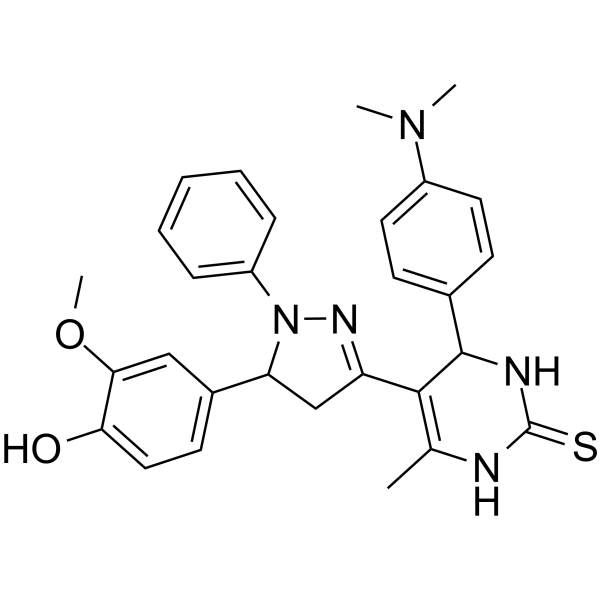
    Antitumor agent-86 (compound 5a) inhibits MCF-7 breast cancer cells with an IC50 value of 2.62 µM. Antitumor agent-86 induces cell apoptosis and cell cycle arrest, and shows antineoplastic activity by targeting RAS/PI3K/Akt/JNK signaling cascades .
    Antitumor agent-86

Inquiry Online

Your information is safe with us. * Required Fields.

Salutation


Country or Region *

Applicant Name *


Organization Name *

Department *


Email Address *


Product Name *

Cat. No.


Requested quantity *

Phone Number *


Remarks

Inquiry Online

Inquiry Information

Product Name:
Cat. No.:
Quantity:
MCE Japan Authorized Agent:

