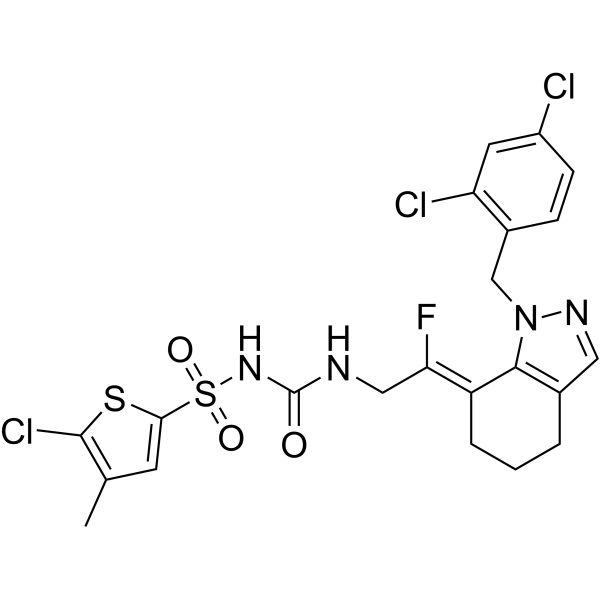
15 Results for "

PK studies

" in MedChemExpress (MCE) Product Catalog:
Products (15)

15 Results for "PK studies" in MCE Product Catalog:

3
3 Cited Publications
Cat. No.: HY-12689
CAS No.: 1260075-17-9
Purity:  99.84%
Synonyms: AG-348
Target:  

Pyruvate Kinase

Research Areas:  

Metabolic Disease

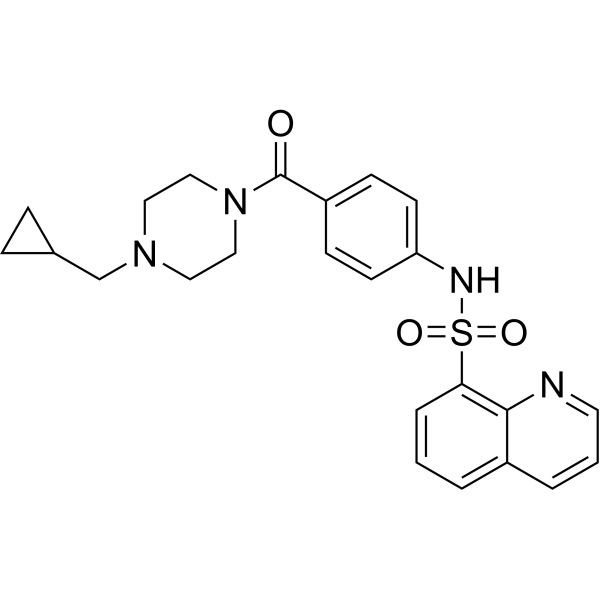
Mitapivat (AG-348) is an orally active pyruvate kinase allosteric activator. Mitapivat increases enzymatic activity, protein stability, and ATP levels over a broad range of PKLR genotypes, shows the potential to restore the activity of PK (pyruvate kinase)-deficient glycolytic pathways. Mitapivat can be used in study of PK deficiency .
loading...
    loading...
Cat. No.: HY-156618
CAS No.: 2230974-62-4
Purity:  99.63%
Synonyms: ABSK011
Target:  

FGFR

Research Areas:  

Cancer

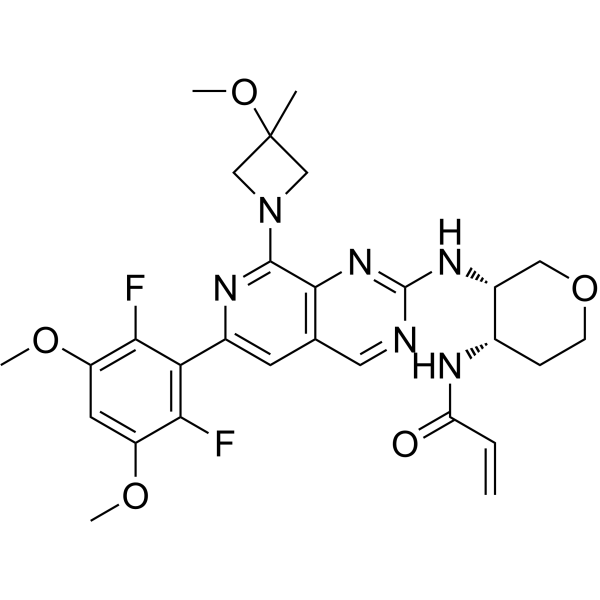
Irpagratinib (ABSK011) is an orally active FGFR4 inhibitor (IC50<10 nM). Irpagratinib inhibits FGFR4 autophosphorylation and blocks signaling from FGFR4 to downstream pathway activation. Irpagratinib has shown high exposure in PK studies in mice, rats, and dogs, and also demonstrated antitumor activity in a subcutaneous xenograft tumor model .
loading...
    loading...
Cat. No.: HY-110184
CAS No.: 1332454-07-5
Purity:  ≥99.0%
Target:  

Potassium Channel

Research Areas:  

Neurological Disease

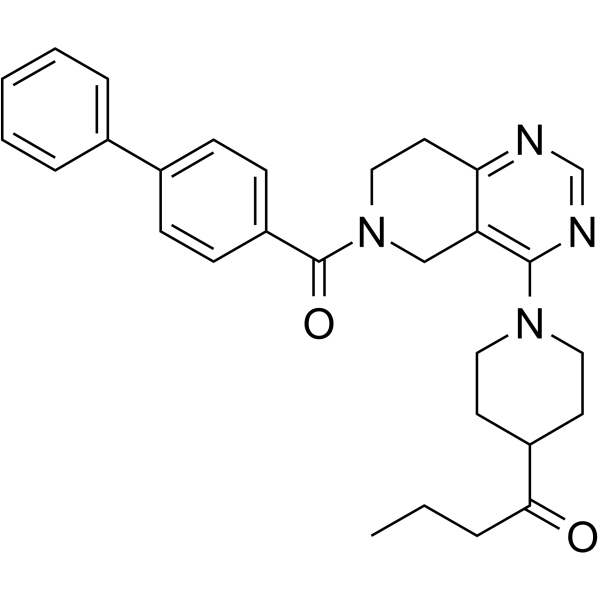
PK-THPP is a potent and brain-penetrant TWIK-related acid-sensitive K + ion channel (K2P9.1 or TASK-3) blocker with IC50s of 35 nM and 300 nM for TASK-3 and TASK-1, respectively. PK-THPP shows no or less activity against other K + channels. PK-THPP is an effective breathing stimulant and can be used for the study of breathing disorders .
loading...
    loading...
Cat. No.: HY-158118
CAS No.: 2088426-96-2
Purity:  97.19%
Target:  

DNA-PK

Research Areas:  

Cancer

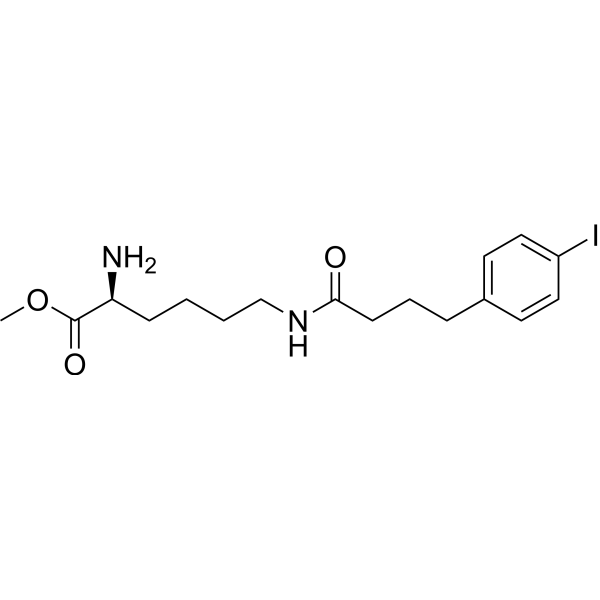
Lys(CO-C3-p-I-Ph)-OMe is a pharmacokinetic modifier (PK modifier) that can improve the PK properties of PSMA ligand molecules (such as Ac-PSMA-trillium). Lys(CO-C3-p-I-Ph)-OMe can increase the residence time of Ac-PSMA-trillium in plasma by increasing its binding capacity to albumin. Lys(CO-C3-p-I-Ph)-OMe also reduces salivary gland absorption of Ac-PSMA-trillium, potentially extending its half-life. Ac-PSMA-trillium is a suitable PSMA-targeting compound that has different biological applications after modification with different radioactive isotopes. If labeled with 111In, it can be used as DOTA chelating agent and imaging agent. Or labeled with 225Ac as a Macropa chelator for targeted radionuclide therapy (TRT) in the study of metastatic castration-resistant prostate cancer (mCRPC) .
loading...
    loading...
Cat. No.: HY-178994
Target:  

Flavivirus Dengue Virus

Research Areas:  

Infection

DENV-IN-14 (Compound 3c) is a thiazole hydrazone derivative with anti-dengue virus (DENV) activity with an EC50 of 0.01 μM and the selectivity index (SI) of 200. DENV-IN-14 exhibits rapid plasma clearance and its metabolic stability is limited. DENV-IN-14 can be used for research on dengue fever .
loading...
    loading...
Cat. No.: HY-19500
CAS No.: 215122-74-0
Target:  

COX

Research Areas:  

Others

SC-75416 is a selective cyclooxygenase-2 inhibitor. Its pharmacokinetic/pharmacodynamic (PK/PD) model was used for development and clinical trial simulation to design a study protocol to verify its analgesic effect in a post-oral surgery pain model. The simulation results showed that 360 mg of SC-75416 may provide better pain relief than 400 mg of ibuprofen. The actual clinical trial results confirmed this hypothesis, and 360 mg of SC-75416 was indeed superior to 400 mg of ibuprofen in pain relief. The PK/PD model of SC-75416 showed good predictive performance and successfully predicted its clinical effect. These research results show that SC-75416, as a new selective COX-2 inhibitor, has potential clinical application value in the management of post-oral surgery pain.
loading...
    loading...
Cat. No.: HY-12689B
CAS No.: 2329710-91-8
Synonyms: AG-348 hemisulfate
Target:  

Pyruvate Kinase

Research Areas:  

Metabolic Disease

Mitapivat hemisulfate is an orally active pyruvate kinase allosteric activator. Mitapivat hemisulfate increases enzymatic activity, protein stability, and ATP levels over a broad range of PKLR genotypes, shows the potential to restore the activity of PK (pyruvate kinase)-deficient glycolytic pathways. Mitapivat hemisulfate can be used in study of PK deficiency .
loading...
    loading...
Cat. No.: HY-12689A
CAS No.: 2151847-10-6
Synonyms: AG-348 hemisulfate sesquihydrate
Target:  

Pyruvate Kinase

Research Areas:  

Metabolic Disease

Mitapivat hemisulfate sesquihydrate (AG-348) is an orally active pyruvate kinase allosteric activator. Mitapivat increases enzymatic activity, protein stability, and ATP levels over a broad range of PKLR genotypes, shows the potential to restore the activity of PK (pyruvate kinase)-deficient glycolytic pathways. Mitapivat can be used in study of PK deficiency .
loading...
    loading...
Cat. No.: HY-153256
CAS No.: 2408297-80-1
Research Areas:  

Metabolic Disease

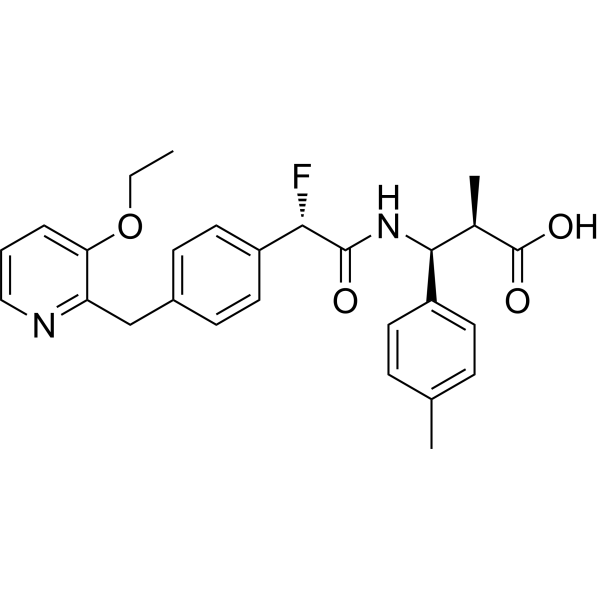
EP3 antagonist 4 (Compound 28) is an EP3 antagonist, with a Ki value of 2 nM for hEP. EP3 antagonist 4 shows low in vivo clearance, high oral AUC, and good bioavailability in the rat full PK studies. EP3 antagonist 4 can be used for research of beta cell dysfunction in diabetes .
loading...
    loading...
Cat. No.: HY-174334
CAS No.: 2924765-23-9
Target:  

RXFP Receptor

Research Areas:  

Cardiovascular Disease

RXFP1 receptor agonist-9 is a potent RXFP1 agonist with an EC50 of 2.5 μM and Ymax of 65%. RXFP1 receptor agonist-9 exhibits good microsomal stability, reasonable PK and pharmacological activity. RXFP1 receptor agonist-9 can be used to the study of heart failure .
loading...
    loading...
Cat. No.: HY-157928
Target:  

Keap1-Nrf2

Research Areas:  

Inflammation/Immunology

Keap1-Nrf2-IN-18 (Compound 22) is an orally active Keap1-Nrf2 protein-protein interaction (PPI) inhibitor with good pharmacokinetics (PK) profiles and more potent in vivo activities in rats. Keap1-Nrf2-IN-18 has the strongest inhibitory activity in structure−activity relationship (SAR) study (KD = 0.0029 μM) .
loading...
    loading...
Cat. No.: HY-123118
CAS No.: 79105-88-7
Target:  

DNA-PK

Research Areas:  

Cancer

NU-7031 (compound 10), a coumarin derivative, is a DNA-PK inhibitor with an IC50 of 1.7 μM. NU-7031 can be used for the study of cancer .
loading...
    loading...
Cat. No.: HY-12689S
Synonyms: AG-348-d8
Mitapivat-d8 (AG-348-d8) is the deuterium labeled Mitapivat (HY-12689). Mitapivat (AG-348) is an orally active pyruvate kinase allosteric activator. Mitapivat increases enzymatic activity, protein stability, and ATP levels over a broad range of PKLR genotypes, shows the potential to restore the activity of PK (pyruvate kinase)-deficient glycolytic pathways. Mitapivat can be used in study of PK deficiency.
loading...
    loading...
Cat. No.: HY-L015
1,125 compounds

The PI3K/Akt/mTOR pathway controls many cellular processes that are important for the formation and progression of cancer, including apoptosis, transcription, translation, metabolism, angiogenesis, and cell cycle progression. Every major node of this signaling network is activated in a wide range of human tumors. Mechanisms for the pathway activation include activation of receptor tyrosine kinases (RTKs) upstream of PI3K, mutation or amplification of PIK3CA encoding p110α catalytic subunit of PI3K, mutation or loss of PTEN tumor suppressor gene, and mutation or amplification of Akt1. Once the pathway is activated, signaling through Akt can stimulate a series of substrates including mTOR which is involved in protein synthesis. Thus, inhibition of this pathway is an attractive concept for cancer prevention and/or therapy. Currently some mTOR inhibitors are approved for several indications, and there are several novel PI3K/Akt/mTOR inhibitors in clinical trials.

MCE owns a unique collection of 1,125 compounds that can be used for PI3K/Akt/mTOR pathway research. PI3K/Akt/mTOR Compound Library also acts as a useful tool for anti-cancer drug discovery.

Cat. No.: HY-L004
3,470 compounds

DNA is prone to numerous forms of damage that can injure cells and impair fitness. Cells have developed an array of mechanisms to repair these injuries. Proliferating cells are especially vulnerable to DNA damage due to the added demands of cellular growth and division. Cell cycle checkpoints represent integral components of DNA repair that coordinate cooperation between the machinery of the cell cycle and several biochemical pathways that respond to damage and restore DNA structure. By delaying progression through the cell cycle, checkpoints provide more time for repair before the critical phases of DNA replication, when the genome is replicated, and of mitosis, when the genome is segregated. Loss or attenuation of checkpoint function may increase spontaneous and induced gene mutations and chromosomal aberrations by reducing the efficiency of DNA repair.

MCE owns a unique collection of 3,470 cell cycle/DNA damage-related compounds which can be used in the research of the same.

  • 1

