1. Search Result
Search Result
Results for "

Panic disorders

" in MedChemExpress (MCE) Product Catalog:

14

Inhibitors & Agonists

1

Natural
Products

4

Isotope-Labeled Compounds

Cat. No. Product Name Target Research Areas Chemical Structure
  • HY-122272
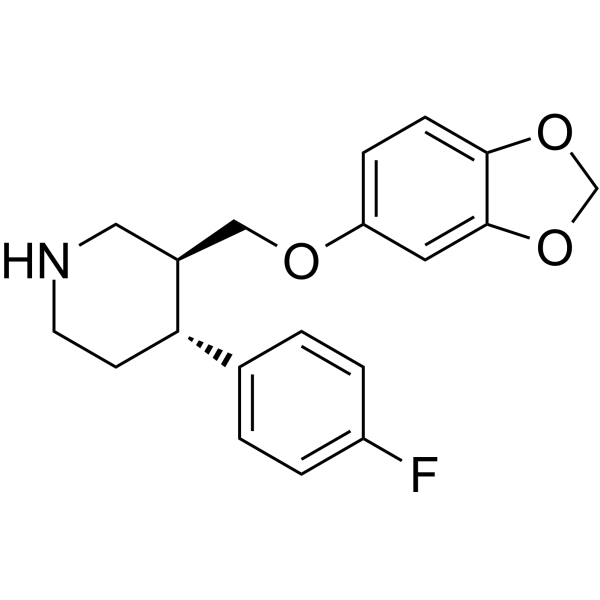
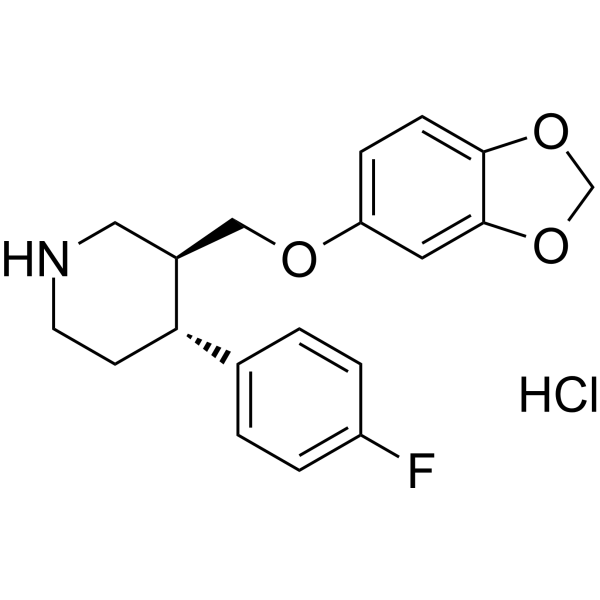
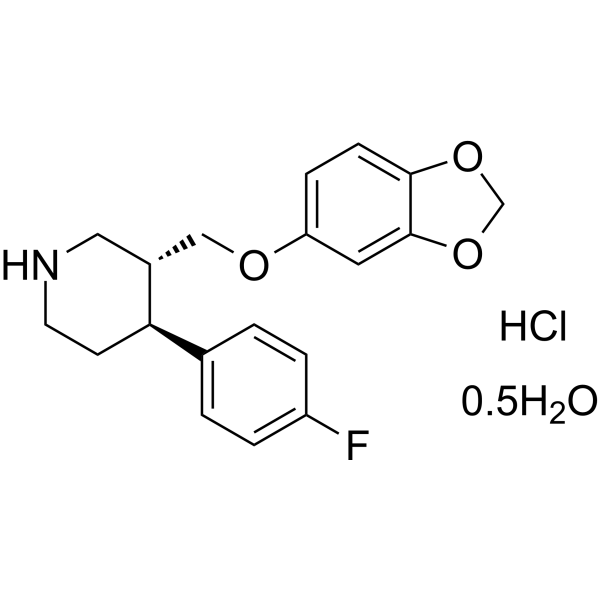
    Paroxetine
    15+ Cited Publications

    BRL29060

    Serotonin Transporter Adrenergic Receptor P2X Receptor Apoptosis Neurological Disease Cancer
    Paroxetine is an oral inhibitor that falls under the category of selective serotonin reuptake inhibitors (SSRIs). Paroxetine is also a very weak norepinephrine (NE) reuptake inhibitor, capable of inducing cell apoptosis and having anti-tumor activity. Paroxetine has antidepressant, anti-anxiety, and pain-relieving effects, and it can help improve conditions like obsessive-compulsive disorder, panic disorder, post-traumatic stress disorder, premenstrual anxiety, and chronic headaches .
    Paroxetine
  • HY-14560C
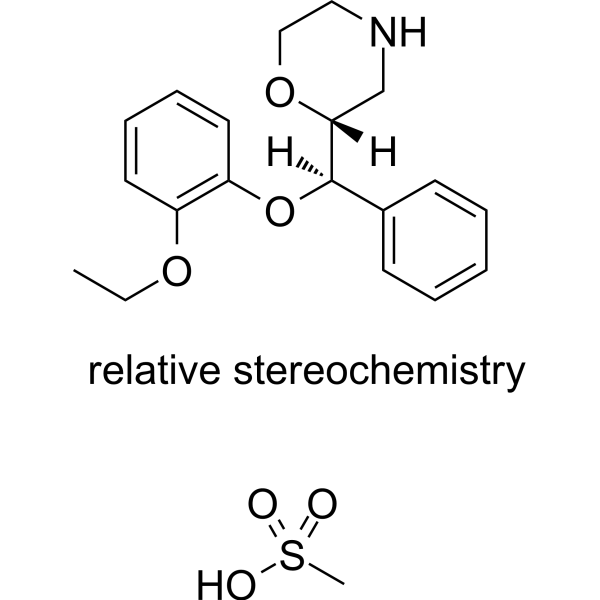
    Reboxetine mesylate
    2 Publications Verification

    FCE20124 mesylate; PNU155950E mesylate

    Adrenergic Receptor Neurological Disease
    Reboxetine mesylate (FCE20124 mesylate) is a potent, selective, and specific noradrenaline reuptake inhibitor (NARI) for the research of depression. Reboxetine mesylate inhibits the uptake of norepinephrine, with a Ki of 8 nM .
    Reboxetine mesylate
  • HY-147403S

    JNJ-61393215

    Orexin Receptor (OX Receptor) Isotope-Labeled Compounds Neurological Disease
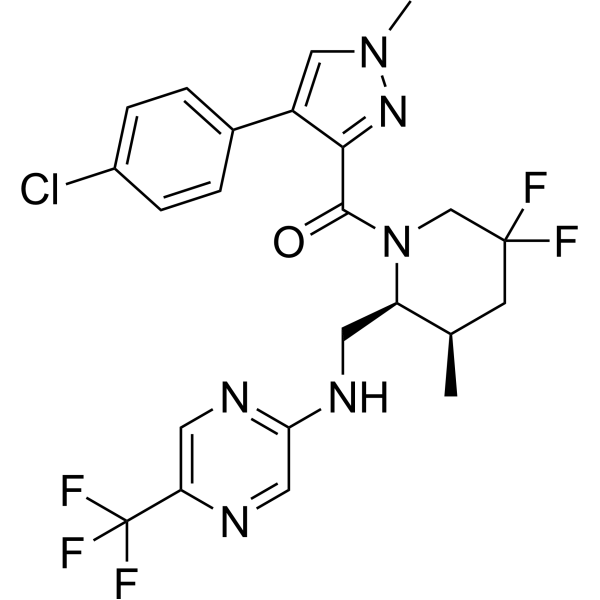
    Tebideutorexant is an OX1R-selective inhibitor with oral bioavailability and blood-brain barrier permeability, with human OX1R pKi 8.17 and rat OX1R pKi 8.13.Tebideutorexant selectively modulates OX1R, with no significant functional effect on OX2R. Tebideutorexant can be used for the research of panic and anxiety disorders .
    Tebideutorexant
  • HY-101665

    (+)-RP-59037; IP-456; RP-62955

    GABA Receptor Neurological Disease
    Pagoclone is an active (+)-enantiomer of the racemate RP 59037. Pagoclone is a partial GABA(A) receptor agonist used for the treatment of panic and anxiety disorders.
    Pagoclone
  • HY-122272R

    BRL29060 (Standard)

    Serotonin Transporter Adrenergic Receptor P2X Receptor Apoptosis Reference Standards Neurological Disease Cancer
    Paroxetine (Standard) is the analytical standard of Paroxetine. This product is intended for research and analytical applications. Paroxetine is an oral inhibitor that falls under the category of selective serotonin reuptake inhibitors (SSRIs). Paroxetine is also a very weak norepinephrine (NE) reuptake inhibitor, capable of inducing cell apoptosis and having anti-tumor activity. Paroxetine has antidepressant, anti-anxiety, and pain-relieving effects, and it can help improve conditions like obsessive-compulsive disorder, panic disorder, post-traumatic stress disorder, premenstrual anxiety, and chronic headaches .
    Paroxetine (Standard)
  • HY-W039283

    MCHR1 (GPR24) Neurological Disease Cancer
    MCH-1 antagonist 2 (l-BROMO-2,4-DIFLUORO-5-NITROBEN-ZENE) is a melanin concentrating hormone-1 (MCH1) receptor-selective 4-aryl piperidine. MCH-1 antagonist 2 can be used for the research of depression, anxiety, obesity, urge incontinence, urinary incontinence, major depression, bipolar disorder, agoraphobia, specific phobia, social phobia, obsessive-compulsive disorder, post-traumatic stress disorder, acute stress disorder, urinary frequency, urinary urgency, nocturia, enuresis, bulimia, bulimia nervosa, anorexia nervosa, major depressive disorder, dysthymic disorder, bipolar 1 and 2 disorders, schizoaffective disorder, cognitive disorders with depressed mood, personality disorders, insomnia, hypersomnia, narcolepsy, circadian rhythm sleep disorder, nightmare disorder, sleep terror disorder, sleepwalking disorder, panic disorder, social anxiety disorder, generalized anxiety disorder, overactive bladder .
    MCH-1 antagonist 2
  • HY-155205

    Cholecystokinin Receptor Neurological Disease
    GV150013X is an antagonist for cholecystokinin-2/gastrin receptor (CCK2R), with Ki of 2.29 nM. GV150013X attenuates central nervous disorders, such as anxiety and panic disorder .
    GV150013X
  • HY-153458

    Orexin Receptor (OX Receptor) Cardiovascular Disease Neurological Disease Metabolic Disease
    Orexin receptor modulator-1 is an orexin receptor modulator. Orexin receptor modulator-1 can be used for the research of substance addiction, panic disorder, anxiety, post-traumatic stress disorder, pain, depression, seasonal affective disorder, an eating disorder, or hypertension .
    Orexin receptor modulator-1
  • HY-B0193S

    Adrenergic Receptor Cardiovascular Disease Endocrinology
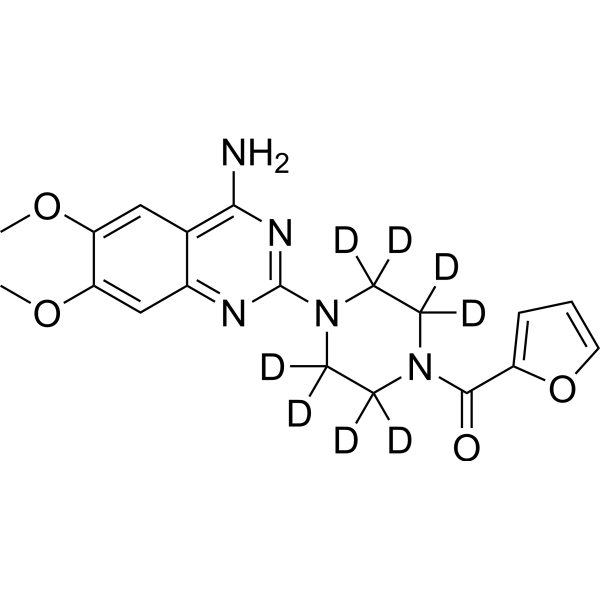
    Prazosin-d8 is the deuterium labeled Prazosin. Prazosin is an alpha-adrenergic blocker and is a sympatholytic drug used to treat high blood pressure and anxiety, PTSD, and panic disorder.
    Prazosin-d8
  • HY-18941B

    (rel)-LY354740; (rel)-Eglumetad

    mGluR Neurological Disease
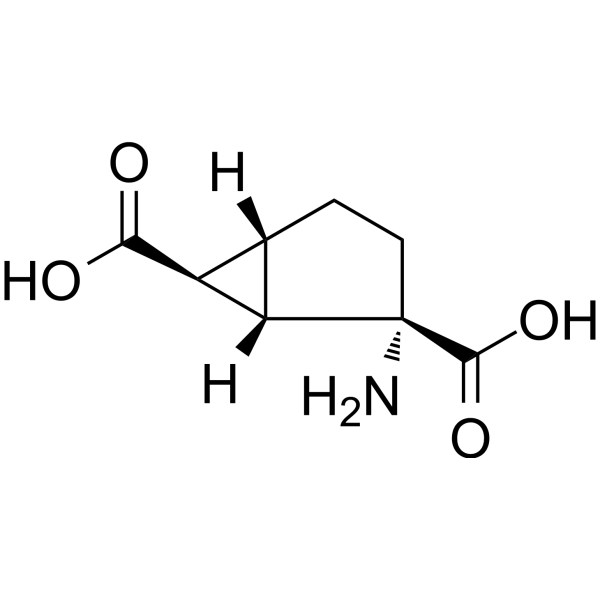
    (rel)-Eglumegad ((rel)-LY354740) is a relative configuration of Eglumegad (HY-18941). Eglumegad is a highly potent and selective group II (mGlu2/3) receptor agonist with EC50s of 5 and 24 nM for transfected human mGlu2 and mGlu3 receptors, respectively .
    (rel)-Eglumegad
  • HY-14560CR

    FCE20124 mesylate (Standard); PNU155950E mesylate (Standard)

    Reference Standards Adrenergic Receptor Neurological Disease
    Reboxetine (mesylate) (Standard) is the analytical standard of Reboxetine (mesylate). This product is intended for research and analytical applications. Reboxetine mesylate (FCE20124 mesylate) is a potent, selective, and specific noradrenaline reuptake inhibitor (NARI) for the research of depression. Reboxetine mesylate inhibits the uptake of norepinephrine, with a Ki of 8 nM .
    Reboxetine mesylate (Standard)
  • HY-111124

    BRL29060-d2

    Isotope-Labeled Compounds Serotonin Transporter Adrenergic Receptor P2X Receptor Apoptosis Neurological Disease Cancer
    Paroxetine-d2 (CTP 347) is a deuterium labeled Paroxetine (HY-122272). Paroxetine is an oral inhibitor that falls under the category of selective serotonin reuptake inhibitors (SSRIs). Paroxetine is also a very weak norepinephrine (NE) reuptake inhibitor, capable of inducing cell apoptosis and having anti-tumor activity. Paroxetine has antidepressant, anti-anxiety, and pain-relieving effects, and it can help improve conditions like obsessive-compulsive disorder, panic disorder, post-traumatic stress disorder, premenstrual anxiety, and chronic headaches .
    Paroxetine-d2
  • HY-122272S

    BRL29060-d4

    Isotope-Labeled Compounds Serotonin Transporter Adrenergic Receptor Apoptosis P2X Receptor Neurological Disease Cancer
    Paroxetine-d4 (BRL29060-d4) is deuterium labeled Paroxetine. Paroxetine is an oral inhibitor that falls under the category of selective serotonin reuptake inhibitors (SSRIs). Paroxetine is also a very weak norepinephrine (NE) reuptake inhibitor, capable of inducing cell apoptosis and having anti-tumor activity. Paroxetine has antidepressant, anti-anxiety, and pain-relieving effects, and it can help improve conditions like obsessive-compulsive disorder, panic disorder, post-traumatic stress disorder, premenstrual anxiety, and chronic headaches .
    Paroxetine-d4
  • HY-N15656

    Others Neurological Disease
    Swertinin (Compound 3) is an antianxiety. Swertinin can be isolated from stems of Kielmeyera coriacea. Swertinin can be used for anxiety disorders, such as generalized anxiety and panic disorders research .
    Swertinin

Inquiry Online

Your information is safe with us. * Required Fields.

Salutation


Country or Region *

Applicant Name *


Organization Name *

Department *


Email Address *


Product Name *

Cat. No.


Requested quantity *

Phone Number *


Remarks

Inquiry Online

Inquiry Information

Product Name:
Cat. No.:
Quantity:
MCE Japan Authorized Agent:

