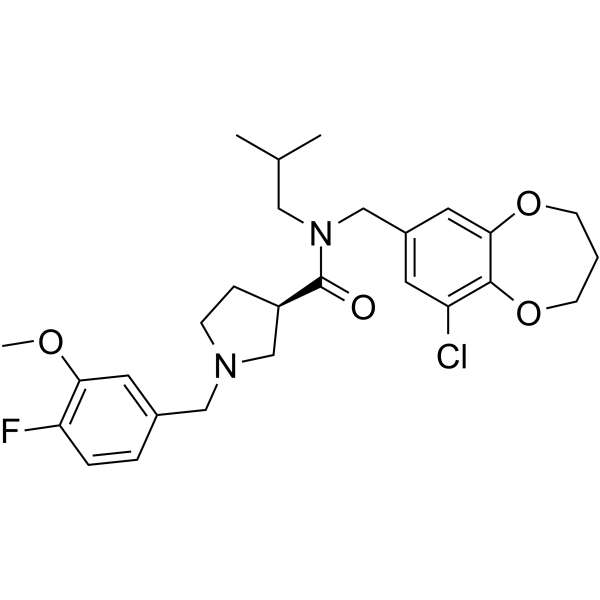
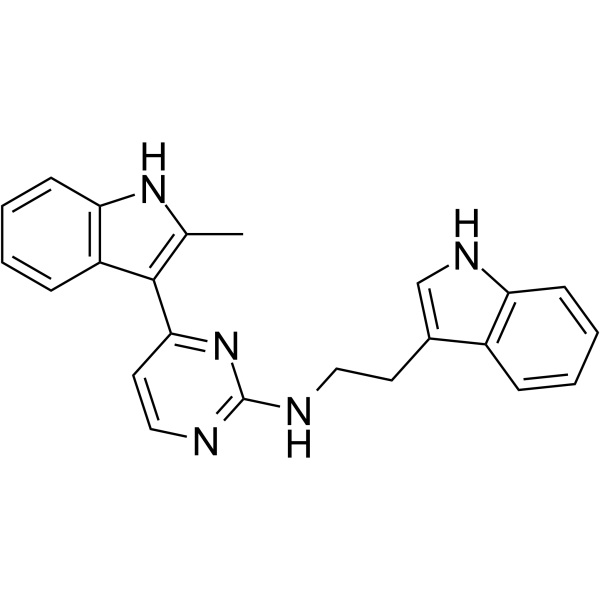
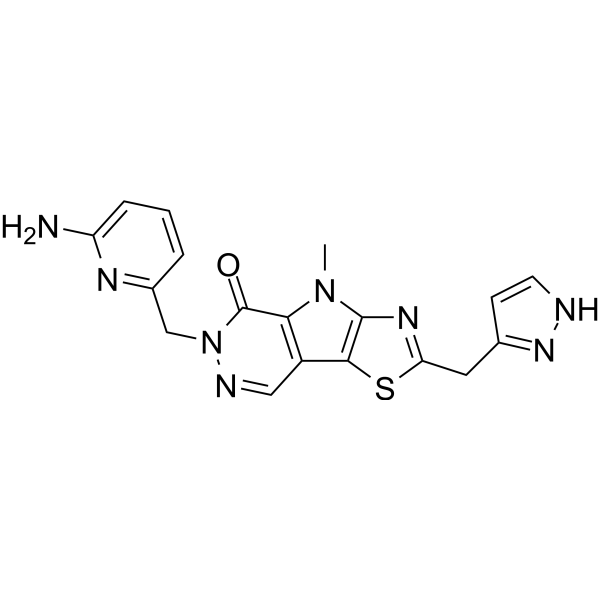
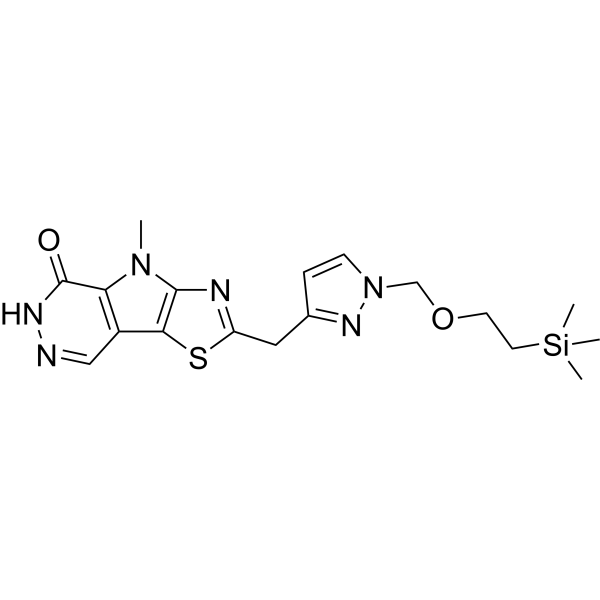
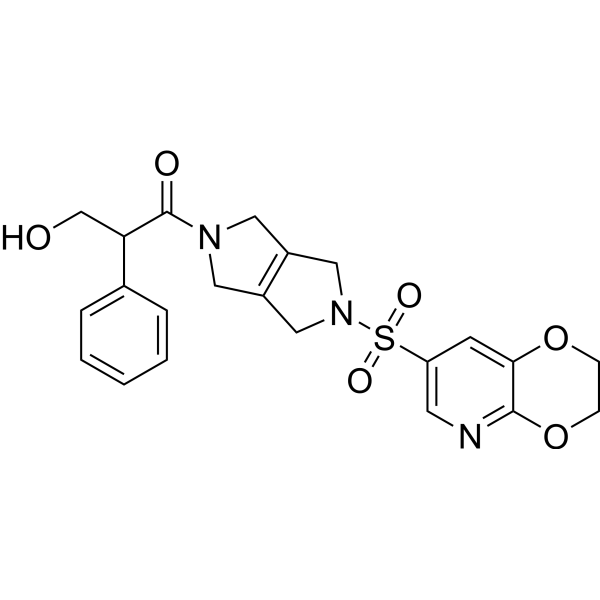
52 Results for "

Pkr

" in MedChemExpress (MCE) Product Catalog:
Products (52)

52 Results for "Pkr" in MCE Product Catalog:

  • Targets Recommended:
65
65 Publications Verification
Cat. No.: HY-13820
CAS No.: 1337532-29-2
Purity:  99.66%
Target:  

PERK Autophagy Apoptosis

Research Areas:  

Cancer

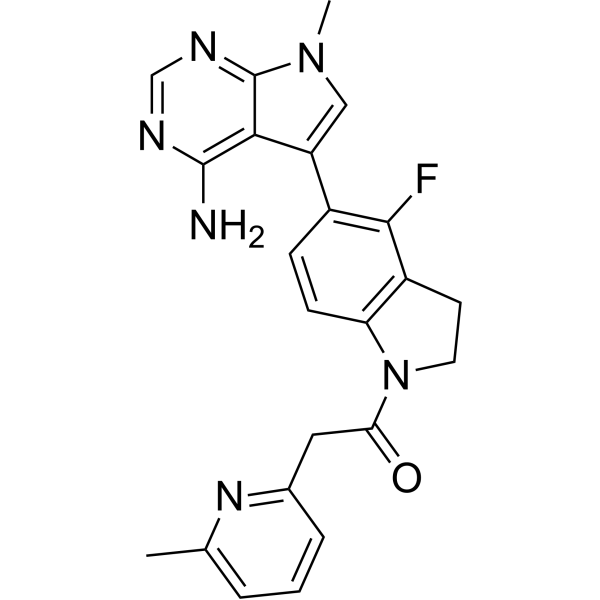
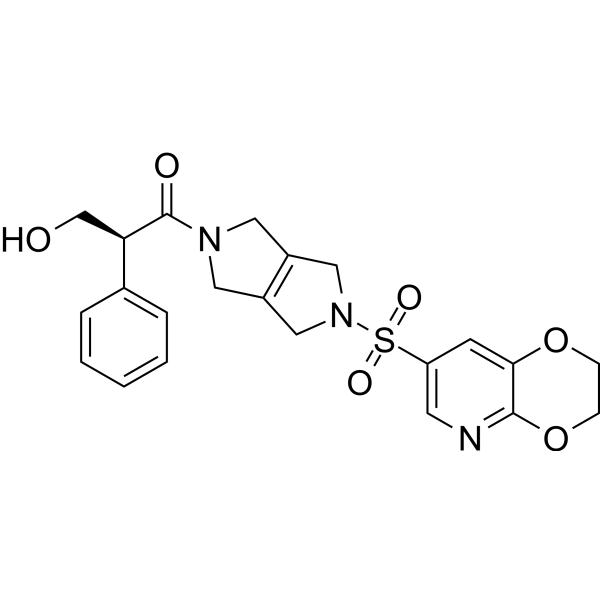
GSK2656157 is a selective and ATP-competitive inhibitor of protein kinase R (PKR)-like endoplasmic reticulum kinase (PERK) with an IC50 of 0.9 nM.
55
55 Cited Publications
Cat. No.: HY-18657
CAS No.: 1221186-53-3
Synonyms: ML-265
Target:  

Pyruvate Kinase

Research Areas:  

Cancer

TEPP-46 (ML-265) is a potent and selective pyruvate kinase M2 (PKM2) activator with an AC50 of 92 nM, showing little or no effect on PKM1, PKL and PKR .
8
8 Cited Publications
Cat. No.: HY-13977A
CAS No.: 608512-97-6
Purity:  99.27%
Target:  

Apoptosis

Research Areas:  

Neurological Disease

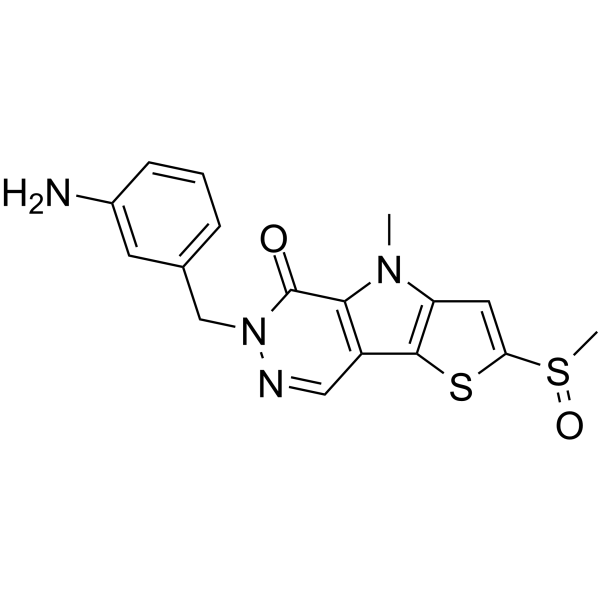
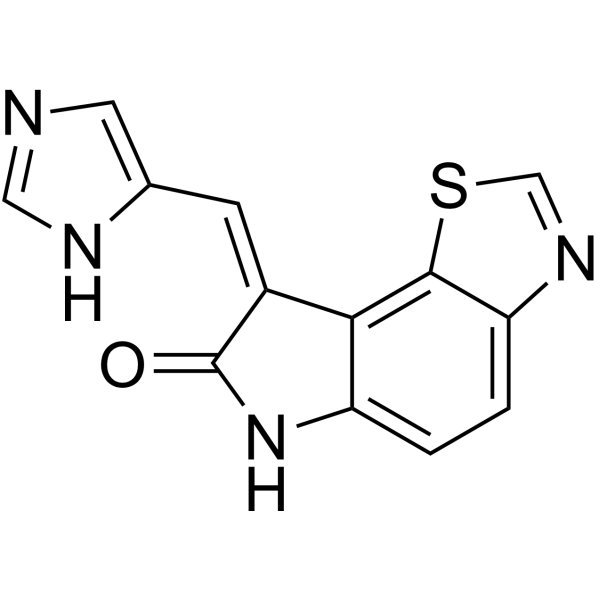
PKR-IN-C16 (Compound C16) is a specific double-stranded RNA-dependent protein kinase (PKR) inhibitor. PKR-IN-C16 shows promising neuroprotective properties and can rescue acute brain lesions .
2
2 Cited Publications
Cat. No.: HY-P80847
Synonyms: PRKAR2A; Pkr2; PRKAR2; cAMP-dependent protein kinase type II-alpha regulatory subunit

Host:  

Rabbit

Application:  

WB, IHC-P, ICC/IF, IP

Reactivity:  

Human, Mouse, Rat, Pig

1
1 Cited Publications
Cat. No.: HY-128854
CAS No.: 792-74-5
Purity:  ≥98.0%
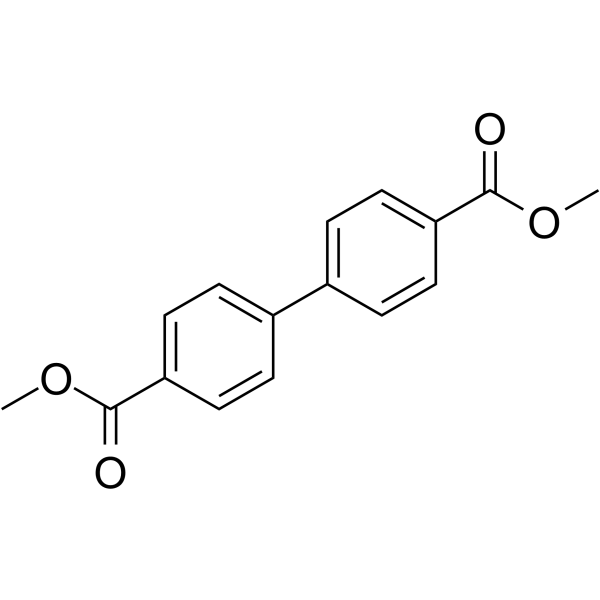
Dimethyl biphenyl-4,4'-dicarboxylate (Biphenyl dimethyl dicarboxylate) is a hepatoprotective agent. Dimethyl biphenyl-4,4'-dicarboxylate stimulates the Jak/Stat signaling pathway and induces the expression of IFN-α-stimulated genes, particularly 6-16 and ISG12. Dimethyl biphenyl-4,4'-dicarboxylate inhibits the replication of pregenomic RNA and HBeAg. Polymer micelles loaded with Dimethyl biphenyl-4,4'-dicarboxylate can serve as carriers for the compound. Dimethyl biphenyl-4,4'-dicarboxylate can be used as an auxiliary improving agent for chronic hepatitis. Dimethyl biphenyl-4,4'-dicarboxylate is applicable to research related to chronic hepatitis B .\n


Cat. No.: HY-147056
CAS No.: 1233926-87-8
Purity:  98.04%
Synonyms: PkrA7
PKRA83 (PKRA7) is a potent prokineticin (PK2) antagonist, which can compete for the binding of PK2 to its receptors PKR1 and PKR2. PKRA83 potently inhibits PK2 receptors, with IC50 values of 5.0 nM and 8.2 nM for PKR1 and PKR2, respectively. PKRA83 has anticancer, anti-arthritis and anti-angiogenic activities. .
Cat. No.: HY-101997
CAS No.: 455311-98-5
Research Areas:  

Infection Cancer

BEPP hydrochloride is a double-stranded RNA-dependent protein kinase (PKR) modulator. BEPP hydrochloride enhances the phosphorylation levels of PKR and eIF2α, activates caspase-3, upregulates the pro-apoptotic protein BAX, and downregulates the anti-apoptotic protein Bcl-2. BEPP hydrochloride inhibits vaccinia virus replication and exhibits selective cytotoxicity in cells expressing PKR. BEPP hydrochloride can be used in research related to cancer and viral infections .
Cat. No.: HY-118131
CAS No.: 1314594-23-4
Purity:  99.79%
Target:  

Pyruvate Kinase

Research Areas:  

Others

PKR-IN-C51 is an ATP-competitive protein kinase R (PKR) inhibitor with a human IC50 of 9 μM and a human Ki of 3.4 μM. PKR-IN-C51 blocks the activation of PKR, inhibits intracellular PKR activation in primary mouse macrophages, and shows no obvious cytotoxicity. PKR-IN-C51 can be used in studies related to the regulation of PKR-mediated signaling pathways .
Cat. No.: HY-135884
CAS No.: 2283422-04-6
Purity:  99.12%
Synonyms: AG-946; Pkr activator 2
Target:  

Pyruvate Kinase

Research Areas:  

Cardiovascular Disease

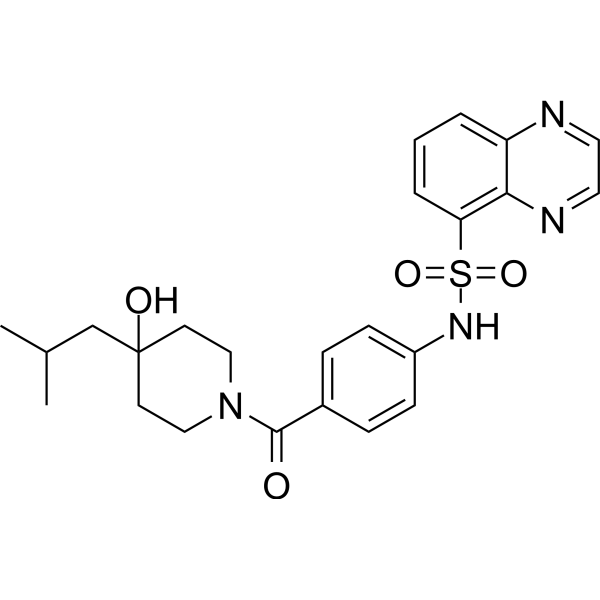
Tebapivat (PKR activator 2) is a potent pyruvate kinase-R (PKR) activator extracted from patent WO2019035863A1, compound 385 .
Cat. No.: HY-W010451
CAS No.: 533-73-3
Synonyms: Hydroxyhydroquinone
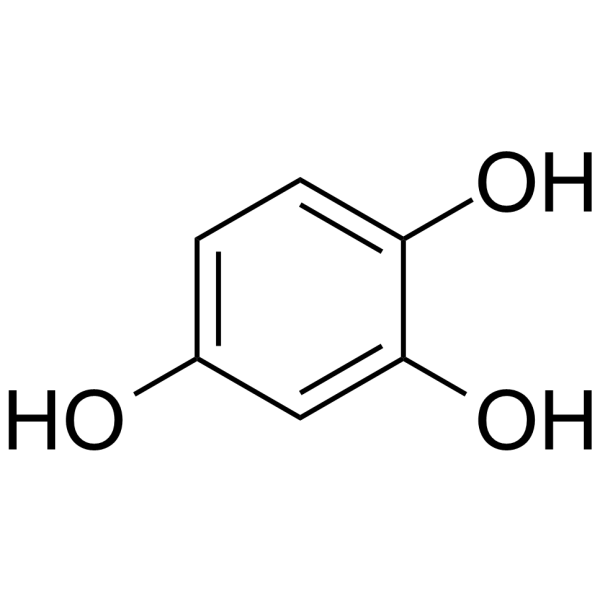
1,2,4-Trihydroxybenzene (Hydroxyhydroquinone) is an ER stress inducer that targets proteins such as PKR-like ER kinase PERK to induce cytotoxicity. 1,2,4-Trihydroxybenzene selectively activates eIF2α phosphorylation, activates the PERK-eIF2α signaling pathway and induces stress granule formation. 1,2,4-Trihydroxybenzene subsequently exacerbates oxidative stress and causes DNA double-strand breaks, destroying organelles such as mitochondria and ER, and inducing cell death. 1,2,4-Trihydroxybenzene also has the potential to exhibit anti-tumor effect, increase blood pressure, and relieve spasm .
Cat. No.: HY-139573
CAS No.: 2245053-57-8
Purity:  99.91%
Synonyms: FT-4202
Target:  

Pyruvate Kinase

Research Areas:  

Cardiovascular Disease

Etavopivat is a potent, selective, and orally active erythrocyte pyruvate kinase (PKR) activator. Etavopivat has potent antisickling effects that can be used in studies of sickle cell disease and other haemoglobinopathies .
Cat. No.: HY-W319647
CAS No.: 315705-10-3
GCN2 activator-1 (Compound 20) is a GCN2 activator. GCN2 activator-1 binds within the ATP-pocket of GCN2 and activates GCN2 in a GCN1-independent manner. GCN2 activator-1 activates Integrated Stress Response (ISR) in cells. GCN2 activator-1 inhibits PKR with an IC50 of 3.75 µM. GCN2 activator-1 can be used for research of pulmonary veno-occlusive disease (PVOD) .
Cat. No.: HY-137813
CAS No.: 1337531-89-1
Purity:  98.30%
Target:  

PERK

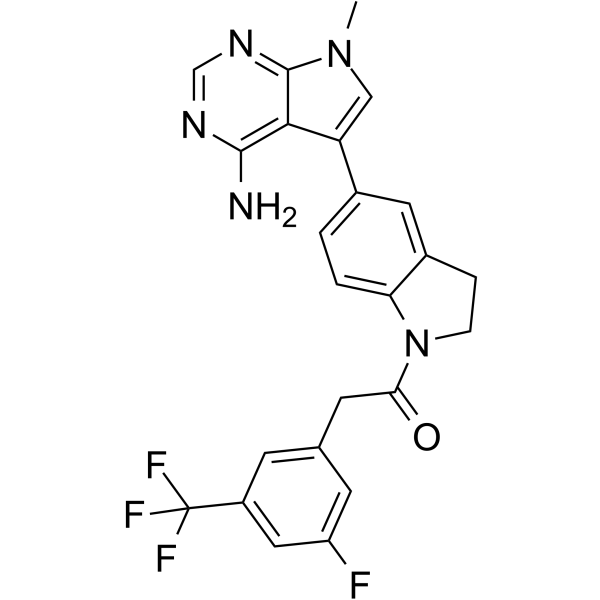
PERK-IN-4 is a potent and selective PERK (protein kinase R (PKR)-like endoplasmic reticulum kinase) inhibitor with an IC 50 of 0.3 nM. PERK is activated in response to a variety of endoplasmic reticulum stresses implicated in numerous disease states .
Cat. No.: HY-19702
CAS No.: 1628428-01-2
Target:  

Pyruvate Kinase

Research Areas:  

Metabolic Disease

PKR activator 3 (Compound 160) is a red blood cell pyruvate kinase (PKR) activator. PKR activator 3 can be used in the research of diseases related to PKR function, such as pyruvate kinase deficiency (PKD) .
Cat. No.: HY-124857
CAS No.: 26927-01-5
Purity:  98%
Synonyms: 7-Desacetoxy-6,7-dehydrogedunin
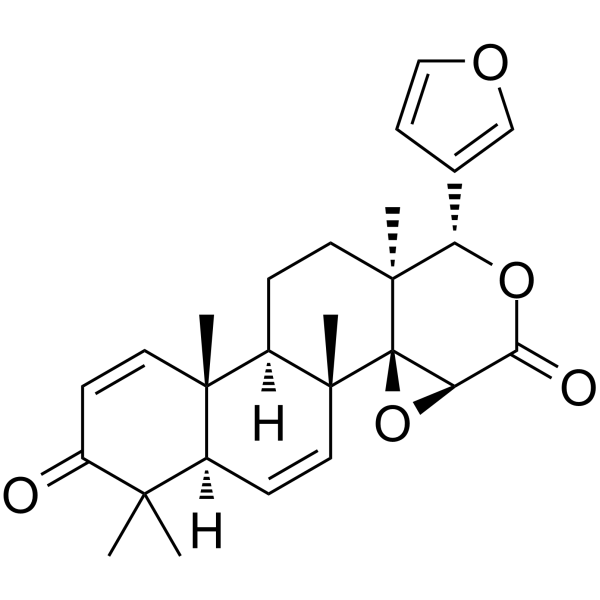
7DG (7-Desacetoxy-6,7-dehydrogedunin) is a PKR inhibitor, P2X7 purinergic receptor inhibitor, and skin-lightening agent. 7DG binds outside the ATP-catalytic domain of PKR, blocks the kinase activity-independent protein-protein interactions of PKR, inhibits the phosphorylation and activity of PKR, disrupts ASC assembly and caspase-1 activation, and suppresses the activation of the NLRP1 inflammasome. 7DG inhibits pyroptosis, suppresses the ATP-P2X7 signaling pathway, and abolishes ATP-induced increases in the expression levels of MITF, tyrosinase, PMEL/gp100, and melanin content. 7DG exerts skin-lightening effects in cultured skin in vitro. 7DG can be used in research related to chronic obstructive pulmonary disease, gout, type 2 diabetes, Alzheimer's disease, and hyperpigmentary skin disorders .
Cat. No.: HY-159972
CAS No.: 910113-60-9
Target:  

Prokineticin Receptor

Research Areas:  

Neurological Disease

PKR1 antagonist 1 (PC1) is a potent PKR1 antagonist. PKR1 antagonist 1 reduces hyperalgesia and allodynia in SNI mice .
Cat. No.: HY-175880
CAS No.: 1644664-11-8
Research Areas:  

Cancer

AMG-34 is a GCN2-targeting agent with IC50 values of 0.395 μM, 0.010 μM, 1.07 μM and > 10 μM for GCN2, PERK, HRland PKR, respectively .
Cat. No.: HY-153354
CAS No.: 2283420-05-1
Target:  

Pyruvate Kinase

Research Areas:  

Metabolic Disease

PKR activator 4 (example 7A) is a potent pyruvate kinase R (PKR) activator. PKR activator 4 has the potential for the research of blood disorders .
Cat. No.: HY-139573A
CAS No.: 2622070-93-1
Purity:  99.87%
Synonyms: (Rac)-FT-4202
Target:  

Pyruvate Kinase

Research Areas:  

Cardiovascular Disease

(Rac)-Etavopivat ((Rac)-FT-4202) is an isomer of Etavopivat (HY-139573). Etavopivat is an orally active erythrocyte pyruvate kinase-R (PKR) activator that can be used in studies of sickle cell disease and other haemoglobinopathies .
Cat. No.: HY-168446
CAS No.: 3057531-75-3
Target:  

Pyruvate Kinase Fungal

Research Areas:  

Infection

PKR-IN-1 (Compound 5s) is a pyruvate kinase (PK) inhibitor that has antifungal activity, with an EC50 of 0.21 μg/mL for R. solani .

