
10 Results for "

Redox regulation

" in MedChemExpress (MCE) Product Catalog:
Products (10)

10 Results for "Redox regulation" in MCE Product Catalog:

20
20 Cited Publications
Cat. No.: HY-113324
CAS No.: 53-57-6
Purity:  99.49%
NADPH is a coenzyme of glutathione reductase (GR), thioredoxin reductase (TrxR) and NADPH oxidase (NOX), and participates in redox reactions as a hydrogen donor. NADPH has the characteristic of selectively participating in the regulation of cellular redox homeostasis. NADPH exerts antioxidant activity and resists reactive oxygen species (ROS) damage by providing reducing equivalents for the regeneration of glutathione (GSH) and thioredoxin (Trx); at the same time, it acts as a substrate of NOX to generate superoxide anions, mediating oxidative stress and immune response. NADPH participates in maintaining the intracellular reducing environment, biosynthesis and regulating gene expression (such as the Nrf2 pathway), and is mainly used in the study of oxidative stress-related diseases (such as cardiovascular diseases, neurodegenerative diseases, cancer) and immune regulation mechanisms .
loading...
    loading...
Cat. No.: HY-150097
Purity:  ≥99.0%
Recombinant Human Serum Albumin (rHSA) is a non-glycosylated monomeric plasma protein that acts as a core factor for maintaining plasma colloid osmotic pressure. Recombinant Human Serum Albumin (rHSA) possesses multiple physiological functions including carrier, metabolic regulation, detoxification, antioxidation and enzyme mimicking. Recombinant Human Serum Albumin (rHSA) not only scavenges reactive oxygen and nitrogen species via specific residues and binds a variety of endogenous and exogenous compounds to maintain redox homeostasis, but also serves as a biomarker for multiple diseases such as cancer and inflammation. Recombinant Human Serum Albumin (rHSA) broadly supports the development of implantable materials, surgical adhesives and ligand capture, and can be used for research on critical illnesses including hypovolemia, liver failure, severe sepsis and various types of trauma resuscitation .
loading...
    loading...
Cat. No.: HY-138354A
CAS No.: 72978-16-6
Purity:  98.87%
Target:  

Drug Intermediate

Research Areas:  

Infection

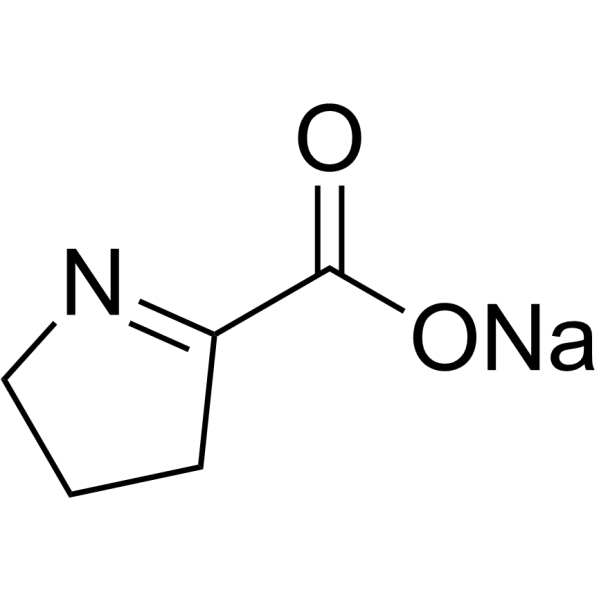
Pyrroline-5-carboxylate sodium is a key intermediate in proline anabolism and catabolism. Pyrroline-5-carboxylate sodium plays important roles in plant defense against pathogen invasion, as well as in redox regulation, nucleotide synthesis and other processes in animal cells .
loading...
    loading...
Cat. No.: HY-P2742
CAS No.: 9029-44-1
Synonyms: ASO, Cucurbit sp.
Target:  

Endogenous Metabolite

Research Areas:  

Metabolic Disease

Ascorbate oxidase, Cucurbit sp., also known as vitamin C oxidase, is a REDOX enzyme involved in the regulation of extracellular matrix. Ascorbate oxidase catalyzes the reaction of ascorbic acid and oxygen to produce dehydroascorbic acid .
loading...
    loading...
Cat. No.: HY-W287569
CAS No.: 370073-65-7
Target:  

Atg4 Autophagy

Research Areas:  

Cancer

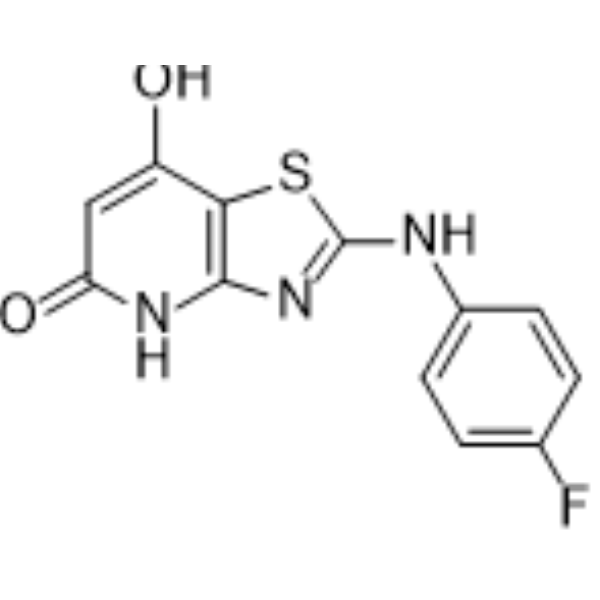
STK683963 is a strong activator of cellular ATG4B activity. STK683963 can act as a mediator of redox-regulation of ATG4B in cells. STK683963 can be used for the research of cancer .
loading...
    loading...
Cat. No.: HY-138354
CAS No.: 2139-03-9
Target:  

Drug Intermediate

Research Areas:  

Infection

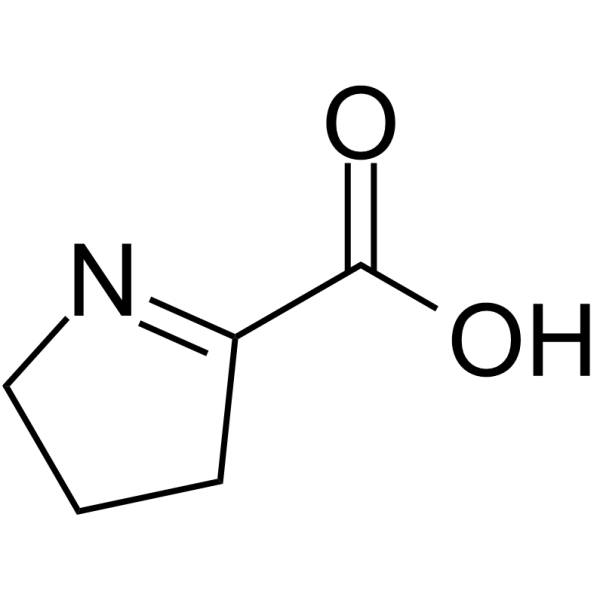
Pyrroline-5-carboxylate is a key intermediate in proline anabolism and catabolism. Pyrroline-5-carboxylate plays important roles in plant defense against pathogen invasion, as well as in redox regulation, nucleotide synthesis and other processes in animal cells .
loading...
    loading...
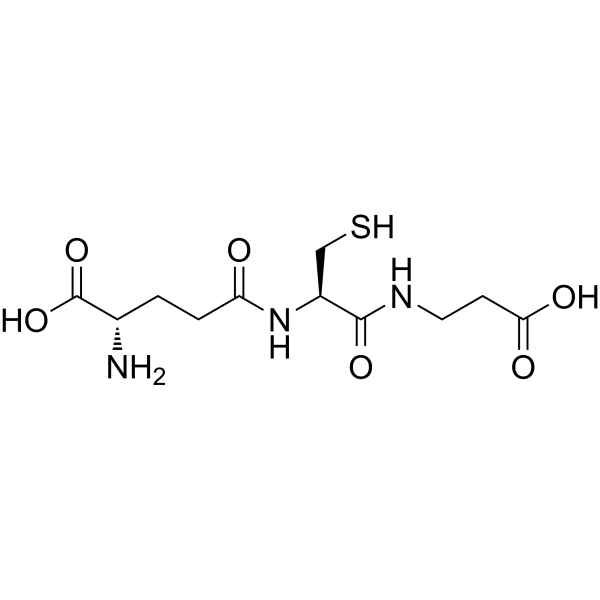
Cat. No.: HY-P4450
CAS No.: 18710-27-5
Synonyms: γ-Glu-Cys-β-Ala; H-γ-Glu-Cys-β-Ala-OH
Target:  

Peptides

Research Areas:  

Others

Homoglutathione is a ubiquitous and indispensable tripeptide in eukaryotes with multi-facetted functions, many of which relate to cellular redox regulation. Homoglutathione has taste modifying effect .
loading...
    loading...
Cat. No.: HY-178055
CAS No.: 10200-72-3
Research Areas:  

Others

Tyrosinase-IN-44 (Compound 3) is a Tyrosinase inhibitor with IC50s of 0.47  and 0.53 μM for monophenolase and diphenolase, respectively. Tyrosinase-IN-44 has superior glutathione peroxidase-like catalytic and DPPH radical scavenging activity. Tyrosinase-IN-44 has potent antibrowning activity in banana and apple juices by directly inhibiting polyphenol oxidase (PPO) and offering antioxidant activity. Tyrosinase-IN-44 can be used for redox regulation and food preservation .
loading...
    loading...
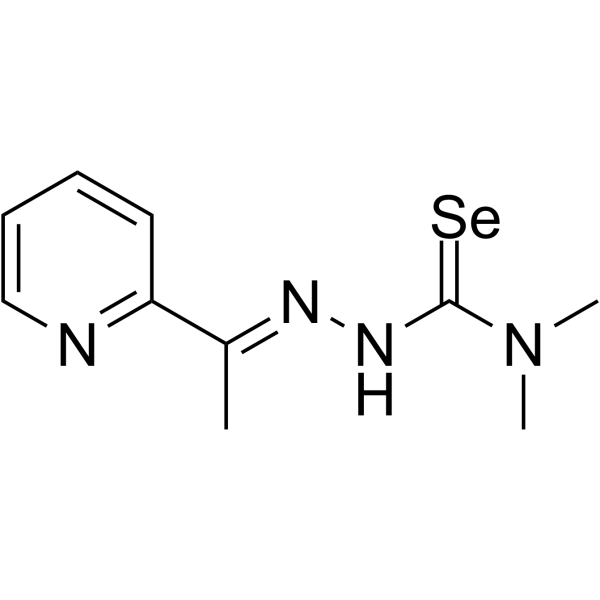
Cat. No.: HY-115832
CAS No.: 79514-49-1
Target:  

Transferrin Receptor

Research Areas:  

Cancer

Ap44mSe is a selenosemicarbazone that effectively depletes cellular Fe, resulting in transferrin receptor-1 up-regulation, ferritin down-regulation, and increased expression of the potent metastasis suppressor, N-myc downstream regulated gene-1. Ap44mSe forms redox active Cu complexes that target the lysosome to induce lysosomal membrane permeabilization .
loading...
    loading...
Cat. No.: HY-180370
CAS No.: 765890-91-3
Synonyms: NitroSynapsin; YQW-036; NMI-6979
Nitromemantine (NitroSynapsin) is a nitrate derivative of Memantine (HY-B0591) and is a dual-functional NMDAR antagonist. Nitromemantine exhibits significant efficacy in rodent models of cerebral infarction through a dual mechanism of blocking channels and regulating receptors via NO/redox regulation. Nitromemantine can target ischemic neurons under hypoxic conditions and enhance its activity. Nitromemantine inhibits the current induced by NMDA, with its IC50 being 2.4 μM. Nitromemantine can be used for the study of cerebral ischemic stroke .
loading...
    loading...

