10 Results for "

Rocaglates

" in MedChemExpress (MCE) Product Catalog:
Products (10)

10 Results for "Rocaglates" in MCE Product Catalog:

12
12 Publications Verification
Cat. No.: HY-136453
CAS No.: 1352914-52-3
Purity:  98.38%
Research Areas:  

Cancer

CR-1-31-B is a synthetic rocaglate and a potent eIF4A inhibitor. CR-1-31-B exhibits powerful inhibitory effects over eIF4A by perturbing the interaction between eIF4A and RNA, sequentially impeding initiation during protein synthesis. CR-1-31-B perturbs association of Plasmodium falciparum eIF4A (PfeIF4A) with RNA. CR-1-31-B induces apoptosis of neuroblastoma and gallbladder cancer cells .
1
1 Cited Publications
Cat. No.: HY-P4406
CAS No.: 100307-95-7
Target:  

Fluorescent Dye

Research Areas:  

Others

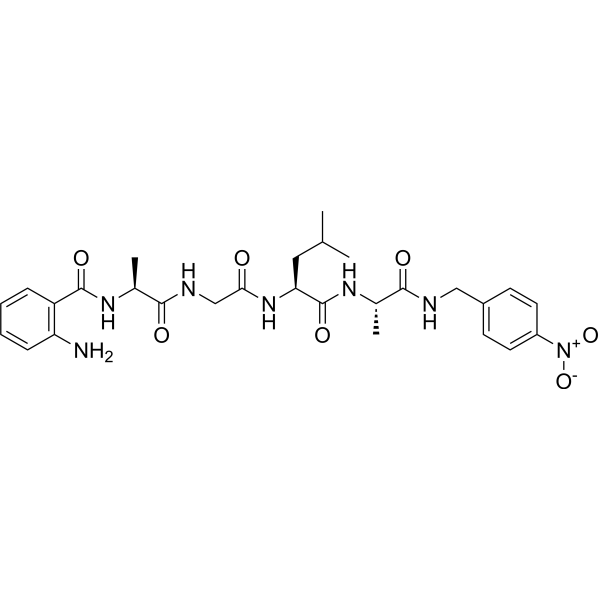
Abz-AGLA-Nba is a fluorogenic substrate for the determination of protease activity. Abz-AGLA-Nba is hydrolyzed to release aminoacyl benzimide (Abz-AGLA) and 2-naphthylaminoacyl (Nba). The product Abz-AGLA produced by this hydrolysis reaction is fluorescent under ultraviolet light and can emit a fluorescent signal .
Cat. No.: HY-148448
CAS No.: 1402931-65-0
Purity:  99.81%
Research Areas:  

Cancer

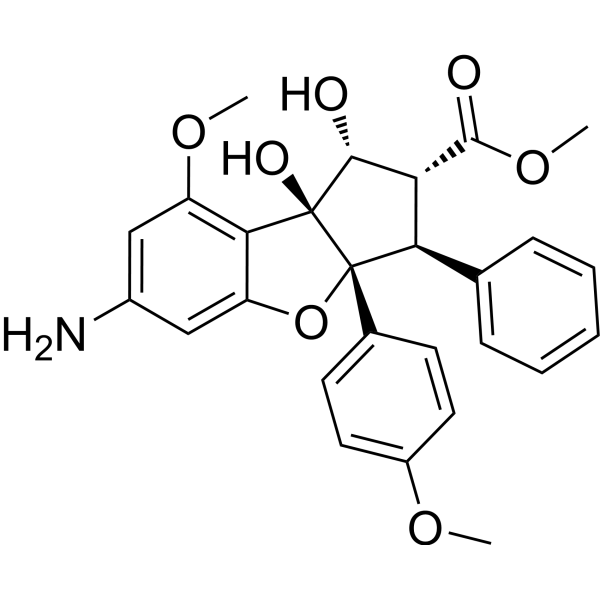
eIF4A3-IN-9 is a Rocaglate analog. eIF4A3-IN-9 interferes with the assembly of the eIF4F translation complex, with EC50 values of 40 nM and > 2000 nM against myc-LUC and tub-LUC, respectively. eIF4A3-IN-9 can be used for the research of tumor pathogenesis .
Cat. No.: HY-148443
CAS No.: 1402931-71-8
Purity:  99.71%
Research Areas:  

Cancer

eIF4A3-IN-9 is a Rocaglate analog. eIF4A3-IN-9 interferes with the assembly of the eIF4F translation complex, with EC50 values of 29 and 450 nM against myc-LUC and tub-LUC, respectively. eIF4A3-IN-9 can be used for the research of tumor pathogenesis .
Cat. No.: HY-P4406A
Target:  

Fluorescent Dye

Research Areas:  

Others

Abz-AGLA-Nba TFA is a fluorogenic substrate for the determination of protease activity. Abz-AGLA-Nba TFA is hydrolyzed to release aminoacyl benzimide (Abz-AGLA) and 2-naphthylaminoacyl (Nba). The product Abz-AGLA produced by this hydrolysis reaction is fluorescent under ultraviolet light and can emit a fluorescent signal .
Cat. No.: HY-129768
CAS No.: 2368900-33-6
Research Areas:  

Cancer

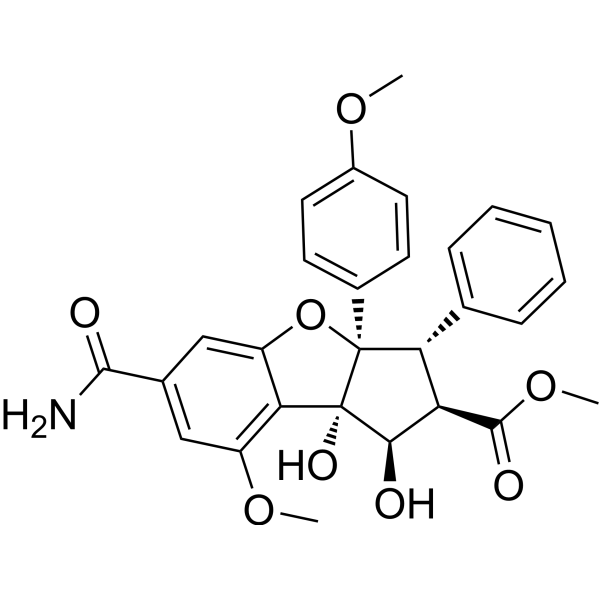
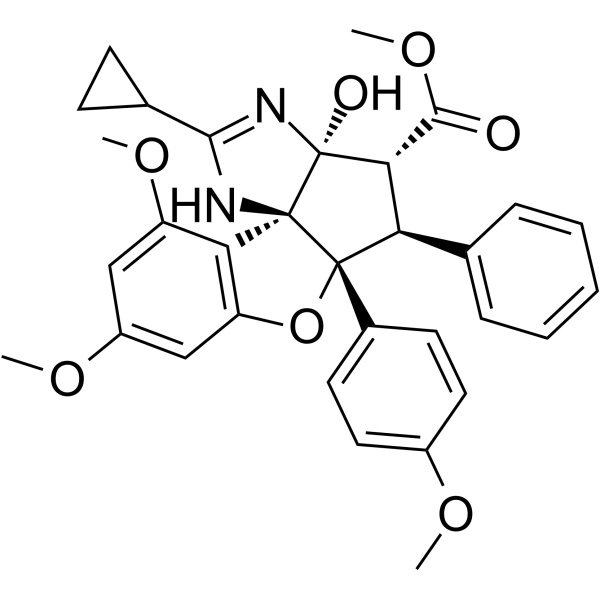
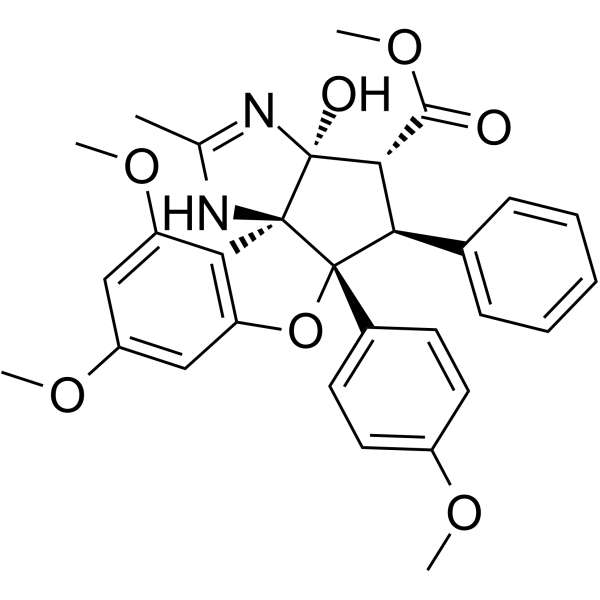
CMLD012072 is an amidino-rocaglates and is a potent eukaryotic initiation factor 4A (eIF4A) inhibitor. CMLD012072 can induce RNA clamping of eIF4A1 and eIF4A2 and possess potent anti-neoplastic activity .
Cat. No.: HY-129767
CAS No.: 2368900-35-8
Research Areas:  

Cancer

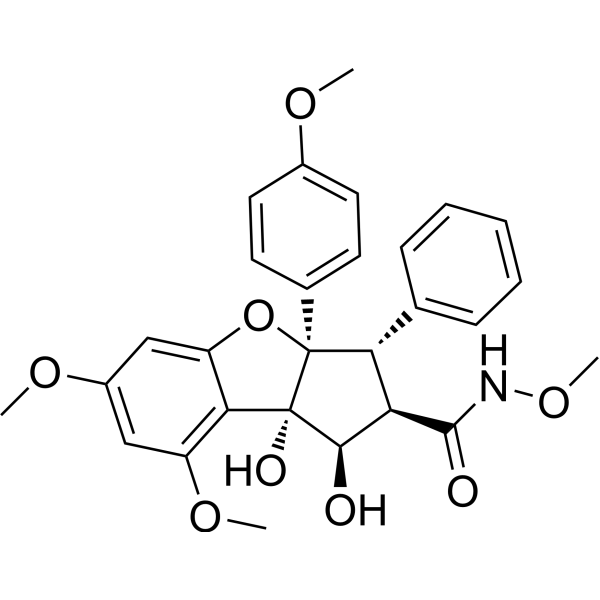
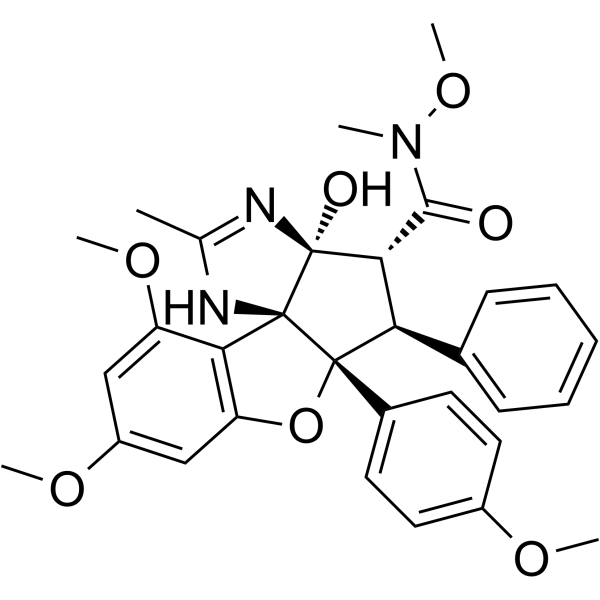
CMLD012612 is an amidino-rocaglate containing a hydroxamate group and is a potent eukaryotic initiation factor 4A (eIF4A) inhibitor. CMLD012612 inhibits cell translation and is cytotoxic to NIH/3T3 cells with an IC50 value of 2 nM. CMLD012612 inhibits eukaryotic translation initiation by modifying the behavior of the RNA helicase (eIF4A) and possesses potent anti-neoplastic activity .
Cat. No.: HY-161946
CAS No.: 3080542-96-4
Research Areas:  

Cancer

GBM CSCs-IN-1 (Compound (−)-20), a derivative of rocaglate, is a potent inhibitor of glioblastoma stem cells (GBM CSCs) with an EC50 of 45 nM, functioning by targeting the RNA helicase DDX3. Furthermore, GBM CSCs-IN-1 is also capable of inducing apoptosis .
Cat. No.: HY-129769
CAS No.: 2368900-32-5
Research Areas:  

Cancer

CMLD012073 is an amidino-rocaglates and is a potent eukaryotic initiation factor 4A (eIF4A) inhibitor. CMLD012073 inhibits the growth of NIH/3T3 cells with an IC50 of 10 nM. CMLD012073 inhibits eukaryotic translation initiation by modifying the behavior of the RNA helicase (eIF4A) .
Cat. No.: HY-173172
CAS No.: 3076503-34-6
Research Areas:  

Cancer

MG-002 is an orally active eIF4A inhibitor. MG-002 non-productively traps the eukaryotic translation initiation factor 4A (eIF4A) onto RNA, hindering the recruitment and scanning of ribosomes, thereby inhibiting mRNA translation. MG-002 selectively inhibits the growth and metastasis formation of triple-negative breast cancer (TNBC) tumors and induces cell apoptosis. MG-002 significantly inhibits the protein expression of c-MYC and cyclin D1. MG-002 can be used for research on TNBC .

