
Search Result
Results for "
SSTRs
" in MedChemExpress (MCE) Product Catalog:
| Cat. No. |
Product Name |
Target |
Research Areas |
Chemical Structure |
-
- HY-106033
-
|
DOTATOC; SDZ-SMT 487; SMT 487
|
Radionuclide-Drug Conjugates (RDCs)
|
Cancer
|
|
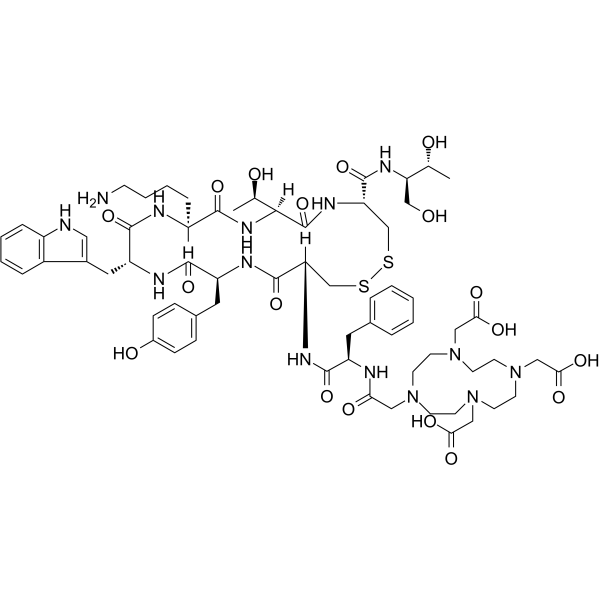
Edotreotide is a ligand that selectively targets SSTR2 and can competitively bind to the receptor. Edotreotide mediates the targeted delivery, while modificated with radionuclides (such as 90Y, 177Lu, and 68Ga) to SSTR-positive tumors and induces tumor cell apoptosis by releasing β rays. Edotreotide has strong tumor targeting and precise killing activity. Edotreotide is used in the synthesis of radionuclide-drug conjugates (RDCs) and is widely used in the field of neuroendocrine tumors (such as metastatic carcinoids, lung and thymus NETs) .
|
-
-
- HY-P5128
-
|
Satoreotide tetraxetan
|
Radionuclide-Drug Conjugates (RDCs)
Somatostatin Receptor
|
Cancer
|
|
DOTA-JR11 is a somatostatin receptor 2 (SSTR2)antagonist. DOTA-JR11 can be labeled by 68Ga, used for paired imaging in neuroendocrine tumors (NETs) research . DOTA-JR11 can be used for the synthesis/research of Radionuclide-Drug Conjugates (RDCs).
|
-
-
- HY-P3954
-
|
|
Somatostatin Receptor
|
Metabolic Disease
|
|
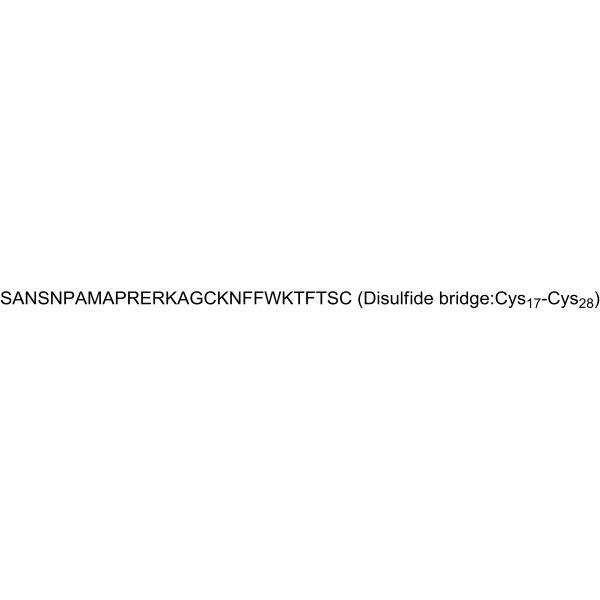
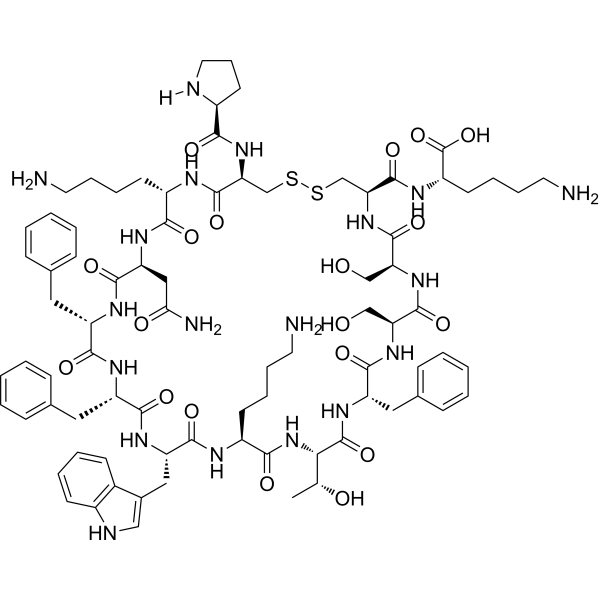
Somatostatin-28 (sheep, human rat mouse) is a biologically active polypeptide, synthesised in the proximal intestinal epithelial cells. Somatostatin-28 (sheep, human rat mouse) suppresses glucose-stimulated insulin secretion without affecting circulating basal insulin concentration. Somatostatin-28 (sheep, human rat mouse) also targets to somatostatin receptor subtype 5 (SSTR5) to regulate GLP-1 secretion .
|
-
-
- HY-P5126
-
|
|
Radionuclide-Drug Conjugates (RDCs)
Somatostatin Receptor
|
Cancer
|
|
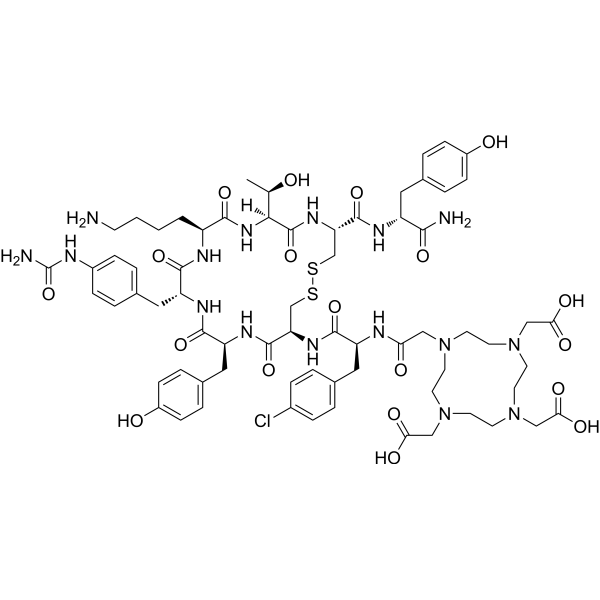
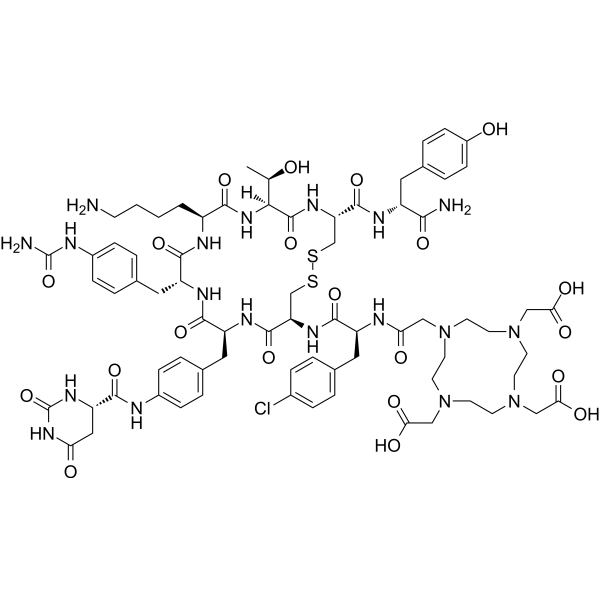
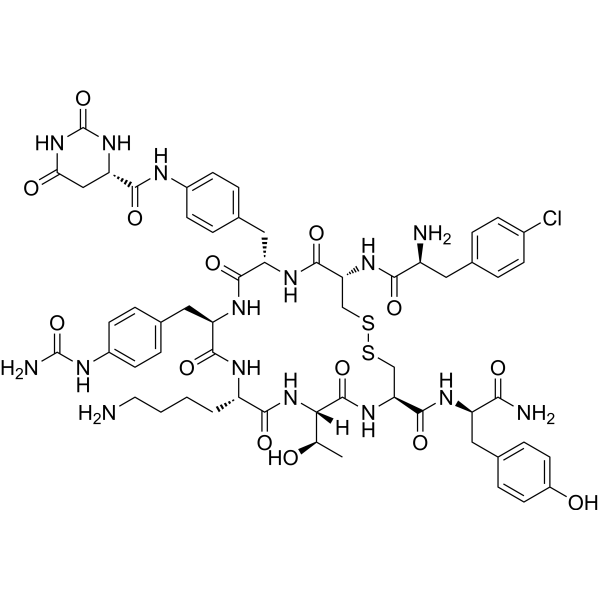
DOTA-LM3 is a somatostatin receptor (SSTR) antagonist. LM3 refers to p-Cl-Phe- cyclo(D-Cys-Tyr-D-4-amino-Phe(carbamoyl)-Lys-Thr-Cys)D-Tyr- NH2, as well as a somatostatin antagonist. DOTA-LM3 is often isotopically labeled for tracing tumors in vivo, such as 177Lu-DOTA-LM3 and 68 Ga-DOTA-LM3. 68 Ga-DOTA-LM3 shows favorable biodistribution, high tumor uptake, good tumor retention, and few safety concerns. 177Lu-DOTA-LM3 can be used for research in DOTATOC-negative liver metastases, such as pancreatic NET and extensive tumor thrombosis . DOTA-LM3 can be used for the synthesis/research of Radionuclide-Drug Conjugates (RDCs).
|
-
-
- HY-P99562
-
|
XmAb-18087
|
CD3
|
Cancer
|
|
Tidutamab (XmAb-18087) is a humanized and affinity-optimized bispecific antibody (bsAb) targeting SSTR2 binding domain and T-cell binding domain (CD3). Tidutamab possesses a full Fc domain to maintain long serum half-life.Tidutamab eliminates SSTR+ tumor cells by stimulating redirected T cellmediated cytotoxicity (RTcC) .
|
-
-
- HY-P5362
-
|
|
Radionuclide-Drug Conjugates (RDCs)
Somatostatin Receptor
|
Neurological Disease
Cancer
|
|
NODAGA-LM3 is a ligand that can cross the blood-brain barrier and targets somatostatin receptor SSTR2 with high affinity (IC50 = 1.3 nM). NODAGA-LM3 does not trigger the internalization of SSTR2 and can inhibit agonist-induced internalization processes. NODAGA-LM3 shows low uptake in normal tissues such as the liver and spleen, but high uptake in the lungs and blood pool. 68Ga-labeled NODAGA-LM3 can serve as a PET imaging agent for well-differentiated neuroendocrine tumors, and is applied in studies related to small cell lung cancer and well-differentiated neuroendocrine tumors .
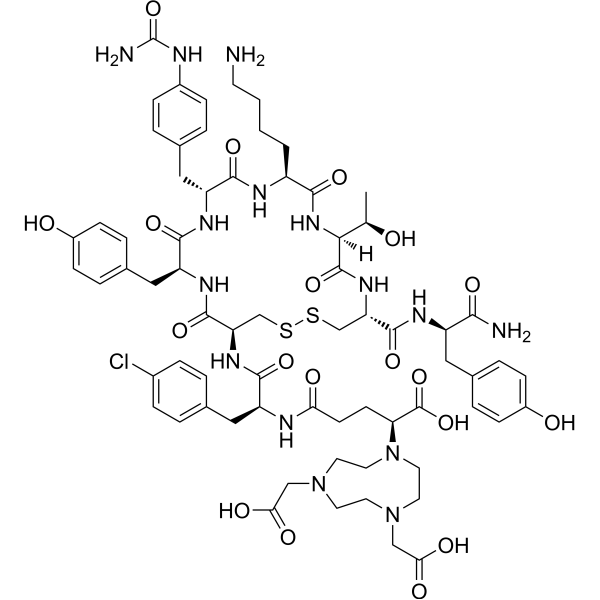
|
-
-
- HY-139347
-
|
LY3556050; CNTX-0290
|
Somatostatin Receptor
|
Neurological Disease
|
|
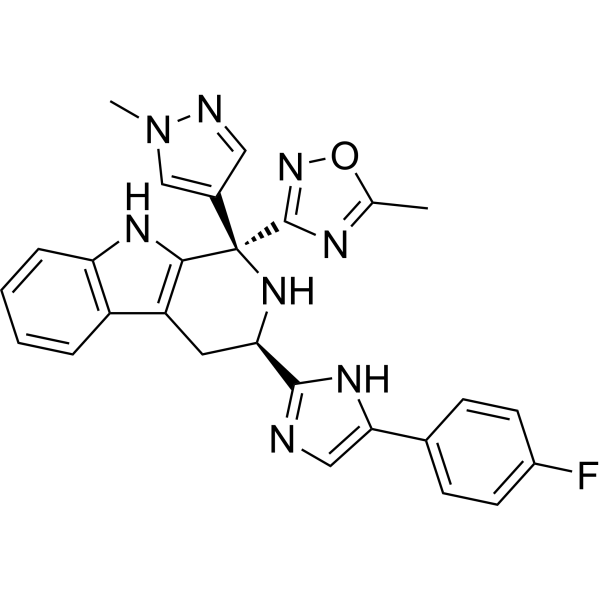
Mazisotine (CNTX-0290) is an orally active, non-opioid somatostatin receptor 4 (SSTR4) agonist with an EC50 of 4.7 nM. Mazisotine exerts significant analgesic effects in various nociceptive (inflammatory, osteoarthritic) and neuropathic pain models. Mazisotine can be used for pain research .
|
-
-
- HY-102037
-
-
-
- HY-P10137
-
-
-
- HY-13466
-
-
-
- HY-P1201
-
|
|
Somatostatin Receptor
|
Cancer
|
|
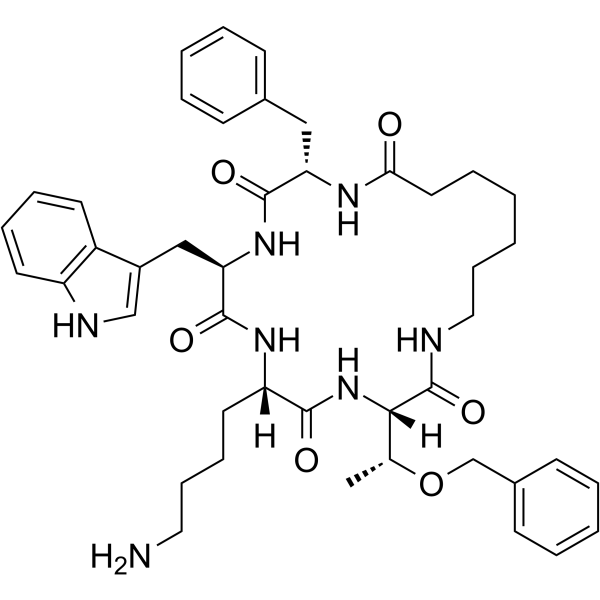
Cyclosomatostatin is a potent somatostatin (SST) receptor antagonist. Cyclosomatostatin can inhibit somatostatin receptor type 1 (SSTR1) signaling and decreases cell proliferation, ALDH+ cell population size and sphere-formation in colorectal cancer (CRC) cells .
|
-
-
- HY-P5126A
-
|
|
Radionuclide-Drug Conjugates (RDCs)
Somatostatin Receptor
|
Cancer
|
|
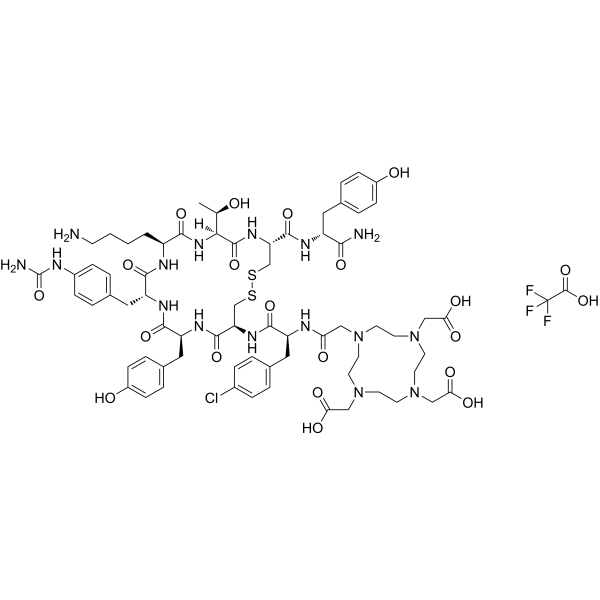
DOTA-LM3 TFA is a somatostatin receptor (SSTR) antagonist. LM3 refers to p-Cl-Phe- cyclo(D-Cys-Tyr-D-4-amino-Phe(carbamoyl)-Lys-Thr-Cys)D-Tyr- NH2, as well as a somatostatin antagonist. DOTA-LM3 TFA is often isotopically labeled for tracing tumors in vivo, such as 177Lu-DOTA-LM3 TFA and 68 Ga-DOTA-LM3 TFA. 68 Ga-DOTA-LM3 TFA shows favorable biodistribution, high tumor uptake, good tumor retention, and few safety concerns. 177Lu-DOTA-LM3 TFA can be used for research in DOTATOC-negative liver metastases, such as pancreatic NET and extensive tumor thrombosis . DOTA-LM3 (TFA) can be used for the synthesis/research of Radionuclide-Drug Conjugates (RDCs).
|
-
-
- HY-105172
-
|
CAP-232; TLN-232
|
Somatostatin Receptor
|
Inflammation/Immunology
Cancer
|
|
TT-232 (CAP-232), a somatostatin derivative, is a peptide SSTR1/SSTR4 agonist. TT-232 inhibits cancer cell proliferation and induces apoptosis. TT-232 is also a broad-spectrum anti-inflammatory and analgesic agent .
|
-
-
- HY-106103
-
-
-
- HY-114191B
-
|
|
Somatostatin Receptor
|
Metabolic Disease
Endocrinology
|
|
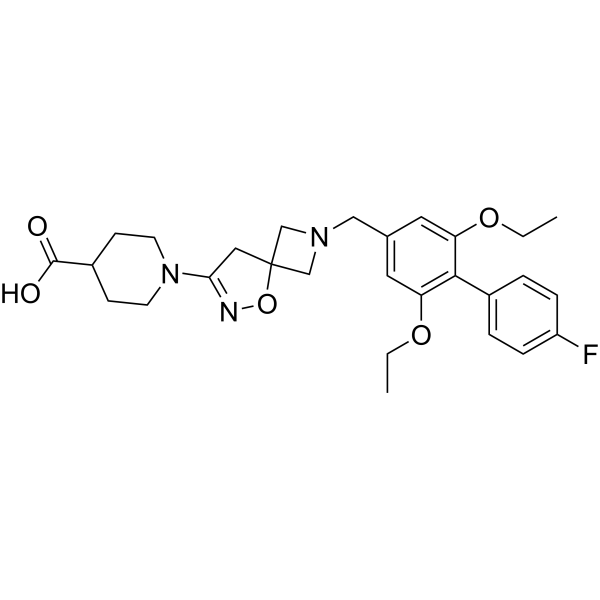
SSTR5 antagonist 2 hydrochloride is a highly potent, oral active and selective somatostatin (receptor) subtype 5 (SSTR5) antagonist and has potential for the research of type 2 diabetes mellitus (T2DM) .
|
-
-
- HY-P1212
-
|
CST-14 (mouse, rat)
|
Somatostatin Receptor
|
Neurological Disease
|
|
Cortistatin 14, mouse, rat (CST-14, human, rat), a neuropeptide with neuronal depressant and sleep modulating properties, can bind to all five cloned somatostatin receptors (SSTRs) and ghrelin receptor to exert its biological activities and co-exists with GABA within the cortex and hippocampus .
|
-
-
- HY-P3124A
-
|
|
Somatostatin Receptor
|
Cancer
|
|
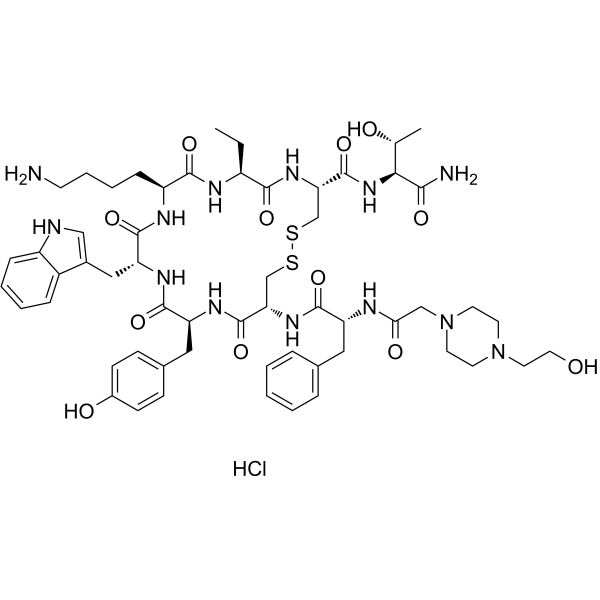
BIM-23190 hydrochloride, a somatostatin analog, a selective SSRT2 and SSRT5 agonist, exhibits Ki values of 0.34 nM and 11.1 nM for SSTR2 and SSTR5, respectively. BIM-23190 can be used in the study for cancer and acromegaly .
|
-
-
- HY-142699
-
|
|
Somatostatin Receptor
|
Inflammation/Immunology
|
|
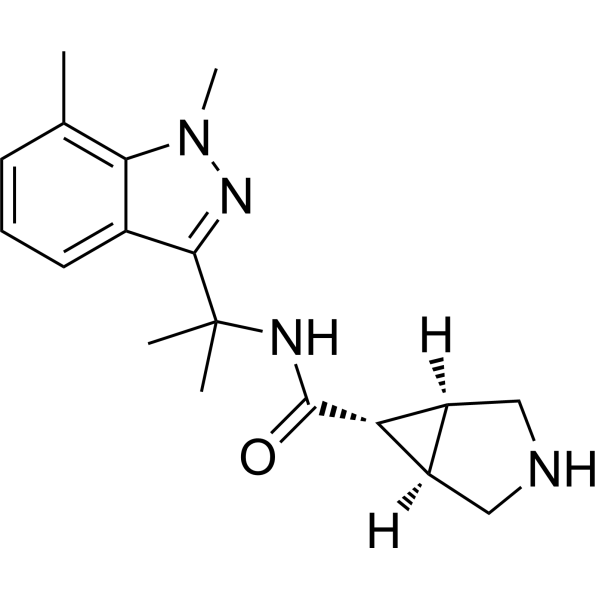
SSTR4 agonist 2 is a potent agonist of somatostatin receptor subtype 4 (SSTR4). SSTR4 pathway inhibits nociceptive and inflammatory processes. SSTR4 agonist 2 has the potential for the research of medical disorders related to SSTR4 (extracted from patent WO2014184275A1, compound 107) .
|
-
-
- HY-163317A
-
|
|
Somatostatin Receptor
|
Cancer
|
|
MMC(TMZ)-TOC TFA has high binding affinity and selectivity for somatostatin receptor subtype-2 (SSTR2). MMC(TMZ)-TOC TFA targets delivery of TMZ to SSTR2-positive tumor cells. MMC(TMZ)-TOC TFA can be used for the research of cancer .
|
-
-
- HY-P10741
-
-
-
- HY-P1139
-
|
PCFWKTCK
|
GHSR
|
Metabolic Disease
|
|
Cortistatin-8 (CST-8; PCFWKTCK), a neuropeptide, is a GHS-R1a antagonist by counteracting the response of ghrelin on gastric acid secretion. Cortistatin-8 can modulate GH release from somatotroph cells. Cortistatin-8 is a synthetic CST-analogue devoid of any binding affinity to SST-R but capable to bind the GHS-R1a. Cortistatin-8 can exert antagonistic effects on ghrelin actions either in vitro or in vivo in animals .
|
-
-
- HY-106103A
-
|
MK 678 acetate; L 36358 acetate
|
Somatostatin Receptor
|
Cardiovascular Disease
Neurological Disease
Metabolic Disease
|
|
Seglitide acetate (MK 678; L 36358 acetate) is a potent, orally active somatostatin receptor 2 (SSTR2) agonist, and also a competitive antagonist of SSTR14, SSTR25, and SSTR28. Seglitide acetate has antihypertensive effects and can inhibit plasma glucagon and growth hormone. Seglitide acetate can be used for research on diabetes .
|
-
-
- HY-142701
-
|
|
Somatostatin Receptor
|
Neurological Disease
|
|
SSTR4 agonist 4 is a potent agonist of SSTR4. SSTR4 is expressed at relatively high levels in the hippocampus and neocortex, memory and learning regions, and Alzheimer's disease pathology. SSTR4 agonists are potent in rodent models of pain associated with acute and chronic associated anti-peripheral nociceptive and anti-inflammatory activity. SSTR4 agonist 4 has the potential for the research of pain (extracted from patent WO2021233428A1, compound 14) .
|
-
-
- HY-P0024A
-
|
DG3173 TFA; PTR-3173 TFA
|
Somatostatin Receptor
|
Endocrinology
Cancer
|
|
Veldoreotide (DG3173) TFA a somatostatin analogue, binds to and activate the somatostatin receptors (SSTR) 2, 4, and 5. Veldoreotide TFA inhibits growth hormone (GH) secretion in adenomas compared with Octreotide (HY-P0036). Veldoreotide has the potential to be used as pain modulating agent
|
-
-
- HY-P3124
-
|
|
Somatostatin Receptor
|
Cancer
|
|
BIM-23190, a somatostatin analog, a selective SSTR2 and SSTR5 agonist, exhibits Ki values of 0.34 nM and 11.1 nM for SSTR2 and SSTR5, respectively. BIM-23190 can be used in the study for cancer and acromegaly .
|
-
-
- HY-177493
-
|
|
Somatostatin Receptor
|
Others
|
|
SSTR3 Agonist-1 (Compound EX 38) is an orally active SSTR3 agonist, with an EC50 of 0.14 nM. SSTR3 Agonist-1 reduces the kidney cystic index. SSTR3 Agonist-1 can be used in the research of autosomal dominant polycystic kidney disease .
|
-
-
- HY-P3618
-
|
|
Somatostatin Receptor
|
Neurological Disease
Inflammation/Immunology
|
|
Cortistatin-29 is a neuropeptide. Cortistatin-29 alleviates neuropathic pain. Cortistatin-29 binds all somatostatin (SS) receptor subtypes with high affinity and shows IC50 values of 2.8 nM, 7.1 nM, 0.2 nM, 3.0 nM, 13.7 nM for SSTR1, SSTR2, SSTR3, SSTR4, SSTR5, respectively. Cortistatin-29 shows anti-fibrotic effects .
|
-
-
- HY-P3294
-
-
-
- HY-P0024
-
|
DG3173; PTR-3173
|
Somatostatin Receptor
|
Endocrinology
Cancer
|
|
Veldoreotide (DG3173) a somatostatin analogue, binds to and activate the somatostatin receptors (SSTR) 2, 4, and 5. Veldoreotide inhibits growth hormone (GH) secretion in adenomas compared withOctreotide (HY-P0036). Veldoreotide has the potential to be used as pain modulating agent
|
-
-
- HY-P2434
-
|
|
Somatostatin Receptor
|
Neurological Disease
Metabolic Disease
Cancer
|
|
AP102 is a dual SSTR2/SSTR5-specific somatostatin analog (SSA). AP102 is a disulfide-bridged octapeptide SSA containing synthetic iodinated amino acids. AP102 binds with subnanomolar affinity to SSTR2 and SSTR5 (IC50: 0.63 and 0.65 nM, respectively). AP102 does not bind to SSTR1 or SSTR3. AP102 can be used for acromegaly and neuroendocrine tumors research .
|
-
-
- HY-177493A
-
|
|
Somatostatin Receptor
|
Metabolic Disease
Endocrinology
|
|
SSTR3 agonist-1 TFA is a potent, orally active, and selective SSTR3 agnoist (EC50 =0.14 nM). SSTR3 agonist-1 TFA binds to SSTR3 receptor to inhibit cAMP activity. SSTR3 agonist-1 TFA decreases kidney weight and kidney cystic index (KCI) in a mouse model of autosomal dominant polycystic kidney disease (ADPKD). SSTR3 agonist-1 TFA can be used for ADPKD research .
|
-
-
- HY-P4555
-
|
|
Somatostatin Receptor
|
Neurological Disease
|
|
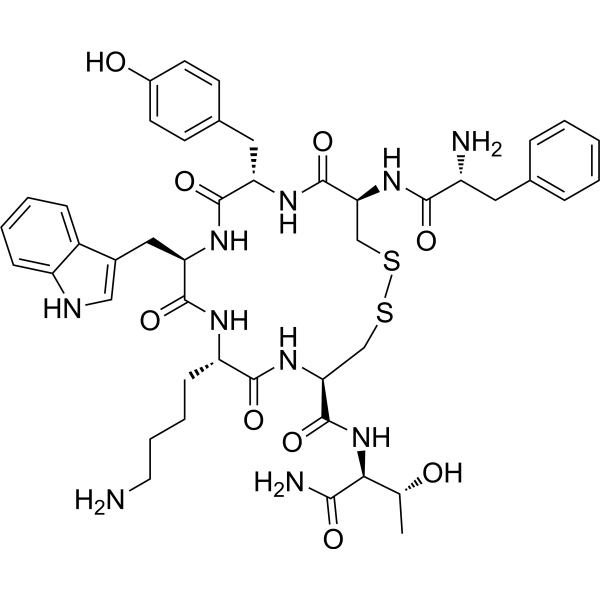
(D-Phe5,Cys6,11,N-Me-D-Trp8)-Somatostatin-14 (5-12) amide (Compound 4) is a somatostatin analog with Kds of 0.61, 11.05, 23.5, 1200 and >1000 nM for SSTR5, SSTR3, SSTR2, SSTR1 and SSTR4, respectively .
|
-
-
- HY-172147
-
|
|
Somatostatin Receptor
|
Neurological Disease
|
|
SSTR4 agonist 5 (Compound 5) is the orally active agonist for somatostatin receptor 4 (SSTR4) with an EC50 of 0.228 nM. SSTR4 agonist 5 exhibits good stability in human/rat liver microsomes. SSTR4 agonist 5 inhibits mechanical hyperalgesia in rat models .
|
-
-
- HY-160176
-
|
|
Somatostatin Receptor
|
Metabolic Disease
|
|
SSTR5 antagonist 6 is an orally active somatostatin receptor subtype 5 (SSTR5) antagonist with an IC50 of 24 nM. SSTR5 antagonist 6 can be used in the study of type 2 diabetes .
|
-
-
- HY-142700
-
|
|
Somatostatin Receptor
|
Neurological Disease
|
|
SSTR4 agonist 3 is a potent agonist of SSTR4. SSTR4 is expressed at relatively high levels in the hippocampus and neocortex, memory and learning regions, and Alzheimer's disease pathology. SSTR4 agonists are potent in rodent models of pain associated with acute and chronic associated anti-peripheral nociceptive and anti-inflammatory activity. SSTR4 agonist 3 has the potential for the research of pain (extracted from patent WO2021233427A1, compound 14) .
|
-
-
- HY-12819
-
-
-
- HY-P2545
-
-
-
- HY-159825
-
-
-
- HY-114133
-
|
|
Radionuclide-Drug Conjugates (RDCs)
Somatostatin Receptor
|
Cancer
|
|
Depreotide is a nove tumor tarcer, can be complexed with technetium-99m ( 99mTc-depreotide) for optimal imaging properties. 99mTc-depreotide somatostain receptor imaging has been playing an important role in medical diagnosis research . Depreotide can be used for the synthesis/research of Radionuclide-Drug Conjugates (RDCs).
|
-
-
- HY-P5362A
-
|
|
Radionuclide-Drug Conjugates (RDCs)
Somatostatin Receptor
|
Cancer
|
|
NODAGA-LM3 TFA is a ligand that can cross the blood-brain barrier and targets somatostatin receptor SSTR2 with high affinity (IC50 = 1.3 nM). NODAGA-LM3 TFA does not trigger the internalization of SSTR2 and can inhibit agonist-induced internalization processes. NODAGA-LM3 TFA shows low uptake in normal tissues such as the liver and spleen, but high uptake in the lungs and blood pool. 68Ga-labeled NODAGA-LM3 TFA can serve as a PET imaging agent for well-differentiated neuroendocrine tumors, and is applied in studies related to small cell lung cancer and well-differentiated neuroendocrine tumors .
|
-
-
- HY-Z15823
-
|
Dexverapamil
|
Calcium Channel
Potassium Channel
Somatostatin Receptor
Arrestin
Apoptosis
P-glycoprotein
|
Metabolic Disease
Inflammation/Immunology
|
|
(R)-Verapamil (Dexverapamil) is an optically enantiomer of the oral-active Verapamil (HY-14275). (R)-Verapamil has a relatively low affinity for L-type calcium channels (Cav1.2) (IC50 > 300 μM), and its IC50 for sodium channels (sodium channel) is 3.19 μM. (R)-Verapamil exhibits SSTR2 agonistic activity, with an EC50 of 1.3 μM. (R)-Verapamil significantly downregulates the expression of TXNIP protein in diabetic mouse models and significantly inhibits β-cell apoptosis (apoptosis), effectively controlling blood sugar. (R)-Verapamil can be used as a PET tracer for the function of P-glycoprotein (P-gp) .
|
-
-
- HY-P2150
-
|
|
Somatostatin Receptor
|
Neurological Disease
Inflammation/Immunology
|
|
Cortistatin-29 is a neuropeptide. Cortistatin-29 alleviates neuropathic pain. Cortistatin-29 binds all somatostatin (SS) receptor subtypes with high affinity and shows IC50 values of 2.8 nM, 7.1 nM, 0.2 nM, 3.0 nM, 13.7 nM for SSTR1, SSTR2, SSTR3, SSTR4, SSTR5, respectively. Cortistatin-29 shows anti-fibrotic effects .
|
-
-
- HY-157303
-
|
|
Somatostatin Receptor
|
Cardiovascular Disease
|
|
SSTR5 antagonist 3 (Compound 23) is an orally active somatostatin receptor subtype 5 (SSTR5) antagonist with low hERG inhibition. SSTR5 antagonist 3 exhibits potency with IC50 values of 2.8 nM and 1.4 nM in human and mouse, respectively. SSTR5 antagonist 3 can be used for the research of anti-gallstone .
|
-
-
- HY-P4100
-
|
|
Somatostatin Receptor
|
Others
|
|
Cyclic SSTR agonist octreotide is a Octreotide (HY-P0036), serving as the cyclic Somatostatin Receptor SSTR agonist .
|
-
-
- HY-163317
-
|
|
Somatostatin Receptor
|
Cancer
|
|
MMC(TMZ)-TOC has high binding affinity and selectivity for somatostatin receptor subtype-2 (SSTR2). MMC(TMZ)-TOC targets delivery of TMZ to SSTR2-positive tumor cells. MMC(TMZ)-TOC can be used for the research of cancer .
|
-
-
- HY-RS13822
-
-
Sstr1 Rat Pre-designed siRNA Set A
-
- HY-RS13830
-
-
Sstr4 Mouse Pre-designed siRNA Set A
-
- HY-RS13820
-
-
SSTR1 Human Pre-designed siRNA Set A
-
- HY-RS13821
-
-
Sstr1 Mouse Pre-designed siRNA Set A
-
- HY-RS13824
-
-
Sstr2 Mouse Pre-designed siRNA Set A
- HY-RS13828
-
-
Sstr3 Rat Pre-designed siRNA Set A
- HY-RS13834
-
-
Sstr5 Rat Pre-designed siRNA Set A
- HY-RS13827
-
-
Sstr3 Mouse Pre-designed siRNA Set A
- HY-RS13826
-
-
SSTR3 Human Pre-designed siRNA Set A
- HY-RS13831
-
-
Sstr4 Rat Pre-designed siRNA Set A
- HY-RS13825
-
-
Sstr2 Rat Pre-designed siRNA Set A
- HY-RS13833
-
-
Sstr5 Mouse Pre-designed siRNA Set A
- HY-RS13832
-
-
SSTR5 Human Pre-designed siRNA Set A
- HY-RS13829
-
-
SSTR4 Human Pre-designed siRNA Set A
- HY-RS13823
-
-
SSTR2 Human Pre-designed siRNA Set A
- HY-114191
-
|
|
Somatostatin Receptor
|
Metabolic Disease
Endocrinology
|
|
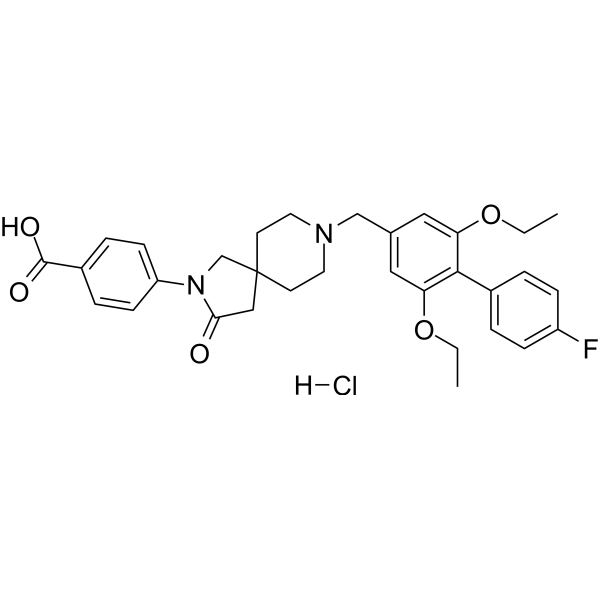
SSTR5 antagonist 2 (compound 10) is a highly potent, oral active and selective somatostatin (receptor) subtype 5 (SSTR5) antagonist and has potential for the research of treat type 2 diabetes mellitus (T2DM) .
|
-
- HY-114191A
-
|
|
Somatostatin Receptor
|
Metabolic Disease
Endocrinology
|
|
SSTR5 Antagonist 1 (compound 10) is a highly potent, oral active and selective somatostatin (receptor) subtype 5 (SSTR5) antagonist and has potential for the research of treat type 2 diabetes mellitus (T2DM) .
|
-
- HY-P1201A
-
|
|
Somatostatin Receptor
|
Cancer
|
|
Cyclosomatostatin TFA is a potent somatostatin (SST) receptor antagonist. Cyclosomatostatin TFA can inhibit somatostatin receptor type 1 (SSTR1) signaling and decreases cell proliferation, ALDH+ cell population size and sphere-formation in colorectal cancer (CRC) cells .
|
-
- HY-139347A
-
|
LY3556050 tartrate; CNTX-0290 tartrate
|
Somatostatin Receptor
|
Neurological Disease
|
|
Mazisotine (CNTX-0290) tartrate is an orally active, non-opioid somatostatin receptor 4 (SSTR4) agonist with an EC50 of 4.7 nM. Mazisotine tartrate exerts significant analgesic effects in various nociceptive (inflammatory, osteoarthritic) and neuropathic pain models. Mazisotine tartrate can be used for pain research .
|
-
- HY-182905
-
|
|
Somatostatin Receptor
G protein-coupled Bile Acid Receptor 1
|
Metabolic Disease
|
|
SSTR5/TGR5-modulator-1 is an orally active and dual-target small molecule, balanced in vitro activity at human TGR5 and human SSTR5. SSTR5/TGR5-modulator-1 activates human TGR5 to promote cAMP accumulation. SSTR5/TGR5-modulator-1 blocks human SSTR5 to inhibit agonist-induced calcium mobilization. SSTR5/TGR5-modulator-1 improves glucose tolerance in mice. SSTR5/TGR5-modulator-1 alleviates gallbladder filling in mice at pharmacologically relevant doses. SSTR5/TGR5-modulator-1 has suboptimal physicochemical and metabolic properties.SSTR5/TGR5-modulator-1 can be used for the research of type 2 diabetes mellitus .
|
-
- HY-P0036D
-
|
|
Drug Derivative
Radionuclide-Drug Conjugates (RDCs)
Somatostatin Receptor
Apoptosis
|
Cancer
|
|
NOTA‑Octreotide is a selective SSTR2‑targeting PET tracer. NOTA‑Octreotide binds specifically to SSTR2 and accumulates in SSTR2‑expressing tissues. NOTA‑Octreotide enables effective imaging of somatostatin receptor‑positive tumors in mice and shows high specific uptake in SSTR2‑expressing organs in healthy rats. NOTA-Octreotide can be used for PET imaging investigation of neuroendocrine tumors. .
|
-
- HY-W1117589
-
-
- HY-183205
-
|
|
Somatostatin Receptor
|
Metabolic Disease
|
|
SSTR5 antagonist 7 (Compound 3p) is an orally active SSTR5 antagonist, with an IC50 of 6.2 nM against hSSTR5 and an IC50 of 25 nM against mouse-derived SSTR5. SSTR5 antagonist 7 exerts a sustained hypoglycemic effect. SSTR5 antagonist 7 can be used for the research of diabetes .
|
-
- HY-P11655
-
|
|
Somatostatin Receptor
|
Neurological Disease
|
|
NOTA-TATE is a somatostatin receptor 2 (SSTR2) binder. NOTA-TATE binds to SSTR2 to enable targeting of SSTR2-positive tumour cells for PET imaging. NOTA-TATE can be used for the research of neuroendocrine tumours .
|
-
- HY-102037R
-
|
|
Reference Standards
Somatostatin Receptor
|
Metabolic Disease
Endocrinology
|
|
SSTR5 antagonist 1 (Standard) is the analytical standard of SSTR5 antagonist 1 (HY-102037). This product is intended for research and analytical applications. SSTR5 antagonist 1 (compound 25a) is a selective and orally available somatostatin receptor subtype 5 (SSTR5) antagonist with IC50s of 9.6 and 57 nM for hSSTR5 and mSSTR5, respectively .
|
-
- HY-160156
-
|
|
Somatostatin Receptor
|
Metabolic Disease
|
|
SSTR5 antagonist 4 (compound 1) is a potent, selective and orally active somatostatin subtype 5 (SSTR5) antagonist (hSSTR5 IC50 = 1.3 nM, mSSTR5 IC50 = 1.0 nM). SSTR5 antagonist 4 shows efficacy in mouse oral glucose tolerance test (OGTT) in high fat diet (HFD)-mice. SSTR5 antagonist 4 can be used for type 2 diabetes research .
|
-
- HY-P11485
-
|
|
Radionuclide-Drug Conjugates (RDCs)
Somatostatin Receptor
PSMA
|
Cancer
|
|
JR11-PEG3-HBED-CC-PSMA-03 (Compound 1) is an RDC-related compound containing the chelating agent HBED-CC, the JR11 peptide (SSTR2 antagonist), and the PSMA ligand. JR11-PEG3-HBED-CC-PSMA-03 shows SSTR2-binding affinities and PSMA-binding affinities, with IC50 s of 59.2 nM, 57.0 nM, respectively. JR11-PEG3-HBED-CC-PSMA-03 can be radiolabeled with [ 68Ga]. [ 68Ga] radiolabeled JR11-PEG3-HBED-CC-PSMA-03 can be used in diagnostic studies of neuroendocrine differentiated prostate cancer .
|
-
- HY-P11488
-
|
|
Radionuclide-Drug Conjugates (RDCs)
Somatostatin Receptor
PSMA
|
Cancer
|
|
JR11-PEG3-DOTA-PSMA-03 (Compound 2) is an RDC-related compound containing the chelating agent DOTA (HY-W053583), the JR11 peptide (SSTR2 antagonist), and the PSMA ligand. JR11-PEG3-DOTA-PSMA-03 shows SSTR2-binding affinities and PSMA-binding affinities, with IC50 s of 94.0 nM, 81.8 nM, respectively. JR11-PEG3-DOTA-PSMA-03 can be radiolabeled with [ 68Ga]. [ 68Ga] radiolabeled JR11-PEG3-DOTA-PSMA-03 can be used in diagnostic studies of neuroendocrine differentiated prostate cancer .
|
-
- HY-106033R
-
|
DOTATOC (Standard); SDZ-SMT 487 (Standard); SMT 487 (Standard)
|
Reference Standards
Radionuclide-Drug Conjugates (RDCs)
|
Cancer
|
|
Edotreotide (Standard) is the analytical standard of Edotreotide (HY-106033). This product is intended for research and analytical applications. Edotreotide is a ligand that selectively targets SSTR2 and can competitively bind to the receptor. Edotreotide mediates the targeted delivery, while modificated with radionuclides (such as 90Y, 177Lu, and 68Ga) to SSTR-positive tumors and induces tumor cell apoptosis by releasing β rays. Edotreotide has strong tumor targeting and precise killing activity. Edotreotide is used in the synthesis of radionuclide-drug conjugates (RDCs) and is widely used in the field of neuroendocrine tumors (such as metastatic carcinoids, lung and thymus NETs) .
|
-
| Cat. No. |
Product Name |
Target |
Research Area |
-
- HY-106033
-
|
DOTATOC; SDZ-SMT 487; SMT 487
|
Radionuclide-Drug Conjugates (RDCs)
|
Cancer
|
|
Edotreotide is a ligand that selectively targets SSTR2 and can competitively bind to the receptor. Edotreotide mediates the targeted delivery, while modificated with radionuclides (such as 90Y, 177Lu, and 68Ga) to SSTR-positive tumors and induces tumor cell apoptosis by releasing β rays. Edotreotide has strong tumor targeting and precise killing activity. Edotreotide is used in the synthesis of radionuclide-drug conjugates (RDCs) and is widely used in the field of neuroendocrine tumors (such as metastatic carcinoids, lung and thymus NETs) .
|
-
- HY-P5128
-
|
Satoreotide tetraxetan
|
Radionuclide-Drug Conjugates (RDCs)
Somatostatin Receptor
|
Cancer
|
|
DOTA-JR11 is a somatostatin receptor 2 (SSTR2)antagonist. DOTA-JR11 can be labeled by 68Ga, used for paired imaging in neuroendocrine tumors (NETs) research . DOTA-JR11 can be used for the synthesis/research of Radionuclide-Drug Conjugates (RDCs).
|
-
- HY-P3954
-
|
|
Somatostatin Receptor
|
Metabolic Disease
|
|
Somatostatin-28 (sheep, human rat mouse) is a biologically active polypeptide, synthesised in the proximal intestinal epithelial cells. Somatostatin-28 (sheep, human rat mouse) suppresses glucose-stimulated insulin secretion without affecting circulating basal insulin concentration. Somatostatin-28 (sheep, human rat mouse) also targets to somatostatin receptor subtype 5 (SSTR5) to regulate GLP-1 secretion .
|
-
- HY-P5126
-
|
|
Radionuclide-Drug Conjugates (RDCs)
Somatostatin Receptor
|
Cancer
|
|
DOTA-LM3 is a somatostatin receptor (SSTR) antagonist. LM3 refers to p-Cl-Phe- cyclo(D-Cys-Tyr-D-4-amino-Phe(carbamoyl)-Lys-Thr-Cys)D-Tyr- NH2, as well as a somatostatin antagonist. DOTA-LM3 is often isotopically labeled for tracing tumors in vivo, such as 177Lu-DOTA-LM3 and 68 Ga-DOTA-LM3. 68 Ga-DOTA-LM3 shows favorable biodistribution, high tumor uptake, good tumor retention, and few safety concerns. 177Lu-DOTA-LM3 can be used for research in DOTATOC-negative liver metastases, such as pancreatic NET and extensive tumor thrombosis . DOTA-LM3 can be used for the synthesis/research of Radionuclide-Drug Conjugates (RDCs).
|
-
- HY-P5362
-
|
|
Radionuclide-Drug Conjugates (RDCs)
Somatostatin Receptor
|
Neurological Disease
Cancer
|
|
NODAGA-LM3 is a ligand that can cross the blood-brain barrier and targets somatostatin receptor SSTR2 with high affinity (IC50 = 1.3 nM). NODAGA-LM3 does not trigger the internalization of SSTR2 and can inhibit agonist-induced internalization processes. NODAGA-LM3 shows low uptake in normal tissues such as the liver and spleen, but high uptake in the lungs and blood pool. 68Ga-labeled NODAGA-LM3 can serve as a PET imaging agent for well-differentiated neuroendocrine tumors, and is applied in studies related to small cell lung cancer and well-differentiated neuroendocrine tumors .
|
-
- HY-P10137
-
-
- HY-P1201
-
|
|
Somatostatin Receptor
|
Cancer
|
|
Cyclosomatostatin is a potent somatostatin (SST) receptor antagonist. Cyclosomatostatin can inhibit somatostatin receptor type 1 (SSTR1) signaling and decreases cell proliferation, ALDH+ cell population size and sphere-formation in colorectal cancer (CRC) cells .
|
-
- HY-P5126A
-
|
|
Radionuclide-Drug Conjugates (RDCs)
Somatostatin Receptor
|
Cancer
|
|
DOTA-LM3 TFA is a somatostatin receptor (SSTR) antagonist. LM3 refers to p-Cl-Phe- cyclo(D-Cys-Tyr-D-4-amino-Phe(carbamoyl)-Lys-Thr-Cys)D-Tyr- NH2, as well as a somatostatin antagonist. DOTA-LM3 TFA is often isotopically labeled for tracing tumors in vivo, such as 177Lu-DOTA-LM3 TFA and 68 Ga-DOTA-LM3 TFA. 68 Ga-DOTA-LM3 TFA shows favorable biodistribution, high tumor uptake, good tumor retention, and few safety concerns. 177Lu-DOTA-LM3 TFA can be used for research in DOTATOC-negative liver metastases, such as pancreatic NET and extensive tumor thrombosis . DOTA-LM3 (TFA) can be used for the synthesis/research of Radionuclide-Drug Conjugates (RDCs).
|
-
- HY-105172
-
|
CAP-232; TLN-232
|
Somatostatin Receptor
|
Inflammation/Immunology
Cancer
|
|
TT-232 (CAP-232), a somatostatin derivative, is a peptide SSTR1/SSTR4 agonist. TT-232 inhibits cancer cell proliferation and induces apoptosis. TT-232 is also a broad-spectrum anti-inflammatory and analgesic agent .
|
-
- HY-106103
-
-
- HY-P1212
-
|
CST-14 (mouse, rat)
|
Somatostatin Receptor
|
Neurological Disease
|
|
Cortistatin 14, mouse, rat (CST-14, human, rat), a neuropeptide with neuronal depressant and sleep modulating properties, can bind to all five cloned somatostatin receptors (SSTRs) and ghrelin receptor to exert its biological activities and co-exists with GABA within the cortex and hippocampus .
|
-
- HY-P3124A
-
|
|
Somatostatin Receptor
|
Cancer
|
|
BIM-23190 hydrochloride, a somatostatin analog, a selective SSRT2 and SSRT5 agonist, exhibits Ki values of 0.34 nM and 11.1 nM for SSTR2 and SSTR5, respectively. BIM-23190 can be used in the study for cancer and acromegaly .
|
-
- HY-P10741
-
-
- HY-P1139
-
|
PCFWKTCK
|
GHSR
|
Metabolic Disease
|
|
Cortistatin-8 (CST-8; PCFWKTCK), a neuropeptide, is a GHS-R1a antagonist by counteracting the response of ghrelin on gastric acid secretion. Cortistatin-8 can modulate GH release from somatotroph cells. Cortistatin-8 is a synthetic CST-analogue devoid of any binding affinity to SST-R but capable to bind the GHS-R1a. Cortistatin-8 can exert antagonistic effects on ghrelin actions either in vitro or in vivo in animals .
|
-
- HY-106103A
-
|
MK 678 acetate; L 36358 acetate
|
Somatostatin Receptor
|
Cardiovascular Disease
Neurological Disease
Metabolic Disease
|
|
Seglitide acetate (MK 678; L 36358 acetate) is a potent, orally active somatostatin receptor 2 (SSTR2) agonist, and also a competitive antagonist of SSTR14, SSTR25, and SSTR28. Seglitide acetate has antihypertensive effects and can inhibit plasma glucagon and growth hormone. Seglitide acetate can be used for research on diabetes .
|
-
- HY-P0024A
-
|
DG3173 TFA; PTR-3173 TFA
|
Somatostatin Receptor
|
Endocrinology
Cancer
|
|
Veldoreotide (DG3173) TFA a somatostatin analogue, binds to and activate the somatostatin receptors (SSTR) 2, 4, and 5. Veldoreotide TFA inhibits growth hormone (GH) secretion in adenomas compared with Octreotide (HY-P0036). Veldoreotide has the potential to be used as pain modulating agent
|
-
- HY-P3124
-
|
|
Somatostatin Receptor
|
Cancer
|
|
BIM-23190, a somatostatin analog, a selective SSTR2 and SSTR5 agonist, exhibits Ki values of 0.34 nM and 11.1 nM for SSTR2 and SSTR5, respectively. BIM-23190 can be used in the study for cancer and acromegaly .
|
-
- HY-P3618
-
|
|
Somatostatin Receptor
|
Neurological Disease
Inflammation/Immunology
|
|
Cortistatin-29 is a neuropeptide. Cortistatin-29 alleviates neuropathic pain. Cortistatin-29 binds all somatostatin (SS) receptor subtypes with high affinity and shows IC50 values of 2.8 nM, 7.1 nM, 0.2 nM, 3.0 nM, 13.7 nM for SSTR1, SSTR2, SSTR3, SSTR4, SSTR5, respectively. Cortistatin-29 shows anti-fibrotic effects .
|
-
- HY-P3294
-
-
- HY-P0024
-
|
DG3173; PTR-3173
|
Somatostatin Receptor
|
Endocrinology
Cancer
|
|
Veldoreotide (DG3173) a somatostatin analogue, binds to and activate the somatostatin receptors (SSTR) 2, 4, and 5. Veldoreotide inhibits growth hormone (GH) secretion in adenomas compared withOctreotide (HY-P0036). Veldoreotide has the potential to be used as pain modulating agent
|
-
- HY-P2434
-
|
|
Somatostatin Receptor
|
Neurological Disease
Metabolic Disease
Cancer
|
|
AP102 is a dual SSTR2/SSTR5-specific somatostatin analog (SSA). AP102 is a disulfide-bridged octapeptide SSA containing synthetic iodinated amino acids. AP102 binds with subnanomolar affinity to SSTR2 and SSTR5 (IC50: 0.63 and 0.65 nM, respectively). AP102 does not bind to SSTR1 or SSTR3. AP102 can be used for acromegaly and neuroendocrine tumors research .
|
-
- HY-P4555
-
|
|
Somatostatin Receptor
|
Neurological Disease
|
|
(D-Phe5,Cys6,11,N-Me-D-Trp8)-Somatostatin-14 (5-12) amide (Compound 4) is a somatostatin analog with Kds of 0.61, 11.05, 23.5, 1200 and >1000 nM for SSTR5, SSTR3, SSTR2, SSTR1 and SSTR4, respectively .
|
-
- HY-P2545
-
-
- HY-114133
-
|
|
Radionuclide-Drug Conjugates (RDCs)
Somatostatin Receptor
|
Cancer
|
|
Depreotide is a nove tumor tarcer, can be complexed with technetium-99m ( 99mTc-depreotide) for optimal imaging properties. 99mTc-depreotide somatostain receptor imaging has been playing an important role in medical diagnosis research . Depreotide can be used for the synthesis/research of Radionuclide-Drug Conjugates (RDCs).
|
-
- HY-P5362A
-
|
|
Radionuclide-Drug Conjugates (RDCs)
Somatostatin Receptor
|
Cancer
|
|
NODAGA-LM3 TFA is a ligand that can cross the blood-brain barrier and targets somatostatin receptor SSTR2 with high affinity (IC50 = 1.3 nM). NODAGA-LM3 TFA does not trigger the internalization of SSTR2 and can inhibit agonist-induced internalization processes. NODAGA-LM3 TFA shows low uptake in normal tissues such as the liver and spleen, but high uptake in the lungs and blood pool. 68Ga-labeled NODAGA-LM3 TFA can serve as a PET imaging agent for well-differentiated neuroendocrine tumors, and is applied in studies related to small cell lung cancer and well-differentiated neuroendocrine tumors .
|
-
- HY-P2150
-
|
|
Somatostatin Receptor
|
Neurological Disease
Inflammation/Immunology
|
|
Cortistatin-29 is a neuropeptide. Cortistatin-29 alleviates neuropathic pain. Cortistatin-29 binds all somatostatin (SS) receptor subtypes with high affinity and shows IC50 values of 2.8 nM, 7.1 nM, 0.2 nM, 3.0 nM, 13.7 nM for SSTR1, SSTR2, SSTR3, SSTR4, SSTR5, respectively. Cortistatin-29 shows anti-fibrotic effects .
|
-
- HY-P4100
-
|
|
Somatostatin Receptor
|
Others
|
|
Cyclic SSTR agonist octreotide is a Octreotide (HY-P0036), serving as the cyclic Somatostatin Receptor SSTR agonist .
|
-
- HY-P1201A
-
|
|
Somatostatin Receptor
|
Cancer
|
|
Cyclosomatostatin TFA is a potent somatostatin (SST) receptor antagonist. Cyclosomatostatin TFA can inhibit somatostatin receptor type 1 (SSTR1) signaling and decreases cell proliferation, ALDH+ cell population size and sphere-formation in colorectal cancer (CRC) cells .
|
-
- HY-P0036D
-
|
|
Drug Derivative
Radionuclide-Drug Conjugates (RDCs)
Somatostatin Receptor
Apoptosis
|
Cancer
|
|
NOTA‑Octreotide is a selective SSTR2‑targeting PET tracer. NOTA‑Octreotide binds specifically to SSTR2 and accumulates in SSTR2‑expressing tissues. NOTA‑Octreotide enables effective imaging of somatostatin receptor‑positive tumors in mice and shows high specific uptake in SSTR2‑expressing organs in healthy rats. NOTA-Octreotide can be used for PET imaging investigation of neuroendocrine tumors. .
|
-
- HY-P11655
-
|
|
Somatostatin Receptor
|
Neurological Disease
|
|
NOTA-TATE is a somatostatin receptor 2 (SSTR2) binder. NOTA-TATE binds to SSTR2 to enable targeting of SSTR2-positive tumour cells for PET imaging. NOTA-TATE can be used for the research of neuroendocrine tumours .
|
-
- HY-P11485
-
|
|
Radionuclide-Drug Conjugates (RDCs)
Somatostatin Receptor
PSMA
|
Cancer
|
|
JR11-PEG3-HBED-CC-PSMA-03 (Compound 1) is an RDC-related compound containing the chelating agent HBED-CC, the JR11 peptide (SSTR2 antagonist), and the PSMA ligand. JR11-PEG3-HBED-CC-PSMA-03 shows SSTR2-binding affinities and PSMA-binding affinities, with IC50 s of 59.2 nM, 57.0 nM, respectively. JR11-PEG3-HBED-CC-PSMA-03 can be radiolabeled with [ 68Ga]. [ 68Ga] radiolabeled JR11-PEG3-HBED-CC-PSMA-03 can be used in diagnostic studies of neuroendocrine differentiated prostate cancer .
|
-
- HY-P11488
-
|
|
Radionuclide-Drug Conjugates (RDCs)
Somatostatin Receptor
PSMA
|
Cancer
|
|
JR11-PEG3-DOTA-PSMA-03 (Compound 2) is an RDC-related compound containing the chelating agent DOTA (HY-W053583), the JR11 peptide (SSTR2 antagonist), and the PSMA ligand. JR11-PEG3-DOTA-PSMA-03 shows SSTR2-binding affinities and PSMA-binding affinities, with IC50 s of 94.0 nM, 81.8 nM, respectively. JR11-PEG3-DOTA-PSMA-03 can be radiolabeled with [ 68Ga]. [ 68Ga] radiolabeled JR11-PEG3-DOTA-PSMA-03 can be used in diagnostic studies of neuroendocrine differentiated prostate cancer .
|
-
- HY-106033R
-
|
DOTATOC (Standard); SDZ-SMT 487 (Standard); SMT 487 (Standard)
|
Reference Standards
Radionuclide-Drug Conjugates (RDCs)
|
Cancer
|
|
Edotreotide (Standard) is the analytical standard of Edotreotide (HY-106033). This product is intended for research and analytical applications. Edotreotide is a ligand that selectively targets SSTR2 and can competitively bind to the receptor. Edotreotide mediates the targeted delivery, while modificated with radionuclides (such as 90Y, 177Lu, and 68Ga) to SSTR-positive tumors and induces tumor cell apoptosis by releasing β rays. Edotreotide has strong tumor targeting and precise killing activity. Edotreotide is used in the synthesis of radionuclide-drug conjugates (RDCs) and is widely used in the field of neuroendocrine tumors (such as metastatic carcinoids, lung and thymus NETs) .
|
| Cat. No. |
Product Name |
Target |
Research Area |
Image |
-
- HY-P99562
-
|
XmAb-18087
|
CD3
|
Cancer
|
|
Tidutamab (XmAb-18087) is a humanized and affinity-optimized bispecific antibody (bsAb) targeting SSTR2 binding domain and T-cell binding domain (CD3). Tidutamab possesses a full Fc domain to maintain long serum half-life.Tidutamab eliminates SSTR+ tumor cells by stimulating redirected T cellmediated cytotoxicity (RTcC) .
|
-
(5)
| Cat. No. |
Product Name |
|
Classification |
-
- HY-RS13822
-
|
|
|
siRNAs
Rat Pre-designed siRNA Sets
|
|
Sstr1 Rat Pre-designed siRNA Set A contains three designed siRNAs for Sstr1 gene (Rat), as well as a negative control, a positive control, and a FAM-labeled negative control.
|
-
- HY-RS13830
-
|
|
|
siRNAs
Mouse Pre-designed siRNA Sets
|
|
Sstr4 Mouse Pre-designed siRNA Set A contains three designed siRNAs for Sstr4 gene (Mouse), as well as a negative control, a positive control, and a FAM-labeled negative control.
|
-
- HY-RS13820
-
|
|
|
siRNAs
Human Pre-designed siRNA Sets
|
|
SSTR1 Human Pre-designed siRNA Set A contains three designed siRNAs for SSTR1 gene (Human), as well as a negative control, a positive control, and a FAM-labeled negative control.
|
-
- HY-RS13821
-
|
|
|
siRNAs
Mouse Pre-designed siRNA Sets
|
|
Sstr1 Mouse Pre-designed siRNA Set A contains three designed siRNAs for Sstr1 gene (Mouse), as well as a negative control, a positive control, and a FAM-labeled negative control.
|
-
- HY-RS13824
-
|
|
|
siRNAs
Mouse Pre-designed siRNA Sets
|
|
Sstr2 Mouse Pre-designed siRNA Set A contains three designed siRNAs for Sstr2 gene (Mouse), as well as a negative control, a positive control, and a FAM-labeled negative control.
|
-
- HY-RS13828
-
|
|
|
siRNAs
Rat Pre-designed siRNA Sets
|
|
Sstr3 Rat Pre-designed siRNA Set A contains three designed siRNAs for Sstr3 gene (Rat), as well as a negative control, a positive control, and a FAM-labeled negative control.
|
-
- HY-RS13834
-
|
|
|
siRNAs
Rat Pre-designed siRNA Sets
|
|
Sstr5 Rat Pre-designed siRNA Set A contains three designed siRNAs for Sstr5 gene (Rat), as well as a negative control, a positive control, and a FAM-labeled negative control.
|
-
- HY-RS13827
-
|
|
|
siRNAs
Mouse Pre-designed siRNA Sets
|
|
Sstr3 Mouse Pre-designed siRNA Set A contains three designed siRNAs for Sstr3 gene (Mouse), as well as a negative control, a positive control, and a FAM-labeled negative control.
|
-
- HY-RS13826
-
|
|
|
siRNAs
Human Pre-designed siRNA Sets
|
|
SSTR3 Human Pre-designed siRNA Set A contains three designed siRNAs for SSTR3 gene (Human), as well as a negative control, a positive control, and a FAM-labeled negative control.
|
-
- HY-RS13831
-
|
|
|
siRNAs
Rat Pre-designed siRNA Sets
|
|
Sstr4 Rat Pre-designed siRNA Set A contains three designed siRNAs for Sstr4 gene (Rat), as well as a negative control, a positive control, and a FAM-labeled negative control.
|
-
- HY-RS13825
-
|
|
|
siRNAs
Rat Pre-designed siRNA Sets
|
|
Sstr2 Rat Pre-designed siRNA Set A contains three designed siRNAs for Sstr2 gene (Rat), as well as a negative control, a positive control, and a FAM-labeled negative control.
|
-
- HY-RS13833
-
|
|
|
siRNAs
Mouse Pre-designed siRNA Sets
|
|
Sstr5 Mouse Pre-designed siRNA Set A contains three designed siRNAs for Sstr5 gene (Mouse), as well as a negative control, a positive control, and a FAM-labeled negative control.
|
-
- HY-RS13832
-
|
|
|
siRNAs
Human Pre-designed siRNA Sets
|
|
SSTR5 Human Pre-designed siRNA Set A contains three designed siRNAs for SSTR5 gene (Human), as well as a negative control, a positive control, and a FAM-labeled negative control.
|
-
- HY-RS13829
-
|
|
|
siRNAs
Human Pre-designed siRNA Sets
|
|
SSTR4 Human Pre-designed siRNA Set A contains three designed siRNAs for SSTR4 gene (Human), as well as a negative control, a positive control, and a FAM-labeled negative control.
|
-
- HY-RS13823
-
|
|
|
siRNAs
Human Pre-designed siRNA Sets
|
|
SSTR2 Human Pre-designed siRNA Set A contains three designed siRNAs for SSTR2 gene (Human), as well as a negative control, a positive control, and a FAM-labeled negative control.
|
Your information is safe with us. * Required Fields.
Inquiry Information
- Product Name:
- Cat. No.:
- Quantity:
- MCE Japan Authorized Agent:

