
Search Result
Results for "
Skin conditioning
" in MedChemExpress (MCE) Product Catalog:
10
Biochemical Assay Reagents
3
Isotope-Labeled Compounds
| Cat. No. |
Product Name |
Target |
Research Areas |
Chemical Structure |
-
- HY-N0543
-
-
-
- HY-101180
-
|
Ceramide 2
|
Phosphatase
Mitochondrial Metabolism
Apoptosis
Autophagy
|
Metabolic Disease
Endocrinology
|
|
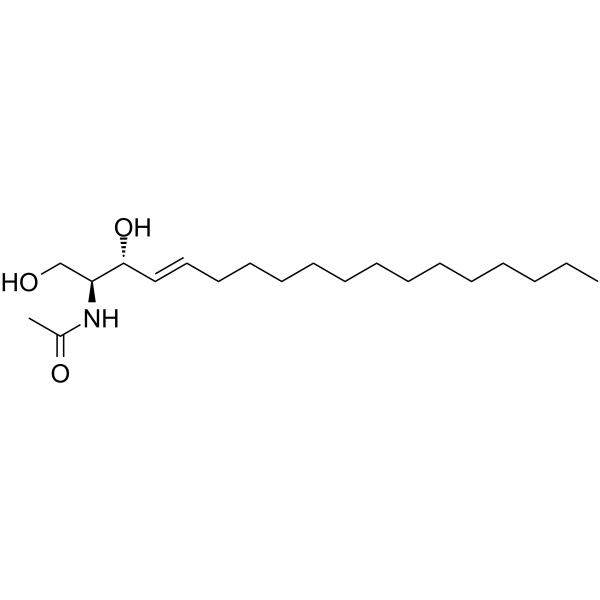
C2 Ceramide (Ceramide 2) is the main lipid of the stratum corneum and a protein phosphatase 1 (PP1) activator. C2 Ceramide activates PP2A and ceramide-activated protein phosphatase (CAPP). C2 Ceramide induces cells differentiation, autophagy and apoptosis, inhibits mitochondrial respiratory chain complex III. C2 Ceramide is also a skin conditioning agent that protects the epidermal barrier from water loss .
|
-
-
- HY-126573
-
-
-
- HY-B1024
-
|
DL-Pantothenol; DL-Pantothenyl alcohol
|
Biochemical Assay Reagents
|
Inflammation/Immunology
|
|
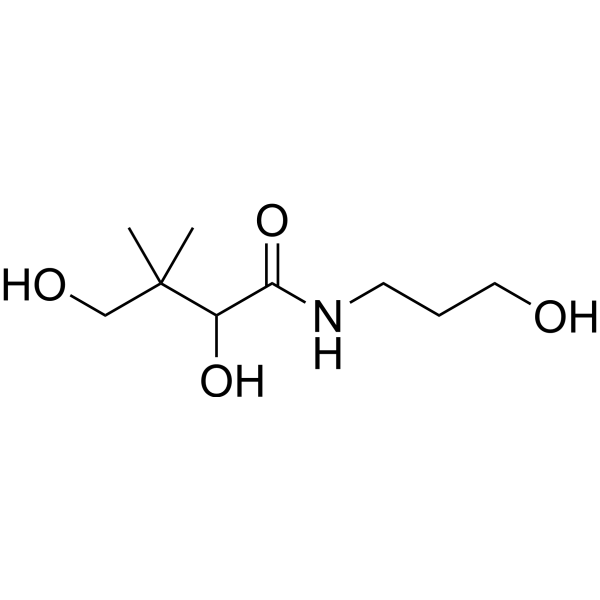
DL-Panthenol (DL-Pantothenol) is a precursor of pantothenic acid. DL-Panthenol easily penetrates the skin and has effects of deep moisturizing, promoting wound healing and anti-inflammation. DL-Panthenol can also be used as a hair conditioner in cosmetics. DL-Panthenol has low acute toxicity, non-sensitizing property, and no significant genotoxicity or reproductive and developmental toxicity. DL-Panthenol can be applied to the research of cosmetics .
|
-
-
- HY-N0543S
-
|
5-Ureidohydantoin-13C2,15N4
|
Imidazoline Receptor
Endogenous Metabolite
|
Cancer
|
|
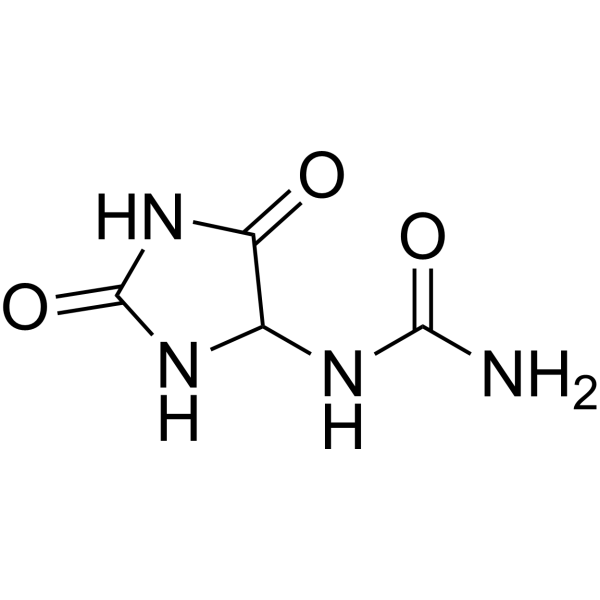
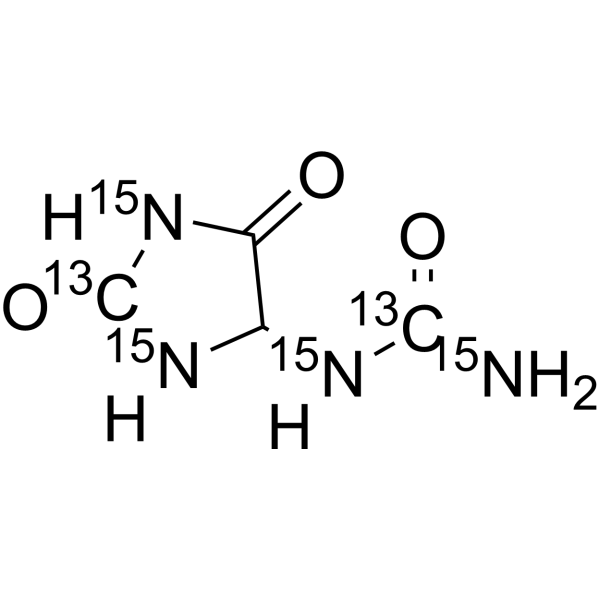
Allantoin- 13C2, 15N4 is the 13C and 15N labeled Allantoin . Allantoin is a skin conditioning agent that promotes healthy skin, stimulates new and healthy tissue growth .
|
-
-
- HY-N7055
-
|
Trierucoylglycerol
|
Drug Derivative
|
Metabolic Disease
|
|
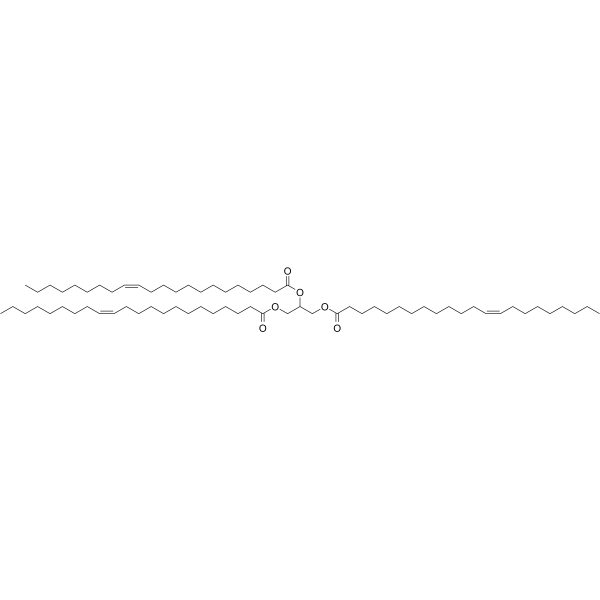
Trierucin (Trierucoylglycerol) is a triester formed by glycerol and erucic acid, which serves as an occlusive skin conditioning agent and non-aqueous thickener in cosmetics. Long-term feeding of Trierucin to rats induces chronic toxicities such as cardiac lipid deposition and fibrosis .
|
-
-
- HY-W127534
-
|
Trihexanoin
|
Biochemical Assay Reagents
|
Others
|
|
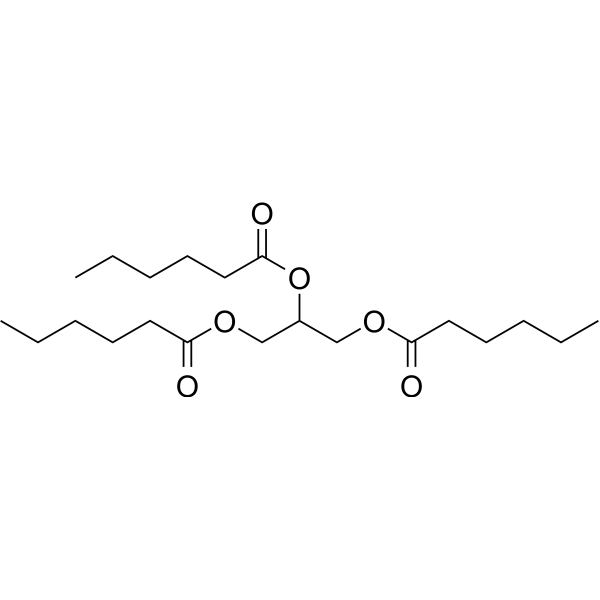
TricaproinIt is an organic compound belonging to the class of triacylglycerols. It consists of three molecules of caproic acid esterified to the glycerin backbone, with a mild fatty smell. TricaproinIt has a variety of applications in the cosmetic and personal care industries, especially as an emollient and conditioning agent in skin and hair care products. Additionally, it is used as a lubricant and surfactant in industrial settings.
|
-
-
- HY-W010807
-
|
|
Environmental Pollutants
Biochemical Assay Reagents
|
Others
|
|
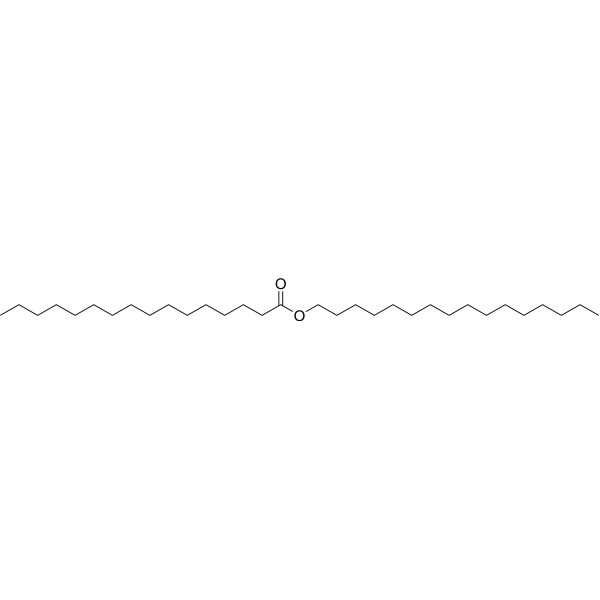
Hexadecyl palmitate is an organic compound commonly used in the cosmetic industry as an emollient, thickener and skin conditioning agent. Cetyl palmitate is derived from a mixture of cetyl alcohol (a fatty alcohol) and palmitic acid (a saturated fatty acid). It is often used in skin care products such as moisturizers, lotions, and creams to improve their texture and Helps them glide smoothly on the skin. In addition to its use in cosmetics, cetyl palmitate is used in other industries including pharmaceuticals, food additives and lubricants. Overall, it's considered safe for use in personal care products, but like any other ingredient, it may cause irritation or an allergic reaction in some people.
|
-
-
- HY-B0704S
-
|
Nonanedioic acid-d14
|
Endogenous Metabolite
|
Others
|
|
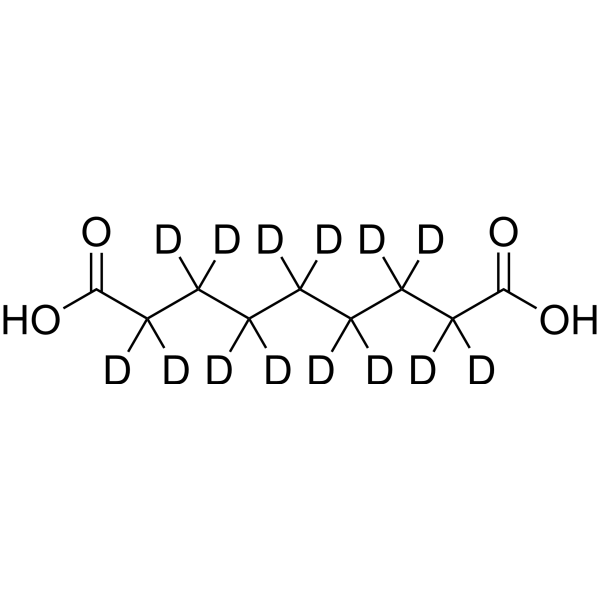
Azelaic acid-d14 is the deuterium labeled Azelaic acid . Azelaic acid is an organic compound produced by the ozonolysis of oleic acid;component of a number of hair and skin conditioners .
|
-
-
- HY-N0543R
-
-
-
- HY-N2086R
-
|
Ethyl hexadecanoate (Standard)
|
Reference Standards
Others
|
Others
|
|
Ethyl palmitate (Standard) is the analytical standard of Ethyl palmitate. This product is intended for research and analytical applications. Ethyl palmitate, a fatty acid ethyl ester (FAEE), shows a marked preference for the synthesis of ethyl palmitate and ethyl oleate over other FAEEs in human subjects after ethanol consumption. Ethyl palmitate is used as a hair- and skin-conditioning agent .
|
-
-
- HY-N2086S
-
|
Ethyl hexadecanoate-d31
|
Isotope-Labeled Compounds
|
Others
|
|
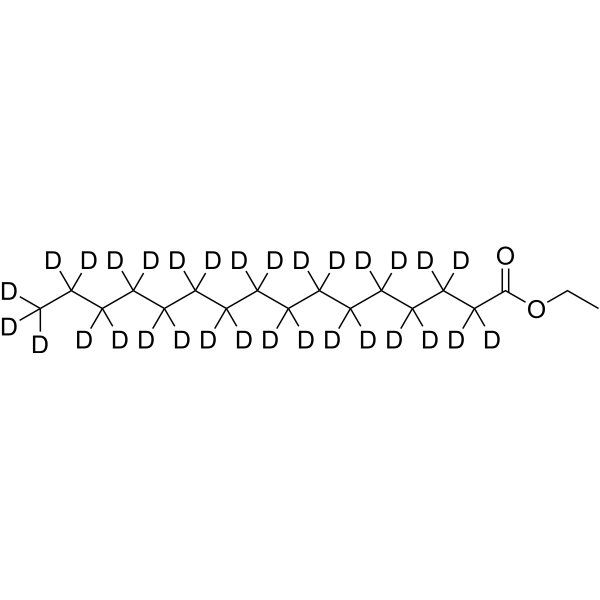
Ethyl palmitate-d31 is the deuterium labeled Ethyl palmitate. Ethyl palmitate, a fatty acid ethyl ester (FAEE), shows a marked preference for the synthesis of ethyl palmitate and ethyl oleate over other FAEEs in human subjects after ethanol consumption. Ethyl palmitate is used as a hair- and skin-conditioning agent .
|
-
-
- HY-W127465
-
|
|
Biochemical Assay Reagents
|
Others
|
|
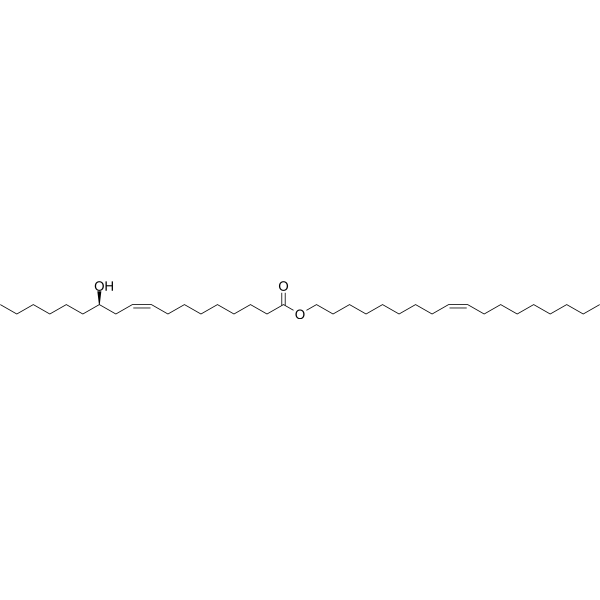
Oleyl RicinoleateIt is an organic compound belonging to esters. It is formed from the reaction between oleyl alcohol and ricinoleic acid and has a mild fatty odor. Oleyl RicinoleateIt has a variety of applications in the cosmetic and personal care industries, especially as an emollient and conditioning agent in skin and hair care products. Additionally, it is used as a lubricant and plasticizer in industrial settings.
|
-
-
- HY-W250194
-
|
|
Biochemical Assay Reagents
|
Others
|
|
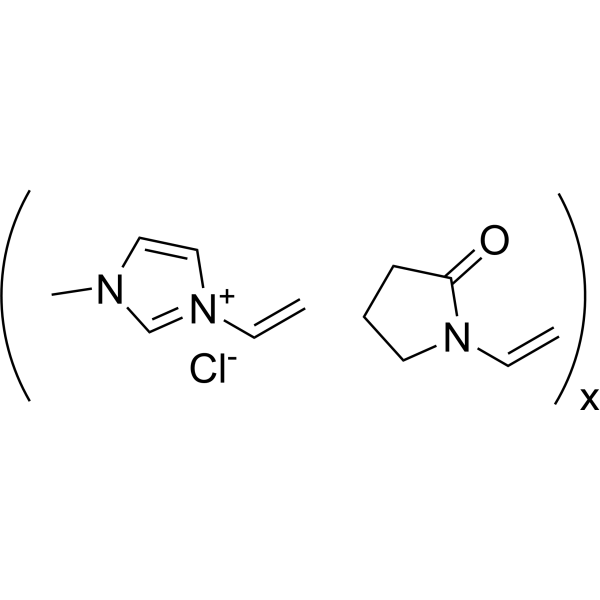
Luviquat FC 550 is a cationic polymer commonly used in a variety of personal care and cosmetics. It is a viscous liquid containing quaternary ammonium groups which give it a positive charge. Luviquat FC 550 has a variety of properties suitable for these applications including its ability to provide conditioning, antistatic and film-forming properties to hair and skin. In addition, it is used as a binder in oral care products and as a flocculant in industrial water treatment.
|
-
-
- HY-165190
-
|
|
Biochemical Assay Reagents
|
Others
|
|
Tristearyl citrate is a triester of stearyl alcohol and citric acid that can function as a skin-conditioning agent-occlusive in cosmetic formulations, is assessed as safe in present practices of use and concentration in cosmetics, and is allowed as an indirect food additive.Tristearyl citrate can be used for the research of cosmetic formulation development .
|
-
-
- HY-W127377
-
|
|
Biochemical Assay Reagents
|
Others
|
|
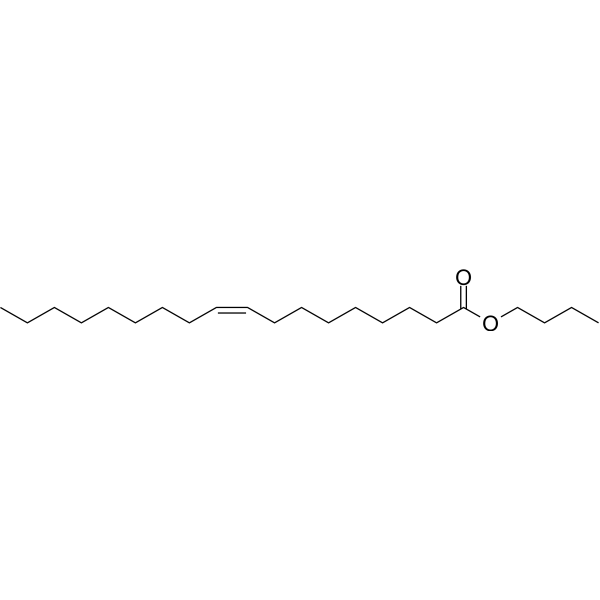
Butyl oleateIt is an organic compound belonging to esters. It is formed from the reaction of butanol and oleic acid and has a mild fruity smell. Butyl oleateIt has a variety of applications in the cosmetic and personal care industries, especially as an emollient and conditioning agent in skin and hair care products. Additionally, it is used as a lubricant and solvent in industrial settings.
|
-
-
- HY-W127437
-
|
Octadecanoic acid, octadecyl ester
|
Biochemical Assay Reagents
|
Others
|
|
Stearyl StearateIt is an organic compound belonging to esters. It is formed from the reaction between stearyl alcohol and stearic acid and has a mild fatty odor. Stearyl stearate has several applications in the cosmetic and personal care industries, especially as an emollient and conditioning agent in skin and hair care products. Additionally, it is used as a lubricant and surfactant in industrial settings.
|
-
-
- HY-133847
-
|
Laurylamidopropyldimethylamine oxide
|
Endogenous Metabolite
|
Others
|
|
LAPAO (Laurylamidopropyldimethylamine oxide) is an amphoteric surfactant with good biocompatibility and surface activity. LAPAO can be used as a detergent and foam enhancer for personal care and household cleaning products. LAPAO is stable at different pH values and can effectively remove dirt and grease. LAPAO also has a conditioning effect and is suitable for use in skin care and hair care products .
|
-
-
- HY-177151
-
|
|
Drug Derivative
|
Others
|
|
Allantoin glycyrrhetinic acid is a complex formed by Allantoin (HY-N0543) and Glycyrrhetinic acid. Allantoin glycyrrhetinic acid is a skin-conditioning agent that can be added to cosmetic products, including shaving creams, skin cleansing products, moisturizers, and night creams, etc .
|
-
-
- HY-177150
-
|
|
Drug Derivative
|
Others
|
|
Allantoin galacturonic acid is a complex formed by Allantoin (HY-N0543) and Galacturonic acid. Allantoin galacturonic acid is a skin-conditioning agent and can be used in cosmetics-related research .
|
-
-
- HY-W127549
-
|
cis-6-Octadecenoic acid
|
Biochemical Assay Reagents
|
Others
|
|
Petroselinic acid sodium is an organic compound belonging to the class of carboxylic acids. Petroselinic acid sodium has several applications in the cosmetic and personal care industries, especially as an emulsifier and conditioning agent in skin and hair care products. In addition, it has potential utility in inhibiting inflammation-related diseases and cancer.
|
-
-
- HY-W010807R
-
|
|
Biochemical Assay Reagents
Reference Standards
|
Others
|
|
Hexadecyl palmitate (Standard) is the analytical standard of Hexadecyl palmitate. This product is intended for research and analytical applications. Hexadecyl palmitate is an organic compound commonly used in the cosmetic industry as an emollient, thickener and skin conditioning agent. Cetyl palmitate is derived from a mixture of cetyl alcohol (a fatty alcohol) and palmitic acid (a saturated fatty acid). It is often used in skin care products such as moisturizers, lotions, and creams to improve their texture and Helps them glide smoothly on the skin. In addition to its use in cosmetics, cetyl palmitate is used in other industries including pharmaceuticals, food additives and lubricants. Overall, it's considered safe for use in personal care products, but like any other ingredient, it may cause irritation or an allergic reaction in some people.
|
-
-
- HY-177149
-
|
|
Drug Derivative
|
Neurological Disease
|
|
Allantoin ascorbate is a complexe of Allantoin (HY-N0543). Allantoin is a skin conditioning agent that promotes healthy skin, stimulates new and healthy tissue growth. Allantoin enhances cognitive functions by the mediation of PI3K-Akt-GSK-3β signal pathway. Allantoin ascorbate is slao a skin conditioning agent .
|
-
-
- HY-170977
-
|
|
JAK
STAT
|
Inflammation/Immunology
|
|
JAK1/STAT3-IN-1 (compound 4f) is an anti-AD (atopic dermatitis) agent by inhibiting JAK1/STAT3 signaling pathway. JAK1/STAT3-IN-1 inhibits NO generation with an IC50 of 2.17 μM. JAK1/STAT3-IN-1 improves the skin condition of AD-like mice, reduces inflammatory infiltration, inhibits the expressions of p-JAK1/JAK1 and p-STAT3/STAT3, and mitigates the excessive immune response on Calcipotriol (HY-10001) (MC903)-induced AD-like mice .
|
-
-
- HY-179893
-
-
-
- HY-N18642
-
|
|
Bacterial
|
Infection
Inflammation/Immunology
|
|
Soapnut extract is a natural nonionic surfactant that can be used as a skin conditioning agent. It possesses strong detergency, antibacterial, non-polluting, and skin-softening properties. Soapnut extract also exhibits anti-inflammatory, antioxidant, free radical scavenging, and anticoagulant effects.
|
-
-
- HY-177152
-
|
|
Drug Derivative
|
Others
|
|
Allantoin biotin is a complex formed by Allantoin (HY-N0543) and Biotin (HY-B0511). Allantoin biotin is a skin-conditioning agent and can be used in cosmetics-related research .
|
-
-
- HY-N18670
-
|
|
Others
|
Others
|
|
Panax notoginseng extract is derived from the stems and leaves of Panax notoginseng, a plant belonging to the Araliaceae family. Its main active ingredient is notoginsenoside (PNS), among which notoginsenoside Rb1, notoginsenoside Rg1, and notoginsenoside R1 are present in high amounts and can be used for skin conditioning in functional cosmetics.
|
-
-
- HY-W127534R
-
|
Trihexanoin (Standard)
|
Biochemical Assay Reagents
Reference Standards
|
Others
|
|
Tricaproin (Standard) is the analytical standard of Tricaproin. This product is intended for research and analytical applications. TricaproinIt is an organic compound belonging to the class of triacylglycerols. It consists of three molecules of caproic acid esterified to the glycerin backbone, with a mild fatty smell. TricaproinIt has a variety of applications in the cosmetic and personal care industries, especially as an emollient and conditioning agent in skin and hair care products. Additionally, it is used as a lubricant and surfactant in industrial settings.
|
-
| Cat. No. |
Product Name |
Type |
-
- HY-B1024
-
|
DL-Pantothenol; DL-Pantothenyl alcohol
|
Biochemical Assay Reagents
|
|
DL-Panthenol (DL-Pantothenol) is a precursor of pantothenic acid. DL-Panthenol easily penetrates the skin and has effects of deep moisturizing, promoting wound healing and anti-inflammation. DL-Panthenol can also be used as a hair conditioner in cosmetics. DL-Panthenol has low acute toxicity, non-sensitizing property, and no significant genotoxicity or reproductive and developmental toxicity. DL-Panthenol can be applied to the research of cosmetics .
|
-
- HY-W127534
-
|
Trihexanoin
|
Biochemical Assay Reagents
|
|
TricaproinIt is an organic compound belonging to the class of triacylglycerols. It consists of three molecules of caproic acid esterified to the glycerin backbone, with a mild fatty smell. TricaproinIt has a variety of applications in the cosmetic and personal care industries, especially as an emollient and conditioning agent in skin and hair care products. Additionally, it is used as a lubricant and surfactant in industrial settings.
|
-
- HY-W010807
-
|
|
Biochemical Assay Reagents
|
|
Hexadecyl palmitate is an organic compound commonly used in the cosmetic industry as an emollient, thickener and skin conditioning agent. Cetyl palmitate is derived from a mixture of cetyl alcohol (a fatty alcohol) and palmitic acid (a saturated fatty acid). It is often used in skin care products such as moisturizers, lotions, and creams to improve their texture and Helps them glide smoothly on the skin. In addition to its use in cosmetics, cetyl palmitate is used in other industries including pharmaceuticals, food additives and lubricants. Overall, it's considered safe for use in personal care products, but like any other ingredient, it may cause irritation or an allergic reaction in some people.
|
-
- HY-W127465
-
|
|
Biochemical Assay Reagents
|
|
Oleyl RicinoleateIt is an organic compound belonging to esters. It is formed from the reaction between oleyl alcohol and ricinoleic acid and has a mild fatty odor. Oleyl RicinoleateIt has a variety of applications in the cosmetic and personal care industries, especially as an emollient and conditioning agent in skin and hair care products. Additionally, it is used as a lubricant and plasticizer in industrial settings.
|
-
- HY-W250194
-
|
|
Biochemical Assay Reagents
|
|
Luviquat FC 550 is a cationic polymer commonly used in a variety of personal care and cosmetics. It is a viscous liquid containing quaternary ammonium groups which give it a positive charge. Luviquat FC 550 has a variety of properties suitable for these applications including its ability to provide conditioning, antistatic and film-forming properties to hair and skin. In addition, it is used as a binder in oral care products and as a flocculant in industrial water treatment.
|
-
- HY-W127377
-
|
|
Biochemical Assay Reagents
|
|
Butyl oleateIt is an organic compound belonging to esters. It is formed from the reaction of butanol and oleic acid and has a mild fruity smell. Butyl oleateIt has a variety of applications in the cosmetic and personal care industries, especially as an emollient and conditioning agent in skin and hair care products. Additionally, it is used as a lubricant and solvent in industrial settings.
|
-
- HY-W127437
-
|
Octadecanoic acid, octadecyl ester
|
Biochemical Assay Reagents
|
|
Stearyl StearateIt is an organic compound belonging to esters. It is formed from the reaction between stearyl alcohol and stearic acid and has a mild fatty odor. Stearyl stearate has several applications in the cosmetic and personal care industries, especially as an emollient and conditioning agent in skin and hair care products. Additionally, it is used as a lubricant and surfactant in industrial settings.
|
-
- HY-W127549
-
|
cis-6-Octadecenoic acid
|
Biochemical Assay Reagents
|
|
Petroselinic acid sodium is an organic compound belonging to the class of carboxylic acids. Petroselinic acid sodium has several applications in the cosmetic and personal care industries, especially as an emulsifier and conditioning agent in skin and hair care products. In addition, it has potential utility in inhibiting inflammation-related diseases and cancer.
|
-
- HY-W010807R
-
|
|
Biochemical Assay Reagents
|
|
Hexadecyl palmitate (Standard) is the analytical standard of Hexadecyl palmitate. This product is intended for research and analytical applications. Hexadecyl palmitate is an organic compound commonly used in the cosmetic industry as an emollient, thickener and skin conditioning agent. Cetyl palmitate is derived from a mixture of cetyl alcohol (a fatty alcohol) and palmitic acid (a saturated fatty acid). It is often used in skin care products such as moisturizers, lotions, and creams to improve their texture and Helps them glide smoothly on the skin. In addition to its use in cosmetics, cetyl palmitate is used in other industries including pharmaceuticals, food additives and lubricants. Overall, it's considered safe for use in personal care products, but like any other ingredient, it may cause irritation or an allergic reaction in some people.
|
-
- HY-W127534R
-
|
Trihexanoin (Standard)
|
Biochemical Assay Reagents
|
|
Tricaproin (Standard) is the analytical standard of Tricaproin. This product is intended for research and analytical applications. TricaproinIt is an organic compound belonging to the class of triacylglycerols. It consists of three molecules of caproic acid esterified to the glycerin backbone, with a mild fatty smell. TricaproinIt has a variety of applications in the cosmetic and personal care industries, especially as an emollient and conditioning agent in skin and hair care products. Additionally, it is used as a lubricant and surfactant in industrial settings.
|
| Cat. No. |
Product Name |
Target |
Research Area |
-
- HY-P10266
-
|
|
Peptides
|
Others
|
|
Myristoyl tripeptide-1 is the reaction product of Myristic acid (HY-N2041) and Tripeptide-1. Myristoyl tripeptide-1 is utilized in cosmetics as the conditioning agent of skin .
|
| Cat. No. |
Product Name |
Category |
Target |
Chemical Structure |
-
- HY-N0543
-
-
-
- HY-126573
-
-
-
- HY-N7055
-
-
-
- HY-N0543R
-
-
-
- HY-N2086R
-
-
-
- HY-N18642
-
|
|
Structural Classification
Extract
|
Bacterial
|
|
Soapnut extract is a natural nonionic surfactant that can be used as a skin conditioning agent. It possesses strong detergency, antibacterial, non-polluting, and skin-softening properties. Soapnut extract also exhibits anti-inflammatory, antioxidant, free radical scavenging, and anticoagulant effects.
|
-
-
- HY-N18670
-
|
|
Structural Classification
Extract
|
Others
|
|
Panax notoginseng extract is derived from the stems and leaves of Panax notoginseng, a plant belonging to the Araliaceae family. Its main active ingredient is notoginsenoside (PNS), among which notoginsenoside Rb1, notoginsenoside Rg1, and notoginsenoside R1 are present in high amounts and can be used for skin conditioning in functional cosmetics.
|
-
| Cat. No. |
Product Name |
Chemical Structure |
-
- HY-N0543S
-
|
|
|
Allantoin- 13C2, 15N4 is the 13C and 15N labeled Allantoin . Allantoin is a skin conditioning agent that promotes healthy skin, stimulates new and healthy tissue growth .
|
-
-
- HY-B0704S
-
|
|
|
Azelaic acid-d14 is the deuterium labeled Azelaic acid . Azelaic acid is an organic compound produced by the ozonolysis of oleic acid;component of a number of hair and skin conditioners .
|
-
-
- HY-N2086S
-
|
|
|
Ethyl palmitate-d31 is the deuterium labeled Ethyl palmitate. Ethyl palmitate, a fatty acid ethyl ester (FAEE), shows a marked preference for the synthesis of ethyl palmitate and ethyl oleate over other FAEEs in human subjects after ethanol consumption. Ethyl palmitate is used as a hair- and skin-conditioning agent .
|
-
| Cat. No. |
Product Name |
|
Classification |
-
- HY-126573
-
|
|
|
Fillers
|
|
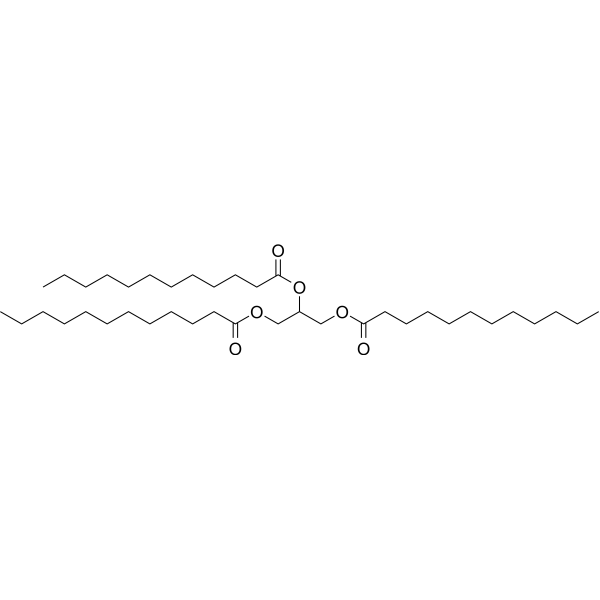
Trilaurin is an orally active triglyceride. Trilaurin inhibits DMBA-induced, croton oil-promoted skin tumor formation in Swiss Webster mice. Trilaurin increases plasma high-density lipoprotein cholesterol and apolipoprotein A-I concentrations. Trilaurin is used as an occlusive skin conditioning agent and/or non-aqueous thickener in cosmetics .
|
-
- HY-W010807
-
|
|
|
Emulsifiers
|
|
Hexadecyl palmitate is an organic compound commonly used in the cosmetic industry as an emollient, thickener and skin conditioning agent. Cetyl palmitate is derived from a mixture of cetyl alcohol (a fatty alcohol) and palmitic acid (a saturated fatty acid). It is often used in skin care products such as moisturizers, lotions, and creams to improve their texture and Helps them glide smoothly on the skin. In addition to its use in cosmetics, cetyl palmitate is used in other industries including pharmaceuticals, food additives and lubricants. Overall, it's considered safe for use in personal care products, but like any other ingredient, it may cause irritation or an allergic reaction in some people.
|
Your information is safe with us. * Required Fields.
Inquiry Information
- Product Name:
- Cat. No.:
- Quantity:
- MCE Japan Authorized Agent:

