



Trilaurin

Based on 1 Customer Validation
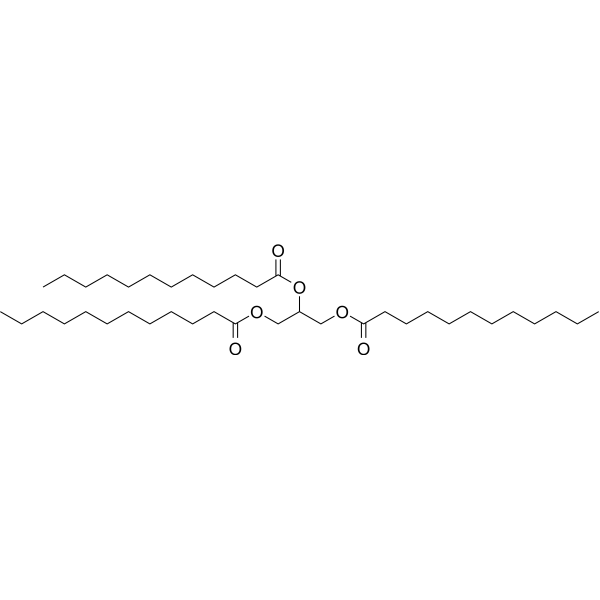
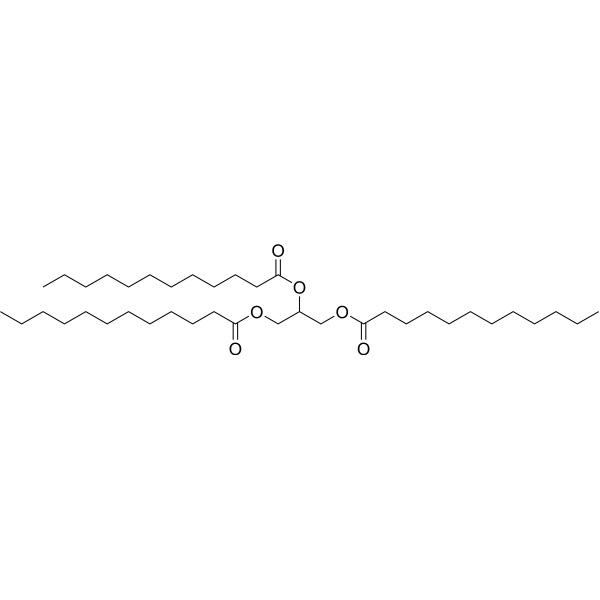
Trilaurin is an orally active triglyceride. Trilaurin inhibits DMBA-induced, croton oil-promoted skin tumor formation in Swiss Webster mice. Trilaurin increases plasma high-density lipoprotein cholesterol and apolipoprotein A-I concentrations. Trilaurin is used as an occlusive skin conditioning agent and/or non-aqueous thickener in cosmetics.
For research use only. We do not sell to patients.
- Purity : 99.78%
- CAS No.: 538-24-9
- Formula: C39H74O6
- Molecular Weight:639.00
-
Storage:Powder -20°C, 3 years , 4°C, 2 years ; In solvent -80°C, 6 months , -20°C, 1 month

To place orders, for customer services and technical support, please contact: MedChemExpress USA
Tel: 609-228-6898 E-mail: [email protected] [email protected]


-
 Biological Activity
-
Chemical Information
-
Solvent & Solubility
- Purity & Documentation
- References
-
 Help & FAQs


-
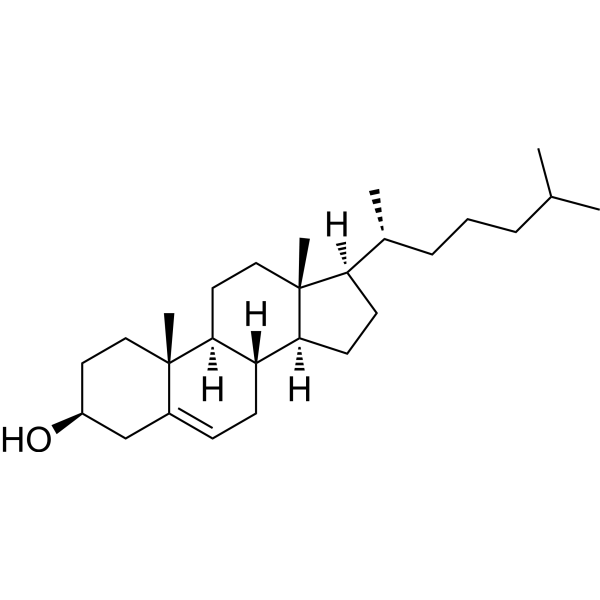
HY-N0322
Cholesterol (from animal)ERRα Agonist -
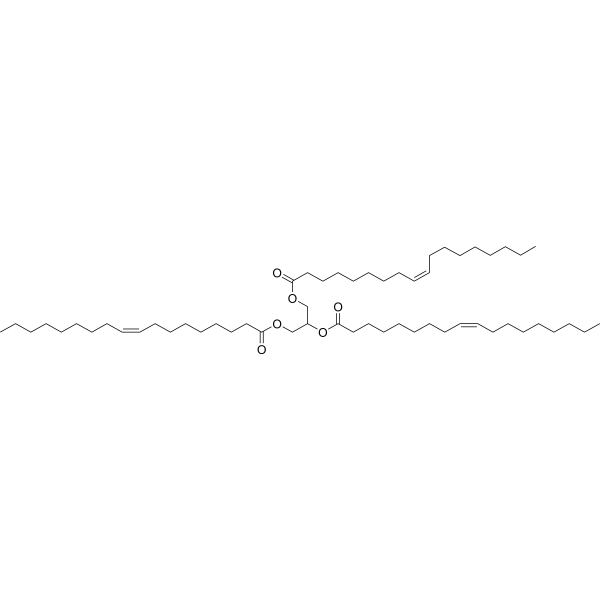
HY-N1981
TrioleinMonoacid Triglyceride -
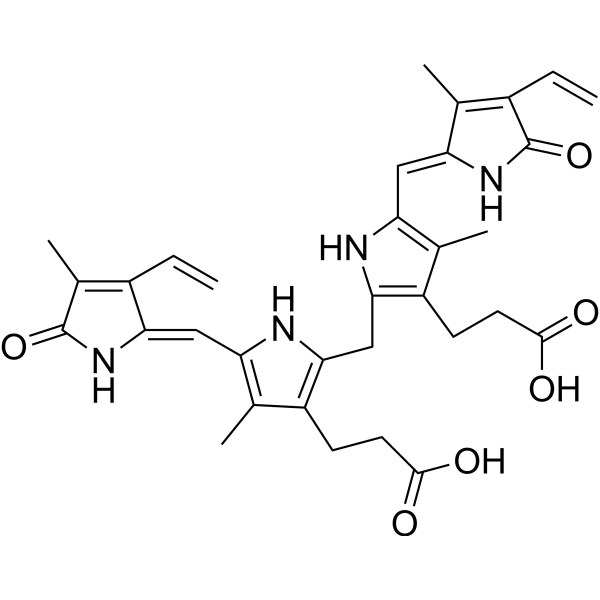
HY-N0323
BilirubinAntioxidant -

HY-P2995
HemoglobinIron-containing Protein -
HY-N2511
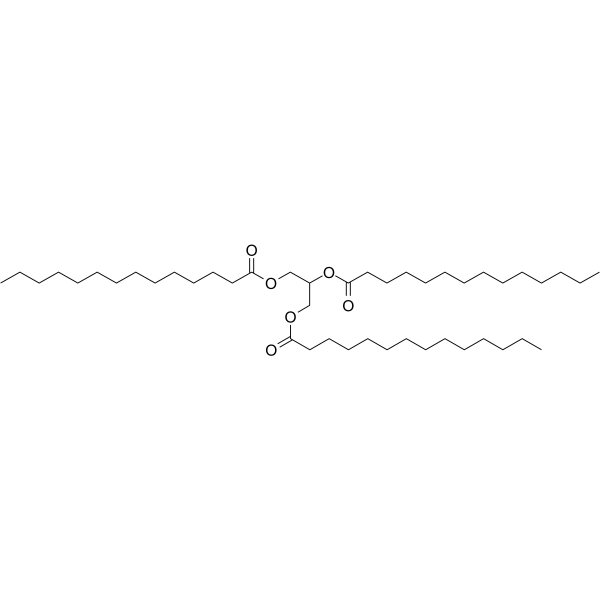
Trimyristinacetylcholinesterase Inhibitor, acid phosphatase Inhibitor, alkaline phosphatase Inhibitor -
HY-B0166
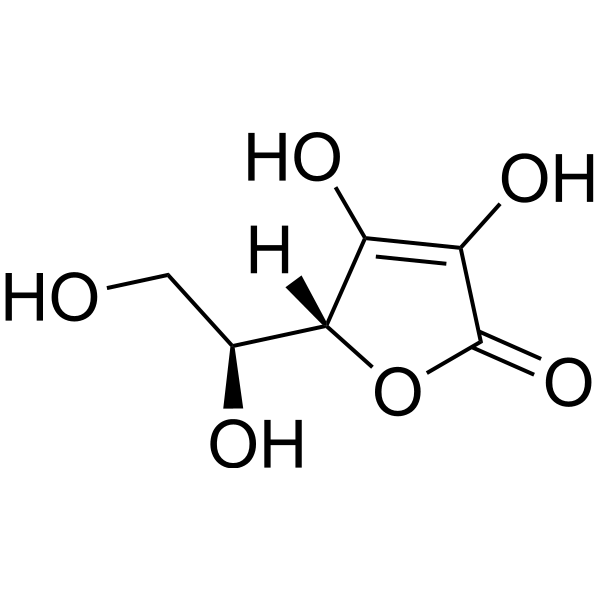
L-Ascorbic acidAntioxidant -
HY-14654
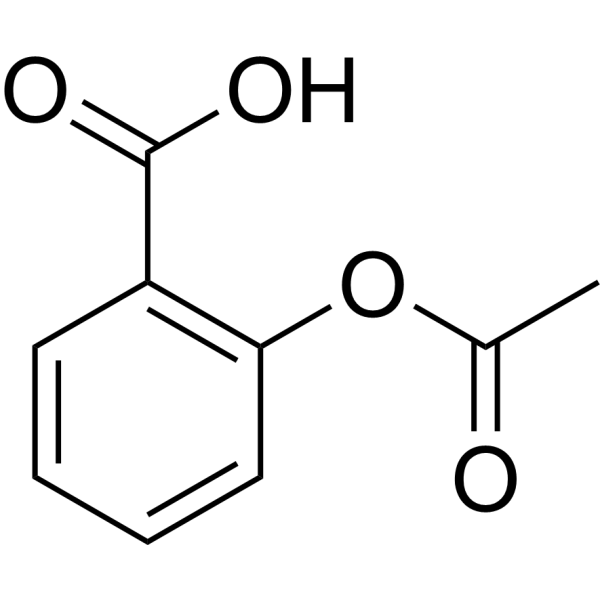
AspirinCOX Inhibitor -
HY-N1446
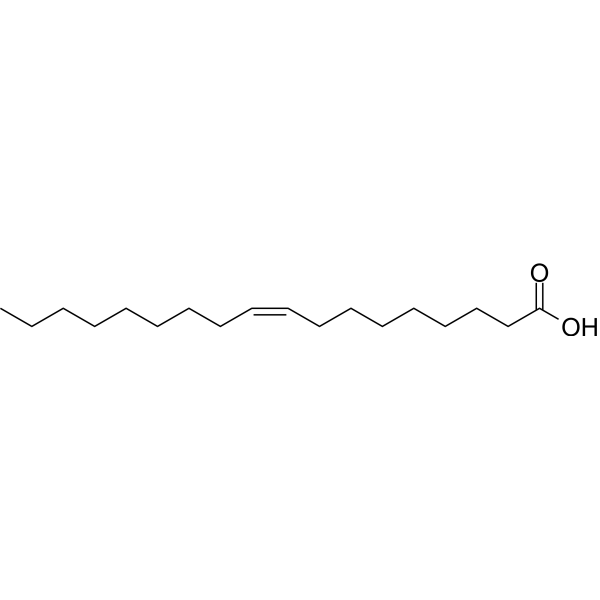
Oleic acidMonounsaturated Fatty Acid -
HY-126573R
Trilaurin (Standard) -

HY-N1981R
Triolein (Standard)Monoacid Triglyceride -
HY-127035
TristearinStearic Acid -
HY-W013061
Propane-1,2,3-triyl tripalmitateGlycerol Tristearate Lymphatic Transport Promoter
All Endogenous Metabolite Isoforms
More

Biological Activity
Description
IC50 & Target
|
Human Endogenous Metabolite |
In Vitro
Trilaurin does not inhibit 5α-reductase activity in prostate tissue samples[1].
Trilaurin (4 mg per plate) shows no mutagenicity in *Salmonella typhimurium* strains TA1535, TA100, TA1537, TA1538, or TA98 with or without metabolic activation[1].
MedChemExpress (MCE) has not independently confirmed the accuracy of these methods. They are for reference only. .
In Vivo
Trilaurin (3 times per week; for 20 weeks) completely inhibits DMBA-induced, croton oil-promoted skin tumor formation in Swiss Webster mice[1].
Trilaurin (25% w/w; p.o.; mixed into feed; daily; 10 weeks) exerts no toxic effects or induces no body weight changes in weanling rats[1].
Trilaurin (accounting for 36.3% w/w; administered via topical ocular instillation, 3 times) causes mild irritation in rabbits, with a Draize score of 2[1].
Trilaurin (36.3% w/w; administered percutaneously; delivered via occlusive patch) causes no skin irritation in rabbits[1].
MedChemExpress (MCE) has not independently confirmed the accuracy of these methods. They are for reference only.
-
Animal Model:Watanabe (WHHL) rabbits (6 months old); New Zealand white (NZW) rabbits (10 months old)[1]
-
Dosage:6.5% w/w
-
Administration:oral; mixed in chow diet; 4 days, 1 week
-
Result:Increased plasma HDL cholesterol to 250% of baseline and apo A-I to 200% of baseline in 6-month-old WHHL rabbits.
Returned both parameters to baseline after Trilaurin was removed.
Produced similar increases in 10-month-old WHHL and NZW rabbits after 1 week of supplementation.
-
Animal Model:Rabbits[1]
-
Dosage:36.3% w/w
-
Administration:ocular instillation; three times
-
Result:Produced a Draize score of 2, classified as mildly irritating to rabbit eyes.
-
Animal Model:Rabbits[1]
-
Dosage:36.3% w/w
-
Administration:topical; occlusive patch application
-
Result:Observed no erythema or edema in any rabbits at 2 or 24 hours after patch removal, classifying the test substance as nonirritating to rabbit skin.


Chemical Information
-
CAS No. 538-24-9
-
Appearance Solid
-
Molecular Weight 639.00
-
Formula C39H74O6
-
Color White to off-white
-
SMILES
CCCCCCCCCCCC(OCC(OC(CCCCCCCCCCC)=O)COC(CCCCCCCCCCC)=O)=O
-
Structure Classification
-
Initial Source
-
Shipping
Room temperature in continental US; may vary elsewhere.
-
Storage
Powder -20°C 3 years 4°C 2 years In solvent -80°C 6 months -20°C 1 month


Solvent & Solubility
In Vitro:
DMSO : 4 mg/mL (6.26 mM; ultrasonic and warming and heat to 60°C; Hygroscopic DMSO has a significant impact on the solubility of product, please use newly opened DMSO)
DMF : 1 mg/mL (1.56 mM; ultrasonic and warming and heat to 60°C)
Please refer to the solubility information to select the appropriate solvent. Once prepared, please aliquot and store the solution to prevent product inactivation from repeated freeze-thaw cycles.
Storage method and period of stock solution: -80°C, 6 months; -20°C, 1 month. When stored at -80°C, please use it within 6 months. When stored at -20°C, please use it within 1 month.
Please refer to the solubility information to select the appropriate solvent. Once prepared, please aliquot and store the solution to prevent product inactivation from repeated freeze-thaw cycles.
Storage method and period of stock solution: -80°C, 6 months; -20°C, 1 month. When stored at -80°C, please use it within 6 months. When stored at -20°C, please use it within 1 month.
Concentration (start) × Volume (start) = Concentration (final) × Volume (final)


Purity & Documentation
-
Data Sheet (272 KB)
-
SDS (393 KB)
- English - EN (393 KB)
- Français - FR (393 KB)
- Deutsch - DE (393 KB)
- Norwegian - NO (393 KB)
- Español - ES (393 KB)
- Swedish - SV (393 KB)
- Italian - IT (393 KB)
- Korean - KR (393 KB)
- Portuguese - PT (393 KB)
-
Handling Instructions (2659 KB)
References
[1]. Johnson W Jr; Cosmetic Ingredient Review Expert Panel, et al. Final report on the safety assessment of trilaurin, triarachidin, tribehenin, tricaprin, tricaprylin, trierucin, triheptanoin, triheptylundecanoin, triisononanoin, triisopalmitin, triisostearin, trilinolein, trimyristin, trioctanoin, triolein, tripalmitin, tripalmitolein, triricinolein, tristearin, triundecanoin, glyceryl triacetyl hydroxystearate, glyceryl triacetyl ricinoleate, and glyceryl stearate diacetate. Int J Toxicol. 2001;20 Suppl 4:61-94. [Content Brief]


Complete Stock Solution Preparation Table
Please refer to the solubility information to select the appropriate solvent. Once prepared, please aliquot and store the solution to prevent product inactivation from repeated freeze-thaw cycles.
Storage method and period of stock solution: -80°C, 6 months; -20°C, 1 month. When stored at -80°C, please use it within 6 months. When stored at -20°C, please use it within 1 month.
| Optional Solvent | Concentration Solvent Mass | 1 mg | 5 mg | 10 mg | 25 mg |
|---|---|---|---|---|---|
| DMF / DMSO | 1 mM | 1.5649 mL | 7.8247 mL | 15.6495 mL | 39.1236 mL |
| DMSO | 5 mM | 0.3130 mL | 1.5649 mL | 3.1299 mL | 7.8247 mL |


Trilaurin Related Classifications
HY-126573 Related Classifications
 Powered by Bioz