1. Search Result
Search Result
Results for "

Translocase

" in MedChemExpress (MCE) Product Catalog:

26

Inhibitors & Agonists

4

Natural
Products

6

Recombinant Proteins

5

Isotope-Labeled Compounds

7

Antibodies

Cat. No. Product Name Target Research Areas Chemical Structure
  • HY-W014787
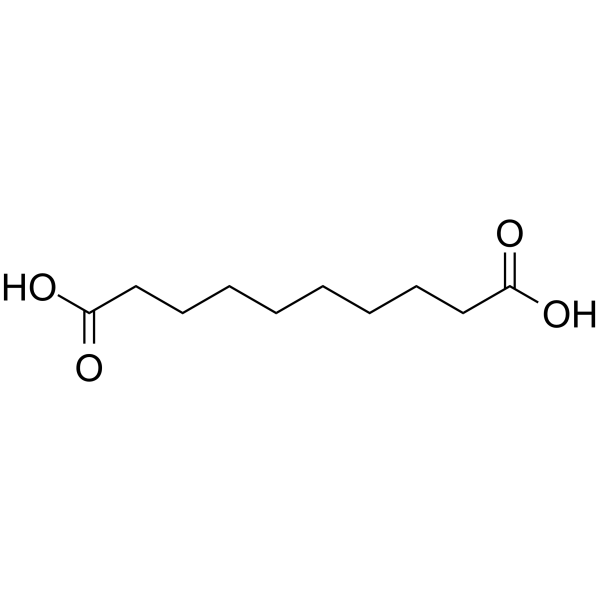
    Decanedioic acid
    1 Publications Verification

    Sebacic acid

    Environmental Pollutants Endogenous Metabolite Metabolic Disease
    Decanedioic acid is a straight-chain dicarboxylic acid. Dodecanedioic acid overcomes metabolic inflexibility in type 2 diabetes. Decanedioic acid prevents and reverses metabolic-associated liver disease and obesity. Decanedioic acid is associated with carnitine-acylcarnitine translocase deficiency and medium chain acyl-CoA dehydrogenase deficiency .
    Decanedioic acid
  • HY-136406
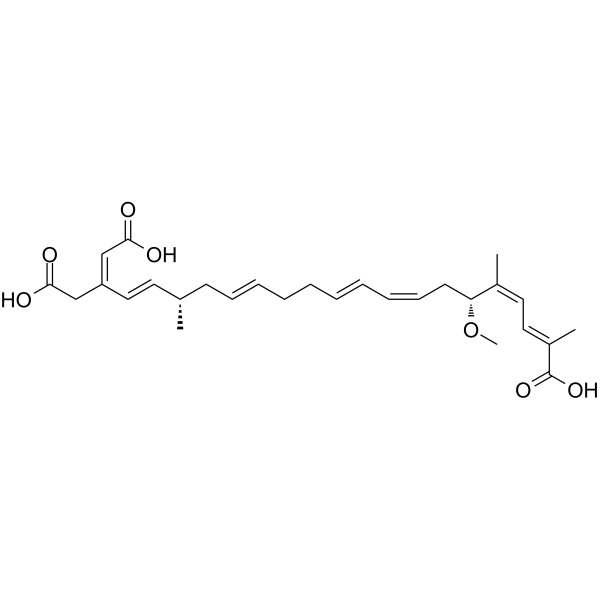
    Bongkrekic acid
    1 Publications Verification

    ATP Synthase Infection Cancer
    Bongkrekic acid is a mitochondrial toxin secreted by the bacteria Pseudomonas cocovenenans . Bongkrekic acid specific ligand for mitochondrial adenine nucleotide translocase (ANT) rather than the electron transport chain. Bongkrekic acid has to cross the mitochondrial inner membrane to produce its inhibitory effect on ADP/ATP transport .
    Bongkrekic acid
  • HY-176763

    Sec61 Cancer
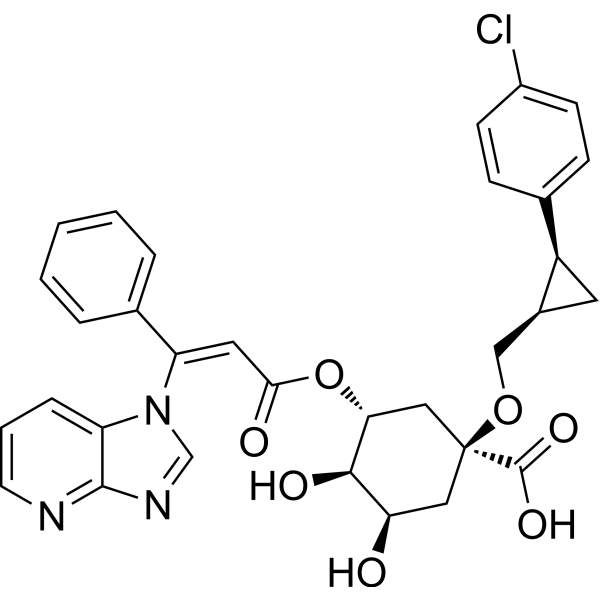
    KZR-261 is a Sec61 translocase inhibitor. KZR-261 binds directly to the Sec61 channel, thereby inhibiting the biosynthesis of certain Sec61 substrate proteins, including oncogenic factors. KZR-261 activates the endoplasmic reticulum stress response. KZR-261 exhibits broad in vitro anticancer activity. KZR-261 shows antitumor efficacy in mouse models of cancer. KZR-261 can be used for the research of multiple myeloma, colorectal cancer, small cell lung cancer, pancreatic cancer, prostate cancer, non-Hodgkin's lymphoma, and mantle cell lymphoma .
    KZR-261
  • HY-N4104
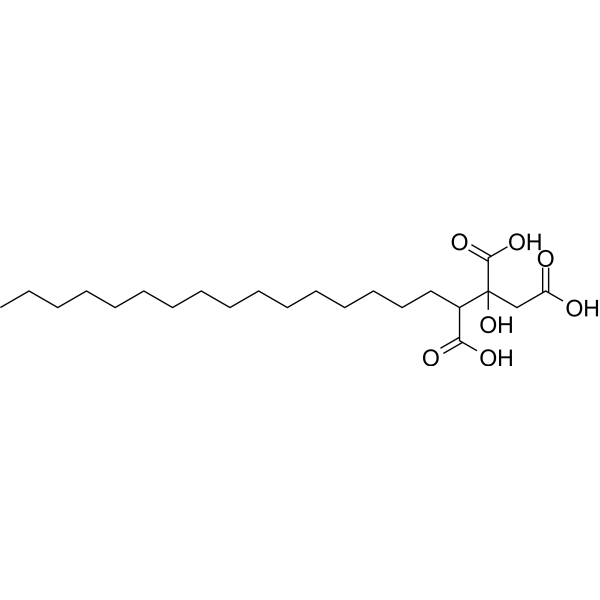
    Agaric acid
    1 Publications Verification

    Agaricinic Acid

    Mitochondrial Metabolism Bacterial Calcium Channel Infection Metabolic Disease
    Agaric acid (Agaricinic Acid) is an orally active inhibitor of adenine nucleotide translocase found in specific fungi. Agaric acid can inhibit the biofilm formation of various bacteria such as Salmonella. Agaric acid can also induce mitochondrial permeability transition, prompting mitochondria to release Ca 2+, disrupting the transmembrane potential, and causing mitochondrial swelling. In addition, Agaric acid can also inhibit citrate transport in liver mitochondria and participate in the inhibition of fatty acid synthesis, affecting multiple metabolic processes .
    Agaric acid
  • HY-163649

    AMPK Metabolic Disease
    A17 is a bile acid analog with anti-non-alcoholic steatohepatitis (NASH) and anti-inflammatory activities. A17 reduces fatty acid (FA) uptake and promotes FA oxidation though inhibiting fatty acid translocase (Cd36) expression and activating AMPKα. A17 can be used for NASH research .
    A17
  • HY-166114

    Heptaprenyl phosphate

    Biochemical Assay Reagents Infection
    Heptaprenyl-MPDA (Heptaprenyl phosphate) is a short-chain homolog of undecaprenyl phosphate, is an endogenous substrate of Phospho-MurNAc-pentapeptide translocase (MraY). Heptaprenyl-MPDA can be used for bacterial infections research .
    Heptaprenyl-MPDA
  • HY-166114A

    (Z)-Heptaprenyl phosphate diammonium

    Bacterial Infection
    (Z)-Heptaprenyl-MPDA ((Z)-Heptaprenyl phosphate) diammonium is the (Z)-isomer of Heptaprenyl-MPDA (HY-166114). Heptaprenyl-MPDA (Heptaprenyl phosphate) is a short-chain homolog of undecaprenyl phosphate, is an endogenous substrate of Phospho-MurNAc-pentapeptide translocase (MraY). Heptaprenyl-MPDA can be used for bacterial infections research .
    (Z)-Heptaprenyl-MPDA diammonium
  • HY-136406S
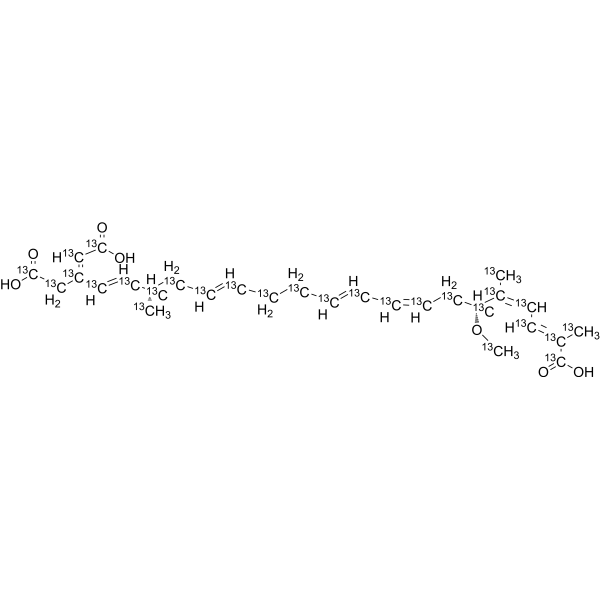
    Bongkrekic acid-13C28
    1 Publications Verification

    Isotope-Labeled Compounds ATP Synthase Cancer
    Bongkrekic acid- 13C28 is the 13C labeled Bongkrekic acid (HY-136406). Bongkrekic acid is a mitochondrial toxin secreted by the bacteria Pseudomonas cocovenenans. Bongkrekic acid specific ligand for mitochondrial adenine nucleotide translocase (ANT) rather than the electron transport chain. Bongkrekic acid has to cross the mitochondrial inner membrane to produce its inhibitory effect on ADP/ATP transport .
    Bongkrekic acid-13C28
  • HY-171151

    Bacterial Infection
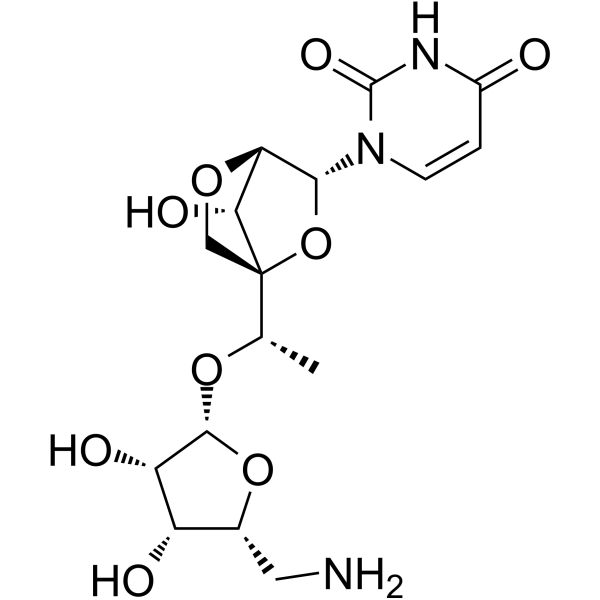
    CPZEN-45 is a bacterial translocase I inhibitor with potent anti-tuberculosis activity. CPZEN-45 is promising for research of tuberculosis .
    CPZEN-45
  • HY-E70583

    TET Protein Others
    Recombinant Ten-Eleven Translocase is a recombinant Fe(II)- and α-ketoglutarate-dependent dioxygenase. Recombinant Ten-Eleven Translocase converts 5-methylcytosine (5mC) to 5-hydroxymethylcytosine (5hmC), and then to 5-formylcytosine (5fC) and 5-carboxycytosine (5caC) through a series of oxidation reactions. Then, 5caC is further converted into uracil (U) through the action of a conversion agent or enzyme, and uracil (U) is converted into thymine (T) through PCR, thereby achieving single-base resolution and high-accuracy identification of DNA methylation sites .
    Recombinant Ten-Eleven Translocase
  • HY-146426

    Bacterial Infection
    MraY-IN-2 (compound 6) is a potent MurNAc-pentapeptide translocase (MraY) inhibitor with an IC50 value of 4.5 μM. MraY-IN-2 can be used for researching anti-bacteria .
    MraY-IN-2
  • HY-151357

    Bacterial Infection
    MraY-IN-3 (12a) is a potent bacterial translocase MraY inhibitor with an IC50 value of 140 µM. MraY-IN-3 acts on E. coli K12, B. subtilis W23 and P. fluorescens Pf-5 with the MIC50 values of 7 µg/mL, 12 µg/mL, and 46 µg/mL, respectively .
    MraY-IN-3
  • HY-W015300S

    Octanedioic acid-d4

    Endogenous Metabolite Metabolic Disease
    Suberic acid-d4 is the deuterium labeled Suberic acid . Suberic acid (Octanedioic acid) is found to be associated with carnitine-acylcarnitine translocase deficiency, malonyl-Coa decarboxylase deficiency .
    Suberic acid-d4
  • HY-W015300S1

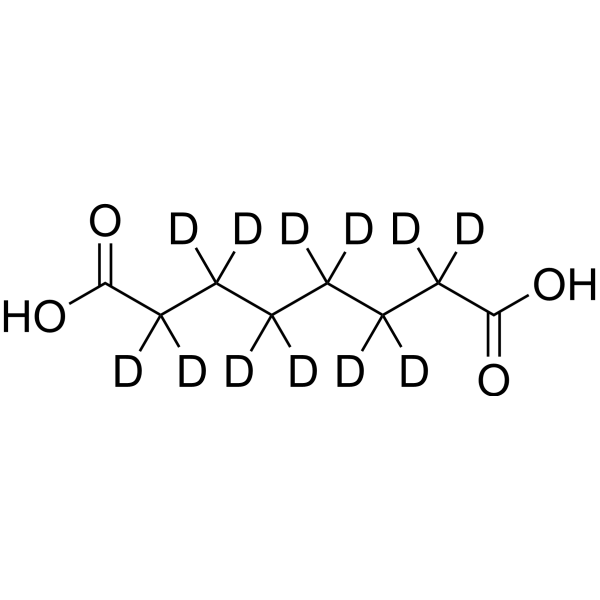
    Octanedioic acid-d12

    Endogenous Metabolite Metabolic Disease
    Suberic acid-d12 is the deuterium labeled Suberic acid . Suberic acid (Octanedioic acid) is found to be associated with carnitine-acylcarnitine translocase deficiency, malonyl-Coa decarboxylase deficiency .
    Suberic acid-d12
  • HY-144728

    Bacterial Infection
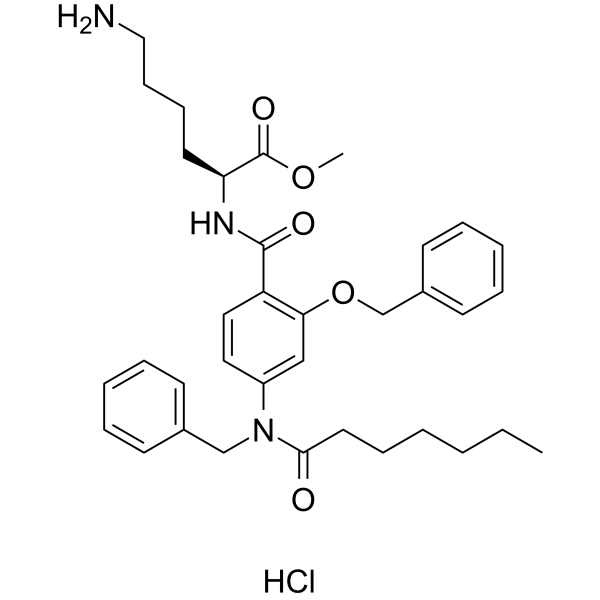
    MraY-IN-1 (compound 12a) is a potent  MraY inhibitor with an IC50 value of 140 μM. MraY-IN-1 has antimicrobial activity against Escherichia coli K12, Bacillus subtilis W23 and Pseudomonas fluorescens Pf-5 with MIC50s of 7 µg/mL, 12 µg/mL and 46 µg/mL, respectively. MraY-IN-1 can be used for researching anti-bacteria .
    MraY-IN-3 hydrochloride
  • HY-136602

    Apoptosis JNK Caspase Cancer
    MT-21 is an Apoptosis inducer and adenine nucleotide translocase inhibitor. MT-21 induces Apoptosis by activating JNK via the Krs/MST protein. MT-21 activates caspase-3 via caspase-9. MT-21 induces the release of cytochrome c. MT-21 can be used in the research of tumors .
    MT-21
  • HY-W014787R

    Sebacic acid (Standard)

    Reference Standards Endogenous Metabolite Metabolic Disease
    Decanedioic acid (Standard) is the analytical standard of Decanedioic acid (HY-W014787). This product is intended for research and analytical applications. Decanedioic acid is a straight-chain dicarboxylic acid. Dodecanedioic acid overcomes metabolic inflexibility in type 2 diabetes. Decanedioic acid prevents and reverses metabolic-associated liver disease and obesity. Decanedioic acid is associated with carnitine-acylcarnitine translocase deficiency and medium chain acyl-CoA dehydrogenase deficiency .
    Decanedioic acid (Standard)
  • HY-N4104R

    Agaricinic Acid (Standard)

    Reference Standards Mitochondrial Metabolism Bacterial Calcium Channel Infection Metabolic Disease
    Agaric acid (Standard) (Agaricinic Acid (Standard)) is the analytical standard of Agaric acid (HY-N4104). This product is intended for research and analytical applications. Agaric acid (Agaricinic Acid) is an orally active inhibitor of adenine nucleotide translocase found in specific fungi. Agaric acid can inhibit the biofilm formation of various bacteria such as Salmonella. Agaric acid can also induce mitochondrial permeability transition, prompting mitochondria to release Ca 2+, disrupting the transmembrane potential, and causing mitochondrial swelling. In addition, Agaric acid can also inhibit citrate transport in liver mitochondria and participate in the inhibition of fatty acid synthesis, affecting multiple metabolic processes.
    Agaric acid (Standard)
  • HY-182303

    CATR

    Methionine Adenosyltransferase (MAT) Neurological Disease
    Carboxyatractyloside (CATR) is a tight-binding inhibitor of adenine nucleotide translocase, and represents the major toxic component of Xanthium sibiricum. Carboxyatractyloside competes with ADP for binding to the translocase, blocks the translocation of ADP/ATP across the inner mitochondrial membrane, and thereby inhibits ADP-stimulated respiration. In the presence of Cyclosporin A (HY-B0579), Carboxyatractyloside still induces permeability transition in liver mitochondria of aged rats, exhibiting significant hepatotoxicity and nephrotoxicity. Carboxyatractyloside is widely used in studies related to hepatotoxicity, nephrotoxicity and Alzheimer's disease .
    Carboxyatractyloside
  • HY-179760

    Others Metabolic Disease
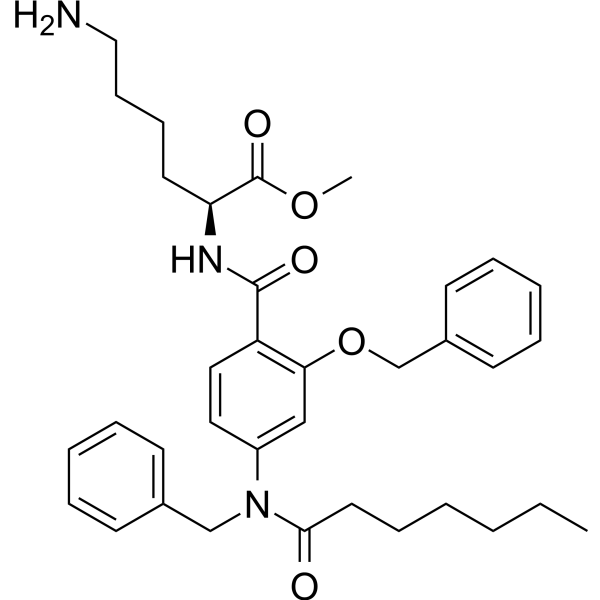
    16:0-7 Doxyl PC is a phosphocholine with a Doxyl group, which can be used as a membrane probe and a fluorescence quencher in the study of lipid bilayer structures, and is employed to study the membrane transport mediated by phosphatidylinositol translocase.
    16:0-7 Doxyl PC
  • HY-179883

    Others Metabolic Disease
    16:0-5 Doxyl PC is a phosphocholine with a Doxyl group, which can be used as a membrane probe and a fluorescence quencher in the study of lipid bilayer structures, and is employed to study the membrane transport mediated by phosphatidylinositol translocase.
    16:0-5 Doxyl PC
  • HY-179879

    Others Metabolic Disease
    16:0-16 Doxyl PC is a phosphocholine with a Doxyl group, which can be used as a membrane probe and a fluorescence quencher in the study of lipid bilayer structures, and is employed to study the membrane transport mediated by phosphatidylinositol translocase.
    16:0-16 Doxyl PC
  • HY-W014787S

    Endogenous Metabolite Metabolic Disease
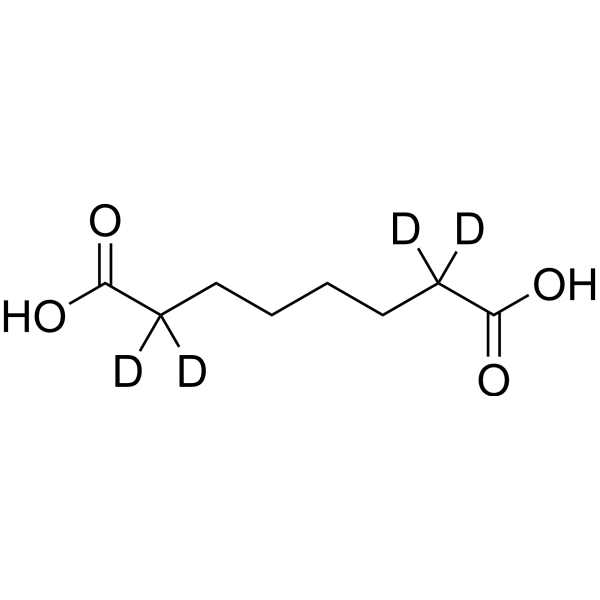
    Decanedioic acid-d4 is the deuterium labeled Decanedioic acid (HY-W014787). Decanedioic acid is a straight-chain dicarboxylic acid. Dodecanedioic acid overcomes metabolic inflexibility in type 2 diabetes. Decanedioic acid prevents and reverses metabolic-associated liver disease and obesity. Decanedioic acid is associated with carnitine-acylcarnitine translocase deficiency and medium chain acyl-CoA dehydrogenase deficiency .
    Decanedioic acid-d4
  • HY-W014787S1

    Endogenous Metabolite Metabolic Disease
    Decanedioic acid-d16 is the deuterium labeled Decanedioic acid (HY-W014787). Decanedioic acid is a straight-chain dicarboxylic acid. Dodecanedioic acid overcomes metabolic inflexibility in type 2 diabetes. Decanedioic acid prevents and reverses metabolic-associated liver disease and obesity. Decanedioic acid is associated with carnitine-acylcarnitine translocase deficiency and medium chain acyl-CoA dehydrogenase deficiency .
    Decanedioic acid-d16
  • HY-182690

    HIV Infection
    CK147 is a Sec61α translocase inhibitor that blocks the co-translational translocation of proteins by binding to and inhibiting the Sec61 protein translocation channel on the endoplasmic reticulum membrane. CK147 exhibits potent CD4 downregulation activity with an IC50 of 0.04 µM. CK147 prevents HIV entry into host cells and shows significant cytotoxicity. CK147 can be used in studies related to HIV infection .
    CK147
  • HY-181939

    Bacterial Infection
    Antibacterial agent 329 (Compound 9c) is an antibacterial agent. Antibacterial agent 329 inhibits the activity of MraY. Antibacterial agent 329 exhibits antibacterial activity against Escherichia coli K12 and Bacillus subtilis W23 with a MIC of 16 μg/mL, but shows no activity against Pseudomonas fluorescens Pf-5. Antibacterial agent 329 exerts antibacterial activity against Acinetobacter baumannii 19606, Staphylococcus aureus MRSA USA300 JE2, Enterobacter cloacae 19434, Klebsiella pneumoniae 700603 and Enterococcus faecium 19434, with MIC values of 8, 8, 16-32, 16-32 and 16 μg/mL, respectively, while it shows no activity against Pseudomonas aeruginosa NCTC 13437 .
    Antibacterial agent 329

Inquiry Online

Your information is safe with us. * Required Fields.

Salutation


Country or Region *

Applicant Name *


Organization Name *

Department *


Email Address *


Product Name *

Cat. No.


Requested quantity *

Phone Number *


Remarks

Inquiry Online

Inquiry Information

Product Name:
Cat. No.:
Quantity:
MCE Japan Authorized Agent:

