4 Results for "

Xanthii Fructus

" in MedChemExpress (MCE) Product Catalog:
Products (4)

4 Results for "Xanthii Fructus" in MCE Product Catalog:

1
1 Cited Publications
Cat. No.: HY-N0358
CAS No.: 1182-34-9
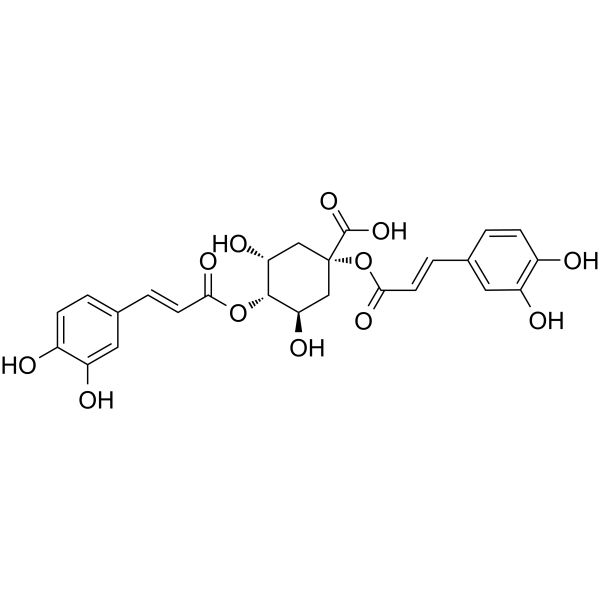
Synonyms: 1,4-DCQA
1,4-Dicaffeoylquinic acid (1,4-DCQA) is a phenylpropanoid compound that can be isolated from Xanthii fructus and an inhibitor of xanthine oxidase (IC50: 7.36 μM). 1,4-Dicaffeoylquinic acid has anti-inflammatory activity and can inhibit the production of TNF-α induced by LPS (HY-D1056) .
loading...
    loading...
Cat. No.: HY-W342604R
CAS No.: 5699-41-2
Synonyms: NAP (Standard)
1,4-Dicaffeoylquinic acid (Standard) is the analytical standard of 1,4-Dicaffeoylquinic acid. This product is intended for research and analytical applications. 1,4-Dicaffeoylquinic acid (1,4-DCQA) is a phenylpropanoid from Xanthii fructus, inhibits LPS-stimulated TNF-α production .
loading...
    loading...
Cat. No.: HY-N0358R
CAS No.: 1182-34-9
Synonyms: 1,4-DCQA (Standard)
1,4-Dicaffeoylquinic acid (Standard) (1,4-DCQA (Standard)) is the analytical standard of 1,4-Dicaffeoylquinic acid (HY-N0358). This product is intended for research and analytical applications. 1,4-Dicaffeoylquinic acid (1,4-DCQA) is a phenylpropanoid compound that can be isolated from Xanthii fructus and an inhibitor of xanthine oxidase (IC50: 7.36 μM). 1,4-Dicaffeoylquinic acid has anti-inflammatory activity and can inhibit the production of TNF-α induced by LPS (HY-D1056) .
loading...
    loading...
Cat. No.: HY-182303
CAS No.: 35988-42-2
Synonyms: CATR
Carboxyatractyloside (CATR) is a tight-binding inhibitor of adenine nucleotide translocase, and represents the major toxic component of Xanthium sibiricum. Carboxyatractyloside competes with ADP for binding to the translocase, blocks the translocation of ADP/ATP across the inner mitochondrial membrane, and thereby inhibits ADP-stimulated respiration. In the presence of Cyclosporin A (HY-B0579), Carboxyatractyloside still induces permeability transition in liver mitochondria of aged rats, exhibiting significant hepatotoxicity and nephrotoxicity. Carboxyatractyloside is widely used in studies related to hepatotoxicity, nephrotoxicity and Alzheimer's disease .
loading...
    loading...

