16 Results for "

Z ring

" in MedChemExpress (MCE) Product Catalog:
Products (16)

16 Results for "Z ring" in MCE Product Catalog:

2
2 Cited Publications
Art. -Nr.: HY-110354
CAS. Nr.: 1094451-90-7
Reinheit:  99.58%
Synonyms: G28UCM
Forschungsgebiete:  

Infection

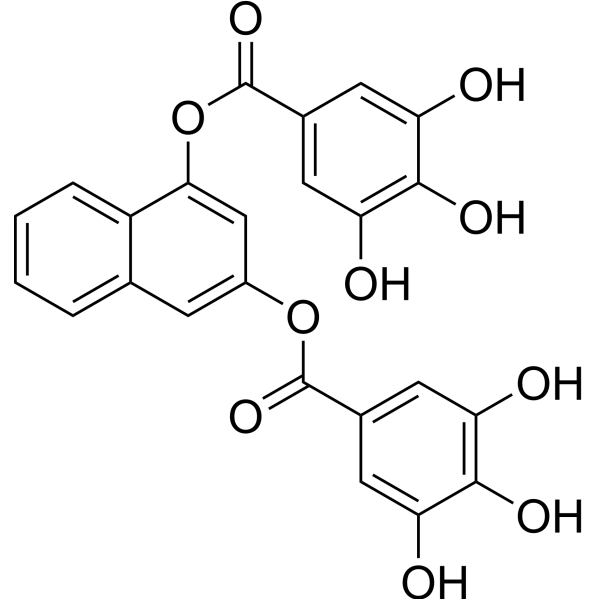
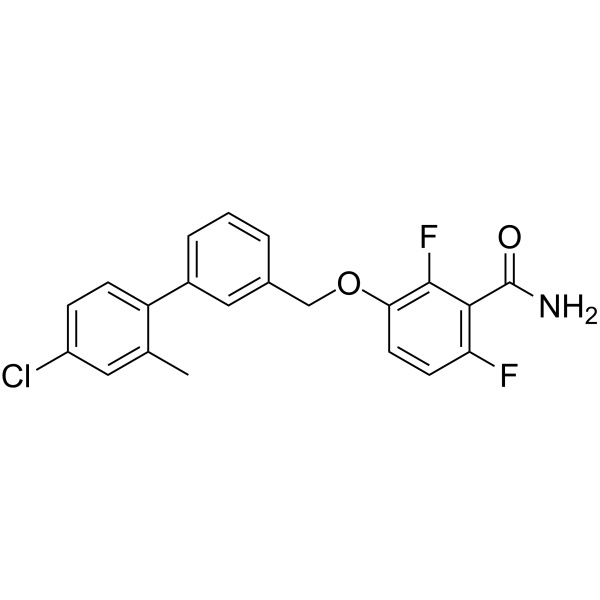
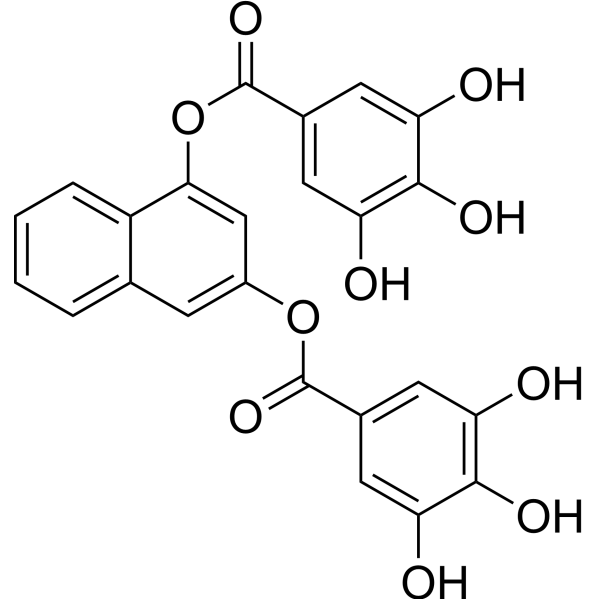
UCM05 (G28UCM) is a fatty acid synthase (FASN) and filamentous temperature-sensitive protein Z (Ftsz) inhibitor. UCM05 inhibits fatty acid synthesis, viral replication, and Gram-positive bacterial growth. UCM05 binds to FtsZ GTP-binding sites, inhibits GTPase activity, and disrupts Z-ring localization. UCM05 can be used for the research of HSV-1/2 infection, HIV-1 infection, and Gram-positive bacterial infections[1][2][3].
loading...
    loading...
Art. -Nr.: HY-W011238
CAS. Nr.: 6110-53-8
Synonyms: (Z)-1-Bromooctadec-9-ene
Forschungsgebiete:  

Others

Oleyl bromide ((Z)-1-Bromooctadec-9-ene) is a hydrophobic compound that can carry out ring-opening reaction through a process called "encapsulation". Oleyl bromine can also be used as the starting material in the synthesis of oleylphosphonates.
loading...
    loading...
Art. -Nr.: HY-151761
CAS. Nr.: 2084913-49-3
Reinheit:  99.69%
Target:  

ADC Linkers

Forschungsgebiete:  

Others

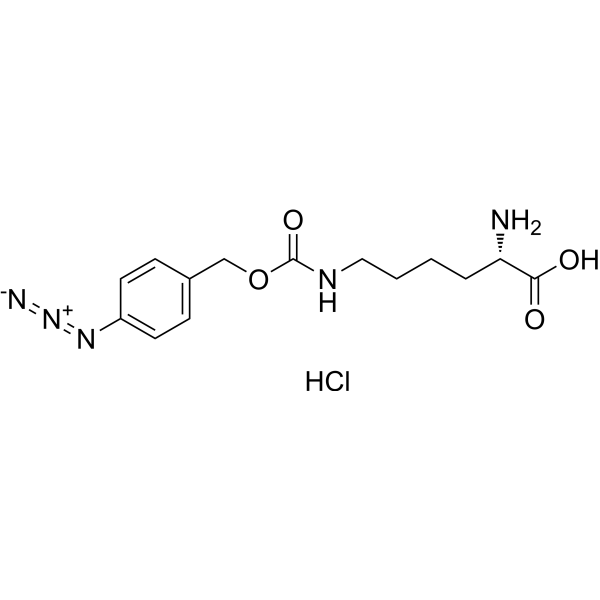
H-L-Lys(4-N3-Z)-OH hydrochloride is a click chemistry reagent containing an azide group. H-L-Lys(4-N3-Z)-OH hydrochloride contains a lysine-modified azide moiety and as a bioorthogonal ligation handle. H-L-Lys(4-N3-Z)-OH hydrochloride is an infrared probe and a photo-affinity reagent . It contains an azide group and can undergo copper-catalyzed azide-alkyne cycloaddition (CuAAc) with molecules containing alkyne groups. It can also undergo ring strain-promoted alkyne-azide cycloaddition (SPAAC) with molecules containing DBCO or BCN groups.
loading...
    loading...
Art. -Nr.: HY-151732
CAS. Nr.: 1931958-82-5
Target:  

ADC Linkers

Forschungsgebiete:  

Others

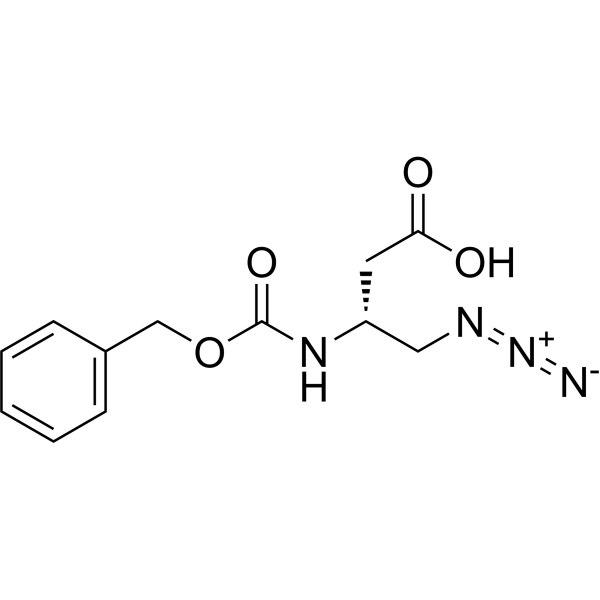
Z-D-Dbu(N3)-OH is a click chemistry reagent containing an azide group. Z-D-Dbu(N3)-OH can be used for the research of various biochemical . It contains an azide group and can undergo copper-catalyzed azide-alkyne cycloaddition (CuAAc) with molecules containing alkyne groups. It can also undergo ring strain-promoted alkyne-azide cycloaddition (SPAAC) with molecules containing DBCO or BCN groups.
loading...
    loading...
Art. -Nr.: HY-151849
CAS. Nr.: 684270-44-8
Target:  

ADC Linkers

Forschungsgebiete:  

Others

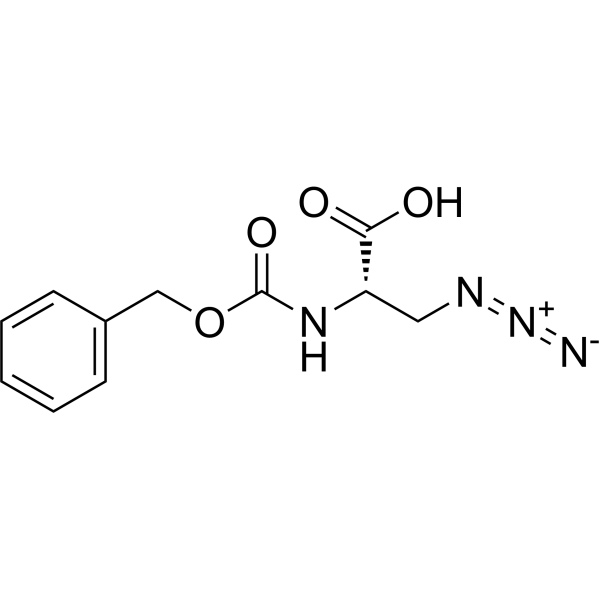
Z-L-Dap(N3)-OH is a click chemistry reagent containing an azide group. Click chemistry has great potential for use in binding between nucleic acids, lipids, proteins, and other molecules, and has been used in many research fields because of its beneficial characteristics, including high yield, high specificity, and simplicity . It contains an azide group and can undergo copper-catalyzed azide-alkyne cycloaddition (CuAAc) with molecules containing alkyne groups. It can also undergo ring strain-promoted alkyne-azide cycloaddition (SPAAC) with molecules containing DBCO or BCN groups.
loading...
    loading...
Art. -Nr.: HY-129756
CAS. Nr.: 637-53-6
Reinheit:  98.35%
Synonyms: N-Phenylthioacetamide
Forschungsgebiete:  

Metabolic Disease

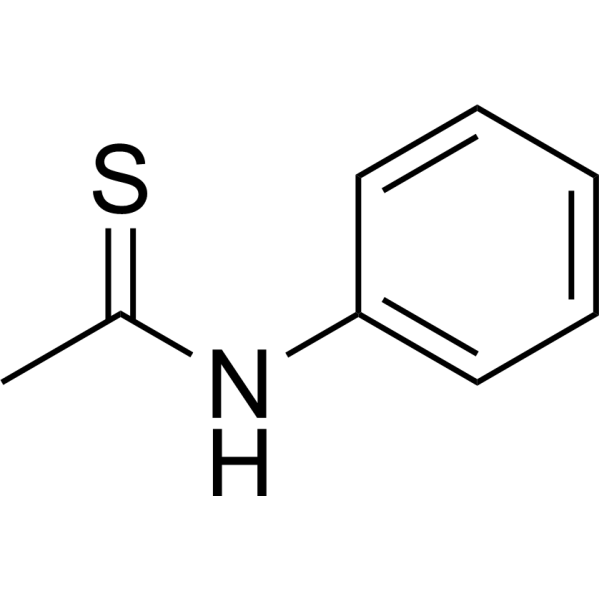
Thioacetanilide (N-Phenylthioacetamide) is a sulfur-containing thioamide derivative of acetanilide. Thioacetanilide displays a solvent‑dependent Z/E isomeric distribution, preferring the E conformation in polar hydrogen‑bonding solvents and the Z conformation in halogenated solvents. Thioacetanilide serves as a substrate for metabolic desulfurization and aromatic hydroxylation. Thioacetanilide is mainly metabolized via desulfurization and 4‑hydroxylation of the aromatic ring in Rattus norvegicus, and the released sulfur integrates into the total body sulfur pool. Thioacetanilide is well absorbed in rats, and more than 90% of the dose is excreted in urine as conjugated metabolites after oral administration .
loading...
    loading...
Art. -Nr.: HY-121968
CAS. Nr.: 66051-14-7
Forschungsgebiete:  

Metabolic Disease

(Z)-α-Methylcinnamaldehyde is an organic compound that is characterized by its distinct aldehyde and aromatic ring structures. (Z)-α-Methylcinnamaldehyde is an impurity that can be found in a pharmaceutical drug used for diabetic neuropathy–Epalrestat.
loading...
    loading...
Art. -Nr.: HY-150754
CAS. Nr.: 2882904-64-3
Target:  

Bacterial

Forschungsgebiete:  

Infection

FtsZ-IN-4 is an orally active FtsZ (filamenting temperature-sensitive mutant Z) inhibitor, exhibits excellent antibacterial activity. FtsZ-IN-4 shows good pharmaceutical properties with low cytotoxicity (CC50 >20 μg/mL) .
loading...
    loading...
Art. -Nr.: HY-151668
CAS. Nr.: 1263047-43-3
Target:  

ADC Linkers

Forschungsgebiete:  

Others

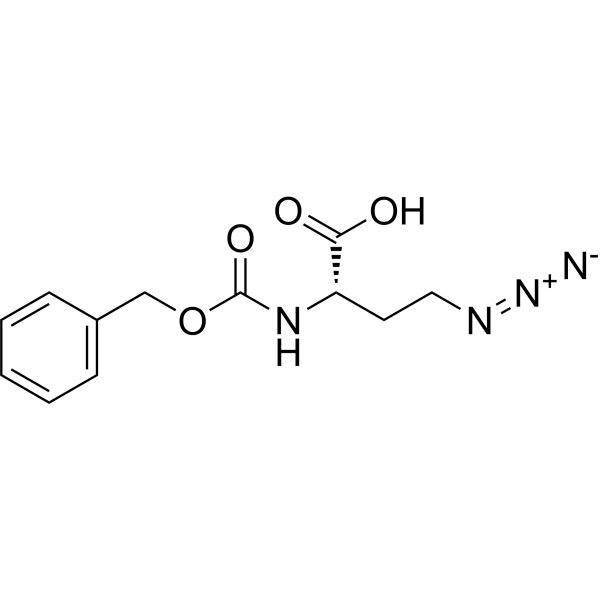
Z-L-Aha-OH is a click chemistry reagent containing azide group . It contains an azide group and can undergo copper-catalyzed azide-alkyne cycloaddition (CuAAc) with molecules containing alkyne groups. It can also undergo ring strain-promoted alkyne-azide cycloaddition (SPAAC) with molecules containing DBCO or BCN groups.
loading...
    loading...
Art. -Nr.: HY-151668A
CAS. Nr.: 1423018-09-0
Target:  

ADC Linkers

Forschungsgebiete:  

Others

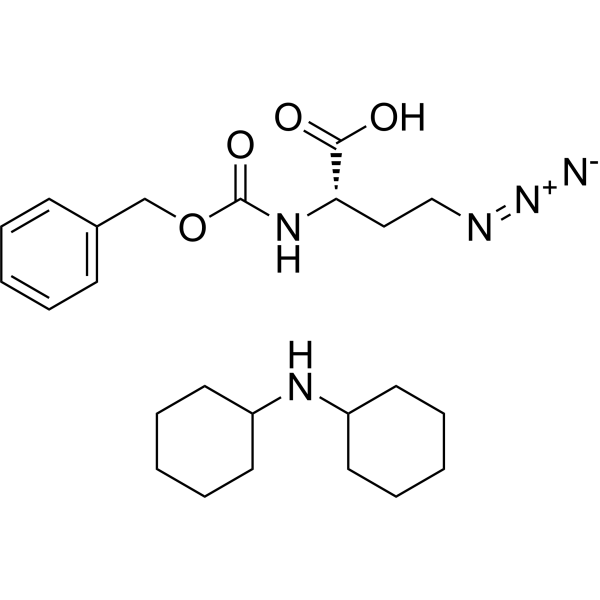
Z-L-Aha-OH (DCHA) is a click chemistry reagent containing azide group . It contains an azide group and can undergo copper-catalyzed azide-alkyne cycloaddition (CuAAc) with molecules containing alkyne groups. It can also undergo ring strain-promoted alkyne-azide cycloaddition (SPAAC) with molecules containing DBCO or BCN groups.
loading...
    loading...
Art. -Nr.: HY-110354R
CAS. Nr.: 1094451-90-7
Synonyms: G28UCM (Standard)
UCM05 (Standard) is the analytical standard of Lysipressin. This product is intended for research and analytical applications. UCM05 (G28UCM) is a fatty acid synthase (FASN) and filamentous temperature-sensitive protein Z (Ftsz) inhibitor. UCM05 inhibits fatty acid synthesis, viral replication, and Gram-positive bacterial growth. UCM05 binds to FtsZ GTP-binding sites, inhibits GTPase activity, and disrupts Z-ring localization. UCM05 can be used for the research of HSV-1/2 infection, HIV-1 infection, and Gram-positive bacterial infections [1][2][3].
loading...
    loading...
Art. -Nr.: HY-W773487
CAS. Nr.: 676995-91-8
Target:  

Bacterial

Forschungsgebiete:  

Infection

FtsZ-IN-10 is a bacterial division inhibitor that interferes with the normal assembly of FtsZ. FtsZ-IN-10 specifically binds to Bacillus subtilis FtsZ monomers, thereby affecting their polymerization behavior. FtsZ-IN-10 may also activate nucleotide-free archaeal FtsZ to form ordered polymers. FtsZ-IN-10 can hinder the localization of FtsZ in the Z ring and inhibit bacterial cell division. Chlorinated analogs of FtsZ-IN-10 show the ability to inhibit the growth of antibiotic-resistant clinical isolates such as Staphylococcus aureus and Enterococci .
loading...
    loading...
Art. -Nr.: HY-182063
CAS. Nr.: 2419496-02-7
Forschungsgebiete:  

Inflammation/Immunology

Z226407860 is a RING-box protein 1 (RBX1) inhibitor. Z226407860 reduces house dust mite-induced airway epithelial injury and ROS accumulation by inhibiting RBX1. Z226407860 can be used for the research of asthma .
loading...
    loading...
Art. -Nr.: HY-28009
CAS. Nr.: 1883429-78-4
Forschungsgebiete:  

Others

2-(7Z,10Z)-7,10-Hexadecadien-1-yloxirane is an intermediate for the preparation of lipid molecules. 2-((7Z,10Z)-Hexadeca-7,10-dien-1-yl)oxirane features a polyunsaturated chain with an epoxy ring that can be opened by nucleophiles.
loading...
    loading...
Art. -Nr.: HY-P10814
Target:  

Bacterial

Forschungsgebiete:  

Infection

MciZ (B. subtilis), a 40-amino-acid peptide, inhibits the GTPase activity of FtsZ that prevents inappropriate Z-ring formation during sporulation .
loading...
    loading...
Art. -Nr.: HY-177148B
CAS. Nr.: 136623-15-9
Forschungsgebiete:  

Cardiovascular Disease

(E/Z)-G256 (dihydrochloride) is an isomer of G256 dihydrochloride (HY-177148A). G256 dihydrochloride is a cytochrome P450 substrate with antiarrhythmic properties. In recombinant monooxygenase systems, G256 dihydrochloride undergoes N-hydroxylation of the terminal aminoguanidine nitrogen, as well as ring hydroxylation catalyzed by cytochrome P4502C3. G256 dihydrochloride generates N-hydroxyaminoguanidine metabolites via N-hydroxylation in liver microsomal fractions. G256 dihydrochloride produces phenol metabolites through ring hydroxylation in both liver microsomal fractions and recombinant cytochrome P450 systems. G256 dihydrochloride can be used for research on arrhythmias .
loading...
    loading...
  • 1

