10 Results for "

acridine compound

" in MedChemExpress (MCE) Product Catalog:
Products (10)

10 Results for "acridine compound" in MCE Product Catalog:

3
3 Cited Publications
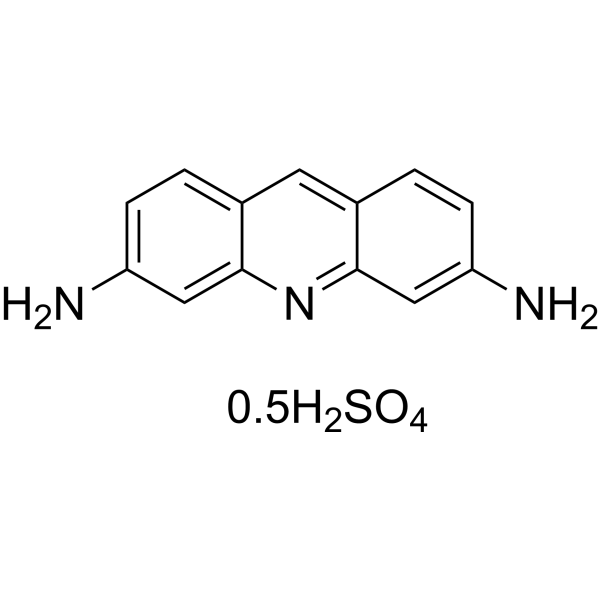
Cat. No.: HY-B0883
CAS No.: 1811-28-5
3,6-Diaminoacridine hemisulfate is a multifunctional acridine compound. 3,6-Diaminoacridine hemisulfate is an acridine dye and also a DNA inserter. 3,6-Diaminoacridine hemisulfate is a potent broad-spectrum antibacterial agent. Its mechanism is to insert into bacterial DNA, interfering with replication and transcription, leading to bacterial lysis. 3,6-Diaminoacridine hemisulfate is a Kir3.2 potassium channel blocker and can be used to study the neurological phenotype of Down syndrome. 3,6-Diaminoacridine hemisulfate can penetrate the stratum corneum of the skin and accumulate in the cell nucleus. Long-term exposure may induce skin cancer or other malignant tumors .
loading...
    loading...
3
3 Cited Publications
Cat. No.: HY-B1741
CAS No.: 92-62-6
Research Areas:  

Infection Cancer

3,6-Diaminoacridine is a versatile acridine compound. 3,6-Diaminoacridine exerts antibacterial activity by intercalating into bacterial DNA, interfering with replication and transcription, and inducing bacterial lysis. 3,6-Diaminoacridine is an acridine dye and also a DNA intercalator .
loading...
    loading...
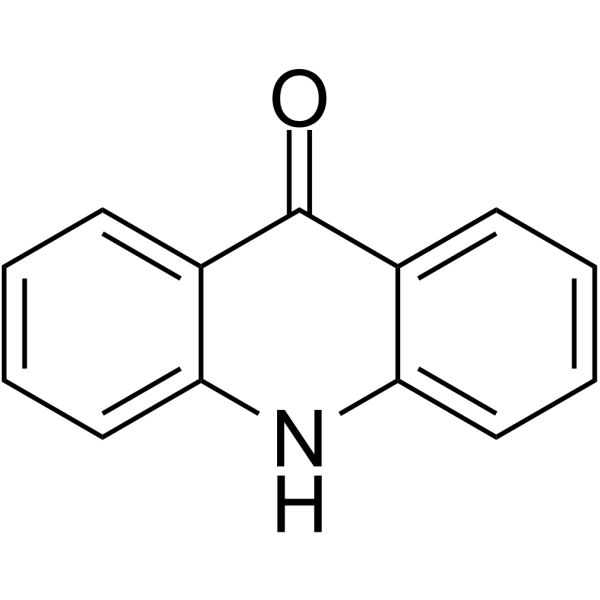
Cat. No.: HY-W007771
CAS No.: 578-95-0
Acridone is an organic compound based on the acridine skeleton. Acridone has antibacterial, antimalarial, antiviral and anti neoplastic activities .
loading...
    loading...
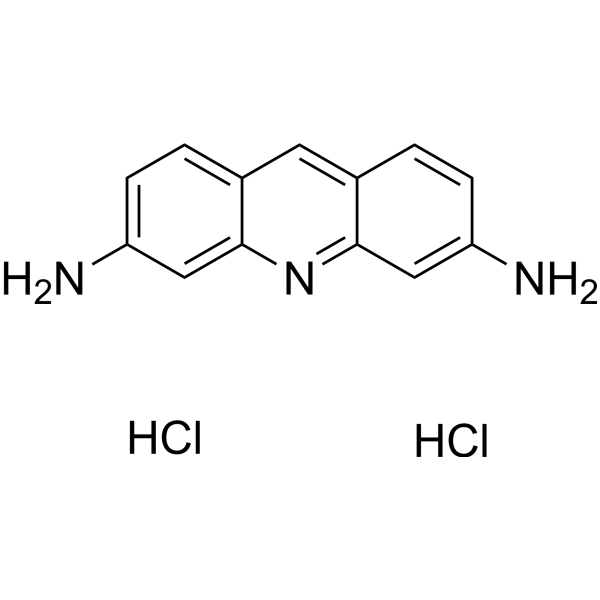
Cat. No.: HY-B1741A
CAS No.: 531-73-7
Research Areas:  

Infection Cancer

3,6-Diaminoacridine dihydrochloride is a versatile acridine compound. 3,6-Diaminoacridine dihydrochloride exerts antibacterial activity by intercalating into bacterial DNA, interfering with replication and transcription, and inducing bacterial lysis. 3,6-Diaminoacridine dihydrochloride is an acridine dye and also a DNA intercalator .
loading...
    loading...
Cat. No.: HY-W026644
CAS No.: 885-23-4
Synonyms: acridine-9-carbaldehyde
Target:  

Bacterial

Research Areas:  

Infection Cancer

Acridine-9-carboxaldehyde (Acridine-9-carbaldehyde) is a bioactive compound with potential antibacterial and antitumor activities. Acridine-9-carboxaldehyde is widely used as a building block in compound development to synthesize various bioactive derivatives. Acridine-9-carboxaldehyde exhibits significant cytotoxicity against certain cancer cells, making it an important candidate in cancer inhibition research.
loading...
    loading...
Cat. No.: HY-W007771R
CAS No.: 578-95-0
Acridone (Standard) is the analytical standard of Acridone. This product is intended for research and analytical applications. Acridone is an organic compound based on the acridine skeleton. Acridone has antibacterial, antimalarial, antiviral and anti neoplastic activities .
loading...
    loading...
Cat. No.: HY-B1509A
CAS No.: 86-40-8
Target:  

Parasite

Research Areas:  

Infection Endocrinology

Trypaflavin is an acridine compound and antimalarial agent. Trypaflavin invades germ cells. Trypaflavin induces aberrations in unfertilized oocytes. Trypaflavin increases the frequency of chromosomal aberrations. Trypaflavin shows weak mutagenicity. Trypaflavin is highly toxic to Leishmania, causing immediate lysis of the leptomonads .
loading...
    loading...
Cat. No.: HY-177958
CAS No.: 2227022-64-0
ACS03 is a hybrid thiophene-acridine compound. ACS03 induces an increase in lactate dehydrogenase, glutathione S-transferase, and AChE activities. ACS03 has antileishmanial activity. ACS03 exhibits selective anti-cancer effects against colon carcinoma .
loading...
    loading...
Cat. No.: HY-W197393
CAS No.: 553-30-0
Proflavine sulfate is a multifunctional acridine compound. 3,6-Diaminoacridine sulfate is an acridine dye and also a DNA inserter. Proflavine sulfate is a potent broad-spectrum antibacterial agent, and its mechanism is to insert into bacterial DNA, interfering with replication and transcription, causing bacterial lysis. 3,6-Diaminoacridine sulfate is a Kir3.2 potassium channel blocker and can be used to study the neurological phenotype of Down syndrome. 3,6-Diaminoacridine sulfate can penetrate the stratum corneum of the skin and accumulate in the cell nucleus and long-term exposure may induce skin cancer or other malignant tumors .
loading...
    loading...
Cat. No.: HY-B1509B
CAS No.: 857613-80-0
Target:  

Parasite

Research Areas:  

Infection Endocrinology

Trypaflavin bromide is an orally active acridine compound and antimalarial agent. Trypaflavin bromide invades germ cells. Trypaflavin bromide induces aberrations in unfertilized oocytes. Trypaflavin bromide increases the frequency of chromosomal aberrations. Trypaflavin bromide shows weak mutagenicity. Trypaflavin bromide is highly toxic to Leishmania, causing immediate lysis of the leptomonads .
loading...
    loading...

