
1. Search Result
Search Result
Results for "

aqueous solubility

" in MedChemExpress (MCE) Product Catalog:

138

Inhibitors & Agonists

2

Screening Libraries

14

Fluorescent Dye

29

Biochemical Assay Reagents

2

Peptides

29

Click Chemistry

8

Oligonucleotides

Cat. No. Product Name Target Research Areas Chemical Structure
  • HY-16643
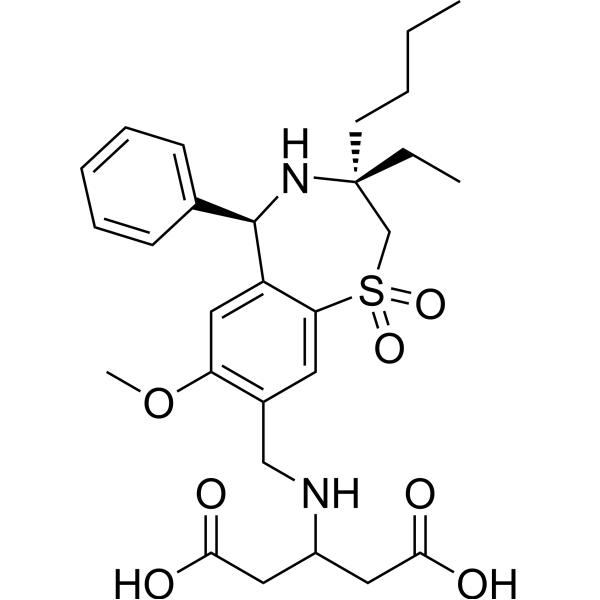
    Linerixibat
    10+ Cited Publications

    GSK2330672

    Apical Sodium-Dependent Bile Acid Transporter Infection Metabolic Disease Inflammation/Immunology
    Linerixibat (GSK2330672) is a highly potent, nonabsorbable and orally active apical sodium-dependent bile acid transporter (ASBT) inhibitor with an IC50 of 42 nM human ASBT. Linerixibat can be used as lipid-lowering agent. Linerixibat has the potential for type 2 diabetes and Primary Biliary Cholangitis treatment .
    Linerixibat
  • HY-W590569

    Biochemical Assay Reagents Others
    Azido-PEG12-amine is a water soluble PEG compound. The azide group enables Click Chemistry. The amine group is reactive with carboxylic acids, activated NHS esters, carbonyls (ketone, aldehyde), etc. The hydrophilic PEG arm increases solubility in aqueous media.
    Azido-PEG12-amine
  • HY-W127790

    Biochemical Assay Reagents Others
    Bathophenanthrolinedisulfonic acid disodium salt (BPS) is a colorimetric reagent for iron detection, with a wavelength of 535 nm for iron complex. It can be used for iron determination in aqueous solution systems without the need for extraction solvents. BPS can serve as a precursor to prepare Europium(III) tris(dibenzoylmethanate) bis(bathophenanthrolinedisulfonate) complex and ruthenium(II) tris(bathophenanthrolinedisulfonate), or participate in the catalytic oxidation of 2-hexanol by forming water-soluble complexes with palladium .
    Bathophenanthrolinedisulfonic acid disodium
  • HY-18706

    trans-MK-341; trans-SB 252218

    Angiotensin Receptor Drug Isomer Cardiovascular Disease Metabolic Disease Inflammation/Immunology Cancer
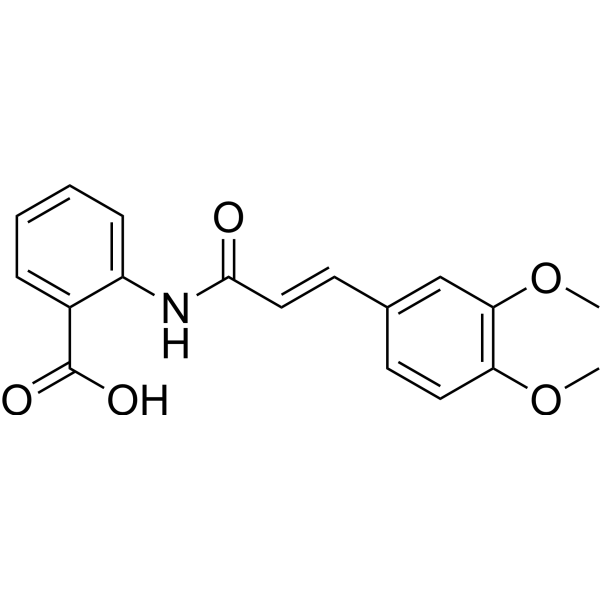
    trans-Tranilast (trans-MK-341) is an isomer of Tranilast (HY-B0195), and an anti-allergy agent used in studies of bronchial asthma, allergic rhinitis, and atopic dermatitis .
    trans-Tranilast
  • HY-W591374

    ADC Linker Cancer
    DBCO-PEG4-Val-Ala-PAB-PNP is a cleavable ADC linker. The Val-Ala linkers can be cleaved by Cathepsin B. The DBCO groups is commonly used for Click Chemistry reactions. PEG spacer improves the compound's aqueous solubility. PNP is a good leaving group.
    DBCO-PEG4-Val-Ala-PAB-PNP
  • HY-W800805

    Liposome Cancer
    DOPE-Mal is a synthetic analog of naturally-occurring PE containing 18:1 fatty acids at the sn-1 and sn-2 positions with a terminal maliemide group. The maleimide group will react with a thiol group to form a covalent bond. The hydrophilic PEG spacer increases solubility in aqueous media.
    DOPE-Mal
  • HY-W1049092

    Biochemical Assay Reagents Others
    mPEG2000-N3 can be used to modify proteins, peptides, and other materials. The azide group can react with alkynes in aqueous solution catalyzed by copper. It can also be easily reduced to an amine group. PEGylation can increase solubility and stability and reduce the immunogenicity of peptides and proteins. mPEG2000-N3 can also inhibit the nonspecific binding of charged molecules to the modified surface .
    mPEG2000-N3
  • HY-P4389

    GLP Receptor Metabolic Disease
    (Asp28)-Glucagon (1-29) (human, rat, porcine) is an optimized structure of glucagon, the 28th position is replaced by aspartic acid (Asp) which significantly increases the aqueous solubility of glucagon in a physiological pH buffer, has the same activity as glucagon .
    (Asp28)-Glucagon (1-29) (human, rat, porcine)
  • HY-W190881

    Biochemical Assay Reagents Others
    N3-PEG11-CH2CH2Br is a PEG linker containing a bromine and an azide group. The hydrophilic PEG spacer increases solubility in aqueous media. The azide group can react with alkyne, BCN, DBCO via Click Chemistry to yield a stable triazole linkage. The bromine (Br) is a very good leaving group for nucleophilic substitution reactions.
    N3-PEG11-CH2CH2Br
  • HY-W1049105

    Biochemical Assay Reagents Others
    mPEG2000-Alkyne is a PEG derivative. The alkynyl group can react with azide in aqueous solution under the catalysis of monovalent copper. Polyethylene glycol derivatives can increase the solubility and stability of drugs, reduce the immunogenicity of peptides, and have good biocompatibility .
    mPEG2000-Alkyne
  • HY-W144703

    9-Aminoheptadecane

    Biochemical Assay Reagents Others
    Heptadecan-9-amine (9-Aminoheptadecane) is PEG linker containing a maleimide and TFP ester end group. Maleimide groups are reactive with thiols between pH 6.5 and 7.5. The TFP ester can react with primary amine groups and is also less susceptible to undergo hydrolysis compared to NHS ester. The hydrophilic PEG chains increase the water solubility of a compound in aqueous media. Longer PEG chains have improved water solubility relative to shorter PEG chains.
    Heptadecan-9-amine
  • HY-174359C

    Biochemical Assay Reagents Others
    Alkyne-PEG5000-NH2 is an alkyne-functionalized bifunctional PEG derivative that can be used to modify proteins, peptides, and other materials. The alkyne group reacts with azides in aqueous solution in a copper-catalyzed manner. PEGylation can increase solubility and stability and reduce the immunogenicity of peptides and proteins .
    Alkyne-PEG5000-NH2
  • HY-W591402

    ADC Linker Cancer
    3,4-Dibromo-Mal-PEG4-acid is a site specific ADC linker with a dibromomaleimide group and an acid group. The dibromomaleimide group allows for two points of substitution due to the two bromine atoms. The carboxylic acid can react with primary amines in the presence of EDC and HATU to form a stable amide bond. The hydrophilic PEG linker increases the water solubility of compounds in aqueous media.
    3,4-Dibromo-Mal-PEG4-Acid
  • HY-W440945

    Liposome Others
    Stearic acid-PEG2000-amine is an amphiphilic PEG polymer which forms micelles in an aqueous solution. The terminal amine can react with an NHS ester to form a stable amide linkage. The aliphatic chain of stearic acid can be used to encapsulate or congregate hydrophobic therapeutic agents while the PEG chain enhances overall solubility of the polymer. Reagent grade, for research use only.
    Stearic acid-PEG2000-amine
  • HY-D2242

    Fluorescent Dye Others
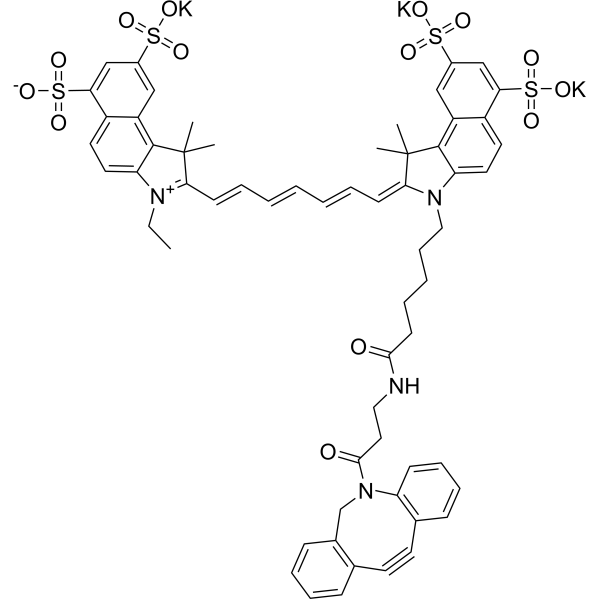
    Sulfo-Cy7.5 DBCO is a dye derivative of Cyanine 7.5 (Cy7.5) (HY-D0926) bearing a DBCO group. The sulfonate ion increases the water solubility of the compound, making it suitable for use in aqueous solutions. Sulfo-Cy7.5 DBCO can bind to biomolecules such as proteins and antibodies to track their location and dynamic changes in biological samples .
    Sulfo-Cy7.5 DBCO
  • HY-145261

    Dihydroorotate Dehydrogenase Inflammation/Immunology
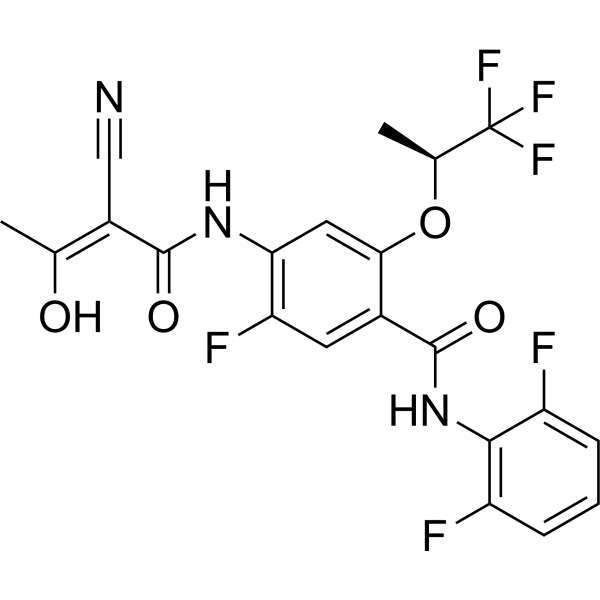
    hDHODH-IN-8 is a potent inhibitor of human dihydroorotate dehydrogenase (hDHODH) with an IC50 of 16 nM. hDHODH-IN-8 has potent antiproliferative activity and excellent aqueous solubility. hDHODH-IN-8 has the potential for the research of tumor disease, especially lymphoma .
    hDHODH-IN-8
  • HY-D1307A

    Fluorescent Dye
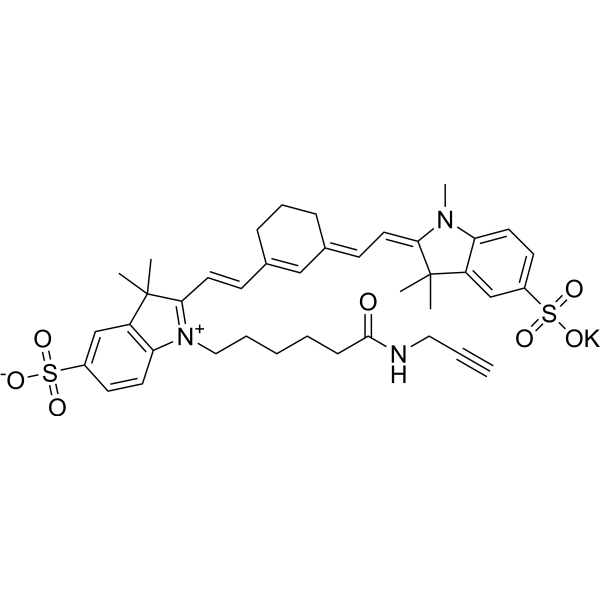
    Sulfo-cyanine7 alkyne potassium is a water-soluble near-infrared dye with a sulfonated terminal alkyne that can be used in copper-catalyzed click chemistry reactions to conjugate with azides in an aqueous environment.
    Sulfo-cyanine7 alkyne potassium
  • HY-D1307

    Fluorescent Dye
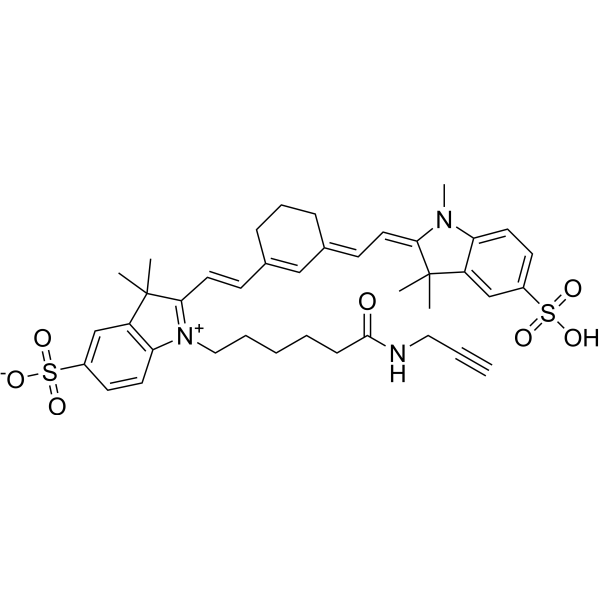
    Sulfo-cyanine7 alkyne is a water-soluble near-infrared dye with a sulfonated terminal alkyne that can be used in copper-catalyzed click chemistry reactions to conjugate with azides in an aqueous environment.
    Sulfo-cyanine7 alkyne
  • HY-W190914

    Biochemical Assay Reagents Others
    TCO-PEG2-TCO is a homebifunctional reagent containing TCO moiety at both ends of the molecule. TCO group specifically and efficiently reacts with tetrazine. The hydrophilic PEG linker increases the solubility of compounds in aqueous media.
    Tco-PEG2-Tco
  • HY-W878813

    Biochemical Assay Reagents Others
    Tos-PEG22-Tos is a PEG linker containing two tosyl groups. The hydrophilic PEG spacer increases solubility in aqueous media. The tosyl group is a very good leaving group for nucleophilic substitution reactions.
    Tos-PEG22-Tos
  • HY-151392

    LPL Receptor Neurological Disease Inflammation/Immunology
    LPA5 antagonist 2 (compound 65) is a high aqueous solubility LPA5 (lysophosphatidic acid receptor 5) antagonist. LPA5 antagonist 2 significantly attenuates nociceptive hypersensitivity and it can be used for the research of inflammatory and neuropathic pains .
    LPA5 antagonist 2
  • HY-W591373

    ADC Linker Cancer
    DBCO-PEG4-Val-Ala-PAB is a cleavable ADC linker. The Val-Ala linkers can be cleaved by Cathepsin B. The DBCO groups is commonly used for Click Chemistry reactions. PEG spacer improves the compound's aqueous solubility.
    DBCO-PEG4-Val-Ala-PAB
  • HY-131914B

    Sigma Receptor Inflammation/Immunology
    EST64454 maleate is a highly soluble σ1 receptor antagonist, demonstrating potent antinociceptive properties for pain treatment. EST64454 maleate exhibits excellent metabolic stability across various species and possesses an adequate pharmacokinetic profile in rodents. EST64454 maleate has been identified as a promising clinical candidate due to its favorable aqueous solubility and high permeability in Caco-2 cells.
    EST64454 maleate
  • HY-W1049091C

    Biochemical Assay Reagents Others
    mPEG20000-Alkyne is a PEG derivative. The alkynyl group can react with azide in aqueous solution under the catalysis of monovalent copper. Polyethylene glycol derivatives can increase the solubility and stability of drugs, reduce the immunogenicity of peptides, and have good biocompatibility .
    mPEG20000-Alkyne
  • HY-W190752

    Biochemical Assay Reagents Others
    m-PEG13-acid is a PEG linker containing a terminal carboxylic acid. The terminal carboxylic acid can react with primary amine groups in the presence of activators (e.g. EDC, or HATU) to form a stable amide bond. The hydrophilic PEG spacer increases solubility in aqueous media.
    m-PEG13-acid
  • HY-W800669

    PROTAC Linkers Cancer
    (S, R, S)-AHPC-PEG2-NHS ester is a synthetic PROTAC linker that incorporatess an E3 ligase ligand with a PEG linker to empower PROTAC medicine chemistry. NHS ester is reactive with amine moiety. The hydrophilic PEG spacer increases its aqueous solubility.
    (S,R,S)-AHPC-PEG2-NHS ester
  • HY-W190939

    Biochemical Assay Reagents Others
    C11-PEG9-alcohol is a linker with an aliphatic carbon chain and a PEG chain. The hydrophilic PEG chain increases the water solubility of the compounds in the aqueous media. The hydroxyl group enables further derivatization or replacement with other reactive functional groups.
    C11-PEG9-alcohol
  • HY-W190942

    PROTAC Linkers Cancer
    (S, R, S)-AHPC-PEG8-acid is a synthetic PROTAC linker that incorporatess an E3 ligase ligand with a PEG8 linker to empower PROTAC drug R&D. PEG8 increases the compound's aqueous solubility. Acid group is reactive with amine containing molecule.
    (S,R.S)-AHPC-PEG8-acid
  • HY-W250735

    Biochemical Assay Reagents Others
    NHS-PEG4-biotinidase resistant biotin is a biotinylation reagent with a terminal NHS ester. The hydrophilic PEG spacer increases solubility in aqueous media. The NHS ester can be used to label the primary amines (-NH2) of proteins, amine-modified oligonucleotides, and other amine-containing molecules.
    NHS-PEG4-biotinidase resistant biotin
  • HY-174359H

    Biochemical Assay Reagents Others
    Alkyne-PEG40000-NH2 is an alkyne-functionalized bifunctional PEG derivative that can be used to modify proteins, peptides, and other materials. The alkyne group reacts with azides in aqueous solution in a copper-catalyzed manner. PEGylation can increase solubility and stability and reduce the immunogenicity of peptides and proteins .
    Alkyne-PEG40000-NH2
  • HY-174359A

    Biochemical Assay Reagents Others
    Alkyne-PEG2000-NH2 is an alkyne-functionalized bifunctional PEG derivative that can be used to modify proteins, peptides, and other materials. The alkyne group reacts with azides in aqueous solution in a copper-catalyzed manner. PEGylation can increase solubility and stability and reduce the immunogenicity of peptides and proteins .
    Alkyne-PEG2000-NH2
  • HY-W800775

    Fluorescent Dye Others
    BP Fluor 647 Alkyne is a bright green-fluorescent dye optimal for use with the 633, 650 nm Argon laser. The alkyne group can react with azides via copper catalyzed Click Chemistry reactions. The dye is water soluble and pH-insensitive from pH 4 to pH 10. The dye has 4 sulfonate groups which make it highly water soluble and cause less aggregation in the aqueous solution. BP Fluor 647 Alkyne is used for protein and antibody labeling, or nucleic acid applications with high labeling density.
    BP Fluor 647 Alkyne
  • HY-W440953

    Biochemical Assay Reagents Others
    Stearic acid-PEG1000-CH2CO2H is an amphiphilic PEG polymer which forms micelles in an aqueous solution. The aliphatic chain of stearic acid can be used to encapsulate or congregate hydrophobic therapeutic agents while the PEG chain enhances overall solubility of the polymer.
    Stearic acid-PEG1000-CH2CO2H
  • HY-W590583

    PROTAC Linkers Cancer
    (S, R, S)-AHPC-PEG6-Azide is a click chemistry PROTAC linker that incorporates an E3 ligase ligand with a PEG6 arm to empower PROTAC research & discovery. The hydrophilic PEG spacer increases the solubility of a compound in aqueous media. Azide enables click chemistry with alkyne, DBCO, or BCN molecule.
    (S,R,S)-Ahpc-PEG6-azide
  • HY-W451433

    Biochemical Assay Reagents Others
    OTs-PEG1-NHCbz is a PEG linker containing a tosyl group and benzyl (Cbz) protecting group. The hydrophilic PEG spacer increases the water solubility of the compound in aqueous media. The tosyl group is a very good leaving group for nucleophilic substitution reactions. The benzyl protecting group can be removed via hydrogenolysis to form a free amine.
    OTs-PEG1-NHCbz
  • HY-W460133

    Biochemical Assay Reagents Others
    tert-Butyl (2-(2-(2-iodoethoxy)ethoxy)ethyl)carbamate is a PEG linker containing a Boc protected amine and an iodine group. The protected amine can be deprotected under mild acidic conditions. Iodine (I) is a very good leaving group for nucleophilic substitution reactions. The hydrophilic PEG spacer increases solubility in aqueous media.
    tert-Butyl (2-(2-(2-iodoethoxy)ethoxy)ethyl)carbamate
  • HY-W553514

    Biochemical Assay Reagents
    DL-α-Phosphatidylcholine, distearoyl is a synthetic form of phosphatidylcholine that has the activity of spontaneously forming bilayer membranes in aqueous environments. DL-α-Phosphatidylcholine, distearoyl is an important component of biological membranes and provides support for the integrity of cell structures. DL-α-Phosphatidylcholine, distearoyl plays a key role in the preparation of compound delivery systems to improve the solubility and biocompatibility of compounds.
    DL-α-Phosphatidylcholine, distearoyl
  • HY-126321

    ROR Cancer
    RORγt agonist 1 (compound 14) is a potent, orally bioavailable RORγt agonist with an EC50 of 20.8 nM. RORγt agonist 1 showes high metabolic stability, improved aqueous solubility and excellent mouse PK profile. RORγt agonist 1 is a potential candidate of RORγt agonist for cancer immunotherapy .
    RORγt agonist 1
  • HY-W572763

    Biochemical Assay Reagents Others
    Tos-PEG6-acid is a PEG linker containing a tosyl group and a terminal carboxylic acid. The hydrophilic PEG spacer increases solubility in aqueous media. The tosyl group is a very good leaving group for nucleophilic substitution reactions. The terminal carboxylic acid can react with primary amine groups in the presence of activators (e.g. HATU) to form a stable amide bond.
    Tos-PEG6-acid
  • HY-W800654

    Biochemical Assay Reagents Others
    Mal-PEG5-amine is a PEG linker containing a maleimide group and an amine group. The hydrophilic PEG spacer increases solubility in aqueous media. The amine group is reactive with carboxylic acids, activated NHS esters, carbonyls (ketone, aldehyde) etc. The maleimide group will react with a thiol group to form a covalent bond, enabling the connection of biomolecule with a thiol.
    Mal-PEG5-amine
  • HY-W190941

    3,6,9,12,15-Pentaoxahexacosan-1-ol

    Biochemical Assay Reagents Others
    C11-PEG6-alcohol (3,6,9,12,15-Pentaoxahexacosan-1-ol) is a linker with an aliphatic carbon chain and a PEG chain. The hydrophilic PEG chain increases the water solubility of the compounds in the aqueous media. The hydroxyl group enables further derivatization or replacement with other reactive functional groups.
    C11-PEG6-alcohol
  • HY-W190955

    Biochemical Assay Reagents Others
    N-(t-butyl ester-PEG3)-N-bis(PEG3-amine) is a PEG reagent that can easily react with activated NHS esters or carboxylic acid in the presence of EDC or HATU. The t-butyl group can be deprotected under acidic conditions. The hydrophilic PEG spacers increase the compounds water solubility in aqueous media.
    N-(t-Butyl ester-PEG3)-N-bis(PEG3-amine)
  • HY-152614

    Parasite Infection
    Antimalarial agent 19 (compound 6e) is an antimalarial active agent. Antimalarial agent 19 has antimalarial activity for the blood stage of P. falciparum K1 and P. berghei with EC50 values of 0.3 µM, 15.3 µM, respectively. Antimalarial agent 19 has good aqueous solubility, intestinal permeability and microsomal stability compared to gamhepathiopine .
    Antimalarial agent 19
  • HY-W800814

    ADC Linker Cancer
    Azido-PEG8-Amido-Val-Cit-PAB is a cleavable ADC linker. The Val-Cit will specifically be cleaved by Cathepsin B. As this enzyme is only present in the lysosome, the ADC payload will be released only in the cell. Azido will react with DBCO, BCN or other alkyne groups through click chemistry. PEG spacer increases aqueous solubility. Reagent grade, for research purpose.
    Azido-PEG8-Amido-Val-Cit-PAB
  • HY-151134

    HBV Infection
    HBV-IN-25 is a good potency, orally active novel HBV cccDNA reducer. HBV-IN-25 has anti-HBeAg potency and anti-HBV activity with IC50 values of 0.58 μM and 1.15 μM, respectively. HBV-IN-25 has good aqueous solubility (LYSA>452 μg/mL) and good PK property with no cellular toxicity .
    HBV-IN-25
  • HY-W440807

    Liposome Others
    Oleoyl-Gly-Lys-(m-PEG11)-NH2 is a PEG-lipid molecule featuring an oleoyl amide linked to a Gly-Lys dipeptide and a methoxy PEG11 chain on the C-terminus of the lysine. The lysine primary amine may be used in a wide variety of reactions with carboxylic acids, NHS esters, and carbonyl groups. The PEG linker provides aqueous solubility.
    Oleoyl-Gly-Lys-(m-PEG11)-NH2
  • HY-W591390

    Biochemical Assay Reagents Others
    6-Azidohexanoic Acid STP Ester is an amine-reactive, water-soluble labeling reagent with an azide group and a terminal 4-Sulfo-2,3,5,6-tetrafluorophenyl (STP) group. 6-Azidohexanoic Acid STP Ester is used to modify proteins, antibodies, and other amine-containing biopolymers in aqueous media. The azide group can react with alkyne, BCN, DBCO via Click Chemistry to yield a stable triazole linkage. STP esters can react with primary amines, forming covalent amide bonds, and typically display much better stability toward hydrolysis in aqueous media, resulting in more efficiency and better reproducible labeling of biopolymers.
    6-Azidohexanoic acid STP ester
  • HY-W800649

    Biochemical Assay Reagents Others
    Aminooxy-PEG2-amine hydrochloride (compound L3) is an aqueous soluble crosslinker. The aminooxy group can be used in bioconjugation. It reacts with an aldehyde to form an oxime bond, if a reductant is used, it will form a hydroxylamine linkage. The amino group is reactive with carboxylic acids, activated NHS esters, carbonyls (ketone, aldehyde) etc. Aminooxy compounds are very reactive and sensitive; they cannot be stored for long term .
    Aminooxy-PEG2-amine hydrochloride
  • HY-131699

    Biochemical Assay Reagents Others
    t-Butyl ester-PEG4-CH2COOH is a PEG linker containing a t-butyl group with a terminal carboxylic acid. The terminal carboxylic acid can react with primary amine groups in the presence of activators (e.g. HATU) to form a stable amide bond. The hydrophilic PEG spacer increases solubility in aqueous media. The t-butyl group can be deprotected under acidic conditions.
    t-Butyl ester-PEG4-CH2COOH
  • HY-W800670

    Biochemical Assay Reagents Others
    Mal-amido-PEG5-alkyne is a PEG linker containing a maleimide group and an alkyne. The hydrophilic PEG spacer increases solubility in aqueous media. The alkyne group can react with azide-bearing compounds or biomolecules via copper catalyzed azide-alkyne Click Chemistry to yield a stable triazole linkage. The maleimide group will react with a thiol group to form a covalent bond, enabling the connection of biomolecule with a thiol.
    Mal-amido-PEG5-alkyne

Inquiry Online

Your information is safe with us. * Required Fields.

Salutation


Country or Region *

Applicant Name *


Organization Name *

Department *


Email Address *


Product Name *

Cat. No.


Requested quantity *

Phone Number *


Remarks

Inquiry Online

Inquiry Information

Product Name:
Cat. No.:
Quantity:
MCE Japan Authorized Agent:

