


1. Search Result
Search Result
Results for "

bee venom

" in MedChemExpress (MCE) Product Catalog:

17

Inhibitors & Agonists

8

Peptides

1

Natural
Products

Cat. No. Product Name Target Research Areas Chemical Structure
  • HY-P0256
    Apamin
    5+ Cited Publications

    Apamine

    Potassium Channel Neurological Disease Inflammation/Immunology
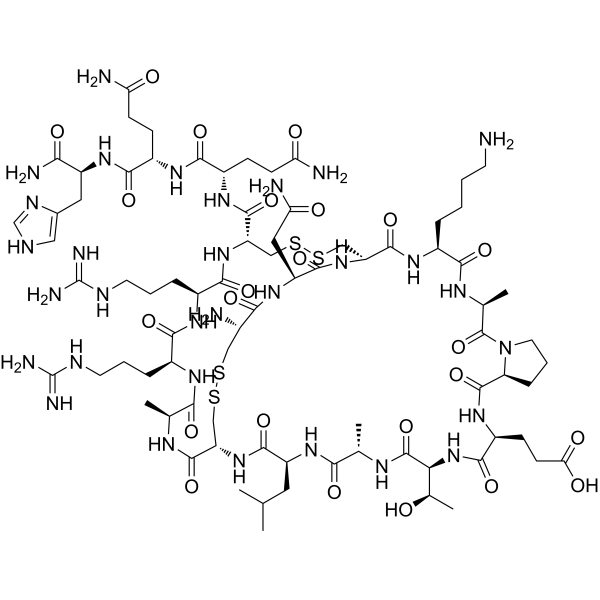
    Apamin (Apamine) is an 18 amino acid peptide neurotoxin found in apitoxin (bee venom), is known as a specifically selective blocker of Ca 2+-activated K + (SK) channels and exhibits anti-inflammatory and anti-fibrotic activity .
    Apamin
  • HY-103474
    Bicuculline methiodide
    4 Publications Verification

    (-)-Bicuculline methiodide

    GABA Receptor Neurological Disease
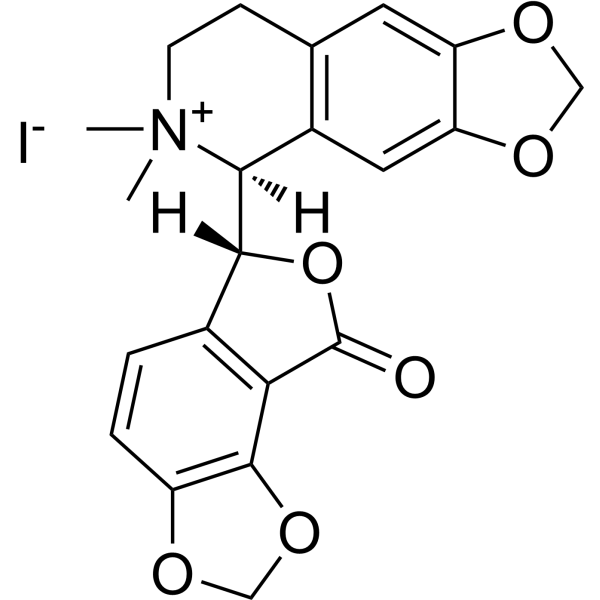
    Bicuculline methiodide ((-)-Bicuculline methiodide) is a potent GABAA blocker. Bicuculline methiodide alters membrane properties and firing pattern. Bicuculline methiodide reduces the Apamin-sensitive afterhyperpolarization, while Apamin is a toxin isolated from bee venom to block small conductance Ca 2+ -activated K + channels. Bicuculline methiodide facilitates burst firing via blocking apamin-sensitive Ca 2+ -activated K + current .
    Bicuculline methiodide
  • HY-12537

    Histamine Receptor 5-HT Receptor Inflammation/Immunology Endocrinology
    Peptide 401, a potent mast cell degranulating factor from bee venom, suppresses the increased vascular permeability due to intradermal injection of various smooth muscle spasmogens (histamine, and 5-HT).
    Peptide 401
  • HY-P3914

    Oct-CA(1-7)M(2-9)

    Bacterial Infection
    Cecropin A (1-7)-Melittin A (2-9) is an antimicrobial peptide with antimicrobial activity against a broad spectrum of Gram-positive and Gram-negative aerobic bacteria, as well as antimalarial activity, without the adverse hemolytic properties of bee venom peptides .
    Cecropin A (1-7)-Melittin A (2-9)
  • HY-100783
    (-)-Bicuculline methobromide
    4 Publications Verification

    GABA Receptor Neurological Disease
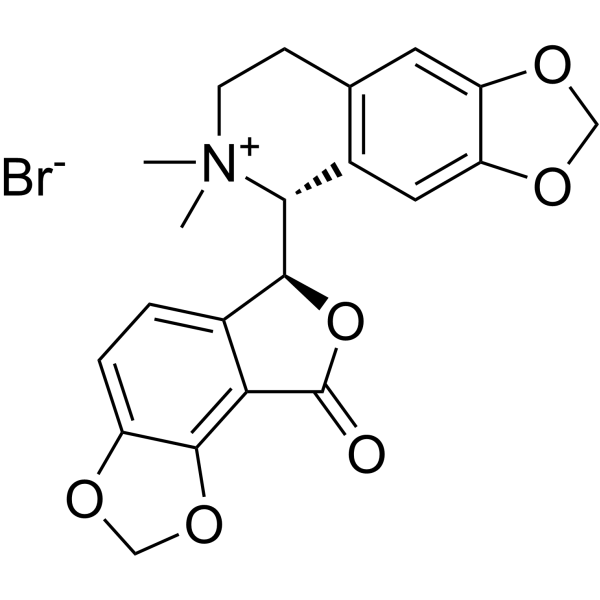
    (-)-Bicuculline methobromide is a potent GABAA blocker. (-)-Bicuculline methobromide alters membrane properties and firing pattern. (-)-Bicuculline methobromide reduces the Apamin-sensitive afterhyperpolarization, while Apamin is a toxin isolated from bee venom to block small conductance Ca 2+ -activated K + channels. (-)-Bicuculline methobromide facilitates burst firing via blocking apamin-sensitive Ca 2+ -activated K + current .
    (-)-Bicuculline methobromide
  • HY-P0256A
    Apamin TFA
    5+ Cited Publications

    Apamine TFA

    Potassium Channel Neurological Disease Inflammation/Immunology
    Apamin TFA (Apamine TFA) is an 18 amino acid peptide neurotoxin found in apitoxin (bee venom), is known as a specifically selective blocker of Ca 2+-activated K + (SK) channels and exhibits anti-inflammatory and anti-fibrotic activity .
    Apamin TFA
  • HY-P5629

    Bacterial Infection
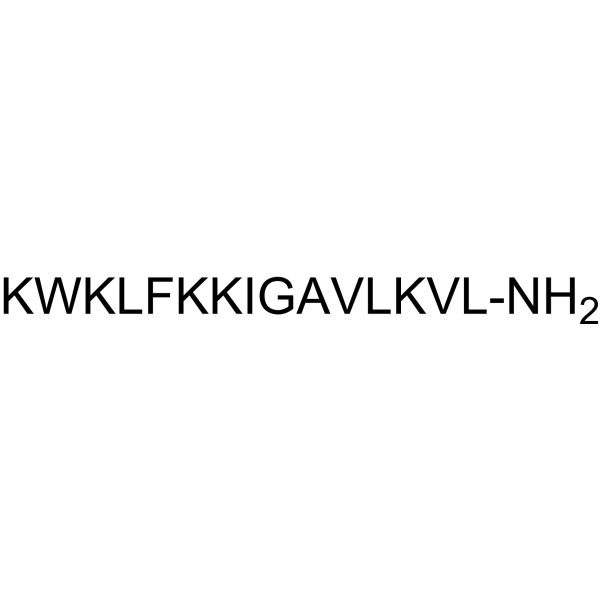
    MCF is an antimicrobial peptide derived from bee venom. MCF has activity against E.coli W 160-37, S.aureus 8530 and B.subtilis, the MIC values are 35-45 μg/ml, 25-35 μg/ml and 15-25 μg/ml .
    MCF
  • HY-100783A

    GABA Receptor Neurological Disease
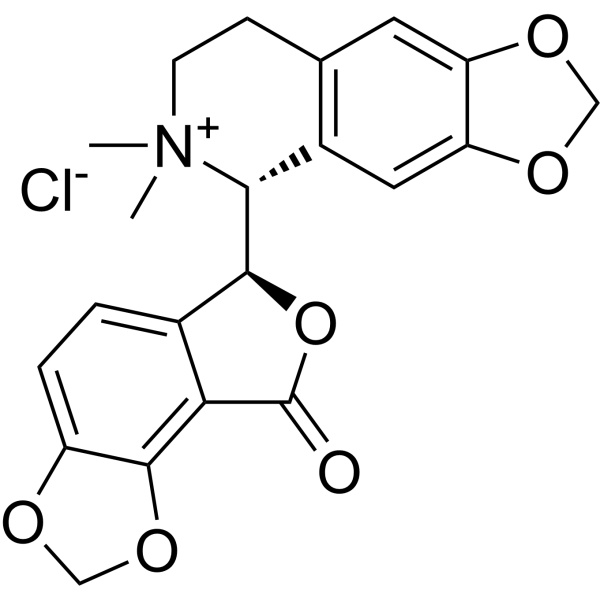
    (+)-Bicuculline methobromide is a potent GABAA blocker. (+)-Bicuculline methobromide alters membrane properties and firing pattern. (+)-Bicuculline methobromide reduces the Apamin-sensitive afterhyperpolarization, while Apamin is a toxin isolated from bee venom to block small conductance Ca 2+ -activated K + channels. (+)-Bicuculline methobromide facilitates burst firing via blocking apamin-sensitive Ca 2+ -activated K + current .
    (+)-Bicuculline methochloride
  • HY-P10596

    Bacterial Fungal Infection Cancer
    Lasioglossin-III is an antimicrobial peptide that can be isolated from the venom of wild bees. Lasioglossin-III has high antibacterial activity against Gram-positive and Gram-negative bacteria, antifungal activity and antitumor activity. Lasioglossin-III has certain cytotoxicity against three cancer cell lines (HeLa S3, CRC SW 480 and CCRF-CEM T) with IC50 values ​​of 4, 18 and 5 μM, respectively .
    Lasioglossin-III
  • HY-P3029D

    Biochemical Assay Reagents Metabolic Disease
    Phospholipase A2, Honey bee venom (Apis mellifera) (EC 3.1.1.4) hydrolyzes the β-ester bond of zwitterionic glycerophospholipids. Preferred substrates are phosphatidylcholine, phosphatidylethanolamine, and their plasmalogen analogues.
    Phospholipase A2, Honey bee venom (Apis mellifera)
  • HY-P1987

    Calcium Channel Neurological Disease
    Mast cell degranulating peptide (28-49) is a depolarizing agent from bee venom, it can raise the content of cGMP level in mouse cerebellar slices .
    Mast cell degranulating peptide (28-49)
  • HY-125744

    Biochemical Assay Reagents Others
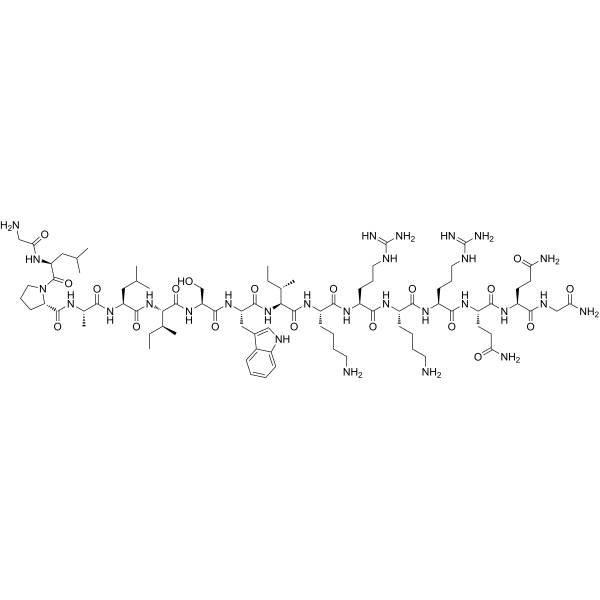
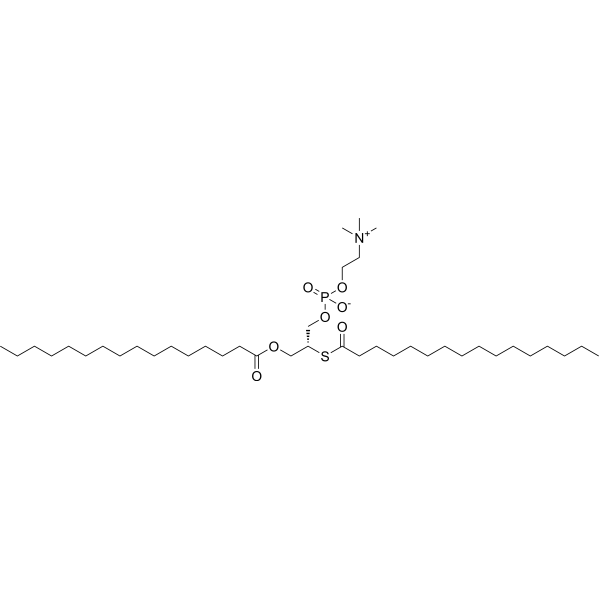
    Palmitoyl thio-PC is a chromogenic substrate specific for PLA2 with a palmitoyl thioester at the sn-2 position. Palmitoyl thio-PC could be used to measure bee-venom sPLA2 activity in a phospholipid system .
    Palmitoyl thio-PC
  • HY-165327

    Phospholipase Inflammation/Immunology
    AGN-190383 is a bee venom phospholipase A2 inhibitor. AGN 190383 inhibits both hormone-operated and depolarization-dependent calcium mobilization as well as fMLP stimulated increases in free cytosolic calcium. AGN-190383 has anti-inflammatory activity .
    AGN-190383
  • HY-P10547

    MAC-1 peptide

    Bacterial Infection
    Macropin (MAC-1 peptide) is an antimicrobial peptide found in the venom of the solitary bee Macropis fulvipes. Macropin has antibacterial activity against both Gram-positive and Gram-negative bacteria, and also exhibits inhibitory activity against fungi and moderate hemolytic activity against human erythrocytes. Macropin can be used in research on anti-infective therapy .
    Macropin
  • HY-182680

    Phospholipase Inflammation/Immunology
    Manoalogue is an irreversible secretory phospholipase A2 (sPLA2) inhibitor. Manoalogue covalently modifies K94 of bee venom phospholipase A2 (bvPLA2) to inactivate the enzyme and shows selective inhibition on bvPLA2. Manoalogue can suppress PLA2-mediated contractions of guinea pig lung pleural strips. Manoalogue is used for sPLA2 mechanism and respiratory physiology research .
    Manoalogue
  • HY-182434

    Phosphatase FAP Inflammation/Immunology
    CL 118326 is a potent, selective, competitive inhibitor of mammalian pancreatic phospholipase A2 (PLA2) and a weak antagonist of platelet-activating factor receptor (PAF receptor). CL 118326 competitively inhibits mammalian pancreatic PLA2 (porcine: IC50 = 1.55 μg/mL), and shows no activity against snake venom or bee venom PLA2. CL 118326 inhibits PAF-induced and thrombin-induced platelet aggregation, as well as the release of leukotriene (LTC4) and histamine from basophil-enriched leukocytes. CL 118326 can be used for research on inflammation and allergic reactions .
    CL 118326
  • HY-103474R

    (-)-Bicuculline methiodide (Standard)

    Reference Standards GABA Receptor Neurological Disease
    Bicuculline methiodide (Standard) is the analytical standard of Bicuculline methiodide (HY-103474). This product is intended for research and analytical applications. Bicuculline methiodide ((-)-Bicuculline methiodide) is a potent GABAA blocker. Bicuculline methiodide alters membrane properties and firing pattern. Bicuculline methiodide reduces the Apamin-sensitive afterhyperpolarization, while Apamin is a toxin isolated from bee venom to block small conductance Ca2+ -activated K+ channels. Bicuculline methiodide facilitates burst firing via blocking apamin-sensitive Ca2+ -activated K+ current .
    Bicuculline methiodide (Standard)

Inquiry Online

Your information is safe with us. * Required Fields.

Salutation


Country or Region *

Applicant Name *


Organization Name *

Department *


Email Address *


Product Name *

Cat. No.


Requested quantity *

Phone Number *


Remarks

Inquiry Online

Inquiry Information

Product Name:
Cat. No.:
Quantity:
MCE Japan Authorized Agent:

