17 Results for "

birds

" in MedChemExpress (MCE) Product Catalog:
Products (17)

17 Results for "birds" in MCE Product Catalog:

6
6 Publications Verification
Cat. No.: HY-B0710
CAS No.: 107-43-7
Synonyms: Trimethylglycine; carboxy-N,N,N-trimethylmethanaminium
Betaine (Trimethylglycine) is a natural compound found in many foods and also an active methyl-donor which can maintain normal DNA methylation patterns [1,2]. Betaine is found ubiquitously in plants, animals, microorganisms, and rich dietary sources including seafood, spinach, and wheat bran. Betaine also acts as an osmolyte, to maintain the avian’s cellular water and ion balance to improve the avian’s capacity against heat stress via preventing dehydration and osmotic inactivation. It helps in maintaining the protective osmolytic activity, especially in heat-stressed birds. Betaine may promote various intestinal microbes against osmotic variations and thus improve microbial fermentation activity .
loading...
    loading...
1
1 Cited Publications
Cat. No.: HY-N1500
CAS No.: 89-82-7
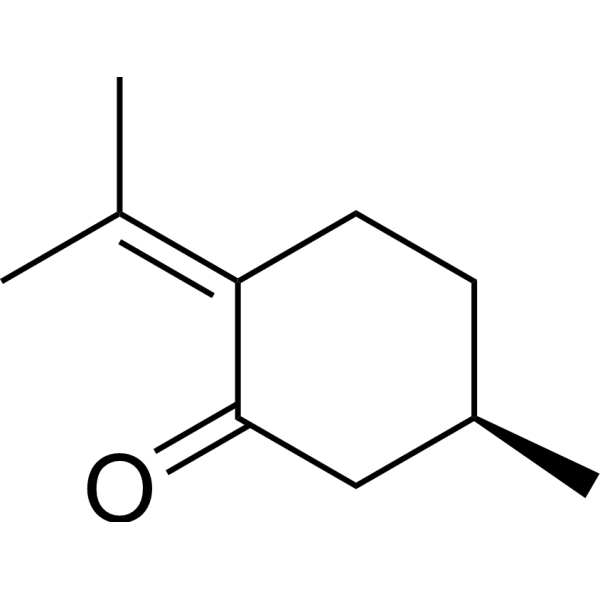
Pulegone is a monoterpene ketone compound widely present in the essential oils of many plants. Pulegone can also be used as a bird repellent. Pulegone has multiple activities such as anti-inflammatory, antibacterial, antifungal, and anti-hyperalgesic effects. Pulegone is particularly effective against bacteria of the Salmonella species .
loading...
    loading...
1
1 Cited Publications
Cat. No.: HY-119737
CAS No.: 64902-72-3
Purity:  99.95%
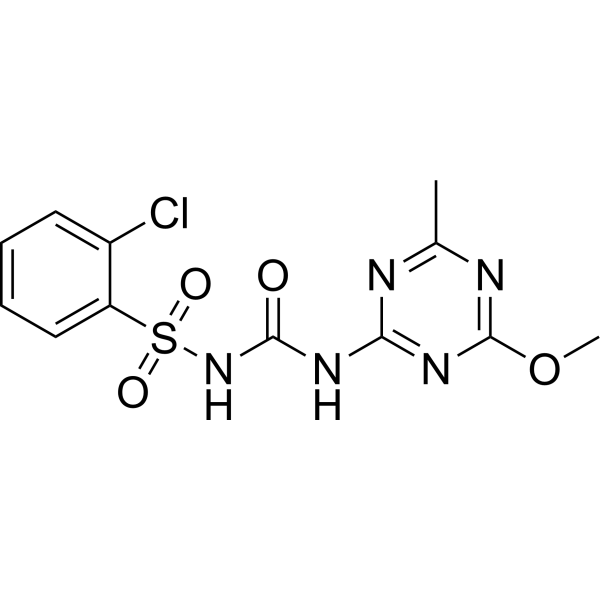
Chlorsulfuron is an acetolactate synthase inhibitor and selective systemic herbicide. Chlorsulfuron blocks the synthesis of branched-chain amino acids (valine and isoleucine), thereby inhibiting protein synthesis, cell growth, and cell division. Chlorsulfuron blocks G1 and G2 phase cell cycle progression in plant root tip cells without directly interfering with mitosis or DNA synthesis. Chlorsulfuron completely inhibits germination of non-target terrestrial plants and is highly toxic to aquatic macrophytes. Chlorsulfuron has low toxicity to mammals, birds and bees, and moderate toxicity to fish and aquatic invertebrates. Chlorsulfuron can be used in studies related to herbicides, plant cell cycles and ecotoxicology .
loading...
    loading...
Cat. No.: HY-W017423
CAS No.: 6485-40-1
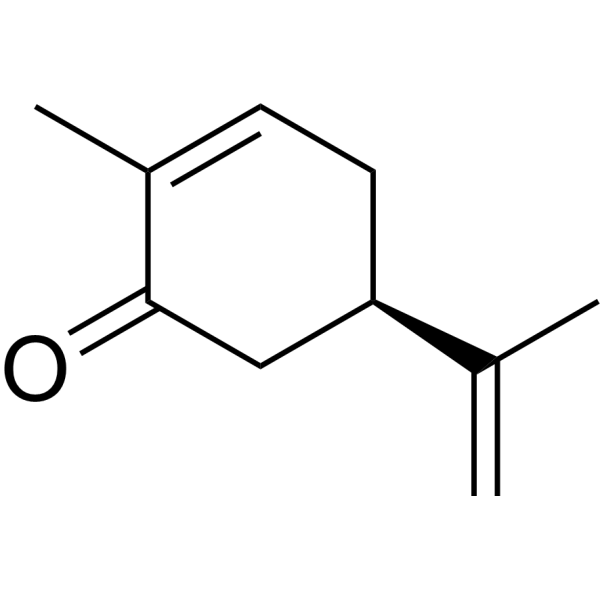
(-)-Carvone is an insect neurotoxin and a irreversible acetylcholinesterase (AChE) inhibitor. (-)-Carvone can be used as a bird repellent, inhibits larval growth, decreases pupatation rate, and increases mortality of larvae .
loading...
    loading...
Cat. No.: HY-B0710R
CAS No.: 107-43-7
Synonyms: Trimethylglycine (Standard); carboxy-N,N,N-trimethylmethanaminium (Standard)
Betaine (Standard) is the analytical standard of Betaine. This product is intended for research and analytical applications. Betaine (Trimethylglycine) is a natural compound found in many foods and also an active methyl-donor which can maintain normal DNA methylation patterns [1,2]. Betaine is found ubiquitously in plants, animals, microorganisms, and rich dietary sources including seafood, spinach, and wheat bran. Betaine also acts as an osmolyte, to maintain the avian’s cellular water and ion balance to improve the avian’s capacity against heat stress via preventing dehydration and osmotic inactivation. It helps in maintaining the protective osmolytic activity, especially in heat-stressed birds. Betaine may promote various intestinal microbes against osmotic variations and thus improve microbial fermentation activity .
loading...
    loading...
Cat. No.: HY-109051A
CAS No.: 1148151-21-6
Purity:  95.94%
Target:  

Endogenous Metabolite

Research Areas:  

Others

Arfolitixorin calcium is a bioactive compound that acts as an enzyme substrate. Arfolitixorin calcium is used as a substrate for methylenetetrahydrofolate reductase to generate 5-methyltetrahydrofolate. Arfolitixorin calcium may have potential applications in neurobiological research, particularly in studies related to gene expression and metabolism. Research on arfolitixorin calcium helps reveal the functional genetics of bird genes .
loading...
    loading...
Cat. No.: HY-E70183
Synonyms: EC:3.2.1.20; GAA
Lysosomal α-Glucosidase (EC:3.2.1.20) is a lysosomal α-Glucosidase that degrades glycogen into glucose and catalyzes the hydrolysis of α-1,4 and α-1,6 glycosidic linkages in glycogen, as well as that of natural and synthetic oligoglucosides. Deficiency of Lysosomal α-Glucosidase causes type II glycogen storage disease (Pompe disease), which is characterized by lysosomal glycogen accumulation in mammals and birds. Lysosomal α-Glucosidase can be used in research related to type II glycogen storage disease .
loading...
    loading...
Cat. No.: HY-B0710S
CAS No.: 309762-22-9
Synonyms: Trimethylglycine-13C3; Carboxy-N,N,N-trimethylmethanaminium-13C3
Betaine- 13C3 (Trimethylglycine- 13C3) is the 13C labeled isotope of Betaine (HY-B0710). Betaine (Trimethylglycine) is a natural compound found in many foods and also an active methyl-donor which can maintain normal DNA methylation patterns [1,2]. Betaine is found ubiquitously in plants, animals, microorganisms, and rich dietary sources including seafood, spinach, and wheat bran. Betaine also acts as an osmolyte, to maintain the avian’s cellular water and ion balance to improve the avian’s capacity against heat stress via preventing dehydration and osmotic inactivation. It helps in maintaining the protective osmolytic activity, especially in heat-stressed birds. Betaine may promote various intestinal microbes against osmotic variations and thus improve microbial fermentation activity .
loading...
    loading...
Cat. No.: HY-W017423R
CAS No.: 6485-40-1
(-)-Carvone (Standard) is the analytical standard of (-)-Carvone. This product is intended for research and analytical applications. (-)-Carvone is an insect neurotoxin and a irreversible acetylcholinesterase (AChE) inhibitor. (-)-Carvone can be used as a bird repellent, inhibits larval growth, decreases pupatation rate, and increases mortality of larvae .
loading...
    loading...
Cat. No.: HY-125153A
CAS No.: 136994-55-3
Target:  

Others

Research Areas:  

Endocrinology

Bursin triacetate is a peptide that can be isolated from the bursa of Fabricius in chickens. It promotes the phenotypic differentiation of B precursor cells in both mammals and birds. Bursin triacetate increases cyclic guanosine monophosphate levels in the human B-cell line Daudi .
loading...
    loading...
Cat. No.: HY-W750404
(-)-Carvone-d4 is the deuterium labeled (-)-Carvone (HY-W017423). (-)-Carvone is an insect neurotoxin and a irreversible acetylcholinesterase (AChE) inhibitor. (-)-Carvone can be used as a bird repellent, inhibits larval growth, decreases pupatation rate, and increases mortality of larvae .
loading...
    loading...
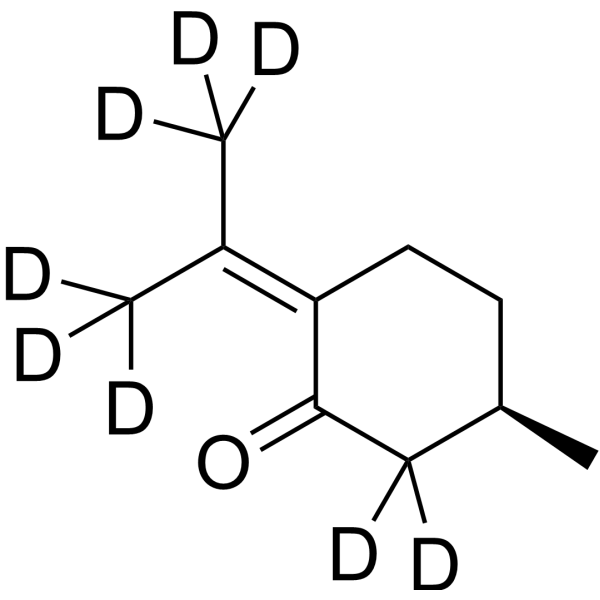
Cat. No.: HY-N1500S1
CAS No.: 62385-90-4
Pulegone-d8 is deuterated labeled Pulegone (HY-N1500). Pulegone is a monoterpene ketone compound widely present in the essential oils of many plants. Pulegone can also be used as a bird repellent. Pulegone has multiple activities such as anti-inflammatory, antibacterial, antifungal, and anti-hyperalgesic effects. Pulegone is particularly effective against bacteria of the Salmonella species .
loading...
    loading...
Cat. No.: HY-N1500R
CAS No.: 89-82-7
Pulegone (Standard) is the analytical standard of Pulegone (HY-N1500). This product is intended for research and analytical applications. Pulegone is a monoterpene ketone compound widely present in the essential oils of many plants. Pulegone can also be used as a bird repellent. Pulegone has multiple activities such as anti-inflammatory, antibacterial, antifungal, and anti-hyperalgesic effects. Pulegone is particularly effective against bacteria of the Salmonella species .
loading...
    loading...
Cat. No.: HY-119737R
CAS No.: 64902-72-3
Chlorsulfuron (Standard) is the analytical standard of Chlorsulfuron (HY-119737). This product is intended for research and analytical applications. Chlorsulfuron is an acetolactate synthase inhibitor and selective systemic herbicide. Chlorsulfuron blocks the synthesis of branched-chain amino acids (valine and isoleucine), thereby inhibiting protein synthesis, cell growth, and cell division. Chlorsulfuron blocks G1 and G2 phase cell cycle progression in plant root tip cells without directly interfering with mitosis or DNA synthesis. Chlorsulfuron completely inhibits germination of non-target terrestrial plants and is highly toxic to aquatic macrophytes. Chlorsulfuron has low toxicity to mammals, birds and bees, and moderate toxicity to fish and aquatic invertebrates. Chlorsulfuron can be used in studies related to herbicides, plant cell cycles and ecotoxicology .
loading...
    loading...
Cat. No.: HY-113203A
CAS No.: 27561-79-1
Target:  

Endogenous Metabolite

Research Areas:  

Neurological Disease

Putreanine dihydrochloride is an alkaline diamino monocarboxylic acid amino acid that exists exclusively in the central nervous system of mammals and birds. Putreanine dihydrochloride reaches its highest concentration in the caudal region of the brain. Putreanine dihydrochloride appears in the brain tissue of rats 2 weeks after birth, and its concentration gradually increases to adult levels over several months .
loading...
    loading...
Cat. No.: HY-N20516
Synonyms: Edible bird's nest extract extract; Bird's nest extract
Category:  

Extract

Target:  

Influenza Virus

Nidus collocaliae extract (Edible bird's nest extract) is an extract from bird's nest (Nidus Collocaliae) that has anti-H5N1 virus activity.
loading...
    loading...
Cat. No.: HY-W560099
CAS No.: 7745-89-3
Research Areas:  

Others

3-Chloro-4-methylaniline hydrochloride is an orally effective avicide. 3-Chloro-4-methylaniline hydrochloride causes death in avian species. 3-Chloro-4-methylaniline hydrochloride induces pericardial deposits in birds post-mortem .
loading...
    loading...
  • 1

