14 Results for "

chlorophyll content

" in MedChemExpress (MCE) Product Catalog:
Products (14)

14 Results for "chlorophyll content" in MCE Product Catalog:

Cat. No.: HY-W051140
CAS No.: 10294-26-5
Synonyms: Disilver sulfate, 99%
Silver sulfate acts as an ethylene inhibitor and a shoot regeneration promoter. Silver sulfate promotes shoot proliferation in explants of the cherry rootstock CAB-6P. Silver sulfate is applicable to studies on the optimization of micropropagation for cherry rootstocks .
loading...
    loading...
Cat. No.: HY-B2024
CAS No.: 99607-70-2
Research Areas:  

Others

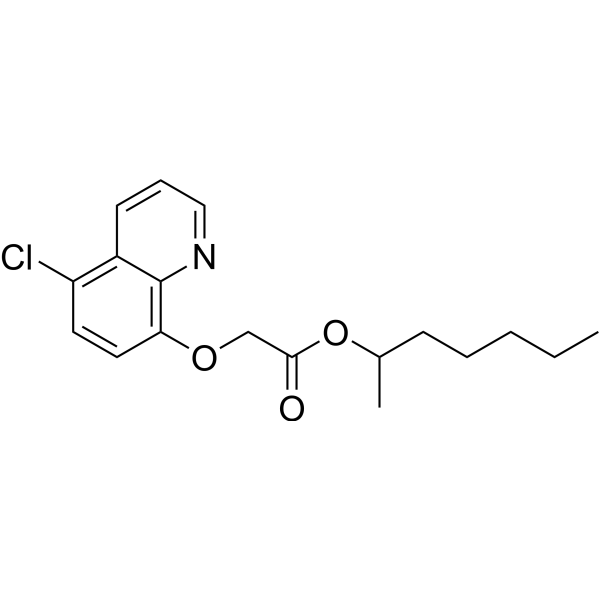
Cloquintocet-mexyl is a herbicide safener. Cloquintocet-mexyl promotes the expression of genes related to chlorophyll synthesis (such as GTR and PPO) and chlorophyll-binding protein genes (CBP), increases the chlorophyll content, thereby promoting photosynthesis and reducing oxidative stress. Cloquintocet-mexyl improves wheat tolerance to Fomesafen (HY-B2010) .
loading...
    loading...
Cat. No.: HY-W017448
CAS No.: 24307-26-4
Synonyms: N,N-Dimethylpiperidinium chloride; PIX
Mepiquat chloride (N,N-Dimethylpiperidinium chloride) is a systemic plant growth regulator. Mepiquat chloride reduces the activity of RuBP carboxylase. Mepiquat chloride decreases plant height, total length of vegetative and fruiting branches, and total leaf area of cotton. Mepiquat chloride reduces the net photosynthetic rate of cotton leaves. Mepiquat chloride promotes starch accumulation in cotton leaves without altering sucrose content .
loading...
    loading...
Cat. No.: HY-34449
CAS No.: 13061-96-6
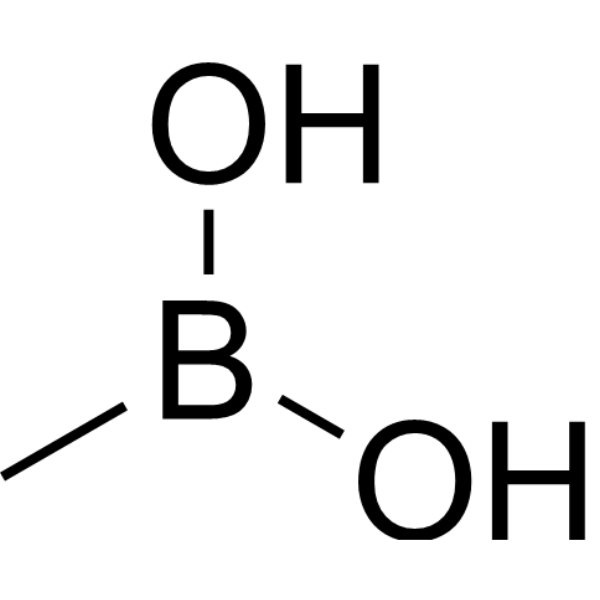
Methylboronic acid is a synthetic boric acid. Methylboronic acid alleviates boron deficiency symptoms in Arabidopsis thaliana and promotes the growth of taproots, lateral roots, root hairs and leaf surface area. Methylboronic acid is less toxic than boric acid at high concentrations, only causing a slight shortening of the taproot length in Arabidopsis thaliana without reducing the total chlorophyll content. Methylboronic acid can be used in studies related to boron deficiency in plants .
loading...
    loading...
Cat. No.: HY-34449S
CAS No.: 1332481-37-4
Methylboronic acid-d3 is the deuterated-labeled Methylboronic acid (HY-34449). Methylboronic acid is a synthetic boric acid. Methylboronic acid alleviates boron deficiency symptoms in Arabidopsis thaliana and promotes the growth of taproots, lateral roots, root hairs and leaf surface area. Methylboronic acid is less toxic than boric acid at high concentrations, only causing a slight shortening of the taproot length in Arabidopsis thaliana without reducing the total chlorophyll content. Methylboronic acid can be used in studies related to boron deficiency in plants .
loading...
    loading...
Cat. No.: HY-W042216
CAS No.: 515-74-2
Synonyms: Sodium 4-aminobenzenesulfonate
Target:  

Fungal

Research Areas:  

Infection

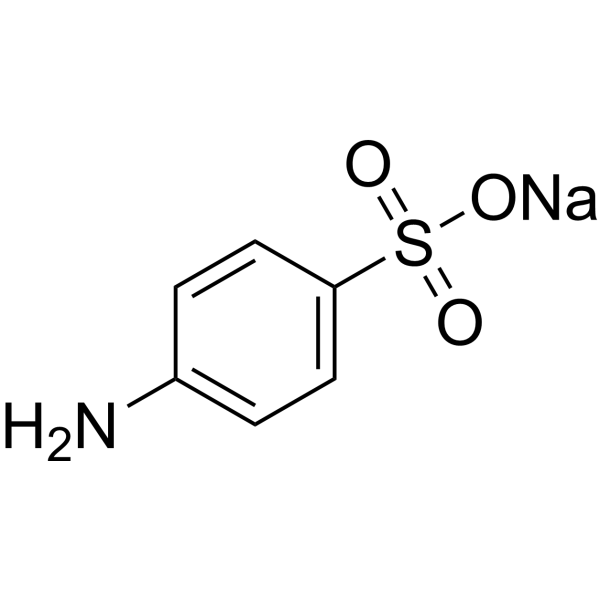
Sodium Sulphanilate (Sodium 4-aminobenzenesulfonate) is a folic acid synthetase inhibitor and antifungal agent, as well as a structural analog of p-aminobenzoic acid, that competitively inhibits folate biosynthesis in fungal pathogens. Sodium Sulphanilate induces host disease resistance via changes in amino acid profiles, reduces chlorophyll content in peanut leaves at high concentrations, and controls rust diseases in various plant species. Sodium Sulphanilate is applicable to studies related to peanut rust .
loading...
    loading...
Cat. No.: HY-B2039
CAS No.: 25057-89-0
Research Areas:  

Others

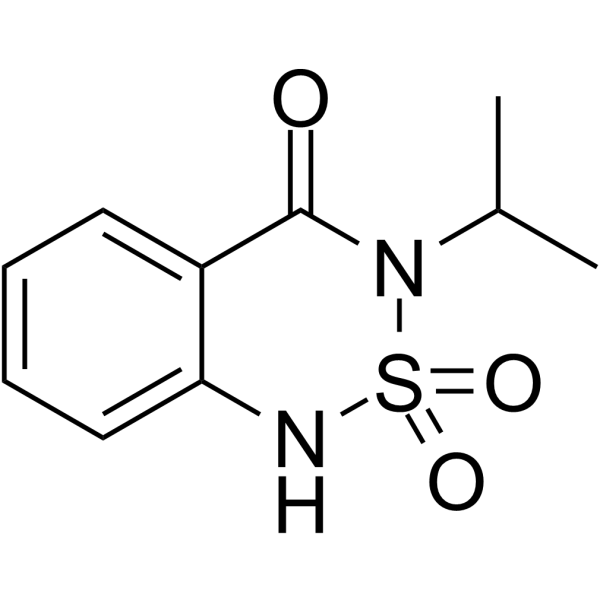
Bentazone is a selective post-emergence herbicide and a Photosystem II inhibitor targeting the quinone B binding site, with activity against broadleaf weeds. Bentazone interferes with photosynthetic electron transport, blocks sunlight-dependent energy production, and acts as a phytotoxin to induce leaf damage, growth inhibition, lipid peroxidation, and reduced chlorophyll content .
loading...
    loading...
Cat. No.: HY-P10685
CAS No.: 147658-54-6
Synonyms: [Tyr5,12,Lys7]-Polyphemusin II
Target:  

HIV CMV

Research Areas:  

Infection

T-22 (polyphemusin II with [Tyr5,12,Lys7]) is a new synthetic peptide that fights HIV, with an EC50 of 0.008 μg/mL and a CC50 of 54 μg/mL. T22 promotes plant height, photosynthesis, total chlorophyll content, and gas exchange in tomatoes, and it can resist CMV .
loading...
    loading...
Cat. No.: HY-B2039S1
CAS No.: 131842-77-8
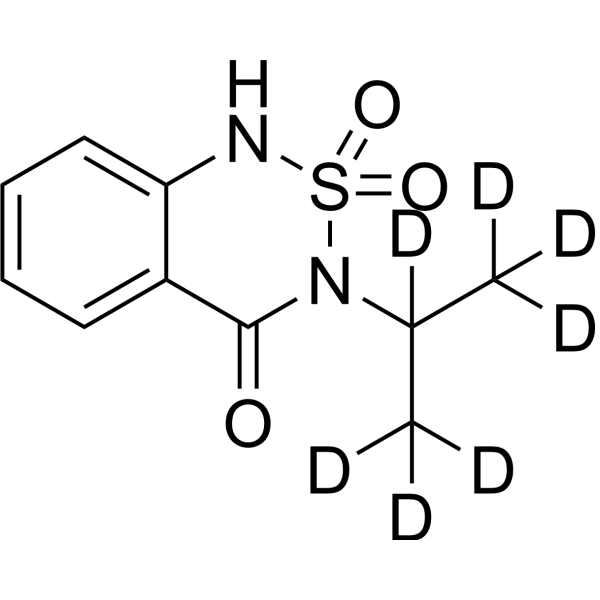
Bentazone-d7 is the deuterated-labeled Bentazone (HY-B2039). Bentazone is a selective post-emergence herbicide and a Photosystem II inhibitor targeting the quinone B binding site, with activity against broadleaf weeds. Bentazone interferes with photosynthetic electron transport, blocks sunlight-dependent energy production, and acts as a phytotoxin to induce leaf damage, growth inhibition, lipid peroxidation, and reduced chlorophyll content .
loading...
    loading...
Cat. No.: HY-B2039R
CAS No.: 25057-89-0
Research Areas:  

Others

Bentazone (Standard) is the analytical standard of Bentazone (HY-B2039). This product is intended for research and analytical applications. Bentazone is a selective post-emergence herbicide and a Photosystem II inhibitor targeting the quinone B binding site, with activity against broadleaf weeds. Bentazone interferes with photosynthetic electron transport, blocks sunlight-dependent energy production, and acts as a phytotoxin to induce leaf damage, growth inhibition, lipid peroxidation, and reduced chlorophyll content .
loading...
    loading...
Cat. No.: HY-W017448R
CAS No.: 24307-26-4
Synonyms: N,N-Dimethylpiperidinium chloride (Standard); PIX (Standard)
Mepiquat chloride (Standard) (N,N-Dimethylpiperidinium chloride (Standard)) is the analytical standard of Mepiquat chloride (HY-W017448). This product is intended for research and analytical applications. Mepiquat chloride (N,N-Dimethylpiperidinium chloride) is a systemic plant growth regulator. Mepiquat chloride reduces the activity of RuBP carboxylase. Mepiquat chloride decreases plant height, total length of vegetative and fruiting branches, and total leaf area of cotton. Mepiquat chloride reduces the net photosynthetic rate of cotton leaves. Mepiquat chloride promotes starch accumulation in cotton leaves without altering sucrose content .
loading...
    loading...
Cat. No.: HY-W758396
Synonyms: N,N-Dimethylpiperidinium-d16 chloride; PIX-d16
Mepiquat-d16 chloride (N,N-Dimethylpiperidinium-d16 chloride) is the deuterated-labeled Mepiquat chloride (HY-W017448). Mepiquat chloride (N,N-Dimethylpiperidinium chloride) is a systemic plant growth regulator. Mepiquat chloride reduces the activity of RuBP carboxylase. Mepiquat chloride decreases plant height, total length of vegetative and fruiting branches, and total leaf area of cotton. Mepiquat chloride reduces the net photosynthetic rate of cotton leaves. Mepiquat chloride promotes starch accumulation in cotton leaves without altering sucrose content .
loading...
    loading...
Cat. No.: HY-W681749
CAS No.: 2536-31-4
Synonyms: Morphactin
Morphactin Chlorflurenol methyl (Morphactin) is a plant growth regulator. Morphactin Chlorflurenol methyl preserves chlorophyll and suppresses senescence. Morphactin Chlorflurenol methyl regulates chlorophyll metabolic enzymes and alleviates heat-induced leaf senescence by enhancing chlorophyll content and reducing electrolyte leakage. Morphactin Chlorflurenol methyl promotes shoot redifferentiation and tracheary element development in tobacco calluses. Morphactin Chlorflurenol methyl can be applied to the investigation of heat-induced leaf senescence .
loading...
    loading...
Cat. No.: HY-167959
CAS No.: 26544-20-7
Target:  

Herbicide

Research Areas:  

Infection

MCPA-isooctyl is a selective conductive phenoxycarboxylate herbicide and an alternative to 2,4-D Butyl ester (HY-B0867). MCPA-isooctyl effectively controls broadleaf weeds in various crop fields via post-emergence foliar or soil treatment. MCPA-isooctyl is absorbed by the roots, stems and leaves of plants; it is easily metabolized and detoxified in gramineous crops, but difficult to metabolize in dicotyledonous weeds, causing stem and leaf distortion, root deformation, and eventually weed death. When formulated into chitosan nanoparticles, MCPA-isooctyl still significantly inhibits the growth of weeds in wheat fields, and reduces their chlorophyll content and biomass at low doses .
loading...
    loading...
  • 1

