1. Search Result
Search Result
Results for "

clone

" in MedChemExpress (MCE) Product Catalog:

160

Inhibitors & Agonists

3

Fluorescent Dye

23

Peptides

8

MCE Kits

3

Inhibitory Antibodies

24

Natural
Products

6

Recombinant Proteins

6

Isotope-Labeled Compounds

11

Antibodies

Cat. No. Product Name Target Research Areas Chemical Structure
  • HY-15934
    X-GAL
    5 Publications Verification

    BCIG

    Fluorescent Dye Glycosidase Others
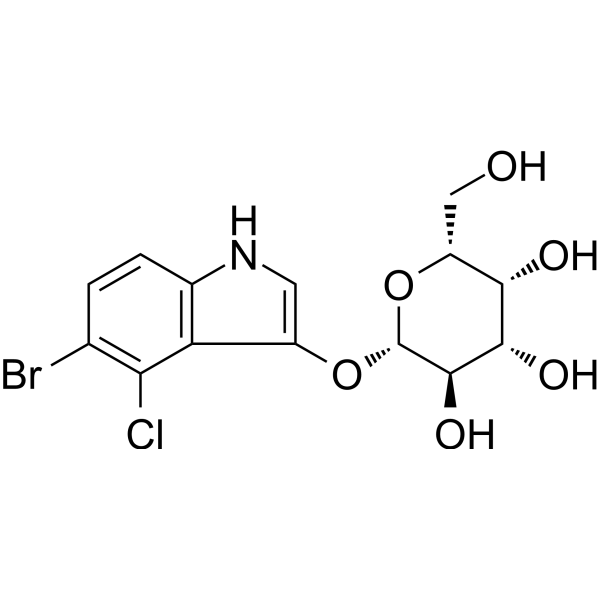
    X-GAL (BCIG) is a widely used chromogenic β-galactosidase substrate. X-GAL is a colorless compound until cleaved by β-galactosidase, at which point X-GAL turns to an insoluble and detectable blue compound, making X-GAL particularly useful in techniques such as blue-white screening for cloning in bacteria. X-GAL can also be used for detection of β-galactosidase activity .
    X-GAL
  • HY-12100
    Umeclidinium bromide
    1 Publications Verification

    GSK573719A

    mAChR Inflammation/Immunology Cancer
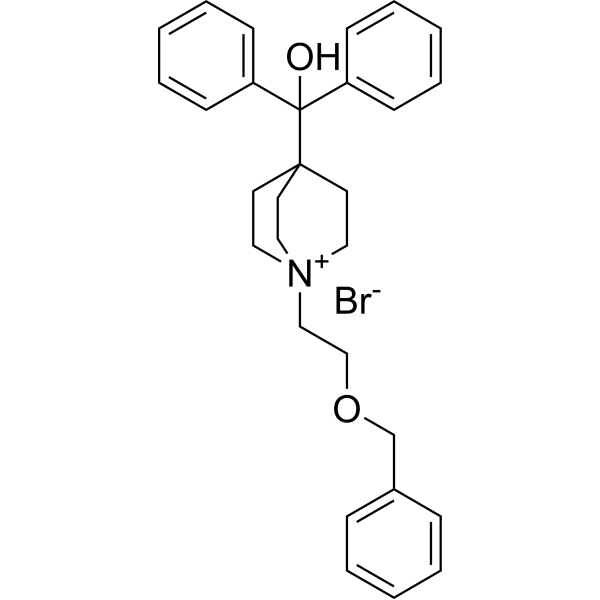
    Umeclidinium bromide is a novel mAChR antagonist. The affinity (Ki) of Umeclidinium bromide for the cloned human M1-M5 mAChRs ranges from 0.05 to 0.16 nM.
    Umeclidinium bromide
  • HY-N0007
    (E,E)-Bisdemethoxycurcumin
    4 Publications Verification

    (E,E)-Curcumin III; (E,E)-Didemethoxycurcumin

    Apoptosis Autophagy Cancer
    (E,E)-Bisdemethoxycurcumin ((E,E)-Curcumin III) is a curcumin derivative with anti-inflammatory and anticancer activities .
    (E,E)-Bisdemethoxycurcumin
  • HY-14850
    Sograzepide
    1 Publications Verification

    Netazepide; YF 476; YM-220

    Cholecystokinin Receptor Metabolic Disease Endocrinology
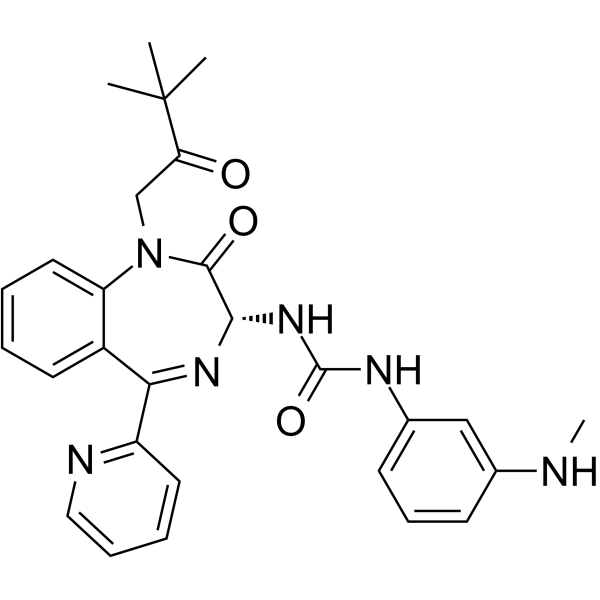
    Sograzepide (Netazepide; YF 476; YM-220) is an extremely potent, highly selective and orally active Gastrin/CCK-B antagonist with an IC50 value of 0.1 nM, has inhibitory effect on Gastrin/CCK-A activity with an IC50 of 502 nM . Sograzepide (Netazepide; YF 476; YM-220) replaces the specific binding of [125I]CCK-8 to the rat brain, cloned canine and cloned human Gastrin/CCK-B receptors, with Ki values of 0.068, 0.62 and 0.19 nM, respectively .
    Sograzepide
  • HY-101249

    Neurokinin Receptor Neurological Disease Cancer
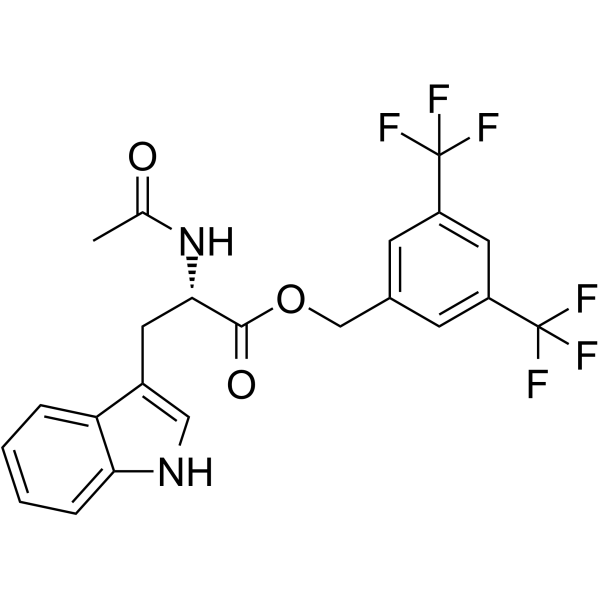
    L-732138 is a selective, potent and competitive neurokinin-1 (NK-1) receptor antagonist with an IC50 of 2.3 nM. L-732138 has 200-fold more potent in cloned human NK-1 receptors than cloned rat NK-1 receptors, and has > 1000-fold more potent than human NK-2 and NK-3 receptors. L-732138 can reduce hyperalgesia and has antitumor action .
    L-732138
  • HY-100554
    BMY 7378
    2 Publications Verification

    Adrenergic Receptor 5-HT Receptor Cardiovascular Disease
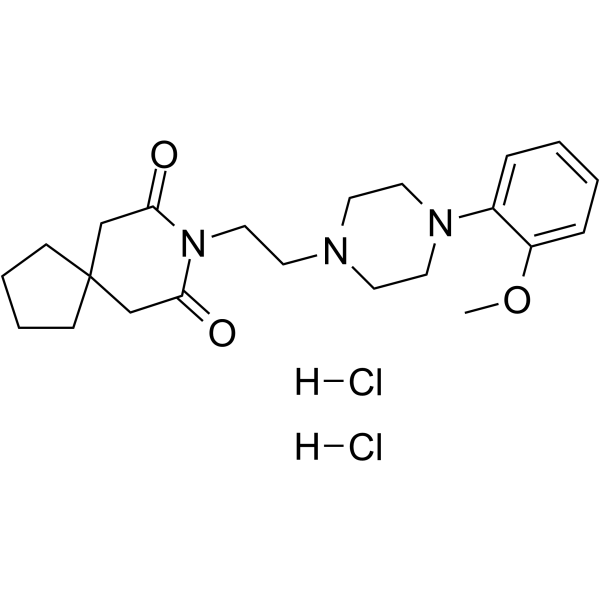
    BMY 7378 is a selective antagonist of α1D-adrenoceptor (α1D-AR). BMY 7378 binds to membranes expressing the cloned rat α1D-AR with a >100-fold higher affinity (Ki=2 nM) than binding to either the cloned rat α1A-AR (Ki=800 nM) or the hamster α1B-AR (Ki=600 nM). BMY 7378 is a 5-HT1A receptor partial agonist .
    BMY 7378
  • HY-10418
    AH 6809
    4 Publications Verification

    Prostaglandin Receptor Inflammation/Immunology Endocrinology
    AH 6809 is an antagonist of EP and DP receptor, with Kis of 1217, 1150, 1597, and 1415 nM for the cloned human EP1, EP2, EP3-III, and DP receptor respectively. AH 6809 has a Ki of 350 nM for mouse EP2 receptor .
    AH 6809
  • HY-137790
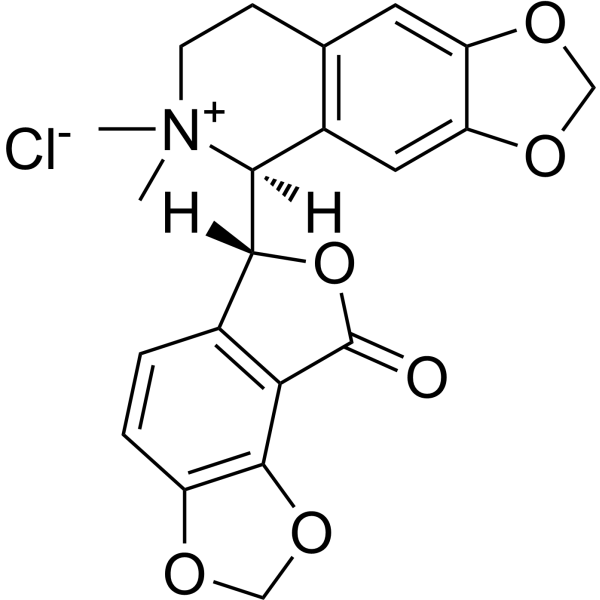
    Bicuculline methochloride
    Maximum Cited Publications
    39 Publications Verification

    (-)-Bicuculline methochloride

    GABA Receptor Neurological Disease
    Bicuculline ((+)-Bicuculline; d-Bicuculline) methochloride is a selective GABAA receptor antagonist with an IC50 value of 3 μM. Bicuculline methochloride induces clonic tonic convulsions in mammals and can also be used to block Ca 2+ activated potassium channels. Bicuculline methochloride can be used in studies of epilepsy and other related psychiatric disorders .
    Bicuculline methochloride
  • HY-P99358

    GSK 2398852; Anti-Serum Amyloid P/SAP Reference Antibody (dezamizumab)

    Complement System Inflammation/Immunology
    Dezamizumab is a fully humanized clonal IgG1 antibody against serum amyloid P component (SAP) with complement activation and amyloid clearance-inducing activities. Dezamizumab binds to SAP associated with amyloid deposits to form complexes that activate complement and mediate phagocytic clearance, triggering activation of the classical complement pathway. Dezamizumab can be used for the research of systemic amyloidosis .
    Dezamizumab
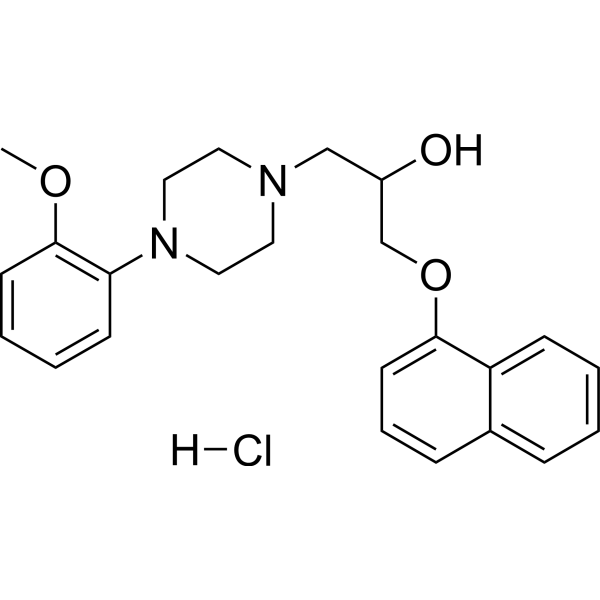
  • HY-B0391
    Naftopidil
    1 Publications Verification

    KT-611; BM-15275

    Adrenergic Receptor Cardiovascular Disease Endocrinology
    Naftopidil (KT-611) is is a selective alpha1-adrenoceptor antagonist, with Kis of 3.7 nM, 20 nM and 1.2 nM for the cloned human α1a-, α1b- and α1d-adrenoceptor subtypes, respectively. Naftopidil has antiproliferative effects. Naftopidil can be used for the research of prostate hyperplasia .
    Naftopidil
  • HY-144448
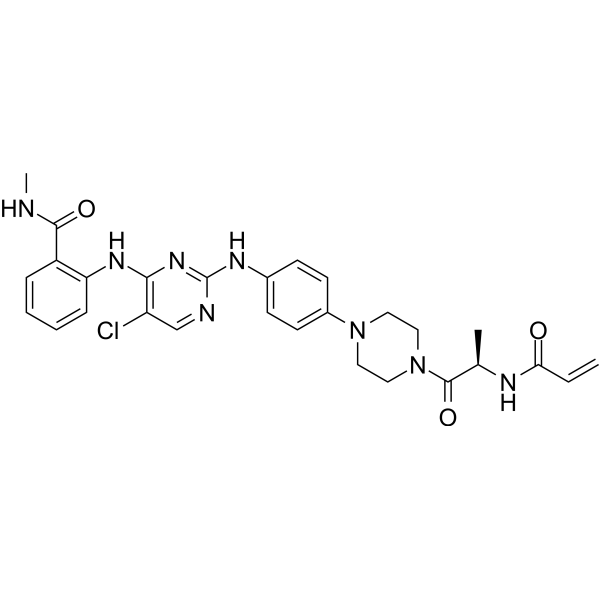
    FAK-IN-2
    1 Publications Verification

    FAK Apoptosis Cancer
    FAK-IN-2 is a potent and orally active focal adhesion kinase (FAK) inhibitor, with anticancer activity (FAK IC50= 35 nM). FAK-IN-2 covalently inhibits the autophosphorylation of FAK in a dose-dependent manner, and inhibits the clone formation and migration of tumor cells, inducing apoptosis .
    FAK-IN-2
  • HY-107721

    Opioid Receptor Neurological Disease
    (±)-J-113397 is a potent and selective non-peptidyl ORL1 receptor antagonist with a Ki of 1.8 nM for cloned human ORL1. J-113397 inhibited nociceptin/orphanin FQ-stimulated GTPγS binding to CHO cells expressing ORL1 with an IC50 value of 5.3 nM. J-113397 can be used for researching the physiological roles of nociceptin/orphanin FQ .
    (±)-J-113397
  • HY-100809
    Guvacine hydrochloride
    1 Publications Verification

    GABA Receptor Neurological Disease
    Guvacine hydrochloride is an alkaloid from the nut of Areca catechu, acts as an inhibitor of GABA transporter, and dispalys modest selectivity for cloned GABA transporters with IC50s of 14 μM (human GAT-1), 39 μM (rat GAT-1), 58 μM (rat GAT-2), 119 μM (human GAT-3), 378 μM (rat GAT-3), and 1870 μM (human BGT-3).
    Guvacine hydrochloride
  • HY-114072

    Opioid Receptor Neurological Disease
    J-113397 is the first potent and selective nonpeptidyl ORL1 receptor antagonist (Ki: cloned human ORL1=1.8 nM) without any agonistic effects on other opioid receptors .
    J-113397
  • HY-117195

    N6-Lauroyl-L-lysine; ; N6-(1-Oxododecyl)-L-lysine

    Amino Acid Derivatives Others
    Lauroyl lysine (N6-Lauroyl-L-lysine) is a compound that can be synthesized by recombinant enzymes. After the synthase is cloned and expressed, it can be used to synthesize lauroyl lysine from specific raw materials with high yield.
    Lauroyl lysine
  • HY-130538
    1-Naphthohydroxamic acid
    2 Publications Verification

    HDAC Cancer
    1-Naphthohydroxamic acid (Compound 2) is a potent and selective HDAC8 inhibitor with an IC50 of 14 μM. 1-Naphthohydroxamic acid is more selectively for HDAC8 than class I HDAC1 and class II HDAC6 (IC50 >100 μM). 1-Naphthohydroxamic acid does not increase global histone H4 acetylation and also does not reduce total intracellular HDAC activity .1-Naphthohydroxamic acid can induce tubulin acetylation .
    1-Naphthohydroxamic acid
  • HY-P1212

    CST-14 (mouse, rat)

    Somatostatin Receptor Neurological Disease
    Cortistatin 14, mouse, rat (CST-14, human, rat), a neuropeptide with neuronal depressant and sleep modulating properties, can bind to all five cloned somatostatin receptors (SSTRs) and ghrelin receptor to exert its biological activities and co-exists with GABA within the cortex and hippocampus .
    Cortistatin 14 (mouse, rat)
  • HY-162934

    Apoptosis Connective Peptide Cancer
    TFCP2L1-IN-1 is a specific small molecule targeting TFCP2L1’s active domain with anti-cancer activity. TFCP2L1-IN-1 synergizes with Sorafenib (HY-10201) to induce Apoptosis and reduces cell proliferation, invasion, metastasis, clonal formation and sphere-forming capacity in hepatocellular carcinoma cells .
    TFCP2L1-IN-1
  • HY-179215

    GABA Receptor Neurological Disease
    OV329 hydrochloride is a potent GABA aminotransferase inactivator. OV329 hydrochloride is a Vigabatrin (HY-15399) analogue. OV329 hydrochloride can increase brain GABA levels and block abnormal intracerebral hyperexcitability. OV329 hydrochloride exhibits anticonvulsant and antiepileptic activities. OV329 hydrochloride can be used for the research of neurological disease, such as seizure .
    OV329 hydrochloride
  • HY-179215A

    GABA Receptor Neurological Disease
    OV329 is a potent GABA aminotransferase inactivator. OV329 is a Vigabatrin (HY-15399) analogue. OV329 can increase brain GABA levels and block abnormal intracerebral hyperexcitability. OV329 exhibits anticonvulsant and antiepileptic activities. OV329 can be used for the research of neurological disease, such as seizure .
    OV329
  • HY-100330
    YM348
    1 Publications Verification

    5-HT Receptor Metabolic Disease
    YM348 is a potent and orally active 5-HT2C receptor agonist, which shows a high affinity for cloned human 5-HT2C receptor (Ki: 0.89 nM).
    YM348
  • HY-116057

    Apoptosis Others
    Stemazole is a protective agent that promotes stem cell survival. Stemazole has the protective effect of human embryonic stem cells (hESCs). Stemazole enhances clonal expansion of single cells and decreases apoptosis. Stemazole for the study of stem cell survival in starvation culture .
    Stemazole
  • HY-155363

    AMPK Metabolic Disease
    AMPK activator 13 is a potent activator of AMPK. AMPK activator 13 inhibits mitotic clonal expansion of 3T3-L1 cells by activating AMPK pathway and enhances cell mitochondrial oxygen consumption rate. AMPK activator 13 can be used in study obesity .
    AMPK activator 13
  • HY-P3742

    Tyrosinase MHC Cancer
    Tyrosinase (192-200), human mouse is a HLA-B*4403-restricted tyrosinase epitope with affinity for HLA-B4403 and HLA-B4402. Tyrosinase (192-200), human mouse binds to HLA-B*4403 to form a complex, which is recognized by the autologous cytotoxic T lymphocyte clone 22/31 derived from melanoma. Tyrosinase (192-200), human mouse binds to HLA-B4402 to form a complex, which is recognized by the CTL clone 329B/5 derived from healthy HLA-B4402 donors. Tyrosinase (192-200), human mouse is applicable to melanoma-related research .
    Tyrosinase (192-200), human mouse
  • HY-100783B

    (+)-Bicuculline methobromide

    GABA Receptor Neurological Disease
    Bicuculline methobromide is a selective GABAA Receptor antagonist with an IC50 value of 3 μM. Bicuculline methobromide induces clonic tonic convulsions in mammals and can also be used to block Ca 2+ activated potassium channels. Bicuculline methobromide can be used in studies of epilepsy and other related psychiatric disorders .
    Bicuculline methobromide
  • HY-P1822

    Transmembrane Glycoprotein Metabolic Disease
    BDC2.5 mimotope 1040-31, a BDC2.5 TCR reactive peptide, is a strong agonistic peptide for diabetogenic T cell clone BDC2.5, and the 1040-31 peptide is specific for BDC 2.5 TCR Tg + T cells .
    BDC2.5 mimotope 1040-31
  • HY-W014004

    CBHA

    HDAC Apoptosis Others Cancer
    m-Carboxycinnamic acid bishydroxamide (CBHA) is a histone deacetylase inhibitor. m-Carboxycinnamic acid bishydroxamide modulates histone acetylation sites, alters DNA methylation and epigenetic status, increases global histone acetylation, alleviates transcription repression, and facilitates chromatin remodelling. m-Carboxycinnamic acid bishydroxamide can be used for the research of cloned embryo development and epigenetic regulation .
    m-Carboxycinnamic acid bishydroxamide
  • HY-P0200

    Src Inflammation/Immunology
    RR-SRC is a substrate for src-tyrosine-specific protein kinase .
    RR-SRC
  • HY-15707
    NS6180
    1 Publications Verification

    Potassium Channel Inflammation/Immunology
    NS6180 is a new orally active KCa3.1 channel inhibitor. NS6180 inhibits cloned human KCa3.1 channels with an IC50value of 9 nM. NS6180 can be used for the research of inflammatory bowel disease (IBD) .
    NS6180
  • HY-107743

    NalBzoH

    Opioid Receptor Neurological Disease
    Naloxone benzoylhydrazone (NalBzoH) is a mixed agonist/antagonist. Naloxone benzoylhydrazone is a prototypic κ3-opioid receptor agonist, and a partial agonist at the cloned μ and δ opioid receptors, and an antagonist at opioid-like NOP receptors. Naloxone benzoylhydrazone has potently analgesia effect .
    Naloxone benzoylhydrazone
  • HY-120104

    (±)-Nitidanin

    Parasite HCV Infection
    Nitidanin ((±)-Nitidanin) is an antimalarial and antiviral compound that can be isolated from the wood of Xanthoxylum nitidun D. C. Nitidanin is shows IC50 values of 21.2 and 18.4 μM for D6 and W2 clones of Plasmodium falciparum, respectively. Nitidanin can be used for the research of malaria and virus infection .
    Nitidanin
  • HY-N15748

    (-)-Pelorol

    Parasite Infection
    Pelorol ((-)-Pelorol) is a sesquiterpene found in the tropical marine sponge Dactylospongia elegans. Pelorol has weak antitrypanosomal activity with an IC50 of 17.4 μg/mL and antiplasmodial activity against Plasmodium falciparum clones K1 and NF54 with IC50 values of 786 ng/mL and 1911 ng/mL, respectively. Pelorol is promising for research of parasitic diseases, such as trypanosomiasis and malaria .
    Pelorol
  • HY-N0007R

    (E,E)-Curcumin III (Standard); (E,E)-Didemethoxycurcumin (Standard)

    Reference Standards Apoptosis Autophagy Cancer
    (E,E)-Bisdemethoxycurcumin (Standard) is the analytical standard of (E,E)-Bisdemethoxycurcumin. This product is intended for research and analytical applications. (E,E)-Bisdemethoxycurcumin ((E,E)-Curcumin III) is a curcumin derivative with anti-inflammatory and anticancer activities .
    (E,E)-Bisdemethoxycurcumin (Standard)
  • HY-19742A

    SRA-333 hydrochloride

    5-HT Receptor Neurological Disease
    Lecozotan (SRA-333) hydrochloride is an orally active and selective antagonist of 5-HT1A with a Ki of 4.5 nM for cloned human 5-HT1A receptor. Lecozotan hydrochloride enhances the stimulated release of glutamate and acetylcholine in the hippocampus and possesses cognitive-enhancing properties. Lecozotan hydrochloride has the potential for mild-to-moderate Alzheimer's disease (AD) research .
    Lecozotan hydrochloride
  • HY-106994A

    YM598

    Endothelin Receptor Cardiovascular Disease Inflammation/Immunology Cancer
    Nebentan potassium (YM598) is a potent, selective and orally active non-peptide endothelin ETA receptor antagonist through the modification of Bosentan (HY-A0013). Nebentan potassium inhibits [ 125I] endothelin-1 binding to cloned human endothelin ETA and ETB receptor, with Ki of 0.697 nM and 569 nM, respectively . YM598 can ameliorate the progression of cor pulmonale and myocardial infarction in vivo .
    Nebentan potassium
  • HY-147622

    GCGR Metabolic Disease
    GLP-1R agonist 9 (Compound 96) is a GLP-1R agonist with EC50 values of 1.1 nM and 11 nM against CHO GLP-1R Clone H6 and CHO GLP-1R Clone C6, respectively .
    GLP-1R agonist 9
  • HY-P3747

    Influenza Virus Infection
    Hemagglutinin (48-68) is the 48-68 fragment of influenza virus hemagglutinin. Hemagglutinin (48-68) can induce proliferation of the peptide specific T-cell clones .
    Hemagglutinin (48-68)
  • HY-E70218

    Others Others
    Cas9 Nuclease is cloned from wild-type Streptococcus pyogenes. Cas9 Nuclease can be used in the area of molecular diagnosis to achieve highly sensitive and specific detection of pathogens [1] .
    Cas9 Nuclease
  • HY-136844

    GYKI 53655

    iGluR Neurological Disease
    LY 300168 (GYKI 53655) is a non-competitive, blood-brain-barrier permeable AMPA receptor antagonist. LY 300168 attenuates hippocampal injury. LY 300168 blocks the sound-induced clonic and tonic convulsions .
    LY-300168
  • HY-141830

    Histone Acetyltransferase Cancer
    SYY-B029-2 is a potent histone acetyltransferase (HAT) inhibitor with an IC50 of 1.4 nM. SYY-B029-2 cell growth of human mantle cell lymphoma (MCL) cell line MAVER-1 and human castration resistant prostate cancer cell line LNCaP clone FGC, with IC50 values of 15 nM and 13 nM, respectively .
    SYY-B029-2
  • HY-124234

    Endothelin Receptor Cardiovascular Disease
    TA-0201 is a novel orally active, competitive, non-peptide endothelin receptor antagonist. TA-0201 antagonizes the specific binding of [ 125I]ET-1 to cloned human receptors of ETA and ETB with Ki values of 15 pM and 41 nM, respectively. TA-0201 inhibits the pressor response to the exogenous big ET-1 .
    TA-0201
  • HY-B0391A

    KT-611 dihydrochloride; BM-15275 dihydrochloride

    Adrenergic Receptor Cancer
    Naftopidil dihydrochloride (KT-611 dihydrochloride) is a selective alpha1-adrenoceptor antagonist, with Kis of 3.7 nM, 20 nM and 1.2 nM for the cloned human α1a-, α1b- and α1d-adrenoceptor subtypes, respectively. Naftopidil dihydrochloride has antiproliferative effects. Naftopidil dihydrochloride can be used for the research of prostate hyperplasia .
    Naftopidil dihydrochloride
  • HY-103405A

    Dopamine Receptor Neurological Disease
    NGD 94-1 (dimaleate) is a potent and selective dopamine D4 receptor antagonist. NGD 94-1 (dimaleate) shows high affinity for the cloned human D4.2 receptor (Ki = 3.6 nM). NGD 94-1 (dimaleate) modulates the cognitive functions of the frontostriatal system and regulates dopaminergic transmission in Phencyclidine (PCP)-induced monkeys. NGD 94-1 (dimaleate) can be used for neurological disease research [1][2].
    NGD 94-1 dimaleate
  • HY-145035

    MAP4K Inflammation/Immunology Cancer
    HPK1-IN-9 is potent inhibitor of HPK1. HPK1 is a serine/threonine protein kinase cloned from hematopoietic progenitor cells and belongs to the MAP4K family of mammalian Ste-20-related protein kinases. HPK1-IN-9 has the potential for the research of HPK1 related diseases (extracted from patent WO2021213317A1, compound 112) .
    HPK1-IN-9
  • HY-W116594

    Fluorescent Dye Infection
    X-GalNAc is a chromogenic substrate for for N-acetyl-β-galactosidase, used to determine the presence or absence of a cloned DNA insert in bacteria growing on agar plates .
    X-GalNAc
  • HY-E70382

    Phosphatase Biochemical Assay Reagents Others
    Shrimp Alkaline Phosphatase (SAP), a nucleotide phosphatase, can catalyze the removal of 5′ phosphates from nucleic acid templates. Shrimp Alkaline Phosphatase is readily inactivated in the absence of chelators and is widely used phosphatases in molecular cloning .
    Shrimp Alkaline Phosphatase
  • HY-157282

    PLI

    Hapten Inflammation/Immunology
    Photolumazine I(PLI) is a vitamin B-based hapten.Photolumazine Icanactivates Mucosal-associated Invariant T clones .
    Photolumazine I
  • HY-129656

    GCGR Metabolic Disease
    GLP-1 receptor agonist 3 (compound (R)-4A-1) is a GLP-1 receptor agonist (WO2018109607A1), used for diabetes research. compound (S)-4A-1 shows EC50s of 1.1 nM and 13 nM in Clone H6 and Clone C6 cell lines assay, respectively .
    GLP-1 receptor agonist 3
  • HY-P11127

    Transmembrane Glycoprotein MHC Inflammation/Immunology
    MBP (111-129) is a polypeptide that constitutes an immunodominant epitope cluster restricted by HLA-DRB1*0401. MBP (111-129) is an antagonist for the clone HD4-1C2 TCR and an agonist for clone MS2-3C8 TCR. MBP (111-129) can be used for on multiple sclerosis and T cell biology .
    MBP (111-129)
  • HY-117053

    Neurokinin Receptor Neurological Disease
    ZM 253270 is a species-selective non-peptide NK-2 receptor (NK-2R) antagonist. ZM 253270 competitively inhibits the binding of [ 3H]NKA to native or cloned NK-2R from hamster bladder (Ki=2 nM), but has a weaker inhibitory effect (48-fold) on the binding of [ 3H]NKA to cloned human NK-2R .
    ZM 253270

Inquiry Online

Your information is safe with us. * Required Fields.

Salutation


Country or Region *

Applicant Name *


Organization Name *

Department *


Email Address *


Product Name *

Cat. No.


Requested quantity *

Phone Number *


Remarks

Inquiry Online

Inquiry Information

Product Name:
Cat. No.:
Quantity:
MCE Japan Authorized Agent:

