



1. Search Result
Search Result
Results for "

composites

" in MedChemExpress (MCE) Product Catalog:

42

Inhibitors & Agonists

2

Fluorescent Dyes

25

Biochemical Assay Reagents

1

Peptides

1

MCE Kits

1

Inhibitory Antibodies

4

Natural
Products

3

Isotope-Labeled Compounds

2

Oligonucleotides

Cat. No. Product Name Target Research Areas Chemical Structure
  • HY-107799
    Castor oil
    5 Publications Verification

    Environmental Pollutants Biochemical Assay Reagents Others
    Castor oil is a natural triglyceride and a solvent. Castor oil has a laxative effect and induces labor in pregnant females. Castor oil can be used as a solvent, co-solvent, stabilizing agent and polyol for the formation of polymer-nanoparticle composites .
    Castor oil
  • HY-D0944
    Giemsa stain
    2 Publications Verification

    Fluorescent Dye Others
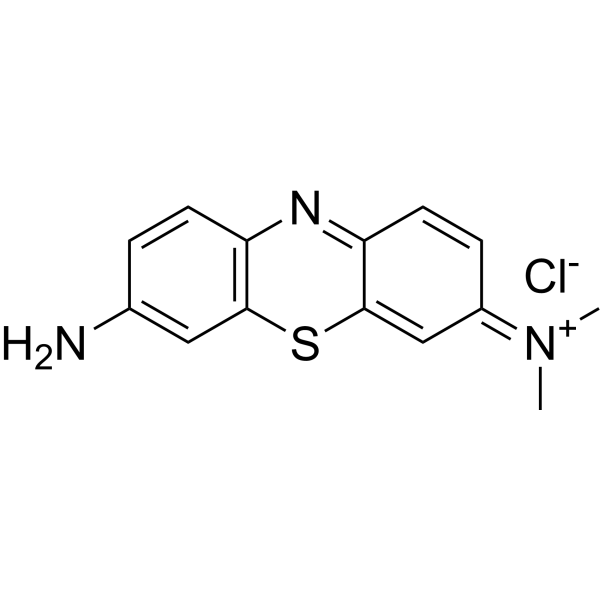
    Giemsa stain is a composite dye composed of methylene azure, methylene blue, eosin and other components. Giemsa stain stains chromatin, nuclear membranes, specific cytoplasmic components and microorganisms. Giemsa stain is used in research on cytological and parasitological staining .
    Giemsa stain
  • HY-W250313

    PLA

    Biochemical Assay Reagents Others Cancer
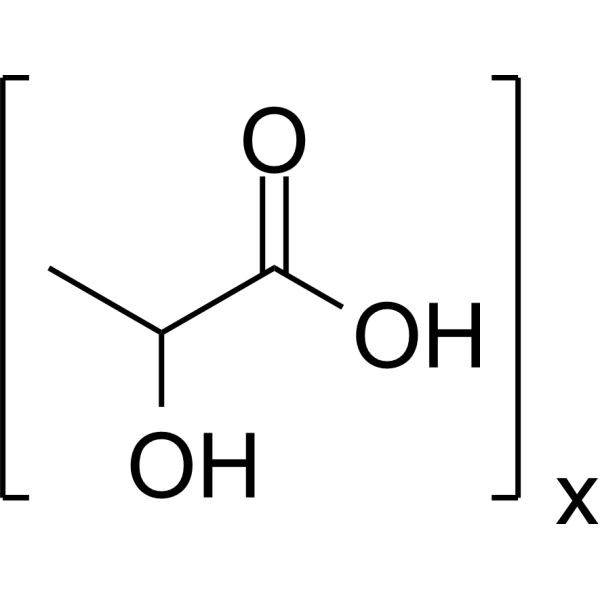
    Polylactic acid (PLA) is a biodegradable and biocompatible polymer widely used as a carrier for drug delivery systems and a structural material for tissue engineering and medical implants. Polylactic acid acts as a controlled release matrix through the hydrolysis mechanism of ester bonds, gradually releasing the encapsulated drug and metabolizing to non-toxic lactic acid. Polylactic acid has adjustable degradation rate, mechanical properties and the ability to composite with other polymers, and can be used in local or systemic drug delivery, orthopedic fixation devices and 3D printed bone regeneration scaffolds .
    Polylactic acid
  • HY-W012723

    Biochemical Assay Reagents Others
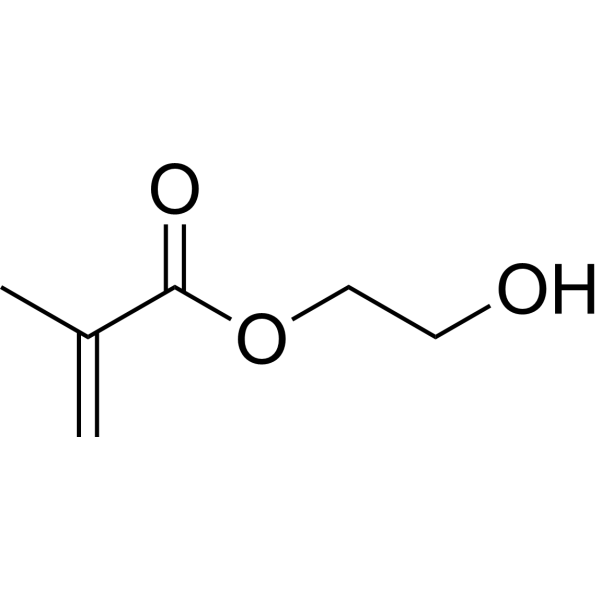
    2-Hydroxyethyl methacrylate (HEMA) is a monomer used in the synthesis of various polymers, and the polymer PHEMA of 2-Hydroxyethyl methacrylate is widely used in the synthesis of dental composite materials .
    2-Hydroxyethyl methacrylate
  • HY-D0835

    Hydroxyapatite (25-45 μm)

    Others Cardiovascular Disease Inflammation/Immunology
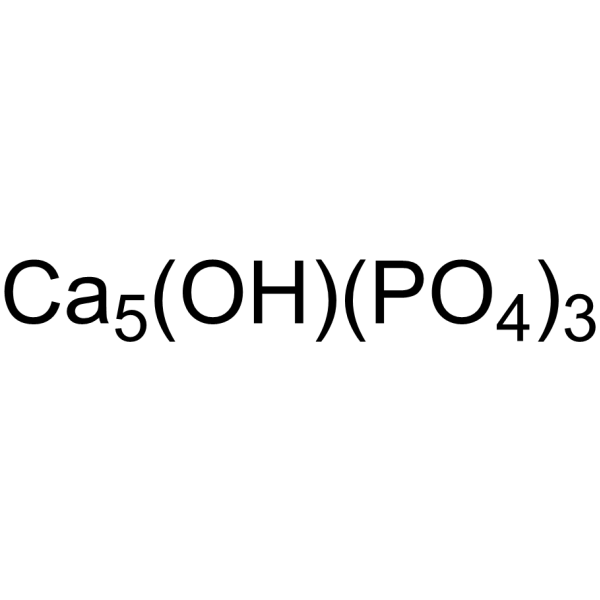
    Hydroxylapatite (Hydroxyapatite) (25-45 μm) is a natural form of calcium phosphate and is the main mineral component of bones and teeth. Hydroxylapatite (25-45 μm) can stimulate the expression and secretion of collagen in primary human dermal fibroblasts. Hydroxylapatite (25-45 μm) has good biocompatibility, bioactivity, and bone conductivity, making it suitable for targeted drug or nucleic acid delivery. Hydroxylapatite (25-45 μm) can be used in research on osteoarthritis, gout, and atherosclerosis .
    Hydroxylapatite (25-45 μm)
  • HY-W019885A

    Sodium triphosphate pentabasic, 98%

    Environmental Pollutants Biochemical Assay Reagents Others
    Sodium tripolyphosphate (STPP), 98% is an inorganic, non-toxic polyphosphate crosslinker, inducer and enhancer. Sodium tripolyphosphate (STPP), 98% induces the formation of unique needle-like microcrystals in sodium alginate-chitosan composite films. Sodium tripolyphosphate (STPP), 98% enhances the DPPH free radical scavenging activity of sodium alginate-chitosan composite films .
    Sodium tripolyphosphate (STPP), 98%
  • HY-B1073

    Parasite Infection
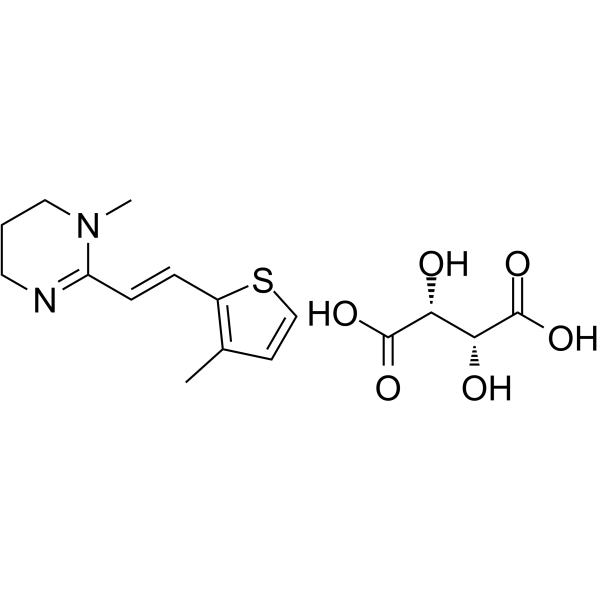
    Morantel tartrate is an anthelmintic agent. Sustained-release three-layer composite tablets of Morantel tartrate are administered orally and release after exposure to rumen fluid. Morantel tartrate reduces the fecal egg output and worm burden of gastrointestinal nematodes in Hereford calves. Morantel tartrate is used in research related to gastrointestinal nematode infections .
    Morantel tartrate
  • HY-W088068

    Fluorescent Dye Others
    Wright's stain is a composite cell stain that mainly binds to intracellular nucleic acids, proteins and other components through thiazine dyes (such as methylene blue) and eosin. Wright's stain is pH-dependent (optimal pH 6.4-6.7) and achieves cell morphology resolution by differentially staining the cytoplasm and nucleus. Under alkaline conditions, thiazine dyes bind to nucleic acids to form purple, and acidic eosin binds to cytoplasmic proteins to form red, which can form contrasting cell morphological features. Wright's stain can clearly display the fine structures of blood cells and bone marrow cells (such as nuclear chromatin and granules) and quickly evaluate cell morphological abnormalities .
    Wright's stain
  • HY-Y0850U9

    Polyvinyl alcohol (Mw 67000, 87-89% hydrolyzed, ~1400 polymerization); Poly(Ethenol) (Mw 67000, 87-89% hydrolyzed, ~1400 polymerization)

    Biochemical Assay Reagents Others
    PVA (Mw 67000, 87-89% hydrolyzed, ~1400 polymerization) is a polyvinyl alcohol with a molecular weight of 67000 and hydrolytic properties. Degree of hydrolysis refers to the conversion rate of acetate groups in the original polyvinyl acetate to hydroxyl groups; PVA (Mw 67000, 87-89% hydrolyzed, ~1400 polymerization) is obtained by hydrolyzing and removing acetate groups after the polymerization of vinyl acetate. Polyvinyl alcohol with different degrees of hydrolysis can be used to form self-crosslinked cryogels and is applied as a biological adjuvant .
    PVA (Mw 67000, 87-89% hydrolyzed, ~1400 polymerization)
  • HY-W015695

    Drug Intermediate Others
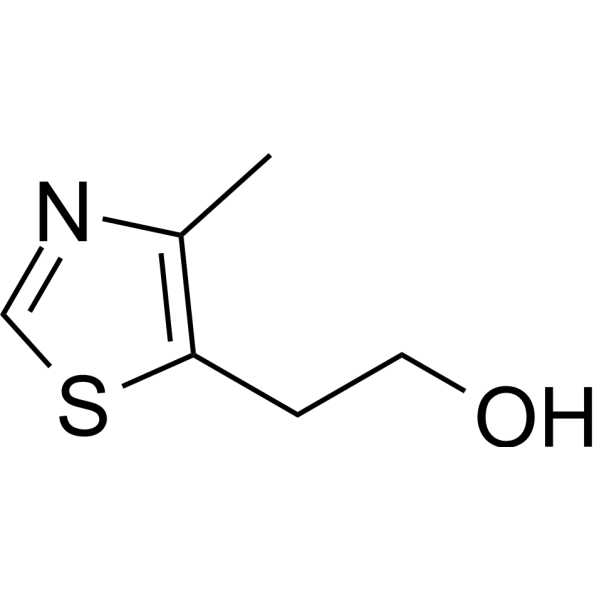
    4-Methyl-5-thiazoleethanol is a natural sulfur-containing flavor compound with the aroma of beef and nuts. In addition, the composite material prepared by modifying graphene oxide with 4-Methyl-5-thiazoleethanol through a one-step esterification reaction can selectively adsorb copper ions (Cu 2+) in aqueous solutions .
    4-Methyl-5-thiazoleethanol
  • HY-N9929
    Docosane
    1 Publications Verification

    Environmental Pollutants Biochemical Assay Reagents Others
    Docosane is a straight-chain alkane. Docosane can be used to synthesize structural composites with thermal energy storage/release capabilities. Docosane can also be used to prepare thermosensitive antipyretic analgesics .
    Docosane
  • HY-W1123941C

    Dopamine-PEG2000-Azide

    Biochemical Assay Reagents Others
    Dopamine-PEG2000-N3 (Dopamine-PEG2000-Azide) is a compound composed of dopamine, PEG segments and an azide group (-N3). Dopamine-PEG2000-N3 can be used as a crosslinker to connect different materials together to build new composite materials and improve the performance of materials. Dopamine-PEG2000-N3 is a click chemistry reagent. It contains an azide group and can undergo copper-catalyzed azide-alkyne cycloaddition reaction (CuAAc) with molecules containing an alkyne group.
    Dopamine-PEG2000-N3
  • HY-W250121

    Environmental Pollutants Biochemical Assay Reagents Infection Inflammation/Immunology Cancer
    Tragacanth gum is an orally active anionic composite polysaccharide and multifunctional biomaterial. Tragacanth gum exhibits biocompatibility, mucoadhesion and renoprotective effects, and effectively promotes wound closure and tissue healing. Tragacanth gum can be isolated from Astragalus gummifer. Tragacanth gum acts as an emulsifier and drug delivery carrier, and is also widely used in fields such as 3D scaffolds, tissue engineering and green nanoparticle preparation. High doses of Tragacanth gum may induce reversible forestomach squamous epithelial hyperplasia in mice, but show no mutagenic or carcinogenic activity. Tragacanth gum is commonly used in studies related to diseases including systemic candidiasis, rheumatoid arthritis and osteosarcoma .
    Tragacanth gum
  • HY-139446A

    ETPTA (MW 912); TMPETA (MW 912)

    Biochemical Assay Reagents Others
    Trimethylolpropane ethoxylate triacrylate (MW 912) (ETPTA (MW 912); TMPETA (MW 912)) is a trifunctional acrylate monomer with multiple acrylate functional groups, which can be used in polymerization and crosslinking reactions. Trimethylolpropane ethoxylate triacrylate (MW 912) is widely used in the preparation of cured resins for 3D printing, optical coatings for display devices, and dental composite restorative materials .
    Trimethylolpropane ethoxylate triacrylate (MW 912)
  • HY-159067

    DEAE-dextran, MW 500000 hydrochloride, from bacterial (Leuconostoc mesenteroides); Diethylaminoethyl-dextran, MW 500000 hydrochloride

    Biochemical Assay Reagents Cancer
    DEAE-dextran, MW 500000 hydrochloride (DEAE-dextran, MW 500000 hydrochloride, from bacterial (Leuconostoc mesenteroides)) is a high-molecular-weight positively charged polymer that significantly enhances the uptake of viral RNA by tissue culture cells. When employed in the delivery system for "tumor immunity" RNA-splenocyte transfer, DEAE-dextran can markedly extend the lifespan of tumor-bearing animals, comparable to that of actively immunized animals. Furthermore, DEAE-dextran serves as a complexing agent for nucleic acids, forming composite particles with DNA/RNA for extensive applications in gene delivery. Additionally, DEAE-dextran can be utilized as a coating for liposomes .
    DEAE-dextran, MW 500000 hydrochloride
  • HY-W008721

    Biochemical Assay Reagents Others
    4,4'-Biphthalic anhydride (BPDA) is a rigid symmetrical polyamide used in the production of high-performance polymers, such as polyimide products and their composites .
    4,4'-Biphthalic anhydride
  • HY-Y0850U1

    Polyvinyl alcohol (Mw 61000, 98-99% hydrolyzed, ~1400 polymerization); Poly(Ethenol) (Mw 61000, 98-99% hydrolyzed, ~1400 polymerization)

    Biochemical Assay Reagents Others
    PVA (Mw 61000, 98-99% hydrolyzed, ~1400 polymerization) (Polyvinyl alcohol (Mw 61000, 98-99% hydrolyzed, ~1400 polymerization); Poly(Ethenol) (Mw 61000, 98-99% hydrolyzed, ~1400 polymerization)) is a biodegradable of polymer. PVA (Mw 61000, 98-99% hydrolyzed, ~1400 polymerization) can be used to produce bio-composite films .
    PVA (Mw 61000, 98-99% hydrolyzed, ~1400 polymerization)
  • HY-158223

    CMCSMA

    Biochemical Assay Reagents Others
    Carboxymethyl chitosan Methacryloyl (CMCSMA) is methacrylated carboxymethyl chitosan with properties as a 3D printing ink. A composite hydrogel made of Carboxymethyl chitosan Methacryloyl can effectively accelerate bone healing in an infectious microenvironment after implantation in a rat model of Staphylococcus aureus-infected femoral defect . Carboxymethyl chitosan Methacryloyl needs to self-assemble into fibrous hydrogel under the action of photoinitiator LAP (HY-44076), and target bioactive adhesion sites, play an inherent supporting role for tissue cells and biodegradable activity.
    Application: cell culture, biological 3D printing, tissue engineering, etc.
    Carboxymethyl chitosan Methacryloyl
  • HY-W1123941

    Dopamine-PEG9-Azide

    Biochemical Assay Reagents Others
    Dopamine-PEG-N3 (Dopamine-PEG-Azide is a compound composed of dopamine, PEG segments and an azide group (-N3). Dopamine-PEG-N3 can be used as a crosslinker to connect different materials together to build new composite materials and improve the performance of materials. Dopamine-PEG-N3 is a click chemistry reagent. It contains an azide group and can undergo copper-catalyzed azide-alkyne cycloaddition reaction (CuAAc) with molecules containing an alkyne group.
    Dopamine-PEG9-N3
  • HY-W012723S

    Isotope-Labeled Compounds Biochemical Assay Reagents Others
    2-Hydroxyethyl methacrylate- 13C is the 13C--labeled 2-Hydroxyethyl methacrylate (HY-W012723). 2-Hydroxyethyl methacrylate (HEMA) is a monomer used in the synthesis of various polymers, and the polymer PHEMA of 2-Hydroxyethyl methacrylate is widely used in the synthesis of dental composite materials .
    2-Hydroxyethyl methacrylate-13C
  • HY-P99913

    c-Fms Inflammation/Immunology Cancer
    Eflapegrastim is a composite protein consisting of a genetically modified granulocyte-colony stimulating factor (GCSF) molecule linked via a chemical bond to an IgG4 Fc fragment (LAPS-carrier). Eflapegrastim targets to G-CSF receptor (c-Fms). Eflapegrastim stimulates proliferation and differentiation of neutrophil progenitor cells and maintains stable numbers of mature and functional neutrophils. Eflapegrastim also shortens the duration of neutropenia .
    Eflapegrastim
  • HY-W1123941A

    Dopamine-PEG-Azide

    Biochemical Assay Reagents Others
    Dopamine-PEG13-N3 (Dopamine-PEG-Azide) is a compound composed of dopamine, PEG segments and an azide group (-N3). Dopamine-PEG13-N3 can be used as a crosslinker to connect different materials together to build new composite materials and improve the performance of materials. Dopamine-PEG13-N3 is a click chemistry reagent. It contains an azide group and can undergo copper-catalyzed azide-alkyne cycloaddition reaction (CuAAc) with molecules containing an alkyne group.
    Dopamine-PEG13-N3
  • HY-W088448

    Triphenylsilylhydroxide

    Biochemical Assay Reagents Others
    Triphenylsilanol (Triphenylsilylhydroxide) is a Silanol. Triphenylsilanol is an effective as an active catalyst component .
    Triphenylsilanol
  • HY-119516

    Biochemical Assay Reagents Others
    Naftalofos is a phosphate compound that can be used to prepare glassy carbon electrodes modified with modified reduced graphene oxide/chitosan composites. Naftalofos sensors can be used in the detection of food and environmental samples .
    Naftalofos
  • HY-W763557B

    Biochemical Assay Reagents Others
    Poly(ethylene glycol) methacrylate (MW 500) is a monomethacrylate functionalized PEG, which is used to prepare composite materials, such as Poly(ethylene glycol) methacrylate-chitosan, and can be used as an ocular drug delivery carrier .
    Poly(ethylene glycol) methacrylate (MW 500)
  • HY-W763557A

    Biochemical Assay Reagents Others
    Poly(ethylene glycol) methacrylate (MW 360) is a monomethacrylate functionalized PEG, which is used to prepare composite materials, such as Poly(ethylene glycol) methacrylate-chitosan, and can be used as an ocular drug delivery carrier .
    Poly(ethylene glycol) methacrylate (MW 360)
  • HY-P10955

    Caspase Others
    Ac-AAVALLPAVLLALLAPVAD-CHO (TFA) is a composite of Ac-VAD-CHO. Ac-AAVALLPAVLLALLAPVAD-CHO (TFA) is a non-selective caspase inhibitor as well as a cell permeable hydrophobic sequence derived from K-FGF .
    Ac-AAVALLPAVLLALLAPVAD-CHO TFA
  • HY-N9929S

    Isotope-Labeled Compounds Biochemical Assay Reagents Others
    Docosane-d46 is the deuterium labeled Docosane. Docosane is a straight-chain alkane. Docosane can be used to synthesize structural composites with thermal energy storage/release capabilities. Docosane can also be used to prepare thermosensitive antipyretic analgesics .
    Docosane-d46
  • HY-N9929R

    Reference Standards Biochemical Assay Reagents Others
    Docosane (Standard) is the analytical standard of Docosane (HY-N9929). This product is intended for research and analytical applications. Docosane is a straight-chain alkane. Docosane can be used to synthesize structural composites with thermal energy storage/release capabilities. Docosane can also be used to prepare thermosensitive antipyretic analgesics .
    Docosane (Standard)
  • HY-W1123941H

    Dopamine-PEG10000-Azide

    Biochemical Assay Reagents Others
    Dopamine-PEG10000-N3 (Dopamine-PEG10000-Azide) is a compound composed of dopamine, PEG segments and an azide group (-N3). Dopamine-PEG10000-N3 can be used as a crosslinker to connect different materials together to build new composite materials and improve the performance of materials. Dopamine-PEG10000-N3 is a click chemistry reagent. It contains an azide group and can undergo copper-catalyzed azide-alkyne cycloaddition reaction (CuAAc) with molecules containing an alkyne group.
    Dopamine-PEG10000-N3
  • HY-W1123941E

    Dopamine-PEG5000-Azide

    Biochemical Assay Reagents Others
    Dopamine-PEG5000-N3 (Dopamine-PEG5000-Azide) is a compound composed of dopamine, PEG segments and an azide group (-N3). Dopamine-PEG5000-N3 can be used as a crosslinker to connect different materials together to build new composite materials and improve the performance of materials. Dopamine-PEG5000-N3 is a click chemistry reagent. It contains an azide group and can undergo copper-catalyzed azide-alkyne cycloaddition reaction (CuAAc) with molecules containing an alkyne group.
    Dopamine-PEG5000-N3
  • HY-W1123941B

    Dopamine-PEG1000-Azide

    Biochemical Assay Reagents Others
    Dopamine-PEG1000-N3 (Dopamine-PEG1000-Azide) is a compound composed of dopamine, PEG segments and an azide group (-N3). Dopamine-PEG1000-N3 can be used as a crosslinker to connect different materials together to build new composite materials and improve the performance of materials. Dopamine-PEG1000-N3 is a click chemistry reagent. It contains an azide group and can undergo copper-catalyzed azide-alkyne cycloaddition reaction (CuAAc) with molecules containing an alkyne group.
    Dopamine-PEG1000-N3
  • HY-W1123941D

    Dopamine-PEG3400-Azide

    Biochemical Assay Reagents Others
    Dopamine-PEG3400-N3 (Dopamine-PEG3400-Azide) is a compound composed of dopamine, PEG segments and an azide group (-N3). Dopamine-PEG3400-N3 can be used as a crosslinker to connect different materials together to build new composite materials and improve the performance of materials. Dopamine-PEG3400-N3 is a click chemistry reagent. It contains an azide group and can undergo copper-catalyzed azide-alkyne cycloaddition reaction (CuAAc) with molecules containing an alkyne group.
    Dopamine-PEG3400-N3
  • HY-B1521B

    Biochemical Assay Reagents Others
    Aluminum hydroxide (0.1 μm) is a nano-sized aluminum hydroxide flame retardant with a particle size of approximately 100 nm. Aluminum hydroxide (0.1 μm) can be used in flame-retardant composite materials and improves mechanical properties and processing flowability.
    Aluminum hydroxide (0.1 μm)
  • HY-B1521A

    Biochemical Assay Reagents Others
    Aluminum hydroxide (0.03 μm) is a nano-sized aluminum hydroxide flame retardant with a particle size of approximately 30 nm. Aluminum hydroxide (0.03 μm) can be used in flame-retardant composite materials and improves mechanical properties and processing flowability.
    Aluminum hydroxide (0.03 μm)
  • HY-182834

    Biochemical Assay Reagents Others
    4-Arm-PEG2000-Dopamine is a four-armed PEG derivative. Its core structure consists of four PEG chains, each terminal of which is modified with dopamine (DA) molecules. 4-Arm-PEG2000-Dopamine is used for surface modification, functional hydrogel preparation, and composite material construction.
    4-Arm-PEG2000-Dopamine
  • HY-182834A

    Biochemical Assay Reagents Others
    4-Arm-PEG5000-Dopamine is a four-armed PEG derivative. Its core structure consists of four PEG chains, each terminal of which is modified with dopamine (DA) molecules. 4-Arm-PEG5000-Dopamine is used for surface modification, functional hydrogel preparation, and composite material construction.
    4-Arm-PEG5000-Dopamine
  • HY-182834B

    Biochemical Assay Reagents Others
    4-Arm-PEG10000-Dopamine is a four-armed PEG derivative. Its core structure consists of four PEG chains, each terminal of which is modified with dopamine (DA) molecules. 4-Arm-PEG10000-Dopamine is used for surface modification, functional hydrogel preparation, and composite material construction.
    4-Arm-PEG10000-Dopamine
  • HY-182834C

    Biochemical Assay Reagents Others
    4-Arm-PEG20000-Dopamine is a four-armed PEG derivative. Its core structure consists of four PEG chains, each terminal of which is modified with dopamine (DA) molecules. 4-Arm-PEG20000-Dopamine is used for surface modification, functional hydrogel preparation, and composite material construction.
    4-Arm-PEG20000-Dopamine
  • HY-117007

    Apoptosis Others
    Glycidyl methacrylate exhibits concentration-dependent cytotoxicity and genotoxicity against human peripheral blood lymphocytes and CCRF-CEM leukemia cells. Glycidyl methacrylate can induce DNA strand breaks, base oxidative damage, and apoptosis through oxidative stress mechanisms, but the induced DNA damage can be effectively cleared by the cellular repair system within 2 hours (>90%). Glycidyl methacrylate can be used in dental composite restorative materials .
    Glycidyl methacrylate
  • HY-W749394

    Isotope-Labeled Compounds Drug Intermediate Others
    4-Methyl-5-thiazoleethanol- 13C3 is the 13C-labeled 4-Methyl-5-thiazoleethanol (HY-W015695). 4-Methyl-5-thiazoleethanol is a natural sulfur-containing flavor compound with the aroma of beef and nuts. In addition, the composite material prepared by modifying graphene oxide with 4-Methyl-5-thiazoleethanol through a one-step esterification reaction can selectively adsorb copper ions (Cu2+) in aqueous solutions .
    4-Methyl-5-thiazoleethanol-13C3
  • HY-W008583

    DBDPA

    Fluorescent Dye Biochemical Assay Reagents Others
    Bis (4-tert-butylphenyl) amine (DBDPA) is a C4 alkyl-substituted diphenylamine-based amino antioxidant. Bis (4-tert-butylphenyl) amine serves as a polymer additive in car seats. Bis (4-tert-butylphenyl) amine acts as a synthetic precursor for donor-acceptor-donor (D-A-D) type π-conjugated fluorophores .
    Bis(4-tert-butylphenyl)amine

Inquiry Online

Your information is safe with us. * Required Fields.

Salutation


Country or Region *

Applicant Name *


Organization Name *

Department *


Email Address *


Product Name *

Cat. No.


Requested quantity *

Phone Number *


Remarks

Inquiry Online

Inquiry Information

Product Name:
Cat. No.:
Quantity:
MCE Japan Authorized Agent:

