3 Results for "

cucumber seedlings

" in MedChemExpress (MCE) Product Catalog:
Products (3)

3 Results for "cucumber seedlings" in MCE Product Catalog:

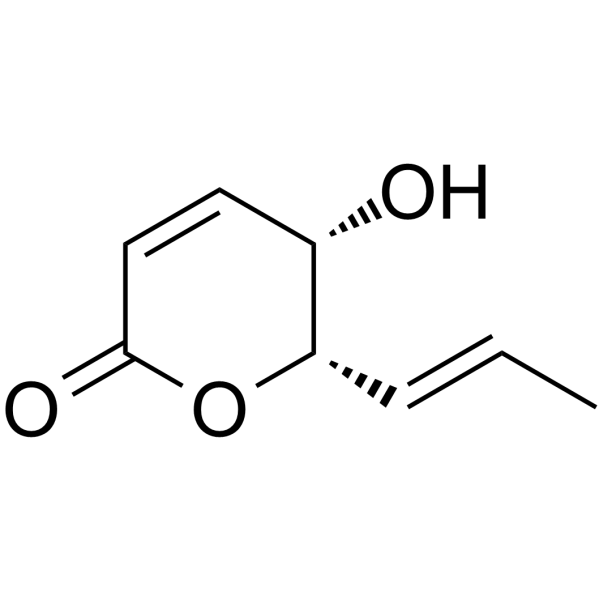
Cat. No.: HY-N10269
CAS No.: 28921-94-0
Phomalactone, produced by the fungus Nigrospora sphaerica, specifically inhibits the mycelial growth of Phytophthora infestans, with an MIC value of 2.5 mg/L . Phomalactone is phytotoxic to Z. elegans and other plant species by inhibition of seedling growth and by causing electrolyte leakage from photosynthetic tissues of both Z. elegans leaves and cucumber cotyledons .
loading...
    loading...
Cat. No.: HY-W727209
CAS No.: 1254304-22-7
Target:  

Parasite

Research Areas:  

Infection

Fluazaindolizine is a fluorinated nematicide. Fluazaindolizine induces mortality in second-stage juveniles (J2) of Meloidogyne incognita and Tylenchulus semipenetrans in vitro. Fluazaindolizine impacts plant-parasitic nematode parasitism. Fluazaindolizine can be used for the research of plant-parasitic nematode infestation .
loading...
    loading...
Cat. No.: HY-N9409
CAS No.: 229018-17-1
2-Hydroxymelatonin is a major hydroxylated metabolite of Melatonin (HY-B0075). It is enzymatically produced in plants by melatonin 2-hydroxylase (M2H/AsMT), while in animals, it is generated in trace amounts via CYP450 or spontaneous oxidation. 2-Hydroxymelatonin acts as a respiratory burst oxidase homolog (RBOH)-dependent ROS burst inducer, thereby regulating stress tolerance, seed germination and growth in plants. In animal cells, 2-Hydroxymelatonin synergizes with BMP-4 to promote osteogenesis, and exerts pro-apoptotic and anti-metastatic activities against colorectal cancer cells. 2-Hydroxymelatonin can be used in studies related to plant premature senescence, osteoporosis and colorectal cancer .
loading...
    loading...

