
1. Search Result
Search Result
Results for "

cysteamine

" in MedChemExpress (MCE) Product Catalog:

14

Inhibitors & Agonists

2

Biochemical Assay Reagents

4

Peptides

2

Natural
Products

2

Isotope-Labeled Compounds

Cat. No. Product Name Target Research Areas Chemical Structure
  • HY-77591
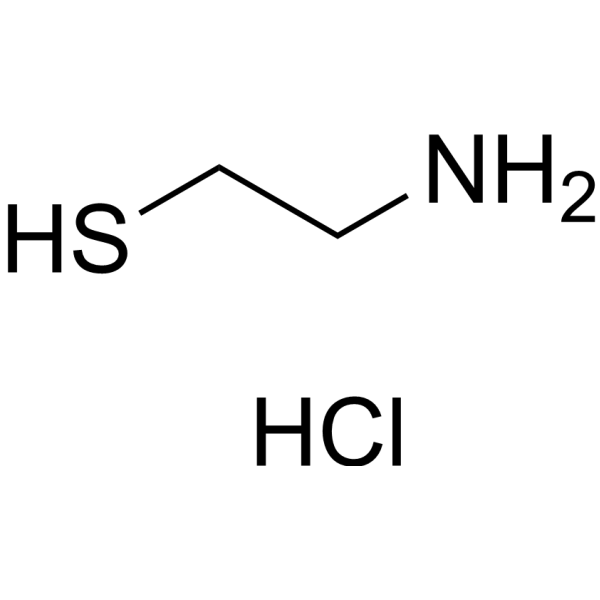
    Cysteamine hydrochloride
    2 Publications Verification

    2-Aminoethanethiol hydrochloride; 2-Mercaptoethylamine hydrochloride

    Autophagy Reactive Oxygen Species (ROS) Apoptosis Endogenous Metabolite Metabolic Disease Cancer
    Cysteamine hydrochloride (2-Aminoethanethiol hydrochloride) is an orally active agent for the treatment of nephropathic cystinosis and an antioxidant.
    Cysteamine hydrochloride
  • HY-124476
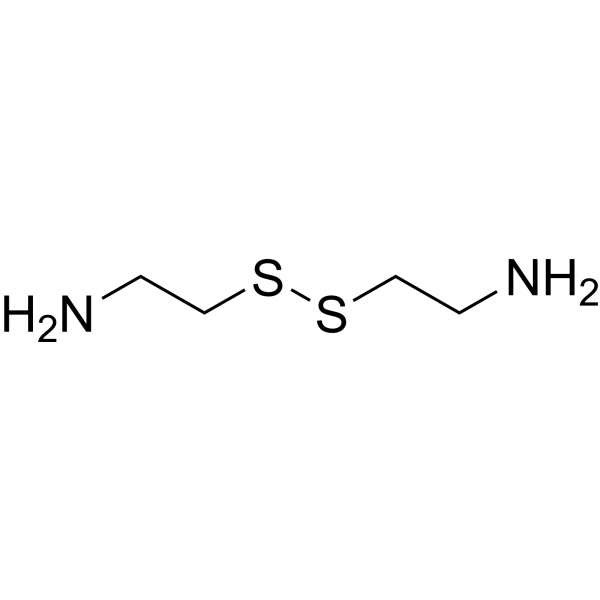
    Cystamine
    5 Publications Verification

    Caspase Glutaminase Apoptosis Cancer
    Cystamine is the disulfide form of the free thiol, cysteamine. Cystamine is an orally active transglutaminase (Tgase) inhibitor. Cystamine also has inhibition activity for caspase-3 with an IC50 value of 23.6 μM. Cystamine can be used for the research of severals diseases including Huntington's disease (HD) .
    Cystamine
  • HY-101794

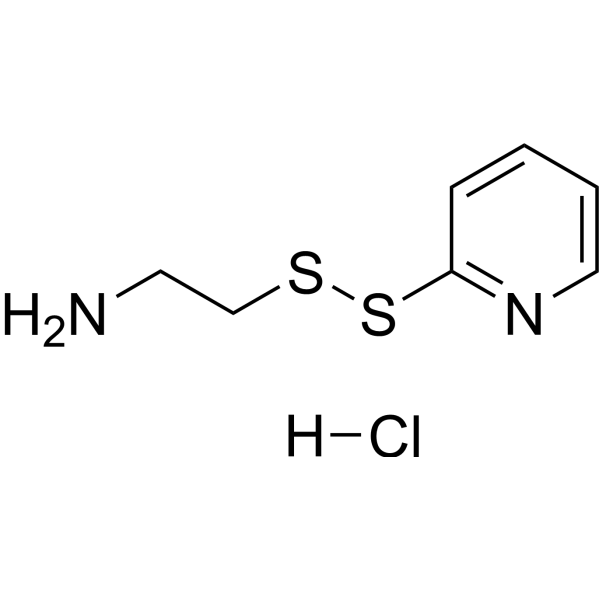
    (S)-2-Pyridylthio cysteamine Hydrochloride

    Biochemical Assay Reagents Others
    2-(Pyridyldithio)ethylamine hydrochloride is a novel disulfide intercalating cross-linking reagent.
    2-(Pyridyldithio)ethylamine hydrochloride
  • HY-W020050
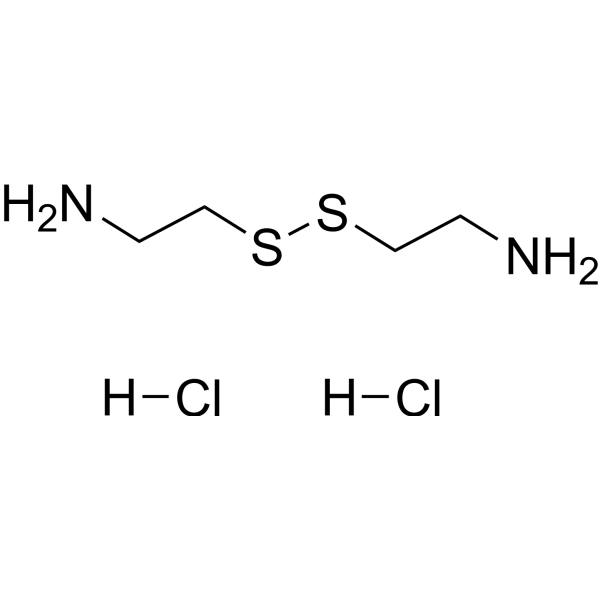
    Cystamine dihydrochloride
    5 Publications Verification

    Caspase Glutaminase Apoptosis Neurological Disease Cancer
    Cystamine (dihydrochloride) is the disulfide form of the free thiol, cysteamine. Cystamine is an orally active transglutaminase (Tgase) inhibitor. Cystamine also has inhibition activity for caspase-3 with an IC50 value of 23.6 μM. Cystamine can be used for the research of severals diseases including Huntington's disease (HD) .
    Cystamine dihydrochloride
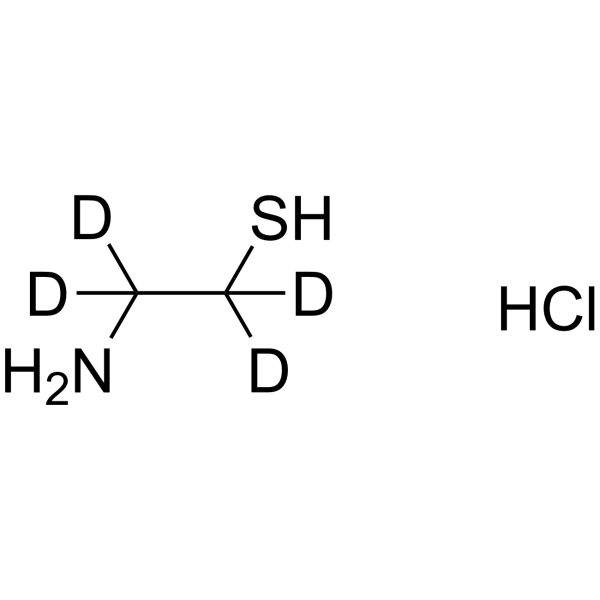
  • HY-77591S

    2-Aminoethanethiol-d4 hydrochloride; 2-Mercaptoethylamine-d4 hydrochloride

    Isotope-Labeled Compounds Autophagy Reactive Oxygen Species (ROS) Apoptosis Endogenous Metabolite Metabolic Disease Cancer
    Cysteamine-d4 (hydrochloride) is the deuterium labeled Cysteamine hydrochloride. Cysteamine hydrochloride (2-Aminoethanethiol hydrochloride) is an orally active agent for the treatment of nephropathic cystinosis and an antioxidant.
    Cysteamine-d4 hydrochloride
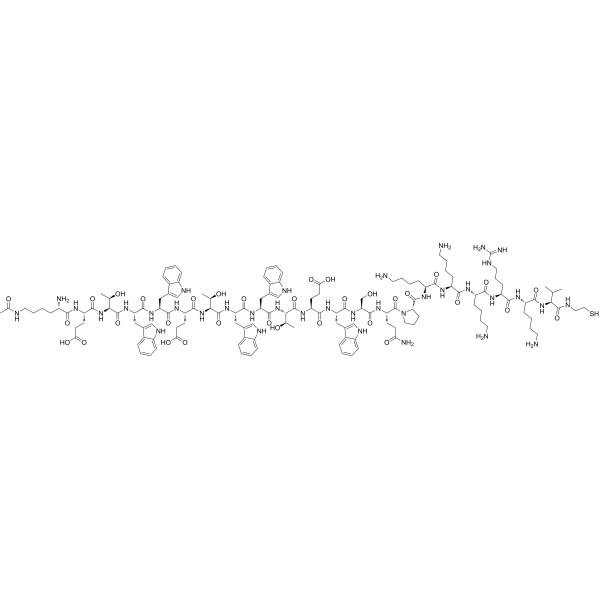
  • HY-P4119

    Biochemical Assay Reagents Others
    Pep-1-Cysteamine is an amphipathic chimeric cell-penetrating peptide. Pep-1-Cysteamine can penetrate biological membranes in an energy-independent manner without forming transmembrane pores, and efficiently deliver active proteins into cells, with its translocation dominated by electrostatic interactions and membrane perturbation .
    Pep-1-Cysteamine
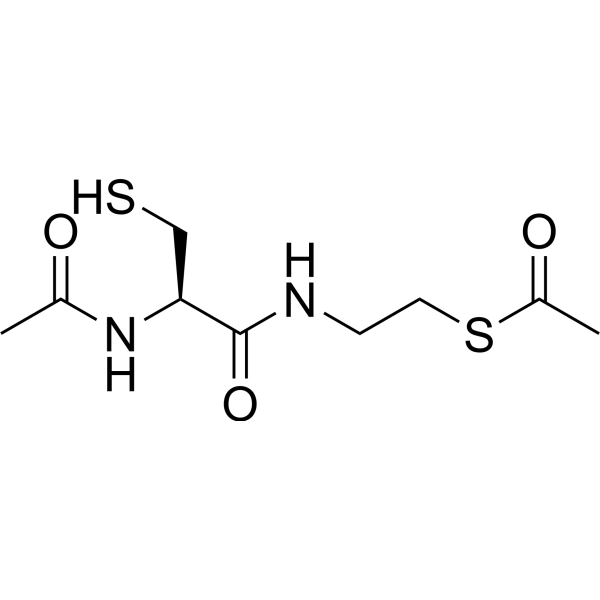
  • HY-153340

    Keap1-Nrf2 Metabolic Disease
    I-152 is a conjugate containing N-acetyl-cysteine (NAC) and cysteamine (MEA). I-152 activates NRF2 and ATF4 signals. I-152 has anti-proliferative properties .
    I-152
  • HY-77591R

    2-Aminoethanethiol hydrochloride (Standard); 2-Mercaptoethylamine hydrochloride (Standard)

    Reference Standards Autophagy Reactive Oxygen Species (ROS) Apoptosis Endogenous Metabolite Metabolic Disease Cancer
    Cysteamine (hydrochloride) (Standard) is the analytical standard of Cysteamine (hydrochloride). This product is intended for research and analytical applications. Cysteamine hydrochloride (2-Aminoethanethiol hydrochloride) is an orally active agent for the treatment of nephropathic cystinosis and an antioxidant.
    Cysteamine hydrochloride (Standard)
  • HY-P1341

    Orexin A (17-33) (human, mouse, rat, bovine)

    Orexin Receptor (OX Receptor) Sigma Receptor Phospholipase Neurological Disease
    OXA (17-33) (Orexin A (17-33) (human, mouse, rat, bovine)) is the shortest active orexin peptide that selectively targets OX1 (EC50=8.29 nM), with 23-fold selectivity for the OX1 receptor over the OX2 receptor. The activity of OXA (17-33) depends on the Tyr17, Leu20, Asn25, His26 residues and the spatial conformation of the α-helix. OXA (17-33) activates signaling pathways involving inositol-1,4,5-trisphosphate receptor (IP3R), phospholipase D (PL-D) and choline-Sigma-1R, thereby increasing the cytoplasmic Ca 2+ level in nucleus accumbens neurons, an effect that is blocked by Sigma-1R antagonists. OXA (17-33) serves as an important biological probe for investigating the function of the OX1 receptor. OXA (17-33) can be modified via incorporation of mixed disulfide bonds of homocysteine and cysteamine, and is widely used in studies related to insomnia and narcolepsy .
    OXA(17-33)
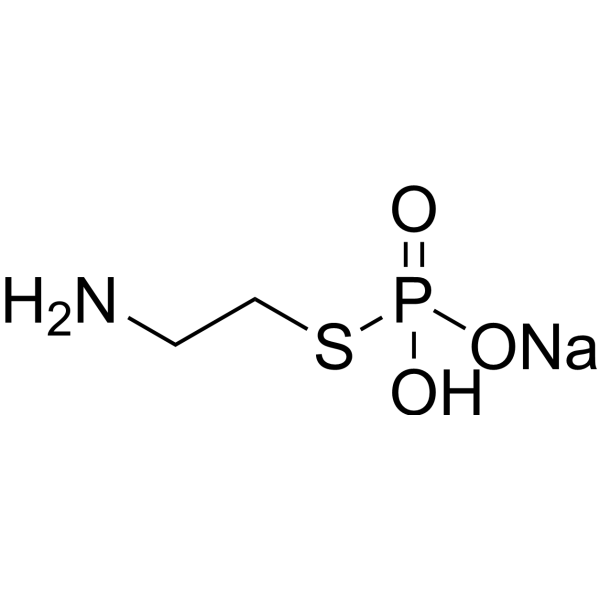
  • HY-W141781

    Cystaphos sodium

    Phosphatase Metabolic Disease
    Cysteamine S-phosphate (Cystaphos) sodium can be hydroIyzed to Cysteamine by human alkaline phosphatases. Cysteamine is an orally active agent for the research of nephropathic cystinosis and an antioxidant .
    Cysteamine S-phosphate sodium
  • HY-126751

    Na+/K+ ATPase Metabolic Disease
    DBM-819 is a reversible inhibitor of H⁺/K⁺-ATPase (H +/K +-ATPase), with an IC50 value of 5 μM. DBM-819 can reversibly block gastric acid secretion by inhibiting the proton pump in the gastric mucosa. It shows significant protective effects against duodenal ulcers induced by Cysteamine (HY-77591), gastric ulcers induced by Indomethacin (HY-14397), and gastric ulcers induced by Aspirin (HY-14654), with EC50 values of 6, 3.1, and 4 mg/kg respectively. DBM-819 can be used in ulcer prevention research .
    DBM-819
  • HY-W020050S

    Apoptosis Caspase Glutaminase Cancer
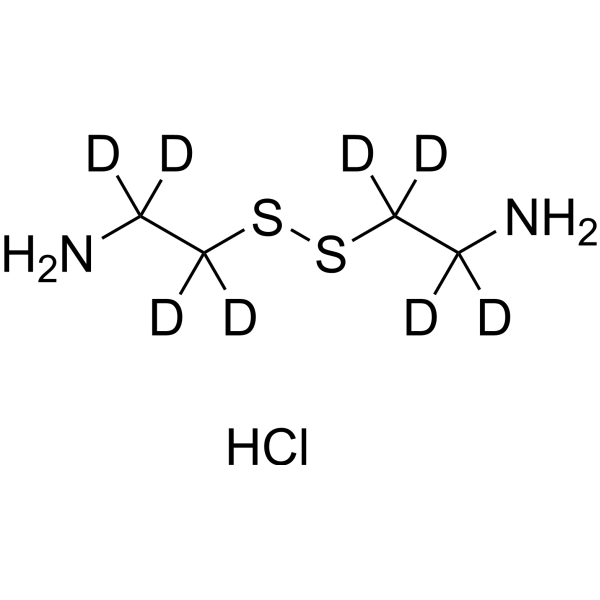
    Cystamine-d8 (dihydrochloride) is the deuterium labeled Cystamine (dihydrochloride) . Cystamine (dihydrochloride) is the disulfide form of the free thiol, cysteamine. Cystamine is an orally active transglutaminase (Tgase) inhibitor. Cystamine also has inhibition activity for caspase-3 with an IC50 value of 23.6 μM. Cystamine can be used for the research of severals diseases including Huntington's disease (HD) .
    Cystamine-d8 dihydrochloride
  • HY-101794R

    (S)-2-Pyridylthio cysteamine Hydrochloride (Standard)

    Biochemical Assay Reagents Reference Standards Others
    2-(Pyridyldithio)ethylamine hydrochloride (Standard) ((S)-2-Pyridylthio Cysteamine Hydrochloride (Standard)) is the analytical standard of 2-(Pyridyldithio)ethylamine hydrochloride (HY-101794). This product is intended for research and analytical applications. 2-(Pyridyldithio)ethylamine hydrochloride is a novel disulfide intercalating cross-linking reagent.
    2-(Pyridyldithio)ethylamine hydrochloride (Standard)
  • HY-105433

    Drug Derivative Cancer
    Perrimustine is a cysteamine (CysA) derivative with potent antitumor activity. Perrimustine exhibits significant effect on B16 melanoma and metastasized melanoma cells by causing DNA damage. Perrimustine exhibits antitumor effects in mice bearing various cancers, including lung carcinoma, leukemia, lymphoma, melanoma, colon carcinoma, and glioma. Perrimustine can be used for cancer research, such as melanoma and leukemia .
    Perrimustine

Inquiry Online

Your information is safe with us. * Required Fields.

Salutation


Country or Region *

Applicant Name *


Organization Name *

Department *


Email Address *


Product Name *

Cat. No.


Requested quantity *

Phone Number *


Remarks

Inquiry Online

Inquiry Information

Product Name:
Cat. No.:
Quantity:
MCE Japan Authorized Agent:

