
1. Search Result
Search Result
Results for "

dietary fiber

" in MedChemExpress (MCE) Product Catalog:

15

Inhibitors & Agonists

6

Biochemical Assay Reagents

2

Natural
Products

5

Isotope-Labeled Compounds

1

Oligonucleotides

Cat. No. Product Name Target Research Areas Chemical Structure
  • HY-B1773A
    Sodium propionate
    3 Publications Verification

    Environmental Pollutants Apoptosis Endogenous Metabolite Bacterial Autophagy HSV PPAR NF-κB COX NO Synthase Infection Neurological Disease Inflammation/Immunology Cancer
    Sodium propionate is an orally active short-chain fatty acid. Sodium propionate can be produced by intestinal bacteria from the metabolism of dietary fiber. Sodium propionate increases PPAR-γ, inhibits NF-κB activation, and reduces COX-2 expression and NO production. Sodium propionate also induces Apoptosis and Autophagy. Sodium propionate reduces HSV-1-induced keratitis. Sodium propionate has anticancer effects against glioblastoma. Sodium propionate exhibits neuroprotective, antioxidant, and anti-inflammatory activities. Sodium propionate can be used in the research of spinal cord injury and Alzheimer's disease .
    Sodium propionate
  • HY-A0103

    Environmental Pollutants Biochemical Assay Reagents Inflammation/Immunology
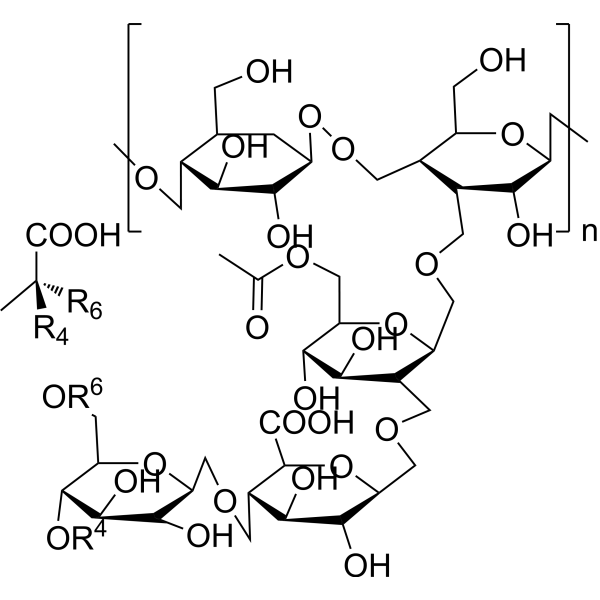
    Xanthan gum interacts with gelatin (HY-Y1365) via hydrogen bonds, thereby increasing the viscosity and stability of the hydrogel while promoting cell growth and creating a microenvironment conducive to cell differentiation [1][2]. Xanthan gum induces pro-inflammatory responses by increasing the levels of TNF-α, IL-6, and IL-10. Xanthan gum can be used for inflammation and immunology research .
    Xanthan gum
  • HY-B0921
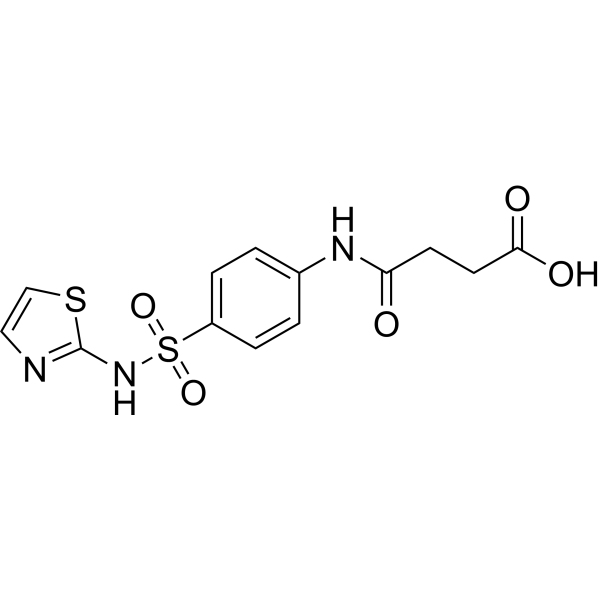
    Succinylsulfathiazole
    1 Publications Verification

    Succinylsulphathiazole

    Antibiotic Bacterial Dihydrofolate reductase (DHFR) mTOR Infection
    Succinylsulfathiazole (Succinylsulphathiazole) is a long-acting sulfonamide antibiotic with localized gut-specific antibacterial activity and is orally active. Succinylsulfathiazole inhibits bacterial folate synthesis, reduces coliform counts, suppresses intestinal bacterial growth and vitamin biosynthesis, and depletes gut folate-producing bacteria. Succinylsulfathiazole modulates hepatic mTOR signaling, diminishes cecal fermentation, decreases hepatic folate levels and total folate excretion, elevates nitrogen excretion and reduces the fermentability of certain dietary fibers. Succinylsulfathiazole induces folate deficiency and triggers biotin- and folate-related nutritional deficiency symptoms in rats and C57BL/6 mice .
    Succinylsulfathiazole
  • HY-B1773AS3

    Isotope-Labeled Compounds Apoptosis NF-κB Bacterial PPAR COX NO Synthase Autophagy HSV Endogenous Metabolite Infection Neurological Disease Inflammation/Immunology Cancer
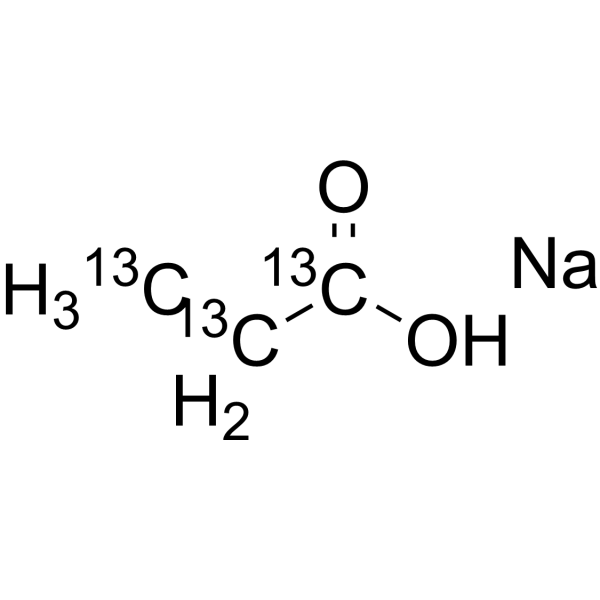
    Sodium propionate- 13C-3 is the 13C-labeled Propionate sodium (HY-B1773A). Sodium propionate is an orally active short-chain fatty acid. Sodium propionate can be produced by intestinal bacteria from the metabolism of dietary fiber. Sodium propionate increases PPAR-γ, inhibits NF-κB activation, and reduces COX-2 expression and NO production. Sodium propionate also induces Apoptosis and Autophagy. Sodium propionate reduces HSV-1-induced keratitis. Sodium propionate has anticancer effects against glioblastoma. Sodium propionate exhibits neuroprotective, antioxidant, and anti-inflammatory activities. Sodium propionate can be used in the research of spinal cord injury and Alzheimer's disease .
    Sodium propionate-13C3
  • HY-107863

    Oligolevulose

    Biochemical Assay Reagents Bacterial Infection Metabolic Disease
    Fructooligosaccharides (Oligolevulose) are a class of orally active dietary fibers and prebiotics. Fructooligosaccharides exist in foods such as breast milk, wheat, honey, onions, garlic and bananas. Fructooligosaccharides resist hydrolysis by the body's digestive enzymes and stimulate the growth of beneficial intestinal bacteria through colonic fermentation. Fructooligosaccharides significantly prevent bone loss in the femur and lumbar spine .
    Fructooligosaccharides
  • HY-W250146

    Locust bean gum, Polysaccharide>75%, 5000-6500 mPa·S

    Environmental Pollutants Biochemical Assay Reagents Others
    Locust bean gum is a natural polysaccharide derived from the seeds of the carob tree. It is commonly used as a thickening, stabilizing and gelling agent in a variety of foods, including dairy, baked goods and meat products. Locust bean gum has several properties suitable for these applications, including high water retention capacity, ability to form stable gels at low temperatures, and resistance to acidic conditions. Additionally, it can be used as a dietary fiber supplement due to its potential health benefits, including improving digestion and lowering cholesterol levels.
    Locust bean gum, from Ceratonia siliqua seeds
  • HY-B1773AS4

    Isotope-Labeled Compounds Apoptosis NF-κB Bacterial PPAR COX NO Synthase Autophagy HSV Endogenous Metabolite Infection Neurological Disease Inflammation/Immunology Cancer
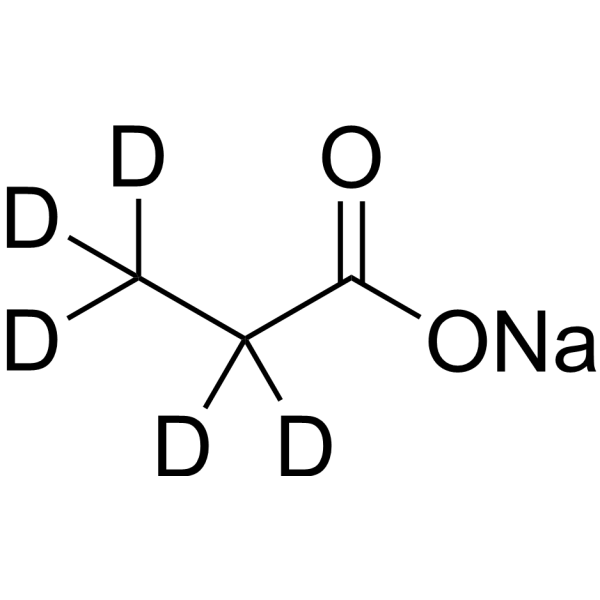
    Sodium propionate-d5 is the deuterium labeled Propionate sodium (HY-B1773A). Sodium propionate is an orally active short-chain fatty acid. Sodium propionate can be produced by intestinal bacteria from the metabolism of dietary fiber. Sodium propionate increases PPAR-γ, inhibits NF-κB activation, and reduces COX-2 expression and NO production. Sodium propionate also induces Apoptosis and Autophagy. Sodium propionate reduces HSV-1-induced keratitis. Sodium propionate has anticancer effects against glioblastoma. Sodium propionate exhibits neuroprotective, antioxidant, and anti-inflammatory activities. Sodium propionate can be used in the research of spinal cord injury and Alzheimer's disease .
    Sodium propionate-d5
  • HY-B1773AS

    Isotope-Labeled Compounds Apoptosis NF-κB Bacterial PPAR COX NO Synthase Autophagy HSV Endogenous Metabolite Infection Neurological Disease Inflammation/Immunology Cancer
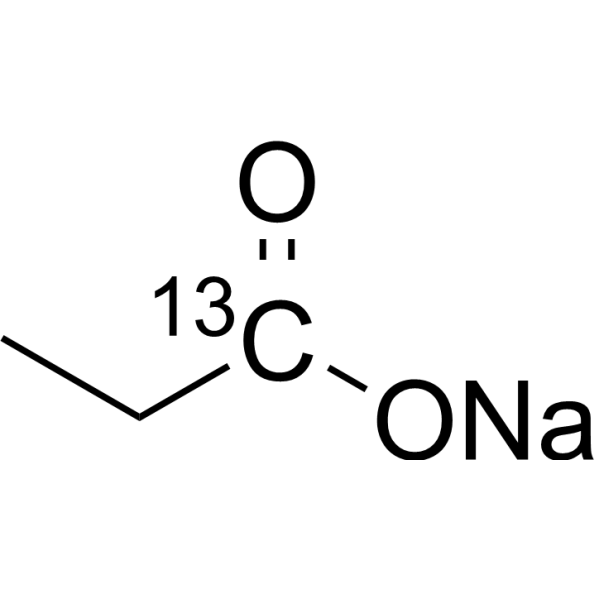
    Sodium propionate- 13C is the 13C labeled Propionate sodium (HY-B1773A). Sodium propionate is an orally active short-chain fatty acid. Sodium propionate can be produced by intestinal bacteria from the metabolism of dietary fiber. Sodium propionate increases PPAR-γ, inhibits NF-κB activation, and reduces COX-2 expression and NO production. Sodium propionate also induces Apoptosis and Autophagy. Sodium propionate reduces HSV-1-induced keratitis. Sodium propionate has anticancer effects against glioblastoma. Sodium propionate exhibits neuroprotective, antioxidant, and anti-inflammatory activities. Sodium propionate can be used in the research of spinal cord injury and Alzheimer's disease .
    Sodium propionate-13C
  • HY-B1773AS5

    Isotope-Labeled Compounds Apoptosis NF-κB Bacterial PPAR COX NO Synthase Autophagy HSV Endogenous Metabolite Infection Neurological Disease Inflammation/Immunology Cancer
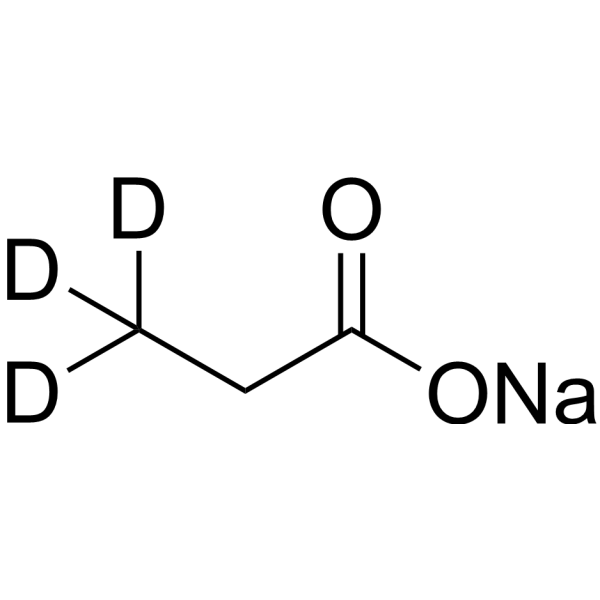
    Sodium propionate-d3 is the deuterium labeled Propionate sodium (HY-B1773A). Sodium propionate is an orally active short-chain fatty acid. Sodium propionate can be produced by intestinal bacteria from the metabolism of dietary fiber. Sodium propionate increases PPAR-γ, inhibits NF-κB activation, and reduces COX-2 expression and NO production. Sodium propionate also induces Apoptosis and Autophagy. Sodium propionate reduces HSV-1-induced keratitis. Sodium propionate has anticancer effects against glioblastoma. Sodium propionate exhibits neuroprotective, antioxidant, and anti-inflammatory activities. Sodium propionate can be used in the research of spinal cord injury and Alzheimer's disease .
    Sodium propionate-d3
  • HY-159063

    Biochemical Assay Reagents Others
    Soy Polysaccharides are biochemical reagents that can be added to beverages, sauces, and dairy products as thickeners, emulsifiers, and dietary fiber ingredients. Soy Polysaccharides are non-toxic, hydrophilic, and biodegradable, allowing for widespread application in various food sectors. Additionally, Soy Polysaccharides serve as effective stabilizers in oil/water emulsions. Even under acidic conditions, Soy Polysaccharides can stabilize β-conglycinin-based emulsions to prevent flocculation .
    Soy Polysaccharides
  • HY-B1773AR

    Reference Standards Apoptosis NF-κB Bacterial PPAR COX NO Synthase Autophagy HSV Endogenous Metabolite Infection Neurological Disease Inflammation/Immunology Cancer
    Sodium propionate (Standard) is the analytical standard of Sodium propionate. This product is intended for research and analytical applications. Sodium propionate is an orally active short-chain fatty acid. Sodium propionate can be produced by intestinal bacteria from the metabolism of dietary fiber. Sodium propionate increases PPAR-γ, inhibits NF-κB activation, and reduces COX-2 expression and NO production. Sodium propionate also induces Apoptosis and Autophagy. Sodium propionate reduces HSV-1-induced keratitis. Sodium propionate has anticancer effects against glioblastoma. Sodium propionate exhibits neuroprotective, antioxidant, and anti-inflammatory activities. Sodium propionate can be used in the research of spinal cord injury and Alzheimer's disease .
    Sodium propionate (Standard)
  • HY-B1773AS1

    Isotope-Labeled Compounds Apoptosis NF-κB Bacterial PPAR COX NO Synthase Autophagy HSV Endogenous Metabolite Infection Neurological Disease Inflammation/Immunology Cancer
    Sodium propionate- 13C-1 is the 13C-labeled Propionate sodium (HY-B1773A). Sodium propionate is an orally active short-chain fatty acid. Sodium propionate can be produced by intestinal bacteria from the metabolism of dietary fiber. Sodium propionate increases PPAR-γ, inhibits NF-κB activation, and reduces COX-2 expression and NO production. Sodium propionate also induces Apoptosis and Autophagy. Sodium propionate reduces HSV-1-induced keratitis. Sodium propionate has anticancer effects against glioblastoma. Sodium propionate exhibits neuroprotective, antioxidant, and anti-inflammatory activities. Sodium propionate can be used in the research of spinal cord injury and Alzheimer's disease .
    Sodium propionate-13C-1
  • HY-B0921R

    Succinylsulphathiazole (Standard)

    Reference Standards Bacterial Antibiotic Dihydrofolate reductase (DHFR) mTOR Infection
    Succinylsulfathiazole (Standard) (Succinylsulphathiazole) is the analytical standard of Succinylsulfathiazole (HY-B0921). This product is intended for research and analytical applications. Succinylsulfathiazole is a long-acting sulfonamide antibiotic with localized gut-specific antibacterial activity and is orally active. Succinylsulfathiazole inhibits bacterial folate synthesis, reduces coliform counts, suppresses intestinal bacterial growth and vitamin biosynthesis, and depletes gut folate-producing bacteria. Succinylsulfathiazole modulates hepatic mTOR signaling, diminishes cecal fermentation, decreases hepatic folate levels and total folate excretion, elevates nitrogen excretion and reduces the fermentability of certain dietary fibers. Succinylsulfathiazole induces folate deficiency and triggers biotin- and folate-related nutritional deficiency symptoms in rats and C57BL/6 mice .
    Succinylsulfathiazole (Standard)
  • HY-N18779

    Bacterial Infection Inflammation/Immunology
    Phoenix dactylifera extract is rich in dietary fiber, phenols, tocopherols, carotenoids, and flavonoids, among other bioactive compounds, offering significant health and beauty benefits. It also possesses antioxidant, anti-inflammatory, antibacterial, and antiviral properties.
    Phoenix dactylifera extract
  • HY-N16477

    Drug Metabolite Metabolic Disease
    Ciceritol is a dietary fiber component/prebiotic targeting α-galactosidic linkage oligosaccharides. Ciceritol selectively promotes proliferation of beneficial bacteria like Bifidobacteria. Ciceritol is promising for research of gut microbiota-related diseases (e.g., irritable bowel syndrome, metabolic syndrome) .
    Ciceritol

Inquiry Online

Your information is safe with us. * Required Fields.

Salutation


Country or Region *

Applicant Name *


Organization Name *

Department *


Email Address *


Product Name *

Cat. No.


Requested quantity *

Phone Number *


Remarks

Inquiry Online

Inquiry Information

Product Name:
Cat. No.:
Quantity:
MCE Japan Authorized Agent:

