
1. Search Result
Search Result
Results for "

digestive system

" in MedChemExpress (MCE) Product Catalog:

30

Inhibitors & Agonists

1

Screening Libraries

5

Biochemical Assay Reagents

5

Peptides

2

Inhibitory Antibodies

2

Natural
Products

1

Oligonucleotides

Targets Recommended:
Cat. No. Product Name Target Research Areas Chemical Structure
  • HY-B0633D

    CD44 Endogenous Metabolite Bacterial Akt PI3K Neurological Disease Metabolic Disease Inflammation/Immunology Cancer
    Hyaluronic acid sodium (MW 200-1560) is a biopolymer composed of repeating disaccharide units, with a molecular weight of 200-1560. Hyaluronic acid sodium is a major component of the extracellular matrix (ECM). It is synthesized on the plasma membrane. Hyaluronic acid sodium exerts its effects by binding to receptors CD44 and RHAMM. Hyaluronic acid sodium activates PI3K-Akt signaling. Hyaluronic acid sodium also enhances cell invasion and angiogenesis by promoting or stimulating the binding of proteolytic MMP-9 to the cell surface. Elevated hyaluronic acid levels are associated with tumor cell growth, adhesion, migration, invasion, and angiogenesis in digestive system cancers. Hyaluronic acid sodium is involved in tissue remodeling and rapid cell proliferation in several physiological processes, including embryonic morphogenesis and wound healing. Hyaluronic acid sodium can be used as a regulator of cancer-associated lymphangiogenesis. Hyaluronic acid sodium can be used as a drug delivery carrier for sodium butyrate, enhancing its anti-proliferative activity against breast cancer cell lines. Hyaluronic acid sodium can lubricate the corneal endothelium. Hyaluronic acid sodium can improve tissue hydration and enhance the resistance of cells to mechanical damage. Hyaluronic acid sodium has been conjugated with antibodies to ensure that the active compound continues to exert its effects at the site of inflammation. Hyaluronic acid sodium can be used in research in the fields of osteoarthritis, ophthalmology, cosmetic dermatology, oncology, and liver diseases .
    Hyaluronic acid sodium (MW 200-1560)
  • HY-B0633E

    Hyaluronan, low endotoxin; Hyaluronate, low endotoxin

    Endogenous Metabolite CD44 Bacterial Akt PI3K Neurological Disease Metabolic Disease Inflammation/Immunology Cancer
    Hyaluronic acid, low endotoxin (Hyaluronan, low endotoxin) is a biopolymer composed of repeating disaccharide units containing low levels of endotoxin. Hyaluronic acid is a major component of the extracellular matrix (ECM). It is synthesized on the plasma membrane. Hyaluronic acid exerts its effects by binding to receptors CD44 and RHAMM. Hyaluronic acid activates PI3K-Akt signaling. Hyaluronic acid also enhances cell invasion and angiogenesis by promoting or stimulating the binding of proteolytic MMP-9 to the cell surface. Elevated hyaluronic acid levels are associated with tumor cell growth, adhesion, migration, invasion, and angiogenesis in digestive system cancers. Hyaluronic acid is involved in tissue remodeling and rapid cell proliferation in several physiological processes, including embryonic morphogenesis and wound healing. Hyaluronic acid can be used as a regulator of cancer-associated lymphangiogenesis. Hyaluronic acid can be used as a drug delivery carrier for sodium butyrate, enhancing its anti-proliferative activity against breast cancer cell lines. Hyaluronic acid can lubricate the corneal endothelium. Hyaluronic acid can improve tissue hydration and enhance the resistance of cells to mechanical damage. Hyaluronic acid has been conjugated with antibodies to ensure that the active compound continues to exert its effects at the site of inflammation. Hyaluronic acid can be used in research in the fields of osteoarthritis, ophthalmology, cosmetic dermatology, oncology, and liver diseases .
    Hyaluronic acid, low endotoxin
  • HY-108882C

    DNA/RNA Synthesis Inflammation/Immunology
    DNase I is an enzyme that degrades DNA. DNase I is mainly produced by digestive system organs, such as the pancreas and parotid gland. Three types of DNase I are known in mammals: pancreatic type, parotid type, and pancreatico-parotid type. DNase I plays a key role in the cleavage of extracellular DNA, and is critical for limiting inflammatory responses and maintaining homeostasis. DNase I is responsible for digesting extracellular nucleoproteins, which may be essential for preventing autoimmune reactions. Decreased DNase I activity may be associated with the occurrence and development of systemic lupus erythematosus (SLE). DNase I (filtered) is filtered through a 0.22 μM membrane and is not tested for pyrogenicity .
    DNase I (filtered)
  • HY-108882B
    DNase I RNase & Protease free
    Maximum Cited Publications
    29 Publications Verification

    DNA/RNA Synthesis Inflammation/Immunology
    DNase I is an enzyme that degrades DNA. DNase I is mainly produced by digestive system organs, such as the pancreas and parotid gland. Three types of DNase I are known in mammals: pancreatic type, parotid type, and pancreatico-parotid type. DNase I plays a key role in the cleavage of extracellular DNA, and is critical for limiting inflammatory responses and maintaining homeostasis. DNase I is responsible for digesting extracellular nucleoproteins, which may be essential for preventing autoimmune responses. Decreased DNase I activity may be associated with the onset and progression of systemic lupus erythematosus (SLE). DNase I (RNase & Protease free) is a molecular biology-grade DNase I purified by chromatography to remove RNase and protease .
    DNase I RNase & Protease free
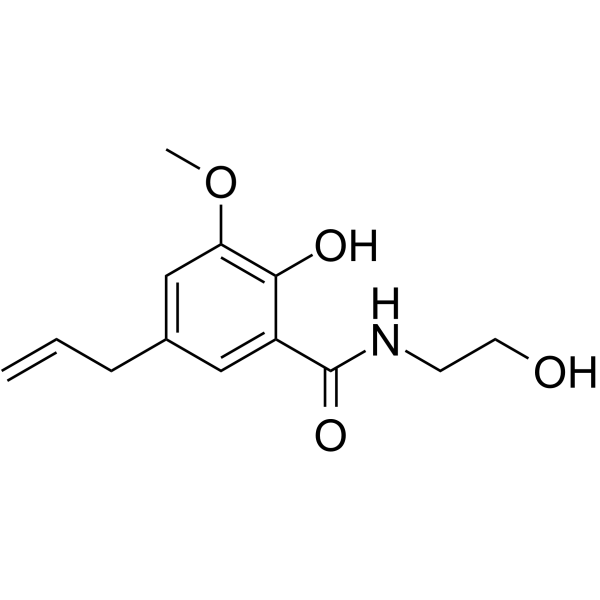
  • HY-B0326

    Drug Derivative Endocrinology
    Alibendol can be taken orally. It has anti-spasmodic properties and promotes bile secretion, making it useful for research on digestive system issues like indigestion, nausea, vomiting, and constipation .
    Alibendol
  • HY-B1113
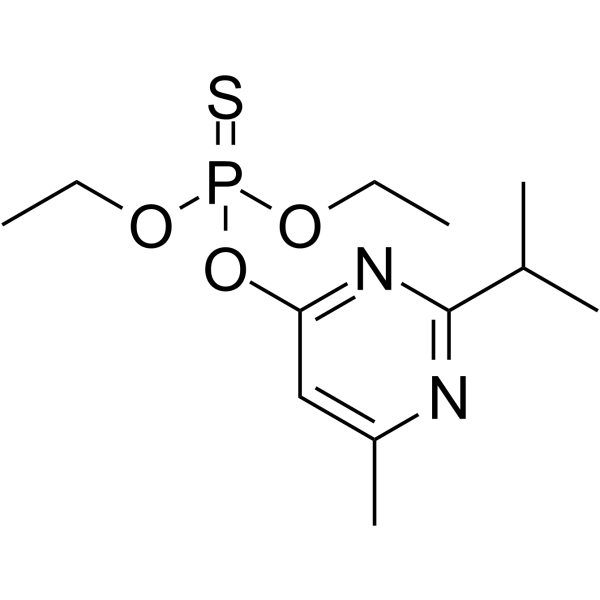
    Diazinon
    2 Publications Verification

    Dimpylate

    Environmental Pollutants Parasite Infection
    Diazinon is an orally active, irreversible AChE inhibitor and insecticide that can be absorbed through the digestive system, skin or respiratory tract. Diazinon inhibits AChE, leading to accumulation of acetylcholine, which in turn overstimulates ACh receptors and affects the nervous system. Diazinon also produces reactive oxygen species (ROS), which induce oxidative stress in various tissues. Diazinon is mainly used in the agricultural field as an insecticide and may have potential effects on human and animal health .
    Diazinon
  • HY-Y0850U3

    Polyvinyl alcohol (Mw 125000, 98-99% hydrolyzed, ~2800 polymerization); Poly(Ethenol) (Mw 125000, 98-99% hydrolyzed, ~2800 polymerization)

    Biochemical Assay Reagents Others
    PVA (Polyvinyl alcohol) (Mw 125000, 98-99% hydrolyzed, ~2800 polymerization) is a water-soluble, biodegradable, biocompatible and non-immunogenic polymer. PVA (Mw 125000, 98-99% hydrolyzed, ~2800 polymerization) causes no irritation to rabbit eyes, no skin sensitization in guinea pigs, promotes the proliferation of human skin keratinocytes, and reduces the loss of corneal endothelial cells. The LD50 of PVA (Mw 125000, 98-99% hydrolyzed, ~2800 polymerization) in rats and dogs is greater than 10 g/kg. PVA (Mw 125000, 98-99% hydrolyzed, ~2800 polymerization) is hardly absorbed by the digestive system, causes no adverse effects upon long-term oral administration, and shows no mutagenicity or carcinogenicity. However, repeated intravenous or portal vein injection of PVA (Mw 125000, 98-99% hydrolyzed, ~2800 polymerization) may induce pathological changes such as glomerular lesions, anemia, hypertension or liver fibrosis in rats or dogs. Crosslinked nanofibers prepared by modifying PVA (Mw 125000, 98-99% hydrolyzed, ~2800 polymerization) can be used in studies related to wound dressings and other applications .
    PVA (Mw 125000, 98-99% hydrolyzed, ~2800 polymerization)
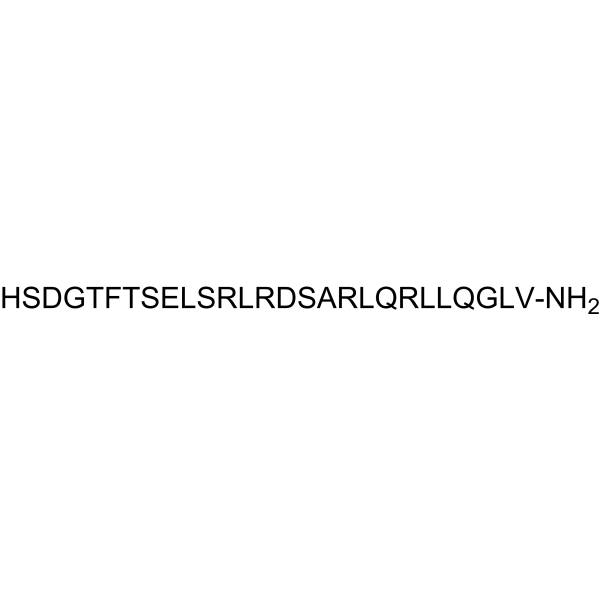
  • HY-109538

    Secretin Receptor Neurological Disease Metabolic Disease
    Secretin (swine), a neuroendocrine hormone, is the first hormone to be identifie and is secreted by S cells that are localized primarily in the mucosa of the duodenum. Secretin also is a 27-amino acid peptide, which acts on secretin receptors. Secretin is expressed by cells in all mature enteroendocrine cell subsets and can be prompted by fatty acids. Secretin stimulates the secretion of pancreatic water and bicarbonate. Secretin exerts various effects in organs, can be used for the research of digestive system, central nervous system and energy metabolism .
    Secretin (swine)
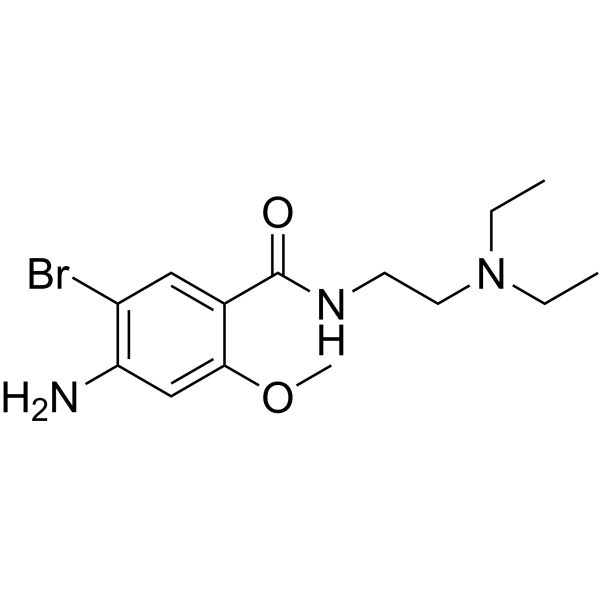
  • HY-B1164
    Bromopride
    2 Publications Verification

    Dopamine Receptor Neurological Disease
    Bromopride is a selective, irreversible, competitive, and orally effective dopamine D2 receptor antagonist. Bromopride can pass through the blood-brain barrier, inhibit the vomiting center, and enhance gastrointestinal motility, exerting antiemetic and gastrointestinal motility effects. Bromopride antagonizes dopamine-mediated vomiting reflexes and promotes gastrointestinal smooth muscle contraction, and has no adverse effects on abdominal wall healing in rats with postoperative abdominal infection. Bromopride can be used for the study of digestive system diseases (such as gastric hypomotility, nausea and vomiting) .
    Bromopride
  • HY-177850

    ACSL Family Metabolic Disease Endocrinology Cancer
    ACSL5-IN-3 (page 115 line 11) is an ACSL5 inhibitor. ACSL5-IN-3 can be used for research of tumours, digestive system diseases, and endocrine and metabolic diseases .
    ACSL5-IN-3
  • HY-P991277

    HS-20137

    Interleukin Related Inflammation/Immunology
    QX-004N (HS-20137) is a monoclonal antibody inhibitor targeting the p19 subunit of interleukin-23 (IL-23). QX-004N is promising for research of immune system diseases and diseases of digestive system .
    QX-004N
  • HY-119722

    Endogenous Metabolite Others
    Butafosfan is a phosphate containing compound, which is used as active ingredient of veterinary drug. Butafosfan can stimulate the appetite, immune system and digestive function, improves liver and muscle function of dogs. Butafosfan can mitigate the adverse effects of Dexamethasone (HY-14648) on liver and pancreatic function in dogs .
    Butafosfan
  • HY-Z2667

    (R)-Omeprazole; (+)-Omeprazole

    Cytochrome P450 Metabolic Disease Inflammation/Immunology
    (R)-Esomeprazole ((R)-Omeprazole; (+)-Omeprazole) is an orally active cytochrome P450 2C19, CYP3A4, and CYP2C9-related metabolic modulator. (R)-Esomeprazole can be used in studies of digestive system diseases and compound metabolic interactions .
    (R)-Esomeprazole
  • HY-P10220

    Radionuclide-Drug Conjugates (RDCs) TREM receptor Cancer
    NOTA-COG1410 forms triggering receptor expressed on myeloid cells 2 (TREM2) targeting ligand. NOTA-COG1410 is capable of being labelled with 68Gallium ( 68Ga) for discovery and diagnosis of digestive system tumors through positron emission tomography/computed tomography (PET/CT). NOTA-COG1410 can be used for the synthesis/research of Radionuclide-Drug Conjugates (RDCs) .
    NOTA-COG1410
  • HY-105524

    5-HT Receptor Dopamine Receptor Inflammation/Immunology
    Lirexapride is a 5-HT4/Dopamine D2 receptor agonist. Lirexapride stimulants gastrointestinal motor. Lirexapride can be used for research on digestive system disorders .
    Lirexapride
  • HY-109538R

    Secretin Receptor Reference Standards Neurological Disease Metabolic Disease
    Secretin (swine) (Standard) is the analytical standard of Secretin (swine). This product is intended for research and analytical applications. Secretin (swine), a neuroendocrine hormone, is the first hormone to be identifie and is secreted by S cells that are localized primarily in the mucosa of the duodenum. Secretin also is a 27-amino acid peptide, which acts on secretin receptors. Secretin is expressed by cells in all mature enteroendocrine cell subsets and can be prompted by fatty acids. Secretin stimulates the secretion of pancreatic water and bicarbonate. Secretin exerts various effects in organs, can be used for the research of digestive system, central nervous system and energy metabolism .
    Secretin (swine) (Standard)
  • HY-P2433

    Biochemical Assay Reagents Others
    SNF-8814 is a cholecystokinin analog. SNF-8814 can be used in digestive system related research .
    SNF-8814
  • HY-142090

    SK&F 93574

    Histamine Receptor Others
    Donetidine (SK&F 93574) is an antagonist for histamine H2 receptor, that promotes histamine release in beagle dog models .
    Donetidine
  • HY-105854

    Apoptosis Reactive Oxygen Species (ROS) JNK p38 MAPK MMP Cancer
    Pipoxolan hydrochloride is an anti-spasmotic agent. Pipoxolan hydrochloride induces Apoptosis, increases intracellular ROS. Pipoxolan hydrochloride down-regulates phosphorylation JNK and p38, and then, MMP-2 and -9. Pipoxolan hydrochloride relieves smooth muscle spasms in the digestive, urinary, and gynecological systems. Pipoxolan hydrochloride also exhibits anticancer activity against leukemia, oral squamous cell carcinoma, and lung adenocarcinoma .
    Pipoxolan hydrochloride
  • HY-B1164A

    Dopamine Receptor Neurological Disease
    Bromopride hydrochloride is a selective, irreversible, competitive, and orally active dopamine D2 receptor antagonist. Bromopride hydrochloride can pass through the blood-brain barrier, inhibit the vomiting center, and enhance gastrointestinal motility, exerting antiemetic and gastrointestinal motility effects. Bromopride hydrochloride antagonizes dopamine-mediated vomiting reflexes and promotes gastrointestinal smooth muscle contraction, and has no adverse effects on abdominal wall healing in rats with postoperative abdominal infection. Bromopride hydrochloride can be used for the study of digestive system diseases (such as gastric hypomotility, nausea and vomiting) .
    Bromopride hydrochloride
  • HY-P991276

    Interleukin Related Inflammation/Immunology
    FM-303 is a monoclonal antibody inhibitor targeting interleukin-23 (IL-23). FM-303 is promising for research of immune system diseases and diseases of digestive system .
    FM-303
  • HY-19179

    Histamine Receptor Metabolic Disease
    TRM-115 is a histamine H2 receptor antagonist. TRM-115 is promising for research of digestive system disease .
    TRM-115
  • HY-105671

    Drug Derivative Inflammation/Immunology
    Balazipone is a phenylmethylene-2,4-pentanedione compound with anti-inflammation activity. Balazipone can be used for digestive system diseases research, such as Crohn's disease .
    Balazipone
  • HY-N16736

    Others Inflammation/Immunology
    Alpinenone is a sesquiterpene compound isolated from nootropic fruits. Alpinenone exerts anti-inflammatory activity by inhibiting overproduction of nitric oxide (NO) and has traditionally had antidiarrheal, diuretic properties. Alpinenone can be used to study inflammation-related diseases and digestive and urinary system diseases .
    Alpinenone
  • HY-129047H

    Ser/Thr Protease Metabolic Disease
    Trypsin, Rat (EC 3.4.21.4) is a serine protease belonging to the PA superfamily. It is present in the digestive systems of many vertebrates and hydrolyzes proteins. Trypsin, Rat (EC 3.4.21.4) primarily cleaves peptide chains at the carboxyl terminus of lysine or arginine, but cleavage does not occur when lysine or arginine is followed by proline.
    Trypsin, Rat
  • HY-172281

    Liposome Cardiovascular Disease
    DSPE-PEG1000-CCK8 is a PEG compound which composed of DSPE and a Cholecystokinin-8 (CCK8). Cholecystokinin-8 has the activity of peptide regulating gallbladder contraction and digestive system function. DSPE-PEG1000-CCK8 can be used for drug delivery .
    DSPE-PEG1000-CCK8
  • HY-172281A

    Liposome Cardiovascular Disease
    DSPE-PEG2000-CCK8 is a PEG compound which composed of DSPE and a Cholecystokinin-8 (CCK8). Cholecystokinin-8 has the activity of peptide regulating gallbladder contraction and digestive system function. DSPE-PEG2000-CCK8 can be used for drug delivery .
    DSPE-PEG2000-CCK8
  • HY-N15354

    Others Others
    Jujubasaponin IV is a triterpenoid saponin compound found in Zizyphi Fructus. Animal studies have shown that Jujubasaponin IV possesses certain anti-ulcer activity, possibly through mechanisms such as enhancing the gastric mucosal barrier or inhibiting gastric acid secretion. Jujubasaponin IV can be used in research on digestive system diseases, particularly in the study of gastric ulcer mechanisms .
    Jujubasaponin IV
  • HY-172281B

    Liposome Cardiovascular Disease
    DSPE-PEG5000-CCK8 is a PEG compound which composed of DSPE and a Cholecystokinin-8 (CCK8). Cholecystokinin-8 has the activity of peptide regulating gallbladder contraction and digestive system function. DSPE-PEG5000-CCK8 can be used for drug delivery .
    DSPE-PEG5000-CCK8
  • HY-E71022

    Endogenous Metabolite Metabolic Disease
    Trypsin Acetylated, Bovine (EC 3.4.21.4) is a serine protease from the PA clan superfamily, found in the digestive system of many vertebrates, where it hydrolyses proteins. Trypsin is produced in the pancreas as the inactive protease trypsinogen. Trypsin cleaves peptide chains mainly at the carboxyl side of the amino acids lysine or arginine, except when either is followed by proline.
    Trypsin Acetylated, Bovine

Inquiry Online

Your information is safe with us. * Required Fields.

Salutation


Country or Region *

Applicant Name *


Organization Name *

Department *


Email Address *


Product Name *

Cat. No.


Requested quantity *

Phone Number *


Remarks

Inquiry Online

Inquiry Information

Product Name:
Cat. No.:
Quantity:
MCE Japan Authorized Agent:

