21 Results for "

exquisite

" in MedChemExpress (MCE) Product Catalog:
Products (21)

21 Results for "exquisite" in MCE Product Catalog:

12
12 Publications Verification
Cat. No.: HY-16911
CAS No.: 620175-39-5
Synonyms: API-1252; Debio 1452
Target:  

Bacterial Antibiotic

Research Areas:  

Infection

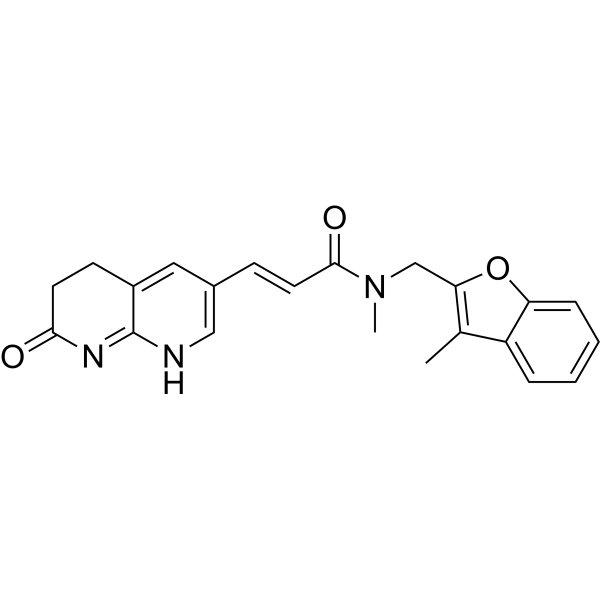
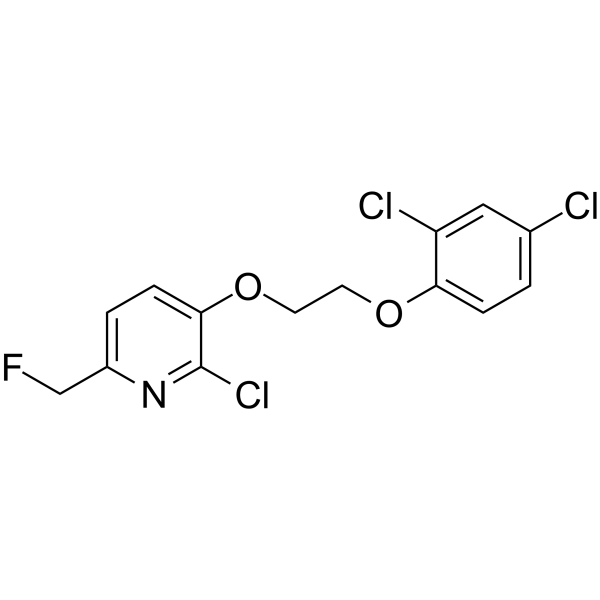
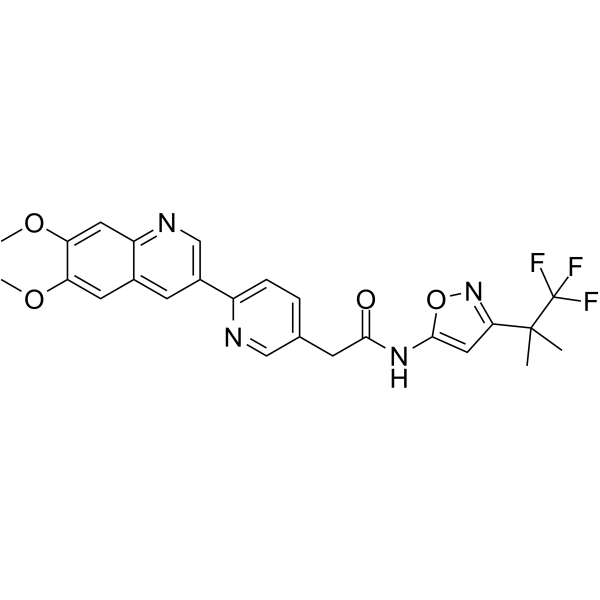
AFN-1252 is an orally active and selective inhibitor of FabI, an essential enzyme in fatty acid biosynthesis in Staphylococcus spp. AFN-1252 exhibits exquisite and highly selective activity against Staphylococcus spp. AFN-1252 exhibits typical MIC90 values of ⩽0.015 μg/ml against diverse clinical isolates of S. aureus. AFN-1252 is efficacious in a mouse model of septicemia providing 100% protection from an otherwise lethal peritoneal infection of S. aureus Smith .
loading...
    loading...
9
9 Cited Publications
Cat. No.: HY-12019
CAS No.: 1022150-57-7
Purity:  99.23%
Target:  

c-Met/HGFR

Research Areas:  

Cancer

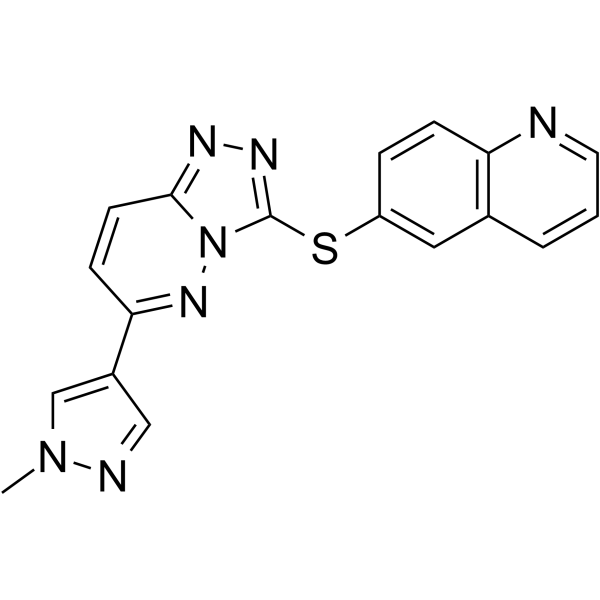
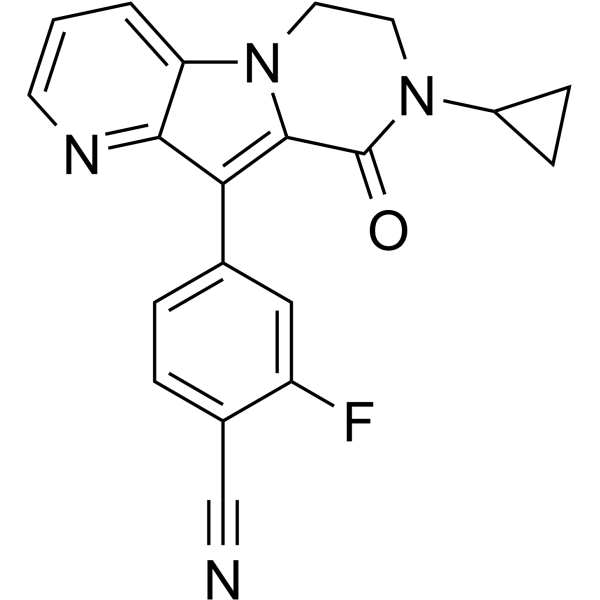
SGX523 is a exquisitely selective and ATP-competitive MET inhibitor. SGX523 potently inhibits MET with an IC50 of 4 nM and is >1,000-fold selective versus other protein kinases. Antitumor activity .
loading...
    loading...
1
1 Cited Publications
Cat. No.: HY-122630
CAS No.: 2244678-29-1
Purity:  98.36%
Target:  

LIM Kinase (LIMK)

Research Areas:  

Cancer

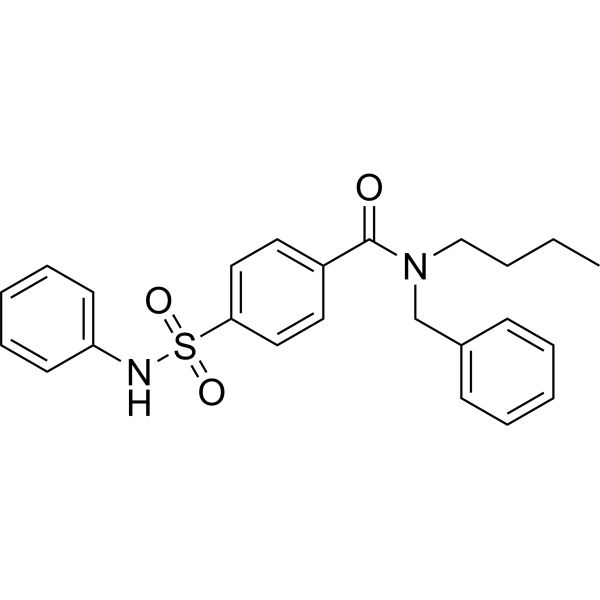
TH-257 is a potent inhibitor of LIMK1 and LIMK2 with IC50 values of 84 nM and 39 nM for LIMK1 and LIMK2, respectively, and it can be used as a chemical probe for LIMK1 and LIMK2. TH-257 is an allosteric inhibitor targeting a binding pocket induced by an αC and DFG-out conformation. TH257 is exquisitely selective and no significant activity against the wider kinome has been observed in the KINOMEscan assay at 1 μM .
loading...
    loading...
Cat. No.: HY-172737
CAS No.: 2980682-00-4
Research Areas:  

Cancer

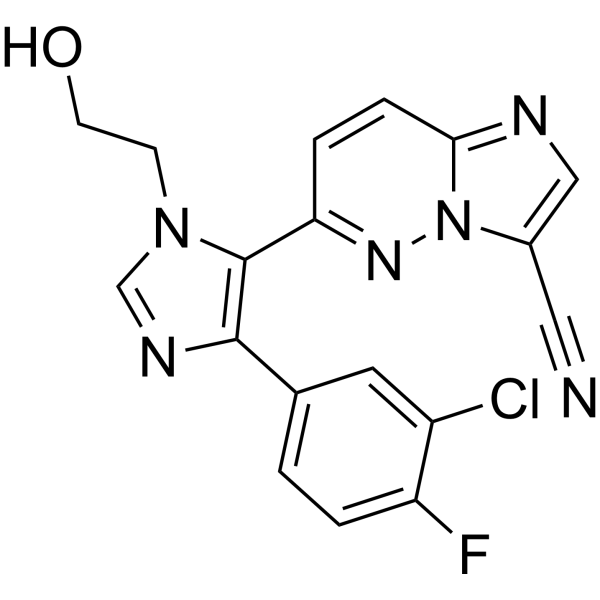
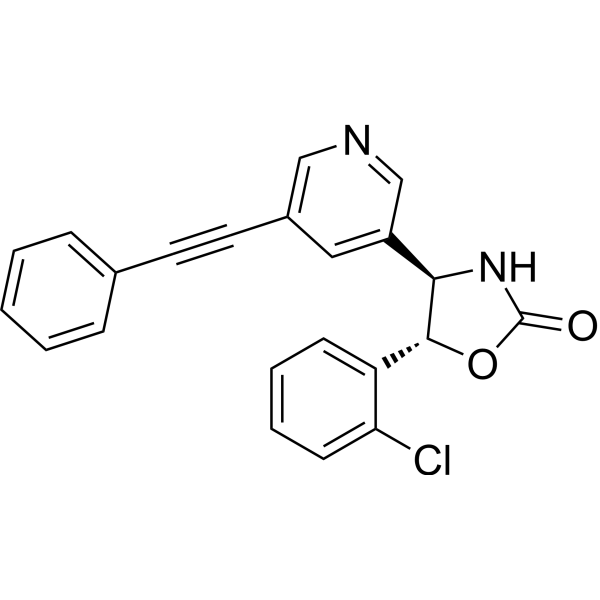
RP-1664 is a selective and orally active PLK4 inhibitor with an IC50 of 3 nM. RP-1664 demonstrates exquisite selectivity over related kinases, including AURKA/B and PLK1. RP-1664 disrupts centriole biogenesis in cancer cells and leads an accumulation of PLK4 and p21 protein. RP-1664 demonstrates increased sensitivity in TRIM37-high-expressing cells or tumors. RP-1664 exhibits anti-tumor activity in breast cancer and neuroblastoma research [1][2].
loading...
    loading...
Cat. No.: HY-W107024
CAS No.: 2001559-19-7
Target:  

TGF-β Receptor

Research Areas:  

Inflammation/Immunology Cancer

BMS-986260, an immuno-oncology agent, is a potent, selective, and orally active TGFβR1 inhibitor (IC50=1.6 nM). BMS-986260 displays exquisite selectivity for TGFβR1 over its isozyme TGFβR2, as well as in a panel of more than 200 kinases examined. BMS-986260 inhibits TGFβ mediated nuclear translocation of pSMAD2/3 in MINK and NHLF cells lines with an IC50 of 350 nM and 190 nM, respectively .
loading...
    loading...
Cat. No.: HY-108494
CAS No.: 1355026-60-6
Purity:  99.70%
Target:  

LPL Receptor

Research Areas:  

Cardiovascular Disease

CYM50260 is a potent and exquisitely selective sphingosine-1-phosphate 4 receptor (S1P4-R) agonist with an EC50 of 45 nM. CYM50260 displays no activity against S1P1-R, S1P2-R, S1P3-R and S1P5-R .
loading...
    loading...
Cat. No.: HY-145072
CAS No.: 2227392-55-2
Purity:  99.45%
Target:  

CDK

Research Areas:  

Cancer

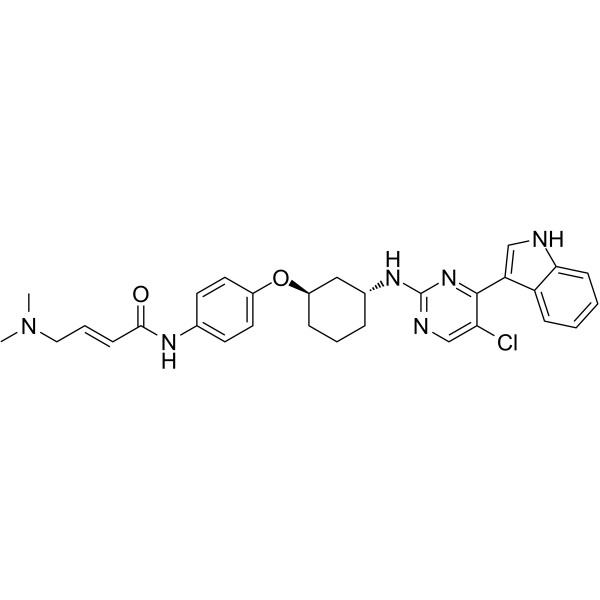
BSJ-01-175 is a potent and selective CDK12/13 covalent inhibitor. BSJ-01-175 demonstrates exquisite selectivity, potent inhibition of RNA polymerase II phosphorylation, and downregulation of CDK12-targeted genes in cancer cells .
loading...
    loading...
Cat. No.: HY-122559
CAS No.: 1375752-78-5
Purity:  99.94%
Target:  

mGluR

Research Areas:  

Neurological Disease

BMS-984923, a potent mGluR5 silent allosteric modulator (SAM), with exquisite binding affinity (Ki = 0.6 nM), exhibits good oral bioavailability and BBB penetration. BMS-984923 potently inhibits the PrPC-mGluR5 interaction and prevents pathological Aβo signaling without affecting physiological glutamate signaling .
loading...
    loading...
Cat. No.: HY-119190
CAS No.: 2055776-17-3
Purity:  98.23%
Research Areas:  

Neurological Disease

PF-06445974, a promising positron emission tomography (PET) lead, has exquisite potency at PDE4B with an IC50 <1 nM. The IC50 values are 36, 4.7 and 17 nM for PDE4D, PDE4A and PDE4C, respectively. PF-06445974 has good selectivity over PDE4D, excellent brain permeability, and a high level of specific binding in the "cold tracer" study .
loading...
    loading...
Cat. No.: HY-139590
CAS No.: 2216753-97-6
Purity:  98.31%
Synonyms: BOS-172738; DS-5010
Target:  

RET PDGFR

Research Areas:  

Cancer

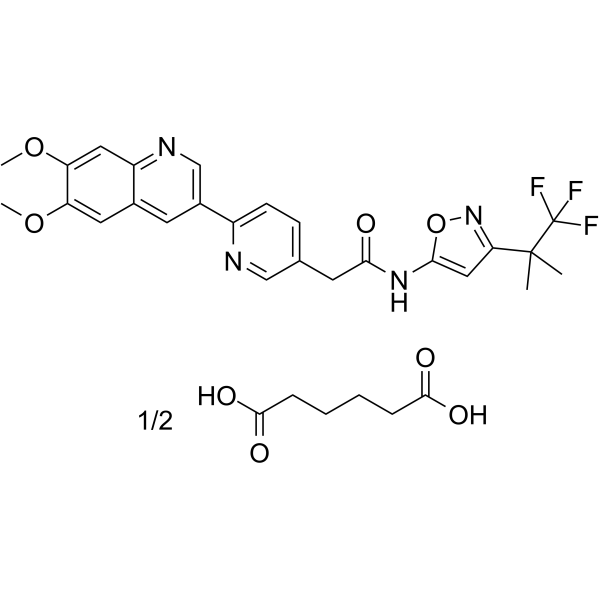
Zeteletinib (BOS-172738; DS-5010) is an orally active, selective RET kinase inhibitor with nanomolar potency against RET and >300-fold selectivity against VEGFR2. Zeteletinib shows exquisite potency for the wild type RET, RET V804M/L gatekeeper mutants, and the most common oncogenic RET mutation M918T. Zeteletinib has potent antitumor activity .
loading...
    loading...
Cat. No.: HY-137346
CAS No.: 2769753-69-5
Purity:  99.63%
Synonyms: (S,R,S)-AHPC-Me-PEG2-dabrafenib
Research Areas:  

Cancer

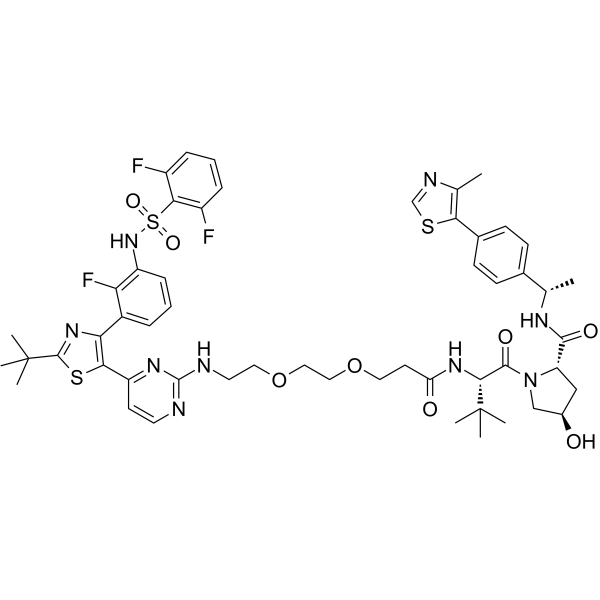
DD-03-156 is a potent and selective degrader of CDK17 and LIMK2. DD-03-156 is exquisite and makes an advanced starting point for the development of a chemical probe for the degradation of CDK17 .
loading...
    loading...
Cat. No.: HY-172734
CAS No.: 2919723-66-1
Target:  

Bacterial

Research Areas:  

Infection

FG-2101 is a selective and orally active non-hydroxamate LpxC inhibitor with an IC50 of ~1 nM. FG-2101 exhibits exquisite selectivity over other bacterial and human metalloenzymes. FG-2101 can be used for the study of Gram-negative bacteria infections including drug-resistant strains .
loading...
    loading...
Cat. No.: HY-139590A
CAS No.: 2375837-06-0
Synonyms: BOS-172738 hemiadipate; DS-5010 hemiadipate
Target:  

RET PDGFR

Research Areas:  

Cancer

Zeteletinib (BOS-172738; DS-5010) hemiadipate is an orally active, selective RET kinase inhibitor with nanomolar potency against RET and >300-fold selectivity against VEGFR2. Zeteletinib hemiadipate shows exquisite potency for the wild type RET, RET V804M/L gatekeeper mutants, and the most common oncogenic RET mutation M918T. Zeteletinib hemiadipate has potent antitumor activity .
loading...
    loading...
Cat. No.: HY-114622
CAS No.: 1047981-31-6
Synonyms: API-1252 tosylate; Debio 1452 tosylate
Target:  

Bacterial Antibiotic

Research Areas:  

Infection

AFN-1252 (API-1252) tosylate is an orally active and selective inhibitor of FabI, an essential enzyme in fatty acid biosynthesis in Staphylococcus spp. AFN-1252 tosylate exhibits exquisite and highly selective activity against Staphylococcus spp. AFN-1252 tosylate exhibits typical MIC90 values of 0.015 μg/ml against diverse clinical isolates of S. aureus. AFN-1252 tosylate is efficacious in a mouse model of septicemia providing 100% protection from an otherwise lethal peritoneal infection of S. aureus Smith .
loading...
    loading...
Cat. No.: HY-N18738
CAS No.: 89997-94-4
Category:  

Extract

Target:  

Others

Corydalis bulbosa extract is a botanical derivative obtained from the exquisite plant Corydalis bulbosa aiding in studying discomfort and attenuating the ravages of inflammation.
loading...
    loading...
Cat. No.: HY-N18828
CAS No.: 8015-73-4
Category:  

Extract

Target:  

Bacterial

Basil oil is an exquisite natural substance extensively employed in the research of biomedical science due to its profound manifestation of antimicrobial and antioxidant attributes. Infused with copious quantities of bioactive substances such as eugenol and linalool, basil oil annihilates bacteria and fungi.
loading...
    loading...
Cat. No.: HY-W190925
CAS No.: 2170240-97-6
Research Areas:  

Others

APN-C3-biotin is a heterobifunctional linker containing an APN moiety with exquisite chemoselectivity for cysteine and Biotin. The superior stability of APN-cysteine conjugates in aqueous media, human plasma, and living cells makes this new thiol-click reaction a promising methodology for applications in bioconjugation.
loading...
    loading...
Cat. No.: HY-124420
CAS No.: 853310-63-1
Target:  

Phosphatase

Research Areas:  

Metabolic Disease

MLS-0322825 is a selective low molecular weight protein tyrosine phosphatase (LMPTP) inhibitor with an IC50 of 3.3 μM for LMPTP-A. MLS-0322825 shows exquisite selectivity over other phosphatases (class I tyrosine-specific lymphoid phosphatase (LYP) and class I dual-specific vaccinia H1-related phosphatase (VHR)). MLS-0322825 can be used for the research of type 2 diabetes [1].
loading...
    loading...
Cat. No.: HY-L167
164 compounds

Boric acid is a stable and usually non-toxic group widely used in modern synthesis to form C-C and C-heteroatom bonds. Boric acid exhibits exquisite reversible coordination characteristics and can be explored as a molecular construction tool, with specific mechanisms for controlling the structure and biological characteristics of bioconjugates. Boric acid has various activities, such as anticancer, antibacterial, and antiviral activities. In drugs, boric acid mainly exists in the form of arylboronic acid. In addition to this form, heterocycles containing boric acid, such as pyridine, pyrrole, and indole derivatives, are also very useful in pharmaceutical chemistry. Molecular modification by introducing boric acid groups into bioactive molecules has been shown to alter selectivity, physicochemical, and pharmacokinetic characteristics, and improve existing activity.

MCE designs a unique collection of 164 boronic acid compounds. It is a good tool to be used for research on cancer and other diseases.

Cat. No.: HY-L152
5,028 compounds

19F-NMR has proved to be a detection mode in fragment-based drug discovery (FBDD) for studies of protein structure and interactions. 19F shows high sensitivity for NMR detection, and the exquisite sensitivity of 19F chemical shifts and linewidths to ligand binding all make it a valuable approach in FBDD.F (Fluorine) -Fragments can be used for 19F-NMR detection after binding to target proteins, and can be used as an effective 19F-NMR tool for FBDD.

MCE designs a unique collection of 5,028 F-fragments, all of which obey a heuristic rule called the “Rule of Three (RO3)”, in which molecular weight ≤300 Da, the number of hydrogen bond donors (H-donors) ≤3, the number of hydrogen bond acceptors (H-acceptors) is ≤3 and cLogP is ≤3. This F-fragments library is an important source of lead-like drugs.

