12 Results for "

hepatotoxin

" in MedChemExpress (MCE) Product Catalog:
Products (12)

12 Results for "hepatotoxin" in MCE Product Catalog:

5
5 Cited Publications
Cat. No.: HY-Y0698
CAS No.: 62-55-5
Synonyms: Acetothioamide; TAA; Thiacetamide
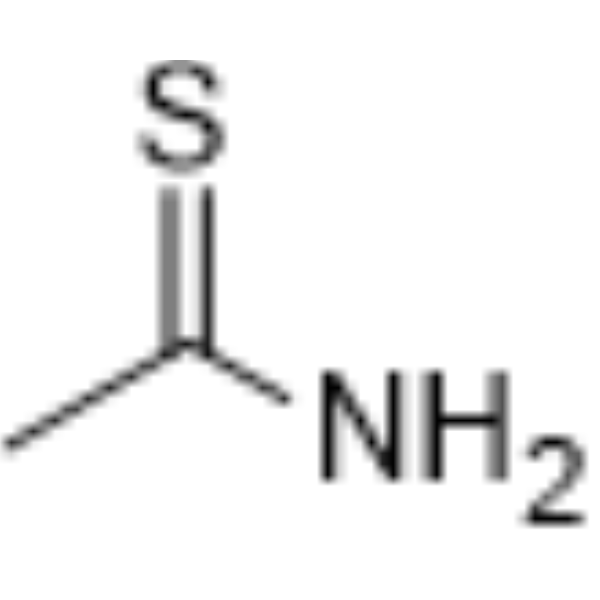
Thioacetamide (TAA) is an indirect hepatotoxin and causes parenchymal cell necrosis. Thioacetamide requires metabolic activation by microsomal CYP2E1 to thioacetamide-S-oxide initially and then to thioacetamide-S-dioxide, which is a highly reactive metabolite, and its reactive metabolites covalently bind to proteins and lipids thereby causing oxidative stress and centrilobular necrosis. Thioacetamide can induce chronic liver fibrosis, encephalopathy and other events model .
loading...
    loading...
3
3 Cited Publications
Cat. No.: HY-B0230
CAS No.: 50-33-9
Target:  

COX

Research Areas:  

Inflammation/Immunology

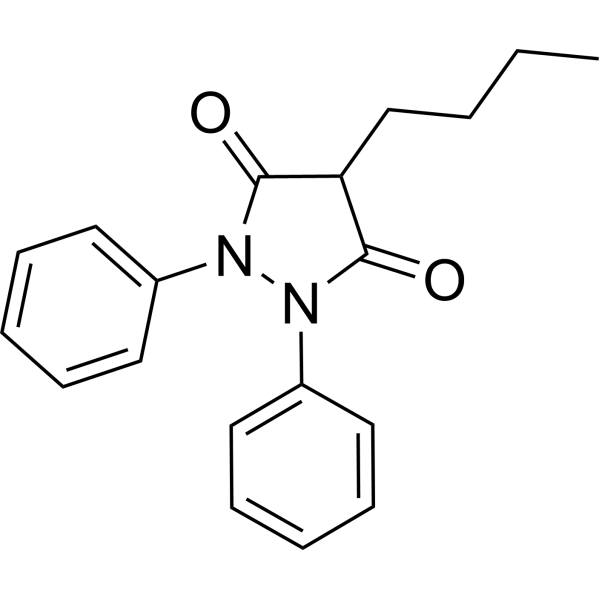
Phenylbutazone is an efficient reducing cofactor for the peroxidase activity of prostaglandin H synthase (PHS). Phenylbutazone, a hepatotoxin, is a nonsteroidal anti-inflammatory agent (NSAID). Phenylbutazone induces muscle blind-like protein 1 (MBNL1) expression and has the potential for ankylosing spondylitis research .
loading...
    loading...
Cat. No.: HY-B1483
CAS No.: 135-23-9
Synonyms: Thenylpyramine hydrochloride
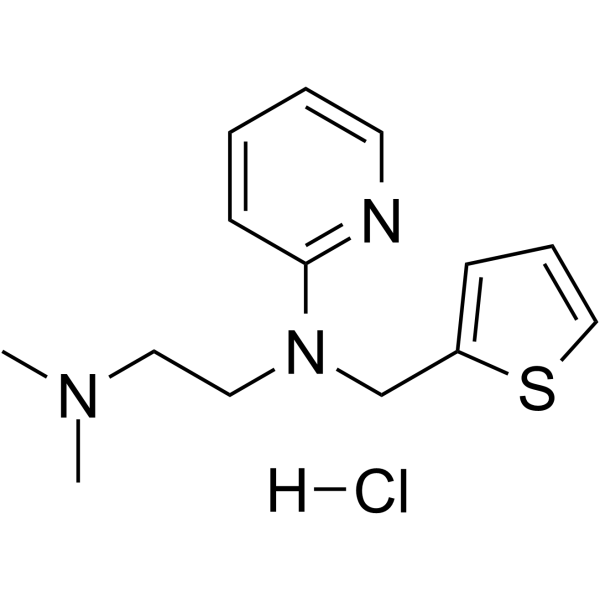
Methapyrilene (Thenylpyramine) hydrochloride is an orally active H1-receptor antihistamine and an anticholinergic agent of the pyridine chemical class. Methapyrilene hydrochloride has hepatotoxicity and can be used as a hepatotoxin that cause periportal hepatic necrosis in vivo
loading...
    loading...
Cat. No.: HY-N10348
CAS No.: 585-95-5
Progoitrin is a sulfur-containing glucosinolate, as well as a naturally occurring orally active thioglycoside. Progoitrin acts as a hepatotoxin and antithyroid agent. Progoitrin is quantitatively converted to goitrin in vivo, including via a gastrointestinal hydrolysis pathway that does not require exogenous myrosinase, thereby blocking the organification of iodine in the thyroid gland and inhibiting the uptake and accumulation of radioactive iodine. Progoitrin can be used in studies related to Graves' disease .
loading...
    loading...
Cat. No.: HY-P2040
CAS No.: 118399-22-7
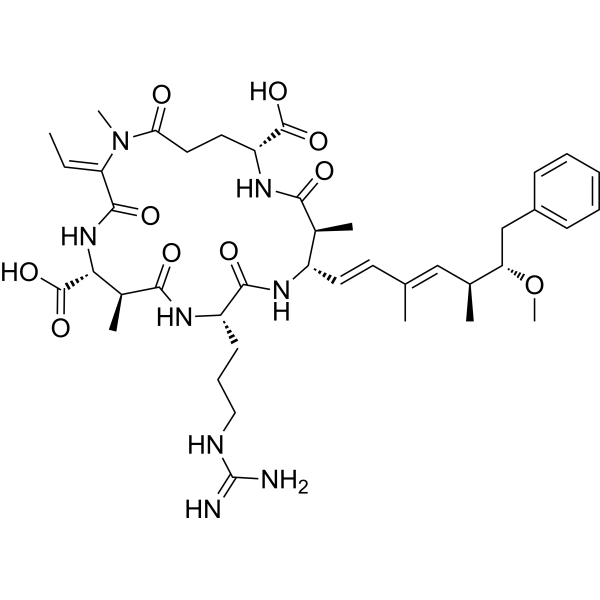
Nodularin is a hepatotoxin, tumor promoter, and protein phosphatase inhibitor. Nodularin induces apoptosis (apoptosis) in normal cells (including caspase activation, upregulation of Bcl-XS, and upregulation of BAX/P53), triggers hyperphosphorylation of the MAPK/ERK, mTOR/S6K and p38 MAPK signaling pathways, and induces oxidative stress, endoplasmic reticulum membrane instability, peroxisome proliferation and increased lysosomal enzyme activity. Nodularin promotes DEN (HY-N7434)-initiated hepatocyte proliferation and adenoma formation, and inhibits proliferation, phagocytosis and chemotaxis of normal lymphocytes, oocyte maturation and vitellogenesis, as well as angiogenesis. Nodularin exhibits hepatotoxicity, reproductive and endocrine toxicity, and embryonic developmental toxicity in various animal models. Nodularin can be used in studies related to liver cancer, hepatotoxicity and reproductive endocrine toxicity .
loading...
    loading...
Cat. No.: HY-B0230S
CAS No.: 1219794-69-0
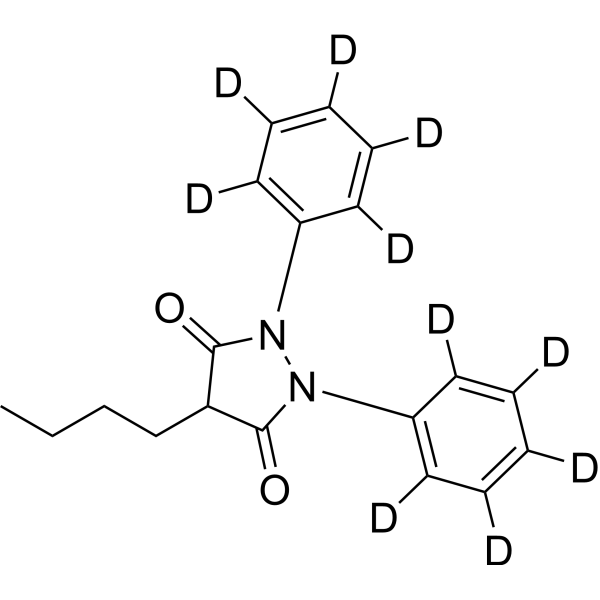
Phenylbutazone(diphenyl-d10) is the deuterium labeled Phenylbutazone. Phenylbutazone is an efficient reducing cofactor for the peroxidase activity of prostaglandin H synthase (PHS). Phenylbutazone, a hepatotoxin, is a nonsteroidal anti-inflammatory agent (NSAID). Phenylbutazone induces muscle blind-like protein 1 (MBNL1) expression and has the potential for ankylosing spondylitis research .
loading...
    loading...
Cat. No.: HY-B0230S2
CAS No.: 1325559-13-4
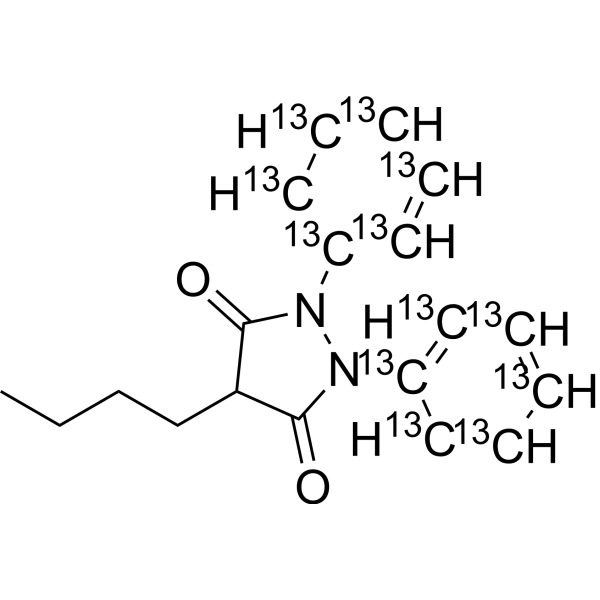
Phenylbutazone- 13C12 is the 13C12 labeled Phenylbutazone. Phenylbutazone is an efficient reducing cofactor for the peroxidase activity of prostaglandin H synthase (PHS). Phenylbutazone, a hepatotoxin, is a nonsteroidal anti-inflammatory agent (NSAID). Phenylbutazone induces muscle blind-like protein 1 (MBNL1) expression and has the potential for ankylosing spondylitis research.
loading...
    loading...
Cat. No.: HY-B0230R
CAS No.: 50-33-9
Target:  

Reference Standards COX

Research Areas:  

Inflammation/Immunology

Phenylbutazone (Standard) is the analytical standard of Phenylbutazone. This product is intended for research and analytical applications. Phenylbutazone is an efficient reducing cofactor for the peroxidase activity of prostaglandin H synthase (PHS). Phenylbutazone, a hepatotoxin, is a nonsteroidal anti-inflammatory agent (NSAID). Phenylbutazone induces muscle blind-like protein 1 (MBNL1) expression and has the potential for ankylosing spondylitis research .
loading...
    loading...
Cat. No.: HY-122916
CAS No.: 73544-48-6
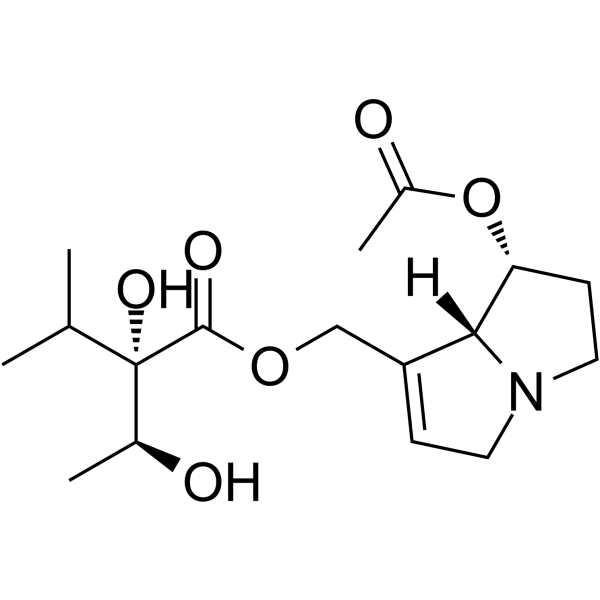
7-Acetyllycopsamine, a pyrrolizidine alkaloid, is a mild hepatotoxin. 7-Acetyllycopsamine can induce liver inflammation in mice .
loading...
    loading...
Cat. No.: HY-118274
CAS No.: 126456-06-2
Synonyms: GC 300
Target:  

Endogenous Metabolite

Research Areas:  

Others

ADDA (GC 300) is a unique C20 amino acid that is a key component of hepatotoxins produced by cyanobacteria. ADDA is essential for the toxicity of nodularin and microcystin, toxins that can cause liver damage. ADDA can be used for research in toxicology .
loading...
    loading...
Cat. No.: HY-Y0698R
CAS No.: 62-55-5
Synonyms: Acetothioamide (Standard); TAA (Standard); Thiacetamide (Standard)
Research Areas:  

Inflammation/Immunology

Thioacetamide (Standard) is the analytical standard of Thioacetamide (HY-Y0698). This product is intended for research and analytical applications. Thioacetamide (TAA) is an indirect hepatotoxin and causes parenchymal cell necrosis. Thioacetamide requires metabolic activation by microsomal CYP2E1 to thioacetamide-S-oxide initially and then to thioacetamide-S-dioxide, which is a highly reactive metabolite, and its reactive metabolites covalently bind to proteins and lipids thereby causing oxidative stress and centrilobular necrosis. Thioacetamide can induce chronic liver fibrosis, encephalopathy and other events model .
loading...
    loading...
Cat. No.: HY-B0230S1
CAS No.: 1189479-75-1
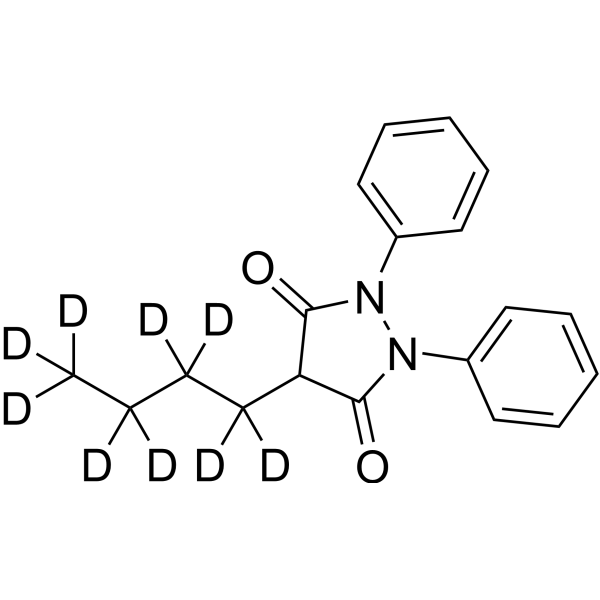
Phenylbutazone-d9 is the deuterium labeled Phenylbutazone. Phenylbutazone is an efficient reducing cofactor for the peroxidase activity of prostaglandin H synthase (PHS). Phenylbutazone, a hepatotoxin, is a nonsteroidal anti-inflammatory agent (NSAID). Phenylbutazone induces muscle blind-like protein 1 (MBNL1) expression and has the potential for ankylosing spondylitis research .
loading...
    loading...
  • 1

