

1. Search Result
Search Result
Results for "

low immunogenicity

" in MedChemExpress (MCE) Product Catalog:

15

Inhibitors & Agonists

7

Biochemical Assay Reagents

1

Peptides

2

Inhibitory Antibodies

4

Oligonucleotides

Targets Recommended:
Cat. No. Product Name Target Research Areas Chemical Structure
  • HY-Y0873
    PEG300
    175+ Cited Publications

    Polyethylene glycol 300

    Environmental Pollutants Biochemical Assay Reagents Others
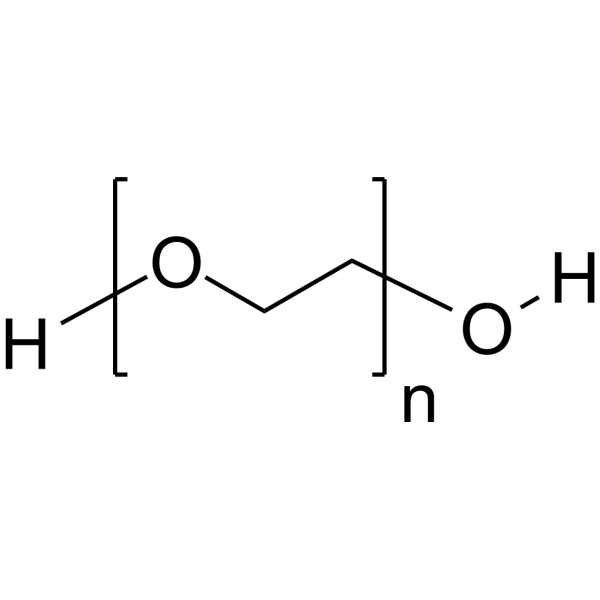
    PEG300 (Polyethylene glycol 300), a neutral polymer of molecular weight 300, is a water-soluble, low immunogenic and biocompatible polymer formed by repeating units of ethylene glycol .
    PEG300
  • HY-B1521
    Aluminum Hydroxide
    5+ Cited Publications

    Environmental Pollutants NOD-like Receptor (NLR) Cardiovascular Disease Inflammation/Immunology
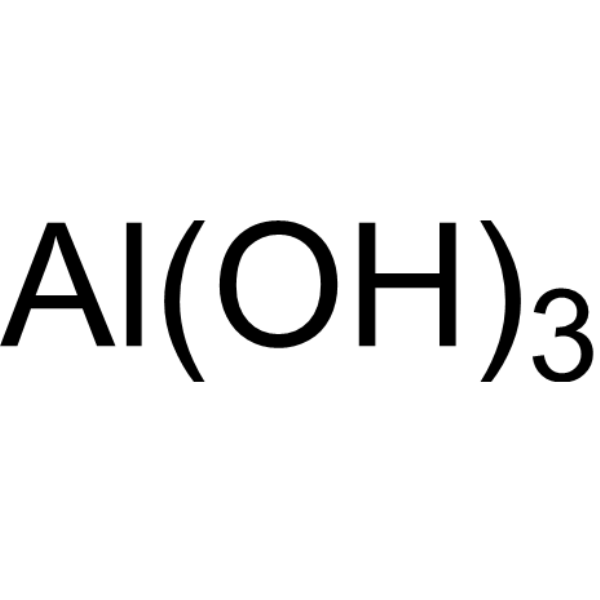
    Aluminum Hydroxide is an orally active main form of aluminum used as adjuvant. Aluminum hydroxide-based adjuvant researches include the repository effect, pro-phagocytic effect, and activation of the pro-inflammatory NLRP3 pathway. Aluminum Hydroxide also acts as adjuvant to compensate low inherent immunogenicity of subunit vaccines .
    Aluminum Hydroxide
  • HY-112624B

    Dextran 70; Dextran D70; Dextran T70(MW 64000-76000)

    Bacterial Others
    Dextran 70,000 is a high molecular weight polysaccharide formed by glucose linked by α-(1→6) glycosidic bonds. Dextran 70,000 can expand blood volume through colloidal osmotic pressure effect and inhibit cell adhesion and platelet aggregation through steric hindrance. At the same time, Dextran 70,000 can be used as a drug carrier to achieve targeted delivery through endocytosis. Dextran 70,000 is biologically inert and has low immunogenicity. It can be used for clinical blood volume expansion, anti-thrombotic research, and evaluation of vascular permeability in in vitro experiments. It can also be combined with fluorescent dyes for cell tracking and drug delivery research. The Dextran series of compounds are also natural polysaccharide drug carriers that can be connected to drugs through covalent bonding methods such as ester bonds, amide bonds or click chemistry, or self-assembled to form carriers such as nanoparticles and hydrogels. Dextran is biodegradable and biocompatible, and can achieve targeted delivery and controlled release of drugs. Dextran derivatives can prolong the half-life of drugs, increase local concentrations, and reduce the activity of immune clearance.
    Dextran T70 (MW 70,000)
  • HY-Y0873K

    Polyethylene glycol 200

    Environmental Pollutants Biochemical Assay Reagents Others
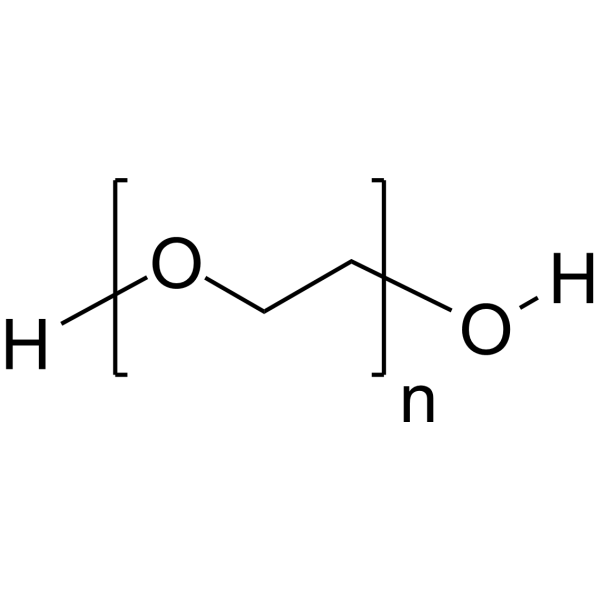
    PEG200 (Polyethylene glycol 200), a neutral polymer of molecular weight 200, is a water-soluble, low immunogenic and biocompatible polymer formed by repeating units of ethylene glycol .
    PEG200
  • HY-147332

    Liposome Neurological Disease
    TCL053 is an ionizable lipid carrier and used to introduce active components, in particular nucleic acids, into cells with excellent efriciency. TCL053, together with DPPC (Dipalmitoylphosphatidylcholine), PEG-DMG (Polyethylene glycoldimyristoyl glycerol), and cholesterol, forms lipid nanoparticle (LNP) which is able to deliver Cas9 mRNA and sgRNA into skeletal muscle .
    TCL053
  • HY-141831

    Phosphodiesterase (PDE) Cancer
    STF-1084 is a specific, cell-impermeable, competitive inhibitor of ENPP1 (Ki = 33 nM). STF-1084 increases extracellular cGAMP concentrations by preventing its degradation by ENPP1, thereby enhancing immune infiltration. STF-1084 acts synergistically with ionizing radiation (IR) and cGAMP to delay tumor progression. STF-1084 can be used to study cancers with low immunogenicity .
    STF-1084
  • HY-158222A

    AlgMA (MW 300000)

    Biochemical Assay Reagents Others
    Alginate Methacryloyl (MW 300000) is a methacryloyl alginate with potential for use as a tissue engineering scaffold and 3D printing ink. Alginate Methacryloyl (MW 300000) is biocompatible, non-immunogenic, has low toxicity and is capable of physical cross-linking with divalent cations such as calcium . Alginate Methacryloyl (MW 300000) needs to self-assemble into fibrous hydrogel under the action of photoinitiator LAP (HY-44076), and target bioactive adhesion sites, play an inherent supporting role for tissue cells and biodegradable activity.
    Application: cell culture, biological 3D printing, tissue engineering, etc.
    Alginate Methacryloyl (MW 300000)
  • HY-158222

    AlgMA (MW 50000)

    Biochemical Assay Reagents Others
    Alginate Methacryloyl (MW 50000) is a methacryloyl alginate with potential for use as a tissue engineering scaffold and 3D printing ink. Alginate Methacryloyl (MW 50000) is biocompatible, non-immunogenic, has low toxicity and is capable of physical cross-linking with divalent cations such as calcium . Alginate Methacryloyl (MW 50000) needs to self-assemble into fibrous hydrogel under the action of photoinitiator LAP (HY-44076), and target bioactive adhesion sites, play an inherent supporting role for tissue cells and biodegradable activity.
    Application: cell culture, biological 3D printing, tissue engineering, etc.
    Alginate Methacryloyl (MW 50000)
  • HY-177531

    Liposome mRNA Neurological Disease Inflammation/Immunology Cancer
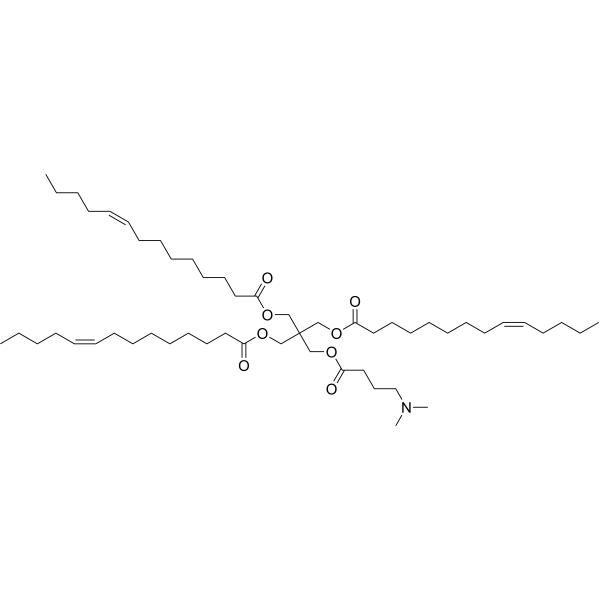
    S-Ac7-DOG is a cationic lipid with biodegradability, low immunogenicity and high nucleic acid transfection capacity, which is commonly used to construct lipid nanoparticles for nucleic acid molecule delivery. S-Ac7-DOG can bind to mRNA, microRNA and self-amplifying RNA through electrostatic interaction. Lipid nanoparticles formed by S-Ac7-DOG enter cells via an energy-dependent endocytic pathway, release nucleic acid cargos, induce antigen-specific CD8 + T cell responses, promote the generation of precursor memory T cells, and regulate neuroinflammatory pathways. S-Ac7-DOG can be used in the research of retinal diseases, neuroinflammation and cancer .
    S-Ac7-DOg
  • HY-P2853A

    Biochemical Assay Reagents Others
    Hemocyanin-SMCC is a hemocyanin that can be used as a carrier protein to couple low molecular weight molecules such as peptides, nucleic acids, drugs or toxins to make them highly immunogenic.
    Hemocyanin-SMCC
  • HY-173023

    Apoptosis Indoleamine 2,3-Dioxygenase (IDO) Reactive Oxygen Species (ROS) Cancer
    IDOi-Pt(IV) prodrug-1 (Compound 10) is an IDOi-Pt(IV) prodrug. IDOi-Pt(IV) prodrug-1 inhibits IDO expression. IDOi-Pt(IV) prodrug-1 induces apoptosis, decreases the mitochondrial membrane potential, inhibits tumor cell migration and invasion. IDOi-Pt(IV) prodrug-1 induces reactive oxygen species-mediated endoplasmic reticulum stress and secretion of damage-associated molecular patterns (DAMPs), thereby presenting immunogenic cell death (ICD) effects. IDOi-Pt(IV) prodrug-1 has high-efficiency and low-toxicity antitumor effects compared to Cisplatin (HY-17394) .
    IDOi-Pt(IV) prodrug-1
  • HY-P992486

    Interleukin Related Inflammation/Immunology
    XKH001 is a recombinant humanized IgG1 monoclonal antibody targeting IL-25. XKH001 has low immunogenicity. XKH001 can be used for the research of type 2 inflammatory diseases .
    XKH001
  • HY-P11593

    Tau Protein Neurological Disease
    D-TLKIVWC is a tau fibril disaggregator. D-TLKIVWC has low immunogenicity and anti-degradation properties. D-TLKIVWC disrupts intermolecular hydrogen bonds of tau via a stress-release mechanism. D-TLKIVWC can be used in the research of amyloid diseases such as Alzheimer's disease .
    D-TLKIVWC
  • HY-P992154

    KJ-103

    Human leukocyte immunoglobulin (Ig)-like receptors (LILR) Infection Inflammation/Immunology
    Ricefidase (KJ-103) is a recombinant human immunoglobulin G-degrading enzyme. Ricefidase efficiently cleaves human IgG at the hinge region. Ricefidase rapidly reduces IgG levels. Ricefidase has low immunogenicity and clears AAV neutralizing antibodies. Ricefidase is applicable to research related to desensitization of all IgG subclasses and improvement of the suitability of AAV-based gene therapy .
    Ricefidase
  • HY-W017180

    α-(Bromomethyl)acrylic acid; α-Methylated acrylamide; α-MAA

    Btk Cancer
    2-(Bromomethyl) acrylic acid is a Bruton's tyrosine kinase (BTK) inhibitor. 2-(Bromomethyl) acrylic acid forms a covalent bond with the cysteine 481 (Cys481) residue of BTK via a nucleophilic addition-elimination reaction, thereby inhibiting the downstream B-cell receptor signaling pathway. 2-(Bromomethyl) acrylic acid induces immunogenic cell death in BTK-expressing B-cell lymphoma cells by releasing damage-associated molecular patterns including extracellular ATP and HMGB1. 2-(Bromomethyl) acrylic acid exhibits cytotoxicity against BTK-expressing B-cell lymphoma cells, but shows low toxicity to BTK-negative cells. 2-(Bromomethyl) acrylic acid can be used in studies related to B-cell lymphoma .
    2-(Bromomethyl)acrylic acid

Inquiry Online

Your information is safe with us. * Required Fields.

Salutation


Country or Region *

Applicant Name *


Organization Name *

Department *


Email Address *


Product Name *

Cat. No.


Requested quantity *

Phone Number *


Remarks

Inquiry Online

Inquiry Information

Product Name:
Cat. No.:
Quantity:
MCE Japan Authorized Agent:

