1. Search Result
Search Result
Results for "

neurobehavioral

" in MedChemExpress (MCE) Product Catalog:

14

Inhibitors & Agonists

3

Natural
Products

2

Isotope-Labeled Compounds

Cat. No. Product Name Target Research Areas Chemical Structure
  • HY-B0717
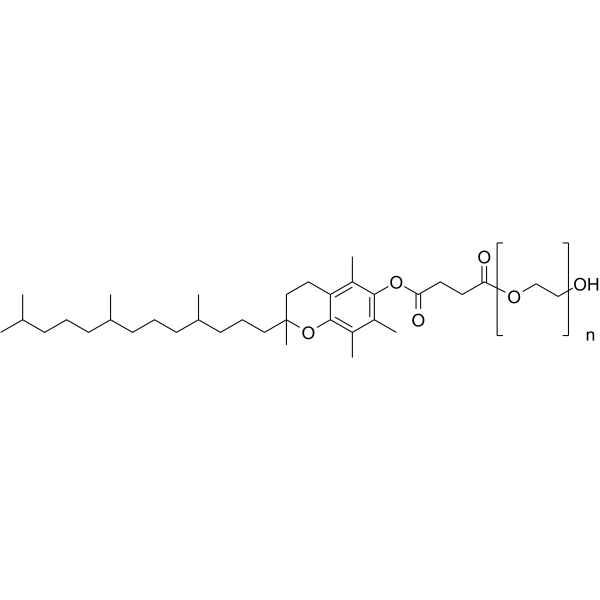
    Tocofersolan
    5+ Cited Publications

    TPGS; D-α-Tocopherol polyethylene glycol 1000 succinate; Vitamin E-TPGS

    Drug Derivative Neurological Disease Metabolic Disease
    Tocofersolan is synthetic polyethylene glycol derivative of α-tocopherol. Tocofersolan is an orally active and water-soluble analog of vitamin E. Tocofersolan can reduce neurobehavioral deficits in zebrafish embryos exposed to moderate and high concentrations of BaP during early development. Tocofersolan shows antioxidant activity. Tocofersolan can be used to provide an orally bioavailable source of vitamin E .
    Tocofersolan
  • HY-Y0304
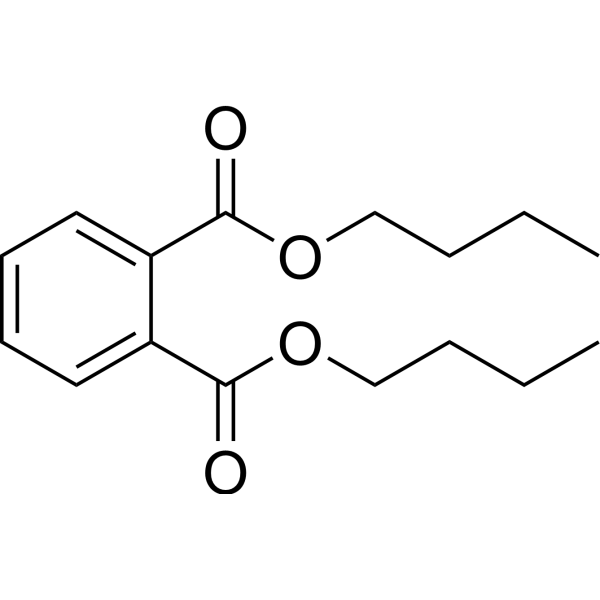
    Dibutyl phthalate
    5+ Cited Publications

    Environmental Pollutants Neurological Disease Cancer
    Dibutyl phthalate is a commonly used plasticizer commonly found in some food packaging materials, personal care products, and the coating of oral medications . May cause toxicity and adverse neurobehavioral effects .
    Dibutyl phthalate
  • HY-124754

    BTRX-335140; CYM-53093

    Opioid Receptor Neurological Disease Metabolic Disease
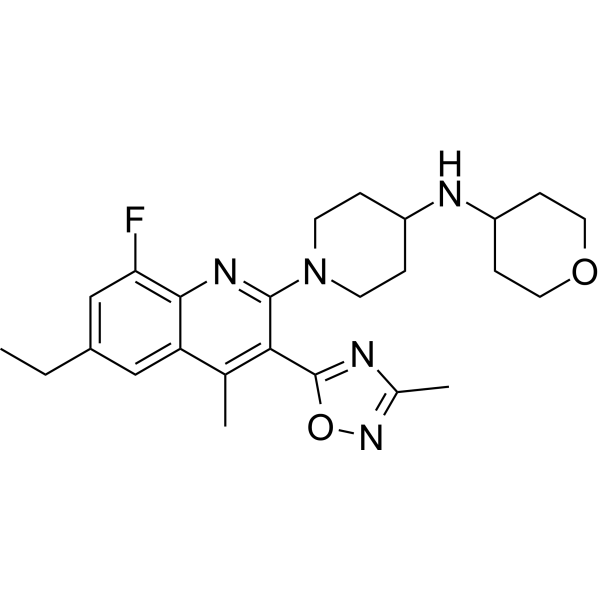
    Navacaprant (BTRX-335140) is a selective and orally active κ opioid receptor (KOR) antagonist, has antagonist activity for κOR, μOR and δOR with IC50 values of 0.8 nM, 110 nM, and 6500 nM, respectively. Navacaprant endows with favorable in vitro ADMET and in vivo pharmacokinetic profiles and medication-like duration of action in rats. Navacaprant distributes well into the CNS and can be used for the research of neuropathy .
    Navacaprant
  • HY-Y0304S1

    Isotope-Labeled Compounds Cancer
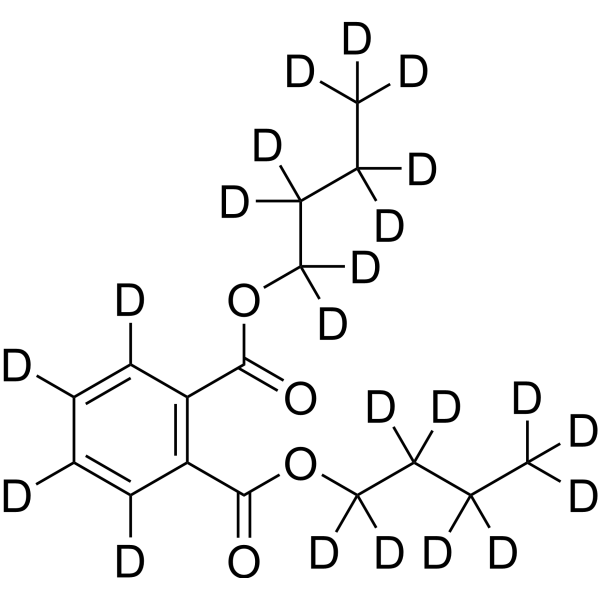
    Dibutyl phthalate-d22 is the deuterium labeled Dibutyl phthalate . Dibutyl phthalate is a commonly used plasticizer commonly found in some food packaging materials, personal care products, and the coating of oral medications. May cause toxicity and adverse neurobehavioral effects .
    Dibutyl phthalate-d22
  • HY-132280

    U 74006F free base

    Reactive Oxygen Species (ROS) SARS-CoV Virus Protease Neurological Disease Inflammation/Immunology
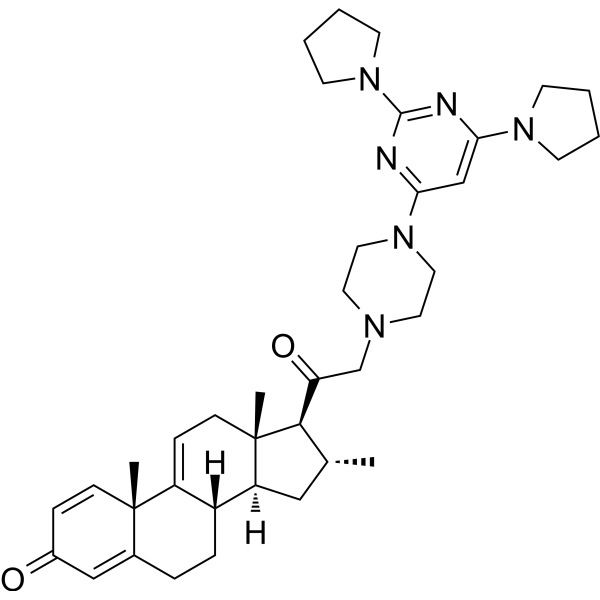
    Tirilazad (U 74006F free base) is a neuroprotective agent. Tirilazad can also bind tightly to the main protease of the COVID-19 virus and exert anti-SARS-CoV-2 activity. Tirilazad scavenges hydroxyl and lipid peroxyl free radicals and maintains the levels of endogenous antioxidants. Tirilazad reduces cerebral infarct volume and improves neurobehavioral scores in animal models of focal ischemia. Tirilazad can be used in research related to ischemic stroke and subarachnoid hemorrhage .
    Tirilazad
  • HY-B0867

    Environmental Pollutants Herbicide Others
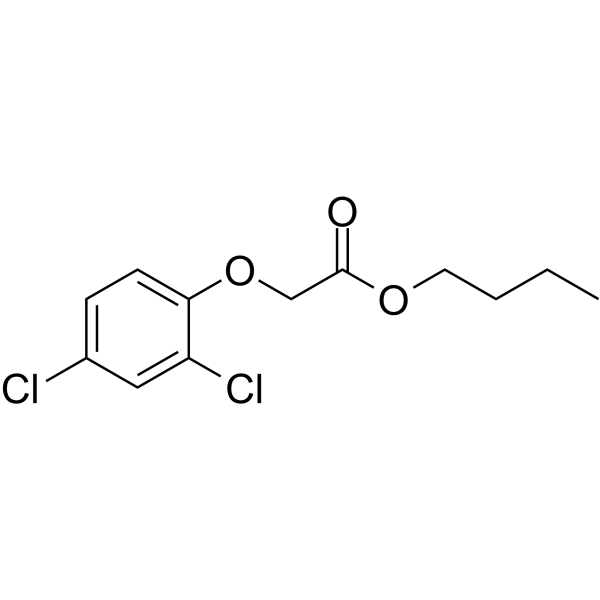
    2,4-D Butyl ester is a phenoxyacetic acid herbicide used to control woody broadleaf weeds. 2,4-D Butyl ester shows high toxicity to fish and aquatic invertebrates. In animals, 2,4-D Butyl ester hydrolyzes to produce n-butanol, which further induces neurobehavioral toxicity such as ataxia in rats .
    2,4-D Butyl ester
  • HY-Y0304S
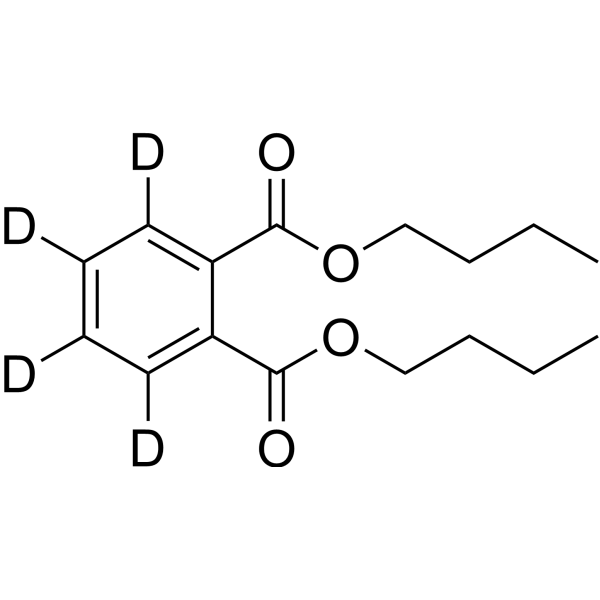
    Dibutyl phthalate-3,4,5,6-d4
    1 Publications Verification

    Isotope-Labeled Compounds Neurological Disease Cancer
    Dibutyl phthalate-3,4,5,6-d4 is the deuterium labeled Dibutyl phthalate. Dibutyl phthalate is a commonly used plasticizer commonly found in some food packaging materials, personal care products, and the coating of oral medications . May cause toxicity and adverse neurobehavioral effects .
    Dibutyl phthalate-3,4,5,6-d4
  • HY-76632

    Cholinesterase (ChE) SOD Neurological Disease
    4-Hydroxyisophthalic acid activates antioxidant enzymes (such as catalase CAT and superoxide dismutase SOD), scavenges free radicals, and exhibits antioxidant property. 4-Hydroxyisophthalic acid activates AChE and BChE, enhances neuronal function and improves Tau-induced neurobehavioral defects. 4-Hydroxyisophthalic acid improves the cognitive defects, and ameliorates circadian rhythm disorders of fruit flies .
    4-Hydroxyisophthalic acid
  • HY-139703

    Biochemical Assay Reagents Inflammation/Immunology
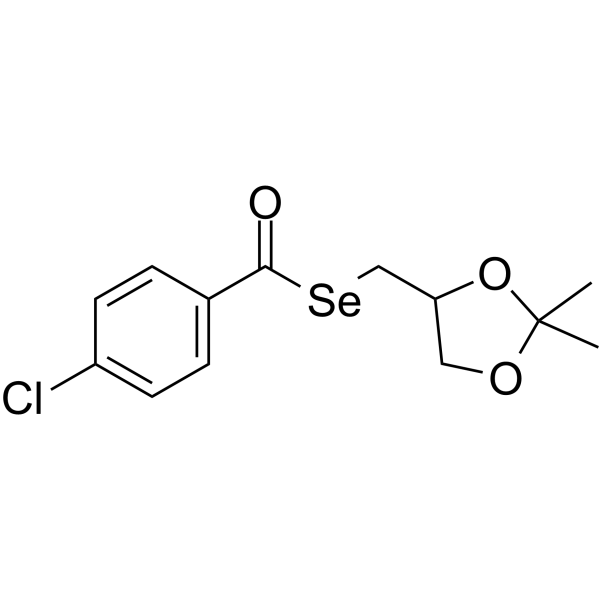
    Se-DMC attenuates complete Freund’s adjuvant (CFA)-induced inflammatory response, nociception, and neurobehavioral deficits in mice.
    Se-DMC
  • HY-Y0304R

    Biochemical Assay Reagents Reference Standards Neurological Disease Cancer
    Dibutyl phthalate (Standard) is the analytical standard of Dibutyl phthalate. This product is intended for research and analytical applications. Dibutyl phthalate is a commonly used plasticizer commonly found in some food packaging materials, personal care products, and the coating of oral medications . May cause toxicity and adverse neurobehavioral effects .
    Dibutyl phthalate (Standard)
  • HY-B0867R

    Herbicide Reference Standards Environmental Pollutants Others
    2,4-D Butyl ester (Standard) is the analytical standard of 2,4-D Butyl ester (HY-B0867). This product is intended for research and analytical applications. 2,4-D Butyl ester is a phenoxyacetic acid herbicide used to control woody broadleaf weeds. 2,4-D Butyl ester shows high toxicity to fish and aquatic invertebrates. In animals, 2,4-D Butyl ester hydrolyzes to produce n-butanol, which further induces neurobehavioral toxicity such as ataxia in rats .
    2,4-D Butyl ester (Standard)
  • HY-132280R

    U 74006F free base (Standard)

    Reference Standards Reactive Oxygen Species (ROS) SARS-CoV Virus Protease Neurological Disease Inflammation/Immunology
    Tirilazad (U 74006F free base) Standard is the analytical standard of Tirilazad (HY-132280). This product is intended for research and analytical applications. Tirilazad (U 74006F free base) is a neuroprotective agent. Tirilazad can also bind tightly to the main protease of the COVID-19 virus and exert anti-SARS-CoV-2 activity. Tirilazad scavenges hydroxyl and lipid peroxyl free radicals and maintains the levels of endogenous antioxidants. Tirilazad reduces cerebral infarct volume and improves neurobehavioral scores in animal models of focal ischemia. Tirilazad can be used in research related to ischemic stroke and subarachnoid hemorrhage .
    Tirilazad (Standard)
  • HY-174126

    P2Y Receptor Cardiovascular Disease
    P2Y1 antagonist 2 (Compound 19) is a P2Y1 receptor antagonist (IC50: 0.49 μM). P2Y1 antagonist 2 has significant antiplatelet aggregation activity and exerts its effects by inhibiting P2Y1 receptor. P2Y1 antagonist 2 can upregulate nuclear Nrf2 protein levels, exhibit neuroprotective effects, and resist oxidative stress damage. P2Y1 antagonist 2 can effectively reduce cerebral infarction area and improve neurobehavioral function, and can be used in the study of ischemic stroke .
    P2Y1 antagonist 2
  • HY-179646

    Toll-like Receptor (TLR) NO Synthase NF-κB TNF Receptor Interleukin Related Neurological Disease
    CIAC101 is a potent and brain-penetrant TLR4 antagonist with an IC50 of 17.0 nM in NO assay. CIAC101 blocks Lipopolysaccharides (HY-D1056) (LPS)-induced NF-κB activation and reduces the expression of pro-inflammatory mediators (iNOS, IL-1β, TNF-α, and IL-6). CIAC101 robust antineuroinflammatory activity with efficacy against drug-evoked neurobehavioral adaptations. CIAC101 can be used for the research of addiction and neurological disease .
    CIAC101

Inquiry Online

Your information is safe with us. * Required Fields.

Salutation


Country or Region *

Applicant Name *


Organization Name *

Department *


Email Address *


Product Name *

Cat. No.


Requested quantity *

Phone Number *


Remarks

Inquiry Online

Inquiry Information

Product Name:
Cat. No.:
Quantity:
MCE Japan Authorized Agent:

