



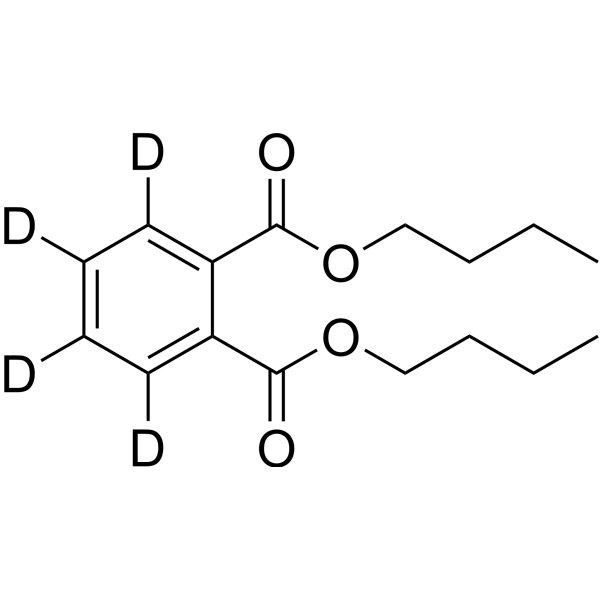
Dibutyl phthalate-3,4,5,6-d4
Based on 1 publication(s) in Google Scholar
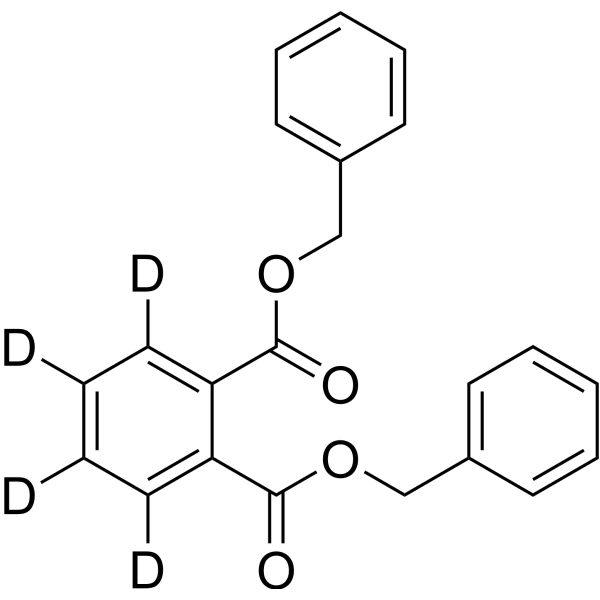
Dibutyl phthalate-3,4,5,6-d4 is the deuterium labeled Dibutyl phthalate. Dibutyl phthalate is a commonly used plasticizer commonly found in some food packaging materials, personal care products, and the coating of oral medications. May cause toxicity and adverse neurobehavioral effects.
For research use only. We do not sell to patients.
- Purity : 99.54%
- CAS No.: 93952-11-5
- Formula: C16H18D4O4
- Molecular Weight:282.37
-
Storage:Pure form -20°C, 3 years , 4°C, 2 years ; In solvent -80°C, 6 months , -20°C, 1 month

To place orders, for customer services and technical support, please contact: MedChemExpress USA
Tel: 609-228-6898 E-mail: [email protected] [email protected]


-
 Biological Activity
-
Chemical Information
-
Solvent & Solubility
- Purity & Documentation
- References
-
 Help & FAQs


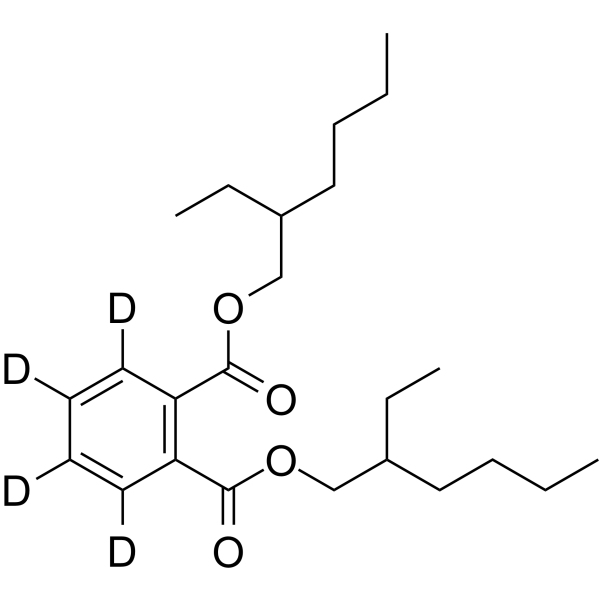
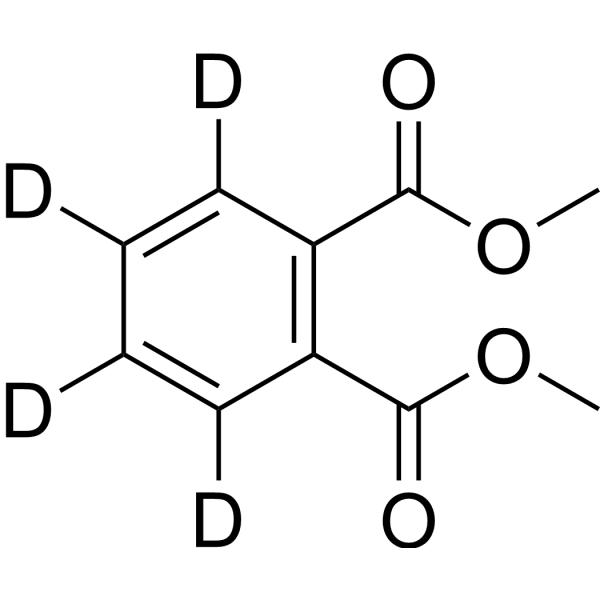
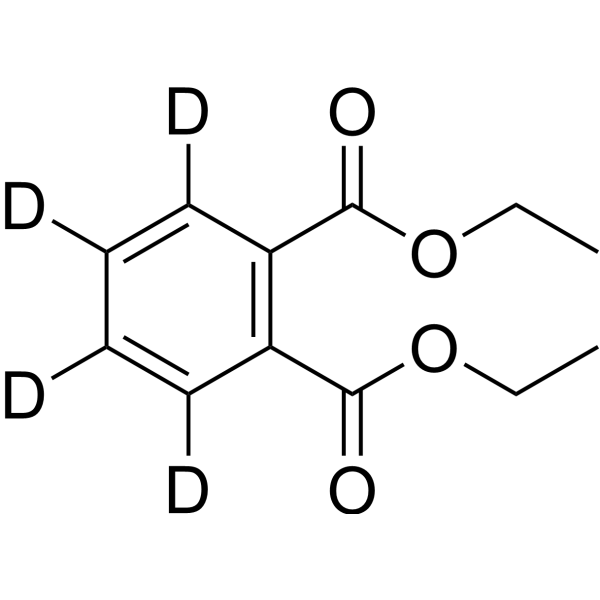
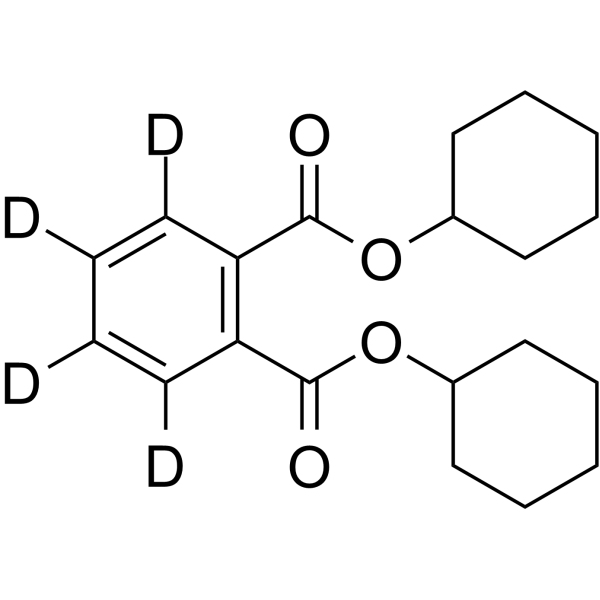
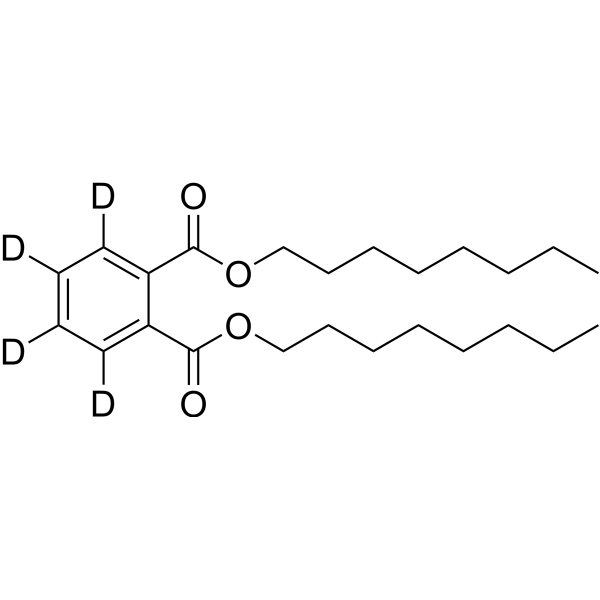
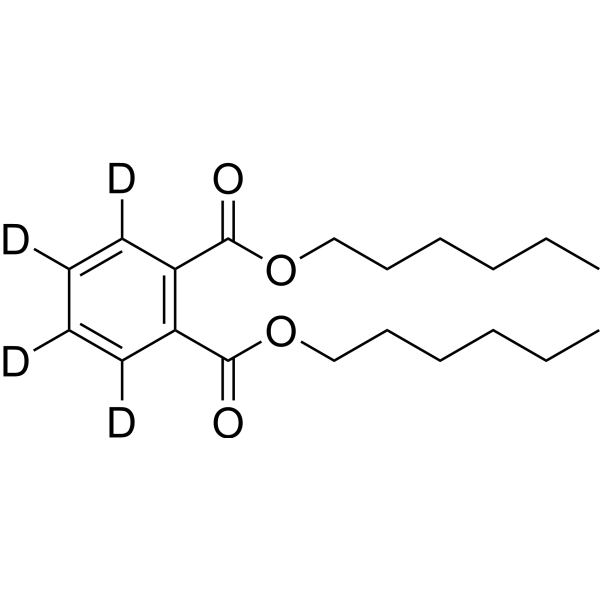
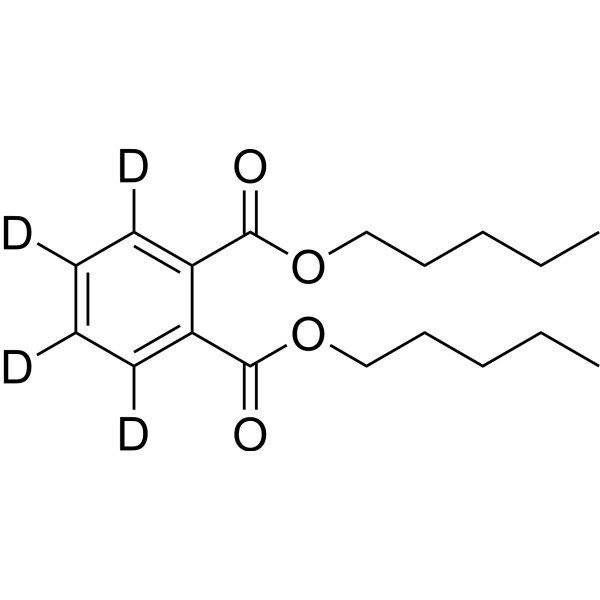
Publications Citing Use of MedChemExpress (MCE) Dibutyl phthalate-3,4,5,6-d4
More

Biological Activity
Description
In Vitro
Stable heavy isotopes of hydrogen, carbon, and other elements have been incorporated into drug molecules, largely as tracers for quantitation during the drug development process. Deuteration has gained attention because of its potential to affect the pharmacokinetic and metabolic profiles of drugs[1].
MedChemExpress (MCE) has not independently confirmed the accuracy of these methods. They are for reference only.
Application
1. This compound can be used as a tracer
2. This compound can be used as an internal standard for quantitative analysis by NMR, GC-MS, or LC-MS.


Chemical Information
-
CAS No. 93952-11-5
-
Unlabeled CAS 84-74-2
-
Appearance Liquid (Density: 1.058 g/cm3)
-
Molecular Weight 282.37
-
Formula C16H18D4O4
-
Color Colorless to light yellow
-
SMILES
O=C(C1=C([2H])C([2H])=C([2H])C([2H])=C1C(OCCCC)=O)OCCCC
-
Shipping
Room temperature in continental US; may vary elsewhere.
-
Storage
Pure form -20°C 3 years 4°C 2 years In solvent -80°C 6 months -20°C 1 month


Publications (1)
-
Journal Impact Factor
-
Most Recent
-
Nat Commun
Pathways and selectivity of Fenton degradation of different precursor species of dissolved organic matter. [Abstract]2025 Jul 10;16(1):6361. PMID: 40640206


Solvent & Solubility
In Vitro:
Ethanol : 100 mg/mL (354.15 mM; Need ultrasonic)
DMSO : 100 mg/mL (354.15 mM; Need ultrasonic; Hygroscopic DMSO has a significant impact on the solubility of product, please use newly opened DMSO)
Please refer to the solubility information to select the appropriate solvent. Once prepared, please aliquot and store the solution to prevent product inactivation from repeated freeze-thaw cycles.
Storage method and period of stock solution: -80°C, 6 months; -20°C, 1 month. When stored at -80°C, please use it within 6 months. When stored at -20°C, please use it within 1 month.
Please refer to the solubility information to select the appropriate solvent. Once prepared, please aliquot and store the solution to prevent product inactivation from repeated freeze-thaw cycles.
Storage method and period of stock solution: -80°C, 6 months; -20°C, 1 month. When stored at -80°C, please use it within 6 months. When stored at -20°C, please use it within 1 month.
Concentration (start) × Volume (start) = Concentration (final) × Volume (final)
In Vivo:
Select the appropriate dissolution method based on your experimental animal and administration route.
- For the following dissolution methods, please ensure to first prepare a clear stock solution using an In Vitro approach and then sequentially add co-solvents:
- To ensure reliable experimental results, the clarified stock solution can be appropriately stored based on storage conditions. As for the working solution for In Vivo experiments, it is recommended to prepare freshly and use it on the same day.
- The percentages shown for the solvents indicate their volumetric ratio in the final prepared solution. If precipitation or phase separation occurs during preparation, heat and/or sonication can be used to aid dissolution.
Add each solvent one by one: 10% EtOH 90% Corn Oil
Solubility: ≥ 2.5 mg/mL (8.85 mM); Clear solution
This protocol yields a clear solution of ≥ 2.5 mg/mL (saturation unknown). If the continuous dosing period exceeds half a month, please choose this protocol carefully.
Taking 1 mL working solution as an example, add 100 μL EtOH stock solution (25.0 mg/mL) to 900 μL Corn oil, and mix evenly.
In Vivo Dissolution Calculator
Please enter the basic information of animal experiments:
-
-
-
-
Recommended: Prepare an additional quantity of animals to account for potential losses during experiments.
Please enter your animal formula composition:
-
%DMSO +
Recommended: Keep the proportion of DMSO in working solution below 2% if your animal is weak.
-
%+
-
+%Tween-80 + +
-
%Saline +
The co-solvents required include: DMSO, . All of co-solvents are available by MedChemExpress (MCE). , Tween 80. All of co-solvents are available by MedChemExpress (MCE).
Working solution concentration: 0.22 mg/mL
Method for preparing stock solution: mg drug dissolved in μL DMSO. Stock solution concentration: mg/mL.
1. Take μL DMSO stock solution;
2. Add μL .
μL , mix evenly;
3. Then add μL Tween 80, mix evenly;
4. Then add μL
Please ensure that the stock solution in the first step is dissolved to a clear state, and add co-solvents in sequence. You can use ultrasonic heating (ultrasonic cleaner, recommended frequency 20-40 kHz), vortexing, etc. to assist dissolution.


Purity & Documentation
-
Data Sheet (275 KB)
-
SDS (563 KB)
- English - EN (563 KB)
- Français - FR (563 KB)
- Deutsch - DE (563 KB)
- Norwegian - NO (563 KB)
- Español - ES (563 KB)
- Swedish - SV (563 KB)
- Italian - IT (563 KB)
- Korean - KR (563 KB)
- Portuguese - PT (563 KB)
-
Handling Instructions (2659 KB)
References
[1]. Russak EM, et al. Impact of Deuterium Substitution on the Pharmacokinetics of Pharmaceuticals. Ann Pharmacother. 2019;53(2):211-216. [Content Brief]
[2]. Rasmussen LM, et al. Effects of in vitro exposure to dibutyl phthalate, mono-butyl phthalate, and acetyl tributyl citrate on ovarian antral follicle growth and viability. Biol Reprod. 2017 May 1;96(5):1105-1117.;Aly HA, et al. Dibutyl phthalate induces oxidative stress and impairs spermatogenesis in adult rats. Toxicol Ind Health. 2016 Aug;32(8):1467-1477.;Farzanehfar V, et al. Determination of dibutyl phthalate neurobehavioral toxicity in mice. Food Chem Toxicol. 2016 Aug;94:221-6. [Content Brief]


Complete Stock Solution Preparation Table
Please refer to the solubility information to select the appropriate solvent. Once prepared, please aliquot and store the solution to prevent product inactivation from repeated freeze-thaw cycles.
Storage method and period of stock solution: -80°C, 6 months; -20°C, 1 month. When stored at -80°C, please use it within 6 months. When stored at -20°C, please use it within 1 month.
| Optional Solvent | Concentration Solvent Mass | 1 mg | 5 mg | 10 mg | 25 mg |
|---|---|---|---|---|---|
| Ethanol / DMSO | 1 mM | 3.5415 mL | 17.7073 mL | 35.4145 mL | 88.5363 mL |
| 5 mM | 0.7083 mL | 3.5415 mL | 7.0829 mL | 17.7073 mL | |
| 10 mM | 0.3541 mL | 1.7707 mL | 3.5415 mL | 8.8536 mL | |
| 15 mM | 0.2361 mL | 1.1805 mL | 2.3610 mL | 5.9024 mL | |
| 20 mM | 0.1771 mL | 0.8854 mL | 1.7707 mL | 4.4268 mL | |
| 25 mM | 0.1417 mL | 0.7083 mL | 1.4166 mL | 3.5415 mL | |
| 30 mM | 0.1180 mL | 0.5902 mL | 1.1805 mL | 2.9512 mL | |
| 40 mM | 0.0885 mL | 0.4427 mL | 0.8854 mL | 2.2134 mL | |
| 50 mM | 0.0708 mL | 0.3541 mL | 0.7083 mL | 1.7707 mL | |
| 60 mM | 0.0590 mL | 0.2951 mL | 0.5902 mL | 1.4756 mL | |
| 80 mM | 0.0443 mL | 0.2213 mL | 0.4427 mL | 1.1067 mL | |
| 100 mM | 0.0354 mL | 0.1771 mL | 0.3541 mL | 0.8854 mL |


Dibutyl phthalate-3,4,5,6-d4 Related Classifications
HY-Y0304S Related Classifications
 Powered by Bioz