


31 Results for "

nocturnal

" in MedChemExpress (MCE) Product Catalog:
Products (31)

31 Results for "nocturnal" in MCE Product Catalog:

13
13 Publications Verification
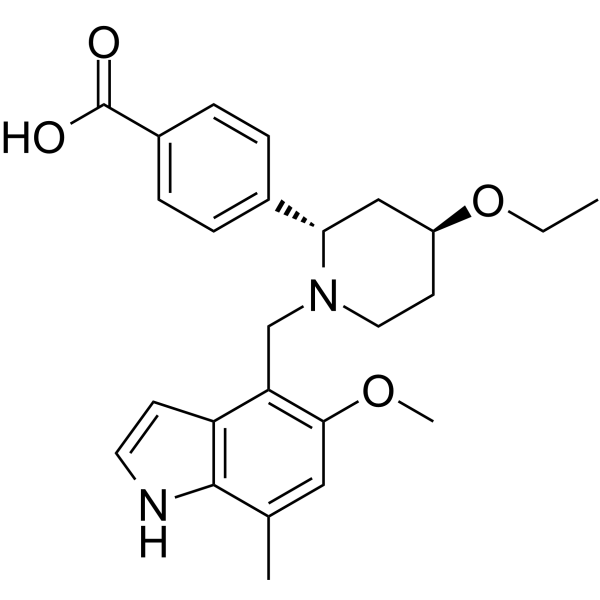
Cat. No.: HY-127105
CAS No.: 1644670-37-0
Purity:  99.93%
Synonyms: LNP023
Iptacopan (LNP023) is an effective and orally-active highly selective factor B inhibitor with an IC50 value of 10 nM and KD of 7.9 nM. Iptacopan exerts a proximal effect in the complement cascade reaction, preventing the destruction (hemolysis) of red blood cells in PNH and the damage of renal cells in IgAN and C3G. Iptacopan can be used for the study of complement-mediated diseases, particularly paroxysmal nocturnal hemoglobinuria (PNH), primary immunoglobulin A nephropathy (IgAN), and complement 3 glomerulopathy (C3G) .
loading...
    loading...
13
13 Publications Verification
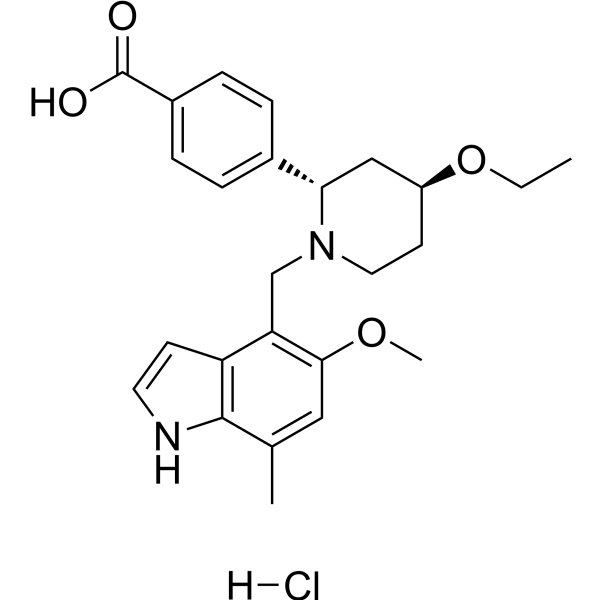
Cat. No.: HY-127105A
CAS No.: 1646321-63-2
Purity:  99.83%
Synonyms: LNP023 hydrochloride
Iptacopan (LNP023) hydrochloride is an effective and orally-active highly selective factor B inhibitor with an IC50 value of 10 nM and KD of 7.9 nM. Iptacopan hydrochloride exerts a proximal effect in the complement cascade reaction, preventing the destruction (hemolysis) of red blood cells in PNH and the damage of renal cells in IgAN and C3G. Iptacopan hydrochloride can be used for the study of complement-mediated diseases, particularly paroxysmal nocturnal hemoglobinuria (PNH), primary immunoglobulin A nephropathy (IgAN), and complement 3 glomerulopathy (C3G) .
loading...
    loading...
7
7 Cited Publications
Cat. No.: HY-110082
CAS No.: 130-89-2
Quinine hydrochloride is an alkaloid extracted from cinchona bark and exhibits oral activity, acting as a potassium channel inhibitor. Quinine hydrochloride modulates the tolerance of red blood cells and presents dose-dependent toxicity and embryonic effects. Quinine hydrochloride is a typical hemolysin that directly lyses red blood cells, with cellular components of red blood cell membranes as its action targets. Quinine hydrochloride disrupts red blood cell membranes and induces hemolysis at high concentrations, while merely weakening the anti-hemolytic capacity of red blood cells at low concentrations. Quinine hydrochloride continuously reduces red blood cell tolerance after in vivo administration, and high doses can also alter blood cell counts. Quinine hydrochloride can be applied to researches related to red blood cell hemolysis, cancer and malaria .
loading...
    loading...
5
5 Cited Publications
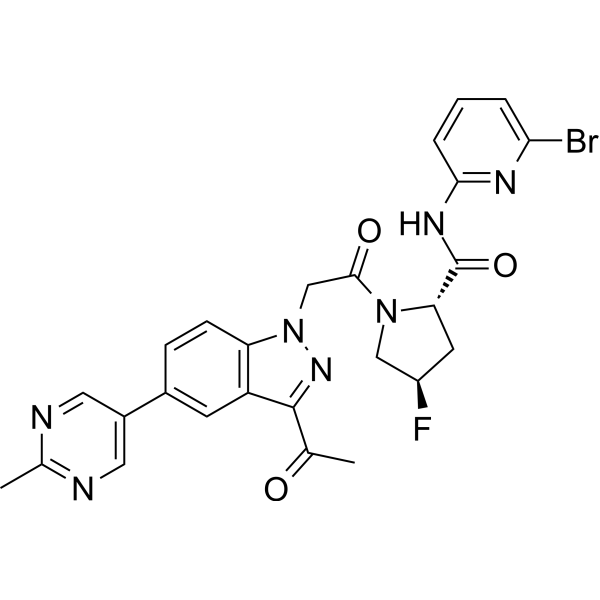
Cat. No.: HY-117930
CAS No.: 1903768-17-1
Purity:  99.91%
Synonyms: ACH-4471
Target:  

Complement System

Research Areas:  

Inflammation/Immunology

Danicopan (ACH-4471), a selective and orally active small-molecule factor D inhibitor, shows high binding affinity to human Factor D with Kd value of 0.54 nM. Danicopan (ACH-4471) inhibits alternative pathway of complement (APC) activity, has potential to block the alternative pathway of complement in paroxysmal nocturnal hemoglobinuria (PNH) and atypical hemolytic uremic syndrome (aHUS) .
loading...
    loading...
2
2 Cited Publications
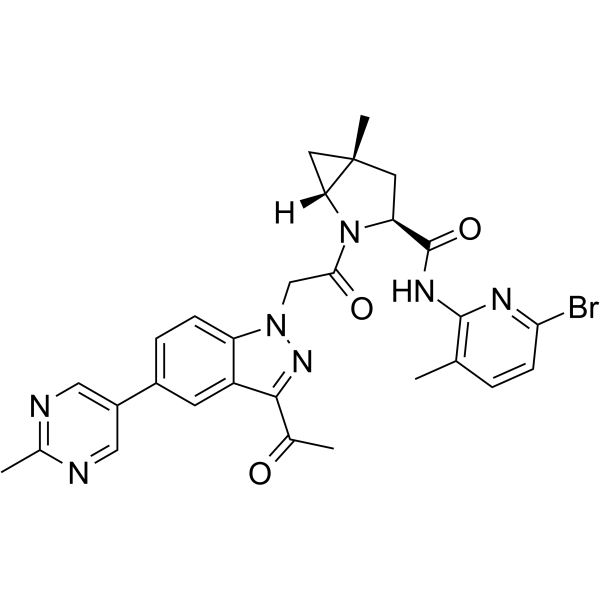
Cat. No.: HY-139588
CAS No.: 2086178-00-7
Purity:  98.61%
Synonyms: ALXN2050; ACH 0145228; ACH-5228
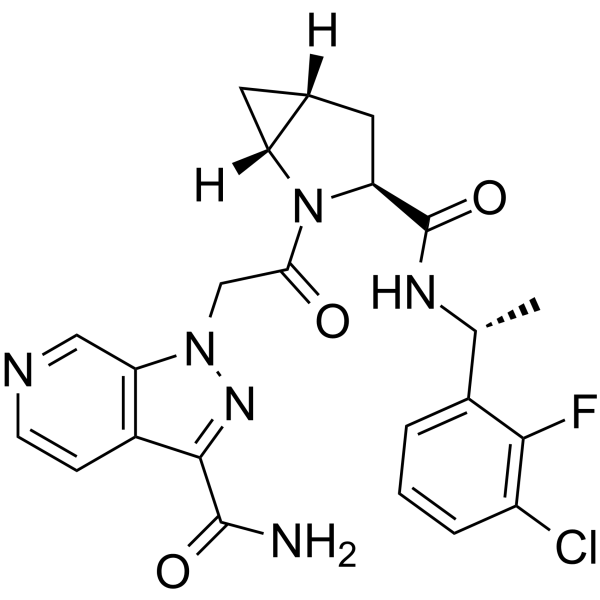
Vemircopan (ALXN2050) is an orally active complement factor D (FD) inhibitor. Vemircopan can be used in the research of diseases such as myasthenia gravis, lupus nephritis, IgA nephropathy, and paroxysmal nocturnal hemoglobinuria .
loading...
    loading...
1
1 Cited Publications
Cat. No.: HY-P3252A
Target:  

Complement System

Research Areas:  

Inflammation/Immunology

Pegcetacoplan acetate is a pegylated complement C3/C3b inhibitor. Pegcetacoplan acetate acts by specifically binding to and inhibiting C3 and C3b, thereby suppressing the complement cascade at its proximal stage. Pegcetacoplan is not a known inhibitor or inducer of CYP450 isoenzymes. Pegcetacoplan acetate can be used for the research of complement-mediated diseases, including paroxysmal nocturnal hemoglobinuria (PNH) and age-related macular degeneration (AMD) .
loading...
    loading...
1
1 Cited Publications
Cat. No.: HY-128342
CAS No.: 2365402-67-9
Purity:  99.14%
Target:  

Complement System

Research Areas:  

Inflammation/Immunology

Compound C5-IN-1 (Compound 7) is a selective allosteric inhibitor of complement component protein C5. Compound C5-IN-1 prevents C5 from being cleaved by C5 convertase, inhibits the cleavage of C5 into C5a and C5b, and thus blocks the formation of membrane attack complex (MAC). Compound C5-IN-1 has an IC50 of 0.77 μM and 5 nM in 50% human whole blood and 2% human serum to block MAC deposition induced by zymosan, respectively. Compound C5-IN-1 can be used to study diseases related to complement overactivation, such as paroxysmal nocturnal hemoglobinuria (PNH) and atypical hemolytic uremic syndrome (aHUS) .
loading...
    loading...
Cat. No.: HY-P99965
CAS No.: 1917321-26-6
Synonyms: SKY59; RO7112689; RG-6107
Crovalimab (SKY59; RO7112689) is a novel humanized antibody against C5 in a pH-dependent manner with KDs of 15.2 nM and 16.8 μM at pH 7.4 and 5.8, respectively. Crovalimab binds human FcRn with great affinity (KD: 17 μM at pH 6.0). Crovalimab can block cleavage of C5 by the C5 convertase and inhibite the activity of a C5 variant (p.Arg885His). Crovalimab inhibits C5b-9 formation significantly in all three complement pathways, the classical pathway (CP), lectin pathway (LP), and alternative pathway (AP). Crovalimab has the potential for paroxysmal nocturnal hemoglobinuria (PNH) and complement-mediated diseases research .
loading...
    loading...
Cat. No.: HY-P99365
CAS No.: 1803171-55-2
Synonyms: ALXN1210

Target:  

Complement System

Research Areas:  

Metabolic Disease

Ravulizumab (ALXN1210) is a humanized monoclonal antibody that specifically binds with high affinity to the human complement protein C5. Ravulizumab can be used for the research of paroxysmal nocturnal hemoglobinuria, atypical hemolytic uremic syndrome, and myasthenia gravis .
loading...
    loading...
Cat. No.: HY-P990952
CAS No.: 2527079-60-1
Synonyms: OMS906
Zaltenibart (OMS906) is an IgG4 humanized monoclonal antibody and MASP-3 inhibitor. By inhibiting MASP-3, Zaltenibart achieves upstream inhibition of the alternative complement pathway. MASP-3 is an upstream activator of Factor D (Factor D), a key enzyme in the alternative complement pathway. Zaltenibart prevents both intravascular hemolysis and extravascular hemolysis. Zaltenibart is applicable to research related to paroxysmal nocturnal hemoglobinuria .
loading...
    loading...
Cat. No.: HY-145720
CAS No.: 1639264-46-2
Synonyms: ALN-CC5
Cemdisiran (ALN-CC5) is an N-acetylgalactosamine-conjugated RNAi agent and also a complement component C5 inhibitor. Cemdisiran targets C5 mRNA, cleaves C5 mRNA via the endogenous RNA interference pathway, and inhibits the production of C5 protein in the liver. Cemdisiran exerts a dose-dependent inhibitory effect on total C5 concentrations in cynomolgus monkeys. When used in combination with Pozelimab (HY-P99786) in cynomolgus monkeys, Cemdisiran achieves a more sustained and complete inhibitory effect on complement activity. Cemdisiran can be used in the research of paroxysmal nocturnal hemoglobinuria and other complement-mediated diseases .
loading...
    loading...
Cat. No.: HY-122700
CAS No.: 1386455-51-1
Purity:  99.45%
Target:  

Complement System

Research Areas:  

Inflammation/Immunology

Factor D inhibitor 6 is a potent, highly selective and orally active factor D (FD) inhibitor with an IC50 of 30 nM and a Kd of 6 nM. Factor D inhibitor 6 is inactive against factor B, lassical and lectin complement-pathway activation, and a broad assay panel of receptors, ion channels, kinases and proteases .
loading...
    loading...
Cat. No.: HY-B1170
CAS No.: 456-59-7
Synonyms: 3,5,5-Trimethylcyclohexyl mandelate
Target:  

Calcium Channel

Research Areas:  

Cardiovascular Disease

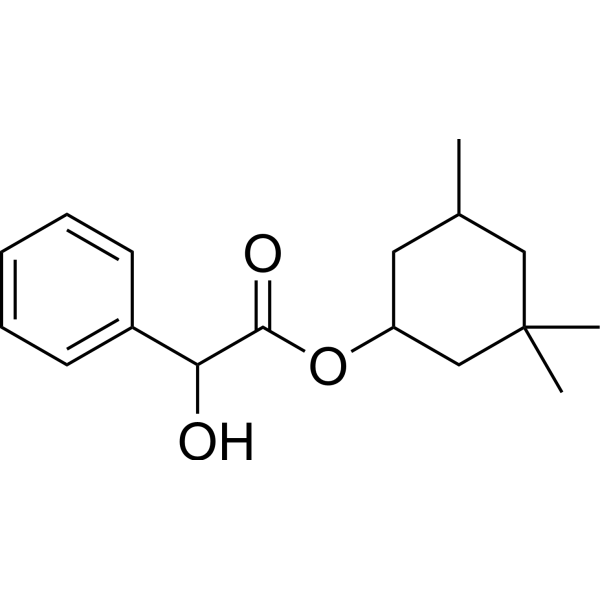
Cyclandelate is a vasodilator that can be used in the study of claudication, arteriosclerosis, Raynaud's disease, nocturnal leg cramps, and migraines.
loading...
    loading...
Cat. No.: HY-116567
CAS No.: 192514-54-8
Purity:  99.77%
Target:  

Vasopressin Receptor

Research Areas:  

Metabolic Disease

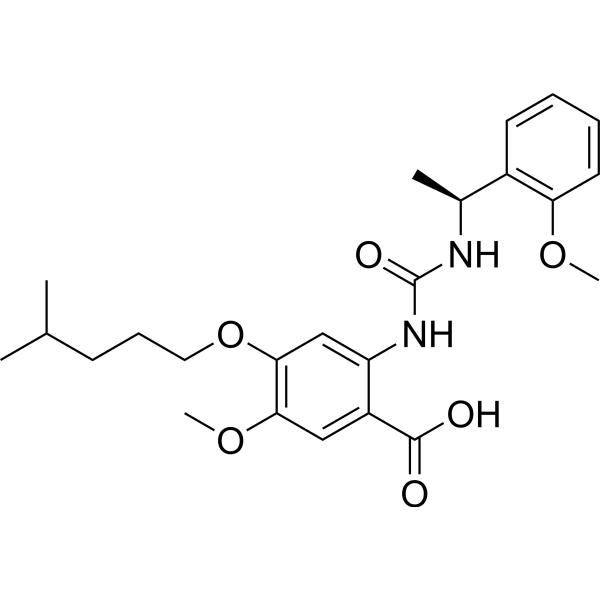
OPC-51803 is an orally active nonpeptide vasopressin V2 receptor agonist. OPC-51803 can be used for the research of micturition disorders that result in frequent micturition, such as that from polyuria, nocturnal polyuria, and some kinds of urinary incontinence .
loading...
    loading...
Cat. No.: HY-145720A
Purity:  96.02%
Synonyms: ALN-CC5 sodium
Cemdisiran sodium (ALN-CC5 sodium) is an N-acetylgalactosamine-conjugated RNAi agent and also a complement component C5 inhibitor. Cemdisiran sodium targets C5 mRNA, cleaves C5 mRNA via the endogenous RNA interference pathway, and inhibits the production of C5 protein in the liver. Cemdisiran sodium exerts a dose-dependent inhibitory effect on total C5 concentrations in cynomolgus monkeys. When used in combination with Pozelimab (HY-P99786) in cynomolgus monkeys, Cemdisiran sodium achieves a more sustained and complete inhibitory effect on complement activity. Cemdisiran sodium can be used in the research of paroxysmal nocturnal hemoglobinuria and other complement-mediated diseases .
loading...
    loading...
Cat. No.: HY-P11291A
Research Areas:  

Metabolic Disease

NNC0165-1273 TFA is a selective NPY Y2 receptor agonist with a Ki of 2 nM and an EC50 of 5.0 nM. NNC0165-1273 TFA blocks Ghrelin-induced cFos expression. NNC0165-1273 TFA reduces nocturnal food intake, attenuates feeding behavior, induces early satiety, and causes dose-dependent decreases in body weight and fat mass in diet-induced obese mice. When used in combination with Semaglutide (HY-114118), NNC0165-1273 TFA reduces preference for high-fat diet, promotes body weight loss, and produces sustained weight loss effects in diet-induced obese rats. NNC0165-1273 TFA can be used in studies related to diet-induced obesity .
loading...
    loading...
Cat. No.: HY-116567A
CAS No.: 192514-57-1
Purity:  99.94%
Target:  

Endogenous Metabolite

Research Areas:  

Endocrinology

(S)-OPC-51803 is an agonist of the vasopressin V2 receptor, with activity in suppressing nocturia and urinary incontinence. (S)-OPC-51803 was evaluated in terms of biological activity and showed a stronger V2 receptor agonist effect compared to its (R)-isomer. The use of (S)-OPC-51803 may improve the patient's ability to control nocturnal polyuria .
loading...
    loading...
Cat. No.: HY-200854
CAS No.: 2447007-60-3
Synonyms: LNP023 hydrochloride hydrate
Iptacopan (LNP023) hydrochloride hydrate is an effective and orally-active highly selective factor B inhibitor with an IC50 value of 10 nM and KD of 7.9 nM. Iptacopan hydrochloride hydrate exerts a proximal effect in the complement cascade reaction, preventing the destruction (hemolysis) of red blood cells in PNH and the damage of renal cells in IgAN and C3G. Iptacopan hydrochloride hydrate can be used for the study of complement-mediated diseases, particularly paroxysmal nocturnal hemoglobinuria (PNH), primary immunoglobulin A nephropathy (IgAN), and complement 3 glomerulopathy (C3G) .
loading...
    loading...
Cat. No.: HY-N12882
CAS No.: 64437-48-5
Category:  

Natural Products Animals

Target:  

Sex Pheromone

(Z)-10-Hexadecen-1-ol is a insect sex pheromones, which can be secreted by some female nocturnal moths, or by the heads of male bumblebees (Bombus spp.) .
loading...
    loading...
Cat. No.: HY-P2830
CAS No.: 37213-56-2
Target:  

Ser/Thr Protease

Research Areas:  

Inflammation/Immunology

Complement factor D is a serine protease. Complement factor D activates C3 convertase by specifically cleaving complement Factor B. Complement factor D is promising for research of autoimmune diseases (e.g., paroxysmal nocturnal hemoglobinuria, C3 glomerulopathy), age-related macular degeneration, and thrombotic microangiopathies .
loading...
    loading...

