1. Search Result
Search Result
Results for "

rat behavioral studies

" in MedChemExpress (MCE) Product Catalog:

13

Inhibitors & Agonists

1

Natural
Products

Cat. No. Product Name Target Research Areas Chemical Structure
  • HY-120380

    MOFs PARP Neurological Disease
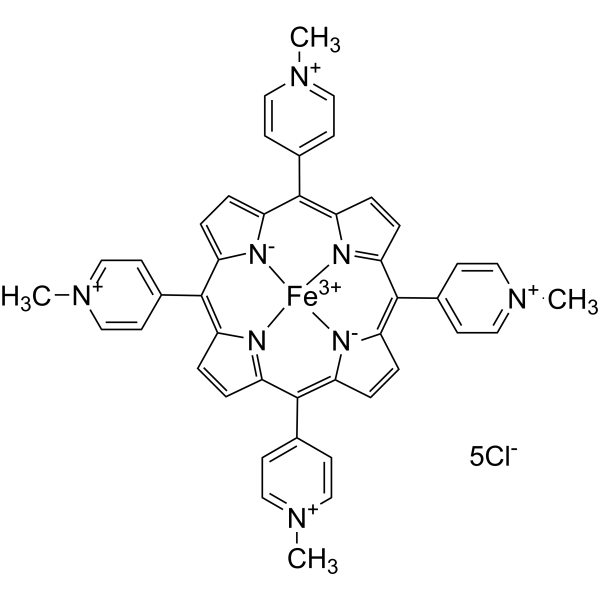
    FeTMPyP is an orally active poly (ADP-ribose) polymerase (PARP) inhibitor. FeTMPyP inhibits cell death, nitrotyrosine formation, and depolarization of mitochondrial transmembrane potential. FeTMPyP reduces homocysteine-induced nitrosative stress and partially restores TFEB protein and mRNA levels. FeTMPyP improves functional and behavioral deficits caused by chronic constriction injury in rats. FeTMPyP alleviates acute cerebral infarction in a rat model of middle cerebral artery occlusion with mild hyperglycemia. FeTMPyP can be used in studies related to neuropathic pain, renal aging, ischemic penumbra, and hyperglycemic stroke .
    FeTMPyP
  • HY-107664

    Neurotensin Receptor Neurological Disease
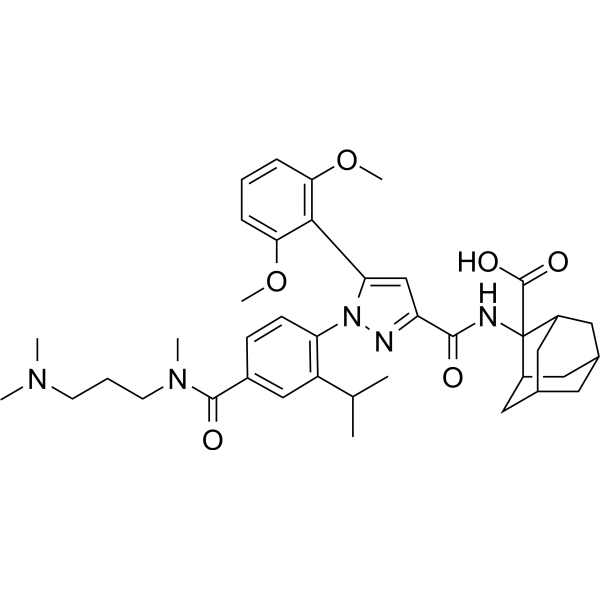
    SR 142948 is an orally active and selective non-peptide neurotensin receptor (NT) antagonist with IC50s of 1.19 nM, 0.32 nM, 3.96 nM in h-NTR1-CHO cells, HT-29 cells, and adult rat brain, respectively. SR 142948 antagonizes NT-induced inositol monophosphate formation in HT-29 cells with an IC50 of 3.9 nM. SR 142948 blocks hypothermia, analgesia and steering behavior induced by NT in vivo. SR 142948 shows blood-brain permeability and can be used in study of psychiatric disorders .
    SR 142948
  • HY-147294

    ACT-539313

    Orexin Receptor (OX Receptor) Cytochrome P450 Neurological Disease
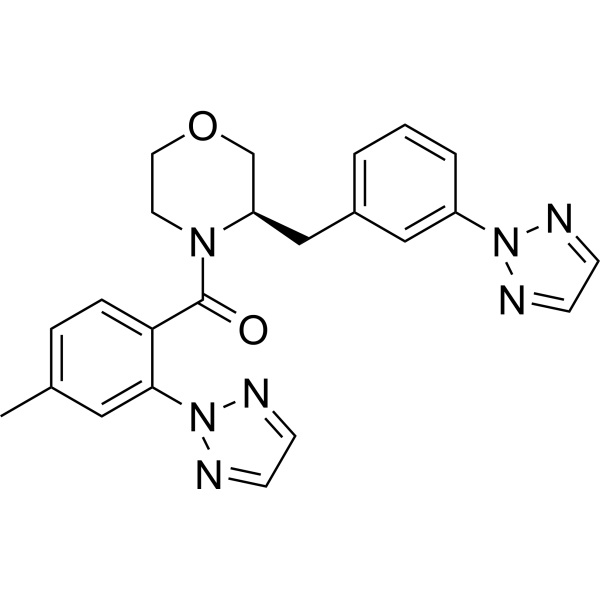
    Nivasorexant (ACT-539313) is an orally active, blood-brain barrier penetrant, selective orexin OX1R inhibitor. Nivasorexant specifically blocks central OX1Rs without affecting OX2Rs, and exhibits competitive inhibitory activity against CYP2C8, CYP2C9, CYP2C19 and CYP3A4 (IC50 values are 25 μM, 8.6 μM, 1.6 μM, 19 μM/44 μM, respectively). Nivasorexant significantly reduces binge-like eating behavior of highly palatable food in rat models and has long-acting properties. Nivasorexant shows no relevant off-target activity against over 130 selected proteins, exhibits favorable safety profiles, and can be used for studies related to binge eating disorder .
    Nivasorexant
  • HY-158013A

    Dopamine Transporter Neurological Disease
    JJC8-088 dioxalate is the dioxalate salt form of JJC8-088 (HY-158013). JJC8-088 dioxalate is a derivative of modafinil. JJC8-088 dioxalate is an inhibitor for dopamine transporter (DAT). JJC8-088 dioxalate exhibits behavioral characteristics similar to cocaine in rat models, and can be to study psychostimulant use disorders .
    JJC8-088 dioxalate
  • HY-N0343A

    p-Formylphenyl-β-D-glucopyranoside; p-Hydroxybenzaldehyde glucoside

    Others Others
    4-Formylpyrnyl-β-D-glucopyranoside (p-Formylphenyl-β-D-glucopyranoside) is a metabolite of Gastrodin (HY-N0115) in rat plasma. 4-Formylpyrnyl-β-D-glucopyranoside can be used to study the effects of multiple doses and food on the pharmacokinetic behavior of oral Gastrodin and its metabolites .
    4-Formylpyrnyl-β-D-glucopyranoside
  • HY-107664A

    Neurotensin Receptor Neurological Disease
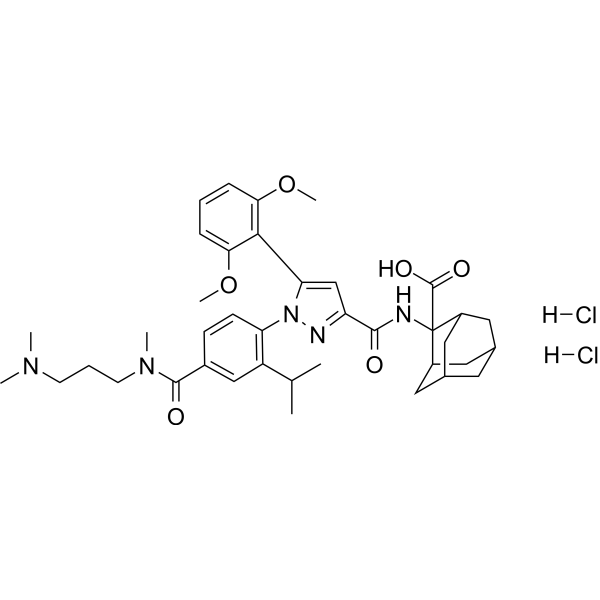
    SR 142948 dihydrochloride is an orally active and selective non-peptide neurotensin receptor (NT) antagonist with IC50s of 1.19 nM, 0.32 nM, 3.96 nM in h-NTR1-CHO cells, HT-29 cells, and adult rat brain, respectively. SR 142948 dihydrochloride antagonizes NT-induced inositol monophosphate formation in HT-29 cells with an IC50 of 3.9 nM. SR 142948 dihydrochloride blocks hypothermia, analgesia and steering behavior induced by NT in vivo. SR 142948 dihydrochloride shows blood-brain permeability and can be used in study of psychiatric disorders .
    SR 142948 dihydrochloride
  • HY-107664B

    Neurotensin Receptor Neurological Disease
    SR 142948 TFA is an orally active and selective non-peptide neurotensin receptor (NT) antagonist with IC50s of 1.19 nM, 0.32 nM, 3.96 nM in h-NTR1-CHO cells, HT-29 cells, and adult rat brain, respectively. SR 142948 TFA antagonizes NT-induced inositol monophosphate formation in HT-29 cells with an IC50 of 3.9 nM. SR 142948 TFA blocks hypothermia, analgesia and steering behavior induced by NT in vivo. SR 142948 TFA shows blood-brain permeability and can be used in study of psychiatric disorders .
    SR 142948 TFA
  • HY-105327

    Cholinesterase (ChE) Neurological Disease
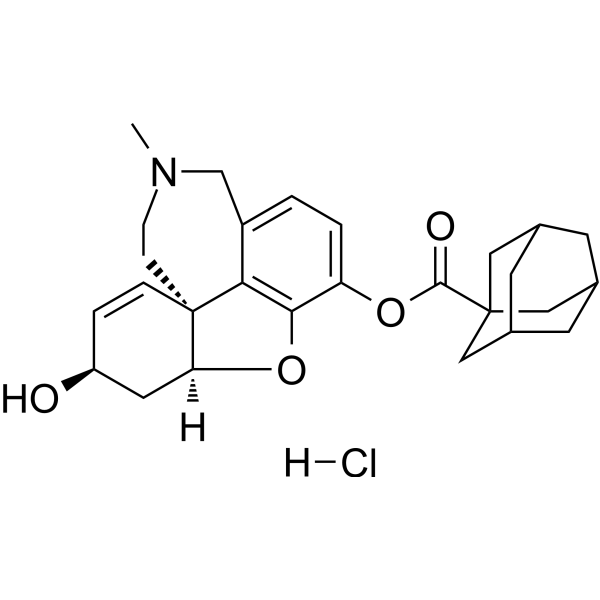
    P11149 is a competitive, BBB-penetarated weakly, orally active and selective inhibitor of AChE. P11149 exhibits an IC50 of 1.3 μM for rat BChE/AChE. P11149, a Galanthamine derivative, demonstrates central cholinergic activity, behavioral efficacy and safety. P11149 is used in the study for Alzheimer's disease .
    P11149
  • HY-181047

    Dopamine Receptor Neurological Disease
    FMJ-01-042 is a blood-brain barrier-permeable, low-efficacy partial agonist with high affinity (Kᵢ = 4.33 nM) and exceptional subtype selectivity for the dopamine D4 receptor. FMJ-01-042 exhibits good metabolic stability and is suitable for research on neurological and psychiatric disorders .
    FMJ-01-042
  • HY-105857

    GABA Receptor Neurological Disease
    Thiazesim is a benzothiazepine compound with a thiophene structure and acts as a GABAA receptor inhibitor, exerting anticonvulsant and antidepressant effects. Thiazesim exhibits specific pharmacological properties in animal experiments. Thiazesim reduces motor activity in rats and effectively inhibits rat killing responses, with a ratio of 2.1 between the ED50 in rotarod tests and the ED50 for anti-killing behavior. Thiazesim can be widely used in basic and clinical studies related to epilepsy .
    Thiazesim
  • HY-105857A

    GABA Receptor Neurological Disease
    Thiazesim hydrochloride is a benzothiazepine compound with a thiophene structure and acts as a GABAA receptor inhibitor, exerting anticonvulsant and antidepressant effects. Thiazesim hydrochloride exhibits specific pharmacological properties in animal experiments. Thiazesim hydrochloride reduces motor activity in rats and effectively inhibits rat killing responses, with a ratio of 2.1 between the ED50 in rotarod tests and the ED50 for anti-killing behavior. Thiazesim hydrochloride can be widely used in basic and clinical studies related to epilepsy .
    Thiazesim hydrochloride
  • HY-105327R

    Reference Standards Cholinesterase (ChE) Neurological Disease
    P11149 (Standard) is the analytical standard of P11149 (HY-105327). This product is intended for research and analytical applications. P11149 is a competitive, BBB-penetarated weakly, orally active and selective inhibitor of AChE. P11149 exhibits an IC50 of 1.3 μM for rat BChE/AChE. P11149, a Galanthamine derivative, demonstrates central cholinergic activity, behavioral efficacy and safety. P11149 is used in the study for Alzheimer's disease .
    P11149 (Standard)
  • HY-107664R

    Reference Standards Neurotensin Receptor Neurological Disease
    SR 142948 (Standard) is the analytical standard of SR 142948 (HY-107664). This product is intended for research and analytical applications. SR 142948 is an orally active and selective non-peptide neurotensin receptor (NT) antagonist with IC50s of 1.19 nM, 0.32 nM, 3.96 nM in h-NTR1-CHO cells, HT-29 cells, and adult rat brain, respectively. SR 142948 antagonizes NT-induced inositol monophosphate formation in HT-29 cells with an IC50 of 3.9 nM. SR 142948 blocks hypothermia, analgesia and steering behavior induced by NT in vivo. SR 142948 shows blood-brain permeability and can be used in study of psychiatric disorders .
    SR 142948 (Standard)

Inquiry Online

Your information is safe with us. * Required Fields.

Salutation


Country or Region *

Applicant Name *


Organization Name *

Department *


Email Address *


Product Name *

Cat. No.


Requested quantity *

Phone Number *


Remarks

Inquiry Online

Inquiry Information

Product Name:
Cat. No.:
Quantity:
MCE Japan Authorized Agent:

