26 Results for "

real-time imaging

" in MedChemExpress (MCE) Product Catalog:
Products (26)

26 Results for "real-time imaging" in MCE Product Catalog:

1
1 Cited Publications
Cat. No.: HY-118667
CAS No.: 516-85-8
Purity:  ≥99.0%
Target:  

Liposome

Research Areas:  

Others

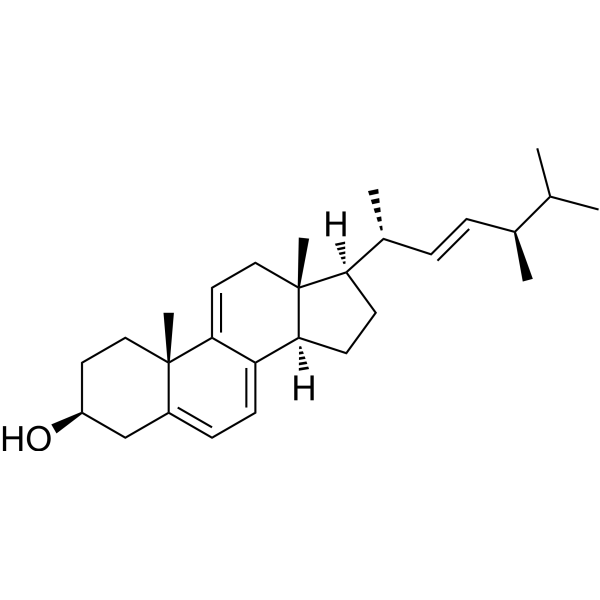
Dehydroergosterolis a naturally occurring fluorescent sterol analog (Ex/Em=325/375 nm), which mimics the properties of cholesterol in cell membranes. DehydroergosterolEasily conjugated by cholesterol-binding proteins for real-time imaging in live cells. DehydroergosterolThe sterol environment and intracellular sterol transport in vivo can be probed/elucidated in real time .
loading...
    loading...
Cat. No.: HY-P4154
CAS No.: 2276787-79-0
Synonyms: ALM-488
Target:  

Fluorescent Dye

Research Areas:  

Neurological Disease Cancer

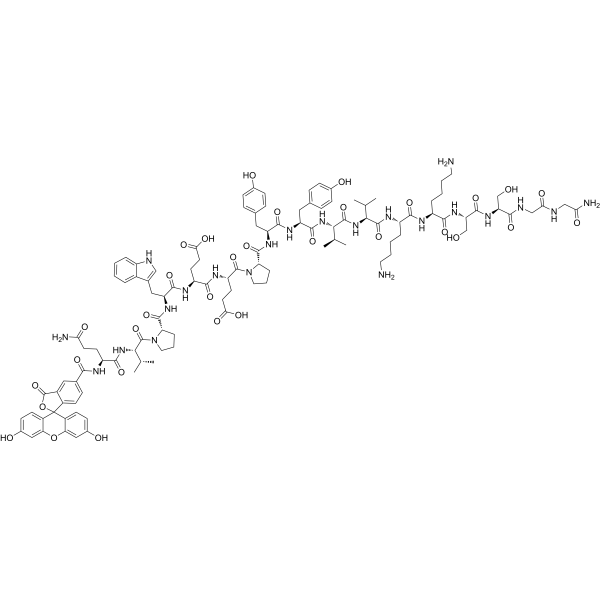
Bevonescein (ALM-488) is a fluorescein-conjugated peptide that facilitates the targeted delivery of a fluorescent moiety (5-FAM (HY-66022)) to nerves after intravenous (IV) administration. Bevonescein binds nerve-associated connective tissue, labels peripheral nerves under real-time fluorescence imaging (FL) in living mice and human ex vivo nerve tissue. Bevonescein is a peptide-linked tracer which fluorescently labeled both intact and degenerated nerves (Ex/Em = 480/530 nm) .
loading...
    loading...
Cat. No.: HY-D1244
CAS No.: 1043865-37-7
CO probe 1 (probe 2) is a highly efficient fluorescent CO probe (Ex=493 nm) with an allyl ether reaction site. In the presence of PdCl₂, CO reduces Pd 2+ to Pd 0, triggering a Tsuji-Trost reaction that removes the allyl protecting group, releases fluorescein, and generates a significant fluorescence signal. CO probe 1 has high selectivity, rapid response (fluorescence enhancement of 150 times within 20 minutes), and low cytotoxicity, and can be used for real-time imaging of CO in living cells. CO probe 1 may be used to study pathological mechanisms involving CO signaling regulation, such as inflammation, vascular disease, or cancer .
loading...
    loading...
Cat. No.: HY-D0920
CAS No.: 166196-17-4
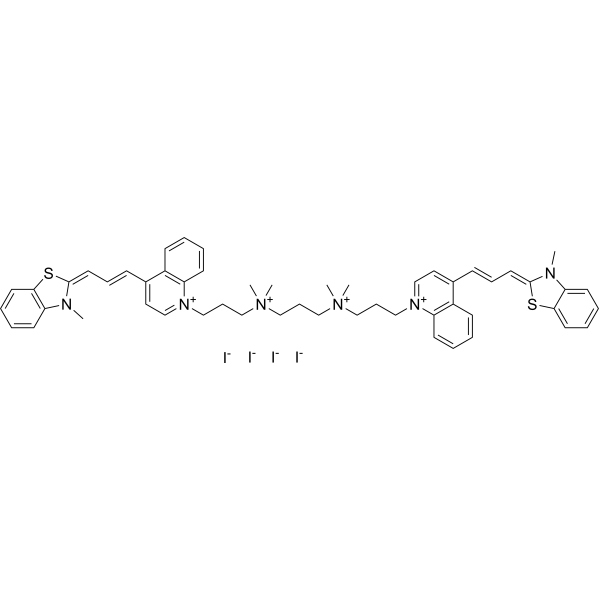
TOTO-3 is a cyanine nucleic acid intercalating fluorescent probe that binds to both RNA and DNA (Ex=642 nm, Em=660 nm). TOTO-3 cannot enter intact cells, but can penetrate cells with permeabilized plasma membranes, staining cytoplasmic RNA and nucleoli to distinguish intact cells from damaged ones. TOTO-3 is taken up by macrophages in an ultrasound-independent manner. TOTO-3 accumulates in tumor cells via ultrasound-mediated enhancement of plasma membrane permeability. TOTO-3 supports optical imaging for real-time assessment of plasma membrane integrity, nucleic acid detection, and monitoring of ultrasound-mediated intracellular delivery processes. TOTO-3 is applicable to studies related to rectal cancer .
loading...
    loading...
Cat. No.: HY-D1707
CAS No.: 209540-67-0
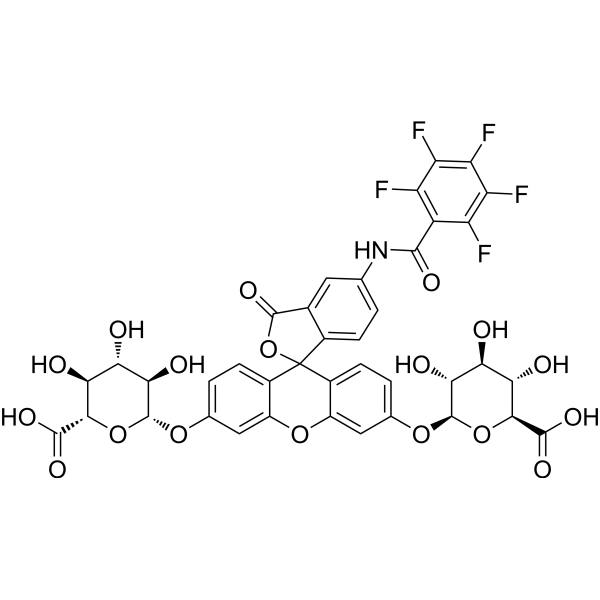
FDGlcU can be used as a fluorescent probe for non-invasively image with a high level of fluorescent activity. FDGlcU is non-fluorescent when the fluorescein is conjugated with two mono-glucuronides (Ex/Em=480/514 nm) .
loading...
    loading...
Cat. No.: HY-147507
CAS No.: 2451986-45-9
Target:  

Fluorescent Dye

Research Areas:  

Others

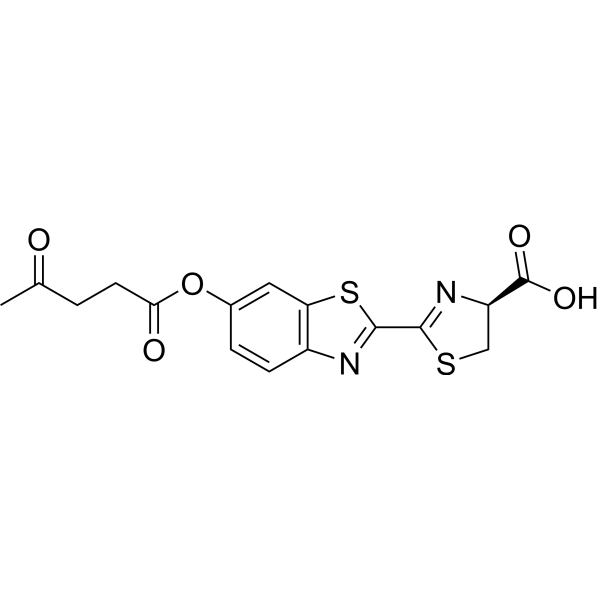
SBP-1 is a sulfite bioluminescent probe (SBP). SBP-1 exhibits the excellent responsivity, selectivity and sensitivity towards sulfite. The recognition of SBP-1 towards sulfite is based on the mechanism of a sulfite-mediated intramolecular cleavage reaction. SBP-1 can be used for detection of exogenous and endogenous sulfite in living animal. SBP-1 also possesses a capability for quantitatively detecting sulfite within a certain concentration range in solution .
loading...
    loading...
Cat. No.: HY-D2931
CAS No.: 1154528-97-8
SNAP-FAM is a FAM-labeled SNAP tag fluorescent probe, specifically designed for live-cell protein labeling and real-time imaging applications .
loading...
    loading...
Cat. No.: HY-D1637
CAS No.: 172646-43-4
Target:  

Fluorescent Dye

Research Areas:  

Others

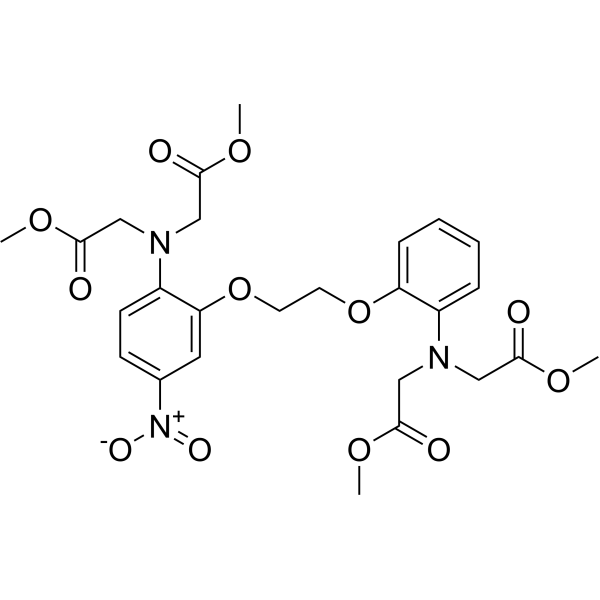
5-Nitro BAPTA tetramethyl ester is a calcium chelator. 5-Nitro BAPTA tetramethyl ester involves in the two-photon probe synthesis, and is used for real-time imaging of intracellular calcium ions, calcium waves monitoring at a depth of 100-300 μm in liver tissues for 1100-4000 s. 5-Nitro BAPTA tetramethyl ester, together with fluorescent compound 2-Me-substituted TM, can be used to form a red fluorescent probe (CaTM-2 AM) .
loading...
    loading...
Cat. No.: HY-163618
Research Areas:  

Cancer

DHMQ is a NIR fluorescent probe that binds to the propylamino group of monoamine oxidase A (MAO-A). DHMQ tracks MAO-A activity in real-time by using fluorescence imaging on mice and cells .
loading...
    loading...
Cat. No.: HY-D2971
CAS No.: 2781892-92-8
NCIC-VIS is a lysosome-targeted, viscosity-sensitive two-photon near-infrared fluorescent probe. NCIC-VIS has a rigid structure that can restrict molecular torsion, thereby increasing the fluorescence quantum yield and two-photon absorption cross-section. NCIC-VIS enables real-time imaging of the autophagy process in cells .
loading...
    loading...
Cat. No.: HY-W112090
CAS No.: 72076-09-6
Synonyms: PdTFPP; 5,10,15,20-Tetrakis(pentafluorophenyl)-21H,23H-porphine palladium(II)
Target:  

Fluorescent Dye

Research Areas:  

Others

Palladium meso-tetra(pentafluorophenyl)porphyrin (PdTFPP) derives from palladium(II), acting as a fluorescence-quenched optical probe and high-performance oxygen concentration sensor with outstanding photostability and antioxidant capacity. Palladium meso-tetra(pentafluorophenyl)porphyrin exhibits reduced luminescence intensity as dissolved oxygen concentration rises. Palladium meso-tetra(pentafluorophenyl)porphyrin can be applied for real-time monitoring of live-cell respiration, hypoxic tissue imaging, and nanofibrous organic semiconductors in photodetectors for ambient oxygen detection .
loading...
    loading...
Cat. No.: HY-145769
CAS No.: 2547100-02-5
Target:  

PD-1/PD-L1

Research Areas:  

Cancer

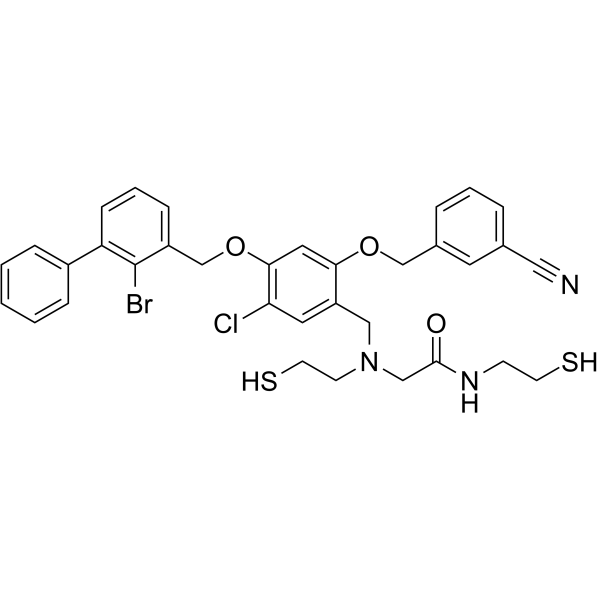
N2S2-CBMBC, an N2S2 bromo-benzyl ether derivative, acts as a ligand and use 99mTc-labelled complexes 99mTc-N2S2-CBMBC can be used as an imaging agent to be applied to the aspect of detecting PD-L1 expression, realize the real-time, comprehensive and convenient detection of the PD-L1 level of tumors, and overcome the defects of an immunohistochemical method .
loading...
    loading...
Cat. No.: HY-D3005
NpCy-4 is a reliable reporter for monitoring lysosomal pH and viscosity changes in real time during Autophagy (λex = 650 nm; λem = 660-740 nm). NpCy-4 demonstrates a superior signal-to-background ratio (SBR) for cellular imaging. NpCy-4 facilitates real-time, noninvasive diagnostic imaging of acute gastritis model with high contrast .
loading...
    loading...
Cat. No.: HY-161981
Target:  

Apoptosis

Research Areas:  

Cancer

Antitumor agent-187 (compound I3) is a photosensitizer based on 5,15-diaryltetrabenzoporphyrin with a maximum absorption wavelength of ~668 nm and anticancer activity. Antitumor agent-187 can induce apoptosis and can be used in photodynamic therapy (PDP). Antitumor agent-187 selectively accumulates at tumor sites and has real-time fluorescence imaging capabilities .
loading...
    loading...
Cat. No.: HY-D2266
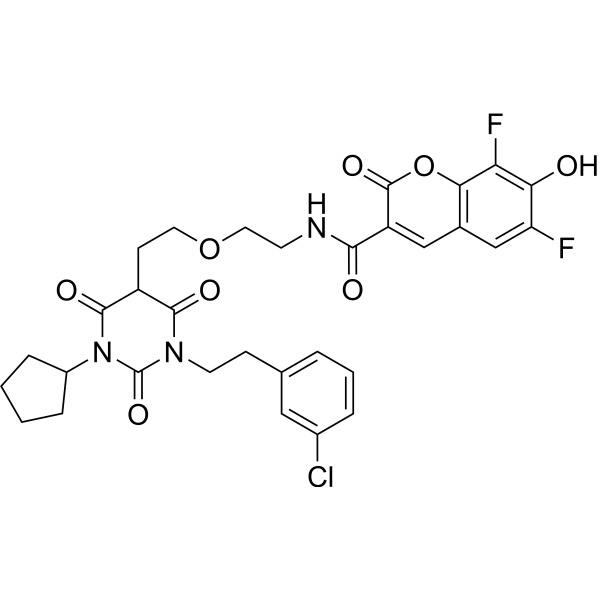
FluoBar1 is an imaging fluorescence probe modified by a barbiturate ligand with fluorescent coumarin. FluoBar1 can monitor L-type voltage-gated calcium channels (LTCC) in living cells in real time for the study of neurological diseases .
loading...
    loading...
Cat. No.: HY-147508
CAS No.: 2494035-92-4
Target:  

Fluorescent Dye

Research Areas:  

Others

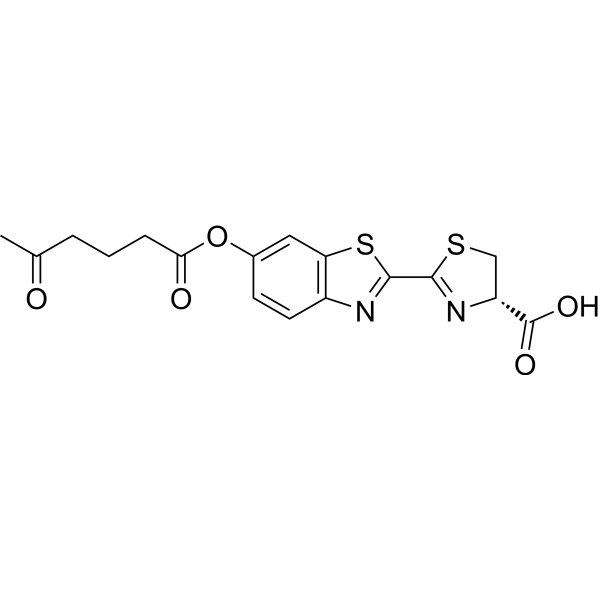
SBP-2 is a sulfite bioluminescent probe (SBP). The recognition of SBP-2 towards sulfite is based on the mechanism of a sulfite-mediated intramolecular cleavage reaction .
loading...
    loading...
Cat. No.: HY-147509
CAS No.: 2494035-93-5
Target:  

Fluorescent Dye

Research Areas:  

Others

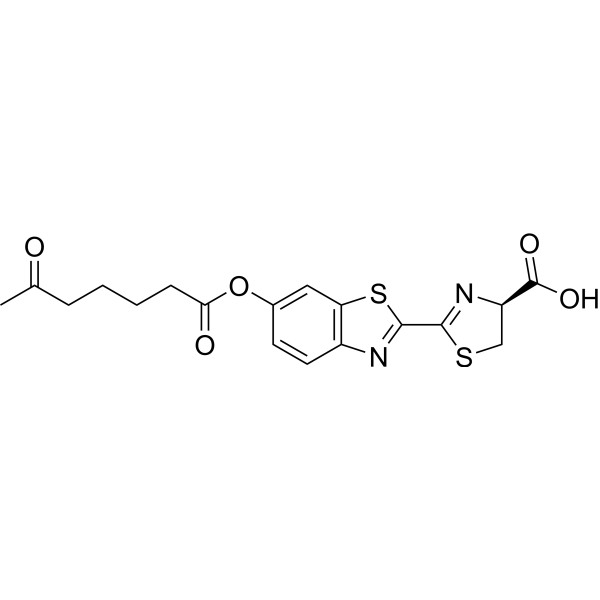
SBP-3 is a sulfite bioluminescent probe (SBP). The recognition of SBP-3 towards sulfite is based on the mechanism of a sulfite-mediated intramolecular cleavage reaction .
loading...
    loading...
Cat. No.: HY-D3224
CAS No.: 2413777-91-8
HCP is a two-photon fluorescent probe capable of crossing the blood-brain barrier, which is specifically designed for real-time detection of hypochlorous acid (HClO/ClO -) produced by myeloperoxidase (MPO). Chlorination of the quinoline skeleton of HCP generates HCP-Cl, which eliminates intramolecular charge transfer (ICT) quenching and thereby produces fluorescence. HCP is suitable for in vivo dynamic imaging of HClO in the brains of epileptic mice and high-throughput screening of antiepileptic drugs (HCP-Cl: Ex/Em = 800 nm/495 nm) .
loading...
    loading...
Cat. No.: HY-D3364
Target:  

Fluorescent Dye

Research Areas:  

Others

RL480 is a green-emitting RNA fluorescent dye used for selective RNA labeling and imaging. RL480 contains an acylimidazole reactive group that undergoes selective acylation with the 2′-OH group of RNA ribose, and restricts intramolecular rotation through covalent binding to relieve the TICT quenching effect, thereby generating a fluorescence enhancement signal. RL480 enables selective fluorescent labeling of RNA over DNA, and is applicable to RNA gel detection, real-time RNA synthesis monitoring and live-cell RNA imaging. The detection wavelengths are Ex/Em = 480 nm/514 nm .
loading...
    loading...
Cat. No.: HY-D3398
FlavAc is a fluorescent dye (with an excitation wavelength of 980 nm) for real-time in vivo imaging of lipid metabolism disorders, including early fatty liver disease and atherosclerotic plaques. FlavAc specifically integrates into endogenous lipoproteins, primarily low-density lipoprotein (LDL), and shows no brightness enhancement when bound to albumin. FlavAc forms aggregates in aqueous solutions, leading to fluorescence quenching; however, when integrated into lipoproteins, such aggregation decreases, forming stable fluorescent complexes with enhanced brightness. FlavAc can selectively illuminate LDL upon laser irradiation .
loading...
    loading...

